
Roo



Added to listFairyloot: Young Adultwith 122 books.


Added to listBroken Binding Boxwith 49 books.


Added to listBroken Binding SF/F Sub.with 2 books.

Added to listFairyloot: Adultwith 46 books.


Added to listFairyloot: Romantasywith 20 books.


Added to listFairyloot: Epic Fantasywith 3 books.


Added to listIllumicratewith 102 books.


Added to listFairyloot: Young Adultwith 24 books.


I received a copy of this book for free from NetGalley as an ARC in exchange for a fair review.
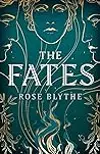
I can't give a rating to this book for the simple fact that to me, this is two stories forced to share the same breath and space as one another, and while I liked one story, I did not like the other, which is probably why this ARC took me over a year to read (almost a year and a half).
The first story is a story about free will, and how mortals are given it. That story relies on themes of love and determining your own path, and is told with a prose that is at once both purple but also fits the feeling of being told an ancient myth. That tale I enjoyed. The second story is a retelling of Greek mythology, but that I did not enjoy, because so much of it was bent out of shape and distorted in order to tell the first tale.
This is the problem with retellings. One portion of your audience demands for the tale to be told faithfully to the myth, and there, any deviation will be met with scorn. Another portion of your audience will demand that the tale be given originality and reinvented, and will scorn any attempts to be faithful to the source material. Authors must choose which side they will let their story land on, and ride the consequences, because inevitably, one portion of the natural audience for this tale will be unhappy, and I was unfortunately a part of that.
In this tale, the Olympian gods are all terrible, drunk on their power and spiteful and cruel. The only gods worth their salt are the Fates themselves and a singular Titan that remains behind, the first of the inaccuracies. For someone who enjoys the Greek gods as being a take on divinity that runs closer to the capricious and complexity of humans, to see them painted in such broadstrokes both bored and annoyed me. It was clear to me from that that this book takes the framework of Greek mythos and shakes it and bends it until it fits the story the author actually wants to tell. There is nothing wrong with the tale being told about how humanity is given its free will, nor the way that the story delights in such freedom and self determination of your own path, but I didn't see the need then to take a tale and force it into something else.
For me, this story would have been better served to be split in two, one a tale of Atalanta, and one a tale of mortals finding free will, and the disservice was done by trying to force the two together.
I received a copy of this book for free from NetGalley as an ARC in exchange for a fair review.
I can't give a rating to this book for the simple fact that to me, this is two stories forced to share the same breath and space as one another, and while I liked one story, I did not like the other, which is probably why this ARC took me over a year to read (almost a year and a half).
The first story is a story about free will, and how mortals are given it. That story relies on themes of love and determining your own path, and is told with a prose that is at once both purple but also fits the feeling of being told an ancient myth. That tale I enjoyed. The second story is a retelling of Greek mythology, but that I did not enjoy, because so much of it was bent out of shape and distorted in order to tell the first tale.
This is the problem with retellings. One portion of your audience demands for the tale to be told faithfully to the myth, and there, any deviation will be met with scorn. Another portion of your audience will demand that the tale be given originality and reinvented, and will scorn any attempts to be faithful to the source material. Authors must choose which side they will let their story land on, and ride the consequences, because inevitably, one portion of the natural audience for this tale will be unhappy, and I was unfortunately a part of that.
In this tale, the Olympian gods are all terrible, drunk on their power and spiteful and cruel. The only gods worth their salt are the Fates themselves and a singular Titan that remains behind, the first of the inaccuracies. For someone who enjoys the Greek gods as being a take on divinity that runs closer to the capricious and complexity of humans, to see them painted in such broadstrokes both bored and annoyed me. It was clear to me from that that this book takes the framework of Greek mythos and shakes it and bends it until it fits the story the author actually wants to tell. There is nothing wrong with the tale being told about how humanity is given its free will, nor the way that the story delights in such freedom and self determination of your own path, but I didn't see the need then to take a tale and force it into something else.
For me, this story would have been better served to be split in two, one a tale of Atalanta, and one a tale of mortals finding free will, and the disservice was done by trying to force the two together.
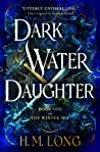
Rating: 4.5 stars
I really liked this book.
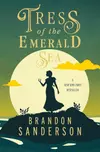
This book is an atmospheric tale of stormsingers, ghosts and pirates, that mixes just that right amount of gothic into its bones to make it creepy when it needs to be, and a seafaring adventure when it needs to be. To me, it was a fun ride, and I loved exploring the world (or worlds, really) as it was laid out before me, filled with ghistlings, snow, ice and storms called on the sound of a voice.
The only note I can truly make of it is the romance aspect of it feels a little thin as a connection. For the most part, the two who are involved are not in the same room together for the vast majority of the plot. In fact, they're more a tale of intersecting points, dropping in and out of each other's lives as the plot pushes them both towards the same goal, but not necessarily towards each other. It's interesting to me, because I enjoying learning about both characters independently of one another, and it helped to make it feel like they both were real characters, rather than one a lead and one a love interest, but at the same point in time, it did affect my enjoyment of the romance as it happened, because it seemed to build so quickly from so few moments. It just made me have to suspend my disbelief a little consciously, rather than just buying into it as I otherwise might have.
But ultimately? I love the world. I love the concept. Story threads are still left open to continuation for following books, while also keeping this first novel relatively contained enough that you feel satisfied with the ending. The main character is no passive damsel and has get up and go to her, but is also motivated by love for her family. Is it the highest of brow literature? No, this won't make you rethink your take on piracy. But it is fun and swashbuckling, with a creepy little mix of Gothic thrown in that makes me think so much of the first Pirates of the Caribbean film. The ocean is dark and deep, and if there's any world that I'd want to explore that fierce and cruel mistress, it would be in the world of the Winter Sea.
Rating: 4.5 stars
I really liked this book.
This book is an atmospheric tale of stormsingers, ghosts and pirates, that mixes just that right amount of gothic into its bones to make it creepy when it needs to be, and a seafaring adventure when it needs to be. To me, it was a fun ride, and I loved exploring the world (or worlds, really) as it was laid out before me, filled with ghistlings, snow, ice and storms called on the sound of a voice.
The only note I can truly make of it is the romance aspect of it feels a little thin as a connection. For the most part, the two who are involved are not in the same room together for the vast majority of the plot. In fact, they're more a tale of intersecting points, dropping in and out of each other's lives as the plot pushes them both towards the same goal, but not necessarily towards each other. It's interesting to me, because I enjoying learning about both characters independently of one another, and it helped to make it feel like they both were real characters, rather than one a lead and one a love interest, but at the same point in time, it did affect my enjoyment of the romance as it happened, because it seemed to build so quickly from so few moments. It just made me have to suspend my disbelief a little consciously, rather than just buying into it as I otherwise might have.
But ultimately? I love the world. I love the concept. Story threads are still left open to continuation for following books, while also keeping this first novel relatively contained enough that you feel satisfied with the ending. The main character is no passive damsel and has get up and go to her, but is also motivated by love for her family. Is it the highest of brow literature? No, this won't make you rethink your take on piracy. But it is fun and swashbuckling, with a creepy little mix of Gothic thrown in that makes me think so much of the first Pirates of the Caribbean film. The ocean is dark and deep, and if there's any world that I'd want to explore that fierce and cruel mistress, it would be in the world of the Winter Sea.

Rating: 2 Stars
Ah, the Atlas Six. It's one of those books to me that though I liked it at the start, the more I read of it, the less I liked of it.
This is my second Olivie Blake book, and I think her style of writing is something that one can bounce off quite easily. In Masters of Death, the need for all the characters to say witty one liners drove me away. In this, it was the endless nihilism and cynicism that was on display that drove me away. I think if I found the right combination of characters, then maybe I would enjoy an Olivie Blake book, but once she commits to an idea of the vibe and the theme, she seems to double down and make it central. This is perfectly fine, if you are the person who enjoys that particular vibe, but for this book? That wasn't me.
I had issues here, more than just the style. To me, this is a dark academia novel weighed down not only by nihilistic or ego driven characters that make being in their heads sometimes an experience that ranges from being a chore to an actually unpleasant experience, but also by inconsistencies with its own magical system. It pretends at being greatly scientific and intellectual, and yet, breaks its own rules. How does an empath for example, use magic to summon glasses to drink scotch? Beats me, but then the next chapter has everyone wondering about how time travel is possible through telepathy because time is a construct of memory and psychology, even as we talk about time as particle and quanta. The end result becomes a muddled mess where magic is simply what seems pretentious to talk about in one moment, and then convenient to use in the next. I have nothing against a marrying of concepts of magic and science, but if you walk that line, then to me, you have to pay homage to the fact that science is full of rules and inherently lends itself to a hard magic system. You can't treat a hard magic system as if it was a soft system. You have to stick to your worldbuilding, even if it uncool.
And there's a thick layer of pretence in this novel. These characters are smart and powerful, so to view the world with that pretence in mind makes sense, but it becomes grating. The prose doesn't help either, becoming very purple, especially in some large speeches were you just think, no nihilistic twenty odd is going to be talking this way, so it feels needlessly ostentatious. Still, despite all this, I'm compelled. I somewhat do want to read forward, to see if, against all these odds, these characters who are driven by self interest, arrogance, greed and cynicism can turn into people rather than just their own egos. If the other books hadn't already been out, I would have bought the second, because I can see a fragment of possibility for this to lend itself to a story I would personally like.
However, the sequels are out, and this is the book that most people say is the best. So, to that I say, I will not continue. Or perhaps, I might get the second from my library and judge for myself, but hold little hope. I do think there's an Olivie Blake book out there that suits me, because Masters of Death was a fine time, just a little bit too flippant for the heart that it wanted to sell to me, but if I had read the Atlas Six first, I don't know if I would have believed it. It takes too much from its characters, and they are not the characters I enjoy.
Rating: 2 Stars
Ah, the Atlas Six. It's one of those books to me that though I liked it at the start, the more I read of it, the less I liked of it.
This is my second Olivie Blake book, and I think her style of writing is something that one can bounce off quite easily. In Masters of Death, the need for all the characters to say witty one liners drove me away. In this, it was the endless nihilism and cynicism that was on display that drove me away. I think if I found the right combination of characters, then maybe I would enjoy an Olivie Blake book, but once she commits to an idea of the vibe and the theme, she seems to double down and make it central. This is perfectly fine, if you are the person who enjoys that particular vibe, but for this book? That wasn't me.
I had issues here, more than just the style. To me, this is a dark academia novel weighed down not only by nihilistic or ego driven characters that make being in their heads sometimes an experience that ranges from being a chore to an actually unpleasant experience, but also by inconsistencies with its own magical system. It pretends at being greatly scientific and intellectual, and yet, breaks its own rules. How does an empath for example, use magic to summon glasses to drink scotch? Beats me, but then the next chapter has everyone wondering about how time travel is possible through telepathy because time is a construct of memory and psychology, even as we talk about time as particle and quanta. The end result becomes a muddled mess where magic is simply what seems pretentious to talk about in one moment, and then convenient to use in the next. I have nothing against a marrying of concepts of magic and science, but if you walk that line, then to me, you have to pay homage to the fact that science is full of rules and inherently lends itself to a hard magic system. You can't treat a hard magic system as if it was a soft system. You have to stick to your worldbuilding, even if it uncool.
And there's a thick layer of pretence in this novel. These characters are smart and powerful, so to view the world with that pretence in mind makes sense, but it becomes grating. The prose doesn't help either, becoming very purple, especially in some large speeches were you just think, no nihilistic twenty odd is going to be talking this way, so it feels needlessly ostentatious. Still, despite all this, I'm compelled. I somewhat do want to read forward, to see if, against all these odds, these characters who are driven by self interest, arrogance, greed and cynicism can turn into people rather than just their own egos. If the other books hadn't already been out, I would have bought the second, because I can see a fragment of possibility for this to lend itself to a story I would personally like.
However, the sequels are out, and this is the book that most people say is the best. So, to that I say, I will not continue. Or perhaps, I might get the second from my library and judge for myself, but hold little hope. I do think there's an Olivie Blake book out there that suits me, because Masters of Death was a fine time, just a little bit too flippant for the heart that it wanted to sell to me, but if I had read the Atlas Six first, I don't know if I would have believed it. It takes too much from its characters, and they are not the characters I enjoy.