
Susan Scribner


Constance Haverhill's future is dismally uncertain. During the Great War, she managed the estate office for the Mercer family. Lady Mercer and Constance's mother were childhood chums, but because of their social class differences, Constance's mother was relegated to part-time governess and invitee to the “less distinguished” dinner parties. With the war over now, Constance is just one of thousands of women who are being told to vacate their jobs to make way for the returning soldiers. Constance's beloved mother was a victim of the influenza epidemic, and the young woman is not welcome at her brother's farm, where he and his wife are grieving the flu-related loss of their baby. A temporary reprieve is found when Constance is asked to be caretaker for Lady Mercer's mother, who is planning a summer-long seaside holiday. At the Hazelbourne-on-Sea's Meredith Hotel, Constance meets Poppy Wirrall, an ebullient iconoclast whose cadre of female motorcycle riders provided messenger services during the war, and are now planning to continue working as taxi drivers. Constance is drawn into Poppy's circle of friends and family, including her brother Harris, a former fighter pilot who lost his leg in a fiery plane crash. The plot takes most of the novel's first half to get off the ground (sorry not sorry), but once it is truly launched it soars. Simonson (author of the bestselling [b:Major Pettigrew's Last Stand 6643090 Major Pettigrew's Last Stand Helen Simonson https://i.gr-assets.com/images/S/compressed.photo.goodreads.com/books/1320539020l/6643090.SX50.jpg 6837577]) weaves in numerous themes on her way to an explosive climax: the post-war reversal of women's equality gains; the reestablishment of class distinctions that were weakened in the trenches; the hypocrisy of honoring the men who died in battle while hiding away the seriously wounded; the toxic, lingering anti-German sentiment; and the unyielding racism towards Black and Indian people. The redoubtable Constance is a bit Mary Sue-ish, always on the side of Justice and Fairness (her name can't be a coincidence), but it's rewarding to watch her come out of her shell and find a place in the this New Normal. Predictably, she is a key to Harris' emergence from depression and isolation, but his recovery journey is predicated on more than just the love of a Good Woman. Poppy is a fascinating character, torn between forging a new path and acknowledging the still limited choices available for women. And it's impossible to not love the elderly Mrs. Fog, who proves that there's no age limit on a HEA ending. There is a bit of humor in the story, primarily in the townspeople's increasingly futile attempts to get rid of a German U boat that washed up on their shore. But the events of the final chapters have a sobering effect. Constance has found her place and her man, but there's already a hint that the extreme xenophobia seen in Hazelbourne's otherwise delightful residents will contribute to a short-lived peace. ARC received from Net Galley in exchange for objective review.


Leftist writer Naomi Klein opens this hard-to-characterize book explaining how she is frequently mistaken for journalist Naomi Wolf, especially online. Klein's area of expertise is “corporate power and its ravages,” while Wolf, whose [b:The Beauty Myth 39926 The Beauty Myth Naomi Wolf https://i.gr-assets.com/images/S/compressed.photo.goodreads.com/books/1388197585l/39926.SY75.jpg 836516] was beloved by white feminists, has gradually became more hard core right wing. After COVID upended everything, Wolf found a home with Trump acolytes like Steve Bannon and Tucker Carlson, spouting anti-vaxxer, anti-mask, rabid conspiracy theories. For this issue and many others, Klein offers examples of how a real systemic problem (such pharmaceutical greed, poorly funded public health systems) was transformed in Wolf's mirror world into a nefarious plot. Klein has great insight into the way Bannon and his ilk have seized on complex concerns, such as child abuse or healthcare access, and have offered simple explanations: Hillary Clinton is killing babies in the basement of a pizza place. The government is hiding cures for cancer, but this 100% natural oil will save you. She even provides a remarkably cogent analysis of the current Israel/Palestine tragedy,* putting the Holocaust –> founding of Israel narrative in the context of other genocides and colonizations. Klein attempts to broaden the doppelganger experience of Klein vs Wolf (Klein = fine, Wolf = oof) into psychological concepts like shadow lands and mirror worlds, and at times she seems to be reaching for connections that don't quite exist. However, Doppelganger is still a fascinating, well-written look at the ongoing dumpster fire of 2024, and two women who exemplify the divisions between us. * This book was published before October 7, 2023 when a tragic situation somehow became even worse.


Short novel about the leadup to and fallout from a California wildfire that dramatically impacts a handful of characters from diverse backgrounds. (The actual fire itself only takes up 10 pages.) The brief length renders the characters more symbolic than real - the rich white woman who throws charity events but resists any real change; the young man living in his van whose situation becomes even difficult after the fire; the working class teacher who slides into depression; the teenagers who are frustrated in their attempts to challenge the system. The issues Ruiz Grossman highlights are disturbingly real, but overall the book reads more like a thesis and less like a novel. For an in-depth examination of climate-related disasters, check out [b:The Great Displacement: Climate Change and the Next American Migration 59366223 The Great Displacement Climate Change and the Next American Migration Jake Bittle https://i.gr-assets.com/images/S/compressed.photo.goodreads.com/books/1674683382l/59366223.SX50.jpg 93537093].


3.5 stars, rounded down. Ed Zwick may not be a household name, but you're probably familiar with his work as writer, director and/or producer for many successful TV shows (thirtysomething, My So-Called Life) and movies (Glory, Legends of the Fall, and Blood Diamond). The book recounts his experiences working with such luminaries as Denzel, Brad and Leo, as well as the wisdom he has accrued about his craft and industry. Very little dirt or shade on anyone with the notable exception of Matthew Broderick. I docked the book half a star for Zwick's slightly inflated ego and the relatively few pages he devotes to the women who have graced his productions.



When we first meet Ella, she is being released from prison, after serving six years of a twenty-five year sentence for attempting to murder her high school boyfriend's father. Ella's single mother Helen, who was raised in an insular Hasidic Jewish community, is there for her daughter, smothering her in love and suggesting that the two of them leave New York City for a small town that won't know about Ella's notoriety.
But Ella has other plans. While in prison, she gave birth to boyfriend Jude's baby and is now determined to find her child. With some highly improbable snooping, she learns that she has a daughter who lives in Ann Arbor, Michigan with her adoptive parents. Ella lies to Helen about why this college town appeals to her, finds a job writing a weekly advice column (that pays enough to live on?), and starts a new life that elides her past.
I had trouble connecting to the novel's characters, who frequently behave like actors in a mediocre Lifetime movie drama. We follow Ella as she makes a series of bad decisions in Ann Arbor, and Helen as she tries to make a life for herself after focusing solely on her daughter for 22 years. There are also flashbacks to the star-crossed romance between Ella and Jude, complete with an Evil Ogre who tries to keep the lovers apart, and the act that resulted in Ella's incarceration. The plot occasionally drops in on present-day Jude, whose character isn't developed much beyond Poor Little Rich Boy. Both Ella and Helen are presented with potential new romantic partners, but the men are barely three-dimensional and feel superfluous, especially for Ella.
The story's most emotionally resonant relationship is between Ella and Helen. The flashbacks to Helen's expulsion from the Hasidic community explain her desire to recreate a feeling of belonging with her daughter. Despite their love, the two women hurt each other both purposefully and inadvertently, but when Ella's world comes undone a second time, their relationship pulls her through. By the book's conclusion, their bond is healthier, allowing Ella to demonstrate newfound maturity in her decisions, and Helen to finally start living her own life.
The characters and plot of Days of Wonder were too melodramatic for my tastes. YMMV if you're okay with almost constant angst that includes triggering passages about biological and adoptive parents.
ARC received from Net Galley in exchange for objective review.


Dark historical paranormal fiction that takes all the brutal misery of World War I and kicks it up a notch with a few friendly ghosts and a mysterious fiddler straight out of a Charlie Daniels Band song (look it up, kids). Not for the faint-hearted, with unflinching, horrifying descriptions of the bloody trenches and field hospitals. Battle-hardened, determined nurse Laura Iven is a strong heroine, but her younger brother Freddie is the character who will live rent-free in my mind for a long time. Just 21 years old, Freddie endures many levels of physical and emotional hell as his war trauma is compounded by actions he takes to save the life of a wounded German soldier when both men are trapped underground. His loyalty and his sanity are both tested numerous times, to the point where ending his existential pain feels like an act of mercy.
It's impossible to imagine a truly HEA ending for this dark story, but at least there is love, grace, and (at least for a few decades) peace. In her author's note, Katherine Arden makes the case that the WWI years were “as close to a moment of historical science fiction as we will ever get: an indescribable mash-up of changing mores and technologies. And its participants, like time travelers, were people of one era flung without warning into another.” The Warm Hands of Ghosts perfectly illustrates that premise, making it much more than just another piece of book-club-bait historical fiction.
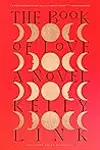


Full RTC (maybe) as soon as I can organize my thoughts about this unique 700 page fantasy novel. For now I want to celebrate the fact that, within those multitudinous pages, author Kelly Link, a freakin' MACARTHUR GENIUS GRANT winner, doesn't condescend, mock, or otherwise cast aspersions on romance novels. In fact, a main character's grandmother is a bestselling romance novel author, and Link occasionally ties romance novels into the plot in an intelligent, thoughtful way.
Kelly Link is my new hero, and those snooty literary types who look down their noses at my favorite genre can fuck all the way off.


Does anyone else write horror + humor better than T. Kingfisher? (I'm serious, if you have an answer please let me know!) I found this more satisfying than the first Alex Easton book, [b:What Moves the Dead 58724626 What Moves the Dead (Sworn Soldier, #1) T. Kingfisher https://i.gr-assets.com/images/S/compressed.photo.goodreads.com/books/1632936332l/58724626.SY75.jpg 91735925], possibly because What Feasts at Night isn't based on a classic tale and thus the plot has more freedom to go wherever Kingfisher's uniquely weird mind takes it. In addition to being creepy and funny (often at the same time), the novella features several passages that are breathtakingly beautiful. I was lukewarm on the series when it started, but now I'm hoping that Alex, Angus, and Hob the horse have many more macabre adventures ahead.


ETA 12/24: I enjoyed this more as a re-read, because I already knew when the cringe moments would take place and could focus on the well-constructed characters instead. I had more sympathy for Jolene this time around; given her past trauma and the toxic workplace dynamics of her soul-sucking job, I might have resorted to the same kind of passive aggressiveness that got her in trouble.
*******
I had the unusual experience of being both eager to read and anxious to avoid this debut novel. Natalie Sue creates the type of FMC who is usually right up my alley - introverted, socially anxious, hiding a troubled past - but her morally gray behavior made me so uncomfortable that I could only manage a few chapters at a time.
Jolene Smith is an office drone for a supermarket chain who passive-aggressively adds snarky postscripts to her emails in white font so her coworkers can't read how much she despises them. One day, hungover from her nightly drinking, she forgets to change the font color and is reported by her office nemesis. Jolene's punishment is to endure weekly anti-harassment sessions with Cliff, the nice new HR analyst, and to allow the installation of monitoring software on her computer. But the new software mistakenly gives her administrative status, allowing her to read the entire staff's emails and DMs. Tired of being the office pariah, Jolene vows to use her newfound power to avenge herself by sabotaging her coworkers while elevating her own work.
To her credit, Jolene does try to alert Cliff to the technical glitch, but he misinterprets her concerns, leaving her free rein to feed her worst impulses. Frankly, I had to question Cliff's sanity for being so quickly smitten by a woman basically comprised of 75% vitriol and 25% alcohol. At home, Jolene alternates between drinking heavily and trying to avoid the needy, friendless middle schooler who lives in her apartment building. I know, I know - “hurt people hurt people.”
Jolene's situation is complicated by cultural issues; her overly involved Persian parents and community raise the stakes when her plan inevitably explodes. Her redemption arc humanizes her without completely smoothing over her rough edges. Honestly, the fact that I had such a hard time with Jolene's behavior demonstrates Natalie Sue's skill at creating realistically flawed but relatable characters (and that I spent way too much of my working life sucking up to authority figures).
ARC received by NetGalley in exchange for objective review.


Focuses on nine women who became megastars in the late 1990s and early aughts, when the details of their intimate lives became increasingly available as the power of the internet mushroomed. Some (Britney Spears, Amy Winehouse) were largely victims, while others (Kim Kardashian, Paris Hilton) learned how to use the New Normal for their own benefit. Most of the biographical information is already well known, and the author's insights aren't particularly novel. But I discovered two more reasons to be mad at the patriarchy in the tragic stories of professional wrestling star Chyna, and singer/actress Aaliyah.


CW: FMC has congenital heart disease
2.5 stars. Oh this book. How quickly it reads and yet how deeply it annoys. I'll have to be vague about my concerns to avoid spoilers (see content warning if you want a hint), but I can safely say that Expiration Dates is NOT “the romance that will define a generation,” as promised by the publisher's description.
Single gal and LA producer's assistant Daphne Bell has a unique secret. Every time she dates a man, she receives a mysterious piece of paper containing his name and how long the relationship will last. She has never tried to determine the source of these papers, or why she seems to be the lone person on planet Earth to experience them, but okay, I can go with that. On her way to a blind date set up by her BFF, she gets the expected paper but there is no time limit included next to the name “Jake.” Does this mean Jake is The One that she will marry and grow old with, the relationship with no expiration date?
Fortunately, Jake is a wonderful guy - caring, handsome, successful, funny, just the right amount of quirky - and soon he and Daphne are a happy couple. But as their relationship moves towards the next milestone, Daphne agonizes over the need to tell Jake her Big Secret. No, not that one. The Other Big Secret.
I will not divulge the nature of the Other Big Secret except to say that it takes the story into unexpected and unwelcome territory. What starts out as a lighthearted romcom with a gimmick turns into melodrama and angst. Genuinely nice people are deeply hurt as Daphne makes martyr-like choices for them. Flashbacks to her previous time-limited affairs serve little purpose besides establishing the infallibility of the expiration date messages. The plot includes a Love Triangle (one of my least favorite tropes) but the other guy is a playboy douche-bro whose Grand Gesture is an unforgiveable (to me) act of control.
The author describes every outfit Daphne wears, the decor of the restaurants she patronizes, and other unnecessary details such as the fact that the shopping mall at which Daphne and BFF meet for lunch has a Santa train at Christmas, a giant bunny at Easter, and a Gilmore Girls gazebo the whole year through. No wonder this was a quick read; I skipped over all of the extraneous stuff.
The one thing that saved this book from one-heart territory was the loving, supportive relationship that Daphne has with her parents. So often Jewish parents, especially mothers, are stereotypically portrayed as overly involved, meddling noodges. Debra and Moshe Bell are lovely people who are willing to meet their daughter where she is, not where they want her to be.
There are many glowing 5-star reviews of Expiration Dates on Goodreads, so it's clear that mine is a minority opinion. YMMV if you like melodrama, Instagram-like fashion and decor descriptions, and ambiguous endings.
ARC received from Net Galley in exchange for objective review.


CW: FMC recovering from eating disorder; MMC's wife died 7 months before book takes place
3.5 stars. Well-written contemporary romance, with both MCs working through some serious issues and supporting each other emotionally before sex rears its head. Good blend of serious (but not angsty) and humorous. Loses half a star because the MMC behaves unbelievably out of character in order for the Third Act Breakup to take place. Also, there is an important subplot about the MMC's tween daughter's grief, especially its impact on her relationship with her dad. But despite that dynamic, any negative emotions she might have about the FMC and MMC's eventual HEA are glossed over.


CW: child sexual abuse, rape
Sam and Lori Sally were the daughters of low-income Jehovah's Witness parents who believed that, because Armageddon could happen at any minute, the only worthwhile activity was proselytizing to recruit more believers. Isolated, pulled out of school after eighth grade, and eventually excommunicated by the Witnesses, both girls drifted, latching on to men who offered lodging, safety, and/or excitement. But either the men became abusive or the girls (especially Sam) got bored, so the relationships never lasted very long.
At age 22, Lori met and married Jason Elhassani, a Moroccan immigrant with a good job and a seemingly sweet personality. After Lori gave birth to their child, however, Jason became distant and then abusive. As that marriage disintegrated, Sam met Jason's brother Moussa and fell deeply in love with him. He too became angry and abusive, especially after he started watching fundamentalist Muslim YouTube videos. While Lori divorced Jason and started over again, Sam stayed with Moussa, who became increasingly radicalized. A trip that was purported to be a visit to Moussa's Moroccan family ended with Sam, Moussa, and her two children living in a Syrian ISIS camp. Moussa became part of the holy jihad against unbelievers. Sam was trapped and alone, with escape seemingly impossible.
Lori and Sam have a complicated relationship, and their differing account of the book's events add to the difficulties of knowing the “true” story. When they were young, they were best friends and confidants; after they left home, their relationship fluctuated between support and betrayal. Sam actually testified for Lori's husband in the domestic violence case against him. Still, Lori moved heaven and earth in her attempts to get Sam out of Syria and back to America.
The ironically titled American Girls gives voice to two women who would probably be dismissed as “white trash” by those who only see their numerous boyfriends/husbands, teenage births, and job instability. Sam's story especially is a tragedy because she was raised in a society where her educational and economic opportunities were limited, and therapy to deal with the abuse she experienced was never even a possibility. The book falters only when Roy tries to shoehorn in research regarding child sexual abuse, PTSD, and Adverse Childhood Experiences (ACEs) to explain the Sally sisters' behavior. These sections feel like a term paper and are jarringly out of place in this otherwise deeply personal, disturbing story.


Nonlinear memoir that is only partially about brain injuries (and features just one chapter about sex). Liontas is a genderqueer author and professor who suffered three concussions in one year. Although they were each considered “mild” brain injuries, she experienced long-term, debilitating migraines, emotional dysregulation and mental confusion.
Liontas provides a smattering of the medical/social history and physiology of brain injury to accompany her personal experiences. The memoir also touches on anger, queerness, insomnia, writing, race, workplace culture, time, memory loss, and marriage. Some of the chapters are at best tangential to the titular subjects, and might have been better suited for a separate book. But Liontas' writing is powerful enough that I didn't really mind the digressions.


Brief, somewhat flat memoir from a Japanese man who decided to rent himself out via Twitter for one-time jobs that required him to do nothing except be present. “Rent” is somewhat misleading; he actually did not charge for his time, unless the request required travel or food and drink. In less than a year he had 100,000 followers and received an average of three requests each day.
So we learn about the woman who wanted Rental Person to go with her to file divorce papers; the man who believed that he would be more productive if Rental Person watched him work; the woman who only asked that Rental Person meet her at a park and make a big fuss about her dog so the dog wouldn't feel sad. The book was ghost-written via Q&A sessions with Morimoto. The writing is unsentimental and reserved. I wish that memoir did more than briefly mention the sad fact that Morimoto's two older siblings were destroyed by Japan's highly competitive economic system, but that's probably Japanese culture seen through the lens of an American who word vomits her feelings to perfect strangers.
Raises some interesting questions about why we put value on doing instead of being, but doesn't go deep enough to provide any answers. And I couldn't help wondering, does Rental Person Who Does Nothing wash the dishes when he's at home?


CW: MC's best friend died by suicide (several years before the book takes place)The best compliment I can give Kate Clayborn's latest novel is that it reminded me of the insanely talented [a:Joshilyn Jackson 45915 Joshilyn Jackson https://images.gr-assets.com/authors/1447590446p2/45915.jpg], who wrote about troubled women facing a crossroads in their lives, usually involving mothers and/or daughters, and often with an understated romance. Unfortunately Jackson has joined the ranks of authors who have gone over to the Dark Side (suspense/thrillers) but [b:The Almost Sisters 32600726 The Almost Sisters Joshilyn Jackson https://i.gr-assets.com/images/S/compressed.photo.goodreads.com/books/1487958944l/32600726.SY75.jpg 53181435] and [b:A Grown-Up Kind of Pretty 10960383 A Grown-Up Kind of Pretty Joshilyn Jackson https://i.gr-assets.com/images/S/compressed.photo.goodreads.com/books/1442347366l/10960383.SY75.jpg 15878096] were both 5-heart reads for me. The Other Side of Disappearing walks a fine line between contemporary romance and women's fiction. Jess Greene is a hairstylist in her early 30s who has served as de facto parent to her much younger half-sister, Tegan, ever since their mother disappeared ten years ago. Jess' entire life has revolved around providing a stable environment for Tegan, and she is emotionally closed off to other people and her own feelings. Jess knows that their mother met, was charmed by, and ran away with notorious con man Lynton Baltimore, but she has kept the truth a secret from her sister. Tegan is now 18, and unbeknownst to Jess, she has been communicating with a podcast host who recently profiled Baltimore. She's figured out the link between Baltimore and her mother, and she wants answers. When the podcast host Salem Durant and her assistant Adam Hawkins show up at their door, Jess is furious at Tegan for potentially bringing public attention to their private shame. But Tegan is determined to track down their mother, using the few postcards she sent Jess as clues. Jess has no choice but to join the road trip so she can watch over Tegan. She has nothing but disdain for Salem and Adam, which is unfortunate because Adam is pretty much a goner from the first time he sees her.Clayborn is trying to do a lot here, and sometimes the book feels a little stuffed. The relationship between Jess and Tegan is beautifully crafted, as Jess learns that she can't protect her little sister from the world and Tegan realizes how much Jess has given up for her. The search for their mother is less a careful unfolding of clues than a few discrete encounters with people who interacted with her in the past ten years. But the climax of that plot fully engages all of the emotions, and packs a strong punch.Then we have Adam, giant cinnamon roll and former football player, who aspires to host his own podcast about his best friend who died by suicide when his mental health issues were ignored and belittled by the football community. He is basically perfect - caring, family-oriented, communicative, patient, and sexy. He does have a Big Secret but the reveal doesn't go quite the way you would predict. It strains credulity a bit that Adam and Jess feel so strongly about each other after only two weeks, but given everything else that is going on, there isn't room in the story for casual dating scenes. And I'm glad that Jess and Tegan both spend some time in therapy before the HEA to address multiple issues that have been suppressed for several decades. This is definitely a change for Clayborn, and some readers may miss the lighter tone of her earlier novels. But I'm thrilled that she is moving into more complex emotional territory, and hope she can fill the Joshilyn Jackson-sized hole in my heart.ARC received from Net Galley in exchange for objective review.


Another solid entry in the series. The victims are pretty teenage girls, and there appears to be no link between them. Eve Dallas and Co. are woefully lacking in actual suspects, which makes the case more urgent because they know the killer will strike again, probably within 24 hours. There's little new character development, outside of Eve's reporter friend Nadine and her rockstar boyfriend Jake, but there is a priceless Dallas-Peabody conversation that made me literally LOL.


I think I lost a few thousand brain cells in the course of reading this ridiculous book. My thanks to ancientreader for coining the immortal phrase “obliviot” to describe the MC. I can't imagine that the second book could be any sillier [sees that the sequel's love interest is the sloppy drunk, boundary-challenged chaos gremlin Marty]. D'oh!


Our biggest mistake had been buying into the lies that had been sold to us - that we would ever truly be sexually liberated, that the summer after we graduated high school had to be unforgettable, that we would be friends for the rest of our lives.
Dark psychological thriller that has its roots in the infamous 2007 Amanda Knox incident. ICYMI, a 20-year old American vacationing in Greece was accused of killing her British roommate, and the resulting media circus convicted her long before her trial.
In this novel, three rich California girls spend the summer in Greece, but one dies under mysterious circumstances. The dead girl becomes a martyred angel, and every mean or selfish thing the remaining two ever posted online is used against them by the justice system and the court of public opinion. Berman does an excellent job at capturing the complex dynamics of the girls' relationships, and the volatile, hormone-laden emotions of being 18. She excoriates the media and true crime fanaticism that allows anyone with access to the internet to believe that they know The Truth, forgetting that there are often no easy answers whenever real, flawed human beings are involved.
Before We Were Innocent is not an easy read, but I'm feeling angry these days, and wanted a book that mirrored my emotions.


Milo and Mungo have been BFFs since university, but when Milo finally realizes he is in love with his big, bearded roommate, it's too late. Mungo, in love with Milo since forever but realizing the flirty twink will never settle down, has finally moved on. He is happy to be in a stable long-term relationship with Cav, even if he is a little controlling and lashes out physically when Mungo does something wrong...I salute Fearne Hill for reminding readers that intimate partner violence happens in queer relationships, even when both of the partners are strong, strapping men. But as a romance, Cloud White fell short for me. From the previous two books in the series in which they were secondary characters, I got the impression that Mungo and Milo were goofy layabouts who loved nothing more than hanging out and getting drunk with Frankie and Tristan Carter (MCs of the first two books). But apparently they are actually corporate lawyers with good jobs? Feels like ret-conning to me. Also, what happened to Maddie, the third (and only heterosexual) Carter triplet? She barely makes an appearance in this book; it's queer couples all the way. Finally, the plot - Mungo breaking away from Cav, Milo giving him time to heal, the two MCs confessing their love - is basically resolved at 75%, so the remaining pages are entirely comprised of explicit sex and treacly banter between the besotted best friends-turned-lovers. This entire series (why is it even called “Nailed It!” anyway?) has been meh for me. Hopefully Hill's next endeavor will remind me why I liked her earlier books like [b:Dipped in Sunshine 60720181 Dipped in Sunshine (Surfing the Waves, #2) Fearne Hill https://i.gr-assets.com/images/S/compressed.photo.goodreads.com/books/1648758865l/60720181.SY75.jpg 95731135] so much.


I thoroughly enjoyed Nathan Tavares' 2022 debut novel, [b:A Fractured Infinity 60852190 A Fractured Infinity Nathan Tavares https://i.gr-assets.com/images/S/compressed.photo.goodreads.com/books/1650477507l/60852190.SY75.jpg 93397711], so I was eager to read this follow up. Sadly, after struggling to finish it, I have to conclude that Welcome to Forever is just not my cup of tea. While Fractured Infinity combined a love story with a fairly basic science fiction plot, this novel goes all in on the sci-fi, which baffled and frustrated me.The book takes place on an exhausted, dying Earth. Fox is a memory editor, whose jobs at NIL/E Technologies involving erasing unpleasant memories from clients' brains and writing code so that entirely new (and always happy) memories can be inserted instead. His personal trainer husband, Gabe, can jump into clients' bodies and exercise for them so they look fit without the effort. In this brave new world, people can download their consciousness and plug it into a new body, forever averting final-death. But recently (maybe?) a bomb exploded near Fox's apartment, releasing a memory virus. Fox doesn't remember anything about his past, including Gabe. He finds himself at the Center for Memory Recovery, where he apparently checked himself in to recover his damaged “memory code” with the help of trained therapists. That summary covers approximately 10% of the book. I'm not sure I could describe the other 90% even if I wanted to. The plot isn't linear, jumping from Fox's experiences at the Memory Center to flashes of the past that his brain is starting to remember. But some of the memories feel like they belong to someone else...okay, you officially lost me. I struggled through discussions of memorystreams, mippers, sahusynics, and rez tech. Fox and Gabe are together. Now they're not. Now they're....other people? The Evil NIL/E Corporation, who operates all of this technology, is searching for Khadija Banks, pioneer of the technology turned revolutionary. But who are the true bad guys? Which parts of the narrative really happened, and which were dreams, fake memories, or something else? And, most importantly, what the hell does that ending mean?The book raises seriously existential questions about whether we are more than the sum of our memories, but I couldn't comprehend Tavares' answers. I think if I tackled it again, I might get a clearer picture of what exactly was going on, but I'm not motivated enough to do so. YMMV if you are more of a sci-fi devotee instead of a casual (and befuddled) reader like me. ARC received from Net Galley in exchange for objective review.


Insightful portrayal of complicated family dynamics, but the mood was too downbeat for me, and the ending left a lot of threads hanging. YMMV if your catnip is three-dimensional but frustrating characters, and sharp dialogue.
She's always late,” Dorothy said. “It's one of her quirks.” “Delightful,” Charlotte said. “I love quirks. So much more appealing than old-fashioned passive aggression.”


CW: Discussion of previous suicide attempt and subsequent hospitalization3.5 stars for this clever [b:Pride and Prejudice 1885 Pride and Prejudice Jane Austen https://i.gr-assets.com/images/S/compressed.photo.goodreads.com/books/1320399351l/1885.SY75.jpg 3060926] update. Jane Austen's Bennetts were family of modest means with an embarrassing fortune-hunting mother; Cotugno's Benedettos are former stars of a Kardashian-like television show whose every action is still gossip-worthy. Will Darcy, a Broadway actor starring in his first movie, is horrified when he learns that Lilly Benedetto, whom he just kissed, is a “reality show trash bag.” For her part, Lilly considers Will; his friend and action movie megastar Charlie Bingley; and his no-strings fuck buddy/agent Caroline Bingley, to be snobby “horrifying garbage monsters.” Will and Lilly alternately banter and glower at each other, as the rest of the familiar story unfolds. June/Jane doesn't catch a cold in this version; she faints doing burpees at Netherfield Place due to an undisclosed eating disorder. Mr. Collins is a self-centered screenwriter who unctuously fawns over his director, Caitriona de Bourgh. And so on. The updates are inspired, the satire of social media fame is on target, and the scenes between Lilly and Will sizzle with a combination of hate-fuck energy and finding-your-soulmate sweetness.Unfortunately, however, the book is a little too ambitious for its scale. The narrative is multiple first person POV, so we learn more about Will Darcy's interior life. Scenes recalling his abrupt exodus from New York to Hollywood after a short-term hospitalization for a suicidal attempt, and detailing his troubled relationship with his sister Georgia are well-written. But they crowd out most of the June and Charlie subplot and rush the Olivia (Lydia) and Nick (Wickham) episode. An unexpected Girl Power twist involving a secondary character solves the Bendettos' financial problems, but the abrupt ending, with a vaguely HFN for Lilly and Will, left me with a “wait, what?” feeling of frustration.