
Kyrie


This anthology is made up of 12 stories, all centered around characters who are aromantic.
A lot of the stories are incredibly on the nose - they use myth and magic and metaphor to explain the lack of romantic attraction that the protagonists feel. There is little to no subtilty, but I'm willing to forgive a lot because 1) this is an anthology aimed at young adults and 2) because there just isn't a lot of aromantic-specific literature out there.
And there were definitely a couple of moments where I felt seen in a way that I never have been before. Like, just the fact that one of the stories states that a lack of romantic connection doesn't mean that there isn't a connection there at all was ground-breaking. It's such an important lesson to be taught, especially for those who might be questioning why they don't feel the same way that their peers do.


The description of this book notes that it is an exact reprint of the original 1910 version, and you can tell. There are a few typos, and each page in my copy has the page number written out, as well as numerically noted at the bottom of the page.
The creatures are all interesting, and clearly tongue-in-cheek.
I do feel like they could have better formatted the illustrations - they're all printed landscape, so that you've got to turn the book sideways to look at the pictures. Which, not a huge deal...but all of the pictures are also enlarged from their original sizes, with the blur to show for it.
Still. My husband bought this for me as a tribute to my folklore shelf, so I love it.


Look. I listen to a LOT of true crime. I've desensitized myself to a lot of things. But there's a section where Dan Lafferty is describing what he and Ron did that I just couldn't listen to. I had to skip over it, because it was too horrific, and too heartbreaking.
The book splits itself into three different (yet relevant) narratives - the founding of the LDS church and its subsequent fundamentalist branch, modern (at the time) coverage of those fundamentalist groups and their focus on plural marriage, and how they all factored into the murder of Brenda Lafferty and her infant daughter.
The history is definitely interesting, but it left me more angry than anything else.
I do want to shout out the doctor on the prosecution's side though, who, when being asked why he didn't believe that Ron Lafferty was mentally ill, said, "You want to know how I know he isn't schizophrenic? Because he has books in his cell. He is able to pick and choose pieces from what he's read, and discuss them reasonably with other people. A person with schizophrenia suffering from delusions would not be able to focus enough to retain information and then discuss it in such a straightforward manner."
mic drop 🎤
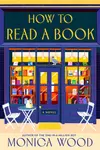

Oh, this was super-sweet, with a wonderful exploration of the pitfalls of the incarceration system, morals, guilt, overcoming your past, the intelligence of grey parrots, and it leads up to a crescendo where several plot threads are coming together...and then it ends.
It literally goes from an incredibly chaotic day, and the main characters trying to put things together and find a way to move forward. And then the next page, Violet is writing from the future, after her death, and summing up the various plot lines.


Okay. Wow. What is wrong with the women who wrote this?
They had it OUT for poor Guinevere...she's always "giggling" or "flirting". And she even "purred" at one point.
I gotta pull a Lancelot here, and defend her honor. As someone who loves the Arthurian legends, this portrayal will not stand!
And honestly, it's not just Guinevere. Pretty much every woman in this book is essentially just there to bat their eyes at the Knights, and make things difficult for them, with the exception of Lady Tryamour. And, naturally, she throws major shade at Guinevere with her, "But at the tournament you proved your courage, your virtue and your loyalty to your lady. One small mistake in your manners," she said, looking slightly disdainfully at Guinevere, who bowed her head, "is understandable." Which is in direct response to Sir Launfal nearly getting executed because Guinevere threw herself at Launfaul like a horndog, and then claimed he had tried to kiss her.
(That's where the purring bit comes in.)
Just...I feel like I need to rinse my mouth out after saying all that. Did I mention that this was a children's book?


It's a good thing that I'm making sure that I'm reading the kids' library books...I just had to break out the eraser for poor Captain Underpants here. My autistic daughter actually followed along with the activities. Which, hey - good to know that she can follow instructions! Not so fun to have to erase about 20 pages of activities.


Whispers from the Wicked Woods
Where are the stories for the wicked girls,
the ones where they are told perfection is a lie?
Where are the legends crafted from nuance,
the ones that cause the hero and the villain to blur lines?
Where are the myths for darker things,
the ones of us who were never snow-white pure?
Where are the lessons for naughty children,
the ones who want to be lost in the forest and folklore?
If you're looking for secrets you will find them here,
these words have been resurrected from old fairytales' ruins.
This is the place where those stories come to be reborn
and from the wreckage emerge things more human than humans.


Oh wow, this book went into so much more detail than I was expecting, especially in regards to North American cryptids! Obviously it wasn't an exhaustive list, but there was a good variety of information - from Bigfoot to the Snallygaster to the Dover Demon and the Beast of Bray Road.
(They mentioned both the Boggy Creek Monster and the Honey Island Swamp Monster!!!)
The book also covers possible explanations for cryptid sightings, famous hoaxes, and prominent figures in the field of cryptozoology...though Pliny the Elder didn't get a mention.
Altogether, it was a very even-handed look into the world of cryptids. Which is, in and of itself, a rare beast.


What an absolutely gorgeous book! The illustrations are stunning.
The entries for each bird are fairly short, and usually comprise of either folklore related to the bird (birblore, if you will) or literary examples that the birds are short-hand for. IE albatrosses representing a psychological burden, that sort of thing.


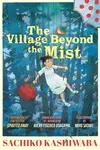

This is the book that Spirited Away was based on. And you can see the bones of it inside of the story - a town hidden up a path to a shrine, a magical old woman, a girl who has to spend the summer working to earn her keep, magic aplenty, a man who has to keep the furnaces running to power part of the magical building.
But it's honestly a completely different beast altogether.
The stakes are very low in this magical village, and Lina (our main character) spends her summer vacation learning how to be more self-sufficient (in a Japanese story? No....) and helps out and loves everyone who lives and works in Absurd Alley. It's a very cozy, magical slice-of-life.


Less a book collecting cases of the missing who have disappeared into the woods, and more a loose scattering of better-known cases shoved between chapters chronicling the story of the author joining a man's search for his missing son. There is SO MUCH MORE Bigfoot in here than I was expecting - which wasn't a non-zero amount, if you talk about people going missing in the woods, eventually someone will suggest that maybe Bigfoot did it.
- the cabin that Randy stays in is called the "Bigfoot Cabin" because it's owned by a group of people searching for Bigfoot in the Pacific Northwest
- several cases, the author floats the idea (tongue-in-cheek, mostly) that maybe Bigfoot did it
- a woman claims that she is feeding a family of Bigfoots, and they telepathically communicated to her the location of Randy's missing son
- when they go to check out said family of Bigfoots, the lady who actually owns the communal Bigfoot feeding spot goes on a rant that leads to my personal favorite quote of the book, which is, "F*ck you, Bigfoot!"
- the author calls out David Palides for claiming that he doesn't always suggest that Bigfoot did it, and his Missing 411 series should not be conflated with his Bigfoot/UFO work. Despite the fact that the entire point of his Missing 411 series is that there are a lot of people who have the same patterns when they go missing - "vanishing" off a trail, no trace of them being found, being found later in an area that was already searched, bad weather immediately following their disappearance, tracking dogs can't find a scent, etc - and that clearly, all of those cases have a common, supernatural root.


This book should be called "Reading Like a Writer, If You Want to Write Like a 18th - 19th Century European/Russian Contemporary Fiction Author Who Writes Art With a Capital A". Which, I'm sure there are people who do want to write like that. But even back when the book was published in 2006, that seems like such a narrow scope of writing to focus on.
The advice that the book offers boils down to "actually pay attention to what you're reading" and "there are no rules for writing because every example of a writing rule can be overturned by an example of someone doing the opposite of that, and the book still being really good!"
The specific advice for each section - dialogue, pacing, descriptions, etc - make some decent points. But it's good to keep in mind that different genres aren't handled the same way, and what works in the tropes and trappings of one may not work well in another. For example, the author points out that in today's writing world (again, as of 2006) publishers were pushing authors to write likeable characters and to provide a happily ever after. Back in the Good Old Days you could have a character be miserable at the end of the book and it was Important to the Work!!!
And yet, if you were writing a modern romance novel, you would be doing a disservice to the community, and flagrantly ignoring the rules of the genre if you were to end your story with both MC and Love Interest miserable or dead. Genre matters.
I do agree with her on the other portion of that statement though, that so many characters these days feel like they're made likeable and relatable in order for people to enjoy the book. I want characters with actual, human flaws that aren't clumsiness! I want darkness, and nuance, and despair, and redemption! I hate the current trend of a large group of people seeing a character (in books, movies, video games, whatever) and being like, "Omg I can't believe Author said that the main character once ate a baby! They're personally condoning baby eating!!!"
My other issue here is the heavy focus on primarily European and Russian literature. Outside of mentioning Pedro Paramo and One Hundred Years of Solitude, there's very little diversity in the selections that the author praises and uses as examples. I mean, I understand writing what you know (though that's an awfully silly way to write) but just like with genres, each culture has different rules and themes and shorthands that are important to the way that they write. And for a moment, I wondered if perhaps it was because of the added layer of translation and how to localize a story without losing the original meaning and authorial intent behind the deliberate word choice...but the Russian novels and my South American examples above all had to be translated into English.
Eh. At the end of the day, I'm not a writer. Those things just kind of stood out to me.


Oof...I'd seen a lot of people talking about how the manga didn't make a lot of sense without you already knowing the game. And as someone who has played and loved the game - I can confirm it's not a great adaptation.
The manga rushes through the story, and rearranges everything. You start with Omori waking up and hanging out with Kel up until the original confrontation with Aubrey, and then all of a sudden you're in White Space. There's no setup, no explanation for what's happening. There's no character building, just a fight with Boss and then a speedrun to Basil's house.
And that's pretty much how the rest of the volume goes. There's no time to stop and set anything up, and the Mari reveal happens way too soon to be properly effective.
I really like the art, though...especially when the story starts to delve into the horror aspects of the game.
You deserve better, Omori manga.