
TJ


*War Storm* delivers the scale and spectacle you’d expect from the final book in the Red Queen series, but it doesn’t always stick the landing. The world-building is strong, and the political maneuvering adds depth, yet the pacing can feel uneven — long stretches of strategy and negotiation slow down the momentum between the more gripping action sequences.
Character arcs resolve in ways that make sense, though some emotional beats don’t hit as hard as earlier installments. The story line in all 4 books seems forced like daytime TV soaps. Overall, I am happy its done and I can finally move on to something better.


Yoga Life is a standout gem for anyone seeking a deeper, more integrated approach to wellness. This isn’t just another yoga manual filled with poses and routines — it’s a thoughtful, beautifully structured exploration of how yoga can shape the way you move, breathe, think, and show up in daily life. The author blends practical guidance with warm, accessible storytelling, making the philosophy behind yoga feel both inviting and achievable.
What makes the book exceptional is its clarity. Each chapter breaks down concepts like mindfulness, balance, and breathwork in a way that feels grounded rather than abstract. The author’s tone is encouraging without being preachy, and the examples are relatable enough that you can immediately apply them to your own routines. Whether you’re a seasoned practitioner or someone simply looking to bring more calm and intention into your day, the book meets you exactly where you are.
By the end, Yoga Life feels less like a book and more like a companion — one that nudges you toward healthier habits, steadier emotions, and a more centered way of living. It’s inspiring, practical, and genuinely uplifting. A true 5‑star read that earns every one of those stars.


The Kings Cage was a bit of a letdown. The build feels sturdy, but the fit and finishing weren’t as clean as I expected—some parts felt slightly off, and setup took longer than it should’ve. It’s usable, but not quite worth the price for the quality control.
On top of that, it ended again on a cliffhanger without satisfying payoff, and the story was full of fluff that didn’t add much. The multiple perspectives also got confusing fast, and they didn’t contribute meaningfully to the plot. Overall a disappointment.


*Glass Sword* delivers exactly what fans of the first book crave: higher stakes, darker turns, and a deeper dive into Mare Barrow’s increasingly complicated world. The pacing is brisk, the tension rarely lets up, and the expansion of the Newblood storyline adds a satisfying layer of urgency. Victoria Aveyard’s worldbuilding continues to shine, especially as Mare grapples with the weight of leadership and the cost of rebellion.
Mare herself is the heart of the novel, and watching her evolve—sometimes in uncomfortable ways—makes for compelling reading. Her internal conflict, her growing isolation, and the moral gray areas she’s forced into give the story emotional heft. The supporting cast also gets more room to breathe, and the new characters add energy and unpredictability to the plot.
But the book loses a star for its abrupt cliff‑hanger ending. Instead of feeling like a natural pause in a larger saga, it lands more like a sudden stop just as the momentum peaks. It’s undeniably effective at making you want the next book, but it also leaves this installment feeling incomplete. Still, for readers invested in the Red Queen universe, *Glass Sword* remains an intense and engaging chapter—just one that doesn’t quite stand on its own. If I didn’t already buy all 4 books, I would DNF the series.


*Red Queen* delivers a slick, fast-paced blend of dystopian tension and courtly intrigue, and for much of the book, it’s easy to see why it became such a phenomenon. Victoria Aveyard builds a world divided by blood—literally—and the contrast between the powerful Silvers and the oppressed Reds gives the story an immediate hook. Mare’s journey from street thief to political pawn is engaging, and the twists sprinkled throughout keep the pages turning.
The book shines most in its atmosphere and its sense of rising danger. Aveyard has a talent for crafting dramatic moments, and the betrayals, shifting alliances, and moral gray areas add depth to what could have been a straightforward YA fantasy. Even when the characters make questionable choices, the tension and stakes stay high enough to keep you invested.
I deducted a star because I **hate cliffhanger endings**, and *Red Queen* leans hard into one. Instead of feeling like a satisfying close to the first installment, the ending feels abrupt—more like a setup for the sequel than a conclusion to this book. If you enjoy series that wrap each installment with at least some sense of resolution, this finale may leave you more annoyed than eager. Still, the worldbuilding and momentum make it a solid, if imperfect, start to the series.


The Medieval World by Dorsey Armstrong is an engaging, thoughtful, and surprisingly vivid exploration of a period that’s often flattened into clichés. Armstrong has a real gift for making medieval life feel textured and human, weaving together politics, religion, daily routines, and cultural shifts in a way that’s both scholarly and highly readable. Her explanations of how medieval people understood their world are especially strong, offering insights that feel fresh without ever drifting into speculation.
I’m giving it four stars—not because it falls short, but because I tend to reserve five stars for the rare books that feel like enduring classics. This one is excellent, informative, and thoroughly enjoyable, but it sits just a notch below that “all‑time great” tier for me. Still, it’s a standout introduction to the Middle Ages and a book I’m glad to have read.


CLEAR THE SPACE… FEEL THE RUSH delivers an energizing premise: clearing clutter—both physical and emotional—can create real momentum in your life. The author’s enthusiasm is infectious, and the book shines when it focuses on that core idea. There are genuinely motivating moments where the connection between environment, mindset, and personal energy feels clear and compelling.
But the book also tries to cover a wide range of topics—decluttering, productivity, emotional healing, habit formation, even broader life philosophy—and that ambition sometimes works against it. Instead of going deep on a few powerful concepts, the narrative jumps between themes, leaving some sections feeling underdeveloped or repetitive. Readers looking for a more structured, step‑by‑step approach may find themselves wishing the author had narrowed the scope and offered more practical detail.
Overall, it’s a quick, uplifting read with a positive message, but its attempt to tackle so many angles at once keeps it from fully landing. A solid three stars for inspiration, even if the execution feels a bit scattered.


Ego Is the Enemy is one of those rare books that feels like a mirror—clear, honest, and impossible to ignore. Ryan Holiday distills timeless wisdom into a modern, practical framework that challenges you to confront the biggest obstacle to your success and fulfillment: your own ego. Every chapter delivers a sharp insight or story that lingers long after you close the book, pushing you to rethink how you approach ambition, adversity, and achievement.
What makes this book exceptional is its blend of philosophy and real-world application. Holiday draws from figures like George Marshall, Jackie Robinson, and Eleanor Roosevelt to show how humility, discipline, and purpose—not bravado—are the true engines of greatness. The lessons are simple but profound, and the writing is crisp enough to make even the toughest truths feel empowering rather than discouraging.
By the end, Ego Is the Enemy leaves you with a renewed sense of clarity and control. It’s not just a book—it’s a recalibration. Whether you’re building a career, navigating relationships, or striving for personal growth, this is a guide you’ll return to again and again. A must-read for anyone serious about becoming their best self.


Living Without Stress or Fear delivers the signature calm, compassionate wisdom Thich Nhat Hanh is known for, offering guidance on transforming anxiety, anger, and despair through mindfulness practices like mindful breathing, “begin anew,” and the four‑pebble meditation. Readers looking for soothing, spiritually grounded reflections will find comfort in his gentle explanations of how to build a “true home” in the present moment.
Where the book may fall short for some is in its high-level, philosophical approach. Much of the content is drawn from live teachings, and while inspiring, it can feel repetitive or abstract if you’re hoping for more structured, step‑by‑step strategies. The emphasis on compassion and presence is beautiful, but readers newer to mindfulness—or those seeking practical, modern stress‑management tools—may wish for more concrete examples or actionable exercises beyond the foundational practices.
Still, the book succeeds in offering a peaceful, reflective experience. Thich Nhat Hanh’s perspective—shaped by decades of teaching mindfulness even in the midst of war and suffering—adds depth and authenticity. For readers who appreciate contemplative teachings and want a gentle reminder to slow down, breathe, and reconnect with compassion, this book provides meaningful value, even if it doesn’t break new ground for seasoned mindfulness practitioners.


Lifelong Health by Dr. Goodman is one of those rare wellness books that manages to be both deeply informative and incredibly practical. Goodman cuts through the noise of fad diets and quick fixes, offering a clear, science‑grounded roadmap for building habits that actually support long-term vitality. What makes the book stand out is its focus on sustainable lifestyle changes rather than overwhelming prescriptions — it feels like advice you can start using the same day you read it.
Dr. Goodman’s writing is warm, encouraging, and refreshingly accessible. He explains complex concepts like inflammation, metabolic health, and longevity in a way that’s easy to grasp without ever feeling simplified. Each chapter builds on the last, guiding you through nutrition, movement, sleep, stress, and mindset with a sense of purpose and clarity. The real magic is how he blends research with real-world application, making the path to better health feel achievable for anyone.
By the time you finish, you’re not just inspired — you’re equipped. Lifelong Health gives you the tools, motivation, and confidence to make meaningful changes that last. It’s the kind of book you’ll want to revisit, highlight, and share with people you care about. A truly outstanding resource for anyone committed to living well for the long haul.
As with most Great Courses, I listened to this as an Audible book.


The Daily Stoic is one of those rare books that manages to be both timeless and immediately practical. Each day’s meditation offers a concise, powerful insight drawn from the wisdom of Marcus Aurelius, Seneca, Epictetus, and other Stoic thinkers, but what makes the book truly shine is how clearly those ancient ideas are connected to modern life. The reflections are short enough to fit into even the busiest morning, yet meaningful enough to stay with you throughout the day.
The commentary that accompanies each quote is thoughtful without being preachy, grounding the philosophy in real-world situations—stress, relationships, ambition, setbacks, gratitude. It’s the kind of guidance that feels both grounding and empowering, helping you respond to life with more clarity and calm. Over time, the daily practice becomes less of a routine and more of a mindset shift.
Whether you’re new to Stoicism or already familiar with its teachings, this book is a steady, uplifting companion. It encourages reflection, resilience, and intentional living in a way that feels accessible and genuinely transformative. A true five-star read that earns its place on the nightstand year after year.


Restaurant Wars starts with a promising setup—competing restaurants, simmering rivalries, and the potential for sharp, behind‑the‑scenes drama—but the story never quite finds its rhythm. The pacing wobbles between slow, drawn‑out scenes and abrupt shifts that break the flow, making it hard to stay fully engaged. While there are flashes of wit and a few entertaining moments, the narrative often feels underdeveloped, as if the ingredients are there but never fully blended into something satisfying.
Character development is where the book struggles most. Many of the personalities feel thinly sketched, their motivations unclear or inconsistent, which makes it difficult to invest in their journeys or root for their successes. By the time the rushed conclusion arrives, the story leaves more loose ends than payoff. Restaurant Wars has a fun concept and occasional charm, but ultimately it reads like a dish that needed more time, depth, and refinement to truly shine


Henry at Work is an insightful and surprisingly warm exploration of how our jobs shape not just our days, but our sense of meaning, identity, and connection. The author blends philosophy, psychology, and everyday observation in a way that feels both accessible and quietly profound. Many of the examples land with that “yes, that’s exactly what it feels like” recognition, and the book invites you to think more intentionally about the role work plays in your life.
It’s not a fast read — the pacing can feel a bit meditative, and some sections linger longer than necessary — but the depth of reflection makes it worthwhile. Even when the arguments stretch a bit, they’re grounded in genuine curiosity about what makes work fulfilling or draining. Overall, it’s a thoughtful, humane book that leaves you with new ways to understand your own working life, and it earns its four stars with ease.


Yours for the Season delivers a cozy, holiday‑tinged romance with a charming premise and a cast of likable characters. The setup—fake dating that slowly turns into something real—has plenty of potential, and the book shines most when it leans into warm family dynamics and festive atmosphere. The chemistry between the leads is sweet, and the story moves at an easy pace that makes it a pleasant, low‑stress read for anyone craving seasonal comfort.
That said, the novel doesn’t quite rise above the familiar beats of its genre. Some plot points feel predictable, and the emotional development between the characters can come across as rushed or surface‑level. While the book is enjoyable and has its heart in the right place, it doesn’t offer many surprises or deeper layers. Overall, it’s a solid, middle‑of‑the‑road holiday romance—cozy enough to enjoy, but not one that lingers long after the last page.


Fantastic book and IMHO required reading for anyone looking to get into investing. *Investing For Dummies* earns every one of its five stars by doing something surprisingly rare in the world of finance books: it makes investing feel clear, approachable, and genuinely empowering. The author breaks down complex ideas—like asset allocation, diversification, and market behavior—into plain language without ever talking down to the reader. Whether you’re brand‑new to investing or brushing up on fundamentals, the explanations feel practical, friendly, and immediately useful.
What really sets the book apart is its balance of simplicity and substance. It doesn’t overwhelm you with jargon, but it also doesn’t shy away from giving you the tools to make real decisions. The examples are relatable, the strategies are grounded in long‑term thinking, and the guidance feels refreshingly free of hype. You walk away understanding not just *what* to do, but *why* it works.
By the end, the book leaves you feeling confident, informed, and ready to take control of your financial future. It’s the kind of guide you can return to again and again as your knowledge grows. For anyone looking to build a solid investing foundation, this is an outstanding place to start.
PS: I read both the physical and audiobook, and this is not a book that can be understood through an audiobook. Do yourself a favor and get the physical book and read it as many times as needed until you become a millionaire.


***One Sweet Holiday*** by Lucy Day is a charming seasonal escape that leans into the joy of simple pleasures. Day builds her story around small, heartfelt moments: shared treats, unexpected conversations, and the gentle spark of two people discovering they fit together better than they expected. The pacing is light and breezy, making it easy to fall into the festive atmosphere without feeling weighed down by unnecessary drama. It’s the kind of holiday read that feels like slipping into a warm room after being out in the cold.
What gives the novel its staying power is Day’s instinct for emotional sincerity. She doesn’t try to reinvent the holiday‑romance wheel; instead, she focuses on authenticity—characters who feel grounded, motivations that make sense, and a sweetness that never tips into syrupy excess. The result is a story that leaves you smiling, not because it surprised you, but because it delivered exactly the comfort and warmth you hoped for. It’s a lovely pick when you want something cozy, uplifting, and just indulgent enough to brighten your day.


A Montana Christmas Homecoming delivers a cozy, small‑town holiday atmosphere with all the familiar comforts of a Christmas romance, but it doesn’t quite rise above the genre’s well‑worn patterns. The snowy Montana setting is charming, and the returning‑home premise has emotional potential, especially as the characters navigate old wounds and rekindled connections. There are sweet moments and a few heartfelt scenes that land well, making it an easy, pleasant seasonal read.
That said, the story sometimes leans too heavily on predictable beats, and the pacing can feel uneven, with certain conflicts resolving a bit too neatly. The romance is warm but not particularly memorable, and some character motivations could have used more depth to make the emotional payoff stronger. Overall, it’s a decent holiday escape—comforting enough for a quiet winter evening, but not one that lingers long after the last page.


Snowed In With a Cowboy is a warm, feel‑good holiday romance that blends small‑town charm with a classic friends‑to‑lovers arc. Kris Bock sets the stage with a fun premise—a Texas rancher who unexpectedly becomes a billionaire and the attorney who’s secretly loved him for years—and uses it to explore how sudden fortune can complicate even the closest relationships.
Josh and Carly’s chemistry is gentle and slow‑burn, built on years of familiarity and unspoken feelings. Their dynamic feels grounded and believable, especially as they navigate the tension between professional boundaries and long‑buried affection. The snowed‑in setting and Christmas backdrop add a cozy, atmospheric layer that enhances the emotional beats without overwhelming them.
Overall, it’s a sweet, easy read perfect for anyone who enjoys small‑town secrets, holiday magic, and cowboy romances with a soft heart. It doesn’t try to reinvent the genre—but it delivers exactly the comfort and charm you want from it.


*Real Estate Investing All‑in‑One for Dummies* delivers exactly what the title promises: a broad, approachable overview of the real estate investing landscape. It’s friendly, digestible, and structured in a way that makes intimidating concepts—like financing strategies, property analysis, and tax considerations—feel manageable for beginners. The book shines when introducing foundational ideas and giving readers a sense of the many paths available in real estate. If you’re brand‑new and want a low‑pressure starting point, this guide does a solid job laying the groundwork.
That said, the book’s biggest strength is also its biggest limitation. Because it tries to cover so many topics in one volume, the depth can feel uneven, and more advanced readers may find themselves wanting clearer examples, more nuanced strategy discussions, or updated market context.
But my biggest issue with the book (but I didn’t deduct any stars for this) is the use of leverage. I understand the need for borrowing money to buy these type of assets, but I would not want to borrow any more then 50% with the shortest loan terms possible. I have no idea how people sleep at night with so much borrowed money.


Kingdom of Ash aims for an epic, emotionally explosive finale, but the sheer sprawl of its narrative ends up diluting much of its intended impact. The book is packed with battles, reunions, and dramatic sacrifices, yet the pacing often drags under the weight of its own ambition. Instead of feeling swept up in a tightly woven climax, I found myself slogging through long stretches where the momentum stalled and the emotional beats felt repetitive rather than resonant. For a series that once balanced character depth with sharp storytelling, this final installment leans too heavily on spectacle at the expense of clarity and cohesion.
What’s most disappointing is how many character arcs—built over thousands of pages—resolve in ways that feel either rushed or strangely muted. The emotional payoff that should have defined the finale never fully materializes, leaving the conclusion feeling more exhausting than triumphant. While longtime fans may appreciate the sheer scale of the world and the devotion to tying up loose ends, Kingdom of Ash ultimately struggles to deliver a satisfying, well‑paced conclusion. It’s a finale that tries to do everything and ends up doing too much, losing the sharpness and heart that made the earlier books so compelling.


Sarah J. Maas’s Tower of Dawn shifts focus to Chaol Westfall’s personal journey, set in the lush southern continent of Antica. The story explores healing, redemption, and political intrigue, expanding the world beyond the main series arc.
Chaol’s emotional and physical recovery is central, with new characters—especially healer Yrene—bringing depth and challenge. The slower pace allows for rich character development and subtle revelations that tie back to the larger saga.
Though it diverges from the main cast, Tower of Dawn offers essential insight and satisfying growth. It’s a thoughtful, character-driven installment that deepens the series in unexpected ways.


*Estate Planning For Dummies* is a practical guide that demystifies the often intimidating world of wills, trusts, probate, and inheritance taxes. This book is tailored for readers of all financial backgrounds, emphasizing that estate planning isn’t just for the wealthy. With clear explanations and step-by-step instructions, it walks readers through the essentials of drafting a will, assigning powers of attorney, and establishing living trusts, all while keeping legal jargon to a minimum.
One of the book’s standout features is its emphasis on minimizing estate taxes and avoiding probate pitfalls. It offers strategies for protecting privacy, planning for family business transitions, and even managing digital assets—an increasingly relevant concern. The updated edition reflects recent changes in estate and inheritance laws, making it a timely resource for anyone looking to ensure their assets are distributed according to their wishes. The authors also include helpful tips for special circumstances, such as planning for incapacity or pet care, which adds a thoughtful layer to the planning process.
While the book is part of the “For Dummies” series and maintains the brand’s signature user-friendly tone, some readers may find the depth of coverage more introductory than comprehensive. However, for those new to estate planning or seeking a refresher, it serves as an excellent starting point. The inclusion of tear-out cheat sheets, top ten lists, and navigational aids makes it easy to reference key concepts quickly. Overall, *Estate Planning For Dummies* is a valuable tool for anyone aiming to take control of their financial legacy with confidence and clarity.


*Empire of Storms* by Sarah J. Maas is a fantasy epic that deepens the stakes and expands the world of Erilea. The story follows a powerful heroine as she navigates shifting alliances, ancient prophecies, and looming war. Maas’s writing is immersive and fast-paced, blending action, magic, and emotional depth in a way that keeps readers hooked from start to finish. The book’s scope is ambitious, with richly imagined settings and a plot that builds toward a thunderous crescendo.
One of the novel’s strengths lies in its character dynamics. Relationships evolve in unexpected ways, revealing layers of loyalty, vulnerability, and strength. Secondary characters receive meaningful development, adding nuance and emotional weight to the journey. Maas balances intense battles with quieter, introspective moments, allowing readers to connect with the characters on a deeper level. The dialogue is sharp, and the tension between personal desires and larger responsibilities adds complexity to the narrative.
Without revealing any twists, it’s safe to say that *Empire of Storms* delivers a powerful blend of heartbreak and heroism. The ending is bold and emotionally charged, setting the stage for a dramatic continuation, which I personally hate in a novel dropping the rating to 4 stars (and I debated 3). Fans of high fantasy will appreciate the intricate world-building, fierce protagonists, and relentless momentum. It’s a book that demands attention and rewards readers with a rich, unforgettable experience.
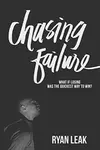

In Chasing Failure: How Falling Short Sets You Up for Success, author Ryan Leak flips the traditional narrative around success and failure, offering a bold and refreshing perspective. Rather than avoiding failure, Leak encourages readers to pursue it—intentionally and strategically—as a pathway to growth. Drawing from personal experiences, including his audacious attempt to try out for an NBA team without professional credentials, Leak illustrates how embracing the possibility of failure can unlock courage, creativity, and resilience.
The book blends motivational storytelling with practical advice, making it accessible to readers from all walks of life. Leak’s tone is conversational and authentic, which helps demystify the fear of falling short. He challenges readers to redefine success not as perfection or achievement, but as the willingness to take risks and learn from setbacks. Each chapter builds on this theme, offering actionable steps to reframe failure as a necessary ingredient for progress—whether in career, relationships, or personal development.
What makes Chasing Failure stand out is its empowering message: that failure is not the enemy, but the evidence of effort. Leak’s insights are especially relevant in a culture that often celebrates flawless outcomes while ignoring the messy process behind them. By encouraging readers to chase failure rather than run from it, the book becomes a catalyst for transformation. It’s a compelling read for anyone looking to break free from fear and pursue a life of bold, purpose-driven action.


Todd Zwillich’s The Man Who Knew the Way to the Moon tells the gripping story of John C. Houbolt, the NASA engineer whose unconventional thinking helped make the Apollo 11 moon landing possible. At a time when most experts favored direct ascent or Earth orbit rendezvous, Houbolt championed the Lunar Orbit Rendezvous (LOR) method—a strategy that was initially dismissed as impractical. Zwillich captures Houbolt’s relentless advocacy, his clashes with NASA bureaucracy, and his unwavering belief in a better way to reach the moon. Through vivid storytelling and meticulous research, the book reveals how one man’s persistence reshaped the course of space exploration.
More than just a technical narrative, the book is a tribute to intellectual courage and the power of conviction. Zwillich highlights the human drama behind the science, portraying Houbolt as a quiet rebel who risked his career to challenge the status quo. His story serves as a reminder that innovation often comes from the margins, and that progress depends on those willing to speak up when it matters most. For readers interested in space history, engineering, or the triumph of underdog ideas, this book offers a compelling and inspiring read.