
Michael Barnes


Those who have been reading this series this synopsis makes sense for those that haven't read the other 10 books in the Wayward children series Why haven't you?
"It follows Nancy Whitman, a girl who found her true home in the Halls of the Dead, a realm where residents become living statues, holding perfect stillness to halt time and camouflage themselves from restless ghosts. Nancy’s peaceful eternity is shattered when those ghosts, break free and begin slaughtering the motionless residents. Forced to flee, Nancy returns to Eleanor West’s Home for Wayward Children—the school for those who’ve lost their portal worlds—to seek help. Reuniting with friends Kade, Sumi, Christopher, and Talia, she breaks the school’s “no quests” rule. Together, this makeshift team must travel back to the underworld, confront the army of the unquiet dead, and find a way to seal them away forever". MD Touzani of 'your summary'
What is so satisfying reading these series for me is the reoccurring characters, those who you encounter in limited ways they are still crafted and distinct but you don't fully understand what made them in this story like Talia, until they get revealed in their own quest, like Nancy Whitman in Every Heart a Doorway, we know why she sought the land of the dead and became such a perfect statue, Kade Bronson's quilt revealed in Mislaid In Parts Half-Known and everyone's favourite Chaos Goblin Onishi Sumi Beneath the Sugar Sky. And who is Sumi you ask? In her own words to Talia...
"I am a shallow, candy coloured pixie flitting through world, doing nothing of weight or meaning".
But like the fool in Shakespeare I love reading her because she speaks the truth.
There are other recurring characters but they are in the realm of spoilers so they shall pass unamend.
I hope Talia gets more of her story soon, I need more Asian women characters who confound the western expectations of 'quite, delicate' (see Sumi above) one of her lines in this story "Who looks at a problem like 'the dead are killing our guests' and decides that the answer is a worldwide game of freeze tag with fatal consequences for the losers? It's not... it's not kind"
Please let there be more books in this series
Those who have been reading this series this synopsis makes sense for those that haven't read the other 10 books in the Wayward children series Why haven't you?
"It follows Nancy Whitman, a girl who found her true home in the Halls of the Dead, a realm where residents become living statues, holding perfect stillness to halt time and camouflage themselves from restless ghosts. Nancy’s peaceful eternity is shattered when those ghosts, break free and begin slaughtering the motionless residents. Forced to flee, Nancy returns to Eleanor West’s Home for Wayward Children—the school for those who’ve lost their portal worlds—to seek help. Reuniting with friends Kade, Sumi, Christopher, and Talia, she breaks the school’s “no quests” rule. Together, this makeshift team must travel back to the underworld, confront the army of the unquiet dead, and find a way to seal them away forever". MD Touzani of 'your summary'
What is so satisfying reading these series for me is the reoccurring characters, those who you encounter in limited ways they are still crafted and distinct but you don't fully understand what made them in this story like Talia, until they get revealed in their own quest, like Nancy Whitman in Every Heart a Doorway, we know why she sought the land of the dead and became such a perfect statue, Kade Bronson's quilt revealed in Mislaid In Parts Half-Known and everyone's favourite Chaos Goblin Onishi Sumi Beneath the Sugar Sky. And who is Sumi you ask? In her own words to Talia...
"I am a shallow, candy coloured pixie flitting through world, doing nothing of weight or meaning".
But like the fool in Shakespeare I love reading her because she speaks the truth.
There are other recurring characters but they are in the realm of spoilers so they shall pass unamend.
I hope Talia gets more of her story soon, I need more Asian women characters who confound the western expectations of 'quite, delicate' (see Sumi above) one of her lines in this story "Who looks at a problem like 'the dead are killing our guests' and decides that the answer is a worldwide game of freeze tag with fatal consequences for the losers? It's not... it's not kind"
Please let there be more books in this series

I have revelled in every one of these Singing Hills Saga books, but each doesn't follow the published order chronologically. In A Long and Speaking Silence our storyteller Chih is only newly minted Cleric, arrives in Feiyu. While disembarking the ferry in the city of Luntien, they’re pickpocketed, and lose all their funds. Fortunately with a popular festival beginning there is extra work to be had at local restaurant called Certain Compassion (it's name becomes a plot point towards the books end).
The title is a reference to Cleric Chih’s calling where gaps in history result in “a long and speaking silence.”
Their initial experiences as a waiter, every night they break plates, and lose track of orders, it fortunate they have talking hoopoe name Almost Brilliant who never forgets anything and their difficulties with knowing when to ask and when to back off in getting the stories makes them question if they should even be a cleric. But I loved how the first night when they finally make it through the shift without breaking a plate the stuff through a celebration, not in a mean sense but sharing their own stories of how terrible they were when they first started. It leads to this observation by Chih
"I was think of Cleric Sun, and how they said easy was only something you knew how to do. Easy's just experience and practice and time put together until you don't notice them any longer. One day, something you can do without thought, and you think it must have always been that way, but it's not true."
The heart of this story is the displaced people, the Verdant Island refugees, who continue to arrive in Luntien looking for shelter. As Roseanna Pendlebury puts in in Nerds of a feather "Too many" and "we're full" are frequent refrains, alongside assumptions of thievery and moral laxity in the newcomers. Over the course of the story, those tensions escalate, resulting in clashes in the street and physical violence, in which Chih finds themself overwhelmed but incensed on behalf of those who have come with so little, asking only for help." The contemporary parallels are clear. What looked to being a cataclysmic conflict between the two communities is prevent by an onset of storms with hailstones which ties back into an earlier story of how a god called 'Little Panuk' saved the town.
The conclusion of the story ties the experience of those refugees/immigrants to a piece of history of the Singing Hills abbey.
Another wonderful novella from this amazing series.
I have revelled in every one of these Singing Hills Saga books, but each doesn't follow the published order chronologically. In A Long and Speaking Silence our storyteller Chih is only newly minted Cleric, arrives in Feiyu. While disembarking the ferry in the city of Luntien, they’re pickpocketed, and lose all their funds. Fortunately with a popular festival beginning there is extra work to be had at local restaurant called Certain Compassion (it's name becomes a plot point towards the books end).
The title is a reference to Cleric Chih’s calling where gaps in history result in “a long and speaking silence.”
Their initial experiences as a waiter, every night they break plates, and lose track of orders, it fortunate they have talking hoopoe name Almost Brilliant who never forgets anything and their difficulties with knowing when to ask and when to back off in getting the stories makes them question if they should even be a cleric. But I loved how the first night when they finally make it through the shift without breaking a plate the stuff through a celebration, not in a mean sense but sharing their own stories of how terrible they were when they first started. It leads to this observation by Chih
"I was think of Cleric Sun, and how they said easy was only something you knew how to do. Easy's just experience and practice and time put together until you don't notice them any longer. One day, something you can do without thought, and you think it must have always been that way, but it's not true."
The heart of this story is the displaced people, the Verdant Island refugees, who continue to arrive in Luntien looking for shelter. As Roseanna Pendlebury puts in in Nerds of a feather "Too many" and "we're full" are frequent refrains, alongside assumptions of thievery and moral laxity in the newcomers. Over the course of the story, those tensions escalate, resulting in clashes in the street and physical violence, in which Chih finds themself overwhelmed but incensed on behalf of those who have come with so little, asking only for help." The contemporary parallels are clear. What looked to being a cataclysmic conflict between the two communities is prevent by an onset of storms with hailstones which ties back into an earlier story of how a god called 'Little Panuk' saved the town.
The conclusion of the story ties the experience of those refugees/immigrants to a piece of history of the Singing Hills abbey.
Another wonderful novella from this amazing series.

"Everyone’s favorite lethal SecUnit is back in the next installment of Martha Wells’ bestselling and award-winning Murderbot Diaries series.
Having someone else support your bad decision feels kind of good.
After volunteering to run a rescue mission, Murderbot realizes that it will have to spend significant time with a bunch of humans it doesn’t know.
Including human children. Ugh.
This may well call for… eye contact!
(Emotion check: Oh, for f—)"
The emotion check comments throughout the novel are due to the new installed “mental health module” to analyze its emotional responses and help it recalibrate its mind. I think these were a great addition giving us even more snarky observations where it has to interrogate its feelings
The opening in in the thick of an extraction with the other rogue SecUnit Three we met in Network Effect they are going rescue members of Dr. Mensah’s family who were kidnapped. The person behind the kidnapping is Director Leonides of Barrish-Estranza. Director Leonides is still experiencing the fallout of her failed mission see System Collapse (all this back story is probably why its not a good choice for anyone who hasn't read these novels.
Needless to say Murderbot picks up even more humans (and children) to rescue on the escort mission/family road trip through this multi-corporation run torus, which is itself a new futuristic structure that helps in the worldbuilding for this remarkable series.
Platform Decay also hints at much larger events going on in the background, particularly with the liberated SecUnit known as Three, and with the spread of Murderbot’s SecUnit-freeing hacking program. The new book hints at Three heading off on a major adventure while Murderbot is busy elsewhere.
A little alarming to me in an interview with the author she said "I only have one Murderbot book on contract right now,” Wells says. “I'm going to start working on that after I finish the third Witch King book, which I'm working on now. It'll probably be the end of the year, at least, before I start the next Murderbot. I've got some vague ideas for it, but I'm not really sure what it's going to be yet. And that may be the last book.”
"Everyone’s favorite lethal SecUnit is back in the next installment of Martha Wells’ bestselling and award-winning Murderbot Diaries series.
Having someone else support your bad decision feels kind of good.
After volunteering to run a rescue mission, Murderbot realizes that it will have to spend significant time with a bunch of humans it doesn’t know.
Including human children. Ugh.
This may well call for… eye contact!
(Emotion check: Oh, for f—)"
The emotion check comments throughout the novel are due to the new installed “mental health module” to analyze its emotional responses and help it recalibrate its mind. I think these were a great addition giving us even more snarky observations where it has to interrogate its feelings
The opening in in the thick of an extraction with the other rogue SecUnit Three we met in Network Effect they are going rescue members of Dr. Mensah’s family who were kidnapped. The person behind the kidnapping is Director Leonides of Barrish-Estranza. Director Leonides is still experiencing the fallout of her failed mission see System Collapse (all this back story is probably why its not a good choice for anyone who hasn't read these novels.
Needless to say Murderbot picks up even more humans (and children) to rescue on the escort mission/family road trip through this multi-corporation run torus, which is itself a new futuristic structure that helps in the worldbuilding for this remarkable series.
Platform Decay also hints at much larger events going on in the background, particularly with the liberated SecUnit known as Three, and with the spread of Murderbot’s SecUnit-freeing hacking program. The new book hints at Three heading off on a major adventure while Murderbot is busy elsewhere.
A little alarming to me in an interview with the author she said "I only have one Murderbot book on contract right now,” Wells says. “I'm going to start working on that after I finish the third Witch King book, which I'm working on now. It'll probably be the end of the year, at least, before I start the next Murderbot. I've got some vague ideas for it, but I'm not really sure what it's going to be yet. And that may be the last book.”

We first met Fern, the foul-mouthed Rattkin bookseller in the seaside town of Murk in Bookshops & Bonedust. In Legends & Lattes Fern's bookshop was relocated to the larger city of Thune next door to Viv’s (also from Bookshops & Bonedust) successful coffee house. The bookshop opens successfully, customers flood through the door, and the dream materializes exactly as planned….
Which drives Fern to question why she is doing what she is doing, which leads to drinking which leads to the opening that finds her in a wagon rolling away from Thune with an elf warrior Astryx One-Ear—the legendary Oathmaiden whose thousand-year career has fallen into routine. They are currently delivering a very valuable bounty in the form of chaos-goblin named Zyll. chaos-goblin isn't some sort fantasy/race class, it is literally what this she does/brings.
This road trip turns into a meditation on what happens when purpose fossilizes into mere habit. Whilst what we do, isn't sufficiently considered why we do it. The prose is a lyrical as in earlier books, but it’s the reflections on the why we do things that sets it apart from other fantasy stories.
The Bookish Elf sums it up well with "Brigands & Breadknives is a book about the terrifying freedom of admitting you don’t know who you are anymore. About friendships that survive absence and disappointment. About the difference between existing and living. It’s messier than its predecessors, more conflicted, and occasionally frustrating—which makes it more honest about the actual experience of being alive and uncertain".
We first met Fern, the foul-mouthed Rattkin bookseller in the seaside town of Murk in Bookshops & Bonedust. In Legends & Lattes Fern's bookshop was relocated to the larger city of Thune next door to Viv’s (also from Bookshops & Bonedust) successful coffee house. The bookshop opens successfully, customers flood through the door, and the dream materializes exactly as planned….
Which drives Fern to question why she is doing what she is doing, which leads to drinking which leads to the opening that finds her in a wagon rolling away from Thune with an elf warrior Astryx One-Ear—the legendary Oathmaiden whose thousand-year career has fallen into routine. They are currently delivering a very valuable bounty in the form of chaos-goblin named Zyll. chaos-goblin isn't some sort fantasy/race class, it is literally what this she does/brings.
This road trip turns into a meditation on what happens when purpose fossilizes into mere habit. Whilst what we do, isn't sufficiently considered why we do it. The prose is a lyrical as in earlier books, but it’s the reflections on the why we do things that sets it apart from other fantasy stories.
The Bookish Elf sums it up well with "Brigands & Breadknives is a book about the terrifying freedom of admitting you don’t know who you are anymore. About friendships that survive absence and disappointment. About the difference between existing and living. It’s messier than its predecessors, more conflicted, and occasionally frustrating—which makes it more honest about the actual experience of being alive and uncertain".
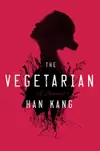
This novel was first published in 2007, been made into a film and then translated in 2017 went on to win a slew of awards including the Nobel Prize for Literature in 2025. In an interview the author Hyan Kang has explained her goals, noting that her novel is a treatise about patriarchy in South Korean society and the role of women overall in her culture.
The picture it paints is not a pleasant one.
Told in three parts it opens with Yeong-Hye an average-appearing and unassuming South Korean woman, a housewife and part-time cartoonist after a dream she declares she will no longer eat meat to the point where she begins to look unhealthy, where she cannot be around meat and can no longer bear the smell of those who consume meat including her husband, who deploys her own family against to get to eat meat. Her father tries to physically force her to eat meat which sees her end up in hospital.
The second is told from the focus of her older married sister successful in business, whose husband Yeong-Hye's brother-in-law a video artist who becomes physically obsessed with Yeong-Hye and her birth mark (referred to as a Mongolian Mark) which leads to Yeong-Hye being committed to a hospital for care of her overt eating disorder. The final third's focus is on her sister whose husband fled after his behaviour and she is the only family that visits Yeong-Hye in the hospital.
"The novel brims with a strangely disturbing beauty especially when describing the Brother-in-law’s obsession. Han Kang’s writing is sparse but almost poetic and intense, translated into English with stunning precision by Deborah Smith. The imagery is often dreamlike, and the symbolism—particularly of plants, blood, and animals—adds to the surreal quality of the narrative" - Cindy D’Silva and Noor Anand Chawla at Blogaberry Dazzle.
After reading this I felt like asking South Korea "are you okay?"
This novel was first published in 2007, been made into a film and then translated in 2017 went on to win a slew of awards including the Nobel Prize for Literature in 2025. In an interview the author Hyan Kang has explained her goals, noting that her novel is a treatise about patriarchy in South Korean society and the role of women overall in her culture.
The picture it paints is not a pleasant one.
Told in three parts it opens with Yeong-Hye an average-appearing and unassuming South Korean woman, a housewife and part-time cartoonist after a dream she declares she will no longer eat meat to the point where she begins to look unhealthy, where she cannot be around meat and can no longer bear the smell of those who consume meat including her husband, who deploys her own family against to get to eat meat. Her father tries to physically force her to eat meat which sees her end up in hospital.
The second is told from the focus of her older married sister successful in business, whose husband Yeong-Hye's brother-in-law a video artist who becomes physically obsessed with Yeong-Hye and her birth mark (referred to as a Mongolian Mark) which leads to Yeong-Hye being committed to a hospital for care of her overt eating disorder. The final third's focus is on her sister whose husband fled after his behaviour and she is the only family that visits Yeong-Hye in the hospital.
"The novel brims with a strangely disturbing beauty especially when describing the Brother-in-law’s obsession. Han Kang’s writing is sparse but almost poetic and intense, translated into English with stunning precision by Deborah Smith. The imagery is often dreamlike, and the symbolism—particularly of plants, blood, and animals—adds to the surreal quality of the narrative" - Cindy D’Silva and Noor Anand Chawla at Blogaberry Dazzle.
After reading this I felt like asking South Korea "are you okay?"

A pleasing murder mystery debut has as a protagonist a 30-something true crime tragic Claire Hendricks who makes money as a freelance medium. One advantage Claire has is her best friend Sophie who rarely leaves her side. This is because she’s been haunting her ever since she was murdered at the age of 17. Claire is Invited to an old university friend’s country pile to provide entertainment performing a seance for the family matriarch's 80th birthday. Needless to say a death occurs, a mystery unfolds and what is hidden is revealed.
Claire and Sophie team up with the least unbearable members of the Wellington-Forge family – depressive ex-cop Basher and teenage reactionary Alex – Claire and Sophie determine to figure out not just whodunnit, but who they killed, why and when.
Also the cast of characters are filled with non-binary, sapphic, and gay, queerness that is not a driving part of the plot but just how people in the contemporary world are.
The details of Sophie's murder/death are only hinted in this novel and I imagine to be slowly provided over the next two novels in the series Displeasure Island, and The Grapples of Wrath.
A pleasing murder mystery debut has as a protagonist a 30-something true crime tragic Claire Hendricks who makes money as a freelance medium. One advantage Claire has is her best friend Sophie who rarely leaves her side. This is because she’s been haunting her ever since she was murdered at the age of 17. Claire is Invited to an old university friend’s country pile to provide entertainment performing a seance for the family matriarch's 80th birthday. Needless to say a death occurs, a mystery unfolds and what is hidden is revealed.
Claire and Sophie team up with the least unbearable members of the Wellington-Forge family – depressive ex-cop Basher and teenage reactionary Alex – Claire and Sophie determine to figure out not just whodunnit, but who they killed, why and when.
Also the cast of characters are filled with non-binary, sapphic, and gay, queerness that is not a driving part of the plot but just how people in the contemporary world are.
The details of Sophie's murder/death are only hinted in this novel and I imagine to be slowly provided over the next two novels in the series Displeasure Island, and The Grapples of Wrath.

The synopses from Will McClelland at Grimdark magazine is better than anything I could summarise
"Out of the Drowning Deep takes place on a solitary planet (Bastion) orbited by a residential space station, in a universe where all gods have made themselves known. Our main characters are Scribe IV (an automaton who records prayers), Quin (the recovering addict and detective), and Angel (an angel who agrees to help solve the murder-mystery). After the visiting Pope is murdered in the Bastion, Scribe IV’s soon to be defunct monastery, the three team up to solve the case before the Sisters of the Drowning Deep (amphibious nuns who punish people with eternal drowning) rise from the depths to exploit the situation for them and their Drowned God".
This is a tight well-crafted tale that managed to build an incredibly rich world in such a confined environment. I particularly love the biblically accurate description of angels, and this is why in the bible the first words spoken by Angels are usually BE NOT AFRAID, and how simply monstrous an Angel of the Christian mythology would be in your life. This story joins the growing collection of Angels in noir crime stories, 'Wings of Desire' Ian Tregillis' Something More Than Night and C.L. Polk's Even Though I Knew the End to list a few.
The synopses from Will McClelland at Grimdark magazine is better than anything I could summarise
"Out of the Drowning Deep takes place on a solitary planet (Bastion) orbited by a residential space station, in a universe where all gods have made themselves known. Our main characters are Scribe IV (an automaton who records prayers), Quin (the recovering addict and detective), and Angel (an angel who agrees to help solve the murder-mystery). After the visiting Pope is murdered in the Bastion, Scribe IV’s soon to be defunct monastery, the three team up to solve the case before the Sisters of the Drowning Deep (amphibious nuns who punish people with eternal drowning) rise from the depths to exploit the situation for them and their Drowned God".
This is a tight well-crafted tale that managed to build an incredibly rich world in such a confined environment. I particularly love the biblically accurate description of angels, and this is why in the bible the first words spoken by Angels are usually BE NOT AFRAID, and how simply monstrous an Angel of the Christian mythology would be in your life. This story joins the growing collection of Angels in noir crime stories, 'Wings of Desire' Ian Tregillis' Something More Than Night and C.L. Polk's Even Though I Knew the End to list a few.
Updated a reading goal:
Read 52 books in 2026
Progress so far: 50 / 52 96%

In an alternative England where magic exists but is not universally know where there exists a faerie realm beside ours. Magic is known and wielded mostly by a few significant (read rich) families. Our protagonist a teenage Clover Hill is introduced when her older brother, Matthew leaving the family farm for reasons that will be familiar to any reader of Great War literature; “the war will over in a few months,” he told his sister. “The farm will be fine without me until then. It might be the only chance I get to see the world. Besides, I should be out there. Everyone my age is going.”
In one the fields in France a desperate attempt to open a door into the faerie realm results in no winning bargain, but a dread fey unleashed which results in many horrific deaths before it is forced back, leaving Matthew only one of three survivors but terribly cursed. A curse which drives Clover to attend a England’s secret magical academy Camford to find a cure. But it's no place for Clover, a commoner with neither connections nor magical blood but she gains three friends and in her own words
"That was how it started, the four of us. We never meant any harm."
I appreciated how immersive a feel of the 1920's Oxford/Cambridge vibe Parry brings to the setting that period at university when you feel you have friend who understand you and you share everything. This novel also cleverly blends the experiences of World War I veterans into the fantasy plot (Parry the author acknowledges the work of several authors from the period including Vera Britain, Ford Maddox Ford, and Rebecca West). Clover and her friends, Alden, Hero, and Eddie each harbor their own secrets and dreams, work to open a faerie door and find answers that might help Matthew. I found them well crafted and interesting characters for their period. It’s the interactions and developments of these characters at different points in their lives, and how their ambitions and goals have directed their paths forward. I despise what Alden became but I can see how it happened. They are all compelling, but flawed, people who make mistakes, sometimes correcting and sometimes doubling down all the more.
Another brilliantly research historical/magical tale from the author of A Declaration of the Rights of Magicians.
In an alternative England where magic exists but is not universally know where there exists a faerie realm beside ours. Magic is known and wielded mostly by a few significant (read rich) families. Our protagonist a teenage Clover Hill is introduced when her older brother, Matthew leaving the family farm for reasons that will be familiar to any reader of Great War literature; “the war will over in a few months,” he told his sister. “The farm will be fine without me until then. It might be the only chance I get to see the world. Besides, I should be out there. Everyone my age is going.”
In one the fields in France a desperate attempt to open a door into the faerie realm results in no winning bargain, but a dread fey unleashed which results in many horrific deaths before it is forced back, leaving Matthew only one of three survivors but terribly cursed. A curse which drives Clover to attend a England’s secret magical academy Camford to find a cure. But it's no place for Clover, a commoner with neither connections nor magical blood but she gains three friends and in her own words
"That was how it started, the four of us. We never meant any harm."
I appreciated how immersive a feel of the 1920's Oxford/Cambridge vibe Parry brings to the setting that period at university when you feel you have friend who understand you and you share everything. This novel also cleverly blends the experiences of World War I veterans into the fantasy plot (Parry the author acknowledges the work of several authors from the period including Vera Britain, Ford Maddox Ford, and Rebecca West). Clover and her friends, Alden, Hero, and Eddie each harbor their own secrets and dreams, work to open a faerie door and find answers that might help Matthew. I found them well crafted and interesting characters for their period. It’s the interactions and developments of these characters at different points in their lives, and how their ambitions and goals have directed their paths forward. I despise what Alden became but I can see how it happened. They are all compelling, but flawed, people who make mistakes, sometimes correcting and sometimes doubling down all the more.
Another brilliantly research historical/magical tale from the author of A Declaration of the Rights of Magicians.
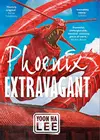
Gyen Jebi is a Hwagugin (a conquered province dismissingly referred to fourteen an adjacent Korea) struggling artist (aren't they all) their desperate enough that the story opens with them sitting the exams to be an artist within the bureaucracy of the occupying power Razanei (think Japan) Note Jebi identifies as neither male nor female, using “they,” “them,” “their,” and “themself” as pronouns.
Jebi's sister Bongsunga who has acted as parent to Jebi since the deaths of their parents is a fervent revolutionary of the Razanei who occupied the country of Hwaguk, who took her wife from her in the ensuing war, who make it nearly impossible for a native Hwagukan to make a living… it takes a toll on a person.
He is not selected though clearly a better artist than the others they’re blackmailed into working for the Ministry of Armor, a secretive government agency under a Machiavellian fellow named Hafanden Razanei’s research division for the military. That employ artists to create new automata, those faceless forces of policing set up wherever the Razanei conquer. And their latest innovative project, a dragonlike automaton called Arazi, failed to work as intended.
So intrigue, mysteries, plots, scheming and giant mechanical sentient clever and full of childlike enthusiasm Dragon called Arazi is not even half the story. I enjoyed the anti-colonial threat, the importance of air and treasure to a culture especially an occupied one. One caveat the resolution could leave some unsatisfied and felt to me like there needs to be a sequel but still a story I do not regret reading.
Gyen Jebi is a Hwagugin (a conquered province dismissingly referred to fourteen an adjacent Korea) struggling artist (aren't they all) their desperate enough that the story opens with them sitting the exams to be an artist within the bureaucracy of the occupying power Razanei (think Japan) Note Jebi identifies as neither male nor female, using “they,” “them,” “their,” and “themself” as pronouns.
Jebi's sister Bongsunga who has acted as parent to Jebi since the deaths of their parents is a fervent revolutionary of the Razanei who occupied the country of Hwaguk, who took her wife from her in the ensuing war, who make it nearly impossible for a native Hwagukan to make a living… it takes a toll on a person.
He is not selected though clearly a better artist than the others they’re blackmailed into working for the Ministry of Armor, a secretive government agency under a Machiavellian fellow named Hafanden Razanei’s research division for the military. That employ artists to create new automata, those faceless forces of policing set up wherever the Razanei conquer. And their latest innovative project, a dragonlike automaton called Arazi, failed to work as intended.
So intrigue, mysteries, plots, scheming and giant mechanical sentient clever and full of childlike enthusiasm Dragon called Arazi is not even half the story. I enjoyed the anti-colonial threat, the importance of air and treasure to a culture especially an occupied one. One caveat the resolution could leave some unsatisfied and felt to me like there needs to be a sequel but still a story I do not regret reading.

Yes it’s a gothic lesbian vampire story which while it begins with the two women, its narrative unfolds across centuries. The unnamed vampire recounts her early life and after witnessing the brutal deaths of her Maker and her sisters at the hands of enraged villagers flees Europe for the distant coast of Argentina. Less a Dracula-like figure arriving at Whitby on the deserted Demeter, and more of a lost scavenger, uninterested in human lives even as she grieves her own losses. Buenos Aires deserted by its men leaving for war and then ravaged by yellow fever and a mysterious pale women who is rumoured to feast on those who open their doors. As time passes, though, the city proves itself to be equally unsafe for a creature of the night. In the wake of betrayal and tragedy brought on by her nature, and after meeting a young cemetery groundskeeper who is entranced by both her beauty and her monstrosity, she locks herself inside a coffin in an abandoned tomb to live out a solitary and thirsty eternity. As the world transforms around her—moving from isolated villages into cosmopolitan, interconnected cities, the vampire must adapt her existence in order to intermingle. In the same city in the present day, a seemingly ordinary woman struggles to cope with the terminal illness of her own mother while also looking after her young son. When she sees the vampire for the first time in a Buenos Aires cemetery at the opening of the novel, the two women stories are to intersect and I think the ending whilst melancholic is satisfying and moving.
"This is a conflicted, confused, and introspective monster with enough of broken moral compass to make this interesting" . Rachel Friars at the Lesbrary
Yes it’s a gothic lesbian vampire story which while it begins with the two women, its narrative unfolds across centuries. The unnamed vampire recounts her early life and after witnessing the brutal deaths of her Maker and her sisters at the hands of enraged villagers flees Europe for the distant coast of Argentina. Less a Dracula-like figure arriving at Whitby on the deserted Demeter, and more of a lost scavenger, uninterested in human lives even as she grieves her own losses. Buenos Aires deserted by its men leaving for war and then ravaged by yellow fever and a mysterious pale women who is rumoured to feast on those who open their doors. As time passes, though, the city proves itself to be equally unsafe for a creature of the night. In the wake of betrayal and tragedy brought on by her nature, and after meeting a young cemetery groundskeeper who is entranced by both her beauty and her monstrosity, she locks herself inside a coffin in an abandoned tomb to live out a solitary and thirsty eternity. As the world transforms around her—moving from isolated villages into cosmopolitan, interconnected cities, the vampire must adapt her existence in order to intermingle. In the same city in the present day, a seemingly ordinary woman struggles to cope with the terminal illness of her own mother while also looking after her young son. When she sees the vampire for the first time in a Buenos Aires cemetery at the opening of the novel, the two women stories are to intersect and I think the ending whilst melancholic is satisfying and moving.
"This is a conflicted, confused, and introspective monster with enough of broken moral compass to make this interesting" . Rachel Friars at the Lesbrary
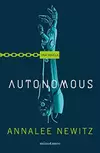
I've enjoyed reading other works by Annalee Newitz described in their podcast 'Our opinions are correct' as a science journalist who writes science fiction and this 2017 debut novel is no exception. It’s a near future rendering of what could be, think William Gibson's Neuromancer but Biopunk rather than Cyberpunk and Newitz knows their way around modern synthetic biology. Its 2144 and our Biopirate Judith 'Jack' Chen is a graduate biochemist who reverse-engineers patented drugs genetic treatments makes the knock-offs available for free or really cheap to those who need them but can’t afford them. Zacuity, the latest drug Jack has released copying Zaxy corporation's Zacuity is supposed to get people feeling good about working; unfortunately, what it actually does is addict people to their jobs to the point of insanity. The novel opens when Jack has to deal; with a pair who break into her sub (it’s a small sub) she ends up taking on the teenage kid Threezed who was indentured to the guy who broke into their sub. Unsurprisingly in a world where children can be indentured (and don't tell me that couldn't happen just read a few tech bros manifestos). Zaxy corporation would rather not have to admit that is very successful 'people now love their work drug' is dangerous and call on the International Property Coalition to help. The IPC tasks Eliasz one human (in a biological sense ) and Paladin (a military bot with a human brain used to process facial recognition) with tracking down and eliminating Jack. Eliasz and Paladin start by tracking down a number of Jack’s associates, looking for clues to Jack’s current whereabouts. Hack heads to an old haunt, the Free Lab. There, she gets her old boyfriend and his students to research a cure to the drug addiction.
Yes it’s a lot and whilst the world building on this climate enshittified earth is excellent the detailed world of biohacking and digital infrastructure including robots, biobots and programs is amazing it’s the discussion of what it measn for these characters where the story really shines. The story follows Jack, but also Eliasz one human (in a biological sense ) and Paladin equal measure. Through their journeys, we visit various aspects of this hyper-commodified world that Newitz envisions. It’s quite dystopian, yet full of beautiful moments too. Also profound as Paladin considers what it means to be autonomous (a term for robots that are no longer regulated by external programs, leads to a discussion about what it means to be autonomous and asks
"These feelings came from programs that ran in a part of his mind that he couldn't access. He was a user of his own consciousness, but he did not have owner privileges. As a result, Paladin felt many things without knowing why".
Who hasn't thought this about this about their own thought processes?
Johnathon Hatful at SciFi now "The story’s most compelling strand, however, is Paladin’s. The robot’s attempts to untangle its feelings for Eliasz, muddled by built-in obedience drives and mostly-useless but definitely gendered human brain in its carapace, are fascinating and unexpectedly unsentimental, even brutal at times. It’s a novel about choices and the lack of them, and Autonomous impresses with its intelligence and sensitivity".
I've enjoyed reading other works by Annalee Newitz described in their podcast 'Our opinions are correct' as a science journalist who writes science fiction and this 2017 debut novel is no exception. It’s a near future rendering of what could be, think William Gibson's Neuromancer but Biopunk rather than Cyberpunk and Newitz knows their way around modern synthetic biology. Its 2144 and our Biopirate Judith 'Jack' Chen is a graduate biochemist who reverse-engineers patented drugs genetic treatments makes the knock-offs available for free or really cheap to those who need them but can’t afford them. Zacuity, the latest drug Jack has released copying Zaxy corporation's Zacuity is supposed to get people feeling good about working; unfortunately, what it actually does is addict people to their jobs to the point of insanity. The novel opens when Jack has to deal; with a pair who break into her sub (it’s a small sub) she ends up taking on the teenage kid Threezed who was indentured to the guy who broke into their sub. Unsurprisingly in a world where children can be indentured (and don't tell me that couldn't happen just read a few tech bros manifestos). Zaxy corporation would rather not have to admit that is very successful 'people now love their work drug' is dangerous and call on the International Property Coalition to help. The IPC tasks Eliasz one human (in a biological sense ) and Paladin (a military bot with a human brain used to process facial recognition) with tracking down and eliminating Jack. Eliasz and Paladin start by tracking down a number of Jack’s associates, looking for clues to Jack’s current whereabouts. Hack heads to an old haunt, the Free Lab. There, she gets her old boyfriend and his students to research a cure to the drug addiction.
Yes it’s a lot and whilst the world building on this climate enshittified earth is excellent the detailed world of biohacking and digital infrastructure including robots, biobots and programs is amazing it’s the discussion of what it measn for these characters where the story really shines. The story follows Jack, but also Eliasz one human (in a biological sense ) and Paladin equal measure. Through their journeys, we visit various aspects of this hyper-commodified world that Newitz envisions. It’s quite dystopian, yet full of beautiful moments too. Also profound as Paladin considers what it means to be autonomous (a term for robots that are no longer regulated by external programs, leads to a discussion about what it means to be autonomous and asks
"These feelings came from programs that ran in a part of his mind that he couldn't access. He was a user of his own consciousness, but he did not have owner privileges. As a result, Paladin felt many things without knowing why".
Who hasn't thought this about this about their own thought processes?
Johnathon Hatful at SciFi now "The story’s most compelling strand, however, is Paladin’s. The robot’s attempts to untangle its feelings for Eliasz, muddled by built-in obedience drives and mostly-useless but definitely gendered human brain in its carapace, are fascinating and unexpectedly unsentimental, even brutal at times. It’s a novel about choices and the lack of them, and Autonomous impresses with its intelligence and sensitivity".

Whilst described as 'Love Island meets Lord of the Flies' and not being watcher of such reality TV is Big Brother even still a thing? I wasn't sure if I could appreciate the full story without being more familkiar with these type of stories. I need not have worried as the writer peeled back the veneer of entertainment to reveal the mechanistic cruelty underneath. This world that feels simultaneously futuristic and depressingly contemporary.
Whilst a slow pace to begin it begins to accelerate as the tasks get crueler (“Banish a resident of the compound”) and weirder (“Spit in your bedmate’s mouth”), participant numbers dwindle, food grows scarce, and nerves and loyalties fray. Our protagonist/point of view is Lily a young beautiful women who prior to the Compound sold makeup at a department store, with qualities that don’t scream “fan favorite”: She admits to being passive, shallow, and not especially interesting. Lily’s self-awareness is gradually revealed as the story gathers steam, but Rawle "balances a shrewd indictment of reality TV’s contrived survivalism with a celebration of the same".(Kirkus Review)
"I wanted to be free from the daily confrontation with the slow decay of humanity and everything we have built".
Lily: the empty Winner reveals the hollow promise of late stage capitalism represents the modern predicament perfectly—caught between genuine human connection and the intoxicating promise of endless rewards. Lily is sympathetic yet manipulative, vulnerable yet calculating. Her confession about struggling with basic mathematics at her retail job reveals the economic desperation that drives her, while her growing isolation as the sole remaining contestant exposes the emptiness of her “victory.” Sam functions as both romantic interest and moral compass, representing the authentic connection Lily ultimately sacrifices. Their relationship develops with genuine tenderness, making its dissolution all the more heartbreaking. When Sam chooses to leave rather than participate in the final degradations, he embodies the novel’s central question: what price are we willing to pay for comfort? The rest aren’t mere contestants but archetypes of contemporary anxieties. Andrew’s desperate need for validation, Tom’s toxic masculinity, and Candice’s fierce intelligence all serve Rawle’s larger critique of a society that reduces human worth to entertainment value.
I also appreciated that the author took the time to recognise the contrived nature of the heteronormative construction these shows need to impose to limit people's behaviour and feeling.
Whilst described as 'Love Island meets Lord of the Flies' and not being watcher of such reality TV is Big Brother even still a thing? I wasn't sure if I could appreciate the full story without being more familkiar with these type of stories. I need not have worried as the writer peeled back the veneer of entertainment to reveal the mechanistic cruelty underneath. This world that feels simultaneously futuristic and depressingly contemporary.
Whilst a slow pace to begin it begins to accelerate as the tasks get crueler (“Banish a resident of the compound”) and weirder (“Spit in your bedmate’s mouth”), participant numbers dwindle, food grows scarce, and nerves and loyalties fray. Our protagonist/point of view is Lily a young beautiful women who prior to the Compound sold makeup at a department store, with qualities that don’t scream “fan favorite”: She admits to being passive, shallow, and not especially interesting. Lily’s self-awareness is gradually revealed as the story gathers steam, but Rawle "balances a shrewd indictment of reality TV’s contrived survivalism with a celebration of the same".(Kirkus Review)
"I wanted to be free from the daily confrontation with the slow decay of humanity and everything we have built".
Lily: the empty Winner reveals the hollow promise of late stage capitalism represents the modern predicament perfectly—caught between genuine human connection and the intoxicating promise of endless rewards. Lily is sympathetic yet manipulative, vulnerable yet calculating. Her confession about struggling with basic mathematics at her retail job reveals the economic desperation that drives her, while her growing isolation as the sole remaining contestant exposes the emptiness of her “victory.” Sam functions as both romantic interest and moral compass, representing the authentic connection Lily ultimately sacrifices. Their relationship develops with genuine tenderness, making its dissolution all the more heartbreaking. When Sam chooses to leave rather than participate in the final degradations, he embodies the novel’s central question: what price are we willing to pay for comfort? The rest aren’t mere contestants but archetypes of contemporary anxieties. Andrew’s desperate need for validation, Tom’s toxic masculinity, and Candice’s fierce intelligence all serve Rawle’s larger critique of a society that reduces human worth to entertainment value.
I also appreciated that the author took the time to recognise the contrived nature of the heteronormative construction these shows need to impose to limit people's behaviour and feeling.

13 short stories of female coming-of-rage horror collection showcasing Piper's inventive concepts, emotional depth, and unadulterated anger.
Whilst the novella Benny Rose, the Cannibal King concluded the collection the stories that I found most gripping were “Why We Keep Exploding” which opens the collection. It makes obvious institutionalised predation and the explosive rage it breeds. It posits words are power and chilling phases such as 'it's just a joke' or 'you should smile more' take on a dark magic power. It’s a story that lingers, forcing the reader to confront the very real horrors that inspire its supernatural premise. In “The Long Flesh of the Law,” the liminal space of womanhood are explored as a teenage girl who is forced to confront the manifestations of a cities hatred of girls as weird police officer. “The Magical Girls Child Crusader Squad” is another focusing on Erin a trans girl who is not yet out to her parents but in her magical role transforms her to the woman she is.
13 short stories of female coming-of-rage horror collection showcasing Piper's inventive concepts, emotional depth, and unadulterated anger.
Whilst the novella Benny Rose, the Cannibal King concluded the collection the stories that I found most gripping were “Why We Keep Exploding” which opens the collection. It makes obvious institutionalised predation and the explosive rage it breeds. It posits words are power and chilling phases such as 'it's just a joke' or 'you should smile more' take on a dark magic power. It’s a story that lingers, forcing the reader to confront the very real horrors that inspire its supernatural premise. In “The Long Flesh of the Law,” the liminal space of womanhood are explored as a teenage girl who is forced to confront the manifestations of a cities hatred of girls as weird police officer. “The Magical Girls Child Crusader Squad” is another focusing on Erin a trans girl who is not yet out to her parents but in her magical role transforms her to the woman she is.