
Jack

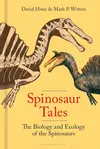
A solid informational book, that doesn't pointlessly meander and act as an autobiography for the authors.
Also provides good evidence to support their claims.
My biggest criticism is that they say some things are 'controversial' but disprove them with such ease, that it doesn't make much sense that anyone would believe the other view. This somewhat makes it feel like the other interpretations haven't been given a fair representation, since it makes little sense that someone would believe them when they can be discarded with such ease.
Witton's artwork is gorgeous, and really acts to add some interesting visuals for the reader to enjoy.
A solid informational book, that doesn't pointlessly meander and act as an autobiography for the authors.
Also provides good evidence to support their claims.
My biggest criticism is that they say some things are 'controversial' but disprove them with such ease, that it doesn't make much sense that anyone would believe the other view. This somewhat makes it feel like the other interpretations haven't been given a fair representation, since it makes little sense that someone would believe them when they can be discarded with such ease.
Witton's artwork is gorgeous, and really acts to add some interesting visuals for the reader to enjoy.


How did I find thi- it was gender role reversal themes again. What can I say, I'm a sucker for it!
This story takes place in an ill defined medieval/early-industrial wild west setting, that was just super fun to read about.
Some people have cited this as being a comedy. I wouldn't entirely agree, unless you're the type of arse who loves laughing at gender non-conformity. In a meta sense, it's definitely got satirical elements in it.
It makes use of tropes that are native to the classic romance genre, and I'm sure you could probably draw some lines connecting it to Charlotte Bronte books, or some other 19th century romance author. What makes these fun, is that they are very clearly leaned into.
The world building is pretty stellar, coming up with a social hierarchy that differs from our own, in a unique way that feels immersive and well thought out. It honestly leaves me wishing to read more of this world.
Gender roles are definitely the prevalent idea in this book, compared to something like The Cloud Roads, as our character is raised within this society, and is thus constrained by it's rules.
There was a very solid balance between character focus and plot focus, with the plot being quite engaging too.
I think it was a fun, somewhat campy read, and for that it was enjoyable. It didn't give me some paradigm shift, but it's too fun not to give a chance in my opinion. My only complaint was that it wasn't longer!
How did I find thi- it was gender role reversal themes again. What can I say, I'm a sucker for it!
This story takes place in an ill defined medieval/early-industrial wild west setting, that was just super fun to read about.
Some people have cited this as being a comedy. I wouldn't entirely agree, unless you're the type of arse who loves laughing at gender non-conformity. In a meta sense, it's definitely got satirical elements in it.
It makes use of tropes that are native to the classic romance genre, and I'm sure you could probably draw some lines connecting it to Charlotte Bronte books, or some other 19th century romance author. What makes these fun, is that they are very clearly leaned into.
The world building is pretty stellar, coming up with a social hierarchy that differs from our own, in a unique way that feels immersive and well thought out. It honestly leaves me wishing to read more of this world.
Gender roles are definitely the prevalent idea in this book, compared to something like The Cloud Roads, as our character is raised within this society, and is thus constrained by it's rules.
There was a very solid balance between character focus and plot focus, with the plot being quite engaging too.
I think it was a fun, somewhat campy read, and for that it was enjoyable. It didn't give me some paradigm shift, but it's too fun not to give a chance in my opinion. My only complaint was that it wasn't longer!

Extremely impressive book, with a very dark undertone. Orwell has a great way of conveying complex concepts and strong imagery in a very easy-to-understand and digestible way. This is an impressive feat for mid-20th century literature. It has a few segments that can be a real slog – looking at you Part 2: Chapter 9 – to get through, but overall it's a believable, engrossing, and bleak view from the perspective of a citizen in a dystopian society. If you want an entry point to begin with more classic works of literature, Orwell is probably a good bet due to his simple style of language and structure. Only took me 7 days to get through, with a negligible amount of breaks, due to the story being so investing. It's a bit of a slow burner however, the first ‘Part' definitely has the least amount of things going on, but it sets up the story well. Don't let it trick you into thinking it'll be boring.
It is a shame that it's been slightly co-opted by Right Wingers, who equate being told that they shouldn't say the N word, or that it's unpleasant to misgender someone, to a restriction on their free speech and not just people around them trying to behave like decent people?
I wouldn't recommend this if you struggle from depression, and it falls miles short in respect to feminist concepts being applied to female characters.
Extremely impressive book, with a very dark undertone. Orwell has a great way of conveying complex concepts and strong imagery in a very easy-to-understand and digestible way. This is an impressive feat for mid-20th century literature. It has a few segments that can be a real slog – looking at you Part 2: Chapter 9 – to get through, but overall it's a believable, engrossing, and bleak view from the perspective of a citizen in a dystopian society. If you want an entry point to begin with more classic works of literature, Orwell is probably a good bet due to his simple style of language and structure. Only took me 7 days to get through, with a negligible amount of breaks, due to the story being so investing. It's a bit of a slow burner however, the first ‘Part' definitely has the least amount of things going on, but it sets up the story well. Don't let it trick you into thinking it'll be boring.
It is a shame that it's been slightly co-opted by Right Wingers, who equate being told that they shouldn't say the N word, or that it's unpleasant to misgender someone, to a restriction on their free speech and not just people around them trying to behave like decent people?
I wouldn't recommend this if you struggle from depression, and it falls miles short in respect to feminist concepts being applied to female characters.
I came to this book knowing that it would explore matriarchal concepts, but it is so much richer as a text then that. It is about grief and mourning, about learning to see things from other people's perspectives, about choice and decisions and how they can effect your life, about growing up, about the power of the stories we pass down, about the importance of communication ,about what the truth is and the impact it can have and whether it should always be told...
That is not to say she did not pay attention in respect to the matriarchal elements; if anything her success is indicated in how encompassing yet invisible it remains, much like how patriarchy operates in modern society. The book does not focus primarily on the relationship between men and women, but on the relationships between Lisbeï and the people she encounters. It is first and foremost about her, and while men and their position in society do come up in her life, they are just another element in her life as she grows as a person–although she does interact with them more in certain parts of the book.
An impressive element of the book, is the translator's way of communicating Vonarburg's feminisation of the French language into English, a language free of grammatical gender. Words like “Visitors” becomes “Visitas”, or word order is changed from “Brothers and sisters” to “Sisters and brothers”. Much credit to Jane Brierley for such an elegant solution. Some words do remain completely unknown to me, and I'm unsure if that is because you just have to infer what it is even in the French version, or if it's a translation issue. On an unrelated note, please feel free to tell me what a ‘Pidge' is... Please also refrain from any Pokemon Go jokes.
The story-telling itself is slow, and deliberately tangential. This is not a plot driven story in which there are heroes, villains, and a journey to throw a ring into a volcano. It is the story of Lisbeï's life. The things that change her, what she learns, and who she ends up as a result. It was a slow read for me, and while tiring, was just so emotionally moving.
I'm unsure how popular this book is in French speaking countries, but I know that it is criminally underrated in English speaking ones. This book is long, and is difficult, but it is beautiful.
I came to this book knowing that it would explore matriarchal concepts, but it is so much richer as a text then that. It is about grief and mourning, about learning to see things from other people's perspectives, about choice and decisions and how they can effect your life, about growing up, about the power of the stories we pass down, about the importance of communication ,about what the truth is and the impact it can have and whether it should always be told...
That is not to say she did not pay attention in respect to the matriarchal elements; if anything her success is indicated in how encompassing yet invisible it remains, much like how patriarchy operates in modern society. The book does not focus primarily on the relationship between men and women, but on the relationships between Lisbeï and the people she encounters. It is first and foremost about her, and while men and their position in society do come up in her life, they are just another element in her life as she grows as a person–although she does interact with them more in certain parts of the book.
An impressive element of the book, is the translator's way of communicating Vonarburg's feminisation of the French language into English, a language free of grammatical gender. Words like “Visitors” becomes “Visitas”, or word order is changed from “Brothers and sisters” to “Sisters and brothers”. Much credit to Jane Brierley for such an elegant solution. Some words do remain completely unknown to me, and I'm unsure if that is because you just have to infer what it is even in the French version, or if it's a translation issue. On an unrelated note, please feel free to tell me what a ‘Pidge' is... Please also refrain from any Pokemon Go jokes.
The story-telling itself is slow, and deliberately tangential. This is not a plot driven story in which there are heroes, villains, and a journey to throw a ring into a volcano. It is the story of Lisbeï's life. The things that change her, what she learns, and who she ends up as a result. It was a slow read for me, and while tiring, was just so emotionally moving.
I'm unsure how popular this book is in French speaking countries, but I know that it is criminally underrated in English speaking ones. This book is long, and is difficult, but it is beautiful.
This was one of the most difficult books I've had to read through in a bit, especially in the middle. I think it hit me in some particularly personal spots, that made me relate to the protagonist quite heavily.
Before I get in fully though, I need to make this clear: This book contains racism, as in the protagonist is racist. On a few occasions slurs are used, and in one scenario she makes some terrible remarks about a black man. However, I did see a post about how this fact made it not worth reading, and I have to disagree. This book does an incredible job at portraying mental health issues, and a tantalising look into the life of a woman dealing with societal expectations of the 60s, many of which still exist today.
The book feels not dissimilar to ‘The Yellow Wallpaper' as they both portray a woman's descent into madness, caused as a product of misogynistic societal expectations of femininity and perfection.
It reminded me a little of Toni Morrison's works, in the way it is written. I honestly couldn't describe quite how they are, but I'd hazard a guess it's due to the poetic reliance on metaphors to describe the external and internal environment of the speaker alike.
I think the character also feels very real. Esther Greenwood is often unlikable, and in very relatable ways for most people. She is judgemental, cruel, and hypocritical. She is also overwhelmed by people's expectations of her–many of which she has no desire to fit–, looking for a reason for why she feels the way she does, never truly completed her journey with grief, and has to deal with constant misogyny that reduces her down to her biology. For these reasons, she feels extremely complicated, and it makes her much easier to empathise with.
I have to say, the lack of annotated versions of this book, or even ones with a simple introduction is a travesty. Plath's life deserves to be acknowledged at the start of this work, because it is incredibly useful context for the book. You can enjoy it just fine without having read it before hand, just as I did, but it adds new layers to what you're reading when you have that awareness.
This book's impact on you, depends greatly on what kind of person you are. It was a real challenge for me to get through, but I've also seen some people in recovery from depression say that it helped them feel less alone. I think this is best saved for when you are feeling decent, but I think this book will probably resonate strongest with women, and the depressed.
This was one of the most difficult books I've had to read through in a bit, especially in the middle. I think it hit me in some particularly personal spots, that made me relate to the protagonist quite heavily.
Before I get in fully though, I need to make this clear: This book contains racism, as in the protagonist is racist. On a few occasions slurs are used, and in one scenario she makes some terrible remarks about a black man. However, I did see a post about how this fact made it not worth reading, and I have to disagree. This book does an incredible job at portraying mental health issues, and a tantalising look into the life of a woman dealing with societal expectations of the 60s, many of which still exist today.
The book feels not dissimilar to ‘The Yellow Wallpaper' as they both portray a woman's descent into madness, caused as a product of misogynistic societal expectations of femininity and perfection.
It reminded me a little of Toni Morrison's works, in the way it is written. I honestly couldn't describe quite how they are, but I'd hazard a guess it's due to the poetic reliance on metaphors to describe the external and internal environment of the speaker alike.
I think the character also feels very real. Esther Greenwood is often unlikable, and in very relatable ways for most people. She is judgemental, cruel, and hypocritical. She is also overwhelmed by people's expectations of her–many of which she has no desire to fit–, looking for a reason for why she feels the way she does, never truly completed her journey with grief, and has to deal with constant misogyny that reduces her down to her biology. For these reasons, she feels extremely complicated, and it makes her much easier to empathise with.
I have to say, the lack of annotated versions of this book, or even ones with a simple introduction is a travesty. Plath's life deserves to be acknowledged at the start of this work, because it is incredibly useful context for the book. You can enjoy it just fine without having read it before hand, just as I did, but it adds new layers to what you're reading when you have that awareness.
This book's impact on you, depends greatly on what kind of person you are. It was a real challenge for me to get through, but I've also seen some people in recovery from depression say that it helped them feel less alone. I think this is best saved for when you are feeling decent, but I think this book will probably resonate strongest with women, and the depressed.

How Bram Stoker presumably looked at this book and thought to himself:
“What if I wrote something like this, but I made it boring, long, and shite.” Is a confounding question that may never be answered.
Camilla recognises both the interesting nature of the vampire, and the simple story it's using to tell you of the creature. It doesn't spend pages and pages arduously explaining pointless details, and it recognises that to keep an air of mystery, you don't make your reader know everything about the villain in the first four chapters!
I wouldn't say this book is outstanding or anything, but it's a really enjoyable read, and it keeps an air of mystery going even when you're aware of what ‘Carmilla' is.
The fact that this has lower stars than Dracula is genuinely shocking.
Edit: After my most recent re-read, I've had to bring this down to a 3½. While I still adore this book, the ending is seriously anti-climactic and a bit of an exposition dump. A shame, but the book is still worth reading.
How Bram Stoker presumably looked at this book and thought to himself:
“What if I wrote something like this, but I made it boring, long, and shite.” Is a confounding question that may never be answered.
Camilla recognises both the interesting nature of the vampire, and the simple story it's using to tell you of the creature. It doesn't spend pages and pages arduously explaining pointless details, and it recognises that to keep an air of mystery, you don't make your reader know everything about the villain in the first four chapters!
I wouldn't say this book is outstanding or anything, but it's a really enjoyable read, and it keeps an air of mystery going even when you're aware of what ‘Carmilla' is.
The fact that this has lower stars than Dracula is genuinely shocking.
Edit: After my most recent re-read, I've had to bring this down to a 3½. While I still adore this book, the ending is seriously anti-climactic and a bit of an exposition dump. A shame, but the book is still worth reading.

I'm pretty confident in saying this is the weakest in the trilogy, but it still holds up really well. The character development reaches a really satisfying conclusion, with a lot of loose ends being tied up in a neat bow.
The reason I think it's the weakest of the two, is really only a couple of things.
1. The dialogue feels very modern. This was somewhat the case for the other books, but this one I noticed it more in. I enjoy the way it provides commentary on our modern day politics, but I sometimes find it hard to see it in the context of the book, due to the language being used to describe certain things.
2. Luken begins to feel like a bit of a Gary Stu. It feels like some things fall into place without much work having to be done by him, or him being fortunate for some things coincidentally lining up. His revenge on Koko bothered me, because by making it retaliatory in the way that it was, it turns Luken into the good guy, when it could have been an interesting moral dilemma.
The world building becomes a little more background-ish, and I found it unsatisfying how little Jez was in the story.
I'm pretty confident in saying this is the weakest in the trilogy, but it still holds up really well. The character development reaches a really satisfying conclusion, with a lot of loose ends being tied up in a neat bow.
The reason I think it's the weakest of the two, is really only a couple of things.
1. The dialogue feels very modern. This was somewhat the case for the other books, but this one I noticed it more in. I enjoy the way it provides commentary on our modern day politics, but I sometimes find it hard to see it in the context of the book, due to the language being used to describe certain things.
2. Luken begins to feel like a bit of a Gary Stu. It feels like some things fall into place without much work having to be done by him, or him being fortunate for some things coincidentally lining up. His revenge on Koko bothered me, because by making it retaliatory in the way that it was, it turns Luken into the good guy, when it could have been an interesting moral dilemma.
The world building becomes a little more background-ish, and I found it unsatisfying how little Jez was in the story.


Added to listMy Favouriteswith 4 books.


Holy roly poly in a scoop of guacamole. I'm not entirely sure what happened here.
This was probably my second favourite in the series, only losing to Siren Depths (It seems me and the GoodReads reviews are in agreement here). This story starts out solid, being a very succinct continuation to it's predecessor ‘Edge of Worlds', and then it begins it's decline...
One thing that feels like a boon to the book, is that Moon becomes one of many perspectives. He doesn't feel quite as focussed on–although that somewhat remains–and allows us a look at more parts of the world. It doesn't feel like it revolves around him as much. This book doing that, made me realise how much more that would've happened in the prior books.
There's this incredibly well done part, where following the chapter where we learn about the weapons ability to kill all the Raksura, we cut to Frost trying to be a grown up queen in the court, and having an important milestone reached by her attending her first meeting. It's both an adorable and heart-wrenching “think of the children” moment, and the juxtaposition was incredibly powerful. It is for that reason why I'm so confused as to why we didn't get more of those scenes! Instead just Moon vaguely thinking about “The Reaches”. More scenes of child Raksura just being children would've raised the stakes massively and increased our resentment for the villains even more.
I want to say before writing this, that there are plenty of positives however, having just left the Three Worlds, the negatives are more prevalent in my mind due to the ending.
One source of annoyance in this book, was the imagery. I don't know if it was me, but it felt much harder to imagine the locations here, because so many new spots were introduced in such rapid succession. I'd imagine this is to sell the “ticking time bomb” vibe that is trying to be conveyed–and that is done successfully–but it still leads to a much less textured reading experience than the other books.
The ending is where this all comes apart at the seams. What actually happened? 300 pages of this book are of the main plot line, and then the last 100 pages feel like an entire other book that was squished into the ending here. Song's death is barely even considered, and Root's grief is not even mentioned. Jade and Moon manage to sort out an emotional gap between them, that feels like it could be a drama saved for a 6th book, in about 4 pages.
Verdoin, this character we had so much time built up to as a truly deceptive and sociopathic arsehole, is suddenly just removed as the primary antagonist. Suddenly it's this random other Hian who we don't know or care about, and hardly has a personality–I don't even remember her name–and it just feels like a clumsy attempt to make an explanation on how the Raksura know how to disable the machine, and to tie up the end with a convenient bow by having a corroborating witness. It might honestly just be proof of a bit of failed planning, because even if Verdoin had stayed the villain, her willingness to use the machine that would've killed her wouldn't line up with her selfish personality.
On the topic of characters. These books just have too many to be impactful. Some characters benefit from being returning characters from other books, but generally if a new character is introduced as and occupies any role other than a main character, the legwork is just not put into making them into fleshed out beings that you can connect fully to. The cast is colossal, and books simply don't focus enough on them to make them feel like anything other than cannon fodder. Song's death is the most apt example of this for sure. When she died, I kinda just went, “Who?”
Wells pretty much never kills off her darlings, and it somewhat reduces the tension. This honestly felt like a book where some of our protagonists should've died. I think Stone would've been a logical choice, as an end of life sacrifice sorta thing.
Moon's children continue to just be sorta forgotten about, as in the last book, and it just makes you wonder how much he actually cares about them.
The Fell attack on the Reaches is just really convenient. It feels like a flimsy device to say why the others can't go off to try and help prevent the Hians and have to stay in the Reaches.
The Weapon is just not explained because Forerunners, I guess? It can just do what the plot demands of it at any given time. It has a real Deus Ex Machina (or Machina Ex Deus?) feeling to it.
Chime's transformation and new magic abilities, while able to be of actual use, are never explained. Still. I held off complaining about this in all the other reviews, but even in this finale, it isn't even addressed. At all.
The Half-Fell Queen and her flight don't even get close to a good enough exploration. Their moral implications are barely looked into, and their relationship with the Raksura remains essentially stagnant throughout. It feels like absolutely wasted potential if you ask me. Kethel and Moon sorta get to have a rudimentary alliance, but it barely goes beyond that.
I think the series was worth reading, and it's still firmly in my favourites I've read, accounting for all it's issues, just for the sheer uniqueness and fun quality it has. I don't think this ending spoiled it entirely. If nothing else, the first 3 books definitely work as their own thing, and you could probably get away with pretending these 2 didn't happen if you really disliked them that much.
The feeling I get from this book is 1 of 2 things happened:
1. The publishers told Wells it needed to be shorter, or maybe they weren't willing to take another book deal because the others hadn't sold quite as well, so she had to condense what was going to be another trilogy into a duology.
2. Wells grew fed up with writing about the Three Worlds after almost a decade, and just decided she wanted to hurry up and finish, without leaving fans on too much of a cliff-hanger. Perhaps writing such a long book after the relatively shorter lengths of the others left her drained and fed up with the universe as a whole.
I have no evidence for either of these, but it's the only way I can come up with a reason for what happened with this ending, because the other 4 books have proven Martha Wells is able to write a compelling and decently paced story, even if the characters themselves could do with a little fleshing out and work. I'd say the plot tends to be the most solid part of Wells writing most of the time, actually. It baffles me that it struggles so much here.
This is only getting 3/5 instead of 2/5 because it still managed to keep me hooked enough to finish in 3 days. That's an achievement.
Holy roly poly in a scoop of guacamole. I'm not entirely sure what happened here.
This was probably my second favourite in the series, only losing to Siren Depths (It seems me and the GoodReads reviews are in agreement here). This story starts out solid, being a very succinct continuation to it's predecessor ‘Edge of Worlds', and then it begins it's decline...
One thing that feels like a boon to the book, is that Moon becomes one of many perspectives. He doesn't feel quite as focussed on–although that somewhat remains–and allows us a look at more parts of the world. It doesn't feel like it revolves around him as much. This book doing that, made me realise how much more that would've happened in the prior books.
There's this incredibly well done part, where following the chapter where we learn about the weapons ability to kill all the Raksura, we cut to Frost trying to be a grown up queen in the court, and having an important milestone reached by her attending her first meeting. It's both an adorable and heart-wrenching “think of the children” moment, and the juxtaposition was incredibly powerful. It is for that reason why I'm so confused as to why we didn't get more of those scenes! Instead just Moon vaguely thinking about “The Reaches”. More scenes of child Raksura just being children would've raised the stakes massively and increased our resentment for the villains even more.
I want to say before writing this, that there are plenty of positives however, having just left the Three Worlds, the negatives are more prevalent in my mind due to the ending.
One source of annoyance in this book, was the imagery. I don't know if it was me, but it felt much harder to imagine the locations here, because so many new spots were introduced in such rapid succession. I'd imagine this is to sell the “ticking time bomb” vibe that is trying to be conveyed–and that is done successfully–but it still leads to a much less textured reading experience than the other books.
The ending is where this all comes apart at the seams. What actually happened? 300 pages of this book are of the main plot line, and then the last 100 pages feel like an entire other book that was squished into the ending here. Song's death is barely even considered, and Root's grief is not even mentioned. Jade and Moon manage to sort out an emotional gap between them, that feels like it could be a drama saved for a 6th book, in about 4 pages.
Verdoin, this character we had so much time built up to as a truly deceptive and sociopathic arsehole, is suddenly just removed as the primary antagonist. Suddenly it's this random other Hian who we don't know or care about, and hardly has a personality–I don't even remember her name–and it just feels like a clumsy attempt to make an explanation on how the Raksura know how to disable the machine, and to tie up the end with a convenient bow by having a corroborating witness. It might honestly just be proof of a bit of failed planning, because even if Verdoin had stayed the villain, her willingness to use the machine that would've killed her wouldn't line up with her selfish personality.
On the topic of characters. These books just have too many to be impactful. Some characters benefit from being returning characters from other books, but generally if a new character is introduced as and occupies any role other than a main character, the legwork is just not put into making them into fleshed out beings that you can connect fully to. The cast is colossal, and books simply don't focus enough on them to make them feel like anything other than cannon fodder. Song's death is the most apt example of this for sure. When she died, I kinda just went, “Who?”
Wells pretty much never kills off her darlings, and it somewhat reduces the tension. This honestly felt like a book where some of our protagonists should've died. I think Stone would've been a logical choice, as an end of life sacrifice sorta thing.
Moon's children continue to just be sorta forgotten about, as in the last book, and it just makes you wonder how much he actually cares about them.
The Fell attack on the Reaches is just really convenient. It feels like a flimsy device to say why the others can't go off to try and help prevent the Hians and have to stay in the Reaches.
The Weapon is just not explained because Forerunners, I guess? It can just do what the plot demands of it at any given time. It has a real Deus Ex Machina (or Machina Ex Deus?) feeling to it.
Chime's transformation and new magic abilities, while able to be of actual use, are never explained. Still. I held off complaining about this in all the other reviews, but even in this finale, it isn't even addressed. At all.
The Half-Fell Queen and her flight don't even get close to a good enough exploration. Their moral implications are barely looked into, and their relationship with the Raksura remains essentially stagnant throughout. It feels like absolutely wasted potential if you ask me. Kethel and Moon sorta get to have a rudimentary alliance, but it barely goes beyond that.
I think the series was worth reading, and it's still firmly in my favourites I've read, accounting for all it's issues, just for the sheer uniqueness and fun quality it has. I don't think this ending spoiled it entirely. If nothing else, the first 3 books definitely work as their own thing, and you could probably get away with pretending these 2 didn't happen if you really disliked them that much.
The feeling I get from this book is 1 of 2 things happened:
1. The publishers told Wells it needed to be shorter, or maybe they weren't willing to take another book deal because the others hadn't sold quite as well, so she had to condense what was going to be another trilogy into a duology.
2. Wells grew fed up with writing about the Three Worlds after almost a decade, and just decided she wanted to hurry up and finish, without leaving fans on too much of a cliff-hanger. Perhaps writing such a long book after the relatively shorter lengths of the others left her drained and fed up with the universe as a whole.
I have no evidence for either of these, but it's the only way I can come up with a reason for what happened with this ending, because the other 4 books have proven Martha Wells is able to write a compelling and decently paced story, even if the characters themselves could do with a little fleshing out and work. I'd say the plot tends to be the most solid part of Wells writing most of the time, actually. It baffles me that it struggles so much here.
This is only getting 3/5 instead of 2/5 because it still managed to keep me hooked enough to finish in 3 days. That's an achievement.
This book was the first that's gotten me properly engaged in a while.
Of all the books I've read that dabble in Gender Role Reversal (GRR) dynamics, this easily has the most interesting take. Egalia's Daughters exists to be a satire of our current society, its story existing as a vehicle to make a point about the real world. A Brother's Price tells a traditional bodice-ripper tale, with the GRR being an interesting twist and set dressing, but it falls into the idea that it must justify itself via the women-outnumbering-men thing (not to say this isn't handled in a great way), which falls into the idea that society could only have formed in a patriarchal way. Veil of Sighs rejects this and provides a world fundamentally the same as our own, but society has simply formed to benefit women instead of men. It doesn't feel the need to weaken men physically, because their physical strength is nothing compared to the political power of the women.
The character development of Luken is incredibly satisfying to witness, and it doesn't stagnate at any point. The whole plot flows wonderfully and uses its 300 pages to its maximum potential to tell a compelling story that takes place over a long period, but perhaps could've used more pages for other things.
I only have a few complaints. I wasn't a fan of the occasional glimpses into the future when describing environs (“Luken would remember the sunset long into his later years,” etc.) because it kind of pulls you out of the moment. It reminds you you're reading fiction and that the whole story is on rails.
The descriptions feel crammed in occasionally when they could've been spaced out to feel less overwhelming. The initial introduction to The Abode is a good example. I would've liked more imagery altogether. Maybe this is a cultural thing, but I have no clue what an Ando is after reading this (and Googling it), and it makes me wonder if it would've been better to have just been a dress, because I couldn't imagine it as anything else.
From time to time, our third person stops narrating things from Luken's interpretation to give what feel like author notes, which sometimes feel a little self-gratifying. When Isuan remembers Luken's family but not his name, the narrator explicitly points this out, and it feels like Obern trying to prove how smart they are, which I'm not a fan of. It happens a few more times here and there, and I'd much rather these things be left to interpretation.
Finally, the world-building. I hope we'll see more of the world as we go, because this book was very confined to the sphere of nobility. The concepts that the book proposes are amazing, but I'd love to see how these gender roles are represented in the peasantry — we really don't get to see much of the lower classes, despite them being mentioned frequently enough.
A minor aside that had no bearing on the review: I'm unsure if August Books are a publisher or printer, so I'll say that if this didn't have an editor, the author did a great job working out a lot of typos, and I think it would be unreasonable to imagine it being any better for a one-person job. If there was an editor, then they did a poor job, and I hope Obern didn't pay too much for their services.
TL;DR: great book with some minor hiccoughs. Can't wait to read the next one!
This book was the first that's gotten me properly engaged in a while.
Of all the books I've read that dabble in Gender Role Reversal (GRR) dynamics, this easily has the most interesting take. Egalia's Daughters exists to be a satire of our current society, its story existing as a vehicle to make a point about the real world. A Brother's Price tells a traditional bodice-ripper tale, with the GRR being an interesting twist and set dressing, but it falls into the idea that it must justify itself via the women-outnumbering-men thing (not to say this isn't handled in a great way), which falls into the idea that society could only have formed in a patriarchal way. Veil of Sighs rejects this and provides a world fundamentally the same as our own, but society has simply formed to benefit women instead of men. It doesn't feel the need to weaken men physically, because their physical strength is nothing compared to the political power of the women.
The character development of Luken is incredibly satisfying to witness, and it doesn't stagnate at any point. The whole plot flows wonderfully and uses its 300 pages to its maximum potential to tell a compelling story that takes place over a long period, but perhaps could've used more pages for other things.
I only have a few complaints. I wasn't a fan of the occasional glimpses into the future when describing environs (“Luken would remember the sunset long into his later years,” etc.) because it kind of pulls you out of the moment. It reminds you you're reading fiction and that the whole story is on rails.
The descriptions feel crammed in occasionally when they could've been spaced out to feel less overwhelming. The initial introduction to The Abode is a good example. I would've liked more imagery altogether. Maybe this is a cultural thing, but I have no clue what an Ando is after reading this (and Googling it), and it makes me wonder if it would've been better to have just been a dress, because I couldn't imagine it as anything else.
From time to time, our third person stops narrating things from Luken's interpretation to give what feel like author notes, which sometimes feel a little self-gratifying. When Isuan remembers Luken's family but not his name, the narrator explicitly points this out, and it feels like Obern trying to prove how smart they are, which I'm not a fan of. It happens a few more times here and there, and I'd much rather these things be left to interpretation.
Finally, the world-building. I hope we'll see more of the world as we go, because this book was very confined to the sphere of nobility. The concepts that the book proposes are amazing, but I'd love to see how these gender roles are represented in the peasantry — we really don't get to see much of the lower classes, despite them being mentioned frequently enough.
A minor aside that had no bearing on the review: I'm unsure if August Books are a publisher or printer, so I'll say that if this didn't have an editor, the author did a great job working out a lot of typos, and I think it would be unreasonable to imagine it being any better for a one-person job. If there was an editor, then they did a poor job, and I hope Obern didn't pay too much for their services.
TL;DR: great book with some minor hiccoughs. Can't wait to read the next one!

This is a really solid book, and I'm glad to have it added to my collection of Gender Role Reversed books. It perhaps takes the crown as the best one. It's like it's made up of all the little pieces of the others, and blended them cohesively.
It has the Sci-Fi power dynamics of "The Power"; "Egalia's Daughters" satirical, yet draining, reversed society; Wen Spencer's fantastical whimsey and world-building. All these in a single novel. It's a heavy read, but it's easy to get invested. It even made me reconsider the complexities that Muslim women must experience when considering their own relationships with their family, society, and home.
The scenery and location is unique, painted expertly with vivid imagery, and the book even has a layered linguistic element. I feel it does a stronger job than Egalia's Daughters, by virtue of the story existing not solely for the point of social commentary. I still feel like Wood wanted to tell me a story of her own, and the social critique is a part of that greater whole.
The story is mostly character driven, so if you're partial to a plot driven novel, it likely won't be for you. It falls into the old tradition of Sci-Fi being used as a method of social critique and challenging norms, rather than as a mere aesthetic decision.
My only strong criticisms of this tale, is that the pacing sometimes feels odd due to the long time-span it covers, and that sometimes the protagonist feels a little bit too lucky in multiple occasions.
This is a really solid book, and I'm glad to have it added to my collection of Gender Role Reversed books. It perhaps takes the crown as the best one. It's like it's made up of all the little pieces of the others, and blended them cohesively.
It has the Sci-Fi power dynamics of "The Power"; "Egalia's Daughters" satirical, yet draining, reversed society; Wen Spencer's fantastical whimsey and world-building. All these in a single novel. It's a heavy read, but it's easy to get invested. It even made me reconsider the complexities that Muslim women must experience when considering their own relationships with their family, society, and home.
The scenery and location is unique, painted expertly with vivid imagery, and the book even has a layered linguistic element. I feel it does a stronger job than Egalia's Daughters, by virtue of the story existing not solely for the point of social commentary. I still feel like Wood wanted to tell me a story of her own, and the social critique is a part of that greater whole.
The story is mostly character driven, so if you're partial to a plot driven novel, it likely won't be for you. It falls into the old tradition of Sci-Fi being used as a method of social critique and challenging norms, rather than as a mere aesthetic decision.
My only strong criticisms of this tale, is that the pacing sometimes feels odd due to the long time-span it covers, and that sometimes the protagonist feels a little bit too lucky in multiple occasions.