
Blue


🎵 Yo ho, yo ho, a pirate's life for me. 🎵
I was doing a marathon of the Pirates of the Caribbean movies, and when I got to On Stranger Tides, I was surprised to learn that it was based on a book--<i>this</i> book.
I actually haven’t heard of this novel, even though it’s a classic and winner of multiple awards. It’s inspired more than Pirates of the Caribbean; the classic point-and-click games from Lucasfilm, Monkey Island, were also inspired by Tim Powers’ fantasy story (according to Wikipedia, at least). After learning about this, I wanted to read it first before watching the movie. I didn’t know what to expect, to be honest. The only thing I knew about the story inside was what the official blurb told me. A complete blind dive into this book.
It was a delight through and through!
I was expecting a fun and solid adventure, and that's what I got! I didn't expect to be so enthralled with the adventure and even with the characters. I mean, some parts even got me a little emotional, and I was so surprised when it happened. It was a case of where I didn't even see it coming. I was listening to the story on the audiobook, nodding along and thinking "yes, this is all quite interesting. This is pretty fun to listen to." I wasn't expecting to get as emotionally invested as I did. Until the very last seconds of the book, I was on the edge of my seat and listening intently, begging and hoping that Jack and Beth would make it out okay.
The story has a great progression; it started as what you'd expect for a typical sea-faring excursion and then ramped it up with fantastical elements. I saw the skeleton pirate on the front of the first edition cover and was intrigued. When the heck does that come into play in this book, which seems like a jaunty old tale of a crew of misfits sailing the seven seas? And then when it did start happening...how exhilarating! The atmosphere, the tension, it all made for excellent listening. This book has all the great aspects of a good adventure story: action, thrills, a helping of magic, and a dash of romance.
I very much respect Powers' prose, too. His imagery was excellent; even listening to it painted such vivid pictures for me. The scene in the jungle...I won't say any more, but one of my favorite parts of the story. Incredibly chilling, creeped me out at certain points.
I have a huge soft spot for anything with a touch of whimsy in it, and On Stranger Tides is no exception. My favorite part is that there are a couple of points in the story that are borderline ridiculous, but because Powers still gives them weight, they don't come off as contrived or something made for simply a throwaway gag. There's a part with some puppet strings and an old magician...once again, I will not spoil it. But if you know, you know. It was equal parts hilarious and exciting.
Overall, the book is the hallmark of a classic adventure. I can see why it's been seen as a significant source of inspiration. "Fun" describes this book perfectly, in my opinion. If I have any complaints, it's that I do wish we learned a bit more about Elizabeth Hurwood, to get the same kind of devotion towards her that Jack does. There are things to admire about her, but in a book where a lot of characters get the chance to open up about their backgrounds, Beth was conspicuously blank to me. Admittedly, there are things in this book that I think haven't aged well. Some of the descriptors of the black characters in the book were a little weird. They're not outwardly malicious, and I would hesitate to say outright racist. With a little acknowledgment and introspection, it doesn't detract too much. Perhaps you could make the argument that because this book is set in the 1700s, it reflects the attitudes of the people during those days. And honestly, none of the black characters from what I remember are outright slaves and tend to be treated as equals to everyone else (if made fun of, but once again, they're not the only ones). One of these black characters I found to be a compelling character in his own right, and for a book set in the 1700s, I think that's neat!
Honestly, my biggest complaint comes from the audiobook reading of it. It was mostly fine, but some of the voices that the narrator did were very grating. Sure, it was immersive, but having to hear a screechy falsetto or hearing him anytime Shanks spoke wasn't a pleasant listening experience.
But a very, very fun book. Now, I'm a little sad. I feel like I made a mistake reading this book before watching the corresponding Pirates of the Caribbean movie. I'm sure I'll like the book much more and the movie much less.
🎵 Yo ho, yo ho, a pirate's life for me. 🎵
I was doing a marathon of the Pirates of the Caribbean movies, and when I got to On Stranger Tides, I was surprised to learn that it was based on a book--<i>this</i> book.
I actually haven’t heard of this novel, even though it’s a classic and winner of multiple awards. It’s inspired more than Pirates of the Caribbean; the classic point-and-click games from Lucasfilm, Monkey Island, were also inspired by Tim Powers’ fantasy story (according to Wikipedia, at least). After learning about this, I wanted to read it first before watching the movie. I didn’t know what to expect, to be honest. The only thing I knew about the story inside was what the official blurb told me. A complete blind dive into this book.
It was a delight through and through!
I was expecting a fun and solid adventure, and that's what I got! I didn't expect to be so enthralled with the adventure and even with the characters. I mean, some parts even got me a little emotional, and I was so surprised when it happened. It was a case of where I didn't even see it coming. I was listening to the story on the audiobook, nodding along and thinking "yes, this is all quite interesting. This is pretty fun to listen to." I wasn't expecting to get as emotionally invested as I did. Until the very last seconds of the book, I was on the edge of my seat and listening intently, begging and hoping that Jack and Beth would make it out okay.
The story has a great progression; it started as what you'd expect for a typical sea-faring excursion and then ramped it up with fantastical elements. I saw the skeleton pirate on the front of the first edition cover and was intrigued. When the heck does that come into play in this book, which seems like a jaunty old tale of a crew of misfits sailing the seven seas? And then when it did start happening...how exhilarating! The atmosphere, the tension, it all made for excellent listening. This book has all the great aspects of a good adventure story: action, thrills, a helping of magic, and a dash of romance.
I very much respect Powers' prose, too. His imagery was excellent; even listening to it painted such vivid pictures for me. The scene in the jungle...I won't say any more, but one of my favorite parts of the story. Incredibly chilling, creeped me out at certain points.
I have a huge soft spot for anything with a touch of whimsy in it, and On Stranger Tides is no exception. My favorite part is that there are a couple of points in the story that are borderline ridiculous, but because Powers still gives them weight, they don't come off as contrived or something made for simply a throwaway gag. There's a part with some puppet strings and an old magician...once again, I will not spoil it. But if you know, you know. It was equal parts hilarious and exciting.
Overall, the book is the hallmark of a classic adventure. I can see why it's been seen as a significant source of inspiration. "Fun" describes this book perfectly, in my opinion. If I have any complaints, it's that I do wish we learned a bit more about Elizabeth Hurwood, to get the same kind of devotion towards her that Jack does. There are things to admire about her, but in a book where a lot of characters get the chance to open up about their backgrounds, Beth was conspicuously blank to me. Admittedly, there are things in this book that I think haven't aged well. Some of the descriptors of the black characters in the book were a little weird. They're not outwardly malicious, and I would hesitate to say outright racist. With a little acknowledgment and introspection, it doesn't detract too much. Perhaps you could make the argument that because this book is set in the 1700s, it reflects the attitudes of the people during those days. And honestly, none of the black characters from what I remember are outright slaves and tend to be treated as equals to everyone else (if made fun of, but once again, they're not the only ones). One of these black characters I found to be a compelling character in his own right, and for a book set in the 1700s, I think that's neat!
Honestly, my biggest complaint comes from the audiobook reading of it. It was mostly fine, but some of the voices that the narrator did were very grating. Sure, it was immersive, but having to hear a screechy falsetto or hearing him anytime Shanks spoke wasn't a pleasant listening experience.
But a very, very fun book. Now, I'm a little sad. I feel like I made a mistake reading this book before watching the corresponding Pirates of the Caribbean movie. I'm sure I'll like the book much more and the movie much less.

“When you share pain, there’s less of it, and when you share joy, there’s more of it. That’s a basic fact of the universe, and I learned it here. I’ve seen it work honest-to-God miracles.”
---------------
Let me start off by saying that the Foreword—or I suppose as the author writes it, the Backward—of this book made me cry.
No, it really did. I can’t remember the last time a book made me cry. It has happened before in the past, but it’s been such a long time that I can’t quite remember. It’s interesting too because, well, it wasn’t even the story itself. It was some meta-commentary the author was writing about his stories years after they were first published. But his words were just so…profound. It touched upon the themes of Callahan’s saloon: camaraderie, the human condition, the inevitability of every human life, and the enduring infinity of love in the face of that mortality. It has given me a quote that has since become on my favorites:
Shared joy is increased; shared pain is lessened.
I start off with this little anecdote because I feel it really set the tone for the rest of my reading experience. It was a wild kind of ride, but I enjoyed it. Even more rare for me to say, this is the kind of book that gave me something after I put it down, and I’m grateful for it.
Callahan’s Crosstime Saloon is a series of short stories all revolving around the titular bar. There are recurring characters (such as the bar owner, Mike Callahan) and a couple of others, along with the strange customs that the patrons all practice. The stories center around strange characters coming into the bar, telling their stories or their predicaments, and then the collective forces of Callahan and the bar patrons help the person out in some way or give them something to reflect on in the midst of their journey. The people come from all walks of speculative life: time travelers, telepaths, emissaries from Mars…but wherever they come from and whatever their ailment, the stories all have one thing in common: the beautiful, sometimes painful, but all-encompassing force of companionship over a pint.
As a side note, the stories are very loosely connected with one another, so they are ones you want to read in order. It’s mostly references to events that happened in other stories or recurring characters that come back. I read these stories in the book The Callahan Chronicles, which I recommend as it collects the stories together in chronological order.
When I first began reading this book? I was utterly disappointed, despite the way the Foreword/Backward affected me.
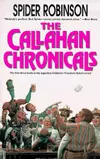
This book first caught my attention by the cover. Despite being a Millenial, I have this weird soft spot for old, pulpy science fiction novels of the 50s to 80s, despite all the problems that they contain. I can’t quite put my finger on why. Maybe because they have this sort of fun camp that newer sci-fi doesn’t have? Maybe I just like how weird they get, and how much they stand out? Whatever the reason, when I saw the cover of the particular edition that caught my eye, that’s what I expected. The artwork showed a jolly human passing off classic mugs of beer to a crowd of colorful characters, aliens that looked right at home in the Star Wars cantina scene or from Wayne Barlowe’s Guide to Extraterrestrials artbook. This is the kind of premise I expected when I began to read. A bunch of crazy, kind of goofy aliens all coming together to drink and share their tales from across the galaxy in a very lighthearted and fun premise.
That’s maybe half of what you get. Yes, you got aliens and time-travelers and all sorts of fantastical people coming into this bar to share their tales, but it’s all very…grounded. They share stories, but they’re grounded in the experience of living and being alive. This wasn’t what I signed up for, and I admit to feeling quite disappointed. It reminded me of this time I signed up for a speculative fiction class in community college, expecting to read stories that involved spaceships and aliens and hiveminds but it was mostly stories of things like…a man struggling with divorce and his car just happens to float. Or a boy experiencing the pains of growing up out of childhood while the speculative worldbuilding is just a little dressing on top of the real focus: the interpersonal drama of it all.
But the more I got into it…the more I got hooked. Before I knew it, the story had grabbed me by the heartstrings and kept me there.
The speculative fiction is really just a topping, a sprig of parsley on the main dish. The stories may talk about time travel, or about aliens, or about people having to contend to immortality, but the way I see it, that’s not what the stories are about. They’re really about life. They’re about pain, joy, loss, love, solitude, companionship…about all the things that make us who we are, about what makes us human.
Robinson’s writing style makes it more effective. The writing is colloquial, filled with references of past decades I didn’t live through. People talk in heavy slang and with vocal tics that took me fifty pages to parse out. Half of these references flew over my head, so I had only the base familiarity with it and could hardly connect with it. Yes, I recognize the name Spiro Agnew. Could I tell you a damn thing about what it was like to witness him in American society? No, I couldn’t, because I wasn’t alive back then, not even close.
A big recurring part of the stories is that the characters often partake in puns, so mixed in with all of this, there’s wordplay. Here’s just a tiny, small example from the story The Wonderful Conspiracy:
Long-Drink got up and walked to the chalk line, and I assumed he wanted to give Doc's stinker the honor of a formal throw. I should have known he was setting us up. He toed the mark, an- nounced, "To the poor corpuscle," drained his glass, and waited.
The Doc had reflexively drained the fresh glass Callahan had already supplied unasked—Doc will drink to anything, sight unseen—but he paused with his arm in midthrow. "Wait a minute," he said. "Why the hell should I drink to 'the poor corpuscle'?"
"He labors in vein," Long-Drink said simply.
"Ah yes," I said without missing a beat, "but he vessels vhile he vorks."
"Plasma soul," exclaimed Callahan.
The Doc's eyes got round and his jaw hung down. "By God," he said at last, "I've never been outpunned by you rummies yet, and I'm not about to go down on medical puns. As a doctor I happen to know for certain there's only one other blood pun—I got it straight from the Auricle of Delphi."
I can tell you right now, I have been speaking American English for almost thirty years, and this passage made maybe 7% sense to me when I first read it.
Even though I struggled with the writing, at the same time, it flowed. It’s hard to explain. Even though I couldn’t get half the allusions or had to really work through some of the accents and wordplay, after a while, I found myself doing less of that and simply letting the story wash over you. Robinson nailed the narrator’s voice down and perfectly captured the vibe of somebody telling you this over a pint. I can imagine myself sitting in Callahan’s saloon right now, listening to the narrator telling me these stories in his own words. Even if you don’t understand the meaning exactly, you can feel it.
That was true for every character who was the subject of the story. That’s what each of the snippets really are: we meet somebody drinking in Callahan’s, and they tell their story. It’s always something that either guts you, or you feel along with them, or you just sympathize because despite the fact that they’re a time traveler or a psychic or something…they’re still human. Or, if they’re not human, their tale is one that speaks to the experience of being human. You still want to cry with them, laugh with them, hug them and just be their companion. I can tell you right now, it’s been a very long time since I’ve shed tears while reading a book. This one made me shed them twice.
My personal favorite stories out of the bunch:
- The Time-Traveler
- Dog Day Evening
- The Law of Conservation of Pain
My criticisms are common with a lot of anthologies: as much as I loved these stories, you’ll get some that are weaker. One such example for me was Unnatural Causes. The story starts out speaking about a man’s experience in Vietnam and all the tragedies he saw and the atrocities he personally committed. I thought it would focus on that. That’s already such a strong hook there, even though the material was hard to stomach. But then, it pivoted into a story about an alien who talks about his people living among humans for thousands of years, influencing them throughout history. There seemed to be threads that tried to all come to a common point, but I just couldn’t see it, and everything felt like it fizzled out before a satisfying conclusion could come to fruition. There were strong building blocks to a good, solid story, but nothing more than building blocks. Another one was Have You Heard The One…? Al Phee’s dialogue made me want to drive rusty nails through my feet, and I started skimming through to get past the story as fast as possible so I could be rid of him.
And then my other criticism: parts of the book have not aged well. I mean, it’s speculative fiction written within the time period of the 50s-80s, which I personally call the Pulp Era, though I acknowledge that’s not a very good term for it. It’s pretty much a guarantee that you’ll come across a part that makes you think “well, that hasn’t aged well.” Luckily, I feel as if they’re few and far in between. There’s no undercurrent of problematic beliefs that are woven throughout like so many other Pulp Era books. It’s not on the level of, say, Heinlein (oh boy, I’m feeling brave today for dropping a name like that, aren’t I?) where problematic politics dominate the whole narrative or are a major focus. It’s mostly some terms or descriptions that we don’t use anymore because we’ve progressed as a society. I think we as readers can come together and acknowledge when something that may have been more readily accepted back in the day has since become unacceptable in modern times. And I think it’s okay to acknowledge that it can be upsetting to see. And I think we as readers are capable of coming together and acknowledging that we don’t condone those parts, but everything else about the book is commendable and compelling.
But overall? I can see why Spider Robinson has received letters throughout the years from readers asking where the fabled saloon is and so desperately wanting to go. This is a place that walks the tight line of being completely grounded, but with enough whimsy to make it seem magical without losing that humanistic touch.
It’s incredible the way this book made me feel. A person will walk into the bar, and in about 30 pages, I’ll care for that person and feel for them like I’ve known them for years. Robinson writes in a way that speaks to a reader emotionally. I laughed with these people. I cried with them. For a few minutes of my life, I really did feel like I was in that bar with them, cheering and throwing glasses into the fireplace and groaning at the incredible wordplay.
It really hit me how much I became emotionally invested in these characters when I came to the end of the book. Without spoilers, I feel like The Callahan Chronicals is the best way to read these stories. The way it starts, the way they’re collected and the way it ends…the very last story had my heart racing. You galavant through all of these peeks into Callahan’s place, a place that seems as unending and unyielding as time itself. And when the thought of something happening to the place seems unbearable. There’s a thread that connects all the stories together and it reaches a beautiful crescendo in the book.
Hell, even the Post Toast, which had me chuckling from how absurd it was (no spoilers, you’ll just have to read it), had tearing up while reading it. Spider just has that talent of bringing ethos into his writing, whatever he is writing about. It really felt like, despite Robinson never once having met me and probably not even knowing that I exist, he was talking to me. He was telling me those things, right there, with a pint of beer between us like we were old friends.
I mean, when the book was over and I turned the last page? I nearly started sobbing. I didn’t want it to end, because it was like Callahan was over. It was like all of these people I’ve grown to love and laugh at were now gone, and I found myself gutted at the thought of that. But, it’s like Robinson says himself. Callahan is a place that exists wherever you stand. Where I go, I will bring a little bit of that spirit with me, and when I do that, Callahan and his patrons won’t ever truly die. Even when Robinson, though the thought brings me great sadness, makes it to the great big saloon in the sky, Callahan’s won’t die. It’ll be here, in the shared joy of humanity, in the shared pain of humanity, in the way we refuse entropy.
I’ve read anecdotes from people who say the series saved them in one way or another. People come together and say how Callahan, and by extension, Spider Robinson have touched them and brightened their lives in some way. I understand why. I wish it was a real place. I don’t drink, but Callahan could probably convince me to.
It’s just like how Spider Robinson puts it so beautifully in a quote that’s carved itself into my heart:
Just as there are laws of Conservation of Mass and Energy, so there are in fact Laws of Conservation of Pain and Joy. Neither can ever be created or destroyed.
But one can be converted into the other.
“When you share pain, there’s less of it, and when you share joy, there’s more of it. That’s a basic fact of the universe, and I learned it here. I’ve seen it work honest-to-God miracles.”
---------------
Let me start off by saying that the Foreword—or I suppose as the author writes it, the Backward—of this book made me cry.
No, it really did. I can’t remember the last time a book made me cry. It has happened before in the past, but it’s been such a long time that I can’t quite remember. It’s interesting too because, well, it wasn’t even the story itself. It was some meta-commentary the author was writing about his stories years after they were first published. But his words were just so…profound. It touched upon the themes of Callahan’s saloon: camaraderie, the human condition, the inevitability of every human life, and the enduring infinity of love in the face of that mortality. It has given me a quote that has since become on my favorites:
Shared joy is increased; shared pain is lessened.
I start off with this little anecdote because I feel it really set the tone for the rest of my reading experience. It was a wild kind of ride, but I enjoyed it. Even more rare for me to say, this is the kind of book that gave me something after I put it down, and I’m grateful for it.
Callahan’s Crosstime Saloon is a series of short stories all revolving around the titular bar. There are recurring characters (such as the bar owner, Mike Callahan) and a couple of others, along with the strange customs that the patrons all practice. The stories center around strange characters coming into the bar, telling their stories or their predicaments, and then the collective forces of Callahan and the bar patrons help the person out in some way or give them something to reflect on in the midst of their journey. The people come from all walks of speculative life: time travelers, telepaths, emissaries from Mars…but wherever they come from and whatever their ailment, the stories all have one thing in common: the beautiful, sometimes painful, but all-encompassing force of companionship over a pint.
As a side note, the stories are very loosely connected with one another, so they are ones you want to read in order. It’s mostly references to events that happened in other stories or recurring characters that come back. I read these stories in the book The Callahan Chronicles, which I recommend as it collects the stories together in chronological order.
When I first began reading this book? I was utterly disappointed, despite the way the Foreword/Backward affected me.
This book first caught my attention by the cover. Despite being a Millenial, I have this weird soft spot for old, pulpy science fiction novels of the 50s to 80s, despite all the problems that they contain. I can’t quite put my finger on why. Maybe because they have this sort of fun camp that newer sci-fi doesn’t have? Maybe I just like how weird they get, and how much they stand out? Whatever the reason, when I saw the cover of the particular edition that caught my eye, that’s what I expected. The artwork showed a jolly human passing off classic mugs of beer to a crowd of colorful characters, aliens that looked right at home in the Star Wars cantina scene or from Wayne Barlowe’s Guide to Extraterrestrials artbook. This is the kind of premise I expected when I began to read. A bunch of crazy, kind of goofy aliens all coming together to drink and share their tales from across the galaxy in a very lighthearted and fun premise.
That’s maybe half of what you get. Yes, you got aliens and time-travelers and all sorts of fantastical people coming into this bar to share their tales, but it’s all very…grounded. They share stories, but they’re grounded in the experience of living and being alive. This wasn’t what I signed up for, and I admit to feeling quite disappointed. It reminded me of this time I signed up for a speculative fiction class in community college, expecting to read stories that involved spaceships and aliens and hiveminds but it was mostly stories of things like…a man struggling with divorce and his car just happens to float. Or a boy experiencing the pains of growing up out of childhood while the speculative worldbuilding is just a little dressing on top of the real focus: the interpersonal drama of it all.
But the more I got into it…the more I got hooked. Before I knew it, the story had grabbed me by the heartstrings and kept me there.
The speculative fiction is really just a topping, a sprig of parsley on the main dish. The stories may talk about time travel, or about aliens, or about people having to contend to immortality, but the way I see it, that’s not what the stories are about. They’re really about life. They’re about pain, joy, loss, love, solitude, companionship…about all the things that make us who we are, about what makes us human.
Robinson’s writing style makes it more effective. The writing is colloquial, filled with references of past decades I didn’t live through. People talk in heavy slang and with vocal tics that took me fifty pages to parse out. Half of these references flew over my head, so I had only the base familiarity with it and could hardly connect with it. Yes, I recognize the name Spiro Agnew. Could I tell you a damn thing about what it was like to witness him in American society? No, I couldn’t, because I wasn’t alive back then, not even close.
A big recurring part of the stories is that the characters often partake in puns, so mixed in with all of this, there’s wordplay. Here’s just a tiny, small example from the story The Wonderful Conspiracy:
Long-Drink got up and walked to the chalk line, and I assumed he wanted to give Doc's stinker the honor of a formal throw. I should have known he was setting us up. He toed the mark, an- nounced, "To the poor corpuscle," drained his glass, and waited.
The Doc had reflexively drained the fresh glass Callahan had already supplied unasked—Doc will drink to anything, sight unseen—but he paused with his arm in midthrow. "Wait a minute," he said. "Why the hell should I drink to 'the poor corpuscle'?"
"He labors in vein," Long-Drink said simply.
"Ah yes," I said without missing a beat, "but he vessels vhile he vorks."
"Plasma soul," exclaimed Callahan.
The Doc's eyes got round and his jaw hung down. "By God," he said at last, "I've never been outpunned by you rummies yet, and I'm not about to go down on medical puns. As a doctor I happen to know for certain there's only one other blood pun—I got it straight from the Auricle of Delphi."
I can tell you right now, I have been speaking American English for almost thirty years, and this passage made maybe 7% sense to me when I first read it.
Even though I struggled with the writing, at the same time, it flowed. It’s hard to explain. Even though I couldn’t get half the allusions or had to really work through some of the accents and wordplay, after a while, I found myself doing less of that and simply letting the story wash over you. Robinson nailed the narrator’s voice down and perfectly captured the vibe of somebody telling you this over a pint. I can imagine myself sitting in Callahan’s saloon right now, listening to the narrator telling me these stories in his own words. Even if you don’t understand the meaning exactly, you can feel it.
That was true for every character who was the subject of the story. That’s what each of the snippets really are: we meet somebody drinking in Callahan’s, and they tell their story. It’s always something that either guts you, or you feel along with them, or you just sympathize because despite the fact that they’re a time traveler or a psychic or something…they’re still human. Or, if they’re not human, their tale is one that speaks to the experience of being human. You still want to cry with them, laugh with them, hug them and just be their companion. I can tell you right now, it’s been a very long time since I’ve shed tears while reading a book. This one made me shed them twice.
My personal favorite stories out of the bunch:
- The Time-Traveler
- Dog Day Evening
- The Law of Conservation of Pain
My criticisms are common with a lot of anthologies: as much as I loved these stories, you’ll get some that are weaker. One such example for me was Unnatural Causes. The story starts out speaking about a man’s experience in Vietnam and all the tragedies he saw and the atrocities he personally committed. I thought it would focus on that. That’s already such a strong hook there, even though the material was hard to stomach. But then, it pivoted into a story about an alien who talks about his people living among humans for thousands of years, influencing them throughout history. There seemed to be threads that tried to all come to a common point, but I just couldn’t see it, and everything felt like it fizzled out before a satisfying conclusion could come to fruition. There were strong building blocks to a good, solid story, but nothing more than building blocks. Another one was Have You Heard The One…? Al Phee’s dialogue made me want to drive rusty nails through my feet, and I started skimming through to get past the story as fast as possible so I could be rid of him.
And then my other criticism: parts of the book have not aged well. I mean, it’s speculative fiction written within the time period of the 50s-80s, which I personally call the Pulp Era, though I acknowledge that’s not a very good term for it. It’s pretty much a guarantee that you’ll come across a part that makes you think “well, that hasn’t aged well.” Luckily, I feel as if they’re few and far in between. There’s no undercurrent of problematic beliefs that are woven throughout like so many other Pulp Era books. It’s not on the level of, say, Heinlein (oh boy, I’m feeling brave today for dropping a name like that, aren’t I?) where problematic politics dominate the whole narrative or are a major focus. It’s mostly some terms or descriptions that we don’t use anymore because we’ve progressed as a society. I think we as readers can come together and acknowledge when something that may have been more readily accepted back in the day has since become unacceptable in modern times. And I think it’s okay to acknowledge that it can be upsetting to see. And I think we as readers are capable of coming together and acknowledging that we don’t condone those parts, but everything else about the book is commendable and compelling.
But overall? I can see why Spider Robinson has received letters throughout the years from readers asking where the fabled saloon is and so desperately wanting to go. This is a place that walks the tight line of being completely grounded, but with enough whimsy to make it seem magical without losing that humanistic touch.
It’s incredible the way this book made me feel. A person will walk into the bar, and in about 30 pages, I’ll care for that person and feel for them like I’ve known them for years. Robinson writes in a way that speaks to a reader emotionally. I laughed with these people. I cried with them. For a few minutes of my life, I really did feel like I was in that bar with them, cheering and throwing glasses into the fireplace and groaning at the incredible wordplay.
It really hit me how much I became emotionally invested in these characters when I came to the end of the book. Without spoilers, I feel like The Callahan Chronicals is the best way to read these stories. The way it starts, the way they’re collected and the way it ends…the very last story had my heart racing. You galavant through all of these peeks into Callahan’s place, a place that seems as unending and unyielding as time itself. And when the thought of something happening to the place seems unbearable. There’s a thread that connects all the stories together and it reaches a beautiful crescendo in the book.
Hell, even the Post Toast, which had me chuckling from how absurd it was (no spoilers, you’ll just have to read it), had tearing up while reading it. Spider just has that talent of bringing ethos into his writing, whatever he is writing about. It really felt like, despite Robinson never once having met me and probably not even knowing that I exist, he was talking to me. He was telling me those things, right there, with a pint of beer between us like we were old friends.
I mean, when the book was over and I turned the last page? I nearly started sobbing. I didn’t want it to end, because it was like Callahan was over. It was like all of these people I’ve grown to love and laugh at were now gone, and I found myself gutted at the thought of that. But, it’s like Robinson says himself. Callahan is a place that exists wherever you stand. Where I go, I will bring a little bit of that spirit with me, and when I do that, Callahan and his patrons won’t ever truly die. Even when Robinson, though the thought brings me great sadness, makes it to the great big saloon in the sky, Callahan’s won’t die. It’ll be here, in the shared joy of humanity, in the shared pain of humanity, in the way we refuse entropy.
I’ve read anecdotes from people who say the series saved them in one way or another. People come together and say how Callahan, and by extension, Spider Robinson have touched them and brightened their lives in some way. I understand why. I wish it was a real place. I don’t drink, but Callahan could probably convince me to.
It’s just like how Spider Robinson puts it so beautifully in a quote that’s carved itself into my heart:
Just as there are laws of Conservation of Mass and Energy, so there are in fact Laws of Conservation of Pain and Joy. Neither can ever be created or destroyed.
But one can be converted into the other.

You might have noticed that this book has been my Currently Reading book for over a year. Yeah…got distracted and fell off of it, and then remembered it was gathering dust on top of my desk and realized, “Oh, yeah. I was reading that.”
I was really struggling to get through this book at first for a lot of reasons, some related to the book itself and some related to outside life circumstances that kind of sapped my reading energy away from me. But it was always there. Sitting on my desk.
And I guess after a year, I got sick of it just sitting there and accusing me, so I picked it up and finally finished reading it.
I got about halfway through it before I dropped off of it and picked it back up, and I find that most books improve as they go on, and so that also helped me finally finish it.
There are two parts of the book: an in-universe mystery novel by Alan Conway about Atticus Pund, a Sherlock-esque private detective who goes to investigate a wealthy man's death (Sir Magnus) in the quaint British village of Saxby-on-Avon. Conway’s novel is very much a traditional mystery novel in the vein of Agatha Christie or Arthur Conan Doyle’s Sherlock Holmes. However, Pund’s story ends rather abruptly, and then we transition into the narrative surrounding Conway’s manuscript: his editor, Susan Ryeland, dissects the story and tries to solve the mystery of the missing chapters and dives into the hidden secrets that are locked away in the manuscript itself.
I admit, part of my lack of enjoyment of this book may have been that I haven’t read a whole lot of mystery books like that. I’ve read Murder on the Orient Express years ago, which I remember liking. I’ve dabbled in Sherlock Holmes a bit, which I was moderately entertained by. I’ve read a few cozy mysteries (unfortunately not my thing, but I absolutely see the appeal).
The main problem with Magpie Murders is that the titular Atticus Pund story that the narrative revolves around is…boring. It is by far the part of the book that took me the longest to get through. It’s just so…I don’t know how to explain this…unengaging? I remember being enthralled by Murder on the Orient Express, and Sherlock Holmes is fun to read about (once you get past the older language barrier). The cast of people in Pund’s mystery and Pund himself are all so dull. The mystery in Murder on the Orient Express captured my attention, and Holmes himself is an eccentric character who’s fun to read about (along with the foil he makes with his assistant, Watson), but there’s nothing of that sort in this book. There’s nothing that makes anybody interesting.
So much of the book is Pund interviewing people, they infodump about who they are and their relation to everybody else and the murdered, and then Pund is off to interview the next person. By far the most interesting parts of the mystery story is at the beginning when we get a glimpse of the people of Saxby-on-Avon and a hint of all of their dynamics with one another, but that’s quickly cut short when Pund arrives. It’s too bad, because as an outsider, I feel like it would heighten the supposed eccentricities of the people, but through his super analytical eye, he’s just boiled down everybody in his point of view to very boring set pieces. There are some legitimately interesting character backstories and some intriguing drama between characters in the story, but we only get them through Pund interviewing people in these giant infodumps and that’s it. It’s like a small peek into this much more richly-defined cast.
Pund himself is also just so boring and dull. It feels like he has no personality. Even his relationship with his assistant feels so underutilized. They don’t feel like friends or allies or really anything other than two people having boring conversations without any emotion in them. I feel like Horowitz made him too analytical and logical and just deprived him of anything to make him pop out. Pund is the character equivalent of sitting in a college lecture class for two and a half hours while the professor drones on and on about something. It’s ironic because in the part with Susan Ryeland, she notes at one point that Pund apparently survived a Nazi concentration camp, but she had Conway pull back on it and de-emphasize that part of his character.
Pund was a sympathetic character and the fact that he had come out of the concentration camps - we eventually cut back on some of this - gave him a certain depth. (pg. 24-25 of Ryeland’s story, but not page 24-25 in the overall book).
WHAT DEPTH, SUSAN? That would have actually made him kind of interesting, but at no point in the manuscript (that I can remember) does this come up or even have any kind of affect on his personality. I guess because Susan had Conway pull back on it. Way to go, Susan. You actively made Conway’s potential novel even worse as an editor.
I also don’t know how I feel about the format of the book itself. You basically get a few-page introduction from Susan establishing the framing of the whole book, and then you get almost the entirety of Conway’s manuscript just in one sitting, which is over 200 pages long. Then you jump into Susan’s part of the book, an entire novel in itself, and you get the last chapter of Conway’s manuscript at the very end. You basically get two books underneath one cover. It might be because I didn’t care much for Pund’s story, but I feel it would have served the book so much later to have excerpts of Conway’s manuscript scattered throughout instead of making me sit through reading one book (novel-length, I would like to remind), and then essentially having to read another one afterwards. It was like I was assigned an entire book to read as homework for the story that came afterwards. The transition was very jarring to me.
Adding to my point above, I feel like adding excerpts throughout would have benefited the story so much more as a lot of discussion surrounding Pund takes place in other books that Conway has written, i.e. ones that aren't included in Horowitz’s novel. It's a strange decision to me to put an entire Pund story into the novel, and then spend a lot of time referencing other Pund stories and fictional events that don't occur in the ~200 page manuscript we had to read.
The part with Susan was more entertaining to read. I liked the slight deconstruction that Susan did about whodunnits and detective stories, which was a nice angle that took into account how she's an editor.
Horowitz probably didn't mean for this, but there was also a strange, morbid sense of humor and curiosity as I was reading that oddly added to my entertainment while reading. Susan, in my opinion, really crossed some boundaries during her investigation. I couldn't stop laughing at the idea of an editor going around doing private investigations. Imagine being flagged down and then questioned by an editor. Imagine saying “I'm an editor” and that gets you into private clubs and residences and gets complete strangers to open up to you. I don't know, I'm not an editor, so I'm sure this isn't as weird as I'm making it out to be. I just found it kind of hilarious. There was definitely some slightly strained suspension of disbelief in the investigation part, but I might be taking this too seriously. I think maybe if the transition from retrieval mission to criminal investigation was a little bit more gradual, it would feel less ridiculous. Or if there was more lampshading about the whole situation.
Also…Matthew Prichard is in the book. I didn't know who that is, but the book informed me that he is Agatha Christie’s grandson. My first thought was “Did Horowitz make a fake family member of a real person?” But I was wrong. Matthew Prichard is a real person who exists, and he was written as a side character in this story with fictional people. That was an…interesting choice. I wonder what the story is behind that.
It's these weird, kind of zany writing decisions that made the Susan Ryeland part of the book kind of fun to read. But I don't really know if that was Horowitz’s intention. Honestly, in the end, I kept thinking about how I couldn’t give less of a shit about Pund and just wanted to read about this editor becoming a private investigator all on her own.
At the end of the book when we finally get to see the rest of Pund’s story, I had no investment. I was much more invested in Susan. I think that’s the main downfall of the book for me. The two aspects of the novel are supposed to compliment each other and play into one another. In reality, for me at least, one half of the book I couldn’t care less about and thought was actively dragging down the decent part of the book.
I’d honestly probably rate this slightly higher, maybe a 3.5/5 just for Susan’s parts, but the Atticud Pund parts make me bring it back down to an even 3. I can easily see this becoming a 4 star book for me if Horowitz focused on her and didn’t try to make me read two books at once.
So, decent book with some interesting parts that were dragged down by the not-so-interesting parts. I’m glad that I finally managed to finish it, at least.
You might have noticed that this book has been my Currently Reading book for over a year. Yeah…got distracted and fell off of it, and then remembered it was gathering dust on top of my desk and realized, “Oh, yeah. I was reading that.”
I was really struggling to get through this book at first for a lot of reasons, some related to the book itself and some related to outside life circumstances that kind of sapped my reading energy away from me. But it was always there. Sitting on my desk.
And I guess after a year, I got sick of it just sitting there and accusing me, so I picked it up and finally finished reading it.
I got about halfway through it before I dropped off of it and picked it back up, and I find that most books improve as they go on, and so that also helped me finally finish it.
There are two parts of the book: an in-universe mystery novel by Alan Conway about Atticus Pund, a Sherlock-esque private detective who goes to investigate a wealthy man's death (Sir Magnus) in the quaint British village of Saxby-on-Avon. Conway’s novel is very much a traditional mystery novel in the vein of Agatha Christie or Arthur Conan Doyle’s Sherlock Holmes. However, Pund’s story ends rather abruptly, and then we transition into the narrative surrounding Conway’s manuscript: his editor, Susan Ryeland, dissects the story and tries to solve the mystery of the missing chapters and dives into the hidden secrets that are locked away in the manuscript itself.
I admit, part of my lack of enjoyment of this book may have been that I haven’t read a whole lot of mystery books like that. I’ve read Murder on the Orient Express years ago, which I remember liking. I’ve dabbled in Sherlock Holmes a bit, which I was moderately entertained by. I’ve read a few cozy mysteries (unfortunately not my thing, but I absolutely see the appeal).
The main problem with Magpie Murders is that the titular Atticus Pund story that the narrative revolves around is…boring. It is by far the part of the book that took me the longest to get through. It’s just so…I don’t know how to explain this…unengaging? I remember being enthralled by Murder on the Orient Express, and Sherlock Holmes is fun to read about (once you get past the older language barrier). The cast of people in Pund’s mystery and Pund himself are all so dull. The mystery in Murder on the Orient Express captured my attention, and Holmes himself is an eccentric character who’s fun to read about (along with the foil he makes with his assistant, Watson), but there’s nothing of that sort in this book. There’s nothing that makes anybody interesting.
So much of the book is Pund interviewing people, they infodump about who they are and their relation to everybody else and the murdered, and then Pund is off to interview the next person. By far the most interesting parts of the mystery story is at the beginning when we get a glimpse of the people of Saxby-on-Avon and a hint of all of their dynamics with one another, but that’s quickly cut short when Pund arrives. It’s too bad, because as an outsider, I feel like it would heighten the supposed eccentricities of the people, but through his super analytical eye, he’s just boiled down everybody in his point of view to very boring set pieces. There are some legitimately interesting character backstories and some intriguing drama between characters in the story, but we only get them through Pund interviewing people in these giant infodumps and that’s it. It’s like a small peek into this much more richly-defined cast.
Pund himself is also just so boring and dull. It feels like he has no personality. Even his relationship with his assistant feels so underutilized. They don’t feel like friends or allies or really anything other than two people having boring conversations without any emotion in them. I feel like Horowitz made him too analytical and logical and just deprived him of anything to make him pop out. Pund is the character equivalent of sitting in a college lecture class for two and a half hours while the professor drones on and on about something. It’s ironic because in the part with Susan Ryeland, she notes at one point that Pund apparently survived a Nazi concentration camp, but she had Conway pull back on it and de-emphasize that part of his character.
Pund was a sympathetic character and the fact that he had come out of the concentration camps - we eventually cut back on some of this - gave him a certain depth. (pg. 24-25 of Ryeland’s story, but not page 24-25 in the overall book).
WHAT DEPTH, SUSAN? That would have actually made him kind of interesting, but at no point in the manuscript (that I can remember) does this come up or even have any kind of affect on his personality. I guess because Susan had Conway pull back on it. Way to go, Susan. You actively made Conway’s potential novel even worse as an editor.
I also don’t know how I feel about the format of the book itself. You basically get a few-page introduction from Susan establishing the framing of the whole book, and then you get almost the entirety of Conway’s manuscript just in one sitting, which is over 200 pages long. Then you jump into Susan’s part of the book, an entire novel in itself, and you get the last chapter of Conway’s manuscript at the very end. You basically get two books underneath one cover. It might be because I didn’t care much for Pund’s story, but I feel it would have served the book so much later to have excerpts of Conway’s manuscript scattered throughout instead of making me sit through reading one book (novel-length, I would like to remind), and then essentially having to read another one afterwards. It was like I was assigned an entire book to read as homework for the story that came afterwards. The transition was very jarring to me.
Adding to my point above, I feel like adding excerpts throughout would have benefited the story so much more as a lot of discussion surrounding Pund takes place in other books that Conway has written, i.e. ones that aren't included in Horowitz’s novel. It's a strange decision to me to put an entire Pund story into the novel, and then spend a lot of time referencing other Pund stories and fictional events that don't occur in the ~200 page manuscript we had to read.
The part with Susan was more entertaining to read. I liked the slight deconstruction that Susan did about whodunnits and detective stories, which was a nice angle that took into account how she's an editor.
Horowitz probably didn't mean for this, but there was also a strange, morbid sense of humor and curiosity as I was reading that oddly added to my entertainment while reading. Susan, in my opinion, really crossed some boundaries during her investigation. I couldn't stop laughing at the idea of an editor going around doing private investigations. Imagine being flagged down and then questioned by an editor. Imagine saying “I'm an editor” and that gets you into private clubs and residences and gets complete strangers to open up to you. I don't know, I'm not an editor, so I'm sure this isn't as weird as I'm making it out to be. I just found it kind of hilarious. There was definitely some slightly strained suspension of disbelief in the investigation part, but I might be taking this too seriously. I think maybe if the transition from retrieval mission to criminal investigation was a little bit more gradual, it would feel less ridiculous. Or if there was more lampshading about the whole situation.
Also…Matthew Prichard is in the book. I didn't know who that is, but the book informed me that he is Agatha Christie’s grandson. My first thought was “Did Horowitz make a fake family member of a real person?” But I was wrong. Matthew Prichard is a real person who exists, and he was written as a side character in this story with fictional people. That was an…interesting choice. I wonder what the story is behind that.
It's these weird, kind of zany writing decisions that made the Susan Ryeland part of the book kind of fun to read. But I don't really know if that was Horowitz’s intention. Honestly, in the end, I kept thinking about how I couldn’t give less of a shit about Pund and just wanted to read about this editor becoming a private investigator all on her own.
At the end of the book when we finally get to see the rest of Pund’s story, I had no investment. I was much more invested in Susan. I think that’s the main downfall of the book for me. The two aspects of the novel are supposed to compliment each other and play into one another. In reality, for me at least, one half of the book I couldn’t care less about and thought was actively dragging down the decent part of the book.
I’d honestly probably rate this slightly higher, maybe a 3.5/5 just for Susan’s parts, but the Atticud Pund parts make me bring it back down to an even 3. I can easily see this becoming a 4 star book for me if Horowitz focused on her and didn’t try to make me read two books at once.
So, decent book with some interesting parts that were dragged down by the not-so-interesting parts. I’m glad that I finally managed to finish it, at least.

Hovering around a 3.75-4 stars for me.
I listened to the entirety of this audiobook while driving for work. This was another one I went into without reading anything about it except for the blurb. I am stealing and reusing one of my own descriptors that I made in my review of The Last Days of New Paris, but I feel like it describes what I felt when listening to this book as well. I felt this story wasn't as much of a narrative as much as it was an experience.
Going into the book, here is what I knew: two time-traveling agents working for different organizations wage war on each other throughout time. Though the two are enemies, they eventually fall in love. That's all the context I had, and it colored what I was expecting. I thought it would be a more traditional plot-driven book since that tends to be the trend with science fiction books. This wasn't it at all. In fact, it even led me to be a little disappointed at first.
It took me a while to get into the feel of the book. I feel like the main focus of it is the language. The letters written by Red and Blue (and even the prose itself to an extent) are filled with some of the most lyrical, abstract, and poetic writing I've ever heard. Metaphors, similies and craftsmanship with the English language fill their letters, like they are both composing music or sonnets. After getting used to this playing and building of language, I started to click with the book and immerse myself in it more. I believe listening to the book versus reading it might have helped with that. It helped the flow of the words feel more natural. It's very unique in that I can't think of another novel I've read that has this same kind of priority on language. There have been others that I've read that felt more like experiences, perhaps in the setting or by just exploring something, but this is the first I've read where the prose itself is what the reader is meant to immerse themselves the most in.
The setting also takes a setting seen in many different media--time traveling--and gives it a unique spin. In fact, I'd say this story is almost borderline weird fiction with how surreal it can get. The main characters are humans, but they stretch the definition of it by all of their enhancements, all to help them better fight their time-traveling war. The way they pass letters onto each other is... unconventional, to say the least. I don't want to say more because I think reading about them is part of the experience of reading this.
It's hard to talk about the characters because their development is not focused on very much. I can't really criticize the relationship not feeling like a natural progression or the two having chemistry because it's hard to quantify those things when all of their interactions are done through these letters filled to the brim with purple prose. But I was surprised, at the end, to find myself invested in their relationship and hoping that everything worked out. Maybe it was the dramatic, creative ways they communicated with one another? While I didn't feel there was much under the surface (even with the backstories they revealed about themselves, I'm the kind of person who feels more impacted when the characters have things happen to them as opposed to them talking of things that have happened to them in the past and seeing the aftermath), this isn't the kind of story that comes across as having that be a priority. I think when an author (or authors) write stories a certain way to make it clear what purpose they have in writing it, it's easier for me to not be so bothered by the lackluster aspects of it.
My biggest complaint? I've already gone over how beautiful and poetic the writing can be, especially in the letters that Blue and Red write to one another. I think sometimes it gets to be a bit too...much. Obviously, this isn't a case where you expect their letters to sound natural and like something most people would write. It's part of the experience, like I said above. But, in all honesty? Even with that in mind, sometimes it gets to be a little ridiculous at points. I guess it's a lucky thing that I listened to this through an audiobook because it means I can't reference it to paste quotes. Otherwise, this review would be filled with the most ridiculous ones. Holding coins under your tongue? An entire paragraph describing eating blueberry pancakes and honey in the most flowery, purple prose imaginable? A dramatic description of a character being locked in a glass coffin with no "necrophilic prince?" I'll be honest, I think even the most delicate and beautiful writing can't really cover up the silliness of such things, and only works to highlight it even more. That's the main reason why I hesitate to give it a full four stars so readily.
But despite the initially bumpy ride, things smoothed out as time went on, and I found myself enjoying it. If you're looking for a traditional story, I don't think this will do it for you. If you're okay with experiencing a story through its writing and take joy just in the act of listening to poetic prose, you will enjoy this. I recommend the audiobook. The narrators do a great job with their respective parts, and it helps better to let the words flow over you.
Hovering around a 3.75-4 stars for me.
I listened to the entirety of this audiobook while driving for work. This was another one I went into without reading anything about it except for the blurb. I am stealing and reusing one of my own descriptors that I made in my review of The Last Days of New Paris, but I feel like it describes what I felt when listening to this book as well. I felt this story wasn't as much of a narrative as much as it was an experience.
Going into the book, here is what I knew: two time-traveling agents working for different organizations wage war on each other throughout time. Though the two are enemies, they eventually fall in love. That's all the context I had, and it colored what I was expecting. I thought it would be a more traditional plot-driven book since that tends to be the trend with science fiction books. This wasn't it at all. In fact, it even led me to be a little disappointed at first.
It took me a while to get into the feel of the book. I feel like the main focus of it is the language. The letters written by Red and Blue (and even the prose itself to an extent) are filled with some of the most lyrical, abstract, and poetic writing I've ever heard. Metaphors, similies and craftsmanship with the English language fill their letters, like they are both composing music or sonnets. After getting used to this playing and building of language, I started to click with the book and immerse myself in it more. I believe listening to the book versus reading it might have helped with that. It helped the flow of the words feel more natural. It's very unique in that I can't think of another novel I've read that has this same kind of priority on language. There have been others that I've read that felt more like experiences, perhaps in the setting or by just exploring something, but this is the first I've read where the prose itself is what the reader is meant to immerse themselves the most in.
The setting also takes a setting seen in many different media--time traveling--and gives it a unique spin. In fact, I'd say this story is almost borderline weird fiction with how surreal it can get. The main characters are humans, but they stretch the definition of it by all of their enhancements, all to help them better fight their time-traveling war. The way they pass letters onto each other is... unconventional, to say the least. I don't want to say more because I think reading about them is part of the experience of reading this.
It's hard to talk about the characters because their development is not focused on very much. I can't really criticize the relationship not feeling like a natural progression or the two having chemistry because it's hard to quantify those things when all of their interactions are done through these letters filled to the brim with purple prose. But I was surprised, at the end, to find myself invested in their relationship and hoping that everything worked out. Maybe it was the dramatic, creative ways they communicated with one another? While I didn't feel there was much under the surface (even with the backstories they revealed about themselves, I'm the kind of person who feels more impacted when the characters have things happen to them as opposed to them talking of things that have happened to them in the past and seeing the aftermath), this isn't the kind of story that comes across as having that be a priority. I think when an author (or authors) write stories a certain way to make it clear what purpose they have in writing it, it's easier for me to not be so bothered by the lackluster aspects of it.
My biggest complaint? I've already gone over how beautiful and poetic the writing can be, especially in the letters that Blue and Red write to one another. I think sometimes it gets to be a bit too...much. Obviously, this isn't a case where you expect their letters to sound natural and like something most people would write. It's part of the experience, like I said above. But, in all honesty? Even with that in mind, sometimes it gets to be a little ridiculous at points. I guess it's a lucky thing that I listened to this through an audiobook because it means I can't reference it to paste quotes. Otherwise, this review would be filled with the most ridiculous ones. Holding coins under your tongue? An entire paragraph describing eating blueberry pancakes and honey in the most flowery, purple prose imaginable? A dramatic description of a character being locked in a glass coffin with no "necrophilic prince?" I'll be honest, I think even the most delicate and beautiful writing can't really cover up the silliness of such things, and only works to highlight it even more. That's the main reason why I hesitate to give it a full four stars so readily.
But despite the initially bumpy ride, things smoothed out as time went on, and I found myself enjoying it. If you're looking for a traditional story, I don't think this will do it for you. If you're okay with experiencing a story through its writing and take joy just in the act of listening to poetic prose, you will enjoy this. I recommend the audiobook. The narrators do a great job with their respective parts, and it helps better to let the words flow over you.
Maybe my rating for this is closer to 3.75/5.
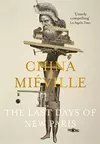
There are two types of readers: those who research a book before they read it and those who go into it blind. Well, I guess some people read books and then read notes during it. Okay, maybe this note wasn't as strong as I thought it was to start on. My whole point is these are the decisions one can make when diving into The Last Days of New Paris by China Miéville.
I am familiar with Miéville from his novel, Perdido Street Station, which is one of my favorites. After getting through that one, I immediately looked up his bibliography to see what more of his works I could experience. I read the synopsis of this particular one and decided, heck yeah, I am going to read this one next. The surrealism and imagery of Miéville's prose were some of my favorite things in Perdido Street Station, so I was looking forward to it.
Reading this was certainly an...experience. One that I feel like I enjoyed for the most part.
The premise is already attention-grabbing. Paris has changed: after the detonation of a bomb with extraordinary powers, the city is overrun now. Nazis still occupy the city, but alongside them, artwork from surreal artists have been given life. Creatures of frightening imagination, referred to by manifs, beyond what true reality could ever host roam the streets amid the fighting. The landscape itself has changed to this beautiful and nightmarish surrealism. On top of that, demons from Hell have joined the fray. Yeah, it's a wild time.
The plot follows two storylines: one set in "present-day" with a soldier known as Thibault fighting against the Nazis and demons while surviving the odd manifs. He meets a woman named Sam, and he helps her on her journey to find a certain something for a book she's writing. The other timeline centers around a man named Jack Parson and focuses on how this dream-esque situation.
I can tell you right now that I don't have any knowledge of art and history that goes beyond the level of basic, which made reading this an interesting experience. I didn't do any research or look up any context notes before diving in. There are references up the wazoo, and I mean it. Unless you have a major in Surrealism Art and History, I feel like many of the references will fly straight over your head. That's at least how it happened to me. Countless names were dropped and I had no clue where I had no clue what its real-world equivalent was.
I will say, for many people, this will probably turn them off. If not that, then the poetic, flowery prose and purposefully obscured narrative will. This is a book I imagine will appeal only to a niche audience.
I guess I am in that audience.
Even if I didn't understand anything, the way that Miéville described it was beautiful. Where my lack of knowledge spanned, I used Miéville's descriptions to fill in the blanks and conjure up an image as much as I could. He would describe a manif to the reader in all its surreal glory, and I would have to try and understand what it looked like from my understanding, I feel like it did something to paint an even more vivid picture for me, as strange as that sounds. It gave me a workout for my imagination as I did my best to imagine what these things could even look like in real life if they were standing right before me.
Miéville's prose is poetic and beautiful, but hard to understand. He is the kind of author where you have to have a dictionary open next to you (thank god for Libby's define feature) to understand many of the words he throws out. He uses haunting imagery in such an evocative way. Describing surrealism is something that I imagine is very, very hard to do. How do you describe something that doesn't conform to any of our laws of physics, that goes beyond all the rules that we hold dear? It's an incredible feat to pull off, and I think Miéville does it well. He has just the right balance of grounded descriptions and dreamy imagery to put it all together. I'm still thinking about his line where he describes the moon in the sky. I think it's one of the more popular quotes in the book.
The plot itself? While it felt it meandered in the middle, I was hooked enough by the imagery and the description of this gutted, strange Paris that I didn't mind. It's equal amounts of experience and story, in my opinion. Like many books (I'm noting this seems to be a trend), it ramped up in the last 20-30% where stakes skyrocketed, and it really pushed me towards the end.
There is a final section in the book that I don't want to get too far into since it might be spoiler activity, but it's a very interesting whiplash and almost like a food-for-thought kind of deal going on with how it bookends the story. I'll be honest, my interest waned here...I came here for surreal imagery mixed with the mundane, one of my favorite contrasts to see in art, and that's where my interest mostly lies. But I don't want to say I didn't care for it or that I disliked it, as I think it's a valuable part of the overall content.
My biggest complaint: As much as I liked this book, I didn't rate it 4 stars and it falls short of Miéville's great Perdido Street Station because, even though I understand this was the vibe he was going for, the narrative at times felt too muddled from the story. I get it, in a story about surrealism, the prose should reflect that theme. And I think it does greatly in some ways! But in others, I feel like it made it harder for me to follow along. It made it that much harder to connect with the characters, but like I said, I think this is a book that's not trying to emphasize those parts. It really feels like it's mostly here to give a reader an experience of the world and how the people are affected by it, which I say it did pretty well. It's too bad, I just felt a little too detached from the story and characters themselves to feel any impact from them, which in turn, causes me the entire book to have less impact on me since they're aspects of the story too.
Even if I don't like it as much as Perdido Street Station. it was still a good book and I enjoyed it. I fall very much into the niche of who this book appeals to. I love surreal imagery, and I love it even more when it's placed into the space of the mundane, and we humans are left grappling with the paradoxical contrast. I feel like for many, this book is not going to hit the mark. But for those who vibe on the same wavelength as this novel, we got something out of it.
Maybe my rating for this is closer to 3.75/5.
There are two types of readers: those who research a book before they read it and those who go into it blind. Well, I guess some people read books and then read notes during it. Okay, maybe this note wasn't as strong as I thought it was to start on. My whole point is these are the decisions one can make when diving into The Last Days of New Paris by China Miéville.
I am familiar with Miéville from his novel, Perdido Street Station, which is one of my favorites. After getting through that one, I immediately looked up his bibliography to see what more of his works I could experience. I read the synopsis of this particular one and decided, heck yeah, I am going to read this one next. The surrealism and imagery of Miéville's prose were some of my favorite things in Perdido Street Station, so I was looking forward to it.
Reading this was certainly an...experience. One that I feel like I enjoyed for the most part.
The premise is already attention-grabbing. Paris has changed: after the detonation of a bomb with extraordinary powers, the city is overrun now. Nazis still occupy the city, but alongside them, artwork from surreal artists have been given life. Creatures of frightening imagination, referred to by manifs, beyond what true reality could ever host roam the streets amid the fighting. The landscape itself has changed to this beautiful and nightmarish surrealism. On top of that, demons from Hell have joined the fray. Yeah, it's a wild time.
The plot follows two storylines: one set in "present-day" with a soldier known as Thibault fighting against the Nazis and demons while surviving the odd manifs. He meets a woman named Sam, and he helps her on her journey to find a certain something for a book she's writing. The other timeline centers around a man named Jack Parson and focuses on how this dream-esque situation.
I can tell you right now that I don't have any knowledge of art and history that goes beyond the level of basic, which made reading this an interesting experience. I didn't do any research or look up any context notes before diving in. There are references up the wazoo, and I mean it. Unless you have a major in Surrealism Art and History, I feel like many of the references will fly straight over your head. That's at least how it happened to me. Countless names were dropped and I had no clue where I had no clue what its real-world equivalent was.
I will say, for many people, this will probably turn them off. If not that, then the poetic, flowery prose and purposefully obscured narrative will. This is a book I imagine will appeal only to a niche audience.
I guess I am in that audience.
Even if I didn't understand anything, the way that Miéville described it was beautiful. Where my lack of knowledge spanned, I used Miéville's descriptions to fill in the blanks and conjure up an image as much as I could. He would describe a manif to the reader in all its surreal glory, and I would have to try and understand what it looked like from my understanding, I feel like it did something to paint an even more vivid picture for me, as strange as that sounds. It gave me a workout for my imagination as I did my best to imagine what these things could even look like in real life if they were standing right before me.
Miéville's prose is poetic and beautiful, but hard to understand. He is the kind of author where you have to have a dictionary open next to you (thank god for Libby's define feature) to understand many of the words he throws out. He uses haunting imagery in such an evocative way. Describing surrealism is something that I imagine is very, very hard to do. How do you describe something that doesn't conform to any of our laws of physics, that goes beyond all the rules that we hold dear? It's an incredible feat to pull off, and I think Miéville does it well. He has just the right balance of grounded descriptions and dreamy imagery to put it all together. I'm still thinking about his line where he describes the moon in the sky. I think it's one of the more popular quotes in the book.
The plot itself? While it felt it meandered in the middle, I was hooked enough by the imagery and the description of this gutted, strange Paris that I didn't mind. It's equal amounts of experience and story, in my opinion. Like many books (I'm noting this seems to be a trend), it ramped up in the last 20-30% where stakes skyrocketed, and it really pushed me towards the end.
There is a final section in the book that I don't want to get too far into since it might be spoiler activity, but it's a very interesting whiplash and almost like a food-for-thought kind of deal going on with how it bookends the story. I'll be honest, my interest waned here...I came here for surreal imagery mixed with the mundane, one of my favorite contrasts to see in art, and that's where my interest mostly lies. But I don't want to say I didn't care for it or that I disliked it, as I think it's a valuable part of the overall content.
My biggest complaint: As much as I liked this book, I didn't rate it 4 stars and it falls short of Miéville's great Perdido Street Station because, even though I understand this was the vibe he was going for, the narrative at times felt too muddled from the story. I get it, in a story about surrealism, the prose should reflect that theme. And I think it does greatly in some ways! But in others, I feel like it made it harder for me to follow along. It made it that much harder to connect with the characters, but like I said, I think this is a book that's not trying to emphasize those parts. It really feels like it's mostly here to give a reader an experience of the world and how the people are affected by it, which I say it did pretty well. It's too bad, I just felt a little too detached from the story and characters themselves to feel any impact from them, which in turn, causes me the entire book to have less impact on me since they're aspects of the story too.
Even if I don't like it as much as Perdido Street Station. it was still a good book and I enjoyed it. I fall very much into the niche of who this book appeals to. I love surreal imagery, and I love it even more when it's placed into the space of the mundane, and we humans are left grappling with the paradoxical contrast. I feel like for many, this book is not going to hit the mark. But for those who vibe on the same wavelength as this novel, we got something out of it.