
Blue

“When you share pain, there’s less of it, and when you share joy, there’s more of it. That’s a basic fact of the universe, and I learned it here. I’ve seen it work honest-to-God miracles.”
---------------
Let me start off by saying that the Foreword—or I suppose as the author writes it, the Backward—of this book made me cry.
No, it really did. I can’t remember the last time a book made me cry. It has happened before in the past, but it’s been such a long time that I can’t quite remember. It’s interesting too because, well, it wasn’t even the story itself. It was some meta-commentary the author was writing about his stories years after they were first published. But his words were just so…profound. It touched upon the themes of Callahan’s saloon: camaraderie, the human condition, the inevitability of every human life, and the enduring infinity of love in the face of that mortality. It has given me a quote that has since become on my favorites:
Shared joy is increased; shared pain is lessened.
I start off with this little anecdote because I feel it really set the tone for the rest of my reading experience. It was a wild kind of ride, but I enjoyed it. Even more rare for me to say, this is the kind of book that gave me something after I put it down, and I’m grateful for it.
Callahan’s Crosstime Saloon is a series of short stories all revolving around the titular bar. There are recurring characters (such as the bar owner, Mike Callahan) and a couple of others, along with the strange customs that the patrons all practice. The stories center around strange characters coming into the bar, telling their stories or their predicaments, and then the collective forces of Callahan and the bar patrons help the person out in some way or give them something to reflect on in the midst of their journey. The people come from all walks of speculative life: time travelers, telepaths, emissaries from Mars…but wherever they come from and whatever their ailment, the stories all have one thing in common: the beautiful, sometimes painful, but all-encompassing force of companionship over a pint.
As a side note, the stories are very loosely connected with one another, so they are ones you want to read in order. It’s mostly references to events that happened in other stories or recurring characters that come back. I read these stories in the book The Callahan Chronicles, which I recommend as it collects the stories together in chronological order.
When I first began reading this book? I was utterly disappointed, despite the way the Foreword/Backward affected me.
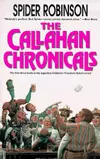
This book first caught my attention by the cover. Despite being a Millenial, I have this weird soft spot for old, pulpy science fiction novels of the 50s to 80s, despite all the problems that they contain. I can’t quite put my finger on why. Maybe because they have this sort of fun camp that newer sci-fi doesn’t have? Maybe I just like how weird they get, and how much they stand out? Whatever the reason, when I saw the cover of the particular edition that caught my eye, that’s what I expected. The artwork showed a jolly human passing off classic mugs of beer to a crowd of colorful characters, aliens that looked right at home in the Star Wars cantina scene or from Wayne Barlowe’s Guide to Extraterrestrials artbook. This is the kind of premise I expected when I began to read. A bunch of crazy, kind of goofy aliens all coming together to drink and share their tales from across the galaxy in a very lighthearted and fun premise.
That’s maybe half of what you get. Yes, you got aliens and time-travelers and all sorts of fantastical people coming into this bar to share their tales, but it’s all very…grounded. They share stories, but they’re grounded in the experience of living and being alive. This wasn’t what I signed up for, and I admit to feeling quite disappointed. It reminded me of this time I signed up for a speculative fiction class in community college, expecting to read stories that involved spaceships and aliens and hiveminds but it was mostly stories of things like…a man struggling with divorce and his car just happens to float. Or a boy experiencing the pains of growing up out of childhood while the speculative worldbuilding is just a little dressing on top of the real focus: the interpersonal drama of it all.
But the more I got into it…the more I got hooked. Before I knew it, the story had grabbed me by the heartstrings and kept me there.
The speculative fiction is really just a topping, a sprig of parsley on the main dish. The stories may talk about time travel, or about aliens, or about people having to contend to immortality, but the way I see it, that’s not what the stories are about. They’re really about life. They’re about pain, joy, loss, love, solitude, companionship…about all the things that make us who we are, about what makes us human.
Robinson’s writing style makes it more effective. The writing is colloquial, filled with references of past decades I didn’t live through. People talk in heavy slang and with vocal tics that took me fifty pages to parse out. Half of these references flew over my head, so I had only the base familiarity with it and could hardly connect with it. Yes, I recognize the name Spiro Agnew. Could I tell you a damn thing about what it was like to witness him in American society? No, I couldn’t, because I wasn’t alive back then, not even close.
A big recurring part of the stories is that the characters often partake in puns, so mixed in with all of this, there’s wordplay. Here’s just a tiny, small example from the story The Wonderful Conspiracy:
Long-Drink got up and walked to the chalk line, and I assumed he wanted to give Doc's stinker the honor of a formal throw. I should have known he was setting us up. He toed the mark, an- nounced, "To the poor corpuscle," drained his glass, and waited.
The Doc had reflexively drained the fresh glass Callahan had already supplied unasked—Doc will drink to anything, sight unseen—but he paused with his arm in midthrow. "Wait a minute," he said. "Why the hell should I drink to 'the poor corpuscle'?"
"He labors in vein," Long-Drink said simply.
"Ah yes," I said without missing a beat, "but he vessels vhile he vorks."
"Plasma soul," exclaimed Callahan.
The Doc's eyes got round and his jaw hung down. "By God," he said at last, "I've never been outpunned by you rummies yet, and I'm not about to go down on medical puns. As a doctor I happen to know for certain there's only one other blood pun—I got it straight from the Auricle of Delphi."
I can tell you right now, I have been speaking American English for almost thirty years, and this passage made maybe 7% sense to me when I first read it.
Even though I struggled with the writing, at the same time, it flowed. It’s hard to explain. Even though I couldn’t get half the allusions or had to really work through some of the accents and wordplay, after a while, I found myself doing less of that and simply letting the story wash over you. Robinson nailed the narrator’s voice down and perfectly captured the vibe of somebody telling you this over a pint. I can imagine myself sitting in Callahan’s saloon right now, listening to the narrator telling me these stories in his own words. Even if you don’t understand the meaning exactly, you can feel it.
That was true for every character who was the subject of the story. That’s what each of the snippets really are: we meet somebody drinking in Callahan’s, and they tell their story. It’s always something that either guts you, or you feel along with them, or you just sympathize because despite the fact that they’re a time traveler or a psychic or something…they’re still human. Or, if they’re not human, their tale is one that speaks to the experience of being human. You still want to cry with them, laugh with them, hug them and just be their companion. I can tell you right now, it’s been a very long time since I’ve shed tears while reading a book. This one made me shed them twice.
My personal favorite stories out of the bunch:
- The Time-Traveler
- Dog Day Evening
- The Law of Conservation of Pain
My criticisms are common with a lot of anthologies: as much as I loved these stories, you’ll get some that are weaker. One such example for me was Unnatural Causes. The story starts out speaking about a man’s experience in Vietnam and all the tragedies he saw and the atrocities he personally committed. I thought it would focus on that. That’s already such a strong hook there, even though the material was hard to stomach. But then, it pivoted into a story about an alien who talks about his people living among humans for thousands of years, influencing them throughout history. There seemed to be threads that tried to all come to a common point, but I just couldn’t see it, and everything felt like it fizzled out before a satisfying conclusion could come to fruition. There were strong building blocks to a good, solid story, but nothing more than building blocks. Another one was Have You Heard The One…? Al Phee’s dialogue made me want to drive rusty nails through my feet, and I started skimming through to get past the story as fast as possible so I could be rid of him.
And then my other criticism: parts of the book have not aged well. I mean, it’s speculative fiction written within the time period of the 50s-80s, which I personally call the Pulp Era, though I acknowledge that’s not a very good term for it. It’s pretty much a guarantee that you’ll come across a part that makes you think “well, that hasn’t aged well.” Luckily, I feel as if they’re few and far in between. There’s no undercurrent of problematic beliefs that are woven throughout like so many other Pulp Era books. It’s not on the level of, say, Heinlein (oh boy, I’m feeling brave today for dropping a name like that, aren’t I?) where problematic politics dominate the whole narrative or are a major focus. It’s mostly some terms or descriptions that we don’t use anymore because we’ve progressed as a society. I think we as readers can come together and acknowledge when something that may have been more readily accepted back in the day has since become unacceptable in modern times. And I think it’s okay to acknowledge that it can be upsetting to see. And I think we as readers are capable of coming together and acknowledging that we don’t condone those parts, but everything else about the book is commendable and compelling.
But overall? I can see why Spider Robinson has received letters throughout the years from readers asking where the fabled saloon is and so desperately wanting to go. This is a place that walks the tight line of being completely grounded, but with enough whimsy to make it seem magical without losing that humanistic touch.
It’s incredible the way this book made me feel. A person will walk into the bar, and in about 30 pages, I’ll care for that person and feel for them like I’ve known them for years. Robinson writes in a way that speaks to a reader emotionally. I laughed with these people. I cried with them. For a few minutes of my life, I really did feel like I was in that bar with them, cheering and throwing glasses into the fireplace and groaning at the incredible wordplay.
It really hit me how much I became emotionally invested in these characters when I came to the end of the book. Without spoilers, I feel like The Callahan Chronicals is the best way to read these stories. The way it starts, the way they’re collected and the way it ends…the very last story had my heart racing. You galavant through all of these peeks into Callahan’s place, a place that seems as unending and unyielding as time itself. And when the thought of something happening to the place seems unbearable. There’s a thread that connects all the stories together and it reaches a beautiful crescendo in the book.
Hell, even the Post Toast, which had me chuckling from how absurd it was (no spoilers, you’ll just have to read it), had tearing up while reading it. Spider just has that talent of bringing ethos into his writing, whatever he is writing about. It really felt like, despite Robinson never once having met me and probably not even knowing that I exist, he was talking to me. He was telling me those things, right there, with a pint of beer between us like we were old friends.
I mean, when the book was over and I turned the last page? I nearly started sobbing. I didn’t want it to end, because it was like Callahan was over. It was like all of these people I’ve grown to love and laugh at were now gone, and I found myself gutted at the thought of that. But, it’s like Robinson says himself. Callahan is a place that exists wherever you stand. Where I go, I will bring a little bit of that spirit with me, and when I do that, Callahan and his patrons won’t ever truly die. Even when Robinson, though the thought brings me great sadness, makes it to the great big saloon in the sky, Callahan’s won’t die. It’ll be here, in the shared joy of humanity, in the shared pain of humanity, in the way we refuse entropy.
I’ve read anecdotes from people who say the series saved them in one way or another. People come together and say how Callahan, and by extension, Spider Robinson have touched them and brightened their lives in some way. I understand why. I wish it was a real place. I don’t drink, but Callahan could probably convince me to.
It’s just like how Spider Robinson puts it so beautifully in a quote that’s carved itself into my heart:
Just as there are laws of Conservation of Mass and Energy, so there are in fact Laws of Conservation of Pain and Joy. Neither can ever be created or destroyed.
But one can be converted into the other.
“When you share pain, there’s less of it, and when you share joy, there’s more of it. That’s a basic fact of the universe, and I learned it here. I’ve seen it work honest-to-God miracles.”
---------------
Let me start off by saying that the Foreword—or I suppose as the author writes it, the Backward—of this book made me cry.
No, it really did. I can’t remember the last time a book made me cry. It has happened before in the past, but it’s been such a long time that I can’t quite remember. It’s interesting too because, well, it wasn’t even the story itself. It was some meta-commentary the author was writing about his stories years after they were first published. But his words were just so…profound. It touched upon the themes of Callahan’s saloon: camaraderie, the human condition, the inevitability of every human life, and the enduring infinity of love in the face of that mortality. It has given me a quote that has since become on my favorites:
Shared joy is increased; shared pain is lessened.
I start off with this little anecdote because I feel it really set the tone for the rest of my reading experience. It was a wild kind of ride, but I enjoyed it. Even more rare for me to say, this is the kind of book that gave me something after I put it down, and I’m grateful for it.
Callahan’s Crosstime Saloon is a series of short stories all revolving around the titular bar. There are recurring characters (such as the bar owner, Mike Callahan) and a couple of others, along with the strange customs that the patrons all practice. The stories center around strange characters coming into the bar, telling their stories or their predicaments, and then the collective forces of Callahan and the bar patrons help the person out in some way or give them something to reflect on in the midst of their journey. The people come from all walks of speculative life: time travelers, telepaths, emissaries from Mars…but wherever they come from and whatever their ailment, the stories all have one thing in common: the beautiful, sometimes painful, but all-encompassing force of companionship over a pint.
As a side note, the stories are very loosely connected with one another, so they are ones you want to read in order. It’s mostly references to events that happened in other stories or recurring characters that come back. I read these stories in the book The Callahan Chronicles, which I recommend as it collects the stories together in chronological order.
When I first began reading this book? I was utterly disappointed, despite the way the Foreword/Backward affected me.
This book first caught my attention by the cover. Despite being a Millenial, I have this weird soft spot for old, pulpy science fiction novels of the 50s to 80s, despite all the problems that they contain. I can’t quite put my finger on why. Maybe because they have this sort of fun camp that newer sci-fi doesn’t have? Maybe I just like how weird they get, and how much they stand out? Whatever the reason, when I saw the cover of the particular edition that caught my eye, that’s what I expected. The artwork showed a jolly human passing off classic mugs of beer to a crowd of colorful characters, aliens that looked right at home in the Star Wars cantina scene or from Wayne Barlowe’s Guide to Extraterrestrials artbook. This is the kind of premise I expected when I began to read. A bunch of crazy, kind of goofy aliens all coming together to drink and share their tales from across the galaxy in a very lighthearted and fun premise.
That’s maybe half of what you get. Yes, you got aliens and time-travelers and all sorts of fantastical people coming into this bar to share their tales, but it’s all very…grounded. They share stories, but they’re grounded in the experience of living and being alive. This wasn’t what I signed up for, and I admit to feeling quite disappointed. It reminded me of this time I signed up for a speculative fiction class in community college, expecting to read stories that involved spaceships and aliens and hiveminds but it was mostly stories of things like…a man struggling with divorce and his car just happens to float. Or a boy experiencing the pains of growing up out of childhood while the speculative worldbuilding is just a little dressing on top of the real focus: the interpersonal drama of it all.
But the more I got into it…the more I got hooked. Before I knew it, the story had grabbed me by the heartstrings and kept me there.
The speculative fiction is really just a topping, a sprig of parsley on the main dish. The stories may talk about time travel, or about aliens, or about people having to contend to immortality, but the way I see it, that’s not what the stories are about. They’re really about life. They’re about pain, joy, loss, love, solitude, companionship…about all the things that make us who we are, about what makes us human.
Robinson’s writing style makes it more effective. The writing is colloquial, filled with references of past decades I didn’t live through. People talk in heavy slang and with vocal tics that took me fifty pages to parse out. Half of these references flew over my head, so I had only the base familiarity with it and could hardly connect with it. Yes, I recognize the name Spiro Agnew. Could I tell you a damn thing about what it was like to witness him in American society? No, I couldn’t, because I wasn’t alive back then, not even close.
A big recurring part of the stories is that the characters often partake in puns, so mixed in with all of this, there’s wordplay. Here’s just a tiny, small example from the story The Wonderful Conspiracy:
Long-Drink got up and walked to the chalk line, and I assumed he wanted to give Doc's stinker the honor of a formal throw. I should have known he was setting us up. He toed the mark, an- nounced, "To the poor corpuscle," drained his glass, and waited.
The Doc had reflexively drained the fresh glass Callahan had already supplied unasked—Doc will drink to anything, sight unseen—but he paused with his arm in midthrow. "Wait a minute," he said. "Why the hell should I drink to 'the poor corpuscle'?"
"He labors in vein," Long-Drink said simply.
"Ah yes," I said without missing a beat, "but he vessels vhile he vorks."
"Plasma soul," exclaimed Callahan.
The Doc's eyes got round and his jaw hung down. "By God," he said at last, "I've never been outpunned by you rummies yet, and I'm not about to go down on medical puns. As a doctor I happen to know for certain there's only one other blood pun—I got it straight from the Auricle of Delphi."
I can tell you right now, I have been speaking American English for almost thirty years, and this passage made maybe 7% sense to me when I first read it.
Even though I struggled with the writing, at the same time, it flowed. It’s hard to explain. Even though I couldn’t get half the allusions or had to really work through some of the accents and wordplay, after a while, I found myself doing less of that and simply letting the story wash over you. Robinson nailed the narrator’s voice down and perfectly captured the vibe of somebody telling you this over a pint. I can imagine myself sitting in Callahan’s saloon right now, listening to the narrator telling me these stories in his own words. Even if you don’t understand the meaning exactly, you can feel it.
That was true for every character who was the subject of the story. That’s what each of the snippets really are: we meet somebody drinking in Callahan’s, and they tell their story. It’s always something that either guts you, or you feel along with them, or you just sympathize because despite the fact that they’re a time traveler or a psychic or something…they’re still human. Or, if they’re not human, their tale is one that speaks to the experience of being human. You still want to cry with them, laugh with them, hug them and just be their companion. I can tell you right now, it’s been a very long time since I’ve shed tears while reading a book. This one made me shed them twice.
My personal favorite stories out of the bunch:
- The Time-Traveler
- Dog Day Evening
- The Law of Conservation of Pain
My criticisms are common with a lot of anthologies: as much as I loved these stories, you’ll get some that are weaker. One such example for me was Unnatural Causes. The story starts out speaking about a man’s experience in Vietnam and all the tragedies he saw and the atrocities he personally committed. I thought it would focus on that. That’s already such a strong hook there, even though the material was hard to stomach. But then, it pivoted into a story about an alien who talks about his people living among humans for thousands of years, influencing them throughout history. There seemed to be threads that tried to all come to a common point, but I just couldn’t see it, and everything felt like it fizzled out before a satisfying conclusion could come to fruition. There were strong building blocks to a good, solid story, but nothing more than building blocks. Another one was Have You Heard The One…? Al Phee’s dialogue made me want to drive rusty nails through my feet, and I started skimming through to get past the story as fast as possible so I could be rid of him.
And then my other criticism: parts of the book have not aged well. I mean, it’s speculative fiction written within the time period of the 50s-80s, which I personally call the Pulp Era, though I acknowledge that’s not a very good term for it. It’s pretty much a guarantee that you’ll come across a part that makes you think “well, that hasn’t aged well.” Luckily, I feel as if they’re few and far in between. There’s no undercurrent of problematic beliefs that are woven throughout like so many other Pulp Era books. It’s not on the level of, say, Heinlein (oh boy, I’m feeling brave today for dropping a name like that, aren’t I?) where problematic politics dominate the whole narrative or are a major focus. It’s mostly some terms or descriptions that we don’t use anymore because we’ve progressed as a society. I think we as readers can come together and acknowledge when something that may have been more readily accepted back in the day has since become unacceptable in modern times. And I think it’s okay to acknowledge that it can be upsetting to see. And I think we as readers are capable of coming together and acknowledging that we don’t condone those parts, but everything else about the book is commendable and compelling.
But overall? I can see why Spider Robinson has received letters throughout the years from readers asking where the fabled saloon is and so desperately wanting to go. This is a place that walks the tight line of being completely grounded, but with enough whimsy to make it seem magical without losing that humanistic touch.
It’s incredible the way this book made me feel. A person will walk into the bar, and in about 30 pages, I’ll care for that person and feel for them like I’ve known them for years. Robinson writes in a way that speaks to a reader emotionally. I laughed with these people. I cried with them. For a few minutes of my life, I really did feel like I was in that bar with them, cheering and throwing glasses into the fireplace and groaning at the incredible wordplay.
It really hit me how much I became emotionally invested in these characters when I came to the end of the book. Without spoilers, I feel like The Callahan Chronicals is the best way to read these stories. The way it starts, the way they’re collected and the way it ends…the very last story had my heart racing. You galavant through all of these peeks into Callahan’s place, a place that seems as unending and unyielding as time itself. And when the thought of something happening to the place seems unbearable. There’s a thread that connects all the stories together and it reaches a beautiful crescendo in the book.
Hell, even the Post Toast, which had me chuckling from how absurd it was (no spoilers, you’ll just have to read it), had tearing up while reading it. Spider just has that talent of bringing ethos into his writing, whatever he is writing about. It really felt like, despite Robinson never once having met me and probably not even knowing that I exist, he was talking to me. He was telling me those things, right there, with a pint of beer between us like we were old friends.
I mean, when the book was over and I turned the last page? I nearly started sobbing. I didn’t want it to end, because it was like Callahan was over. It was like all of these people I’ve grown to love and laugh at were now gone, and I found myself gutted at the thought of that. But, it’s like Robinson says himself. Callahan is a place that exists wherever you stand. Where I go, I will bring a little bit of that spirit with me, and when I do that, Callahan and his patrons won’t ever truly die. Even when Robinson, though the thought brings me great sadness, makes it to the great big saloon in the sky, Callahan’s won’t die. It’ll be here, in the shared joy of humanity, in the shared pain of humanity, in the way we refuse entropy.
I’ve read anecdotes from people who say the series saved them in one way or another. People come together and say how Callahan, and by extension, Spider Robinson have touched them and brightened their lives in some way. I understand why. I wish it was a real place. I don’t drink, but Callahan could probably convince me to.
It’s just like how Spider Robinson puts it so beautifully in a quote that’s carved itself into my heart:
Just as there are laws of Conservation of Mass and Energy, so there are in fact Laws of Conservation of Pain and Joy. Neither can ever be created or destroyed.
But one can be converted into the other.