Lee


Seeing that I'm currently viewing House of the Dragon with friends, the grandiose fantasy worlds filled with white hair protagonists were destined to be compared. As I said in my previous Witcher log (Blood of Elves, which S02 of the Netflix show uses a lot from), I'm writing these partly in hindsight, as I have been pushing myself to use GoodReads more as I begin to regain my literary stride. I had a couple pages left apparently, so I just finished it up with haste in order to pick the series back up. Time of Contempt, while not bad, is certainly the most dense and convoluted of the series so far. On one side of the blade, if you're not invested into this world and its politics by this point, good luck getting through this one. But on the opposite side of the blade, there's a similarity to the sociopolitical dynamics of Game of Thrones (the elongated banquet chapter specifically).
The fourth entry—if reading in chronological order of events—Time of Contempt sees most of the chess pieces prior set, all fall into place: traps, betrayals, deaths, and deceptions all ignited. By now, we are comfortably familiar with the majority of the big names, the complex world and its multifaceted politics, and the inevitable dawn of the Second Great War. What I'm trying to hit home, is that a lot happens in this book. A lot. So much that Geralt himself is forced to finally break free from a Witcher's neutrality and pick a side.
Those who were upset that Ciri had a lot of focal time will be glad to hear that the balance with her adoptive father, Geralt, is much more aligned here. Yenn and almost all of the sorceresses get moments to shine here (particularly in the aforementioned banquet chapter), and even Dandelion/Jaskier aren't forgotten in the giant mix of tumultuous events. There are various reunions of crowd faves, long-time-coming face-offs, and the lifting of the veil for the established cogs of destiny to begin speeding up. Suffice it to say the book does live up to its title quite well.
If their pacing and timeline is what I think it is, I'm both concerned and interested to see how the next season of Netflix's The Witcher manages to include all of this. I brought up HotD earlier because I can foresee S03 of Witcher also struggling to balance the lack of action with the abundance of dialogue, royal court negotiations, and political espionage that is overtly present and pivotal in Time of Contempt. It'd be smart of the show runner to break this book into two parts, were it up to me (I wouldn't want to miss smaller detailed moments like Codringher & Fenn, Yenn & Ciri dealing with tuition costs, Black Rayla, and Geralt & Yenn's romantic daydreams of impossible love and peace).
Seeing that I'm currently viewing House of the Dragon with friends, the grandiose fantasy worlds filled with white hair protagonists were destined to be compared. As I said in my previous Witcher log (Blood of Elves, which S02 of the Netflix show uses a lot from), I'm writing these partly in hindsight, as I have been pushing myself to use GoodReads more as I begin to regain my literary stride. I had a couple pages left apparently, so I just finished it up with haste in order to pick the series back up. Time of Contempt, while not bad, is certainly the most dense and convoluted of the series so far. On one side of the blade, if you're not invested into this world and its politics by this point, good luck getting through this one. But on the opposite side of the blade, there's a similarity to the sociopolitical dynamics of Game of Thrones (the elongated banquet chapter specifically).
The fourth entry—if reading in chronological order of events—Time of Contempt sees most of the chess pieces prior set, all fall into place: traps, betrayals, deaths, and deceptions all ignited. By now, we are comfortably familiar with the majority of the big names, the complex world and its multifaceted politics, and the inevitable dawn of the Second Great War. What I'm trying to hit home, is that a lot happens in this book. A lot. So much that Geralt himself is forced to finally break free from a Witcher's neutrality and pick a side.
Those who were upset that Ciri had a lot of focal time will be glad to hear that the balance with her adoptive father, Geralt, is much more aligned here. Yenn and almost all of the sorceresses get moments to shine here (particularly in the aforementioned banquet chapter), and even Dandelion/Jaskier aren't forgotten in the giant mix of tumultuous events. There are various reunions of crowd faves, long-time-coming face-offs, and the lifting of the veil for the established cogs of destiny to begin speeding up. Suffice it to say the book does live up to its title quite well.
If their pacing and timeline is what I think it is, I'm both concerned and interested to see how the next season of Netflix's The Witcher manages to include all of this. I brought up HotD earlier because I can foresee S03 of Witcher also struggling to balance the lack of action with the abundance of dialogue, royal court negotiations, and political espionage that is overtly present and pivotal in Time of Contempt. It'd be smart of the show runner to break this book into two parts, were it up to me (I wouldn't want to miss smaller detailed moments like Codringher & Fenn, Yenn & Ciri dealing with tuition costs, Black Rayla, and Geralt & Yenn's romantic daydreams of impossible love and peace).
If not evident already, I have been reading these in chronological order rather than order of release. Yes, I really charged through these like Geralt to a morally grey option, because I was racing against the clock to finish as many as I could before the new Netflix season. And yes, I'm logging these in hindsight as I'm trying to use GoodReads more often in hopes of getting back on the proverbial reading horse.
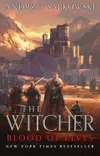
This is the entry that really sets in motion the primary narrative of Geralt, Ciri, and company, focusing heavily on the latter from the downfall of Cintra, her constant struggle to escape, and her eventual training. Those expecting more of Geralt will be a little let down, as Blood of Elves gives more precedence to his protégé and daughter figure, Ciri. I'd say this entry spends far more time with Ciri and Yennifer, as well as putting some more emphasis on the sorcery of the world. Mainstay characters like Triss Merigold (a fave), Nenneke, Eskel, Vesimir, and goes to familiar gamer territory like Oxenfurt and Kaer Morhen. It also has one of the cooler moments of written battle, involving the face-scarred shadowy stalker, Riance. I'd argue the Netflix series borrows the most from this entry, which I do feel rather hit or miss about on their handling of the timeline and constant jumping around.
I recall this book ending on a moody ominous note, with a terrific book title name-drop and setup for Time of Contempt.
If not evident already, I have been reading these in chronological order rather than order of release. Yes, I really charged through these like Geralt to a morally grey option, because I was racing against the clock to finish as many as I could before the new Netflix season. And yes, I'm logging these in hindsight as I'm trying to use GoodReads more often in hopes of getting back on the proverbial reading horse.
This is the entry that really sets in motion the primary narrative of Geralt, Ciri, and company, focusing heavily on the latter from the downfall of Cintra, her constant struggle to escape, and her eventual training. Those expecting more of Geralt will be a little let down, as Blood of Elves gives more precedence to his protégé and daughter figure, Ciri. I'd say this entry spends far more time with Ciri and Yennifer, as well as putting some more emphasis on the sorcery of the world. Mainstay characters like Triss Merigold (a fave), Nenneke, Eskel, Vesimir, and goes to familiar gamer territory like Oxenfurt and Kaer Morhen. It also has one of the cooler moments of written battle, involving the face-scarred shadowy stalker, Riance. I'd argue the Netflix series borrows the most from this entry, which I do feel rather hit or miss about on their handling of the timeline and constant jumping around.
I recall this book ending on a moody ominous note, with a terrific book title name-drop and setup for Time of Contempt.

While I still enjoyed my time with this incredibly vivid world building and immediate—almost intimidating—sense of absorption via myriad forms of jargon and culture, this is certainly overhyped in being called the greatest sci-fi book of all-time. The characters are for the most part great—and Paul is set up to have some excellent development—but so much time is dedicated to the agriculture, biology, and overall politics of Arrakis, that you wouldn't be blamed for feeling this book's already decently sized length. That said, I did think having finished this prior to the film's release greatly helped and improved my love and respect for Denis Villenueve's adaptation.
While I still enjoyed my time with this incredibly vivid world building and immediate—almost intimidating—sense of absorption via myriad forms of jargon and culture, this is certainly overhyped in being called the greatest sci-fi book of all-time. The characters are for the most part great—and Paul is set up to have some excellent development—but so much time is dedicated to the agriculture, biology, and overall politics of Arrakis, that you wouldn't be blamed for feeling this book's already decently sized length. That said, I did think having finished this prior to the film's release greatly helped and improved my love and respect for Denis Villenueve's adaptation.

Not the best introduction to Grady Hendrix perhaps, as I found this IKEA parody comedy-horror to be lacking in both departments. It's a very cool concept—and one that an indie game Styr is being sued by IKEA for I believe—but one that just wasn't executed neither hauntingly nor comedic ally enough for my tastes. I won't spoil the reveal, but once we learn what is causing all these spooky occupancies at the Örsk store, I knew it wasn't going to be my jam; having not read the synopsis, I was actually under the assumption that this was about a supernatural killer hunting down the night crew at a knock-off IKEA. There is death, violence, and suspense throughout the story, but I just didn't connect to any of the characters, and nothing in particular gave me a vivid mental sensation of a eerie big box furniture store when nobody else is around. Not bad, not great, it was fine.
By no means am I going to stray from Hendrix's various positively spread word of mouth catalogue, but I can't shake the initial reaction that it wasn't everything I heard it praised to be.
Not the best introduction to Grady Hendrix perhaps, as I found this IKEA parody comedy-horror to be lacking in both departments. It's a very cool concept—and one that an indie game Styr is being sued by IKEA for I believe—but one that just wasn't executed neither hauntingly nor comedic ally enough for my tastes. I won't spoil the reveal, but once we learn what is causing all these spooky occupancies at the Örsk store, I knew it wasn't going to be my jam; having not read the synopsis, I was actually under the assumption that this was about a supernatural killer hunting down the night crew at a knock-off IKEA. There is death, violence, and suspense throughout the story, but I just didn't connect to any of the characters, and nothing in particular gave me a vivid mental sensation of a eerie big box furniture store when nobody else is around. Not bad, not great, it was fine.
By no means am I going to stray from Hendrix's various positively spread word of mouth catalogue, but I can't shake the initial reaction that it wasn't everything I heard it praised to be.

Ellison manages to really depict his eerie, slimy, distorted visuals in this body horror meets mental anguish psychological horror short. All in all, not as disgusting as I had expected, but a brisk intriguing read regardless.
Ellison manages to really depict his eerie, slimy, distorted visuals in this body horror meets mental anguish psychological horror short. All in all, not as disgusting as I had expected, but a brisk intriguing read regardless.


As expected, some great sci-fi world building and politics from the master Asimov. If you liked the banquet chapter from Dune, you'll be right at home here; Asimov influenced every scifi writer and director, but it absolutely shows that Frank Herbert was heavily and intrinsically affected by Foundation. Now I can start the Apple+ mini-series adaptation with Lee Pace.
As expected, some great sci-fi world building and politics from the master Asimov. If you liked the banquet chapter from Dune, you'll be right at home here; Asimov influenced every scifi writer and director, but it absolutely shows that Frank Herbert was heavily and intrinsically affected by Foundation. Now I can start the Apple+ mini-series adaptation with Lee Pace.

[3.5]
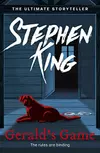
Not counting short stories, I'd place Gerald's Game as my third fave King book, behind Mr. Mercedes and The Gunslinger. As some of you may know, I've been only now diving into Stephen King, but I also wanted to see this book's supposedly very good film adaptation from familial trauma expert, Mike Flanagan. I can now officially say that the Netflix released Gerald's Game might be one of if not the most accurate adaptation of a King work. I wouldn't have called this book “unfilmable,” but I guess I could understand elements of the book that would make some lesser travelled readers a bit queasy and uncomfortable. Of course there are some changes in the film, but nothing that ruins the experience nor anything added for no good reason.
[3.5]
Not counting short stories, I'd place Gerald's Game as my third fave King book, behind Mr. Mercedes and The Gunslinger. As some of you may know, I've been only now diving into Stephen King, but I also wanted to see this book's supposedly very good film adaptation from familial trauma expert, Mike Flanagan. I can now officially say that the Netflix released Gerald's Game might be one of if not the most accurate adaptation of a King work. I wouldn't have called this book “unfilmable,” but I guess I could understand elements of the book that would make some lesser travelled readers a bit queasy and uncomfortable. Of course there are some changes in the film, but nothing that ruins the experience nor anything added for no good reason.


The Langoliers is definitely an underrated Stephen King story. Deserving of a modern movie by M. Night Shamylan or Jordan Peele.
The Langoliers is definitely an underrated Stephen King story. Deserving of a modern movie by M. Night Shamylan or Jordan Peele.


Very much the Samurai oriented Game of Thrones that word of mouth sold it to be. I'd go an additional step further in specifying a more acute comparison to House of the Dragon, as Shogun leans more into the socio-political aspects of its feudal 16th century Japan. It's over 1000pg count allows the characters to breathe and develop through its various revelations, fights, betrayals, and romantic ties. While I would say that author James Clavell gets a little trigger happy with his assumption that seppuku was committed on the fly left and right, Clavell does take detailed pauses to showcase the stark cultural differences between the English, Portuguese, Spanish, and of course, Japanese. It's a tome to get through, but I did enjoy my time with it—possibly the longest I've taken to read a single book ever.
Very much the Samurai oriented Game of Thrones that word of mouth sold it to be. I'd go an additional step further in specifying a more acute comparison to House of the Dragon, as Shogun leans more into the socio-political aspects of its feudal 16th century Japan. It's over 1000pg count allows the characters to breathe and develop through its various revelations, fights, betrayals, and romantic ties. While I would say that author James Clavell gets a little trigger happy with his assumption that seppuku was committed on the fly left and right, Clavell does take detailed pauses to showcase the stark cultural differences between the English, Portuguese, Spanish, and of course, Japanese. It's a tome to get through, but I did enjoy my time with it—possibly the longest I've taken to read a single book ever.