
Daren


The Snake is Mickey Spillane's Mike Hammer #8, and for the first time follows on directly from the previous book. #7, The Girl Hunters, which ended abruptly as Mike was about to be reunited with Velda after 7 years of thinking her dead.
As a regular reader might come to expect, a gunman gate-crashes their reunion, and minutes later two more - and we are only a few pages in and the body count is 2 dead one wounded! And so Mike Hammer is wrapped up in another adventure.
The return of Velda wraps up the last story, but she has with her a girl who is hiding from her step-father who she thinks is trying to kill her. He turns out to be a prominent politician running for Governor...
This book also sees Hammer back in the good books of Pat Chambers, police captain, but a new DA is out to rid Hammer of his agency ticket - (obtained in the previous book) which he brandishes to override the wishes of the cops when he needs to, protecting him and antagonising them in equal measure.
This all rolls into a connection to a 30 year old heist where three million bucks was taken and never recovered.
This is more of a return to form for Hammer - local crime, no international plot for world power, and there were a couple of Spillane worthy twists to the story, but really the very end is so implausible it was a bit of a let down.
3 stars
The Snake is Mickey Spillane's Mike Hammer #8, and for the first time follows on directly from the previous book. #7, The Girl Hunters, which ended abruptly as Mike was about to be reunited with Velda after 7 years of thinking her dead.
As a regular reader might come to expect, a gunman gate-crashes their reunion, and minutes later two more - and we are only a few pages in and the body count is 2 dead one wounded! And so Mike Hammer is wrapped up in another adventure.
The return of Velda wraps up the last story, but she has with her a girl who is hiding from her step-father who she thinks is trying to kill her. He turns out to be a prominent politician running for Governor...
This book also sees Hammer back in the good books of Pat Chambers, police captain, but a new DA is out to rid Hammer of his agency ticket - (obtained in the previous book) which he brandishes to override the wishes of the cops when he needs to, protecting him and antagonising them in equal measure.
This all rolls into a connection to a 30 year old heist where three million bucks was taken and never recovered.
This is more of a return to form for Hammer - local crime, no international plot for world power, and there were a couple of Spillane worthy twists to the story, but really the very end is so implausible it was a bit of a let down.
3 stars

Two short stories in this 158 page book from Mickey Spillane.
The titular Killer Mine is the story of cop Lieutenant Joe Scanlon who is sent back to the neighbourhood of his childhood where his old school friends are turning up dead. Scanlon is your classic Spillane tough guy ‘cop who doesn't always play by the rules, but gets the job done' character. It wouldn't be Spillane without a beautiful woman involved who becomes interwoven in the story.
I found this one of his poorer efforts, where the twist was pretty obvious from quite early on, and I just don't think it was as well executed as normal.
The second story Man Alone features cop Pat Regan who has been acquitted of murder and taking a payoff, but everyone still thinks he is guilty, including most of his former police comrades. As there still has a police conduct process to go through, he is still suspended, and he sets about clearing his name. Reconnecting with an old friend (who happens to be a beautiful woman, see above) helps him progress on solving the case.
This one was a better story better executed, although it meandered for a while in the middle and wrapped up pretty quickly as the last pieces fell into place. There wasn't a lot of mystery about who the guilty party was from the midpoint though.
Probably the least satisfying of the fifteen Spillane books I have read.
2.5 stars, rounded up (which ironically leaves it as 3 stars, where most of Spillane's work lands with me).
Two short stories in this 158 page book from Mickey Spillane.
The titular Killer Mine is the story of cop Lieutenant Joe Scanlon who is sent back to the neighbourhood of his childhood where his old school friends are turning up dead. Scanlon is your classic Spillane tough guy ‘cop who doesn't always play by the rules, but gets the job done' character. It wouldn't be Spillane without a beautiful woman involved who becomes interwoven in the story.
I found this one of his poorer efforts, where the twist was pretty obvious from quite early on, and I just don't think it was as well executed as normal.
The second story Man Alone features cop Pat Regan who has been acquitted of murder and taking a payoff, but everyone still thinks he is guilty, including most of his former police comrades. As there still has a police conduct process to go through, he is still suspended, and he sets about clearing his name. Reconnecting with an old friend (who happens to be a beautiful woman, see above) helps him progress on solving the case.
This one was a better story better executed, although it meandered for a while in the middle and wrapped up pretty quickly as the last pieces fell into place. There wasn't a lot of mystery about who the guilty party was from the midpoint though.
Probably the least satisfying of the fifteen Spillane books I have read.
2.5 stars, rounded up (which ironically leaves it as 3 stars, where most of Spillane's work lands with me).

Added to listOwnedwith 2736 books.


Published in 1966, Spillane's Tiger Mann #3 (of 4) continues his experiment in the espionage spy genre as a excursion from his gumshoe detective characters.
In this book Tiger has to get close to, protect and then extract assistance from a Middle Eastern Arab and his young bride, oil contracts playing off America with Russia. Add to the mix a dangerous assassin spoiling the American play and with revenge in mind for Tiger Mann while he is in the country.
Dated somewhat by it's racial slurs and rampant macho stance, it is however true to the era and the genre, so the reader shouldn't complain on those matters. There was no lack of action and at 172 pages it moves fast enough to keep up the interest.
There is little of challenge in the reading, as is usual with Spillane, but there was plenty to entertain me while this sat in my car to fill in those spare moments.
3 stars
Published in 1966, Spillane's Tiger Mann #3 (of 4) continues his experiment in the espionage spy genre as a excursion from his gumshoe detective characters.
In this book Tiger has to get close to, protect and then extract assistance from a Middle Eastern Arab and his young bride, oil contracts playing off America with Russia. Add to the mix a dangerous assassin spoiling the American play and with revenge in mind for Tiger Mann while he is in the country.
Dated somewhat by it's racial slurs and rampant macho stance, it is however true to the era and the genre, so the reader shouldn't complain on those matters. There was no lack of action and at 172 pages it moves fast enough to keep up the interest.
There is little of challenge in the reading, as is usual with Spillane, but there was plenty to entertain me while this sat in my car to fill in those spare moments.
3 stars

Eric Newby in typical Newby style. Never rushed and never over-excited.
Probably one of the worst researched river expeditions written about - Who turns up near the headwaters of a river, planning to navigate its length, to find it in not a foot deep? Who continues to rent a boat, load it up and depart, only to be required to move rocks for the first 3 days in order to form a channel to allow the boat to be encouraged downstream a little.
For a river expedition, Newby does a reasonable amount of travel on buses and trains, but does manage some boat time in this book.
Readable, (although the version I have contains painfully small font), and hilarious in parts, although in Newby's understated way. Updated from 3 star to 4 star on reflection.
“Bhogpur is two kos from Bhagmalpur,” he said. If Bhogpur is two kos from Bhagmalpur, then it may be possible to make a reasonable guess at our position. It depended on what he meant by a kos.
“There are seventy rassis in one kos,” Karam Chand said.
“There are twelve hundred laggis in one kos,” said Bhosla in a sudden garrulous outburst.
“There are three thousand six hundred gaj in one kos, said Jagganath, the youngest boatman.
“Now I am telling you,” said G. “If one kos is three thousand six hundred gaj, there are three miles and eighty yards in one kos.” If this was so, we had not travelled more than five miles since the previous morning. There is also a gaukos, a rather vague measure - the distance a cow's bellow can be heard.
P70.
Another quote - when they were quite lost:
“On the foreshore, a small girl who was looking after a flock of sheep and goats said that Raoli was two kos.
half a mile further on we passed four fishermen asleep on a sandbank in the shadow of their nets which were drying on poles. With a lot of hollering we managed to wake them. “Raoli,” they said, looking down at us grumpily, “is three kos. With such a boat such you may make it in two hours,” and lay down again. A quarter of an hour later some men loading a country boat with sugar can told us Raoli was four kos.”
Eric Newby in typical Newby style. Never rushed and never over-excited.
Probably one of the worst researched river expeditions written about - Who turns up near the headwaters of a river, planning to navigate its length, to find it in not a foot deep? Who continues to rent a boat, load it up and depart, only to be required to move rocks for the first 3 days in order to form a channel to allow the boat to be encouraged downstream a little.
For a river expedition, Newby does a reasonable amount of travel on buses and trains, but does manage some boat time in this book.
Readable, (although the version I have contains painfully small font), and hilarious in parts, although in Newby's understated way. Updated from 3 star to 4 star on reflection.
“Bhogpur is two kos from Bhagmalpur,” he said. If Bhogpur is two kos from Bhagmalpur, then it may be possible to make a reasonable guess at our position. It depended on what he meant by a kos.
“There are seventy rassis in one kos,” Karam Chand said.
“There are twelve hundred laggis in one kos,” said Bhosla in a sudden garrulous outburst.
“There are three thousand six hundred gaj in one kos, said Jagganath, the youngest boatman.
“Now I am telling you,” said G. “If one kos is three thousand six hundred gaj, there are three miles and eighty yards in one kos.” If this was so, we had not travelled more than five miles since the previous morning. There is also a gaukos, a rather vague measure - the distance a cow's bellow can be heard.
P70.
Another quote - when they were quite lost:
“On the foreshore, a small girl who was looking after a flock of sheep and goats said that Raoli was two kos.
half a mile further on we passed four fishermen asleep on a sandbank in the shadow of their nets which were drying on poles. With a lot of hollering we managed to wake them. “Raoli,” they said, looking down at us grumpily, “is three kos. With such a boat such you may make it in two hours,” and lay down again. A quarter of an hour later some men loading a country boat with sugar can told us Raoli was four kos.”
Added to listOwnedwith 2735 books.


Great book. Love the artwork and the extravagance of the Folio Society (1973) edition I have too.
Having said that, to enjoy it I need to ignore the fact it is poetry, and just treat it like the printer had a strange idea of how to set out each page. Poetry, not for me. However this reads well if you ignore the linestops.
Great book. Love the artwork and the extravagance of the Folio Society (1973) edition I have too.
Having said that, to enjoy it I need to ignore the fact it is poetry, and just treat it like the printer had a strange idea of how to set out each page. Poetry, not for me. However this reads well if you ignore the linestops.
Added to listOwnedwith 2736 books.

One of few books in recent years that I purchased new (although only because I was given a gift voucher), and an excellent choice it was. Five stars.
In this book Kenyon catalogues the actions of various dictators in Africa, noted below. It was surprising to me how much they were all alike, and how many common threads there were. Each typically started out as an underdog, with idealistic goals who triumphed against either colonial occupation or another tyranny, then rose up up take control and then ultimately be corrupted by that power. There is only one end to the dictatorships they set up, and none of them end well for the dictator. Whispers, subordinates plotting, and ultimately the coup are desperately feared by the always paranoid dictator, and their many millions of dollars of corrupt or stolen money can't stop their downfall.
Kenyon does an excellent job of scene setting and describing the situation in each country and what is happening in the adjacent countries as he tells each story separately. The background, the recent events and all that is in between are set out in a logical and readable narrative, and while each dictator could probably have carried off a book on his own, the power of this book is the comparative and additive value of each successive story to form an overall picture - and it isn't a happy one.
Mugabe passed away in the days I was reading his story. It is not the first book I have read about Mugabe, and he is clearly a nasty piece of work, who didn't deserve as longer life as he had. Certainly the world is a better place without him, but it reinforced how weak organisations like the League of Nations and then the United Nations are in their inability to deal with these despicable setups which cause such humanitarian crises to the detriment of so many.
The parts of this book are:
Gold and Diamonds-
Congo (Mobutu)
Zimbabwe (Mugabe)
Oil-
Before the Dictators (background)
Libya (Gaddafi)
Nigeria (Sani Abacha)
Equatorial Guinea (Obiang Nguema)
Chocolate-
Before the Dictators (background, incl Sao Tome & Principe)
Cote d'Ivoire (Felix Houphouet-Boigny)
Modern Slavery
Eritrea (Isaias Afwerki)
–
One of few books in recent years that I purchased new (although only because I was given a gift voucher), and an excellent choice it was. Five stars.
In this book Kenyon catalogues the actions of various dictators in Africa, noted below. It was surprising to me how much they were all alike, and how many common threads there were. Each typically started out as an underdog, with idealistic goals who triumphed against either colonial occupation or another tyranny, then rose up up take control and then ultimately be corrupted by that power. There is only one end to the dictatorships they set up, and none of them end well for the dictator. Whispers, subordinates plotting, and ultimately the coup are desperately feared by the always paranoid dictator, and their many millions of dollars of corrupt or stolen money can't stop their downfall.
Kenyon does an excellent job of scene setting and describing the situation in each country and what is happening in the adjacent countries as he tells each story separately. The background, the recent events and all that is in between are set out in a logical and readable narrative, and while each dictator could probably have carried off a book on his own, the power of this book is the comparative and additive value of each successive story to form an overall picture - and it isn't a happy one.
Mugabe passed away in the days I was reading his story. It is not the first book I have read about Mugabe, and he is clearly a nasty piece of work, who didn't deserve as longer life as he had. Certainly the world is a better place without him, but it reinforced how weak organisations like the League of Nations and then the United Nations are in their inability to deal with these despicable setups which cause such humanitarian crises to the detriment of so many.
The parts of this book are:
Gold and Diamonds-
Congo (Mobutu)
Zimbabwe (Mugabe)
Oil-
Before the Dictators (background)
Libya (Gaddafi)
Nigeria (Sani Abacha)
Equatorial Guinea (Obiang Nguema)
Chocolate-
Before the Dictators (background, incl Sao Tome & Principe)
Cote d'Ivoire (Felix Houphouet-Boigny)
Modern Slavery
Eritrea (Isaias Afwerki)
–

A great doorstop of a book - an omnibus of fiction writing about mountaineering. Various authors, some well know, others unknown. I will only be adding brief notes to each short story and a rating. In many cases the locations are not identified, but I have added generally to the shelves where the locations are know.
The longer novels do have independent listings, so I will review them there and provide a link below.
I expect I will only read a few short stories at a time before getting back to other books, so this ongoing review will likely have been produced over a long period.
In summary I have to say I found mountaineering fiction as a genre to be lacking. It didn't really compared to mountaineering non-fiction for thrills and excitement, commitment and too often, loss.
By calculation, the short stories came out at an average of just under 3 stars from 5. The novella & novel stories came out at an average of 3 stars from 5. So that really means a middling 3 stars out of five overall.
Read from 17/8/24 to 22/2/25
Short Stories
MELTWATER Joe Simpson - A death in the mountains, told from two points of view. 3.5/5
B TOWER WEST WALL Peter Lars Sandberg - Urban climbing, murder and crime syndicates in Boston. Fast action, but tenuous to call this mountaineering. 4/5
LA FOURCHE Anne Sauvy - A deal with the devil to become a more successful climber - what could go wrong? 4/5
A STORM FROM THE EAST David Roberts - A story of relationships and climbing, and lightening! 3/5
MIDGES G. J. F. Dutton - The midges in question hinder climbing. 2/5
OCTOBER DAY Ken Crocket - A starting climb for a boy. 2/5
ULRICH THE GUIDE Guy de Maupassant - The tale of two guides who look after a remote lodge in the Swiss mountains over winter. Supernatural story. 3/5
VIRGINS OF MIST Jeff Long - A supposedly unclimbable rock face with a cave is eventually climbed and the naked body of a women is glimpsed - she becomes recognised as a saint - associated with Mary Magdalene. A secondary story, which to me really confused the story for me, as the narrator has followed a similar pattern, albeit 10 years after, in this village as a Yugoslavian man who hooks up with a local girl. There is a twist at the end when the cave is again accessed. Confusing story. 2/5
THE WHITE GRAPH Dermot Somers - A rock climbing story, with ego and mind games as a man and his climbing partner scale a rock face. 2/5
TIME REVERSAL Anne Sauvy - a story on a strange timeline. 3/5
IN THE CREVASSE Ben Santer - the format didn't work for me, dialogue then inner dialogue. 2/5
SUMMERTIME Al Alvarez - A couple of pages on a mountaineering accident. 3/5
IN HANGING GARDEN GULLY C. E. Montague - Too philosophical for me. 1/5
THE ESCAPIST David Craig - Themed around climbing as an escape from a relationship on the rocks. 3/5
GAZ AND SANKEY M. John Harrison - Unclear where this one was going. 2/5
THE CASE OF THE GREAT GREY MAN Robin Campbell - A Sherlock Holmes / Dr Watson story, with only a vague mention of mountaineering, which in spite of being a strange selection here, was an ok short story. Reasonably authentic to ACD's style. 4/5
CHILDREN LIKE CLIMBERS OFTEN FALL Gordon Thomson - Two men take a friend with a brain injury, who is at risk of being institutionalized, up an unclimbed face. The two men have differing views of how their friend can cope. 3/5
SCENERY FOR A MURDER John Menlove Edwards - I didn't get anything from this one. Somewhat experimental in format maybe. 1/5
CANNIBALS Jeff Long - a strange format, about men trapped after a series of avalanches, the sole survivor accused of cannibalism. 3/5
NO GENTLEMAN IN THE HIMALAYAS Greg Child - all a bit silly really, nothing that held my interest in this one. 1/5
IN ANOTHER TONGUE Greg Child - interesting interpretation of how sherpa see westerners. 4/5
RITES OF PASSAGE Elaine Brook - Tibetans fleeing Tibet for Nepal, and become mountaineering guides. 4/5
THE WAY OF THE WHITE SERPENT John Daniel - an attempt as some sort of mythical history that didn't work for me 1/5
2084 Anne Sauvy - Sci-fi story looking at the 'history' of climbing (looking back from 2084). 3/5
BRIGHT FIRE, BRIGHT ICE Charles Hood - Sci-fi - a wealthy man has achieved all he can in adventure sports, and struggles with what to do next - until he discovers he can charter a flight to Jupiter's moon and carry out a bit of climbing there... 4/5
NIGHT OUT Al Alvarez - a younger climber, and older climber, together are trapped out of the face for the night. 3/5
THE OLD MAN'S PIDGEON LOFT Dave Gregory - a man who befriends climbers to make use of their professions to aid in the renovation of his pigeon loft. 2/5
FOR EVERYTHING ITS SEASON John Long - Steve, whose brother was killed climbing tells the story in a bar, of when he teamed up with his brothers old climbing partner to tackle a difficult face - but primarily because he wanted the truth about his brothers death. The story told has a twist. 3/5
LEVIATHAN Geof Childs - a climb in Nepal, organised by a mysterious man called the Major brings an American, a Scotsman and a Yougoslav together to tackle a face they call the Leviathan. How many make it back? 4/5
THE BRONX PLUMBER Guy Waterman - A story of an unlikely man (the Bronx Plumber) who is subject to the transmigration of souls, as the Hindu call it. Called to fix a backed up toilet he apparently channels Mallory on Everest! 4/5 Quite amusing.
IN GENTLE COMBAT WITH THE COLD WIND Jeff Long - a climber picks up a strange hitchhiker, weak ending. 2/5
Novellas, Novels and a Play
MOTHER GODDESS OF THE WORLD a novella by Kim Stanley Robinson
- Not listed separately, and barely a novella. Set in Nepal, a trekking guide bumps into a fellow guide and old friend on the mountains, and gets dragged into an adventure with Tibetan Monk, and American video director, and George Mallory! Silly fun. 3/5
THE ICE CHIMNEY a play for one actor by Barry Collins
- Also not list separately on GR. A script for a single character, trapped in an ice chimney. Probably much better performed than read. Didn't work for me. 2/5
ONE GREEN BOTTLE a novel by Elizabeth Coxhead
- The first novel in the book. See my review: https://hardcover.app/books/one-green-bottle/reviews/@Daren 3/5
NORTH WALL a novel by Roger Hubank - a technical story about two French climbers in the Swiss Alps. See my review: https://hardcover.app/books/north-wall/reviews/@Daren3/5
LKE WATER AND LIKE WIND a novella by David Roberts - Not separately listed on GR. A tidy novella written around climber Victor Koch and his climbing partner Ed Briles. The story starts with them in Alaska, perched up a mountain face, in a storm and snow drift not far from the top. They make the tough decision to pack up and retreat down the mountain, yet the peak is within striking distance... On the downward climb, there is an accident, and Victor's story rolls out from there. Enjoyable read. 4/5
SOLO FACES a novel by James Salter - separate review https://hardcover.app/books/solo-faces/reviews/@Daren 3/5
VORTEX a novel by David Harris - separate review https://hardcover.app/books/vortex-a-novel/reviews/@Daren 3/5
A great doorstop of a book - an omnibus of fiction writing about mountaineering. Various authors, some well know, others unknown. I will only be adding brief notes to each short story and a rating. In many cases the locations are not identified, but I have added generally to the shelves where the locations are know.
The longer novels do have independent listings, so I will review them there and provide a link below.
I expect I will only read a few short stories at a time before getting back to other books, so this ongoing review will likely have been produced over a long period.
In summary I have to say I found mountaineering fiction as a genre to be lacking. It didn't really compared to mountaineering non-fiction for thrills and excitement, commitment and too often, loss.
By calculation, the short stories came out at an average of just under 3 stars from 5. The novella & novel stories came out at an average of 3 stars from 5. So that really means a middling 3 stars out of five overall.
Read from 17/8/24 to 22/2/25
Short Stories
MELTWATER Joe Simpson - A death in the mountains, told from two points of view. 3.5/5
B TOWER WEST WALL Peter Lars Sandberg - Urban climbing, murder and crime syndicates in Boston. Fast action, but tenuous to call this mountaineering. 4/5
LA FOURCHE Anne Sauvy - A deal with the devil to become a more successful climber - what could go wrong? 4/5
A STORM FROM THE EAST David Roberts - A story of relationships and climbing, and lightening! 3/5
MIDGES G. J. F. Dutton - The midges in question hinder climbing. 2/5
OCTOBER DAY Ken Crocket - A starting climb for a boy. 2/5
ULRICH THE GUIDE Guy de Maupassant - The tale of two guides who look after a remote lodge in the Swiss mountains over winter. Supernatural story. 3/5
VIRGINS OF MIST Jeff Long - A supposedly unclimbable rock face with a cave is eventually climbed and the naked body of a women is glimpsed - she becomes recognised as a saint - associated with Mary Magdalene. A secondary story, which to me really confused the story for me, as the narrator has followed a similar pattern, albeit 10 years after, in this village as a Yugoslavian man who hooks up with a local girl. There is a twist at the end when the cave is again accessed. Confusing story. 2/5
THE WHITE GRAPH Dermot Somers - A rock climbing story, with ego and mind games as a man and his climbing partner scale a rock face. 2/5
TIME REVERSAL Anne Sauvy - a story on a strange timeline. 3/5
IN THE CREVASSE Ben Santer - the format didn't work for me, dialogue then inner dialogue. 2/5
SUMMERTIME Al Alvarez - A couple of pages on a mountaineering accident. 3/5
IN HANGING GARDEN GULLY C. E. Montague - Too philosophical for me. 1/5
THE ESCAPIST David Craig - Themed around climbing as an escape from a relationship on the rocks. 3/5
GAZ AND SANKEY M. John Harrison - Unclear where this one was going. 2/5
THE CASE OF THE GREAT GREY MAN Robin Campbell - A Sherlock Holmes / Dr Watson story, with only a vague mention of mountaineering, which in spite of being a strange selection here, was an ok short story. Reasonably authentic to ACD's style. 4/5
CHILDREN LIKE CLIMBERS OFTEN FALL Gordon Thomson - Two men take a friend with a brain injury, who is at risk of being institutionalized, up an unclimbed face. The two men have differing views of how their friend can cope. 3/5
SCENERY FOR A MURDER John Menlove Edwards - I didn't get anything from this one. Somewhat experimental in format maybe. 1/5
CANNIBALS Jeff Long - a strange format, about men trapped after a series of avalanches, the sole survivor accused of cannibalism. 3/5
NO GENTLEMAN IN THE HIMALAYAS Greg Child - all a bit silly really, nothing that held my interest in this one. 1/5
IN ANOTHER TONGUE Greg Child - interesting interpretation of how sherpa see westerners. 4/5
RITES OF PASSAGE Elaine Brook - Tibetans fleeing Tibet for Nepal, and become mountaineering guides. 4/5
THE WAY OF THE WHITE SERPENT John Daniel - an attempt as some sort of mythical history that didn't work for me 1/5
2084 Anne Sauvy - Sci-fi story looking at the 'history' of climbing (looking back from 2084). 3/5
BRIGHT FIRE, BRIGHT ICE Charles Hood - Sci-fi - a wealthy man has achieved all he can in adventure sports, and struggles with what to do next - until he discovers he can charter a flight to Jupiter's moon and carry out a bit of climbing there... 4/5
NIGHT OUT Al Alvarez - a younger climber, and older climber, together are trapped out of the face for the night. 3/5
THE OLD MAN'S PIDGEON LOFT Dave Gregory - a man who befriends climbers to make use of their professions to aid in the renovation of his pigeon loft. 2/5
FOR EVERYTHING ITS SEASON John Long - Steve, whose brother was killed climbing tells the story in a bar, of when he teamed up with his brothers old climbing partner to tackle a difficult face - but primarily because he wanted the truth about his brothers death. The story told has a twist. 3/5
LEVIATHAN Geof Childs - a climb in Nepal, organised by a mysterious man called the Major brings an American, a Scotsman and a Yougoslav together to tackle a face they call the Leviathan. How many make it back? 4/5
THE BRONX PLUMBER Guy Waterman - A story of an unlikely man (the Bronx Plumber) who is subject to the transmigration of souls, as the Hindu call it. Called to fix a backed up toilet he apparently channels Mallory on Everest! 4/5 Quite amusing.
IN GENTLE COMBAT WITH THE COLD WIND Jeff Long - a climber picks up a strange hitchhiker, weak ending. 2/5
Novellas, Novels and a Play
MOTHER GODDESS OF THE WORLD a novella by Kim Stanley Robinson
- Not listed separately, and barely a novella. Set in Nepal, a trekking guide bumps into a fellow guide and old friend on the mountains, and gets dragged into an adventure with Tibetan Monk, and American video director, and George Mallory! Silly fun. 3/5
THE ICE CHIMNEY a play for one actor by Barry Collins
- Also not list separately on GR. A script for a single character, trapped in an ice chimney. Probably much better performed than read. Didn't work for me. 2/5
ONE GREEN BOTTLE a novel by Elizabeth Coxhead
- The first novel in the book. See my review: https://hardcover.app/books/one-green-bottle/reviews/@Daren 3/5
NORTH WALL a novel by Roger Hubank - a technical story about two French climbers in the Swiss Alps. See my review: https://hardcover.app/books/north-wall/reviews/@Daren3/5
LKE WATER AND LIKE WIND a novella by David Roberts - Not separately listed on GR. A tidy novella written around climber Victor Koch and his climbing partner Ed Briles. The story starts with them in Alaska, perched up a mountain face, in a storm and snow drift not far from the top. They make the tough decision to pack up and retreat down the mountain, yet the peak is within striking distance... On the downward climb, there is an accident, and Victor's story rolls out from there. Enjoyable read. 4/5
SOLO FACES a novel by James Salter - separate review https://hardcover.app/books/solo-faces/reviews/@Daren 3/5
VORTEX a novel by David Harris - separate review https://hardcover.app/books/vortex-a-novel/reviews/@Daren 3/5

I enjoyed this book, but I can see how others may find it lacking enough plot to justify its approximately 500 pages. The writing is very descriptive - it creates an atmosphere and a environment in the circus that is so well described (others may consider over-described) it is possible to imagine every detail in the black and white world of Le Cirque des Reves. The jumping narrative and short chapters following the different strings of the story work well for me in this book.
I don't feel the need to expand on the plot, as there are already so many reviews which will do this better than I can. There is, near the end of the book, a quote I quite liked though:
“...Someone needs to tell those tales. When the battles are fought and won and lost, when the pirates find their treasures and the dragons eat their foes for breakfast with a nice cup of Lapsang souchong, someone needs to tell their bits of overlapping narrative. There's magic in that. It's in the listener, and for each and every ear it will be different, and it will affect them in ways they can never predict. From the mundane to the profound. You may tell a tale that takes up residence in someone's soul, becomes their blood and self and purpose. That tale will move them and drive them and who knows what they might do because of it, because of your words. That is your role, your gift. Your sister may be able to see the future, but you yourself can shape it, boy. Do not forget that... there are many kinds of magic, after all.”
I enjoyed this book, but I can see how others may find it lacking enough plot to justify its approximately 500 pages. The writing is very descriptive - it creates an atmosphere and a environment in the circus that is so well described (others may consider over-described) it is possible to imagine every detail in the black and white world of Le Cirque des Reves. The jumping narrative and short chapters following the different strings of the story work well for me in this book.
I don't feel the need to expand on the plot, as there are already so many reviews which will do this better than I can. There is, near the end of the book, a quote I quite liked though:
“...Someone needs to tell those tales. When the battles are fought and won and lost, when the pirates find their treasures and the dragons eat their foes for breakfast with a nice cup of Lapsang souchong, someone needs to tell their bits of overlapping narrative. There's magic in that. It's in the listener, and for each and every ear it will be different, and it will affect them in ways they can never predict. From the mundane to the profound. You may tell a tale that takes up residence in someone's soul, becomes their blood and self and purpose. That tale will move them and drive them and who knows what they might do because of it, because of your words. That is your role, your gift. Your sister may be able to see the future, but you yourself can shape it, boy. Do not forget that... there are many kinds of magic, after all.”

Strange little book this one. In 1931 with husband Charles, Anne Lindbergh flew from New York to Japan and on to China via the shortest northern route going across northern Alaska. An untested route, with lots of stops in route with their small plane fitted with pontoons for lake / sea landings.
The author is pretty upfront about her book - in the preface she says it is not a technical account, a guidebook or a full description of the journey. It is simply her thoughts and some observations. And that is the way it reads.
There were some amusing parts, but largely it a somewhat detached view of the journey, cherry picking the parts she wished to write about, ignoring the others.
It is the 1930s, and the author is feeling underwhelmed by the media as they prepare to leave, I enjoyed this little sequence:
To explain - interviewers are speaking to the author and her husband separately,but within earshot, and Anne is not really interested in commenting, saying ‘Sorry, I really haven't anything to say”... she is pursued for comment:
“Oh Mrs Lindburgh,” said one “the women of America are so anxious to know about your clothes.”“And I” said another “want to write a little article about your housekeeping in the ship. What do you put in the lunchboxes?”I felt depressed, as I generally do when women reporters ask me conventionally feminine questions. I feel as they must feel when they are given those questions to ask. I feel slightly insulted. Over in the corner my husband is being asked vital masculine questions, cleanly cut steely technicalities or broad abstractions. But I am asked about clothes and lunch-boxes. Still if I were asked about steely technicalities or broad abstractions, I would not be able to answer, so perhaps I do not deserve anything better.
Strange little book this one. In 1931 with husband Charles, Anne Lindbergh flew from New York to Japan and on to China via the shortest northern route going across northern Alaska. An untested route, with lots of stops in route with their small plane fitted with pontoons for lake / sea landings.
The author is pretty upfront about her book - in the preface she says it is not a technical account, a guidebook or a full description of the journey. It is simply her thoughts and some observations. And that is the way it reads.
There were some amusing parts, but largely it a somewhat detached view of the journey, cherry picking the parts she wished to write about, ignoring the others.
It is the 1930s, and the author is feeling underwhelmed by the media as they prepare to leave, I enjoyed this little sequence:
To explain - interviewers are speaking to the author and her husband separately,but within earshot, and Anne is not really interested in commenting, saying ‘Sorry, I really haven't anything to say”... she is pursued for comment:
“Oh Mrs Lindburgh,” said one “the women of America are so anxious to know about your clothes.”“And I” said another “want to write a little article about your housekeeping in the ship. What do you put in the lunchboxes?”I felt depressed, as I generally do when women reporters ask me conventionally feminine questions. I feel as they must feel when they are given those questions to ask. I feel slightly insulted. Over in the corner my husband is being asked vital masculine questions, cleanly cut steely technicalities or broad abstractions. But I am asked about clothes and lunch-boxes. Still if I were asked about steely technicalities or broad abstractions, I would not be able to answer, so perhaps I do not deserve anything better.

For those who aren't aware, [b:Forbidden Journey 20569925 Forbidden Journey Ella Maillart https://i.gr-assets.com/images/S/compressed.photo.goodreads.com/books/1439688906l/20569925.SY75.jpg 666936], by Ella Maillart and [b:News From Tartary 16078494 News From Tartary A Journey from Peking to Kashmir Peter Fleming https://i.gr-assets.com/images/S/compressed.photo.goodreads.com/books/1349868922l/16078494.SX50.jpg 543853] by Peter Fleming both describe the same journey, at the same time, taken together. They were somewhat reluctant companions, who both expressed their misgivings about undertaking the journey together. ”The jokes were flying. Somebody observed that Peter's last book was called One's Company, and the English edition of my last book, was Turkestan Solo. Now here we were, contrary to all our principles, going off together!”In both Forbidden Journey and News From the Tartary the authors distance themselves from the greatness of their work. Fleming goes so far in his Foreword to say “Anyone familiar, even vicariously, with the regions which he traversed will recognise the inadequacy of my descriptions of them... we were no specialists. The world's stock of knowledge – geographical, ethnological, meteorological, what you will – gained nothing from our journey. Nor did we mean that it should. Much as we should have liked to justify our existence by bringing back material which would have set the hive of learned men buzzing... we were not qualified to do so. We measured no skulls, we took no readings; we would not have known how. We travelled for two reasons only... We wanted to find out what was happening in Sinkiang... the second... was because we believed, in the light of previous experience, that we should enjoy it. It turned out we were right. We enjoyed it very much.”Both these books were written in a fairy humble, self-deprecating way, something I hadn't expected from Fleming in particular. I had found his [b:One's Company: A Journey to China in 1933 4757144 One's Company A Journey to China in 1933 Peter Fleming https://i.gr-assets.com/images/S/compressed.photo.goodreads.com/books/1333995036l/4757144.SY75.jpg 1785653] written quite pretentiously, and I hadn't enjoyed it much at all. News from the Tartary however is not written this way at all.Both books come across as accurately written, where one omits detail the other picks detail up, but they don't contradict each other. It may be that one author takes more from one encounter, or one location than the other, or one author is more involved in the conversation with a certain person, and therefore finds more to describe. At times an even that might take a chapter to explain in one book is bypassed with a sentence in the other book. I don't think anything would be lost from reading only one or other of these books, but I enjoyed the novelty of reading them together .It is fair to say that the journey was not unique – it was not the first time this route had been followed, but it was the first time for a number of years, and it would be a number more before it was repeated. To say that the journey of Maillart and Fleming was an inspiration for dozens of other intrepid travellers is no exaggeration.Great books. I have opted to review them together... mainly due to the fact I read them together and can't really separate them.
For those who aren't aware, [b:Forbidden Journey 20569925 Forbidden Journey Ella Maillart https://i.gr-assets.com/images/S/compressed.photo.goodreads.com/books/1439688906l/20569925.SY75.jpg 666936], by Ella Maillart and [b:News From Tartary 16078494 News From Tartary A Journey from Peking to Kashmir Peter Fleming https://i.gr-assets.com/images/S/compressed.photo.goodreads.com/books/1349868922l/16078494.SX50.jpg 543853] by Peter Fleming both describe the same journey, at the same time, taken together. They were somewhat reluctant companions, who both expressed their misgivings about undertaking the journey together. ”The jokes were flying. Somebody observed that Peter's last book was called One's Company, and the English edition of my last book, was Turkestan Solo. Now here we were, contrary to all our principles, going off together!”In both Forbidden Journey and News From the Tartary the authors distance themselves from the greatness of their work. Fleming goes so far in his Foreword to say “Anyone familiar, even vicariously, with the regions which he traversed will recognise the inadequacy of my descriptions of them... we were no specialists. The world's stock of knowledge – geographical, ethnological, meteorological, what you will – gained nothing from our journey. Nor did we mean that it should. Much as we should have liked to justify our existence by bringing back material which would have set the hive of learned men buzzing... we were not qualified to do so. We measured no skulls, we took no readings; we would not have known how. We travelled for two reasons only... We wanted to find out what was happening in Sinkiang... the second... was because we believed, in the light of previous experience, that we should enjoy it. It turned out we were right. We enjoyed it very much.”Both these books were written in a fairy humble, self-deprecating way, something I hadn't expected from Fleming in particular. I had found his [b:One's Company: A Journey to China in 1933 4757144 One's Company A Journey to China in 1933 Peter Fleming https://i.gr-assets.com/images/S/compressed.photo.goodreads.com/books/1333995036l/4757144.SY75.jpg 1785653] written quite pretentiously, and I hadn't enjoyed it much at all. News from the Tartary however is not written this way at all.Both books come across as accurately written, where one omits detail the other picks detail up, but they don't contradict each other. It may be that one author takes more from one encounter, or one location than the other, or one author is more involved in the conversation with a certain person, and therefore finds more to describe. At times an even that might take a chapter to explain in one book is bypassed with a sentence in the other book. I don't think anything would be lost from reading only one or other of these books, but I enjoyed the novelty of reading them together .It is fair to say that the journey was not unique – it was not the first time this route had been followed, but it was the first time for a number of years, and it would be a number more before it was repeated. To say that the journey of Maillart and Fleming was an inspiration for dozens of other intrepid travellers is no exaggeration.Great books. I have opted to review them together... mainly due to the fact I read them together and can't really separate them.
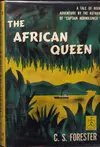
As World War One breaks out, the two lead characters in this book are deep in German Central Africa. The first, the spinster sister of the reverend, who has spent ten years at his side is left alone after her brother passes away. The second is an engineer from a Belgian gold mine two hundred miles further upstream.
Two English people, in the circumstances of the war, they have little other option but to band together to try and find a way out, in the small near derelict launch named The African Queen. Rose and Charlie, an unusual pair soon find their positions in the new relationship, and determine that the only option is to take on the barely navigable Ulanga river to the distant lake, where the German steamer patrols. Their ambitious plan includes improvising torpedos from the mining explosives the launch is loaded with!
So the story unfolds, with the virgin spinster taking control, and the cockney engineer doing as he is told with a ‘yes miss'. Obstacles, rapids and cataracts, mosquitoes and malaria, mechanical breakdowns, gender politics, action and drama. Written in 1935, it is classic action rather than modern action, but a short enough book that you wouldn't notice.
Very entertaining, quick read. 4 stars.
As World War One breaks out, the two lead characters in this book are deep in German Central Africa. The first, the spinster sister of the reverend, who has spent ten years at his side is left alone after her brother passes away. The second is an engineer from a Belgian gold mine two hundred miles further upstream.
Two English people, in the circumstances of the war, they have little other option but to band together to try and find a way out, in the small near derelict launch named The African Queen. Rose and Charlie, an unusual pair soon find their positions in the new relationship, and determine that the only option is to take on the barely navigable Ulanga river to the distant lake, where the German steamer patrols. Their ambitious plan includes improvising torpedos from the mining explosives the launch is loaded with!
So the story unfolds, with the virgin spinster taking control, and the cockney engineer doing as he is told with a ‘yes miss'. Obstacles, rapids and cataracts, mosquitoes and malaria, mechanical breakdowns, gender politics, action and drama. Written in 1935, it is classic action rather than modern action, but a short enough book that you wouldn't notice.
Very entertaining, quick read. 4 stars.

I don't read a lot of fiction, but this is fictionalised - and appears to contain a lot of fact related to the travel and the science (and mathematics) of the two central characters - Alexander von Humboldt & Carl Friedrich Gauss. Both German, and contemporary, it is not clear to me if they ever met or were colleagues / friends, as they are in this book.
Both fascinating men, but very different in their approach to their fields. Humboldt embodies inductive science - based on observation and experience - he is the explorer - the climber, the measurer, the scientist taking samples - plants, animals, rocks. Gauss is pure deductive science an academic, at his desk performing calculations, producing formulae, viewing the stars in his telescope.
Similarly both geniuses, but very much presented here as quite human - flaws well captured in the flow of the novel. The larger crossover with Humboldt and Gauss is surveying - measuring the world. They both develop technique and carry out a significant amount of surveying and cartography.
The third character in the novel is Aimé Bonpland, who travels with Humboldt, and provides a lot of the wit in Humboldt's chapters.
The other constant character is Gauss' son Eugen. Despite being the son of a genius, Eugen is of average intellect. Eugen is a disappointment to Gauss, and shares none of the interests of his father.
This was an enjoyable novel - funny in many parts, well paced, and interesting. The first half was much stronger, and from the midpoint onwards I found myself considering how it would be resolved, or in fact what the storyline here was to resolve. I suspect the storyline is somewhat light, and we are looking at a comparison between the two characters, and their approach to their work, and their lives, rather than pure plot.
In a few other reviews I read, those who read it in its original German and in English have said the humour and tone didn't always translate successfully. I found it pretty amusing, so I was pretty surprised by that.
Difficult to rate, as I haven't the intimate knowledge to know how much liberty the author took with the fictionalisation. I enjoyed it enough to be between three and four stars. Rounded up.
I don't read a lot of fiction, but this is fictionalised - and appears to contain a lot of fact related to the travel and the science (and mathematics) of the two central characters - Alexander von Humboldt & Carl Friedrich Gauss. Both German, and contemporary, it is not clear to me if they ever met or were colleagues / friends, as they are in this book.
Both fascinating men, but very different in their approach to their fields. Humboldt embodies inductive science - based on observation and experience - he is the explorer - the climber, the measurer, the scientist taking samples - plants, animals, rocks. Gauss is pure deductive science an academic, at his desk performing calculations, producing formulae, viewing the stars in his telescope.
Similarly both geniuses, but very much presented here as quite human - flaws well captured in the flow of the novel. The larger crossover with Humboldt and Gauss is surveying - measuring the world. They both develop technique and carry out a significant amount of surveying and cartography.
The third character in the novel is Aimé Bonpland, who travels with Humboldt, and provides a lot of the wit in Humboldt's chapters.
The other constant character is Gauss' son Eugen. Despite being the son of a genius, Eugen is of average intellect. Eugen is a disappointment to Gauss, and shares none of the interests of his father.
This was an enjoyable novel - funny in many parts, well paced, and interesting. The first half was much stronger, and from the midpoint onwards I found myself considering how it would be resolved, or in fact what the storyline here was to resolve. I suspect the storyline is somewhat light, and we are looking at a comparison between the two characters, and their approach to their work, and their lives, rather than pure plot.
In a few other reviews I read, those who read it in its original German and in English have said the humour and tone didn't always translate successfully. I found it pretty amusing, so I was pretty surprised by that.
Difficult to rate, as I haven't the intimate knowledge to know how much liberty the author took with the fictionalisation. I enjoyed it enough to be between three and four stars. Rounded up.

This was a really enjoyable read.
It is not really a novel, more a series of interconnected vignettes, each a small character study of a person or event in the neighbourhood of Miguel Street - in a poor area of Port of Spain in Trinidad. The book is written in some nice subtle use of vernacular - almost patois, not at all challenging or distracting, but for me it really added to the great descriptive writing.
“I know something wrong. Something happen to he.”“You sure this baby for you, and not nobody else? It have some woman making a living this way, you know.”“You better mind you mouth. Otherwise I come up and turn your face with one slap, you hear.”“She look like a drinker sheself.”
Each chapter brings a new depth to the neighbourhood, building on previous characters and events, but written in such a way that the chapter stands alone too. Very clever.
I understand from other reviews that although this was Naipaul third novel published, it was written first. If that is the case it is a great example of a excellent first work. Perhaps even more special given its slightly experimental writing technique.
I have read one other Naipaul fiction (Guerillas), and one of his nonfiction, but for me this is better than either.
Somewhere between four and five stars - probably settling at 4.
Recommended reading.
This was a really enjoyable read.
It is not really a novel, more a series of interconnected vignettes, each a small character study of a person or event in the neighbourhood of Miguel Street - in a poor area of Port of Spain in Trinidad. The book is written in some nice subtle use of vernacular - almost patois, not at all challenging or distracting, but for me it really added to the great descriptive writing.
“I know something wrong. Something happen to he.”“You sure this baby for you, and not nobody else? It have some woman making a living this way, you know.”“You better mind you mouth. Otherwise I come up and turn your face with one slap, you hear.”“She look like a drinker sheself.”
Each chapter brings a new depth to the neighbourhood, building on previous characters and events, but written in such a way that the chapter stands alone too. Very clever.
I understand from other reviews that although this was Naipaul third novel published, it was written first. If that is the case it is a great example of a excellent first work. Perhaps even more special given its slightly experimental writing technique.
I have read one other Naipaul fiction (Guerillas), and one of his nonfiction, but for me this is better than either.
Somewhere between four and five stars - probably settling at 4.
Recommended reading.

To be fair, this is a drop-into-drop-out-again book, rather than a read-cover-to-cover book, so it was my choice to read straight through - probably to the detriment of my enjoyment.
My copy is a VINTAGE BORGES copy (published 2002, 1967 edition), with a cool cover, but i have to admit I prefer the original title of Manual de Zoologia Fantastica. Regrettably, my edition doesn't come with illustrations - I see from other reviews that some do - that might have made it all the better.
The book itself is a chaotic combination (albeit in alphabetical order) of mythical beasts, animals from folklore / traditional stories, and imaginary creatures from literature. Each animal gets a rundown - description, references and context.
Sometimes for me, it got a bit bogged down in references and context, but that was the nature of the book, so it isn't really a fault.
Favourite entries were usually referenced by A Thousand and One Nights, Herodotus or Homer, as well as old favourites - the minotaur, the basilisk, the centuar, cerebus, and dragons in general, the unicorn, the rukh.
Somewhere between 3 and 4 stars for me. Would almost certainly have been an extra star with illustrations. Rounded to 3 stars.
To be fair, this is a drop-into-drop-out-again book, rather than a read-cover-to-cover book, so it was my choice to read straight through - probably to the detriment of my enjoyment.
My copy is a VINTAGE BORGES copy (published 2002, 1967 edition), with a cool cover, but i have to admit I prefer the original title of Manual de Zoologia Fantastica. Regrettably, my edition doesn't come with illustrations - I see from other reviews that some do - that might have made it all the better.
The book itself is a chaotic combination (albeit in alphabetical order) of mythical beasts, animals from folklore / traditional stories, and imaginary creatures from literature. Each animal gets a rundown - description, references and context.
Sometimes for me, it got a bit bogged down in references and context, but that was the nature of the book, so it isn't really a fault.
Favourite entries were usually referenced by A Thousand and One Nights, Herodotus or Homer, as well as old favourites - the minotaur, the basilisk, the centuar, cerebus, and dragons in general, the unicorn, the rukh.
Somewhere between 3 and 4 stars for me. Would almost certainly have been an extra star with illustrations. Rounded to 3 stars.
Added to listOwnedwith 2736 books.


A first novel from this author - In the mountains between the United States from British Columbia two unsuspecting climbers witness a plane crash, finding the pilot dead and a survivor with a suitcase of drugs which they later agree to smuggle to the USA across the mountains for some quick cash. What was a quick money-making adventure, that they were in control of, does not work out as they expected.
There are a few twists and turns to the story, but it is as much a showcase of climbing (snow, ice and rock in equal measures) as it is a drug smuggling adventure and police procedural. The climbing all comes across as technically proficient, and is described in great detail adding up to around half the book. Normally in novels you either get police procedural with a little climbing or climbing with a little adventure crossover, but this really is equal parts.
The three parts of the novel are led by a different character each, giving a slightly different driver in each, but not focused fully from that characters point of view.
This was ok, but not really much more - there were some interesting enough characters in the story - the climbers, the love interest, the American and Canadian detectives working the case, cross border cooperation etc. It was however a quick read, and the pace was good.
2.5 stars, rounded up.
A first novel from this author - In the mountains between the United States from British Columbia two unsuspecting climbers witness a plane crash, finding the pilot dead and a survivor with a suitcase of drugs which they later agree to smuggle to the USA across the mountains for some quick cash. What was a quick money-making adventure, that they were in control of, does not work out as they expected.
There are a few twists and turns to the story, but it is as much a showcase of climbing (snow, ice and rock in equal measures) as it is a drug smuggling adventure and police procedural. The climbing all comes across as technically proficient, and is described in great detail adding up to around half the book. Normally in novels you either get police procedural with a little climbing or climbing with a little adventure crossover, but this really is equal parts.
The three parts of the novel are led by a different character each, giving a slightly different driver in each, but not focused fully from that characters point of view.
This was ok, but not really much more - there were some interesting enough characters in the story - the climbers, the love interest, the American and Canadian detectives working the case, cross border cooperation etc. It was however a quick read, and the pace was good.
2.5 stars, rounded up.


When I finished this book, I was stuck thinking what didn't I like about this book - having decided it would sit in the 2-3 star range, albeit closer to 3.
I still can't really put a finger on exactly what made this a ‘middling' read. Definitely the writing was steady and composed - there wasn't a good deal of variation in pace or modulation in excitement levels. Also the author, while obviously passionate about the countries visited, doesn't transmit any of that passion. He is routinely critical of the lack of facilities, and the interactions with people (who to be fair mostly come across as ‘not all that interesting'), and doesn't go out of his way to find a highlight after 3 lowlights. Try as I might, I also am unable to come up with a highlight to end this paragraph. I suspect if I wrote a travel book, it might turn out a bit like this book.
And to the scope - the author makes three trips in 1968 & 69, extensively covering Romania and Bulgaria, while touching briefly on Serbia (a part of Yugoslavia at that time), and crossing on into Turkey on one trip. Two of the trips commenced in Hungary, which also gets a lot of mentions.
This is not a city highlight sort of travel either. The author and his companions on each trip make for the backroads, calling in small towns and villages, mixing with the common folk equally with the village leaders, local politicians, important folk and dignitaries.
There was a lot of information here, including good backgrounds to the politics and traditions, but it was presently so dryly as to make it difficult to absorb, which was a shame, as my knowledge of this part of eastern Europe needed a hand!
Best I also mention the very good, and very helpful fold out map at the front of the book - opens up to about 400x400mm.
When I finished this book, I was stuck thinking what didn't I like about this book - having decided it would sit in the 2-3 star range, albeit closer to 3.
I still can't really put a finger on exactly what made this a ‘middling' read. Definitely the writing was steady and composed - there wasn't a good deal of variation in pace or modulation in excitement levels. Also the author, while obviously passionate about the countries visited, doesn't transmit any of that passion. He is routinely critical of the lack of facilities, and the interactions with people (who to be fair mostly come across as ‘not all that interesting'), and doesn't go out of his way to find a highlight after 3 lowlights. Try as I might, I also am unable to come up with a highlight to end this paragraph. I suspect if I wrote a travel book, it might turn out a bit like this book.
And to the scope - the author makes three trips in 1968 & 69, extensively covering Romania and Bulgaria, while touching briefly on Serbia (a part of Yugoslavia at that time), and crossing on into Turkey on one trip. Two of the trips commenced in Hungary, which also gets a lot of mentions.
This is not a city highlight sort of travel either. The author and his companions on each trip make for the backroads, calling in small towns and villages, mixing with the common folk equally with the village leaders, local politicians, important folk and dignitaries.
There was a lot of information here, including good backgrounds to the politics and traditions, but it was presently so dryly as to make it difficult to absorb, which was a shame, as my knowledge of this part of eastern Europe needed a hand!
Best I also mention the very good, and very helpful fold out map at the front of the book - opens up to about 400x400mm.
Added to listOwnedwith 2735 books.

A short and readable book about a scientific expedition in the late 1960's into the Okavango swamps to search for a ‘fabled tribe' of Swamp Bushmen. The author is a member of the party, made up of scientists and researchers who are looking in the the depths of the swamps - not fully explored, although accessed by crocodile hunters.
The actual expedition occupies only around a third of the book, the other parts made up by the background to the expedition, the preparations for the expedition and a narrative history of all previous investigations in this area of the Okavango by numerous other explorers over the previous Decades (albeit around the edges rather, and not necessarily very scientific).
The author does a good job with the background, although it does repeat itself in some cases, although this is generally with the more important themes, so was probably purposeful. The writing is colourful, and comes across as accurate. The elements of the book are all interesting, and it is an easy read.
There are some conclusions to the book, which I will not spoil here, but appear from my brief look through Wikipedia to still be accepted and accurate. Some of the science contained however, sounds dated, and almost certainly would be only a simple basis for analysis of the people now.
Also an honourable mention for the dust jacket, which, as is almost always the case with the Travel Book Club Edition, is excellent.
4 stars for me.
A short and readable book about a scientific expedition in the late 1960's into the Okavango swamps to search for a ‘fabled tribe' of Swamp Bushmen. The author is a member of the party, made up of scientists and researchers who are looking in the the depths of the swamps - not fully explored, although accessed by crocodile hunters.
The actual expedition occupies only around a third of the book, the other parts made up by the background to the expedition, the preparations for the expedition and a narrative history of all previous investigations in this area of the Okavango by numerous other explorers over the previous Decades (albeit around the edges rather, and not necessarily very scientific).
The author does a good job with the background, although it does repeat itself in some cases, although this is generally with the more important themes, so was probably purposeful. The writing is colourful, and comes across as accurate. The elements of the book are all interesting, and it is an easy read.
There are some conclusions to the book, which I will not spoil here, but appear from my brief look through Wikipedia to still be accepted and accurate. Some of the science contained however, sounds dated, and almost certainly would be only a simple basis for analysis of the people now.
Also an honourable mention for the dust jacket, which, as is almost always the case with the Travel Book Club Edition, is excellent.
4 stars for me.
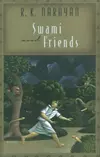
This is Narayan's first book, and therefore the first of his famous Malgudi books.
It is a clever book, in its own way - mainly because it gets into the head of a ten year-old boy, living in a small Indian village. Narayan has really nailed this - the things that are important to a ten year-old, the confusion of a ten year-old, the innocent, lack of understanding that a ten year-old has in the ways of the adult world. It also picks up on the simplicity of relationships - the transition of childhood friendships, the relationship with a father - who is a complex mixture of unfair disciplinarian and hero, the relationship with a doting, but confused grandmother, the relationship with other adults - teachers, headmasters, doctors. In summary, the issues that ten year-olds are troubled with.
It is a short book, it is easy to read, and it is compelling reading - hard to put down.
Each chapter brings a new dynamic or a new situation to be navigated - a new boy at school, a surprise baby brother!, school exams, school holidays, a political protest and a riot, changing schools, the cricket club and a big game.
4 stars.
This is Narayan's first book, and therefore the first of his famous Malgudi books.
It is a clever book, in its own way - mainly because it gets into the head of a ten year-old boy, living in a small Indian village. Narayan has really nailed this - the things that are important to a ten year-old, the confusion of a ten year-old, the innocent, lack of understanding that a ten year-old has in the ways of the adult world. It also picks up on the simplicity of relationships - the transition of childhood friendships, the relationship with a father - who is a complex mixture of unfair disciplinarian and hero, the relationship with a doting, but confused grandmother, the relationship with other adults - teachers, headmasters, doctors. In summary, the issues that ten year-olds are troubled with.
It is a short book, it is easy to read, and it is compelling reading - hard to put down.
Each chapter brings a new dynamic or a new situation to be navigated - a new boy at school, a surprise baby brother!, school exams, school holidays, a political protest and a riot, changing schools, the cricket club and a big game.
4 stars.