
Eduardo Santiago


DNF, p.101. I found it meandering and disjointed, with ornate prose that’s far too clever for me. Occasional snippets of word evolution, but much more text seemed devoted to outrage over the imbecilic things that primitive males believed about women’s bodies, typically without ever having consulted any actual women. I struggled to find cohesion. Maybe I’m just too male and insensitive.
DNF, p.101. I found it meandering and disjointed, with ornate prose that’s far too clever for me. Occasional snippets of word evolution, but much more text seemed devoted to outrage over the imbecilic things that primitive males believed about women’s bodies, typically without ever having consulted any actual women. I struggled to find cohesion. Maybe I’m just too male and insensitive.

Added to listNEA Big Read 2024-2025with 15 books.


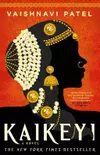
Moving, sensitive, thoughtful, and pretty badass. Although it starts off with a YA feel, it’s not: this is (mostly but not always) emotionally complex. Tough moral questions and decisions. Strong themes of personal responsibility, betrayal, forgiveness. And feminist AF.
Impossible not to be reminded of The Book of Longings: mythologically-inspired fanfic from a female POV. That’s a really tough genre. The constraints are absolutely rigid, so the author has to be careful to work within the gaps. I know nothing of Hindu mythology, so it was reassuring to read the Author’s Note at the beginning in which she describes her familiarity with the canon and the care she took to remain within it. She also has a remarkable postscript in the Goodreads reviews. Read both. I think they show her to be a person of admirable intelligence and ethics. (Despite those, I see some religiofanatic GR reviewers have gotten their “feelings hurt.” I see that as an added bonus.)
The (not a spoiler) Binding Threads gimmick was intriguing. Patel used it a little more than I cared for, and often uncomfortably, but overall effectively. Any power lends itself to abuse, and I see that as part of the author’s point. I really, really loved the relationship dynamics, the first-person narrator’s imperfections, her recognitions of kindness in others. There is a good deal of evil in this book (*cough* “pious sages” *cough) but much more decency and nobility.
Moving, sensitive, thoughtful, and pretty badass. Although it starts off with a YA feel, it’s not: this is (mostly but not always) emotionally complex. Tough moral questions and decisions. Strong themes of personal responsibility, betrayal, forgiveness. And feminist AF.
Impossible not to be reminded of The Book of Longings: mythologically-inspired fanfic from a female POV. That’s a really tough genre. The constraints are absolutely rigid, so the author has to be careful to work within the gaps. I know nothing of Hindu mythology, so it was reassuring to read the Author’s Note at the beginning in which she describes her familiarity with the canon and the care she took to remain within it. She also has a remarkable postscript in the Goodreads reviews. Read both. I think they show her to be a person of admirable intelligence and ethics. (Despite those, I see some religiofanatic GR reviewers have gotten their “feelings hurt.” I see that as an added bonus.)
The (not a spoiler) Binding Threads gimmick was intriguing. Patel used it a little more than I cared for, and often uncomfortably, but overall effectively. Any power lends itself to abuse, and I see that as part of the author’s point. I really, really loved the relationship dynamics, the first-person narrator’s imperfections, her recognitions of kindness in others. There is a good deal of evil in this book (*cough* “pious sages” *cough) but much more decency and nobility.

Abandoned, at 24%. This is not good for my 2021 reading challenge: I'm already two books behind. If I were younger I might slog through... but now, with fewer moments left in my life, I choose to enjoy those moments more — and I am not enjoying this book. At all. Disjointed the timeline is, confusingly so. The characters (so far) only superficially drawn: no depth nor feeling, except for (the author's) heavyhanded scorn toward the Bitter Spinster and the Drunken Ex-Husband. The prose, awkwardly florid at times. (Lovely at times, too, but not enough of a balance for me).
Abandoned, at 24%. This is not good for my 2021 reading challenge: I'm already two books behind. If I were younger I might slog through... but now, with fewer moments left in my life, I choose to enjoy those moments more — and I am not enjoying this book. At all. Disjointed the timeline is, confusingly so. The characters (so far) only superficially drawn: no depth nor feeling, except for (the author's) heavyhanded scorn toward the Bitter Spinster and the Drunken Ex-Husband. The prose, awkwardly florid at times. (Lovely at times, too, but not enough of a balance for me).

“Five senses,” they told me. How chauvinistic that seems now. Understandably so, but still.Remember [b:Flatland 433567 Flatland A Romance of Many Dimensions Edwin A. Abbott https://i.gr-assets.com/images/S/compressed.photo.goodreads.com/books/1435435775l/433567.SY75.jpg 4243538]? (I like to think everyone read that in grade school but am now wondering if it was only us math geeks?) Anyhow, Immense World brought back those feelings of wonder; of imagining what we know is out there but can never, ever fully understand. A dog navigating the world through smell. The countless ways of arranging color receptors, giving some animals a visual experience we can barely even describe. Touch. Vibration, through air (sound) and through ground. Sensing electrical fields. Magnetic fields! How little we know! And of course, [b:bats 197189543 What Is It Like to Be a Bat? Thomas Nagel https://s.gr-assets.com/assets/nophoto/book/50x75-a91bf249278a81aabab721ef782c4a74.png 40899183]. All creatures taking their senses for granted, just like we do, but we have that amazing ability to study and learn and devise instruments that help us see-hear-sense farther. And to imagine.“[...] we can try to step into their worlds. We must choose to do so, and to have that choice is a gift. It is not a blessing we have earned, but it is one we must cherish.” Yong, more than anyone else I've ever encountered or heard of, has made me recognize that gift. Has let me glimpse those worlds of sensation. He does so with compassion and humility.
“Five senses,” they told me. How chauvinistic that seems now. Understandably so, but still.Remember [b:Flatland 433567 Flatland A Romance of Many Dimensions Edwin A. Abbott https://i.gr-assets.com/images/S/compressed.photo.goodreads.com/books/1435435775l/433567.SY75.jpg 4243538]? (I like to think everyone read that in grade school but am now wondering if it was only us math geeks?) Anyhow, Immense World brought back those feelings of wonder; of imagining what we know is out there but can never, ever fully understand. A dog navigating the world through smell. The countless ways of arranging color receptors, giving some animals a visual experience we can barely even describe. Touch. Vibration, through air (sound) and through ground. Sensing electrical fields. Magnetic fields! How little we know! And of course, [b:bats 197189543 What Is It Like to Be a Bat? Thomas Nagel https://s.gr-assets.com/assets/nophoto/book/50x75-a91bf249278a81aabab721ef782c4a74.png 40899183]. All creatures taking their senses for granted, just like we do, but we have that amazing ability to study and learn and devise instruments that help us see-hear-sense farther. And to imagine.“[...] we can try to step into their worlds. We must choose to do so, and to have that choice is a gift. It is not a blessing we have earned, but it is one we must cherish.” Yong, more than anyone else I've ever encountered or heard of, has made me recognize that gift. Has let me glimpse those worlds of sensation. He does so with compassion and humility.

Abandoned, 15% or so (Kindle edition).
Some people like Wuthering Heights and/or The Great Gatsby. I wonder, are they the same ones who like Post Office? The characters in both have no redeeming qualities whatsoever. They're nasty, brutish, unthinking, unkind. It is a torture to experience a world with them in it. I finished WH and TGG because I was young, foolish, and hopeful. This one, nope, life's too short.
Abandoned, 15% or so (Kindle edition).
Some people like Wuthering Heights and/or The Great Gatsby. I wonder, are they the same ones who like Post Office? The characters in both have no redeeming qualities whatsoever. They're nasty, brutish, unthinking, unkind. It is a torture to experience a world with them in it. I finished WH and TGG because I was young, foolish, and hopeful. This one, nope, life's too short.
Abandoned, p.240. I really loved the first three chapters; it then got progressively more tedious, then pompous, and I have other books in need of reading. I'm sorry. I really wanted to love this whole book.
I'm going to keep it, though, and one day reread just the beginning, and try to preserve that in my mind without the unpleasant aftertaste of women-as-property, usury, Whitman, and constant references to judeochristian bullshit.
Abandoned, p.240. I really loved the first three chapters; it then got progressively more tedious, then pompous, and I have other books in need of reading. I'm sorry. I really wanted to love this whole book.
I'm going to keep it, though, and one day reread just the beginning, and try to preserve that in my mind without the unpleasant aftertaste of women-as-property, usury, Whitman, and constant references to judeochristian bullshit.
Abandoned, p.82. It's not funny. I can forgive that. It's not kind—and that, I can't. The essays so far have all consisted of her poking mean-spirited fun at: Americans, for not knowing much about Iran; Americans, for not wanting to learn about her culture; Americans, for wanting to learn about her culture, because those are just wannabe hipsters; her husband, for not mind-reading her precise fantasy honeymoon; and mostly her mother and father, over and over, for not learning English well enough, for not adapting “the right way” to U.S. culture, for being goofy yokels. It's like a surly thirteen-year-old: everything and everyone sucks.
Abandoned, p.82. It's not funny. I can forgive that. It's not kind—and that, I can't. The essays so far have all consisted of her poking mean-spirited fun at: Americans, for not knowing much about Iran; Americans, for not wanting to learn about her culture; Americans, for wanting to learn about her culture, because those are just wannabe hipsters; her husband, for not mind-reading her precise fantasy honeymoon; and mostly her mother and father, over and over, for not learning English well enough, for not adapting “the right way” to U.S. culture, for being goofy yokels. It's like a surly thirteen-year-old: everything and everyone sucks.
Abandoned, p.90. Stories of disasters bringing out the best in us. Cherrypicked anecdotes demonstrating how wonderful and kumbaya it is when disasters happen and survivors organically unite to provide mutual assistance, rejecting payment, everyone acting out of pure unselfish love; then how horrible it is when authorities come in and ruin everything. This was reading more like a utopian manifesto than anything nuanced, informative, or thoughtful. I flipped ahead, got the same vibe, am moving on to my next book.
Abandoned, p.90. Stories of disasters bringing out the best in us. Cherrypicked anecdotes demonstrating how wonderful and kumbaya it is when disasters happen and survivors organically unite to provide mutual assistance, rejecting payment, everyone acting out of pure unselfish love; then how horrible it is when authorities come in and ruin everything. This was reading more like a utopian manifesto than anything nuanced, informative, or thoughtful. I flipped ahead, got the same vibe, am moving on to my next book.

Abandoned; it just wasn't working for me. I usually like the Slavic sly-wink writing style, that little ironic edge where the author brings you in on a shared joke: Balys Sruoga, Milan Kundera, even Solzhenitsyn made it work beautifully. Here, it feels heavyhanded, like the author just thinks the reader is stupid and wants to use a bludgeon to make sure his irony is clear. (Maybe that's part of the joke; if so, I'm not smart enough to get it, and that's OK).
Abandoned; it just wasn't working for me. I usually like the Slavic sly-wink writing style, that little ironic edge where the author brings you in on a shared joke: Balys Sruoga, Milan Kundera, even Solzhenitsyn made it work beautifully. Here, it feels heavyhanded, like the author just thinks the reader is stupid and wants to use a bludgeon to make sure his irony is clear. (Maybe that's part of the joke; if so, I'm not smart enough to get it, and that's OK).

Wankers and poofters and dick jokes. Not for me. Moore can do better (and has).
Wankers and poofters and dick jokes. Not for me. Moore can do better (and has).

Abandoned, p.166. I tried, and I kept going well past where I would've given up on anything else because this was a recommendation from Mira Jacob. But it just doesn't work for me and was becoming painful. I'd call the writing poetic but in a murky way, not florid: it was like Mengiste avoided saying anything directly, preferring instead to hint and dance around even the most mundane actions. This, and the trendy Cormac McCarthyesque lack of quotation marks anywhere, made it too hard for me to follow the story; the characters themselves made it hard for me to care. They're (so far) all unlikable, barbarians trapped in roles imposed upon them by idiotic cultures: beatings, contempt, absence of listening or empathy or basic awareness. Not a shred of connection anywhere.
Abandoned, p.166. I tried, and I kept going well past where I would've given up on anything else because this was a recommendation from Mira Jacob. But it just doesn't work for me and was becoming painful. I'd call the writing poetic but in a murky way, not florid: it was like Mengiste avoided saying anything directly, preferring instead to hint and dance around even the most mundane actions. This, and the trendy Cormac McCarthyesque lack of quotation marks anywhere, made it too hard for me to follow the story; the characters themselves made it hard for me to care. They're (so far) all unlikable, barbarians trapped in roles imposed upon them by idiotic cultures: beatings, contempt, absence of listening or empathy or basic awareness. Not a shred of connection anywhere.

Tunomas Honey
No pude con el tono: ensimismado, hasta buscabulla. No hay relación ninguna entre los caracteres, por lo menos en los cuentos que leí, y no me interesa continuar.
No pude con el tono: ensimismado, hasta buscabulla. No hay relación ninguna entre los caracteres, por lo menos en los cuentos que leí, y no me interesa continuar.

Abandoned ~p.100. The main protagonist is flat, dreary, and unlikely to get interesting. The alternate-chapter Whirling Dervish stuff is treacly and religiony. Absent a recommendation from a trusted source, this goes in the slush pile. For any friends who trust my tastes: not recommended.
Abandoned ~p.100. The main protagonist is flat, dreary, and unlikely to get interesting. The alternate-chapter Whirling Dervish stuff is treacly and religiony. Absent a recommendation from a trusted source, this goes in the slush pile. For any friends who trust my tastes: not recommended.

The whole anthropomorphic-pet thing has never worked for me: pretending that an animal without a prefrontal cortex is just a tiny-human-who-can't-speak is absurd—and not in the enjoyable sense of the word. Add to that some silliness about reincarnation, toss in some pointless car racing, a dash of maudlin, ... and thanks but no thanks.
(Audio CD edition; abandoned partway into 2nd disc.)
The whole anthropomorphic-pet thing has never worked for me: pretending that an animal without a prefrontal cortex is just a tiny-human-who-can't-speak is absurd—and not in the enjoyable sense of the word. Add to that some silliness about reincarnation, toss in some pointless car racing, a dash of maudlin, ... and thanks but no thanks.
(Audio CD edition; abandoned partway into 2nd disc.)

Yikes. I had hoped that Hoff would grow in the ten years after [b:Tao of Pooh 48757 The Tao Of Pooh (The Wisdom Of Pooh) Benjamin Hoff http://www.goodreads.com/images/nocover-60x80.jpg 55188]. He did: he grew batshit.Hoff starts with a good-old-days rant about Man living in Harmony with Nature and Spirits and whatnot before a Great Separation which caused deserts to form and violence and Confucianism. Tin foil hat territory. I had to reread parts of it to see if he really meant all that... and as best I can tell, he does. Maybe in the second half of the book he goes ha-ha just kidding. I don't plan to find out.Piglet and his mafioso bodyguard wander through periodically. Then some ravings about news media and about the American educational system. I give up. I don't want my experience of Winnie-the-Pooh soiled by paranoid ramblings.
Yikes. I had hoped that Hoff would grow in the ten years after [b:Tao of Pooh 48757 The Tao Of Pooh (The Wisdom Of Pooh) Benjamin Hoff http://www.goodreads.com/images/nocover-60x80.jpg 55188]. He did: he grew batshit.Hoff starts with a good-old-days rant about Man living in Harmony with Nature and Spirits and whatnot before a Great Separation which caused deserts to form and violence and Confucianism. Tin foil hat territory. I had to reread parts of it to see if he really meant all that... and as best I can tell, he does. Maybe in the second half of the book he goes ha-ha just kidding. I don't plan to find out.Piglet and his mafioso bodyguard wander through periodically. Then some ravings about news media and about the American educational system. I give up. I don't want my experience of Winnie-the-Pooh soiled by paranoid ramblings.

Couldn't read. Abandoned over a year ago, so I can't remember why, but my recollection was that she just seemed so shallow. Not enough eudaimonia.
Couldn't read. Abandoned over a year ago, so I can't remember why, but my recollection was that she just seemed so shallow. Not enough eudaimonia.
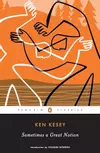
It was really important to me that I love this book... so it hurts to say that I can't. I can't even read it. I'm just not smart enough. From one paragraph to the next Kesey shifts narrator, time, and place. The context switches are abrupt, unsignaled, confusing. I couldn't keep track of who was speaking or what was going on. I feel ashamed and stupid, because if I were smarter or better I'd be able to read it and love it... but I yam what I yam.
It was really important to me that I love this book... so it hurts to say that I can't. I can't even read it. I'm just not smart enough. From one paragraph to the next Kesey shifts narrator, time, and place. The context switches are abrupt, unsignaled, confusing. I couldn't keep track of who was speaking or what was going on. I feel ashamed and stupid, because if I were smarter or better I'd be able to read it and love it... but I yam what I yam.

Cuentos from Long Ago
DNF. Leí cuatro, no pude mas. Son cuentos sin alma: «entonces pasó esto, y entonces esto», sin agencia ninguna de los personajes. Ni dilemas ni tensión ni crecimiento ni moralejas. Sí hay mucha tontería religiosa.
DNF. Leí cuatro, no pude mas. Son cuentos sin alma: «entonces pasó esto, y entonces esto», sin agencia ninguna de los personajes. Ni dilemas ni tensión ni crecimiento ni moralejas. Sí hay mucha tontería religiosa.

Updated a reading goal:
Read 80 books by December 31, 2023
Progress so far: 44 / 80 55%