
Eduardo Santiago


A 300-page motivational speech plugging Internal Family Systems, meditation, self-love, and friendship. That's not really fair, though because it's hella smart, kind, thoughtful, well researched... and, most of all, fun. And did I mention smart? This is the kind of book you hand to a galfriend (of any age) and say Honey, you need to read this, and then you gab about it later over a bottle of wine. Or, if you're not already at peace with your own aging, give it a try: you'll find fresh, sassy material to ponder.
It did grate on me that all the important characters are beautiful, talented, wealthy, and loved. Soaked in privilege. Tara went for escapist; I wish she'd made it relatable. But then I'm not the target audience.
Recommended reading for women over twelve, and for anybody who knows one.
A 300-page motivational speech plugging Internal Family Systems, meditation, self-love, and friendship. That's not really fair, though because it's hella smart, kind, thoughtful, well researched... and, most of all, fun. And did I mention smart? This is the kind of book you hand to a galfriend (of any age) and say Honey, you need to read this, and then you gab about it later over a bottle of wine. Or, if you're not already at peace with your own aging, give it a try: you'll find fresh, sassy material to ponder.
It did grate on me that all the important characters are beautiful, talented, wealthy, and loved. Soaked in privilege. Tara went for escapist; I wish she'd made it relatable. But then I'm not the target audience.
Recommended reading for women over twelve, and for anybody who knows one.

OMG so bleak. Very difficult going at first: hard to feel anything other than contempt for the characters. I persevered, and contempt became pity, which I know is not much better. Finally, halfway through, compassion set in and stayed.
Same day I started reading this, there was an AskReddit thread, What’s something you always assumed was mandatory in life—until you met someone who just… didn’t do it? and almost all the top answers related to communicating, listening, engaging with others. I kept thinking about that while reading. How generational trauma and broken systems trap us with no role models or good examples. How the trauma is passed down and around.
Impressive first work, shows promise. His metaphors felt strained at times ("when night dripped over") and some of the young-child-POV stories were implausibly precocious ("there was no escaping how those problems shaped us all, no escaping the end, like the way the ice melts in the river each spring"). A few continuity glitches and some repetition, likely because these were published previously as individual stories. (This book is described as a collection, and in theory it is, but the stories all form a consistent -- although chronologically jumbled -- first-person narrative comprising one man's childhood through adulthood). Not sure who I'd recommend this to, but I'm glad to have read it.
OMG so bleak. Very difficult going at first: hard to feel anything other than contempt for the characters. I persevered, and contempt became pity, which I know is not much better. Finally, halfway through, compassion set in and stayed.
Same day I started reading this, there was an AskReddit thread, What’s something you always assumed was mandatory in life—until you met someone who just… didn’t do it? and almost all the top answers related to communicating, listening, engaging with others. I kept thinking about that while reading. How generational trauma and broken systems trap us with no role models or good examples. How the trauma is passed down and around.
Impressive first work, shows promise. His metaphors felt strained at times ("when night dripped over") and some of the young-child-POV stories were implausibly precocious ("there was no escaping how those problems shaped us all, no escaping the end, like the way the ice melts in the river each spring"). A few continuity glitches and some repetition, likely because these were published previously as individual stories. (This book is described as a collection, and in theory it is, but the stories all form a consistent -- although chronologically jumbled -- first-person narrative comprising one man's childhood through adulthood). Not sure who I'd recommend this to, but I'm glad to have read it.

Sublime. Brilliant. Laugh-out-loud funny one moment, gut-punch brutal the next. Thoughtful, smart, a beautiful mix of rage and kindness and wish-fulfillment fantasy. Necessary reading.
Sublime. Brilliant. Laugh-out-loud funny one moment, gut-punch brutal the next. Thoughtful, smart, a beautiful mix of rage and kindness and wish-fulfillment fantasy. Necessary reading.

Not sure what this was. Musings on the Covid lockdown in NYC; on writer's block; on writing, writers, art, the future of humanity? Very meta. Bleak at times but--this is Nunez--always gentle.
Not sure what this was. Musings on the Covid lockdown in NYC; on writer's block; on writing, writers, art, the future of humanity? Very meta. Bleak at times but--this is Nunez--always gentle.

Absolutely brilliant in style, narration, and above all content. Maugham uses negative space masterfully: the principal character, around which everything revolves, is mostly absent throughout the book. He appears periodically but his influence is really felt indirectly, through others who are depicted more richly. Too richly: they are for the most part shallow, vapid, inane shells leading meaningless lives, and in fact I nearly abandoned the book two chapters in because of this; I continued because I started understanding Maugham's reason for doing it, and I was rewarded. So take a leap of faith if you find yourself faltering.
Another intriguing use of negative space: the first-person narrator--a proxy for Maugham himself--is mostly invisible. A fly on the wall, one who does interact with the cast but only minimally. For the most part he observes and listens and describes. Which brings me to why I chose to read this: it's because of Kate Murphy's exquisite You're Not Listening. She cites Razor's Edge in her Further Reading list, and indeed there is soooo much awareness here. The narrator has somewhat supernatural powers of attention, noticing peoples' reactions, expressions, and nuances, going in depth into the emotional states involved. A trick that works better in fiction than IRL, where we're better off asking, but that's not always possible and I will assume that the author has a good feel for his characters' mental states. It was effective and showed tremendous sensitivity toward each imperfect creature.
I don't recall ever having read anything like this. Loneliness, search for meaning, privilege, mature views on sexuality and religion and morality, and so much compassion. The fact that it was published in 1944 astonishes me. There's a bit more privilege than I'm comfortable with, not enough (right now) to knock down a star. Just enough to offer you a heads-up.
Absolutely brilliant in style, narration, and above all content. Maugham uses negative space masterfully: the principal character, around which everything revolves, is mostly absent throughout the book. He appears periodically but his influence is really felt indirectly, through others who are depicted more richly. Too richly: they are for the most part shallow, vapid, inane shells leading meaningless lives, and in fact I nearly abandoned the book two chapters in because of this; I continued because I started understanding Maugham's reason for doing it, and I was rewarded. So take a leap of faith if you find yourself faltering.
Another intriguing use of negative space: the first-person narrator--a proxy for Maugham himself--is mostly invisible. A fly on the wall, one who does interact with the cast but only minimally. For the most part he observes and listens and describes. Which brings me to why I chose to read this: it's because of Kate Murphy's exquisite You're Not Listening. She cites Razor's Edge in her Further Reading list, and indeed there is soooo much awareness here. The narrator has somewhat supernatural powers of attention, noticing peoples' reactions, expressions, and nuances, going in depth into the emotional states involved. A trick that works better in fiction than IRL, where we're better off asking, but that's not always possible and I will assume that the author has a good feel for his characters' mental states. It was effective and showed tremendous sensitivity toward each imperfect creature.
I don't recall ever having read anything like this. Loneliness, search for meaning, privilege, mature views on sexuality and religion and morality, and so much compassion. The fact that it was published in 1944 astonishes me. There's a bit more privilege than I'm comfortable with, not enough (right now) to knock down a star. Just enough to offer you a heads-up.
Updated a reading goal:
Read 80 books in 2025
Progress so far: 75 / 80 93%

A portal opens, enabling a race of malevolent greedy subhuman monsters to invade. They torture and kill and destroy.
In this book version, the monsters are stopped by three powerful women and their allies. In the 2025 USA version, ... sigh, it's still up to us.
This was one of his better ones. Good tension, noble characters, decent wit and morality.
A portal opens, enabling a race of malevolent greedy subhuman monsters to invade. They torture and kill and destroy.
In this book version, the monsters are stopped by three powerful women and their allies. In the 2025 USA version, ... sigh, it's still up to us.
This was one of his better ones. Good tension, noble characters, decent wit and morality.

Just not my vibe. DNF, page 40.
Just not my vibe. DNF, page 40.

It was impossible to relate to the narrator: artist type, impulsive, attractive, high drama, poor judgment, completely different life choices and priorities from mine.
It was impossible not to relate to the narrator: King completely drew me in, made me feel immersed in her character's head, care about and for her, even come close to understanding her. At least at the visceral level, so I was shaking my head at her while also rooting for her, and that's an unusual experience for me. The characters are complex, conflicted, inconsistent, human. The relationships are often messy--again, so human. A lot of heart.
This is one of those keep-going books. It got better over time, although the ending felt a little too pat. It's also one of those whoosh books, where I know there's a lot that I'm not smart or talented or educated enough to get but am just aware enough to sense them zooming over my head. And that's OK: this is a book geared toward artists, not engineers; it's just written so beautifully that it resonated... no, not resonated, it affected me. Helped me see the world a little differently.
It was impossible to relate to the narrator: artist type, impulsive, attractive, high drama, poor judgment, completely different life choices and priorities from mine.
It was impossible not to relate to the narrator: King completely drew me in, made me feel immersed in her character's head, care about and for her, even come close to understanding her. At least at the visceral level, so I was shaking my head at her while also rooting for her, and that's an unusual experience for me. The characters are complex, conflicted, inconsistent, human. The relationships are often messy--again, so human. A lot of heart.
This is one of those keep-going books. It got better over time, although the ending felt a little too pat. It's also one of those whoosh books, where I know there's a lot that I'm not smart or talented or educated enough to get but am just aware enough to sense them zooming over my head. And that's OK: this is a book geared toward artists, not engineers; it's just written so beautifully that it resonated... no, not resonated, it affected me. Helped me see the world a little differently.

Informative... at times. But also disjointed, rambling, unclear at times. I did learn: material I never learned in school, and a good bit of filling-in since my departure forty years ago. Overall, though, it was difficult reading in several respects. His timelines meander, making it hard to keep track of track who-what-when. His math is iffy, mixing absolutes and percentages in ways that make little sense ("annual gross national product fell from 7 percent in the 1960s to 2.1 percent in the 1980s" ???). And the wrap-up felt rushed, sloppy.
I did like his focus on social movements and the actors responsible, and on the impact of corruption, cruelty, prejudice, war, and greed on the less powerful populace. So many horrors over so many centuries. Melendez Badillo has a good heart. I do fear that it might blind him to (what I've perceived as) actual problems with puertorican culture: religiosity, willful ignorance, entitlement. (Sound familiar, post-2024 US friends?) Still, his preaching was mostly on target and rarely over the top. I am thankful to have learned about good people who #resisted and still do.
Minor nit that irked me more than it should've: he only refers to PR as "the archipelago." Okay, kudos for including Vieques and Culebra, except he only really talks about them for 2-3 pages so he really just comes off as clumsily pedantic. "PR," "the country," even "la isla" which is what pretty much everyone calls it, would've felt more natural. Not a reason to reject the book, but, why??
[ Note: I read the English edition, because the Spanish one lists a translator credit and this one does not so I assume English is the original. ]
Informative... at times. But also disjointed, rambling, unclear at times. I did learn: material I never learned in school, and a good bit of filling-in since my departure forty years ago. Overall, though, it was difficult reading in several respects. His timelines meander, making it hard to keep track of track who-what-when. His math is iffy, mixing absolutes and percentages in ways that make little sense ("annual gross national product fell from 7 percent in the 1960s to 2.1 percent in the 1980s" ???). And the wrap-up felt rushed, sloppy.
I did like his focus on social movements and the actors responsible, and on the impact of corruption, cruelty, prejudice, war, and greed on the less powerful populace. So many horrors over so many centuries. Melendez Badillo has a good heart. I do fear that it might blind him to (what I've perceived as) actual problems with puertorican culture: religiosity, willful ignorance, entitlement. (Sound familiar, post-2024 US friends?) Still, his preaching was mostly on target and rarely over the top. I am thankful to have learned about good people who #resisted and still do.
Minor nit that irked me more than it should've: he only refers to PR as "the archipelago." Okay, kudos for including Vieques and Culebra, except he only really talks about them for 2-3 pages so he really just comes off as clumsily pedantic. "PR," "the country," even "la isla" which is what pretty much everyone calls it, would've felt more natural. Not a reason to reject the book, but, why??
[ Note: I read the English edition, because the Spanish one lists a translator credit and this one does not so I assume English is the original. ]

Unexpectedly riveting. What a fascinating, complex man, and what an immense debt we all owe to him. Reading this over Thanksgiving weekend I felt especially grateful; reading it in 2025, though, tinged it with grief.
Judge McKeown writes with great care, unsurprisingly, painting his legacy as admirable while always being mindful of his more questionable choices. I loved her decision to label him "Citizen." I might've chosen "Activist," but her choice is far wiser: it humanizes him, makes his work slightly more relatable and hence inspiring. Not many teens are going to be reading this book but maybe their adult role models will, and set examples?
Readers with an ethical mindset may find the book stimulating. My own thinking flipflopped quite a bit regarding his entanglements and conflicts of interest: from How Could He to But Of Course and back through stages in between. Why would it not be okay for a Justice to have an open, outspoken public life on matters of importance? How is it different from today's (lower-case out of disrespect) justices' pursuits of lavish vacations, beer-fueled rape parties, and christofascism? How can we expect someone to recuse themself in the face of evil? I am thankful for Douglas, for his passion and determination and for saving so much of our country. The world would be a much worse place today without him.
Unexpectedly riveting. What a fascinating, complex man, and what an immense debt we all owe to him. Reading this over Thanksgiving weekend I felt especially grateful; reading it in 2025, though, tinged it with grief.
Judge McKeown writes with great care, unsurprisingly, painting his legacy as admirable while always being mindful of his more questionable choices. I loved her decision to label him "Citizen." I might've chosen "Activist," but her choice is far wiser: it humanizes him, makes his work slightly more relatable and hence inspiring. Not many teens are going to be reading this book but maybe their adult role models will, and set examples?
Readers with an ethical mindset may find the book stimulating. My own thinking flipflopped quite a bit regarding his entanglements and conflicts of interest: from How Could He to But Of Course and back through stages in between. Why would it not be okay for a Justice to have an open, outspoken public life on matters of importance? How is it different from today's (lower-case out of disrespect) justices' pursuits of lavish vacations, beer-fueled rape parties, and christofascism? How can we expect someone to recuse themself in the face of evil? I am thankful for Douglas, for his passion and determination and for saving so much of our country. The world would be a much worse place today without him.

There's Type One Fun and Type Two Fun; this book goes into what must be Type Eight or Nine: absolutely nothing fun about it, not even in retrospect, nor reading about it several stages and decades removed. So, don't read this for the fun aspects, unless you're one of those who enjoy HACE and frostbite and pushing beyond human endurance in alpine storms. Read it for the grit; for the determination and strength these women showed in the face of constant obstacles. By which I mean, misogyny and intentional roadblocks by males everywhere. (The mountain, in some respects, seemed gentler).
Read it for insights into leadership under pressure--and the opposite, how extreme altitude and adverse conditions can transform a poorly-performing team into near disaster. Male teams could pick and choose their members from a large pool, replace when personalities clashed. In 1970 there weren't many elite women climbers; this team didn't have the luxury of kicking out assholes. And although most of the team were good people, some were not (or, to be fair, they were not at that time) and they repeatedly imperiled the lives of the others. I was riveted by the team's decision-making processes, their mistakes and the consequences thereof, their subsequent decisions. I'm someone who is mindful of team dynamics; this book really drove home some important points that, I hope, will make me a better person.
Read it for inspiration. These women were remarkable. It's thanks to them that we now live in a world where woman have equal access and opportunity in all fields. [Ed note: this review made it back via a wormhole, from a future time in which this is true thanks to YOUR efforts. Keep strong!]
Like so many books these days, editing was lax. Repetition and padding galore: did we really need to be reminded yet again what crampons are, thirty pages before the end of the book, or (over and over) that air is thinner at higher elevations? "Arlene, Dana, Margaret, Faye, M.Y., and Grace finished packing": what ambiguity could there be in shortening to "They"? These seem like nits, but they accumulated.
There's Type One Fun and Type Two Fun; this book goes into what must be Type Eight or Nine: absolutely nothing fun about it, not even in retrospect, nor reading about it several stages and decades removed. So, don't read this for the fun aspects, unless you're one of those who enjoy HACE and frostbite and pushing beyond human endurance in alpine storms. Read it for the grit; for the determination and strength these women showed in the face of constant obstacles. By which I mean, misogyny and intentional roadblocks by males everywhere. (The mountain, in some respects, seemed gentler).
Read it for insights into leadership under pressure--and the opposite, how extreme altitude and adverse conditions can transform a poorly-performing team into near disaster. Male teams could pick and choose their members from a large pool, replace when personalities clashed. In 1970 there weren't many elite women climbers; this team didn't have the luxury of kicking out assholes. And although most of the team were good people, some were not (or, to be fair, they were not at that time) and they repeatedly imperiled the lives of the others. I was riveted by the team's decision-making processes, their mistakes and the consequences thereof, their subsequent decisions. I'm someone who is mindful of team dynamics; this book really drove home some important points that, I hope, will make me a better person.
Read it for inspiration. These women were remarkable. It's thanks to them that we now live in a world where woman have equal access and opportunity in all fields. [Ed note: this review made it back via a wormhole, from a future time in which this is true thanks to YOUR efforts. Keep strong!]
Like so many books these days, editing was lax. Repetition and padding galore: did we really need to be reminded yet again what crampons are, thirty pages before the end of the book, or (over and over) that air is thinner at higher elevations? "Arlene, Dana, Margaret, Faye, M.Y., and Grace finished packing": what ambiguity could there be in shortening to "They"? These seem like nits, but they accumulated.
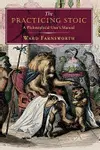
An ingenious premise. Elegantly executed. A delight to read.
The basic idea sounds simple: excerpt the writings of the Stoics, organize by topic and subtopic, add some commentary. The expertise needed to do this, however, and the research and big-picture skills and even hubris ... and then, to pull it off ... I'm in awe.
Farnsworth begins with the most important concept, one pretty much central to Buddhism as well: many events are beyond our control, but we can work to master how we react to those events. He covers this at length and from many perspectives. Subsequent chapters explore other teachings, each with relevant citations and background and clarification; he explains his ordering, and it's quite reasonable, but really chapters 2-11 can be read in any order. Chapter 12, Learning, is lovely: how we continue our practice. He offers overviews and reminders and perspectives gained from the whole book. My favorite part here was how he reconciled detachment and Beginner's Mind (without actually calling it that. He never mentions or acknowledges Buddhism).
I loved reading this with my well-worn translation of the Meditations by my side, to look up and compare interpretations. I loved that he occasionally cites Adam Smith, a much-maligned figure whose philosophy has been coopted by greedmonsters. I loved the occasional Montaigne, reminding me it's been much too long since I've read him. Too long since I've read Seneca, too. The book left me thirsty for more.
Absolutely, unreservedly recommended for anyone with even the slightest interest in living a good moral life.
An ingenious premise. Elegantly executed. A delight to read.
The basic idea sounds simple: excerpt the writings of the Stoics, organize by topic and subtopic, add some commentary. The expertise needed to do this, however, and the research and big-picture skills and even hubris ... and then, to pull it off ... I'm in awe.
Farnsworth begins with the most important concept, one pretty much central to Buddhism as well: many events are beyond our control, but we can work to master how we react to those events. He covers this at length and from many perspectives. Subsequent chapters explore other teachings, each with relevant citations and background and clarification; he explains his ordering, and it's quite reasonable, but really chapters 2-11 can be read in any order. Chapter 12, Learning, is lovely: how we continue our practice. He offers overviews and reminders and perspectives gained from the whole book. My favorite part here was how he reconciled detachment and Beginner's Mind (without actually calling it that. He never mentions or acknowledges Buddhism).
I loved reading this with my well-worn translation of the Meditations by my side, to look up and compare interpretations. I loved that he occasionally cites Adam Smith, a much-maligned figure whose philosophy has been coopted by greedmonsters. I loved the occasional Montaigne, reminding me it's been much too long since I've read him. Too long since I've read Seneca, too. The book left me thirsty for more.
Absolutely, unreservedly recommended for anyone with even the slightest interest in living a good moral life.

Manipulative as hell. Moore relies heavily on teasers: not really cliffhangers--although she throws in some of those--more like throwaway sentences referencing something important that pique the reader's interest and then aren't followed up on for another three or four chapters. Fun the first half-dozen times, formulaic the next fifty. Then the villains: not quite mustachio twirlers, but definitely permanent-sneer types, vile, odious, horrid from the get-go. The good characters did have the decency to be a bit complex, less than perfect, but only just so. Finally, it's pretty contrived: improbable interpersonal dynamics, overreliance on red herrings and serendipitous timing.
I really liked it anyway. The narrative jumps all over the place, lots of characters and timelines, and that was effective in maintaining my interest and engagement. It was atavistically fun to loathe the villains, and emotionally tense to worry about the sheroes. I was pleasantly surprised by Moore's accurate depiction of wilderness survival and search strategies; then delighted to see that she cites Lost Person Behavior, the canonical but obscure SAR reference, in her Acknowledgments. Moore did her homework, and I admire that.
Manipulative as hell. Moore relies heavily on teasers: not really cliffhangers--although she throws in some of those--more like throwaway sentences referencing something important that pique the reader's interest and then aren't followed up on for another three or four chapters. Fun the first half-dozen times, formulaic the next fifty. Then the villains: not quite mustachio twirlers, but definitely permanent-sneer types, vile, odious, horrid from the get-go. The good characters did have the decency to be a bit complex, less than perfect, but only just so. Finally, it's pretty contrived: improbable interpersonal dynamics, overreliance on red herrings and serendipitous timing.
I really liked it anyway. The narrative jumps all over the place, lots of characters and timelines, and that was effective in maintaining my interest and engagement. It was atavistically fun to loathe the villains, and emotionally tense to worry about the sheroes. I was pleasantly surprised by Moore's accurate depiction of wilderness survival and search strategies; then delighted to see that she cites Lost Person Behavior, the canonical but obscure SAR reference, in her Acknowledgments. Moore did her homework, and I admire that.

Bello tributo a la obsesión, inspiración, al genio y los bordes de la cordura. Encontré fascinante como Labatut juega con la realidad, pero no quiero hablar mucho sobre su estilo, aún en spoiler, pues él lo explica en los Reconocimientos finales. Un truco literario muy efectivo y original.
Bello tributo a la obsesión, inspiración, al genio y los bordes de la cordura. Encontré fascinante como Labatut juega con la realidad, pero no quiero hablar mucho sobre su estilo, aún en spoiler, pues él lo explica en los Reconocimientos finales. Un truco literario muy efectivo y original.

Mindblowing, riveting. Humbling: there is so much life and beauty all around us that we rarely get to see because we're in our lit homes or cars or carrying our light with us. I'll never get to see fireflies or glowworms or bioluminescent mushrooms, but maybe you will, and if you can, you should. And we can all make efforts to see moonflowers and moths; to listen to owls; to gaze in awe at bats in twilight. And to be much more mindful about our outside lights. Henion feels a deep sense of wonder over all this amazing life, and she conveys it to the reader.
Mindblowing, riveting. Humbling: there is so much life and beauty all around us that we rarely get to see because we're in our lit homes or cars or carrying our light with us. I'll never get to see fireflies or glowworms or bioluminescent mushrooms, but maybe you will, and if you can, you should. And we can all make efforts to see moonflowers and moths; to listen to owls; to gaze in awe at bats in twilight. And to be much more mindful about our outside lights. Henion feels a deep sense of wonder over all this amazing life, and she conveys it to the reader.

Fascinating and lovely all the way through. Part memoir, part nature guide, and, yes, part manifesto but please don't let that put you off. This is a beautiful work.
Kaishian's nature writing is exquisite. She depicts slugs, crows, mushrooms, eels lovingly: To give someone or something your attention can be a sacred act, she writes, and she does so to every creature she mentions. She blends her memoir effectively into each chapter, acknowledging her trauma (generational and personal) and her healing, her struggles with loneliness, her need for safe spaces, skillfully making each part of herself relevant and strongly tied to the chapter theme.
What I find a stretch is her desire to queerify nature: hermaphroditism in some animals, same-sex couplings in others, fungal sexual permutations, she celebrates them all as "queer" and points them out as counterexamples to cultural heteronormativity. To me, there's a different word that suits them better: "natural." Same with the whole spectrum of humanity. Does she do that as a way of finding belonging? As a way to shock readers into understanding? (Unlikely: the kind of people who think in black-white binary terms, those who need to read this book, are precisely the ones who won't). Or is my cishet privilege coming through in a way I don't recognize? I'd love to hear my queer friends' thoughts on this
Fascinating and lovely all the way through. Part memoir, part nature guide, and, yes, part manifesto but please don't let that put you off. This is a beautiful work.
Kaishian's nature writing is exquisite. She depicts slugs, crows, mushrooms, eels lovingly: To give someone or something your attention can be a sacred act, she writes, and she does so to every creature she mentions. She blends her memoir effectively into each chapter, acknowledging her trauma (generational and personal) and her healing, her struggles with loneliness, her need for safe spaces, skillfully making each part of herself relevant and strongly tied to the chapter theme.
What I find a stretch is her desire to queerify nature: hermaphroditism in some animals, same-sex couplings in others, fungal sexual permutations, she celebrates them all as "queer" and points them out as counterexamples to cultural heteronormativity. To me, there's a different word that suits them better: "natural." Same with the whole spectrum of humanity. Does she do that as a way of finding belonging? As a way to shock readers into understanding? (Unlikely: the kind of people who think in black-white binary terms, those who need to read this book, are precisely the ones who won't). Or is my cishet privilege coming through in a way I don't recognize? I'd love to hear my queer friends' thoughts on this

(Clarification first: this is not a sequel to The Long Way to a Small, Angry Planet. There's a connection, but it's tenuous at best. Don't expect any of the same characters or situations.)
And, with that out of the way, squee again! Not at first — I was slow to catch feelings for these characters — but catch them I did, and it all just kept getting better and better up to the very end. In this book, Chambers speaks to the Broken Ones: those of us with physical and/or psychic trauma, different, weird, hurting. And she writes about grit, compassion, caring, finding one's tribe, one's purpose, one's self. There's a whole lotta love in these books, and okay it can be a little thick at times, but right now I'm A-OK with that. [UPDATE October 2025: reread, and I stand by my earlier comments]
(Clarification first: this is not a sequel to The Long Way to a Small, Angry Planet. There's a connection, but it's tenuous at best. Don't expect any of the same characters or situations.)
And, with that out of the way, squee again! Not at first — I was slow to catch feelings for these characters — but catch them I did, and it all just kept getting better and better up to the very end. In this book, Chambers speaks to the Broken Ones: those of us with physical and/or psychic trauma, different, weird, hurting. And she writes about grit, compassion, caring, finding one's tribe, one's purpose, one's self. There's a whole lotta love in these books, and okay it can be a little thick at times, but right now I'm A-OK with that. [UPDATE October 2025: reread, and I stand by my earlier comments]


Yes, TB is still a thing. Or is it? On the one hand, over one million people die of it each year and millions more suffer. On the other, most of those millions have skin which is high in melanin. Should we care? John Green, along with health professionals all over the world and countless humans, make a convincing case that we should; attorneys representing the Johnson & Johnson corporation, and a few other members of class Republicania I mean Reptilia, argue otherwise. Who's to say who's right?
Green is perhaps the best person to tackle this difficult subject, to make it accessible, and he's done so. His narrative weaves between tragic single deaths and the incomprehensible mind-numbing statistical millions, and he does so in a way that boosts our compassion for all and our anger at the systems that enable these injustices. I admire how he upends germ theory, asserting that TB is not in fact caused by Mycobacterium tuberculosis but by malnutrition, poverty, and stress. Billions of us carry the bacillus, asymptomatic: it's when we suffer that the disease manifests, in turn begetting more suffering. Fiendish. (I don't mean the bug, I mean the human greed that keeps us from responding to this suffering). It was chilling to read this book so soon after Kinship Medicine: so many common threads, so many shared frustrations.
I don't read many white-male authors these days, but Green is a noble exception. He demonstrates compassion and humility and is using his talent for good. Not quite five stars, but am rounding up because of the human importance of this work.
Yes, TB is still a thing. Or is it? On the one hand, over one million people die of it each year and millions more suffer. On the other, most of those millions have skin which is high in melanin. Should we care? John Green, along with health professionals all over the world and countless humans, make a convincing case that we should; attorneys representing the Johnson & Johnson corporation, and a few other members of class Republicania I mean Reptilia, argue otherwise. Who's to say who's right?
Green is perhaps the best person to tackle this difficult subject, to make it accessible, and he's done so. His narrative weaves between tragic single deaths and the incomprehensible mind-numbing statistical millions, and he does so in a way that boosts our compassion for all and our anger at the systems that enable these injustices. I admire how he upends germ theory, asserting that TB is not in fact caused by Mycobacterium tuberculosis but by malnutrition, poverty, and stress. Billions of us carry the bacillus, asymptomatic: it's when we suffer that the disease manifests, in turn begetting more suffering. Fiendish. (I don't mean the bug, I mean the human greed that keeps us from responding to this suffering). It was chilling to read this book so soon after Kinship Medicine: so many common threads, so many shared frustrations.
I don't read many white-male authors these days, but Green is a noble exception. He demonstrates compassion and humility and is using his talent for good. Not quite five stars, but am rounding up because of the human importance of this work.

So much heart. Beautiful flawed characters, running to or running from; some strong, some less so; some demonstrating kindnesses that left me stunned. And grief—so much grief, and bereavement (they’re different), and grit. Klagmann has a gift for depicting loss. Gently, calmly, corner-of-the-eye. The grief we live with every day; that forms us.
Not everything worked for me. Klagmann’s form of magical realism is a challenge: at each introduction of a magical element my first reaction is “no, no, it doesn’t work that way” before I remember to engage my Suspension of Disbelief Engine. (This Impossible Brightness had much the same effect on me. I find my response curious and wonder if others feel similarly.) And halfway through, the parts with the journal, felt a little clunky. Beautiful language, but clearly an exposition tool.
No matter. I am overwhelmingly glad to have kept going, just like with Impossible Brightness. These are characters I wanted to talk to. To listen to. Near the end, thirty pages left to go, I felt myself tensing up: in part wondering how she was going to wind everything up, but then realizing that I was dreading that possibility. I didn’t want the book wrapped up; wanted to live in it a while longer. Still do.
[ Tangent: At the book launch two weeks ago Klagmann remarked on how surprised she felt about the novel's progression, how it went in directions she never imagined when she started writing. After hearing that, it was impossible for me not to read the novel with that in mind: every development had me wondering about paths not taken. It added a thoughtful, but not overly distracting, dimension to my reading. I recommend it. ]
So much heart. Beautiful flawed characters, running to or running from; some strong, some less so; some demonstrating kindnesses that left me stunned. And grief—so much grief, and bereavement (they’re different), and grit. Klagmann has a gift for depicting loss. Gently, calmly, corner-of-the-eye. The grief we live with every day; that forms us.
Not everything worked for me. Klagmann’s form of magical realism is a challenge: at each introduction of a magical element my first reaction is “no, no, it doesn’t work that way” before I remember to engage my Suspension of Disbelief Engine. (This Impossible Brightness had much the same effect on me. I find my response curious and wonder if others feel similarly.) And halfway through, the parts with the journal, felt a little clunky. Beautiful language, but clearly an exposition tool.
No matter. I am overwhelmingly glad to have kept going, just like with Impossible Brightness. These are characters I wanted to talk to. To listen to. Near the end, thirty pages left to go, I felt myself tensing up: in part wondering how she was going to wind everything up, but then realizing that I was dreading that possibility. I didn’t want the book wrapped up; wanted to live in it a while longer. Still do.
[ Tangent: At the book launch two weeks ago Klagmann remarked on how surprised she felt about the novel's progression, how it went in directions she never imagined when she started writing. After hearing that, it was impossible for me not to read the novel with that in mind: every development had me wondering about paths not taken. It added a thoughtful, but not overly distracting, dimension to my reading. I recommend it. ]