J


For a book that covers how we put things into buckets (multiple, hierarchical, potentially fuzzy buckets), this book is really hard to put into a bucket of its own. Really, the biggest commonality across the book is the word organization, which is fitting given the role language can play in how we process concepts. The book starts with an outline of this structure, including some linguistic details about what common elements of language formation tells us about that categorization. Throughout the early part of the book, the sheer scale of information we need to process today (vs evolutionary history) is used to really emphasize that organizing information well is critical.
However, this book isn't an organization system, which it appears is what some people expect. Instead, it is a look at how your brain processes information, puts information into categories, and generally makes sense of the external world. It does use real world examples of things like how businesses handle inventory/displays. There are also occasional tips on how to leverage that information to make the world easier to process without wasting attention on things you can externalize, but they are not the primary intent of the book. While understanding how your brain works is important and valuable to designing an organizational system, this is very much a psychology/cognitive science book, not a self help one. It does cover some high level concepts of a good approach to organization, and the inherent important of organization in terms of cognitive load, in several places, ranging from home, time, relationships, business, and information necessary for decision making, but you will need to do some work to convert the theory to practice.
In the final portion, he touches on the importance of critical thinking and his belief that education should, in the modern world, spend much more time on the ability to sort and process information than merely (implicitly) teaching students to parrot information we feed them, with examples of the unreliability of information in the modern world. This includes evaluating sources and basic numeracy, with basic primers on things like evaluating if simple numbers are reasonable and back of the envelope approaches to solving more complicated questions, and the importance of learning how to learn and externalizing information.
I don't usually do this kind of beat-by-beat breakdown of a book in my reviews, but the content is a pretty eclectic blend of ideas. On my re-read for the sake of this review, I was surprised just how many varied ideas that have formed part of the basis of my understanding of the brain are ones I likely first discovered in this book. A few of the technology references are slightly dated, but they illustrate the concept he's presenting effectively. The end result is excellent, doesn't assume a lot of prior knowledge, and is a pretty reasonable choice for "your one book on the brain" for an intelligent reader looking for broad coverage.
For a book that covers how we put things into buckets (multiple, hierarchical, potentially fuzzy buckets), this book is really hard to put into a bucket of its own. Really, the biggest commonality across the book is the word organization, which is fitting given the role language can play in how we process concepts. The book starts with an outline of this structure, including some linguistic details about what common elements of language formation tells us about that categorization. Throughout the early part of the book, the sheer scale of information we need to process today (vs evolutionary history) is used to really emphasize that organizing information well is critical.
However, this book isn't an organization system, which it appears is what some people expect. Instead, it is a look at how your brain processes information, puts information into categories, and generally makes sense of the external world. It does use real world examples of things like how businesses handle inventory/displays. There are also occasional tips on how to leverage that information to make the world easier to process without wasting attention on things you can externalize, but they are not the primary intent of the book. While understanding how your brain works is important and valuable to designing an organizational system, this is very much a psychology/cognitive science book, not a self help one. It does cover some high level concepts of a good approach to organization, and the inherent important of organization in terms of cognitive load, in several places, ranging from home, time, relationships, business, and information necessary for decision making, but you will need to do some work to convert the theory to practice.
In the final portion, he touches on the importance of critical thinking and his belief that education should, in the modern world, spend much more time on the ability to sort and process information than merely (implicitly) teaching students to parrot information we feed them, with examples of the unreliability of information in the modern world. This includes evaluating sources and basic numeracy, with basic primers on things like evaluating if simple numbers are reasonable and back of the envelope approaches to solving more complicated questions, and the importance of learning how to learn and externalizing information.
I don't usually do this kind of beat-by-beat breakdown of a book in my reviews, but the content is a pretty eclectic blend of ideas. On my re-read for the sake of this review, I was surprised just how many varied ideas that have formed part of the basis of my understanding of the brain are ones I likely first discovered in this book. A few of the technology references are slightly dated, but they illustrate the concept he's presenting effectively. The end result is excellent, doesn't assume a lot of prior knowledge, and is a pretty reasonable choice for "your one book on the brain" for an intelligent reader looking for broad coverage.


Added to listNonfictionwith 154 books.


Added to listIntelligencewith 80 books.

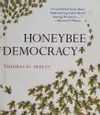
I bought this book with every intention of adding it to my Intelligence list, as the description describes it as exploring the superorganism intelligence/decision making process of bees. For a while, it looked like this was going to be 5 stars, but a miss for the list (or a bit further down at least), as it lays the groundwork with a truly fascinating portrayal of bees generally, along with great explanations of his experimental methodology and the scientific mindset behind the designs, before you get into real treatment of the the bees as a mind.
But the build up is well worth it for the end goal of understanding intelligence as well. Once you have a vivid understanding of how bees work, he does bring it around to neuroscience (though not to the extent that you need significant prior knowledge) and compares it to a traditional, neuron based brain, as well as outlining some ways human groups can improve their process on group problem solving. All in all, an excellent book that is well worth the read for several reasons.
I bought this book with every intention of adding it to my Intelligence list, as the description describes it as exploring the superorganism intelligence/decision making process of bees. For a while, it looked like this was going to be 5 stars, but a miss for the list (or a bit further down at least), as it lays the groundwork with a truly fascinating portrayal of bees generally, along with great explanations of his experimental methodology and the scientific mindset behind the designs, before you get into real treatment of the the bees as a mind.
But the build up is well worth it for the end goal of understanding intelligence as well. Once you have a vivid understanding of how bees work, he does bring it around to neuroscience (though not to the extent that you need significant prior knowledge) and compares it to a traditional, neuron based brain, as well as outlining some ways human groups can improve their process on group problem solving. All in all, an excellent book that is well worth the read for several reasons.