
J


I bought this book with every intention of adding it to my Intelligence list, as the description describes it as exploring the superorganism intelligence/decision making process of bees. For a while, it looked like this was going to be 5 stars, but a miss for the list (or a bit further down at least), as it lays the groundwork with a truly fascinating portrayal of bees generally, along with great explanations of his experimental methodology and the scientific mindset behind the designs, before you get into real treatment of the the bees as a mind.
But the build up is well worth it for the end goal of understanding intelligence as well. Once you have a vivid understanding of how bees work, he does bring it around to neuroscience (though not to the extent that you need significant prior knowledge) and compares it to a traditional, neuron based brain, as well as outlining some ways human groups can improve their process on group problem solving. All in all, an excellent book that is well worth the read for several reasons.
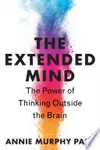

I have a bit of a grain of salt here. Some of the earliest sources of information are studies involving "successful" stock market traders, and almost all the information I've seen is that there is very little correlation between past market success and future success. Additionally, there are a couple other studies cited that I am somewhat skeptical would survive evaluation post replication crisis.
However, I think that bigger picture, most of the ideas here hold up. There is a fair bit of learning and pattern building we do below the level of consciousness, we do process many things better in spatial relationships, externalizing information and work instead of trying to juggle it all in external memory is extremely valuable, etc. Even where I question an individual study here or there, I don't think she's running way away from the bigger body of evidence. I think this is worth a read for most people.


There's a bit of overlap developmentally with The Anxious Generation, but this is also an interesting presentation of how we got to the point we are today, with hyper-polarization, the idea that words are violence, and the messaging that anyone who doesn't agree with you shouldn't be allowed to have a voice at all.


It's hard to put a finger on who exactly to recommend this to. There are portions (starting with the very beginning) that are excellent, hyper accessible narrative illustrations of important ideas, and these I would suggest to anyone. However, some of the other sections are much more abstract and technical, with a much more challenging train of thought to keep up with, that are likely to be confusing without some level of background.
I also, while I do find some of the research inspired by the questions interesting, fundamentally don't care a lot about abstract, pedantic debates about definitions of things like conciousness or free will, and there's a level of that here. However, where he eventually lands is largely consistent with my intuition that makes many of these discussions tedious to me. The arbitrary, meaningless debate is arbitrary and meaningless because, in order to keep it alive, the people perpetuating it have to abstract away more and more of any of the purely theoretical distinctions as their "gotchas" are demonstrated to be nonsensical. For me, this leads to "OK, if this theoretical difference never can be measured and never affects anything, in what context would it have any meaning?". He doesn't present it identically, but he gets to a similar place.
Also worth noting that this is fairly old now, and there are some points where it shows its age. However, with those caveats, this is worth reading and the model is a useful one.


I went in with zero prior knowledge and this is one of my favorites of the year. I love the sense of gravity she brings to the space program and the risks and sacrifices it involves. I love the pragmatic intelligent wisdom of Joan, even as she struggles to apply that element of herself to some of her closest relationships and to recognizing her sexuality. I love the portrayal of NASA as a largely competent and important organization while still giving the weight the difficulties of being a female and homosexual in the organization deserved.
I love the way she finds her peace.


I'm not usually sensitive to repetition, and often see books of this nature talked about as repetitive when I feel their examples are broad and varied. This book is an exception. Many concepts are repeated with relatively little variation, many times. However, I believe this is intentional due to the intent of this book.
The core concept here (and of the cognitive behavioral therapy approach it's built to explain/complement) is to replace harmful patterns of thought with healthier counters and to short circuit harmful loops. Repetition is necessarily part of that, and there's some evidence* that reading the book itself constitutes a moderately effective treatment for depression. Because I believe the repetition and punching you in the face with the "obvious" at times are deliberate and for valid reasons, I wouldn't dock the book for it, but for me personally, I would have liked it edited down slightly.
*https://pubmed.ncbi.nlm.nih.gov/20803165/


He really makes these stories come alive. While the bones are broadly consistent with the mythology to the extent I'm familiar with, he does add modern sounding dialogue, along with asides and his on excellent voice as a narrator. I've read a reasonable amount of Greek mythology and enjoy a lot of the history, and this is the best I've seen at making me feel connected to the stories. He really does a good job of drawing attention to how many linguistic and cultural influences this mythology has without making it dull or dry.


I think there are some decent ideas here. I doubt I'll end up exactly using his proposed approach, but a lot of the core concepts seem reasonable and grounded in how we actually work. Even many places where I disagree raise some interesting points to consider in how I want to handle my own.
One point where I disagree with him fairly strongly is his emphasis on "don't keep everything". In a digital world, for almost anything but video content, the cost to keeping the full content of references (and indexing to make available in a "deep dive full text search" scenario) is too low not to do. I'm much more interested in a hierarchical approach where high level references and tools are extremely refined, and perhaps to multiple levels, but at the very bottom, the ultimate source of truth is preserved. Even when some single point is significant to me in one moment, and is what I want to immediately bring back to mind, access to the broader context is too valuable to throw away. Keeping a library or the chunk of the web that's relevant to you archived is no longer prohibitive, and isn't the same as trying to wade through that big library in physical books. (Though in that older scenario as well, I would still want the physical books to refer back to when needed.)
I additionally fundamentally disagree that gathering information purely for the sake of gathering and organizing information isn't valuable. Organizing and reorganizing is key to learning, understanding, and making connections, whether you turn it into an output product or not. I'm perfectly OK that much of the information I gather may never be used for anything. Saving it because I want to save it is sufficient reason. That said, as with many of the other things he says early that I've had a kneejerk "no" reaction to, when he elaborates further there's a bit more nuance. The "driven by action" focus in terms of how your organization system works does seem reasonable, and his approach to iterative improvement and building better habits of organization make sense. Additionally, while I don't like his "only what you do with it matters" stance at points, I do think he does a good job demonstrating how to go from information gathering to productivity, and the value of structuring information in a way that encourages and facilitates re-use.
If you want an actionable approach that focuses on moving forward instead of retroactively digging through every file across a dozen computers to find the perfect place for everything, this is a reasonable place to start. He gives concrete examples of how he uses every step, illustrates different but similar ways that other successful people have attacked the core concept the chapter is covering, and explains why he does things the way he does. You don't need to copy him exactly, but most people should be able to grab some elements to improve your process.


What is "true" in a scientific sense? One reasonable definition is a model that allows you to make predictions or solve problems. In this sense, Wright makes a compelling case that many of the core ideas of Buddhism, from the idea that we construct a faulty perspective of reality to some of the loop of consistently expecting more satisfaction from goals than they actually provide, is consistent with current understandings of psychology. He also provides a reasonable theoretical basis for some of the ways meditative practices are able to enhance "self" control, even while portraying the concept of an absence of self. He does not claim the supernatural elements of Buddhism are true, and doesn't provide a huge amount of coverage of them.
Some of the language and ideas are foreign to me without a background in Buddhism, to the extent that some of the ideas at the end of the book are really difficult to process. I'm not sure if further exploration of Buddhist ideas will get me there or not. However, at minimum, he has convinced me to spend more time practicing meditation, and to keep an open mind and read further when I get an opportunity.


The predictive model he uses as a baseline for his approach is consistent with many of the other books I'll suggest. His emphasis on cortical columns is not something I've seen before, so I'll need more information to comment on the science there. However, as a model for an actionable approach to AI, I like the groundwork he's laying. I also think, though published before the explosion of LLMs, that he does a great job of articulating some of the limitations of the approaches that they're based on and are why I don't think they'll ever scale to intelligence.


There are some interesting ideas in this book, but unless you're familiar with the predictive brain model, I'd read The Experience Machine by Andy Clark or How Emotions are Made by Lisa Feldman Barrett first. I feel like his coverage is a bit brief for how much he relies on the concept, and it will be easier to follow with a better picture of how broadly applicable the model really is.
Despite that (or because I had done other reading to fill in the gaps), I did enjoy the book. I liked the direct reference to/utilization of Bayesian logic in his use of the prediction framework, and I found the broad ideas of information integration theory and the free energy principle that he covers as potentially interesting and worth exploring further, whether either is actually an accurate model of how the brain works or not.
This book could have been 2-3x the length to give the complicated subjects it covers the depth they warrant.


It's hard to say how I feel about this book. There are very impactful manic episodes, and in general the character is likely suffering from mental illness, and there are moments of humanity where he makes significant sacrifices for others. But he's also a monster and I hate him at times. I'm not entirely sure if I'm intended to forgive him, or if I do.


Another book where the title barely scratches the surface of what it covers. It is a great coverage of emotion, but her presentation is inherently intertwined with how our brains develop, form concepts, learn behavior and ideas, etc. Her wholistic, system driven perspective is really helpful.
The latter portions also discuss our legal system, and while I don't believe she really provides any answers, the questions she raises about how we define intent and how impartial juries and judges are capable of being do warrant consideration.


This book is excellent. I'm not entirely sure if it's optimal to read it as your first book on the brain or if it's better to have a broad background knowledge to allow that other knowledge to settle into and enhance the framework he outlines, but the predictive model he presents provides an excellent system for understanding how our brains work. As I was reading I was constantly seeing other examples he didn't choose that are consistent with this understanding of the mind.
It is also pretty accessible in its own right, with broad coverage of a variety of scenarios where the model is applicable and provides useful insights, and without assuming a huge amount of knowledge. Maybe read it first, be fascinated by the brain it presents, then read it again later and see how your new knowledge fits?
Either way, just read it.
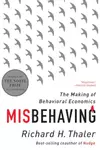


This is another book that's ultimately on bias, and in terms of the research there's a good bit of overlap with Kahneman, but the presentation is different. He really focuses on the economics and the underlying "rational actor" assumption the entire field was built on for decades, and how he used our growing understanding of humans as inherently irrational to help completely change the field. The standard is no longer blindly assuming a perfectly rational person with perfect information acting perfectly in his/her own interest. Instead, the priority is looking at patterns of real behavior in real world situations, and how to apply that knowledge to inform decisions.


This book is somewhat dense. Pinker has done extensive research on the psychology of language and sometimes can't help himself on word choices.
However, it provides an excellent presentation of the ideals that led to the enlightenment and how to apply those ideals in a modern world. It also makes a well structured, well supported case for the fact that those ideals are working and making the world a better place. It pushes back against the loud noise from both sides of the aisle that society is eroding, with an abundance of data showing how far we've come on making food, medicine, education, and human rights available to the planet. It doesn't argue against continuing to push for progress, but shows that we should do so without those new goals being used to diminish the progress we've made. Overall, it's well worth the effort.


This is a little different than I expected, and is a little goofy format-wise, because it has some fairly dense cognitive science and music theory that are probably better suited to a text you pore over, but the audio format is enhanced by concrete examples of some of the concepts covered.
But either way, once it gets the preliminaries out of the way, it uses music as a very useful lens into perception more broadly, emotion, how we structure ideas, and how we learn and develop skills. Other books may cover portions he covers in more depth (his mention of Anders Ericsson's research makes me really want to give Peak another read), but it is a nice broad overview of a number of different concepts, as well as some insights of what elements different musicians are playing with to create their signature music. I definitely enjoyed the read and am looking forward to adding a physical copy to my shelf to re-explore in the future.


Wow.
This book is devastating. I can't speak to the historical accuracy (though apparently Twain did extensive research and claims that all Joan's actions are taken from evidence), but his version makes for one hell of a story. Joan is captivating and you can feel the narrator's devotion to her. Somehow, despite knowing the broad strokes of the history, Twain managed to toy with my emotions and make me feel the alternating hope and despair throughout the church's trial.
This might top The Gilded Age as my favorite Mark Twain story.


I'm not sure how I'd never heard of this book compared to Tom Sawyer/Huck Finn. (OK, it's because they're standard in a lot of curricula.) This book is amazingly full of satire and commentary on the world of the time, done amazingly well. It starts slow and takes time to shine, but once it starts rolling you see every manner of bullshit artist laid bare. The dialogue captures the "art" of spin perfectly. This book reaches masterpiece status for me.


I'm not sure what I expected, but it wasn't really this. Picture a 1600s low end noble with schizophrenic delusions that he's one of King Arthur's Knights, and the entire rest of the nobility trolls him, and you're kind of there. It's a weird thing to say when I read a lot of harsh, violent stuff with sadistic characters, but it kind of feels mean? It might be because of the comedy element, which is definitely there, or because of how close it feels to real mental illness, but there's a level of gut reaction discomfort to that for me. It is a product of its time and the lack of knowledge, and it is a pretty convincing portrayal that's reasonably sympathetic, so I can't bash it for it, but it's there.
I don't like the whole "historian" shtick and all the ways it takes you out of the story, but I tend to dislike a lot of framing devices more than most. I do like several of the individual characters and stories we see along the way.
Ultimately, I do like the two main characters, and did enjoy the read. I think, with today's lens, the fact that he made a character that's mentally ill convincing enough to trigger a visceral reaction is impressive.


Simply fantastic. Sci-fi, from 125 years ago, that still holds up and is relevant today. Obviously the setting is telegraphs and trains instead of cars and airplanes, and the writing itself is slightly dated. But the meat of the story could easily be written, and still feel like futuristic sci-fi, today, with very minor cosmetic changes.