
J


Added to listNonfictionwith 148 books.


Added to listIntelligencewith 73 books.

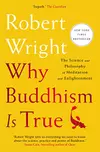
What is "true" in a scientific sense? One reasonable definition is a model that allows you to make predictions or solve problems. In this sense, Wright makes a compelling case that many of the core ideas of Buddhism, from the idea that we construct a faulty perspective of reality to some of the loop of consistently expecting more satisfaction from goals than they actually provide, is consistent with current understandings of psychology. He also provides a reasonable theoretical basis for some of the ways meditative practices are able to enhance "self" control, even while portraying the concept of an absence of self. He does not claim the supernatural elements of Buddhism are true, and doesn't provide a huge amount of coverage of them.
Some of the language and ideas are foreign to me without a background in Buddhism, to the extent that some of the ideas at the end of the book are really difficult to process. I'm not sure if further exploration of Buddhist ideas will get me there or not. However, at minimum, he has convinced me to spend more time practicing meditation, and to keep an open mind and read further when I get an opportunity.
What is "true" in a scientific sense? One reasonable definition is a model that allows you to make predictions or solve problems. In this sense, Wright makes a compelling case that many of the core ideas of Buddhism, from the idea that we construct a faulty perspective of reality to some of the loop of consistently expecting more satisfaction from goals than they actually provide, is consistent with current understandings of psychology. He also provides a reasonable theoretical basis for some of the ways meditative practices are able to enhance "self" control, even while portraying the concept of an absence of self. He does not claim the supernatural elements of Buddhism are true, and doesn't provide a huge amount of coverage of them.
Some of the language and ideas are foreign to me without a background in Buddhism, to the extent that some of the ideas at the end of the book are really difficult to process. I'm not sure if further exploration of Buddhist ideas will get me there or not. However, at minimum, he has convinced me to spend more time practicing meditation, and to keep an open mind and read further when I get an opportunity.

The predictive model he uses as a baseline for his approach is consistent with many of the other books I'll suggest. His emphasis on cortical columns is not something I've seen before, so I'll need more information to comment on the science there. However, as a model for an actionable approach to AI, I like the groundwork he's laying. I also think, though published before the explosion of LLMs, that he does a great job of articulating some of the limitations of the approaches that they're based on and are why I don't think they'll ever scale to intelligence.
The predictive model he uses as a baseline for his approach is consistent with many of the other books I'll suggest. His emphasis on cortical columns is not something I've seen before, so I'll need more information to comment on the science there. However, as a model for an actionable approach to AI, I like the groundwork he's laying. I also think, though published before the explosion of LLMs, that he does a great job of articulating some of the limitations of the approaches that they're based on and are why I don't think they'll ever scale to intelligence.

There are some interesting ideas in this book, but unless you're familiar with the predictive brain model, I'd read The Experience Machine by Andy Clark or How Emotions are Made by Lisa Feldman Barrett first. I feel like his coverage is a bit brief for how much he relies on the concept, and it will be easier to follow with a better picture of how broadly applicable the model really is.
Despite that (or because I had done other reading to fill in the gaps), I did enjoy the book. I liked the direct reference to/utilization of Bayesian logic in his use of the prediction framework, and I found the broad ideas of information integration theory and the free energy principle that he covers as potentially interesting and worth exploring further, whether either is actually an accurate model of how the brain works or not.
There are some interesting ideas in this book, but unless you're familiar with the predictive brain model, I'd read The Experience Machine by Andy Clark or How Emotions are Made by Lisa Feldman Barrett first. I feel like his coverage is a bit brief for how much he relies on the concept, and it will be easier to follow with a better picture of how broadly applicable the model really is.
Despite that (or because I had done other reading to fill in the gaps), I did enjoy the book. I liked the direct reference to/utilization of Bayesian logic in his use of the prediction framework, and I found the broad ideas of information integration theory and the free energy principle that he covers as potentially interesting and worth exploring further, whether either is actually an accurate model of how the brain works or not.


It's hard to say how I feel about this book. There are very impactful manic episodes, and in general the character is likely suffering from mental illness, and there are moments of humanity where he makes significant sacrifices for others. But he's also a monster and I hate him at times. I'm not entirely sure if I'm intended to forgive him, or if I do.
It's hard to say how I feel about this book. There are very impactful manic episodes, and in general the character is likely suffering from mental illness, and there are moments of humanity where he makes significant sacrifices for others. But he's also a monster and I hate him at times. I'm not entirely sure if I'm intended to forgive him, or if I do.


Another book where the title barely scratches the surface of what it covers. It is a great coverage of emotion, but her presentation is inherently intertwined with how our brains develop, form concepts, learn behavior and ideas, etc. Her wholistic, system driven perspective is really helpful.
The latter portions also discuss our legal system, and while I don't believe she really provides any answers, the questions she raises about how we define intent and how impartial juries and judges are capable of being do warrant consideration.
Another book where the title barely scratches the surface of what it covers. It is a great coverage of emotion, but her presentation is inherently intertwined with how our brains develop, form concepts, learn behavior and ideas, etc. Her wholistic, system driven perspective is really helpful.
The latter portions also discuss our legal system, and while I don't believe she really provides any answers, the questions she raises about how we define intent and how impartial juries and judges are capable of being do warrant consideration.

Added to listIntelligencewith 71 books.


