
Jessica Strider


Pros: creepy premise, realistic characters, fantastic world-building
Cons: little action, all but one plot revolves around interpersonal relationships
When Rob kills Winter West in a car accident after a bad break-up with his girlfriend Lorelei, she's sent to Cryomed's ‘bridesicle' facility, where she has the chance to attract a rich man willing to pay for her revival.
The book is built around the award winning novella, “Bridesicle”. Scenes dealing with Mira, the oldest woman in the bridesicle program, are interspersed with the actions of the other characters. It never feels out of place, and as the story progresses, the novella is actively pulled into the larger narrative.
This is a book about the complexity of relationships - between friends, family and lovers. It's a book about people and how they act and react to different situations. It's about death and bringing someone back to life - how that act changes them, changes you.
McIntosh has created a cast of characters that feel like people you know in real life. From the attention hog Lorelei, to the utterly depressed and despondent Rob, doing all he can to keep a promise. Veronika, who knows she's not glamourous enough for the guy she loves, and Lycan, a super shy genius, who has trouble talking to women. And the bridesicles, Mira and Winter, trapped in a living death, desperate to get out, not knowing when or if they'll be revived again. These are all people, unhappy with life and unsure of how to make things better. As their stories weave together they grow, change and learn. And their stories touch you.
The world-building is top notch, taking into account all of the little things that are there but we don't always notice. For example, there's no current day slang, it all pertains to recent tech in the Minus Eighty world. Similarly, one of Lorelei's boyfriends takes on her speech patterns in an effort to impress her. The tech itself is dependant on your status/wealth, with the characters occasionally passing through areas of the city (futuristic NY) that are poorer than others so you get a real feel for the entirety of the world of this future. Even the cryogenics facility is class based, with the rich getting in and only the most beautiful of those uninsured women making the bridesicle program.
This is a brilliant, heart-wrenching story set into one of the most realistically portrayed futuristic worlds I've read. If you want a lot of action and adventure this isn't for you. If you want a book about how humans treat each other, and why, then I highly recommend this.


The edition I read was translated by David Wyllie.
Pros: first use of the word ‘robot', social concerns of using artificial labour to replace humans, fears of uprisings and treating everyone the same
Cons: product of its time with regards to depiction of black nanny, Jewish accountant and infantile womanR.U.R. is short for Rossum's Universal Robots. Written in 1920, this play introduced the term ‘robot' into the English lexicon, though the robots described in the story are human in appearance with skin and tissue rather than mechanical parts. The play begins with the arrival of Helena Glory to a private island where a group of male specialists produce robots based on formulas created by a deceased scientist named Rossum. After the prologue, the play is told in three acts, which take place ten years later, after robots have become indispensable to the nations of the world.The story indirectly addresses fears of robots taking the jobs of human workers, becoming soldiers sent to kill humans, and finally rising up against their human overlords. As the location of the play never leaves the island, the viewer learns about the social impact of the robots on the rest of the world through the interactions of the specialists, Helena, and her nanny.The only con with the play is the obviously racist/sexist depictions of the characters. While the accountant doesn't do anything stereotypically Jewish negating the need to refer to the character as a Jew in the first place (it's easy to overlook the casting direction when you're reading the play and his religion is never mentioned in the play), the nanny speaks in broken English and is treated in some ways as a child by Helena. Helena herself is treated like an imbecile by the men, with them taking care to not to tell her what's going wrong on and off the island.Aside from that, the play is very readable and at 55 pages, only takes a short time to read. It's in the public domain, which means you can read it for free. I found my copy at manybooks.net.(Edited July 2013) According to a comment on this review on Goodreads by the translator, the nanny was meant to have a Prague accent rather than depicting a black nanny as I assumed. I read her lines like the broken English you hear in films like Gone With the Wind and didn't consider the time/place of the play's production. This is also something that would come across when viewing the play that's isn't necessarily easy to get when reading it. My apologies for this error. I've also spellchecked the review, removing the typos.


Pros: candid stories, lots of cultural details, reads like a novel, good pacing
Cons: limited descriptions of sites of interest, no pictures
After getting divorced, Savannah's mother decides she wants to see the world and starts planning a year long family trip. At 14, a year away from school and friends doesn't appeal to Savannah, who fights the trip every step of the way. Until, in China, she starts to see that maybe seeing the world - and getting a different kind of education - isn't such a bad thing.
This is a highly personal story, from Savannah's point of view, highlighting her complaints and moments of personal discovery. While she starts off a bit whiny, the author does a great job of showing her state of mind without annoying the reader. It makes the people real as you read their experiences, which often deserve a few whines. As someone who's backpacked in several countries I'm amazed at the privations they dealt with while crossing China and Mongolia.
This book chronicles the first few months of what was supposed to be a one year trip and ended up being four. It covers their adventures starting with the decision to go, including getting rid of all their pets and dealing with the older brother's sudden bout of cancer, to their layover sleeping in the airport in Korea on the way to Hong Kong, through China and into Mongolia. It ends with them heading off to Russia after numerous adventures.
It reads like a novel, with dialogue and crises every few pages. Grace also maintains interest by adding reminiscence scenes during their travel to things that happened earlier, like the reason for her parents divorce. The descriptions tend more towards the family's impressions of places and the harsh circumstances of the trip (long overnight trains and buses where sleep is difficult, unpleasant to non-existent bathrooms, physically strenuous days, unique snacks and severe culture shock), rather than to the famous, and not so famous, sites they visited. For example, you get more description of how difficult it was to climb the thousands of steps of Emei Shan than the view at the top or the more well known city of Xian and the terra cotta warriors. Indeed, she focuses on places most people haven't been and won't go, which again increases the interest factor.
The only real downside to the book was the lack of photos. It would have been awesome to read about a particular place and see several photos of the location. Pictures are up on the author's website (www.sihpromatum.com), but there aren't any in the physical or ebook (available on kindle only) editions.


Pros: horrifying invasion story, believable protagonists, compelling story
Cons:
For Parents: some swearing, kissing, the violence isn't graphic but there are child soldiers, executions, and murder
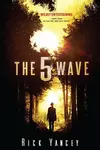
Cassie has survived the first 4 waves of the alien invasion: light's out, surf's up, pestilence and the silencer. Seven billion people didn't, including her mother and father. Her five year old brother was taken away in the 4th wave. Now she waits for the 5th wave and the courage to keep the promise she made to her brother, that she'd come after him.
This is a brutal invasion story. These aliens know how to wipe out humanity and do so in sweeping waves, each more destructive than the last. Through Cassie's eyes we learn about the 4 previous waves, and through her eyes, and those of a few other characters, we slowly learn what the 5th and final wave is.
There's a fair amount of violence, particularly when the child soldiers come into the picture. But it's violence that serves a purpose and isn't graphically portrayed. This is a book that questions humanity. What will humans do to survive? What makes you human in the first place? The book doesn't answer these questions, making it a great jumping point for discussion.
The characters are believable, falling apart under the pressures of the new world and picking themselves up again because doing otherwise means death. This makes the book difficult to put down. The writing is intense and while you may see the revelation that is the 5th wave coming, it doesn't stop it from being horrifying in its implications.
The ending is very tense, though I'm not sure I believe the kids could accomplish everything they do, and it ignores the larger picture. But it does give a good closure for the book.
I highly recommend it.


Pros: hard SF, interesting characters, complex interconnected story lines
Cons: characters sometimes solve problems too easily, ending felt too pat
Jane Navio manages resources for 25 Phocaea, an asteroid settlement. When an accident destroys most of the current shipment of ice that provides water, air and fuel for the colony, she's beset by numerous problems. A feral sapient is born from the disaster and must be dealt with before it creates havoc and the martian mob appears to be the only ones in possession of enough ice to save them. But Jane's dealth with the mob before, on her previous home, Vesta. She barely escaped with her life. Many others she knew weren't so lucky.
Meanwhile, four young bikers who happened to be at the scene of the accident, keep getting in and out of trouble as they cross paths multiple times with those investigating and those exacerbating the crises.
This is a clever hard SF story with multiple major conflicts and some great protagonists. Jane is a complex character who's used to dealing with politics even though she's not keen on them. She's first introduced making a life or death decision reminiscent of Ripley, but while she's got a cold exterior, she's got a sense of morality that won't let her deal with the mob, even when their ice shipment appers to be the colony's only means of survival.
While the book focuses on certain people, it's clear that this is a large colony, with multiple layers of bureaucracy that are mentioned when necessary, but not in enough detail to swamp the book. I only remember one occasion where a name was mentioned and I couldn't place it because it was a beurocrat only mentioned in passing before.
The larger world is also shown to have complex politics and economics, even if they're only hinted at. There's the martian mob, the ‘Stroders (cameras that record what happens in the colony) sending data to reality TV watchers on Earth, and the Earth politics that made gene splicing illegal and forced the Viridians to emigrate. Apparently Canada's no longer a nice place to live, as it's referenced as having refuge camps and detainee centres.
I appreciated the mix of races and religions represented, as well as sexualities, from the expectant homosexual couple barely mentioned in a park to the Viridians who prefer non-gendered pronouns that reflect their gene spliced states.
One of my favourite things in the book was Tonal-Z, a music based programming language used to talk to the feral sapient. The acknowledgements credit a real life interface concept as the genesis for it and I'd have loved to see more of it in action.
The only problems with the book that I found were that the 4 teens kept running into more and more problems in a way that started to feel manufactured even though there were logical reasons why they were in each of the places. And while I liked the fact that, given the locations, characters realized if they were going to get out of bad situations they needed to save themselves as the chances of someone else learning of their problem and/or arriving in time to help were slim, there were a few times when characters got out of tough spots remarkably easily. Similarly, given all the problems the protagonists faced, the ending seemed a little too pat.
If you're looking for space battles, look elsewhere. There are a few fight scenes (which are all remarkably different), but on the whole this is a cerebral SF novel.
If you like interesting science, cool characters, depictions of what it might be like to live in space and complex world building, then give this book a try.


Pros: very interesting mystery, well paced, some great twists
Cons: characters don't consider that the past dangers might still be around, don't really get to know any of the characters
Nate Tucker's new apartment has a few issues. The kitchen light always shines as a blacklight, no matter what bulb he puts in, the cockroaches are green, and the elevator doesn't work. But the price was unbelievably low for L.A. and his data entry job doesn't pay well. The mysteries of the building intrigue him and he slowly gathers a group of other tenants who want to know why it is the way it is and why so many rooms are padlocked.
When I requested this for review I thought it was a horror novel. It's not. The cover's calling it an “Apocalyptic Mystery” is accurate. There are no jump out of the closet scares. But, the last third of the book has a lot of horror based imagery (and location) in it. The book is predominantly a mystery regarding the apartment building. Why does each room have a different layout? Why does room 14 have four padlocks on it? What's up with the mutant cockroaches? Where's the elevator? Some famous people are mentioned, including an important horror author, whose works the last few chapters reference.
The mystery is very intriguing and is well paced so you never get bored. And this building is WEIRD, with a lot of minor and some major issues the group discovers.
The characters themselves are interesting, with all sorts of backgrounds. You don't learn as much about them as you'd like, but it makes it feel real as how much do you know your neighbours?
Most of the twists were completely unpredictable, though I was surprised that, given what they'd discovered, the tenants never considered that the danger that faced the people who built the building might still be around.
The ending fit all of the build up, being appropriately freaky and challenging.


Pros: historical accuracy, intricate plot, complex characters
Cons:
The year is much colder than usual as Jane and Vincent visit with her family, and while they know the coldmongers aren't to blame, those less educated in the working of glamour aren't conviced. They take a commission for a glamural in London and ask Melody, whose marriage prospects at home are slim, to accompany them. But the weather remains dark and cold, and riots are breaking out. And when Vincent's family comes calling, things get worse.
Like Kowal's other books in this series, this one starts off by showing the life and times of the Vincents and slowly adds in intrigue. Only at the end of the book, when the full plot is revealed, do you realize how brilliant Kowal's writing is.
She takes great care getting the details in her book accurate, with notes at the back where readers can both check up on her facts and contact her if they discover an error.
The characters continue to grow, even as they're sometimes reminded of the events of the previous two books. The finale depends heavily on the climax of book two, so keep that in mind if you chose to start here.
This book didn't have the uneven pacing of book two, and, with its ending, is probably my favourite of the three so far.


Pros: interesting premise, great characters, positive depictions of lesbian relationships, positive depictions of handicapped, thought provoking, doesn't provide easy answers, great use of linguistical shifts
Cons: underdeveloped world-building, less development than the story deserved
For Parents: no sex but there is kissing, swearing done in German, minor violence
After a mysterious disease turned all men into ‘Cretinous Males' with degenerative disorders, humanity chose 300 specimens of female perfection on which to build Society. Hatched from tanks, those without modifications are human. Those with modifications are klons, stronger and without the passions and intelligence of their human similars, they serve so the humans can achieve their full potential.
Rubrik and Salmon Jo are sixteen, schatzies (lovers), and leaving the academy for their first mentoring assignments in the city. Rubrik is an artist. Salmon Jo is a scientist working at the hatcheries. When Salmon Jo makes a startling discovery about the klons, their lives are forever changed.
This is a quick, fun read. The characters are a little quirky and their relationship fantastic (no angst, no unwarranted fights or wafflings of affections, no love triangles, just a nice, functional relationship).
I loved that the girls are products of their society, thinking pregnancy and males (at least on Rubrik's side) are disgusting. Similarly, the linguistical shifts, adding in some German words (or, German based words) was neat, and I loved their misunderstanding/misuse of the word ‘hacker'.
Later in the book there are some descriptions of handicapped people that are done with great care and respect. Indeed, this is a great book for questioning biases on several accounts, and specifically what makes a person human. I loved that the author provided no answers, just ethical and philosophical questions
The biggest downside to the book was its low word count. The publisher lists the page count at 264, but the epub file on my iPad came up to 108. On numerous occasions the pacing felt rushed as the story jumped from one aspect to another trying to get everything in. I think the world-building especially suffered here. There's enough information to follow the story, but I'd have loved to see it fleshed out better, especially given the complexity of the issues being addressed.
Also, things on the whole go too easily for the girls. With very little planning most of their crazy schemes turn out ok, which seemed a bit far fetched considering what they were doing.
Still, it's an interesting read.


Pros: gorgeous setting, lyrical writing, interesting characters and magic, unique creatures
Cons: Jenn is surprisingly obtuse at times, uneven pacing
Jenn has never been outside the village of Marrowdell, but she's turning 19 soon and with adulthood comes her opportunity to leave and visit all the place she's heard of. But Jenn is special, and if she leaves Marrowdell, it will destroy not only Marrowdell but the magical Verge it borders.
A dragon, and creature of the Verge, Wisp's penance is to keep Jenn happy - and in the village. But when she wishes him into human form, it becomes more difficult to do both. Because now that he's a human named Wyll, she can marry him, and fulfill her dream to leave.
Bannon is a Rhothan captain and a truthseer, able to see lies. His country's new alliance has forced him to leave and search for a new home. When he stumbles on Marrowdell he realizes he's found it. He quickly falls in love with the village, the life of a farmer, and Jenn.
The Great Turn is coming, an eclipse during which anything is possible. And Jenn isn't the only one hoping to change her destiny.
Czerneda's writing is very lyrical and she does a brilliant job bringing Marrowdell and it's people to life. You quickly get a feel for who's who and what the various connections between the families are. Peggs, Jenn's older sister, who funnels her emotions into baking, was especially fun to read about.
The magic in the book is interesting, from Jenn's ability to wish things into being to Wen's ability to talk to the Verge creatures trapped on their side. I especially liked how Wainn, considered simple, has wisdom where magic and knowing yourself comes into play.
The Verge creatures, dragons aside, are all unique to this book. I loved how they look different in the human realm vs when they're in the Verge.
This is a book that calls out the joy of the fantasy genre. Reading this I felt how I did when I was younger and reading a book for the first time - fully immerserd in the experience. Czerneda's book feels fresh and optimistic in a way I'd forgotten fantasy could, what with the influx of gritty, more ‘realistic' fantasy these past few years.
That doesn't mean it was perfect. My main complaints centered on Jenn and her use of magic. For the most part I really liked her, but there were times when she seemed very naive of consequences and the fact that other people have wishes and desires that might disagree with her own. She's also fairly oblivious to her use of magic, which makes sense when she doesn't know she can do magic. But even once she learns what she is capable of, she still somehow remains ignorant of the magic she performs. I also disliked how, though she promises to ask Wisp/Wyll (as a human) what he wants before making decisions for him, she continues to do so anyway.
Because the book is so long and focused on so many people, I found the pacing somewhat uneven. There were parts that were fascinating and others that weren't. At times my interest was in the sections dealing with magic and the main plot while at other times the scenes that were about village gossip and daily life were much more fun. And while I enjoyed the various romance threads, particularly Peggs', Jenn's waffling about which guy she wanted drove me nuts.
The ending was a little anti-climactic given the build up. I did, however, appreciate that it didn't depend on everyone keeping secrets. Indeed it was great seeing everyone learning about the various difficulties Jenn would face and trying to find solutions. I also liked that the various plot points were tied up, making this a self-contained novel, though it's the first of a series. Still, if you like a good pay-off with lots of action, you won't find it here.
If you're nostalgic for the feel of wonder in your stories or like soap opera style drama than this is for you. If you want action and gritty reality, look elsewhere.


Pros: interesting story, fast pacing, unique aliens, complex plot
Cons: too many big revelations at the end made it hard to comprehend them all
Sam Shao's apartment is attacked and her adopted military father accused of treason and taken away by four military personel. Aside from the fact that Sam knows her dad's innocent, she's also stunned that one of their attackers is a disguised haan. As a surrogate for haan young, Sam is able to pick up on the aliens' emotions through her brain-band and can't understand how one of the fragile beings could survive the violence of the attack and its aftermath. Running from the authorities, Sam tries to figure out what her father discovered that's worth killing for.
This is a fast paced SF thriller, jumping from place to place as Sam tries to find a twistkey her father acquired and hid. Along the way she gets help from a hacker friend, a rogue haan and friends from her, and her father's, pasts.
The story takes place in an overcrowded future, where street meat and scrapcake (made from human flesh) are illegal substitutes for feeding humans when over 80% of the food produced goes to feed the alien haan in return for haan technology. Some of the descriptions in the book are brutal, as humans are pushed to the brink of reason.
The plot is complex and it's interesting watching Sam try to avoid the various groups hunting her. Information about what's really going on is doled out in bits and pieces, making it hard to put the book down. I did find the ending a bit rushed in that you learn a LOT, too much to process so quickly. I'm sure I missed a lot of the nuances of Sam's discoveries because there were so many all at once.
The aliens were really cool. The more you learn about them the stranger they become.
In the end I really liked the book, though I'm hoping if there's a sequel some of the end of book revelations will get more discussion.


Pros: characters feel real, interesting story, compelling, emotionally gripping
Cons: Kate's cruelty made her queenship hard to understand, worldbuilding had some gaps
Seth is an angry child, abandoned by his mother and ignored by his father. Only his older half-brother, Conal, cared for him in his youth. So when Conal is exiled to the mortal realms by Kate, the Sithe queen, Seth travels with him. But life in the late 16th century is hard, especially when they're obvious targets for the witch craze. This is the first part of Seth's tale.
I'm not a fan of character driven novels, but there are exceptions to every rule. And boy, is this an exception. Seth's angry youth and damaged pride grabbed my interest and never let it go. This isn't an angsty story and Seth does grow up, but he only learns there are more things in the world that deserve his anger and that love brings its own kinds of pain.
As a narrator, Seth constantly alludes to future happenings, meaning that even when things are going well for him in the book - as rare as that is - it won't last. Indeed, the tension caused by knowing things will get worse is partly why this book was so compelling. It's also what makes the ending so forceful.
I was surprised that Kate, a queen who ruled by consent, was able to keep power considering as readers we only hear of the cruel things she does. I found this a flaw in the worldbuiding, that we're so focused on Seth's family's dun (holding) that there's no sense of a larger world on their side of the veil.
It also took me longer than I'd care to admit to figure out that the Sithe switched terms with humans, calling themselves human beings, us the full-mortals and stories about us ‘fairy stories'. At first I thought the fairy story reference was an error. This swapping of terms could have been made clearer, though Philip did do a great job of explaining other aspects of Sithe culture through realistic circumstances. I loved the inclusion of truenames and water-horses, and the Lammyr were a creepy invention. There was also a great conversation half way through the book between Seth and one of his lovers about some differences between Sithe and mortal customs with regards to women. And I loved that the Sithe were an equal society, with no bias with regards to lovers, though also little love for offspring.
I don't always mention this but there are 2 rapes that occur in the book. One is off stage and neither is described in any detail. I appreciated the care given one of the characters with regards to healing and finding love despite the reality of the horrors of the world.
Ultimately it's a great book that's hard to put down, though it won't leave you feeling warm and fuzzy at the end.


Pros: fascinating premise; intelligent characters; great mix of humour and sadness; linguistic shifts, history and scientific cohesion give a sense of realism, minor romance
Cons: everything goes a little too perfectly for Jarra
Jarra is an ape, a throw back, a nean(derthal), handicapped: a human born with an immune system that won't allow her to portal to other worlds the way the Norms can. Dumped on Earth to be raised by Earth Hospital as a ward just after birth. She's fascinated with history, having worked on archealogical digs from the time she was 11. She wants to prove that she's as good as any Norm, so she enrolls in a pre-history course run by an outside university for the purpose of meeting, fooling, and then telling off some Norms. But as she gets deeper and deeper into her cover story, lying about most aspects of her life, she also realizes that maybe she didn't think her plan through very well. And maybe these people don't deserve her hatred any more than she deserves their derision.
Set 600 years in the future, the book touches on a lot of science (solar arrays, Planet First, colonization, and most importantly, transportation portals), but the main focus of the book is on Jarra's decisions. This is a character driven book that reads at a quick pace (I finished it in a day).
The author does an amazing job of making Jarra feel real. One minute you're laughing out loud and a few pages later you're crying. Jarra is almost a Mary Sue in that everything seems to go well for her, but she's definitely got some negative character traits. And around the half-way mark something goes very wrong that affects her deeply.
I loved the linguistic shifts that allowed the characters to swear without swearing, and showed how culture and morality had shifted (both due to time and on various planets). For example, Beta is more sexually liberated than the other systems, allowing for nudity and having triad marriages. Meanwhile Gamma, who runs the university course Jarra is on, is much more conservative.
While most of the characters were 18, there were a few instances when they acted younger (mostly when baiting each other at the beginning of fights) but they generally acted their age, learning more about the freedoms of adulthood without going overboard.
There's an understated romance that pops up about half way through the book. I really appreciated the mature way it was handled. Unlike most teen books where angst rules, here the characters thought carefully about the future and what their current decisions would mean for their future. I also liked that when Jarra was strong her beau went along with things, but when she needed help he stepped up, showing that they were both strong characters, but in different ways.
While in no way preachy, the book examines prejudice - and how it can hurt people on both sides. Facing your own beliefs - both positive and negative - is a part of growing up, and it was nice to see Jarra questioning her hatred once she's interacting with Norms, rather than watching them in vids. The Norms too, get some lessons on how important - and knowledgable - the Earth dig teams are, making them question their beliefs.
The book has a few flaws but I highly recommend it. The humour alone is worth the read.


Pros: great characters, complex story, multi-racial cast
Cons: Kayla and Devak's waffling with regards to their relationship got a bit irritating, several plot twists were obvious
It's been several months since the events of Tankborn and Kayla misses Devak. He's been avoiding meeting with her and she's not entirely sure why. Her transport job with Risa has kept her from visiting home and though she's done a lot of work for the kinship, transporting information and materials, she's not as sure their goals are in line with hers anymore.
Two other matters concern her: the spread of the Scratch, a plague that only infects GENs, one their internal circuitry can't cure, with a 100% mortality rate. That is, 100% until one victim came back to life with the ability to heal others. And the graffiti scribbled on the door of a warehouse that blows up: Freedom. Humanity. Equality.
This is a great book with a series of complex, interconnected plots. The characters are great, with a mix of races represented, and a positive portrayal of a lesbian couple.
Kayla's dealing with several issues, both in her love life and with regards to her treatment by the kin. She's fed up letting people mess with her brain without explaining what they're doing, even if it's just to transport information from one group to another.
While I found her relationship issues with Devak a bit irritating over the course of the book, I acknowledge that it's a realistic portrayal of how two sixteen year olds react in the face of challenges they hope - perhaps without hope - to overcome. Devak's realized just how hard a relationship with a GEN would be, and even if Kayla took the treatment that would turn her into a lowborn, a life together would be difficult. She meanwhile feels he's making decisions for her, just like the other trueborns in the kinship.
Some of the plot twists were fairly obvious, but that didn't make the book easy to predict. There were a number of twists I didn't see coming, particularly the cliffhanger ending.


Pros: realistic world, fascinating protagonist, good pacing
Cons: protagonist is remarkably lucky
Isabella, Lady Trent, looks back on her life in this memoir. It begins with her as a child obsessed with dragons and some of the crazier things she did in order to learn more about them. Her hijinks don't end as she becomes a young lady looking for a suitable match with a library he'll let her read. The book concludes with the first of what would be many excursions researching dragons.
Peppered with illustrations by Todd Lockwood, this is a gorgeous book. The print is a faded brown, rather than black, making it feel old and venerable.
Brennan obviously cribbed from history for this, as Scirland feels much like Victorian England in its social conventions and expansionist ideals. Similarly, Vystrana made me think of Eastern European villages, perhaps along the Russian border (as they're ruled by a Tsar). Regardless of what she cribbed from however, the world feels REAL. There are numerous languages, religions, customs, economic concerns, social concerns (different for men and women), class concerns, etc. In many ways, reading this memoir felt like reading an actual memoir, with just enough details about the daily life and times of the protagonist (which she mentions were different from the life and times of the present from which she's writing).
The pacing is great, with new challenges appearing for Isabella just as the previous ones are dealt with.
The only problem I could see with the book was that Isabella is amazingly lucky. She manages to get herself in and out of some difficult situations with fewer negative consequences than one would expect.
The ending is properly shocking, with the acknowledgement that there's more to the story. Given what she goes through in this volume I look forward to reading about her further adventures.


Pros: interesting stories, historical grounding and commentary, gorgeous illustrations, necessary warnings with regards to reading historical documents and dealing with non-European stories about dragons
Cons: too short!
Myths and Legends is a new series by Osprey Publishing. If you've never heard of them, they publish a lot of short, detailed military history series: Men at Arms, Fortress, Campaigns, etc. Each volume is a crash course in a very specific aspect of history: Byzantine Imperial Guardsmen 925-1025, The Fall of English France 1449-53, M103 Heavy Tank 1950-74. The Myths and Legends series is part of their Osprey Adventures books, ‘where fact and fiction meet'. The three volumes currently in print are: Jason and the Argonauts, Dragonslayers, and The War of Horus and Set.
Dragonslayers is specifically about the European tradition of serpentine monsters, how their legends evolved and who killed them. The book starts with an explanation of what a dragon is, historically speaking, and how the image of the dragon evolved into the creature we think of today. There are a lot of gorgeous illustrations throughout the book, both historical and ones commissioned for this book by Peter Dennis. Unlike the older images, Dennis places his subjects in period appropriate clothing. For example, Sigfried/Sigurd is often depicted in barbarian skins. In this case, Dennis paints him in the armour of a 6th C. Germanic warrior. Dennis also uses the actual descriptions of the dragons given by the texts for his images, rather than making up his own, as a lot of older artists did (so there are several sea serpents and crocodile-like creatures here).
I loved how McCullough placed each story in its historical context, explaining who the dragonslayers might have been and how each story has been modified and expanded upon. He also cautions against using a European lens when dealing with ‘dragons' from other cultures. There are a few non-European stories mentioned at the end of the collection, but he emphasizes the fact that the dragonslayer is a European construct, though other cultures have similar creatures and heros (at least, when their stories are told by Europeans).
The stories are summarized concisely, which makes this a great introduction to European myths, even if it's not an in depth study. Each chapter only shares a few stories - the most famous - out of the numerous available. Some of the other stories are given boxed summaries, which helps flesh out the chapters.
Covered in the book are: Ancient, Norse, Holy, Medieval and Dragonslayers From Around the World. It's a great jumping off point for reading the stories themselves, though historians like me might prefer longer synopses here. My only real complaint with the book was its length. It's much too short. :) I was also surprised that the final chapter didn't mention Chinese dragons, which are famous. The author has a brief explanation for this, wherein he states that Asian dragons are generally gods or benign creatures, and so don't need slaying that often, which I was unaware of.
If you're interested in old stories about dragons and dragonslayers then pick this up. It's a fantastic introduction.


Pros: well researched, details Stoker's connection with numerous people despite the focus on Dracula
Cons: fairly repetitious
This non-fiction look at Bram Stoker and the men who influenced the character of Dracula is part biography, part fan letter. It's obvious that the author is a huge fan of Stoker's life and work and has written this well researched book in order to share that love with others.
The book starts out by pointing out the fact that what most people think of when they picture Dracula isn't how the Count was written and that most of the movie features modern audiences are familiar with are not in the novel. If you haven't read Dracula, there's a fairly thorough synopsis of the novel in chapter five so you can follow along.
The book is written in many ways like a novel, with dialogue and set scenes as though the reader was present during the important moments of Stoker's life. This decision helps pull the reader into the story as well as make the book feel less scholastic than the twelve pages of notes at the back reveal it is.
While little is detailed about Stoker's childhood (including his illness when his mother told him fairy tales and about the influenza epidemic of her own youth), there is a lot of detail from his university time onward. In fact, there's a lot of information included on several people, including Henry Irving, Oscar Wilde, the Jack the Ripper murders, other actors, playwrights, poets, etc. But the focus is on Stoker's time as Irving's stage manager and the goings on in and around the Lyceum Theatre.
It's quite a fascinating story, and Steinmeyer mentions how scholars have changed their ideas about Dracula and where Stoker's inspiration came from, over the years.
My only real complaint - and I use that word loosely - is the amount of repetition in the book. The author will mention something in a decent amount of depth in an early chapter and then revisit it later in the book, giving the matter even more depth. On the one hand this means rereading the same information several times, on the other hand, the repetition makes it hard to forget the people/places/events mentioned in the book.
I was a little surprised that the final chapter, which focuses on Dracula's success in the modern age neglected to mention the Francis Ford Coppola film, which greatly emphasized the erotic aspects and meaning of blood in the story to an extent that previous movies had not. Especially since the author seemed so surprised by Stoker's apparent lack of awareness of the erotic overtones of his own story (I have to admit I'm more on Stoker's side on this issue than Steinmeyer's. I probably have to read it again, but I don't remember Dracula being particularly erotic in any sense. The Lucy scenes I'll give you could have been seduction, but Mina's attack was anything but. And I found Dracula's brides more scary than sexy). Similarly, the Stoker estate's acknowledged sequel to Dracula, Dracula: The Un-Dead by Dacre Stoker and Ian Holt, wasn't mentioned.
Those are minor quibbles and on the whole I found this a highly enjoyable and very educational read.


The Long Walk by Stephen King
Pros: creepy premise, really get to know the characters, thought provoking
Cons: don't learn much about the world or why the walk is put on, crass discourse
Every year 100 teen boys join the Long Walk. They walk at 4 miles per hour, day and night, until they can't go any further and are given their ticket. The prize for the winner is great. But it's a long, long road.
This is a character driven dystopian novel that focuses on a small group of walkers in the current year's Long Walk. The characters become very real, three dimentional people. Which makes reading the book difficult, as you're slowly watching them die.
As the walk progresses and the characters discuss why they've joined it and who will survive, you're left questioning many things as the reader - are you the same as the crowd that lines the road, hoping to see blood? Or are you one of the boys, learning that you don't want to die because death is suddenly so close? Unlike the crowd you see the characters as human. You feel their pain. As someone who walked the last 100+ km of the Santiago de Compostella pilgrimmage in 5 days, I really did feel their pain. But even as you feel their pain and sympathise with their situation, you're still a spectator, safe in the knowledge that you can stop walking, sit down, enjoy today with the knowledge that tomorrow is coming.
The book also makes you think about peer pressure, and how much easier it is to go with the status quo than to fight it, even when you life is on the line.
I was disappointed that you don't learn much about the society that allows - nay encourages - the Long Walk year after year. Clues in the text indicate that America has become in some ways a police state, but the extent of it is hidden from the reader. Similarly, the early text leads you to believe that the boys volunteer for the walk, which isn't quite the case.
I wasn't a fan of some of the boys' discussion, but I accept it as realistic. There's some crass humour as well as discussions of bodily functions, etc.
If you liked the Hunger Games or Battle Royale and want a less violent, more introspective version of the same ideas, then check this out.


Pros: brilliant concept, brilliant writing, compelling characters, thought provoking
Cons:
For Parents: some sexual content, some swearing, very minor violence (two teens fight), mention of drug use
‘A' wakes up in a new body every day. The only similarities are the age of A's hosts and their relative proximity to A's previous host. A has come up with a guideline for his/her life: don't mess with the host's life.
When A wakes up in Justin's body and meets Justin's girlfriend, Rhiannon, his/her guideline changes to: spend as much time with Rhiannon as s/he can, often making his/her daily hosts act completely unlike themselves for one day. This starts to cause problems, both for them and for A.
But A no longer cares. All A wants is for Rhiannon to reciprocate his/her love.
This novel is brilliant. The writing is amazing, the premise is bizarre but handled brilliantly, the characters are interesting, both A and Rhiannon. Similarly A's host bodies are varied by gender, sexuality, race, religion, social class, size, etc. Some are drug addicts, some are nice, some are definitely not nice - to themselves or others.
The premise allows for a lot of interesting social and cultural issues to be brought up - how we see ourselves and how we judge others - making this a really thought provoking book. A's acceptance of everyone as they are, and his/her eventual judgements regarding them as s/he starts to see his/her hosts the way Rhiannon does, with her social conditioning, is fascinating.
It's a brilliant novel and even if you're not a fan of romances, it's worth the read.


Fourteen year old twins Sam and James are living with their mom at their Grandparent's farm after their hosptial stay in London. Their dad's censure on using powers doesn't hold up under his absence and the twin's boredom, and so Sam uses her superpowers to run into town. She witnesses a pair of men rob the post office and can't let them get away. Her decision puts her in the path of Sir Michael Rosewood, millionnaire and CEO of G-Netik, a local genetics laboratory. He's also the father of a creepy young woman named Lolly, whom the kids saw in London in connection to their bombed school bus.
Meanwhile, the woods outside their house plays host to various ghost hunters, looking for the ghost of their dead aunt. A girl who looks a lot like Sam.
Told in a series of very short chapters, this book hooks you and never lets you go. Jumping between viewpoints allows you to know what everyone's doing and thinking while making the plot speed by.
The characters were interesting. A few times I wished the twins would figure something out faster, but then I would remind myself that they're 14 and wouldn't necessarily see the connects the way an adult would. And they solved Katie's mystery before me, so...
I was amazed by the complexity of Sir Michael's opperation and how quickly he arranges things with the twins. His powers were creepy, and make it understandable why those without powers would fear those with them.
There's a decent amount of violence in the book, mostly dealing with superpowers (people being beaten up, fire, telepathy). While there are accounts of death, the death scene itself is always off page.
My only major complaint with the book was that Detective Inspector Stannard keeps asking other people to do dangerous and illegal things to further her investigation. Considering she's supposed to be on the side of justice, her putting other people's lives on the line for evidence she can't even use (at least not in court) was surprising, and made me question her motives.
While tying up most of the loose ends, the book did leave a few things open for a third volume.


Pros: clear, easy to read biography, warnings against drawing conclusions without sufficient information, examples from contemporaries to explain medieval thought and give context for Hildegard's actions and/or what may have happened to her when information is scarce
Cons: the introduction and conclusion gave a lot more information about the modern state of the cult of Hildegard than I was interested in
Fiona Maddocks takes historical sources to piece together Hildegard of Bingen's life. Her prose is engaging and, though scholarly, easy to read. She obviously knows modern interpretations of Hildegard's life and works, mentioning them in her book while at the same time cautioning modern readers against looking at Hildegard's actions with a feminist/lesbian slant. Hildegard was very much a woman of her time and there isn't enough evidence to make such conclusions (while at the same time understanding that this doesn't mean such conclusions are wrong).
For times when the information about Hildegard herself is scarce (her childhood for example), Maddocks mentions stories and writings of contemporaries who would have had similar experiences. For example, there is some doubt that Hildegard joined the monestary at the age of 8 but there are other cases when boys and girls of similar ages in Medieval times felt called to serve their God behind walls, so it's not unheard of that she could have come to her vocation early, especially knowing her parents had promised her to the church.
I was unaware of just how much Hildegard had written and on how many subjects - the natural world (plants, animals, rocks), music lyrics and notation as well as her visions. Makes me want to read some of her own works now, though Maddocks warns that most of the English translations are by a gentleman who translated them not from the original Latin but from a German translation (meaning you're getting interpretations of someone else's interpretations, compounding whatever translation errors/decisions the previous translator made).
If you want to read about this fascinating woman while maintaining proper historical distance, I highly recommend this book.


Pros: thought provoking ending, didn't read like a dystopia but ended like one
Cons: protagonist is very naive and makes some questionable decisions
Natasha Wiley lives in America-Five, one of several enclosed cities set up by the Alphas to protect the people from the evils of the outside world: suffering and death. She works in the Office of Mercy, whose job it is to end the suffering to the tribespeople living outside their walls, by giving them a quick, merciful, death.
But she starts to doubt her mission and the ‘wall' she's been taught to keep up between herself and the humans living outside. She empathizes with them, and when she comes face to face with some tribesmen, she makes choices that forever change her life and the lives of those around her.
This book was problematic for me in that I had certain expectations about what was going to happen, given that it's a dystopian novel, that the author didn't follow. The bad thing about this was that I spent a lot of time thinking about how I would have done things to elicit the response I thought the author was going for rather than enjoying the fact that this dystopian novel was going in directions I couldn't predict. Looking back on the book after finishing it, it followed the dystopian conventions, just not in a way that's easily recognizable while you're in the middle of it.
Natasha is a complex individual. She's learned the propaganda of the inside and has helped ‘sweep' (ie kill) tribespeople in the past via the intelligence she's gathered on them. However, her upbringing has left her surprisingly naive with regards to the tribespeople. Despite watching them on screens in the Office of Mercy she doesn't seem to understand how difficult life outside really is. And while her sheltered upbringing does make it understandable that she not comprehend how people relate to each other in a war like situation, some of her decisions are still frustrating to read. Instead of understanding them as separate people with their own motivations and drives, she projects her own desires on the tribespeople, something she's been very specifically trained to avoid doing, and makes decisions based on faulty reasoning. Indeed, she makes decisions that lead to consequences she never considered possible.
Part of me wanted Natasha to get away with her plans, as ridiculous as they seemed, so she could have a happy ending. And part of me wanted to see her come face to face with the consequences of her actions in a true coming of age style ending. Because I wasn't sure what the author was up to, the conclusion took me completely by surprise. In retrospect all the clues were there, but my uncertainty with regards to what message the author was trying to get across made the ending more exciting.
In the middle of the book Natasha falls in with a group of malcontents in the community who also believe the sweeps should stop. I found it interesting that rather than portray these people as freedom fighters in her eyes, they came off as crackpots. Even when she was working with them.
There are several discussion possibilities for this book with regards to how people are portrayed and how/if we project our own beliefs on them rather than seeing them for who they are. I was surprised that a group with the opportunity to brainwash their citizens so easily (as propaganda does to the young) would end up with so many malcontents without some sort of outside force giving opposing views. Do people question their beliefs if they're not faced with a reason to? Under what circumstances?
The book uses several conventions from both post-apocalyptic and dystopian novels. The ending packs a punch though some of Natasha's decisions are hard to swallow and may turn off readers who want a grittier read.


Pros: lots of action, powerful characters had limitations, complex plot gets resolved
Cons: hard to believe just how much Lucas's group achieves with so little rest and time to heal from previous injuries
This is the second volume of the Stryker Syndicate duology that started with Mind Storm. The action starts directly where Mind Storm ended, with Lucas and his group heading to the Arctic while their actions in Buffalo cause problems for the Strykers, the Warhounds and the World Court. The World Court continues their preparations for leaving the Earth, even as Lucas undermines their efforts.
This is a quick moving book with a lot going on. Lucas pushes his people on mission after mission, which, considering the amount of damage they take each mission gets a bit hard to believe. On the other hand, it makes the psions less uber powerful, so the fights have more of a challenge to them. Indeed, I really liked the fact that psions as powerful as Lucas and Jason had limits to their abilities. I also liked how lower powered psions could link their abilities, making their enemies powerful as well, even though they're not as highly ranked.
There's non stop action in this book, with so many missions and so many plot threads that all come together in a final, climactic battle that no one, neither psions nor the humans around them, is left unscathed.
If you like post-apocalyptic societies and characters with super powers, you'll love this duology.


Pros: very interesting and complex characters, city founder has a unique philosophy, slow apocalypse, references to the game are subtle, has a sense of closure so it works as a novel not just a game history
Cons: don't learn as much about certain people/items from the game as I'd have liked, major spoilers for those who haven't played the game
Bioshock: Rapture is the prequel novel to the Bioshock video game franchise. It explains the founding - and ultimate deterioration - of the undersea city, Rapture. Andrew Ryan, the industrialist who designs and builds Rapture has a philosophy upon which his uotopia is based, summed up in the following quote from the game:
“I am Andrew Ryan and I'm here to ask you a question: Is a man not entitled to the sweat of his own brow? No, says the man in Washington. It belongs to the poor. No, says the man in the Vatican. It belongs to God. No, says the man in Moscow. It belongs to everyone. I rejected those answers. Instead, I chose something different. I chose the impossible. I chose....Rapture. A city where the artist would not fear the censor. Where the scientist would not be bound by Petty morality. Where the great would not be constrained by the small. And with the sweat of your brow, Rapture can become your city as well.”
The book is a slow apocalypse taking place in an enclosed environment, with characters and quotes from the games scattered throughout.
The novel is told through several points of view, predominately those of Chief Sullivan, Bill McDonagh and Frank Gorland. People familiar with the game will recognize - and probably read with more interest - scenes with Brigid Tanenbaum and Dr. Yi Suchong (the creators of ADAM and EVE), Frank Fontaine and others who get briefer attention.
There are two groups of people who would read this book, 1) those who have played the game and want to know more of the back story associated with the game and the people whose tape recorded messages you hear played throughout the game, and 2) those who haven't played the game, but who are interested in it or just want a decent soft apocalyptic / dystopian novel.
The book contains some major and minor spoilers for the game if you haven't played it yet. Most notably it explains who Atlas, the man who guides you through the first game, is. As a book independent of the games, the author did a good job of creating one narrative thread that extends beyond Rapture, giving the text a narrative arc with an element of closure. Since the book otherwise ends where the first game begins, this helped give it closure independent of the games, for those who might be interested in an apocalyptic story but who otherwise aren't interested in playing the game.
As a lot of the character explanations in the game happen during fights, the book does a great job of explaining things - in sequential order. The discovery of ADAM and the creation of EVE were very interesting, thought I'd have liked learning more about how the Big Daddies were made.
Because the book covers so much time, some characters, who get levels in the game, are barely touched on, like Dr. Steinman, Julie Langford and Sander Cohen. And most of the events in general are glossed over. Even with such fundamental aspects of the game as ADAM and EVE, the book doesn't go in depth, allowing the mystery of the various Plasmids (psychic powers obtained via taking ADAM) to survive. Also, some common elements of the game are late additions to Rapture, like the Circus of Values vending machines, and so only show up at the end of the book.
As an apocalyptic novel it succeeds quite nicely. The book doesn't depend on an immediate failure of everything as films like Jurassic Park and Westworld do, where one action (or several actions in one night) undermines everything quickly, Rapture faces a slow decline, but one heightened by the fact that the people living there are unable to leave when things start to go bad. There are economic problems, ideological clashes led by those who don't like how things are run, Plasmid addictions (compounded by the lack of regulations on science, especially when it comes to testing new drugs), and more.
I read the book fairly quickly between sessions of watching my husband play the first game, and enjoyed it a lot. I would suggest, if you want to play the games, to play the first one before reading the book. In fact, reading it between games gives you a good grasp of the history of the place (and many events from the first game) without spoiling the gameplay. I did notice a few extremely minor contradictions between what the book said and what characters in the game say, but they're so hard to catch I found myself questioning my memory over them. The writing is good and the story is quite interesting.


Pros: interesting uses of magic, written with historical accuracy and sensitivity, complex and realistic marital relationship, slow pacing that builds to an exciting climax
Cons:
Married a scarce 3 months and already completing a comission for the Prince Regent, Jane and Vincent decide to take a Honeymoon trip to visit an acquaintance of Vincent's in Belgium. But with Napoleon recently abdicated the throne of France, things in Belgium are unsettled as Vincent and his friend exchange glamour secrets.
This is a fairly quick read, though the pacing is slow. It reads like a novel written during the regency period, as well as one set in that period. Kowal knows her stuff, and uses period words and situations perfectly. So don't expect any sex and only limited impropriety. Some readers may find parts dull - particularly prolongued dinner conversations - but I enjoyed the entire book.
In addition to the Sphere Obscurcie, this book introduces the Chastain Damask as well as the possibility of making glamour transportable, rather than tied to the earth as usual. The couple also create a few glamourals along the way.
My favourite aspect of the book is the complexity of Jane and Vincent's relationship. She's happily married, but easily shaken in her belief of his regard, especially when he becomes more and more preoccupied and evasive in Belgium. Jane excuses his actions, rationalizing them away, while at the same time feels saddened by the distance that seems to grow between them. It's a very realistic look at newlyweds, the constant shift between bliss and uncertainty with regards to your partner. The need for intimacy with the acknowlegment that you can never fully know another person.
The climax of the novel is quite exciting, bringing in glamour, politics and a hint of war.


Pros: varied characters, interesting premise, plays on politics and racism
Cons: artwork wasn't to my liking, not much info given as to how vitros were created and why they're so different
This graphic novel collects the first four issues of the Pariah comic books. Each comic details the background of a vitro character (or in one case a set of characters), and how they react when vitros are accused of blowing up a lab, releasing a virus into the environment. Together, the issues form a complex picture of how vitros are treated, how they differ from ‘normal' humans and how they're trying to survive.
The premise, that kids created using a special in vitro technique meant to eliminate disease, which boosts their intelligence, is a very interesting one. I wish more information were given about how they were born/what makes them different, but the series focuses more on the current crisis than their origins.
There's a variety of protagonists, offering several points of view with regards to what's happening and how the vitros should deal with it, culminating in Franklin Hyde, whose radical plan is enacted to unexpected results.
While I enjoyed the story the artwork wasn't to my liking. This is purely a matter of personal taste and as the art didn't detract from the story it wasn't a problem. But, unlike other graphic novels, this isn't one I pick up because I liked the artwork.
This graphic novel ends with the characters coming together in unexpected circumstances, and the kind of cliffhanger that makes you wish the artist could draw faster.