
Kevin Lau


I feel like this is a good example of an amazing concept with poor execution.
16 year old Joey Harker is a bit of a dimwit. At least, when it comes to navigation. He can never really tell where he's at let alone remember the difference between left and right, but he finds out that his confusion is justified when he discovers that he can actually walk to alternate universes without even giving it much thought. Then he finds out that he's not the only one of his kind as he discovers that multiple variations of him are banded together to keep the multiverse safe from those who try to conquer it.
It's a pretty cool concept and the way the plot is laid out makes it seem like it was made for a 13-episode TV season (which it was). The main problem is the pacing of the plot. Instead of ~13 hours of TV to build the characters, world, and concept, it feels like it's rushed into a 90-minute movie (the audiobook itself is only 5 1/2 hours long). Every time the story took a step forward in explaining its concept or developing the characters, it seems that it immediately took two or even three steps back to fast-forward from the middle of that scene to something completely different. When you finally get to the third act that was put together just “okay”, you kind of don't care anymore.
I think the only portion Neil Gaiman had in writing this book was the outline or treatment of the show that didn't happen and Matt Reeves took up the mantle to give it a shot. He tries to make it a pilot, but there is way too much happening here to squeeze it into less than 300 pages. Plus, the structure of the story is very similar to Orson Scott Card's Ender's Game, but fails to emulate what made Ender's Game so intriguing.
Overall, I was pretty disappointed in this book. The concept was promising, but the story's lack on delivery of character-plot dynamic and pacing sorely brings it down.


Back before Carrie was written and published, Stephen King wrote under the pseudonym of Richard Bachman, one of these books under this name being The Long Walk.
In this story, we follow 16 year old Ray who has entered a competition called the Long Walk, an annual event highly celebrated by the nation. He has to compete against 99 other boys his age to walk as far as possible without stopping. All 100 boys must maintain a pace of at least 4 miles per hour or else they'll receive a warning. Once they have reached three warnings, then... well...
Bang.
And these guys are walking non-stop for days through all weather, a lot of them collapsing in a very relatable way. You can't possibly call anyone here a wimp because there is a chance you would have failed the same way. Given this, the plot really is just 100 kids walking down a road and their numbers slowly going down, but it's the character dynamic that keeps the readers going.
Though the characters are a bit flat compared to King's other works, the dialogue here contains more message than character, that message being about how many people seem to have the feeling of invincibility when it comes to making poor choices. It's not a dystopian novel per se, and there is little world-building to go on, but we know early on that these competitors entered the competition by choice with the mindset of out-walking 99 other people. That, I think, is real horror.
Outside of characters, King's writing here is very visible. His descriptive and wordy narrative works well here, dragging out the feeling of walking mile after mile after mile. I had listened to this while on walks myself and it lead to a very interesting listening experience. There were times I felt like this should have been a short story, but then told myself how stupid that would be considering the concept.
So yes, it's a bit of a drawn-out read and those in search of a great conclusion may be dissatisfied, but those interested in the journey to the conclusion should definitely give this book a shot.


UPDATED REVIEW
So there I was, reading the last four chapters of this book tied to a chair, being watched and listened to intensely by a nine year old who claimed to be my brother. He had been gripped to the book, reading all twenty chapters in six days as opposed to the original twenty-day plan. I had no idea what was going to happen to me once I finished reading the final page aloud. He told me he was planning on bringing me to find librarians and ask about the second book.
It's times like these that make you think about things that used to be unimportant. Things like time, money, and being quarantined. Mostly, though, I thought about the first time I listened to this book.
It was 2017. I was in my second year of college, working a desk job in Records Management and decided to take a friend's recommendation to check out the audiobook. I was swept away by Alcatraz's voice, the fun world and plot, the genuine characters, and the hilarious magic system. I was so engaged, that I listened to it even outside of work and up to the late hours of the night.
Don't listen to this in audiobook. It's not as good as print.
Also, I want to point out that you shouldn't point out unnecessary things in book reviews, especially on Goodreads. It ruins the flow of the review, where the most important thing is to be honest in your opinion on how the story made you feel and how the subtext spoke to you, positively or negatively. Plus, since this is technically a form of social media, it's always best to be quick and to the point.
The points of my original review still stand, being that there are areas where the book drags. Though the scenes are important for the information of the story, there could have been a better integration with the drama of the story. Not every joke lands, but I think they land better in print than audibly (especially with some of the gags that play with spelling).
Think of it like The LEGO Movie or most Phil Lord/Chris Miller films (although the one mentioned is the most apt). It's a story not bound by genre, but instead by character and world. Sure, the world and magic system is wacky and funny as all get, and Grandpa Smedry says and does quite a few things that really get your gut shaking, but the most important element of this novel is Alcatraz and his supporting casts' emotional journey. When the dramatic beats hit, they hit hard and with purpose. Not only does is engagingly double as a how-to book on writing fiction, it's full of life lessons and observations that targets kids between the ages of 8-adult about Plato's Allegory of the Cave.
I mean, just look at how many people still trust Fox News despite how many times they get called out for spreading false information. (And though the Librarians may be evil, they're not cruel. I fear there may be a bigger evil at play...)
And so the reread of Alcatraz vs the Evil Librarians's first installment is complete, younger brother in tow. I regret to inform you that he will not be dragging me to the library for the second book, and I'm sorry I lied about that. Instead, I'm saving that for the sequel. We are, after all, in the middle of a pandemic. I wrote it in hopes of getting you hooked into a review that you thought would be full of daring escapades to avoid an extremely contagious virus and deadlier librarians, like a Trojan Horse effect for getting you to read my thoughts on the novel.
We writers, after all, are very self-indulgent about thoughts and ideas.
Oh, and if you're wondering, my brother still gives this a 4/5 despite how often he begged me to read more.
ORIGINAL REVIEW
So this is what it looks like if Monty Python wrote urban fantasy for kids where being a klutz is a superpower.
Alcatraz Versus the Evil Librarians by Brandon Sanderson (you may know him for such titles as Mistborn or The Stormlight Archive) is a young adult novel that not only manages to be entertaining, but also laugh-out-loud hilarious. Its witty humor ranging from the seriousness of silly slapstick to storytelling in general is bound to make anyone laugh at least once. For the record, I laughed four times while listening to this on audiobook, and one particular scene with dinosaurs deserves a reading of its own.
Needless to say, I think this is a great book. Not perfect, since it tends to drag a bit in places here and there (which is strange for such a short book), but the author makes the narrator self-aware even if not all the jokes quite land. Sanderson has constructed an interesting magic system using glasses and... well... For a glasses-wearing klutz that loves urban fantasy, this book felt like it was made just for me.
Funny, charming, and smart, Alcatraz Versus the Evil Librarians is a great opener to a series, even if a bit slow. I'd be more than happy to read the next one.
If you skipped to the ending of this review in an unapproved manner, allow me to inform you that millions of voices screamed out in terror, only to be silenced by an indescribable doom. If you reached this ending the noble, honest, Smedry-Approved way (including reading my original review), those millions of voices screamed out in praise. They might even be throwing a party in your honor. Bravo!


Now this is how you do a Cinderella retelling! Glances at Throne of Glass
Cinder is the first book of Marissa Meyer's Lunar Chronicles series which revolves around the gimmick of turning classic fairy tales into a futuristic sci-fi story. Strange concept, but it actually works. In this book, revolving around Cinderella who is a cyborg in New Beijing, the structure of the main story does follow the classic tale we know and love thanks to Disney, but it brings in its own twist and subplots such as an unsettling alliance with an alien race and a disease that threatens earth as we know it. Plot-wise, this was a decent sci-fi tale. Not completely original, but decent.
Character-wise, however, is where this book takes a bit of a stumble. Though the plot kept me interested, the characters were a bit flat and hard to connect with. Cinder herself, though begs for sympathy, doesn't really give much for us to be sympathetic for because her “evil stepmother” isn't exactly evil, just occasionally overreacts. Not saying that I have more sympathy for her than Cinder, but Cinder's punishments aren't entirely unjustified. At least the romance between Cinder and the prince wasn't sappy. It's not great or anything, but it's not bothersome like most of YA.
Another part that seems to lack is the world-building. I hear this gets better with the rest of the installments. The world-building here isn't bad, but barely any info is provided. It's just enough to understand what's going on, but it's difficult to be absorbed into this world. Again, it's not great, but it's better than most of YA (as you may have guessed, I kind of have a distaste for YA).
Overall, Cinder still kept me interested from beginning to end. Though two of the twists are predictable, the third one caught me a bit off-guard. The first 40% is slow introduction, but it picks up pace there and keeps on chugging. I also enjoyed the voices the narrator of the audiobook gave each character, making them just a wee bit less two-dimensional.
In conclusion, I'll definitely give the next book a shot.


Every now and then I read a book that takes a concept that's been used at least a couple times before and attempts to have their own spin on it. Case in point: The YA dystopia/post-apocalyptic genre. Some of them stand out (my favorite being The Murder Complex duology), but most of them are either mediocre or just plain bad.
This is one of the mediocre attempts.
It's a first-person narrative from two perspectives: Mature nice-guy Jefferson and sarcastic/spunky Donna. All the other side characters have distinctive personalities about them too like the total brainiac or the black gay guy or the Asian martial artist chick. However, that's how deep we dive into the characters. They are rather two-dimensional and serve only as story movers, and when the going gets tough or when one of them dies or turns against the team, you feel no excitement or remorse or anger. In fact, with the stereotypical twist at the end, you're more confused than anything as to why we're even supposed to care for the characters in the first place.
Now, when I mean stereotypical, I actually mean that you know how the plot is going to unfold once the concept is explained. You know who's going to turn, who's going to die, who's going to hook up with whom, all that jazz. Though with a couple entertaining moments, The Young World fails at adding anything new to the genre. If this was your first post-apocalyptic novel, then you may be in awe at some of the commentary Chris Weitz provides. However, if you have read The Road or even watched a single episode of The Walking Dead, you realize that all of this commentary is extremely unoriginal.
It should also be noted that Chris Weitz is a screenwriter. Though the writing of the descriptions flow well, you can find the obvious, “I'm just going to make this easier on myself” trick when it comes to conversations. They're mostly from Donna's perspective and read like a Facebook post.
EXAMPLE
Jefferson: “Don't. I don't want to hear it. I'll always be your friend, but I want more.”
Me: “I know. Maybe I'm crazy.”
Jefferson: “Just-just try, will you? Try to love me if you can.”
Even though I managed to make it to the end of this book (which makes it an automatic two-star), there was almost nothing that I ended up liking once I had finished. It's an empty story, one where a character dynamic is attempted then tossed out and one where a concept was given a treatment that ended up being nothing original. I don't plan on reading the next one.


Tina Fey's Bossypants was definitely enjoyable. I had listened to the audiobook and though the jokes directly from the book don't quite land in audio form, the audiobook-exclusive ones work quite well. In this collection of personal essays that altogether counts as a memoir, Fey writes about some of her stand-out experiences growing up and trying to make a name for herself, realizing that some sacrifices have to be made.
As someone who likes to work with comedy, listening to Fey's experience working on improv, Saturday Night Live, and 30 Rock were especially mesmerizing. Outside of those sequences, though, the book falls kind of flat. Fey attempts to give positive messages to others out there that may need it, but the tone doesn't quite fit with the rest of the book. The book itself becomes a jumbled bag of 30% experiences in comedy, 20% life-changing experiences, and 50% positive messages we hear all the time thrown around by YouTube vloggers. Not a bad thing, just slightly irritating.
But it's a short book/audiobook. The only real complaints I have to say with the audiobook are the one I mentioned in the beginning about some of the jokes not landing and also the fact that Fey suddenly starts using audio effects for comedy in the second half, giving the first half a very dull feel if one were to re-listen to it.
It's a fun book. As a fan of memoirs, this book served its purpose. It just could have been a bit more consistent with its quality.


Talk about zip!
Talk about zowie!
Golly gee, gosh, and wowie!
Charlie the Choo-Choo isn't the children's book it tries to disguise itself as. It's all just a part of the fun and brings the world-building elements of Stephen King's series, The Dark Towers, into the real world (Think Harry Potter's The Tales of Beedle and Bard).
It's short enough to where an adult shouldn't worry about being too bored reading Stephen King in the style of a kid's picture book. Though the writing isn't a great example of King's skill, it still flows wonderfully and has the vocabulary any King fan would recognize immediately. Then there are also bits of lines here and there that add a subtle yet eery chill, just a twinge of the dark story King truly made these characters for.
Is this readable to kids, though? It depends. I'd say it's a good introduction to King for those 9 and up, especially if the creepy train catches their interest. The word “hell” is used in here once, so take that as you may.
It's a fun novelty item any Stephen King fan would enjoy. Though it tells a generic story of friendship and perseverance, it's the style and the subtle hints at horror that makes it a winner in my book.


DNF at 51%
Though most of the writing had a decent flow to it, the content of the writing bored me to death.
We have a lead character who claims to be a fearless assassin, but has anxiety with just about everything and nothing about her actions or speech lead to suggest her having any sort of edge. We also have a love triangle that constantly overpowers the main plot whenever it shows up, spitting out lines that make me audibly groan.
Then, when it comes to the main plot, nothing is given the proper amount of time or execution. The few action so far is pretty much skimmed over with little impact for the reader and makes what's supposed to be thrilling into something that's just boring.
I hear it gets better starting from the second book, so I'll read the wiki summary on this one and try the second book. This has to be my roommate's favorite series for a reason, so I'm giving it one more chance.


4.5 Stars
After reading this book and “The Death Code” (The final book of Lindsay Cummings's YA series), I've come to the conclusion that this author is exceptionally good at writing... well... conclusions.
Whereas the first two books of this trilogy follow the same formula as it develops the characters, plot, and world, this final installment throws that formula out the window. Instead what we get is a story that isn't afraid to put these characters in edge-of-your-seat situations, with lots of fast-paced action spread throughout and twists that made it impossible to put the book down.
What really makes this work is the fact that this is a satisfying conclusion to the series. We see how far the characters have matured in the one year the books cover. They learn to accept their mistakes and the faults of others. Add a villain that was surprisingly good and you've got “The Balance Keepers” series.
So for those looking for a book series for middle-grade readers, you can't choose wrong here. It's very age-appropriate (the violence isn't over the top, no foul language or sexual content at all) and approachable to readers young and old.
The reason why this is knocked down half a star is because the first 50 pages were a little rough to begin with and a few lines of narrative here and there felt like they could have either been trimmed or cut out, but everything else this book has to offer really outshines its problems and deserves recognition.


“Fantastic Beasts and Where to Find Them” is J.K. Rowling's screenwriting debut, and her style is clearly showcased in this script. I have a movie review that gives out my opinion on the film itself, so here I'll be looking at this book as a screenplay and part of merchandise.
First off, like a said, J.K. Rowling's writing is very apparent. Unfortunately, it is a little too apparent. The way Rowling writes this script, for the most part, works, but every now and then a comment is slipped into the action-description or in the parenthetical of a character cue that would not show on screen.
Basically, when you write a screenplay, you should only write what we will see or hear. Just because you say Newt is lying doesn't mean we know it when we see the film. What could you show on camera to let us in on the joke? Yes, Queenie and Jacob look at each other then come to a decision, but how do we know she read his mind about his time in the war? It's just little stuff like that and the lack of breaking paragraphs when changing the shot. Like I said, this is Rowling's first attempt at screenwriting and even I have trouble with those things.
Now we analyze it as merchandise. It's titled as the original screenplay yet it matches the movie exactly, which is extremely rare for hollywood films (especially when it's reported that a scene was cut). Going into it, I was expecting a few deleted scenes here and there and maybe a better execution of the third act, but, alas, it is all exactly the same. So, for those interested in buying this book for that particular reason, it's a no-go. (But it IS technically another book by J.K. Rowling, so why not buy it?)
However, this is still a fun read. The characters are well-written, and I can only imagine Rowling's joy seeing this script come to life on the big screen with actors that perfectly portray their characters' mannerisms. There's room for improvement for future installments and Rowling is most surely on the right track.


I feel like William Goldman cheated with this novel, but it still works. Stupid evil genius.
Basically, “The Princess Bride” by William Goldman is actually an abridgment of the real “The Princess Bride” by S. Morgentern (which is not a real book, so, honestly, William Goldman still wrote the whole thing). Goldman writes in the introduction that, when he was a kid, his father read him Morgenstern's book and Goldman absolutely loved it. Then, as a father and wanting to do the same thing with his son, Goldman purchases a copy of “The Princess Bride”.
Except... something is wrong. The opening is the same, but there are hundreds of pages that go into the history of Florin or the concept of trees that make no coherent sense to the plot. His father never read any of that. What his father read was a story of true love, sword fights that kept you at the edge of your seat, an adventure unlike any other. Upon reading the whole book, the story his father read was still in there, but the scenes were far and few in between.
So, naturally, Goldman begins to abridge the story with all the “good parts”, to adapt Morgentern's story into what Goldman believes it should be. This, of course, is not without notes from the author pointing out what he decided to skip to keep the story going.
And this is not without a few flaws. This book, of course, is entirely satire. Experimental satire, at that, and I could imagine Goldman snickering evilly as he comedically skipped over scenes that would help develop the characters or the plot of the story. It becomes hard to feel attached to the characters Goldman keeps on raving about, to make us on the edge of his seat as he once was. However, this might be a joke in itself, just not one that sits well with me personally.
As for those who enjoy the movie, I recommend reading the book too. The film has less of the “good parts” and a really fun backstory behind it all that the movie purposely skips. It's weird, but I'm telling the truth.


For a sequel to a series, this book had better writing than its predecessors. As a finale to a Young Adult Dystopia (which usually suck), this was VERY good! I never liked the Hunger Games or Divergent, but this series kept me hooked from beginning to end, consistently getting better.
Give this series a shot.


When I read the synopsis, I was intrigued. When I started reading it, I couldn't stop.
The Initiative watches everyone, everywhere, but not for the good of the people. Make one wrong move and the officers (known as Leeches) will not hesitate to shoot. Meadow Woodson, recently turned sixteen, lives with her father, her older brother Koi, and her younger sister Peri. Throughout Meadow's life, her father has taught her to survive any situation she may come across, making her well able to defend herself armed with just a dagger. Getting a job in this world is a test she is ready to pass by any means necessary.
Zephyr James, seventeen, is an orphan who works for the Initiative (called Wards). Every week, he works with his friend Talan to clean up the bodies in the streets. When he sleeps at night, he has visions of a girl with moonlit hair. On one occasion, he comes face to face with her, Meadow. Instantly he is head over heels, finding the girl of his dreams, but little does he realize he is an assassin programmed by a force called the Murder Complex, ready to kill at any moment, and that Meadow's life holds secrets to his past.
That is only the first 100 pages of this thrilling and complex story. If I had to compare this book to current pop culture, I would have to say that it is a combination of The Hunger Games and Divergent, mixed with originality, complexity, and depth, and is far more superior than either of the other titles fore mentioned. Like I said in the beginning of this review, I couldn't put the book down. It truly is action-packed, but the pacing of the book is rather amazing as well, never quite losing its stride. Lindsay Cummings also masterfully switches between the points of views between Meadow and Zephyr, keeping the reader intrigued and allowing us to piece together some of the puzzles.
Though with minor issues of transitioning and lack of detail every now and then, I highly recommend this book to those looking for a thrilling adventure. I can't wait to read the ebook prequel “The Fear Trials” and I highly anticipate the sequel!


Goodness, where do I begin? With her succinct writing style, Katrina Leno created a wonderful book with great characters and a plot that kept me hooked! It's a Young Adult drama right up there with John Green's work and deserves more praise and recognition.
If you, like me, had read Leno's previous book, “The Half Life of Molly Pierce”, and felt that it was really good except for the predictability, give this one a shot. You won't regret it.


Read this book for an upcoming literature class with no idea what I was getting myself into. In short? I really enjoyed the novel.
The idea behind it was well-defined, Vonnegut's prose both solemn, delightful, and actually chilling at times. Easily one of the most enjoyable books I've had the pleasure of reading. So it goes.
I highly recommend this to those who enjoy satire (see “Hitchhiker's Guide to the Galaxy”) and a thought-provoking look on life itself (see “Looking for Alaska”).
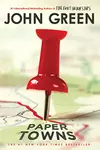


Phew! Read it with a month to spare before the movie comes out!
Ever since they met each other when they were toddlers, timid and worrisome Quentin “Q” Jacobsen has loved Margo Roth Spieglemen, a girl who likes to live life on the edge. Up until a fateful night in their senior year, Q and Margo have only traded few words. On said night, Margo comes into Q's room and ask him for a favor: Be the assistant of the nine things she wants to do tonight to get back at those who wronged her. It's a crazy night, and Q will never forget it. Deep down inside, he hopes this will change their friendship. However, the day after their escapades, Margo disappears without a trace. That is, until Q and his friends realize she left clues behind about her whereabouts. However, the more clues Q puts together, the more he realizes Margo wasn't always the person she lead them all to believe.
Being a fan of John Green's other works (Looking for Alaska, The Fault in our Stars), I wanted to finish this book before I went to see the movie. Though it's not as great as the other two books I mentioned, Paper Towns was still a decent read. The writing was a bit block-y at times and the dialogue unrealistic, but the story still contains great scenes and shows a message of how many different ways people can see one person. Most of the jokes here work as well, maintaining comic relief in this mystery drama that has rather thrilling scenes.
In short, Paper Towns isn't one of my favorite books, but I definitely enjoyed it for it's clever mystery and message.


Well whattaya know? I actually got around to reading a classic.
At the Manor Farm, life for the animals is horrible. They are overworked, underfed, and all around mistreated by their human owners. There was talk of a rebellion for years, and, one day, the animals of the farm finally act upon the idea of freedom, scaring away the human owners once and for all, keeping and running the farm for themselves. Lead by the pigs, the smarter species on the farm, the animals create commandments and slogans (“Four legs good, two legs bad!”), everyone willing to follow these ideas to the very end. However, the animal-ruled freedom may not be what they dreamed. In fact, it may just be worse than before their revolution.
Even though George Orwell's Animal Farm was written fifty years ago, it's writing still remains strong and fresh, it's message and characters still ringing clear and relates to our present-day matters. A short read, Orwell manages to craft a full plot in just a little over 100 pages and manages to keep a steady pace along with it. Having read this now in 2015, I can see that many other stories take inspiration from this book, so it wasn't an entirely unpredictable read for me, but I still give Orwell credit for creating such a story in his time.
Short, thought-provoking, and intense at times, Animal Farm was a pleasant read and I highly recommend it to those looking for a great classic!


Still one of the more solid Spider-Man novels, serving not only as a stand-alone story but also building on elements of the source material for its bigger twists and turns. Plenty of action brought together by solid character moments, including a thematic catharsis that really serves as a love letter to the history of Spider-Man and, oddly enough, J. Jonah Jameson.
In other words: Christopher Bennett knows his Spidey and this is well worth the read. The Graphic Audio audiobook is a fine production as well with its use of voice actors, sound effects, and score.
Also, my brother gives this 4/5 like a proper reader of literature.


I wasn't sure what to expect from this debut novel, but I am pleasantly surprised!
It is a hundred years into the future and the leaders of the world are finally bringing peace. There will be no more wars, ever. But how is this possible? Did they ever find what caused war to begin with? Sort of. Samyaza al Assad, the main World Council member, approached the idea and convinced the other members of the Council that it was religion that caused these wars, including World War III. With religion now banned worldwide, with the mere mention of God able to get you arrested, will anyone be able to find the truth behind Samyaza's plan?
Justin Price's debut The Called explores the dystopian world through four plot lines, transitioning back and forth quickly to maintain a fast pace and a gripping read. However, there are times where this happens so much that the book starts to feel unfocused or confusing, but then gains stability starting around the mid-point. Each plot line helps develop the overall plot and world building, giving us insights on certain areas where the banishment of religion can lead. If I had to choose one main complaint, it would be the characters, who all seem rather bland, with poor dialogue that had me thinking ‘People really don't talk like that' from time to time.
Though a bit out of focus with under-par dialogue, The Called still redeems itself with its concept and execution thereof, with action and twists to keep readers intrigued. All-in-all, I will definitely be reading the sequel!


I read this book to use it as a source for my persuasive speech which focuses on the question of fact: Are there benefits to those who read for pleasure?
Though this essay strays far off-topic for about 50 pages, the parts that do focus on the point are very well-written and thoroughly intriguing. Mr. Ulin elaborates on his points in detail and definitely makes for some excellent citations.
A short read, a great read, but not a perfect read. If I were to turn in this exact essay to my professor, I'd get an 80% for going off-track (not taking plagiarism into account).


After eight months of slumber, Percy Jackson wakes up without any memory of his past. Nothing, except a name: Annabeth. Trained by the Roman wolf teacher Lupa, Percy tries to find a safe haven for demigods like him, finding it in San Francisco, California. Percy knows he is safe there, but he also knows he doesn't belong there. Everything seems... off. Maybe because he somehow knows Greek mythology facts and Camp Jupiter, the safe place for demigods, uses Roman mythology. However, his safety is short-lived when he and his new friends, big, clumsy Frank Zhang and mysterious Hazel Levesque, are set to go on a quest to Alaska to free Thanatos, the god of death, from the hands of the giant Alcyoneus. The clock is ticking with less than five days on the counter as Percy struggles to lead his new friends to victory and simultaneously grasps for memories.
I'm certain most readers would agree with me when I say that this book is superior to The Lost Hero, and not just because of the return of Percy Jackson. Frank and Hazel's characters are equally intriguing, the whole cast of new characters more developed than the previous book. Rick Riordan still maintains his great storytelling, full of action and wit, throughout this entire installment (and maybe the return of Percy Jackson does have something to do with that). The only problem with the book is the unbalanced pacing in the first half, focusing more on the flashbacks of Frank of Hazel than what is happening in the present. However, this isn't a big fault because the flashbacks are still interesting and helps the readers connect with the new characters more.
The Son of Neptune broadens the modern/mythological world and takes the series in the right direction, leading to an ending where all you can think of is how the next book will be.


Whoa. Just... Just whoa.
Shortly after the events of “Insurgent”, Evelyn Johnson is now in control of Chicago. The factionless now rule the city. Now, there are no factions. Desperate for escape from Evelyn's rule, Beatrice “Tris” Prior, Tobias “Four” Eaton, and their friends go to the forbidden outskirts of the city. Perhaps there, the chances of survival are greater. Perhaps there, they can find out the truth of their city, their world, and the secrets of being a divergent.
Too bad the story only provides more problems for the overall plot. “Allegiant” is the final book of Veronica Roth's “Divergent” trilogy (a trilogy with an under-par beginning, a stunning sequel, and now a flat finale with plotholes galore). There are so many secrets that are surfaced that make no sense to the concept and major plot points of the previous books. I'm not saying that the whole book it bad, because there are some good scenes that happen from time to time. I even like the epilogue the author provided to give closure to the world.
Back to the negative stuff about the book. Looking over the plot holes, there is the whole ordeal of the climax. It just happens way too fast with unbelievable actions moving it forward. Now, if you're willing to look past that problem as well, then the final complaint would be about the protagonists: Tris and Tobias. Veronica Roth decided to tell the story of “Allegiant” with alternate perspectives of these two characters. I was glad I was listening to the audiobook with a voice actor for each perspective instead of reading the book myself, because the narrative voices sound alike. Tobias is no longer the tough, intelligent man from the last two books, but instead a man haunted by his fears and prone to making poor judgments (like Tris).
Like I said, the book contains some great scenes. The action is great, the dramatic turn toward the end is surprisingly good, and the epilogue brought great closure to the characters. However, this does not make up for the poorly thought-out plot points, reveals, and the failed attempt to make distinctive voices for each narrator.