
Kim Miller


The basis for the Blade Runner movie. I saw the first movie ages ago and the second movie not so long ago, but hadn't read the book. One thing I missed from the book was the atmosphere of the movies. PKD says very little about the visual state of the world, being content to say nuclear war and fallout has seen people move to Mars and lots of animals go extinct. Radioactive dust is everywhere but we are left to ourselves to put together an inner image. The movies are both visual masterpieces, as if a minor character has been elevated to star status. The Android replicant characters are also much more developed in the movie. In the book Deckard mostly just turns up and shoots them, with only one of them getting under his skin, and she's not even on his target list. Baty's hostility and the 'tears in rain' piece are movie only.
For me the movie fell into what my son and I call, the 'needs more exploding helicopters' genre and comes out at the head of the pack. The book stands in the line of PKD's exploration of what it means to be a thinking human vs an AI. The movie invents the android's goal of extending their life span to that of humans. The book emphasises the contest for the popular mind between the religion of Mercerism and the media saturation by an AI TV personality named Buster Friendly.
Finally, concerning the title. In the book Deckard and his wife have an electric sheep. Living animals are too expensive. Ridley Scott thought the title was too cumbersome for a movie and an associate said 'I've just read this dystopian book called Blade Runner about a guy smuggling medical supplies to poor people. That title sounds pretty good." And so we have a movie based on one book and named after a different book entirely. :)
I've read the book Blade Runner and will put up a review.
The basis for the Blade Runner movie. I saw the first movie ages ago and the second movie not so long ago, but hadn't read the book. One thing I missed from the book was the atmosphere of the movies. PKD says very little about the visual state of the world, being content to say nuclear war and fallout has seen people move to Mars and lots of animals go extinct. Radioactive dust is everywhere but we are left to ourselves to put together an inner image. The movies are both visual masterpieces, as if a minor character has been elevated to star status. The Android replicant characters are also much more developed in the movie. In the book Deckard mostly just turns up and shoots them, with only one of them getting under his skin, and she's not even on his target list. Baty's hostility and the 'tears in rain' piece are movie only.
For me the movie fell into what my son and I call, the 'needs more exploding helicopters' genre and comes out at the head of the pack. The book stands in the line of PKD's exploration of what it means to be a thinking human vs an AI. The movie invents the android's goal of extending their life span to that of humans. The book emphasises the contest for the popular mind between the religion of Mercerism and the media saturation by an AI TV personality named Buster Friendly.
Finally, concerning the title. In the book Deckard and his wife have an electric sheep. Living animals are too expensive. Ridley Scott thought the title was too cumbersome for a movie and an associate said 'I've just read this dystopian book called Blade Runner about a guy smuggling medical supplies to poor people. That title sounds pretty good." And so we have a movie based on one book and named after a different book entirely. :)
I've read the book Blade Runner and will put up a review.

This is the book from which Ridley Scott pinched the movie title instead of using 'Do Androids Dream of Electric Sheep?'.
In a future dystopian society (imagine the same world as the Blade Runner movie - rich/poor divide, flying taxis etc) health care is only granted to people with little illness impact. If you get sick too often, or if your illness has a genetic link you only get health care by agreeing to sterilization. After all, if we manage your diabetes you'll then pass on the genes to your kids and then we manage their illness and the genes pass into a widening pool of people until everyone is diabetic.
Of course there is resistance to this by the population and medical personnel, and underground medical practices spread through the under parts of the city. Regular doctors work nights doing surgeries on kitchen tables in patient's homes. But where do they get instruments etc for that work? Bladerunners are couriers between black market suppliers and the doctors. Billy Gimp is a bladerunner.
Throw into the mix a community of hotheads called the Naturists who deny all medical intervention, either legal or underground, "as God intended". And those guys can get violent. Then imagine a potentially fatal air-borne respiratory virus that reaches epidemic proportions and something has to give.
Reading this 1974 story so soon after covid and all the 'stuff' that hit the fan in those years was more than a little ironic.
This is the book from which Ridley Scott pinched the movie title instead of using 'Do Androids Dream of Electric Sheep?'.
In a future dystopian society (imagine the same world as the Blade Runner movie - rich/poor divide, flying taxis etc) health care is only granted to people with little illness impact. If you get sick too often, or if your illness has a genetic link you only get health care by agreeing to sterilization. After all, if we manage your diabetes you'll then pass on the genes to your kids and then we manage their illness and the genes pass into a widening pool of people until everyone is diabetic.
Of course there is resistance to this by the population and medical personnel, and underground medical practices spread through the under parts of the city. Regular doctors work nights doing surgeries on kitchen tables in patient's homes. But where do they get instruments etc for that work? Bladerunners are couriers between black market suppliers and the doctors. Billy Gimp is a bladerunner.
Throw into the mix a community of hotheads called the Naturists who deny all medical intervention, either legal or underground, "as God intended". And those guys can get violent. Then imagine a potentially fatal air-borne respiratory virus that reaches epidemic proportions and something has to give.
Reading this 1974 story so soon after covid and all the 'stuff' that hit the fan in those years was more than a little ironic.

The Wayfarer is a worm-hole building spaceship. That's right, they build those things. And there's a crew. So next time you are driving past a road building team with stop/go guy, leaning on shovel guy, digger driver guy, roller driver guy, think your way into the future about traveling through a worm hole to a distant planet. Somebody made that super fast interplanetary motorway called a worm hole.
The Wayfarer crew has a captain, a pilot, a navigator, a repair/techie, a computer guy, an office manager, a doctor/cook, a fuel guy, and a sentient AI that controls the ship. Three of them are human, the others are aliens of different species, and they have different levels of affection or antipathy to each other. It's a small operation doing mainly 'local roads', until a major job appears. Along the way various crises occur, each impacting one or other of the characters and causing shifts in their relationships.
The book is strong on character development and world building but Chambers' prose doesn't get the most from those strengths. I'd just come from reading Christopher Ruocchio whose prose is extraordinary, so Chambers had a challenge from the start. However, the book was short listed for the Arthur C Clarke award, so maybe I'm being a bit tough on her.
The bulk of the story is about 'the long way' but towards the end of the book we find out where this worm hole is taking them. And that's where everything hits the fan.
The Wayfarer is a worm-hole building spaceship. That's right, they build those things. And there's a crew. So next time you are driving past a road building team with stop/go guy, leaning on shovel guy, digger driver guy, roller driver guy, think your way into the future about traveling through a worm hole to a distant planet. Somebody made that super fast interplanetary motorway called a worm hole.
The Wayfarer crew has a captain, a pilot, a navigator, a repair/techie, a computer guy, an office manager, a doctor/cook, a fuel guy, and a sentient AI that controls the ship. Three of them are human, the others are aliens of different species, and they have different levels of affection or antipathy to each other. It's a small operation doing mainly 'local roads', until a major job appears. Along the way various crises occur, each impacting one or other of the characters and causing shifts in their relationships.
The book is strong on character development and world building but Chambers' prose doesn't get the most from those strengths. I'd just come from reading Christopher Ruocchio whose prose is extraordinary, so Chambers had a challenge from the start. However, the book was short listed for the Arthur C Clarke award, so maybe I'm being a bit tough on her.
The bulk of the story is about 'the long way' but towards the end of the book we find out where this worm hole is taking them. And that's where everything hits the fan.

By the author of "The Martian". I saw the Martian movie and thought it was rather dull. Apparently I'm alone in that. Project Hail Mary was the total opposite so I imagine the Martian novel would be better than the movie. This is a great read.
A man wakes up. He can't see, can't even open his eyes. He forces them open but the light is blinding. He squints until his eyes adjust. There are things all over him. He can see sensors taped to his arms, chest and legs, an intravenous line, a catheter. He's naked on a bed. He doesn't know where he is, and he can't remember who he is. He sits up halfway and looks around. There are two other beds in the small circular room. The occupants are dead and their bodies are desiccated. He falls from the bed and two robot arms descend from the ceiling and lift him gently back again. He's in a space ship, but why? And where is it going to? And who is he?
The story is a race to a distant star system on a mission to save the Earth. He doesn't know what he's looking for or how he's going to fulfill the mission. The lone astronaut suddenly finds he has an unexpected companion and together they form a strange partnership and a common goal. The pace is rapid and Weir alternates between life on board the ship and the lead up to the mission as the back story slowly fills in, mirroring the steady return of his memory. And he doesn't like it.
By the author of "The Martian". I saw the Martian movie and thought it was rather dull. Apparently I'm alone in that. Project Hail Mary was the total opposite so I imagine the Martian novel would be better than the movie. This is a great read.
A man wakes up. He can't see, can't even open his eyes. He forces them open but the light is blinding. He squints until his eyes adjust. There are things all over him. He can see sensors taped to his arms, chest and legs, an intravenous line, a catheter. He's naked on a bed. He doesn't know where he is, and he can't remember who he is. He sits up halfway and looks around. There are two other beds in the small circular room. The occupants are dead and their bodies are desiccated. He falls from the bed and two robot arms descend from the ceiling and lift him gently back again. He's in a space ship, but why? And where is it going to? And who is he?
The story is a race to a distant star system on a mission to save the Earth. He doesn't know what he's looking for or how he's going to fulfill the mission. The lone astronaut suddenly finds he has an unexpected companion and together they form a strange partnership and a common goal. The pace is rapid and Weir alternates between life on board the ship and the lead up to the mission as the back story slowly fills in, mirroring the steady return of his memory. And he doesn't like it.

A book of short stories in honour of Gene Wolfe by a range of authors. Seeing Neil Gaiman among them hooked me in but the book overall was a bit of a disappointment. Some of the stories invoked either characters or settings from Wolfe's work. None of them hit home well. Wolfe had two stories in here as well. It took me much longer to read it than it should. The variation between the stories was such that reading a few at a time messed up my concentration, which considering how much concentration it takes to read Wolfe himself was a surprise. There's a part of me that doesn't want to quit a book part way through but calling quits on this one might have been better than finishing it.
A book of short stories in honour of Gene Wolfe by a range of authors. Seeing Neil Gaiman among them hooked me in but the book overall was a bit of a disappointment. Some of the stories invoked either characters or settings from Wolfe's work. None of them hit home well. Wolfe had two stories in here as well. It took me much longer to read it than it should. The variation between the stories was such that reading a few at a time messed up my concentration, which considering how much concentration it takes to read Wolfe himself was a surprise. There's a part of me that doesn't want to quit a book part way through but calling quits on this one might have been better than finishing it.

This one has raised a storm of fake rage in the US states where book banning is the new normal. So I decided to check it out.
It's a graphic novel of a woman's memoir about growing up non-binary. She is three years old at the beginning when her family moves to a backwoodsy house with no electricity, water, etc. Her parents are kind of hippie but well educated. At the end of the book she is approaching thirty and considering top surgery.
Her life is one of continuing identity crises as she struggles to fit in but feels she is pushed into silence about herself. While I can see that the religious bigotry of the US would hate the book, it seems to me to fill a real need with young people trying to navigate their way through the minefield of opinions versus the emerging genetics and neuroscience of how bodies and brains are gendered in utero.
This one has raised a storm of fake rage in the US states where book banning is the new normal. So I decided to check it out.
It's a graphic novel of a woman's memoir about growing up non-binary. She is three years old at the beginning when her family moves to a backwoodsy house with no electricity, water, etc. Her parents are kind of hippie but well educated. At the end of the book she is approaching thirty and considering top surgery.
Her life is one of continuing identity crises as she struggles to fit in but feels she is pushed into silence about herself. While I can see that the religious bigotry of the US would hate the book, it seems to me to fill a real need with young people trying to navigate their way through the minefield of opinions versus the emerging genetics and neuroscience of how bodies and brains are gendered in utero.

Blowback. A warning to save America from the next Trump
I saw an interview with Taylor recently and it prompted me to get this book.
Taylor was a Congressional Page at age 16, the kids who run papers back and forth between congress members. He completed post graduate study at Oxford and joined the Dept of Homeland Security as Chief of Staff when it was established after 9/11. He was still there when Trump came to power, something he resisted from the beginning.
The book tells of the 'Axis of Adults' who tried to keep the guardrails up around Trump for the following years. Through that time he'd written a revealing OpEd for the New York Times under the name Anonymous and after that a book called Warning, also as Anonymous. This book is the story of his time in the administration as one of the officials trying to contain Trump's erratic decisions and self-serving excesses, how he made the decision to leave, and the consequences of going public. It's a whole lot more scary than I had imagined.
I saw an interview with Taylor recently and it prompted me to get this book.
Taylor was a Congressional Page at age 16, the kids who run papers back and forth between congress members. He completed post graduate study at Oxford and joined the Dept of Homeland Security as Chief of Staff when it was established after 9/11. He was still there when Trump came to power, something he resisted from the beginning.
The book tells of the 'Axis of Adults' who tried to keep the guardrails up around Trump for the following years. Through that time he'd written a revealing OpEd for the New York Times under the name Anonymous and after that a book called Warning, also as Anonymous. This book is the story of his time in the administration as one of the officials trying to contain Trump's erratic decisions and self-serving excesses, how he made the decision to leave, and the consequences of going public. It's a whole lot more scary than I had imagined.
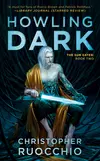
This is book 2 of the Suneater Series. Hadrian Marlowe continues to be tipped from one disaster to another. This time he's searching for links to the enemy from book #1 on a planet that nobody else believes actually exists, "it's only a myth" they say. And it's a big galaxy we live in. Things get very dark as this book proceeds and it left me reeling for days. I'm loving this series.
No spoilers here but the title of #1, Empire of Silence, seemed inappropriate to me as I read the book as Hadrian's Empire is very warlike. But towards the end something happens and the phrase appears for the only time in the book. But it's still a mystery. This second title, Howling Dark is the same. There seems to be no place where the title hits home until towards the end when the phrase appears for the only time. And with a bit of thought I realised it refers to the mystery of the first title. Now my mind is saying 'Ha, so is this a hint of where the whole series is pointing?"
This is book 2 of the Suneater Series. Hadrian Marlowe continues to be tipped from one disaster to another. This time he's searching for links to the enemy from book #1 on a planet that nobody else believes actually exists, "it's only a myth" they say. And it's a big galaxy we live in. Things get very dark as this book proceeds and it left me reeling for days. I'm loving this series.
No spoilers here but the title of #1, Empire of Silence, seemed inappropriate to me as I read the book as Hadrian's Empire is very warlike. But towards the end something happens and the phrase appears for the only time in the book. But it's still a mystery. This second title, Howling Dark is the same. There seems to be no place where the title hits home until towards the end when the phrase appears for the only time. And with a bit of thought I realised it refers to the mystery of the first title. Now my mind is saying 'Ha, so is this a hint of where the whole series is pointing?"

A darkly comic view of free will and purpose in life.
Malachi Constant has extraordinary luck in getting rich. In truth, he buys shares and stock by reading the Bible from the beginning and finding companies that match words as he progresses. His reasoning is that God is making him rich. Winston Rumfoord is already super rich and has his own space ship. Malachi loses his fortune and Winston manipulates him from that moment.
There is a prediction linking Malachi and Winston's wife, a war with Mars, a trip to Mercury, and time on Saturn's moon Titan. And it's all because of Winston. Oh yeah, there's also a sentient alien robot with his own space ship.
Remember when a steak and salad at a pub meant iceberg lettuce and beetroot but now it's three different varieties of rocket and some weird stuff called quinoa and we ask, "What is all this stuff doing here?" That's what this book is like. Vonnegut chucks together so many bits and pieces and expects it all to hold together with meaning. OK, he's good at that sort of thing. He just keeps chucking new things in and I could imagine him saying "You think I can't do this? Just watch me. And you will keep reading anyway." Smug bastard.
He ends the book with the thought that "the purpose of human life, no matter who is controlling it, is to love whoever is around to be loved."
I picked this up because the book I'd just read (Ruoochio's Howling Dark) was such a heavy hitter and I wanted some relief. Sirens of Titan is weird comedy until it's not. Things got rather dark towards the end.
A darkly comic view of free will and purpose in life.
Malachi Constant has extraordinary luck in getting rich. In truth, he buys shares and stock by reading the Bible from the beginning and finding companies that match words as he progresses. His reasoning is that God is making him rich. Winston Rumfoord is already super rich and has his own space ship. Malachi loses his fortune and Winston manipulates him from that moment.
There is a prediction linking Malachi and Winston's wife, a war with Mars, a trip to Mercury, and time on Saturn's moon Titan. And it's all because of Winston. Oh yeah, there's also a sentient alien robot with his own space ship.
Remember when a steak and salad at a pub meant iceberg lettuce and beetroot but now it's three different varieties of rocket and some weird stuff called quinoa and we ask, "What is all this stuff doing here?" That's what this book is like. Vonnegut chucks together so many bits and pieces and expects it all to hold together with meaning. OK, he's good at that sort of thing. He just keeps chucking new things in and I could imagine him saying "You think I can't do this? Just watch me. And you will keep reading anyway." Smug bastard.
He ends the book with the thought that "the purpose of human life, no matter who is controlling it, is to love whoever is around to be loved."
I picked this up because the book I'd just read (Ruoochio's Howling Dark) was such a heavy hitter and I wanted some relief. Sirens of Titan is weird comedy until it's not. Things got rather dark towards the end.

This is the second book I choose from among the many books being banned in US schools. I'm Australian and have limited understanding of how the US school system works. But I don't like what I see when any person can have books banned from school libraries even though they have no children in that school, and even from out of state.
Flamer is based on the author's own experience. Aiden is fourteen, part Asian and a bit chubby, and he's at Scout camp for the summer. He's about to move from middle school to high school and is scared that the bullying he's already receiving will get worse.
SPOILERS from here.
Even worse than the bullying is that living for weeks in close proximity to other boys he's starting to have new feelings for his best friend with whom he shares a tent. The conversations and repartee between this bunch of teen boys is already packed with sexual innuendo and open comments about various girls at school etc, and in this highly charged environment Aiden's thoughts are running wild.
One of the leaders is gone from the campsite and conversations focus on the possibility that he was gay and therefore evil. Aiden sinks into depression under all the assumptions that flood the meal table. He writes a goodbye letter, takes a pocket knife and heads for the lonely chapel on the hill. His favourite Marvel character appears in his mind and reveals inner strength that he didn't know he had.
This is an extraordinary book. I have gay friends who have spoken of how hard they found their life when all they hear is accusations and threats. It can be a teenager's nightmare. Rather than ban this book I would suggest schools promote it. I found it very moving and see the very real possibility that it might save some teen's life.
This is the second book I choose from among the many books being banned in US schools. I'm Australian and have limited understanding of how the US school system works. But I don't like what I see when any person can have books banned from school libraries even though they have no children in that school, and even from out of state.
Flamer is based on the author's own experience. Aiden is fourteen, part Asian and a bit chubby, and he's at Scout camp for the summer. He's about to move from middle school to high school and is scared that the bullying he's already receiving will get worse.
SPOILERS from here.
Even worse than the bullying is that living for weeks in close proximity to other boys he's starting to have new feelings for his best friend with whom he shares a tent. The conversations and repartee between this bunch of teen boys is already packed with sexual innuendo and open comments about various girls at school etc, and in this highly charged environment Aiden's thoughts are running wild.
One of the leaders is gone from the campsite and conversations focus on the possibility that he was gay and therefore evil. Aiden sinks into depression under all the assumptions that flood the meal table. He writes a goodbye letter, takes a pocket knife and heads for the lonely chapel on the hill. His favourite Marvel character appears in his mind and reveals inner strength that he didn't know he had.
This is an extraordinary book. I have gay friends who have spoken of how hard they found their life when all they hear is accusations and threats. It can be a teenager's nightmare. Rather than ban this book I would suggest schools promote it. I found it very moving and see the very real possibility that it might save some teen's life.

Four residents of a senior living village decide they want to investigate unsolved murders. Luckily they represent a range of backgrounds and abilities that seem to fit together like a Tetris game. With a bit of manipulation they recruit the community liaison Police officer who comes to teach them to lock their doors at night. And the game is on.
This is a 'cosy detective story' in the tradition of The Number One Ladies Detective Agency series by MCall Smith. The people are delightful, if somewhat one dimensional. The police vacillate between dismissive and accommodating. The murders are many and varied and the investigation is highly intuitive but ultimately successful. And the amateur sleuths retain secrets at the end that the police won't uncover.
Osman has a way of story telling that is engaging and funny. We start out loving the characters and we still love them when their flaws are revealed. However, I was left with the feeling that murder is OK as long as the victim deserved it.
Four residents of a senior living village decide they want to investigate unsolved murders. Luckily they represent a range of backgrounds and abilities that seem to fit together like a Tetris game. With a bit of manipulation they recruit the community liaison Police officer who comes to teach them to lock their doors at night. And the game is on.
This is a 'cosy detective story' in the tradition of The Number One Ladies Detective Agency series by MCall Smith. The people are delightful, if somewhat one dimensional. The police vacillate between dismissive and accommodating. The murders are many and varied and the investigation is highly intuitive but ultimately successful. And the amateur sleuths retain secrets at the end that the police won't uncover.
Osman has a way of story telling that is engaging and funny. We start out loving the characters and we still love them when their flaws are revealed. However, I was left with the feeling that murder is OK as long as the victim deserved it.
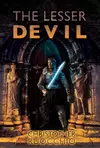
In Empire of Darkness, book #1 of the Sun Eater Series, we meet Hadrian Marlowe and his priggish younger brother Crispin. Hadrian leaves their home planet and Crispin is lost to the story. In this filler novella that sits between #1 and #2 of the series, Crispin is given space to fill in his own story.
An enemy from the past emerges with a new threat and Crispin is thrown into the head of the battle. He proves to be a much more rounded person, a competent leader, and a man of mercy and integrity, attributes that were nowhere to be found when we first met him.
In Empire of Darkness, book #1 of the Sun Eater Series, we meet Hadrian Marlowe and his priggish younger brother Crispin. Hadrian leaves their home planet and Crispin is lost to the story. In this filler novella that sits between #1 and #2 of the series, Crispin is given space to fill in his own story.
An enemy from the past emerges with a new threat and Crispin is thrown into the head of the battle. He proves to be a much more rounded person, a competent leader, and a man of mercy and integrity, attributes that were nowhere to be found when we first met him.

This is runaway bonkers stuff. Set in a far distant future (millions of years) as the sun is starting its heat death process. The culture is medieval with swords, witches, guards that close the city gates at night, hand pulled wagons etc. The protagonist grows up in a strange monastic community that lives in a tower, but as the first book progresses there are hints that it's actually the remains of an ancient space ship standing on its end. Severian is being trained to be a torturer / executioner and the whole monastic thing is at odds with the hints of space ships etc.
The book is written as a memoir by the aged Severian and there are references of things to come that sometimes demand a bit of back tracking to sort out context etc.
Wolfe's terminology for weapons etc is often ancient and cryptic. You have been warned.
It's the first of four books (or five if we count the explanatory sequel) that are generally sold in pairs, Books 1 & 2, and then 3 & 4.
This is runaway bonkers stuff. Set in a far distant future (millions of years) as the sun is starting its heat death process. The culture is medieval with swords, witches, guards that close the city gates at night, hand pulled wagons etc. The protagonist grows up in a strange monastic community that lives in a tower, but as the first book progresses there are hints that it's actually the remains of an ancient space ship standing on its end. Severian is being trained to be a torturer / executioner and the whole monastic thing is at odds with the hints of space ships etc.
The book is written as a memoir by the aged Severian and there are references of things to come that sometimes demand a bit of back tracking to sort out context etc.
Wolfe's terminology for weapons etc is often ancient and cryptic. You have been warned.
It's the first of four books (or five if we count the explanatory sequel) that are generally sold in pairs, Books 1 & 2, and then 3 & 4.
Four residents of a senior living village decide they want to investigate unsolved murders. Luckily they represent a range of backgrounds and abilities that seem to fit together like a Tetris game. With a bit of manipulation they recruit the community liaison Police officer who comes to teach them to lock their doors at night. And the game is on.
This is a 'cosy detective story' in the tradition of The Number One Ladies Detective Agency series by MCall Smith. The people are delightful, if somewhat one dimensional. The police vacillate between dismissive and accommodating. The murders are many and varied and the investigation is highly intuitive but ultimately successful. And the amateur sleuths retain secrets at the end that the police won't uncover.
Osman has a way of story telling that is engaging and funny. We start out loving the characters and we still love them when their flaws are revealed. However, I was left with the feeling that murder is OK as long as the victim deserved it.
Four residents of a senior living village decide they want to investigate unsolved murders. Luckily they represent a range of backgrounds and abilities that seem to fit together like a Tetris game. With a bit of manipulation they recruit the community liaison Police officer who comes to teach them to lock their doors at night. And the game is on.
This is a 'cosy detective story' in the tradition of The Number One Ladies Detective Agency series by MCall Smith. The people are delightful, if somewhat one dimensional. The police vacillate between dismissive and accommodating. The murders are many and varied and the investigation is highly intuitive but ultimately successful. And the amateur sleuths retain secrets at the end that the police won't uncover.
Osman has a way of story telling that is engaging and funny. We start out loving the characters and we still love them when their flaws are revealed. However, I was left with the feeling that murder is OK as long as the victim deserved it.
This is book 2 of the Suneater Series. Hadrian Marlowe continues to be tipped from one disaster to another. This time he's searching for links to the enemy from book #1 on a planet that nobody else believes actually exists, "it's only a myth" they say. And it's a big galaxy we live in. Things get very dark as this book proceeds and it left me reeling for days. I'm loving this series.
No spoilers here but the title of #1, Empire of Silence, seemed inappropriate to me as I read the book as Hadrian's Empire is very warlike. But towards the end something happens and the phrase appears for the only time in the book. But it's still a mystery. This second title, Howling Dark is the same. There seems to be no place where the title hits home until towards the end when the phrase appears for the only time. And with a bit of thought I realised it refers to the mystery of the first title. Now my mind is saying 'Ha, so is this a hint of where the whole series is pointing?"
This is book 2 of the Suneater Series. Hadrian Marlowe continues to be tipped from one disaster to another. This time he's searching for links to the enemy from book #1 on a planet that nobody else believes actually exists, "it's only a myth" they say. And it's a big galaxy we live in. Things get very dark as this book proceeds and it left me reeling for days. I'm loving this series.
No spoilers here but the title of #1, Empire of Silence, seemed inappropriate to me as I read the book as Hadrian's Empire is very warlike. But towards the end something happens and the phrase appears for the only time in the book. But it's still a mystery. This second title, Howling Dark is the same. There seems to be no place where the title hits home until towards the end when the phrase appears for the only time. And with a bit of thought I realised it refers to the mystery of the first title. Now my mind is saying 'Ha, so is this a hint of where the whole series is pointing?"

Book 3 of The Sun Easter series.
Ruocchio continues with the hard hitting tale of Hadrian Marlowe. In Book 2 Hadrian was spoken to by some mystical being and given insight into what he'd been called to. Then he was hijacked to the Emperor's court.
In Book 3 he goes looking for the higher ones behind that previous prophetic voice but leaving the city of empire is not as straightforward as he hoped. When at last he's able to continue with his search it's under the pressure of a looming war with the enemies of people everywhere. The book closes with another revelation that Hadrian is more than he knows.
Ruocchio has total mastery of his craft in this series. His prose is tight and engaging, even as his vocabulary is enough to bedazzle the reader. It would be good to have an author's lexicon sitting beside you for this work. I read ebooks and it's not easy to swap between the text and the lexicography at the end of the book to check stuff on the fly. For the rest of the series I'm considering printing out the end notes to have as a reference as I read.
Book 3 of The Sun Easter series.
Ruocchio continues with the hard hitting tale of Hadrian Marlowe. In Book 2 Hadrian was spoken to by some mystical being and given insight into what he'd been called to. Then he was hijacked to the Emperor's court.
In Book 3 he goes looking for the higher ones behind that previous prophetic voice but leaving the city of empire is not as straightforward as he hoped. When at last he's able to continue with his search it's under the pressure of a looming war with the enemies of people everywhere. The book closes with another revelation that Hadrian is more than he knows.
Ruocchio has total mastery of his craft in this series. His prose is tight and engaging, even as his vocabulary is enough to bedazzle the reader. It would be good to have an author's lexicon sitting beside you for this work. I read ebooks and it's not easy to swap between the text and the lexicography at the end of the book to check stuff on the fly. For the rest of the series I'm considering printing out the end notes to have as a reference as I read.
Answered a promptFavorite Space Opera books


The second in Rajaniemi's Flambeau trilogy. I read the three as one story. And my comments about #1, The Quantum Thief, also apply here.
The first line of the book: "That night, Matjek sneaks out of his dream to visit the thief again." Once again it begins with a 'what on earth does that mean?' line, and continues the same throughout.
The second in Rajaniemi's Flambeau trilogy. I read the three as one story. And my comments about #1, The Quantum Thief, also apply here.
The first line of the book: "That night, Matjek sneaks out of his dream to visit the thief again." Once again it begins with a 'what on earth does that mean?' line, and continues the same throughout.

Book three in Rajaniemi's Flambeau trilogy.
The first line: "Alone on the timeless beach, Joséphine Pellegrini finds herself disappointed by the end of the world." After all her hard work. A bit of a fizzer as it turned out.
Book three in Rajaniemi's Flambeau trilogy.
The first line: "Alone on the timeless beach, Joséphine Pellegrini finds herself disappointed by the end of the world." After all her hard work. A bit of a fizzer as it turned out.
This is the second book I choose from among the many books being banned in US schools. I'm Australian and have limited understanding of how the US school system works. But I don't like what I see when any person can have books banned from school libraries even though they have no children in that school, and even from out of state.
Flamer is based on the author's own experience. Aiden is fourteen, part Asian and a bit chubby, and he's at Scout camp for the summer. He's about to move from middle school to high school and is scared that the bullying he's already receiving will get worse.
SPOILERS from here.
Even worse than the bullying is that living for weeks in close proximity to other boys he's starting to have new feelings for his best friend with whom he shares a tent. The conversations and repartee between this bunch of teen boys is already packed with sexual innuendo and open comments about various girls at school etc, and in this highly charged environment Aiden's thoughts are running wild.
One of the leaders is gone from the campsite and conversations focus on the possibility that he was gay and therefore evil. Aiden sinks into depression under all the assumptions that flood the meal table. He writes a goodbye letter, takes a pocket knife and heads for the lonely chapel on the hill. His favourite Marvel character appears in his mind and reveals inner strength that he didn't know he had.
This is an extraordinary book. I have gay friends who have spoken of how hard they found their life when all they hear is accusations and threats. It can be a teenager's nightmare. Rather than ban this book I would suggest schools promote it. I found it very moving and see the very real possibility that it might save some teen's life.
This is the second book I choose from among the many books being banned in US schools. I'm Australian and have limited understanding of how the US school system works. But I don't like what I see when any person can have books banned from school libraries even though they have no children in that school, and even from out of state.
Flamer is based on the author's own experience. Aiden is fourteen, part Asian and a bit chubby, and he's at Scout camp for the summer. He's about to move from middle school to high school and is scared that the bullying he's already receiving will get worse.
SPOILERS from here.
Even worse than the bullying is that living for weeks in close proximity to other boys he's starting to have new feelings for his best friend with whom he shares a tent. The conversations and repartee between this bunch of teen boys is already packed with sexual innuendo and open comments about various girls at school etc, and in this highly charged environment Aiden's thoughts are running wild.
One of the leaders is gone from the campsite and conversations focus on the possibility that he was gay and therefore evil. Aiden sinks into depression under all the assumptions that flood the meal table. He writes a goodbye letter, takes a pocket knife and heads for the lonely chapel on the hill. His favourite Marvel character appears in his mind and reveals inner strength that he didn't know he had.
This is an extraordinary book. I have gay friends who have spoken of how hard they found their life when all they hear is accusations and threats. It can be a teenager's nightmare. Rather than ban this book I would suggest schools promote it. I found it very moving and see the very real possibility that it might save some teen's life.
Book 3 of The Sun Easter series.
Ruocchio continues with the hard hitting tale of Hadrian Marlowe. In Book 2 Hadrian was spoken to by some mystical being and given insight into what he'd been called to. Then he was hijacked to the Emperor's court.
In Book 3 he goes looking for the higher ones behind that previous prophetic voice but leaving the city of empire is not as straightforward as he hoped. When at last he's able to continue with his search it's under the pressure of a looming war with the enemies of people everywhere. The book closes with another revelation that Hadrian is more than he knows.
Ruocchio has total mastery of his craft in this series. His prose is tight and engaging, even as his vocabulary is enough to bedazzle the reader. It would be good to have an author's lexicon sitting beside you for this work. I read ebooks and it's not easy to swap between the text and the lexicography at the end of the book to check stuff on the fly. For the rest of the series I'm considering printing out the end notes to have as a reference as I read.
Book 3 of The Sun Easter series.
Ruocchio continues with the hard hitting tale of Hadrian Marlowe. In Book 2 Hadrian was spoken to by some mystical being and given insight into what he'd been called to. Then he was hijacked to the Emperor's court.
In Book 3 he goes looking for the higher ones behind that previous prophetic voice but leaving the city of empire is not as straightforward as he hoped. When at last he's able to continue with his search it's under the pressure of a looming war with the enemies of people everywhere. The book closes with another revelation that Hadrian is more than he knows.
Ruocchio has total mastery of his craft in this series. His prose is tight and engaging, even as his vocabulary is enough to bedazzle the reader. It would be good to have an author's lexicon sitting beside you for this work. I read ebooks and it's not easy to swap between the text and the lexicography at the end of the book to check stuff on the fly. For the rest of the series I'm considering printing out the end notes to have as a reference as I read.
This is runaway bonkers stuff. Set in a far distant future (millions of years) as the sun is starting its heat death process. The culture is medieval with swords, witches, guards that close the city gates at night, hand pulled wagons etc. The protagonist grows up in a strange monastic community that lives in a tower, but as the first book progresses there are hints that it's actually the remains of an ancient space ship standing on its end. Severian is being trained to be a torturer / executioner and the whole monastic thing is at odds with the hints of space ships etc.
The book is written as a memoir by the aged Severian and there are references of things to come that sometimes demand a bit of back tracking to sort out context etc.
Wolfe's terminology for weapons etc is often ancient and cryptic. You have been warned.
It's the first of four books (or five if we count the explanatory sequel) that are generally sold in pairs, Books 1 & 2, and then 3 & 4.
This is runaway bonkers stuff. Set in a far distant future (millions of years) as the sun is starting its heat death process. The culture is medieval with swords, witches, guards that close the city gates at night, hand pulled wagons etc. The protagonist grows up in a strange monastic community that lives in a tower, but as the first book progresses there are hints that it's actually the remains of an ancient space ship standing on its end. Severian is being trained to be a torturer / executioner and the whole monastic thing is at odds with the hints of space ships etc.
The book is written as a memoir by the aged Severian and there are references of things to come that sometimes demand a bit of back tracking to sort out context etc.
Wolfe's terminology for weapons etc is often ancient and cryptic. You have been warned.
It's the first of four books (or five if we count the explanatory sequel) that are generally sold in pairs, Books 1 & 2, and then 3 & 4.