
Will


Was reasonably intrigued when I started reading this. Characters were interesting if a little plain/cliche (I basically read Mac as Tommy Lee Jones' exact character from Volcano), and the prologue was a decent hook. Unfortunately, once there was an insane “radioactive waste has been hidden in a volcano” plot I really couldn't get over how absurd that seemed, regardless of how hard Patterson was trying to convince me that our dumb government would let that happen. And it never really recovered from that tbh. They brought in a pretty large handful of opposing force characters that amount to nothing, barely even a roadblock to Mac, and they just die at the end. Speaking of dying at the end, they randomly introduce so many unmentioned people just to kill them off and they all played so false and weird. Nothing they spent 200 pages planning amounted to anything. I guess you could say that illustrates the power and unpredictability of nature, but boy am I reaching for that one.
It's been a while since I've read Crichton, and I've never read any Patterson so take this with a grain of salt; but it really felt like I could tell where there were passages directly from Crichton's hand because they stuck out as so much better written than the rest. Hard to say if that's true, but it felt that way.
Overall this is a schlocky read that doesn't do a great job convincing me of the science, the locations, or the stupidity of some of the characters including the aforementioned government. However, on film I've never had huge issues with schlocky movies as long as they aren't boring, and I wasn't ever THAT bored of Eruption. And I watched Dante's Peak last night for fun for like the tenth time, so who am I to judge. I think if you're a fast reader something like this would be more appealing, but I'm a bit on the slower side and I only read every other day or so. Dedicating like 45ish days to this isn't something I'd recommend.


Wow, I managed to read a fucking BOOK! Been too long...
Really enjoyed the Gunslinger. Obviously this is part 1 of 7 and it's the shortest in the series (I believe) so I've got a long way to go. The Gunslinger does a lot of very specific world building for the Gunslinger himself. You get some back story in the form of flashback and retelling of his past to his companion. But there's less BROAD world building than I maybe would have liked. There's hints at stuff, some much more overt than others, and it thinks it's very clever all the way to the end each time it throws a “real” word in there that Roland doesn't understand.
Overall I liked the prose and the characters, which does a lot of carrying in this book. It's grim and The Gunslinger himself is often pretty harsh, but I liked it. It's certainly an interesting approach to fantasy and I'll be reading on in the series for sure. Though I might read the new Crichton/Patterson book first because it's a silly book about volcanoes.


3.5 Stars.
This was a weird one. I started off REALLY liking it. But it takes a long time to get where it's going, so long in fact that pretty much everything I was thinking would happen by the end of this book is more likely to happen in the next one. That's not necessarily a bad thing, but there are elements of Heretics that I didn't quite understand completely, and other elements whose importance I don't see at all. I did like it, it's got a decent amount of action, it's intriguing and pretty significantly less philosophical than God Emperor. I'm interested to see how Chapter House expands the story at least.


Of the four Dune books I've read so far, this is the one that would most benefit from a re-read, by far. Leto speaks in such a way that often times even the people he's talking to are like ‘huh?' It's not always like this, and it's easy enough to see his surface intentions and follow the primary arc of the book. But he speaks in riddles and there are often interactions where Leto is explaining something to someone, they don't understand, he keeps explaining, then they suddenly understand, but I don't. I often re-read paragraphs like “what did I miss there” and rarely found an answer. I am not the best reader. My mind drifts and I'm not super well read, especially in philosophy in which Leto peddles heavily. So I was lost pretty regularly.
This doesn't make the book BAD in my opinion, but I will need some YouTubing to get some clarity on the ultimate point of this book beyond simply learning what Leto's Golden Path is and how it will carry forward (or not carry forward) after he's gone.
It was interesting, but like I said I just wasn't always “with it”.


Can't give half stars, but this is a 3.5 star book for me on first read. This is my first experience with Hemingway and while I liked the prose I wasn't super into the story. I found myself bogged down by descriptions of what Santiago was doing with his line each of the many times it comes up. I am not a fisherman and I just could not get my head around some of the mechanics of what he was pulling off while being dragged about the ocean by that fish. It certainly wasn't bad, but it broke the flow of my reading every time I had to stop and say “huh?”
I also found it pretty slow for about 60% of the book. The back half moves at a pretty good pace, once the fish is on the line and quickens furthers when it's caught. So I blew through the last 40 pages or so. It was just kind of slow going getting there.
The last thing that didn't work for me really is that there's a good deal of time spent talking about how Santiago pretty easily butchers some smaller fish in the boat. I don't really understand why the approach was to strap this huge, bleeding carcass to the side of the boat, instead of trying to butcher it down. He's this extremely seasoned fisherman, he knows the sharks will come, and doesn't use this other option to better get the fish meat to shore to sell it. I just found it odd.
It sounds like I didn't like it, but I promise I did. I'd definitely read more Hemingway and I'd even read this again. If I put my mind to it I could do it in one sitting. It had just been so built up that it couldn't possibly live up to my expectations.


Really enjoyed this one. There is SO much going on that it sort of feels impossible to parse all of it live. And so much is really cryptic and internal. It's a lot to keep straight, but I think I mostly managed it. I don't mind reading something that nicely asks that you dig a little deeper on your own, I only mind when something is condescending, which Children of Dune never is. While I understood the general arc of the story, watching some YouTube videos helped cement it in my mind and clarified a lot of the more nebulous stuff. Like the original Dune, you can feel the richness of the universe Herbert created as it is on the cusp of massive change.
I'm going to take a quick break from the series but I'm eager to get back to it. The series is essentially two trilogies, so it should be interesting to see what's going on after the massive time jump. Big recommend the Dune books, this one especially.


I did like the overarching story of this book. It was interesting and unique and the science felt really spot on. But I didn't like the main character all that much, or at least the way he's written, and there was absolutely no way for me to divorce this from The Martian because they are so structurally similar. There are a lot of straight lines to be drawn from plot lines in The Martian to plot lines in Hail Mary. Ditto character traits, scenes, problems that need solving, etc. It was more of the same “MacGuyver in Space” schtick and if that's what you were looking for when you picked this up you will be very satisfied. To me it just felt like fan fiction or an unnecessary but competent sequel. Maybe I'm just being a grump, or maybe reading something so light off the back of reading two Dune books wasn't the right move. It's just too similar to Weir's other work for me to totally get into it.


Liked it, didn't love it. Story was really cool and interesting and super deep. I just found it to be kind of hard to follow at times. It jump perspectives between paragraphs a lot, which is fine, but when you're dealing with two characters who are prescient and hyper philosophical it gets hard to keep track of. I assume that is part of the point so I don't hold it as a huge fault and I appreciate that it's not just a three act structured story. It just got wordy and a little slow in some points particularly in the middle. I definitely would recommend it to anyone who wants more Dune, just go in knowing it's quite a shift from the original, in both good and not as good ways.


Never wrote a review for this I guess and I want it in my Read list, so briefly:
I enjoyed Dune very much. The world is super rich and vast, the characters are cool, the story is interesting, etc. It's a form of palace intrigue I actually enjoyed, just gotta make it sci-fi I guess. It should be noted that I read this AFTER I watched the new movie, which made my reading experience much easier. I did the same thing with Game of Thrones. Having some of the visualization done for me and understanding the characters and world a bit made the book a much better read. I'm about to go into Dune #4 and there's a 3,000 year time gap, so I'm about to lose my visual crutch...Pray for me. Or maybe I'll just read the first trilogy again, who knows.
tl;dr Great book. Will read again. Movie good too. Recommend watching that first.


Ugh, this book sat untouched for 6 months. SLACKER!
I really enjoyed YOU. It was fun, unique, and read quickly. There were a few points where I got a bit tired of the style, but that could just be a personal thing. I couldn't imagine this book written any other way as it fits perfectly for the main character, Joe.
It's a short 350 pages, the ebook at least, so grab this if you was a quick psychological character study/pseudo-thriller if that's even a thing.


I will for sure be reading the rest of this series, despite feeling myself frequently lost in the sometimes huge and sometimes small time jumps. The series will span 1000 years, leaving this entry to cover somewhere in the ballpark of 200 of them. I think reading this as it was published piece by piece in a sci-fi magazine would have benefited me. Nonetheless, it's a unique way to write a story and was enjoyable through its faults. I'll be into the next after I get a few other books under my belt this year.


Another win for Robert Galbraith! Probably my second favorite of the series though it did seem to lose pace in the second act for some time. Someday I expect I'll read these again, and because I'm sort of dumb I likely will have forgotten who the baddies were and it'll be just like reading them for the first time! Definitely pick this up if you like the other two, and if you haven't at least read Cuckoo's Calling, please get on it!


Sadly, I didn't enjoy this book as much as I was hoping. It was kind of confusing with all of the dinosaur names, gods being referenced, and the seeming arbitrary inclusion of Earth languages. In general I don't feel like very much actually happened. I will probably read the next one in the series to see if the writing becomes a bit more focused and the characters find more to do. This one felt like mostly set up.
I did like it. I don't feel like I wasted my time by reading it. It just didn't exactly grab me the way Game of Thrones and Jurassic Park did (the two items Dinosaur Lords is compared to on the cover).


Ready Player One isn't a great book, but an extremely fun one if you have an affinity for gaming, and you get bonus fun out of it if you love old games, movies from the 80s, and as many pop culture references to choke an elephant. I thought some of it felt a little forced or coincidence driven, and the very end got a little cliché sappy for my taste, but ultimately it was a blast to read and I hope they include all of the amazing shit that goes down on the page in the upcoming movie.
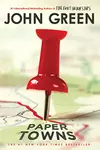


I didn't love this one. For as much as they talk about paper people, the characters were all pretty one-dimensional and unrealistic. Margo as the manic-pixie-dream-girl only served to annoy which in turn made Quentin's ludicrous obsession with her annoying. Maybe it's just the adult in me saying “these dang kids these days”, but this book didn't work for me the same way Fault in Our Stars did. I'm still going to see the movie, though now I can lower my hopes ever so slightly.


I bought this book without even reading the back cover, only hearing that it was good and should be read. Fortunately, I heard right and The Thousand Autumns of Jacob de Zoet was great! An extremely well written historical fiction, the book is a look into Japanese isolationist culture in the late 1700s-early 1800s. Which does not sound exciting at all, but the life shared with you through de Zoet himself and the many deep and intriguing tertiary characters makes this book a quick read. It's expertly written and paced near-perfectly.
It was a much different book than I'm used to reading but the change was unexpectedly welcome. Most books present a very clear goal or at least allow you to discern it fairly easily, whereas Autumns simply puts you on the shoulders of this man as he lives through this tumultuous time.
I can't recommend this enough. I will certainly e picking up more David Mitchell novels (and in fact I bought this and Cloud Atlas in the same trip).


While maybe not quite as mind-blowing as the hype I managed to catch, The Martian was a lot of fun and sciency without being TOO sciency. You never feel like author Andy Weir is just making shit up, it all feels real, and the conflict all feels earned, never just tossed in to add interest. A few moments get a little tedious, but ultimately this is a great read and as long as you don't take huge swathes of time away from reading you will wrap this one up in a few 3 hour reading binge sessions. Plus, it's got an amazing cover design. Great first outing by Weir, and a great example of a self-published book that SHOULD be picked up for wider distribution (looking at you, 50 Shades). Recommended for anyone with even just a hobbyist level interest in space travel, as this book isn't so much science fiction as it is a pretty likely look at science future.


I've said a time or two that the Strike series of books lack an ‘edge' that really get you to the edge of your seat turning page after page. However, the Silkworm, following Cuckoo's Calling's footsteps, is an entertaining whodunit. It's much lighter than picking up a Lehane novel, but not as soft as an Evanovich. Strong writing and character, I definitely would recommend it.


This book....MAN! To review would be to spoil, and to spoil would be to absolutely ruin. So in as few words as possible, here goes. Gone Girl was excellent. Flynn takes on what seems to be a pretty typical albeit well-written trip through a mystery and then WHAM! Shit goes down. Simply understand that as you approach the well-separated Part 2 of this book, it becomes nearly impossible to put down, and when you turn the first page of Part 2 the “nearly” disappears and you better hope you have enough time left in your day to read 200 pages straight. Great read.


While this book is well written, flows nicely, and has some interesting characters, nothing all that interesting happens to them. Some people you are meant to be sympathizing with just seem weak and it's a bit exhausting. Having sped through it with the hopes of finding answers before the HBO series I was left pretty unsatisfied. It feels like the first half of a book that was just about to get more interesting. Not totally unworthy of a read, but not a priority.


