
Wulf C. Krueger


Answered a promptWhat are your favorite books by black authors?







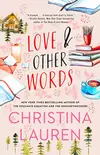
Isn’t it the worst act of treason when a book disappoints? I was looking for a fun romance by one (or actually: two) of my favourite romance authors. That’s how I came across “Love and Other Words” by Christina Lauren and, sadly, and unusually, it turned traitor quickly!
Macy and Elliott have been friends since childhood. They’re perfect for each other and they both know it. They even get together until one day, Macy breaks off contact for a whopping 11 years. The reasons? They do make sense, but eleven years? I’m not sure I can suspend my disbelief that much.
This is where “Love” starts: Macy is now a resident physician. Elliott is, probably, some kind of author. Either we don’t really get to know, or I already forgot. He seems to pretty much have all the time in the world.
Once they meet again, things start moving inexorably to the inevitable happily-ever-after. Unfortunately, despite many nice ideas, “Love” tells us much about their shared past and a bit about their present but it always feels “low stakes”: Yes, there’s some rather weird drama in lieu of a third-act breakup but it’s over within a few pages and then we’re back with Elliott and Macy on cloud nine.
»His front door is flat brown, and before it is a thin doormat with the Dickinson quote The soul should always stand ajar.«
Emily Dickinson’s poem in full reveals a clever double meaning to Macy whose soul Elliott hopes to “re-open” and “visit”. It also serves as a warning not to let this chance pass…
»The Soul should always stand ajar
That if the Heaven inquire
He will not be obliged to wait
Or shy of troubling Her
Depart, before the Host have slid
The Bolt unto the Door —
To search for the accomplished Guest,
Her Visitor, no more —«
They both know each other so immensely well (and neither of them seems to have significantly changed much during that decade apart) that both Elliott, and, to an even higher degree, Macy, know full well how they’re going to end up. They often end up asking each other “Do you really question that?”, and the answer is always and unequivocally a “no”. They know beforehand.
This is one of the reasons I’m not much into second-chance romance: the people involved have already been together, and in this kind of romance, will always get back together. So where’s the thrill of discovery? The allure of the new?
All side characters stay schematic and either serve to cheer Macy on (Sabrina), to be “mini villains” (Christian), or to be just plain “exotic” (her Danish father or her late but ever-present mother, Laís). Even Elliott’s family, of which we get to “see” a bit more, remains nevertheless vague and relatively insignificant to the story as a whole. They all play a part, but come across more as extras.
Even more so in a scenario like this: Macy and Elliott read like two halves of a whole. Apart from the event that broke them, there’s nothing but violins and fluff. The respective partners are quickly disposed of (Elliott pretty much immediately leaves his girlfriend; Macy conveniently finds out she and her partner didn’t even love each other in the first place) and, if Christina Lauren didn’t spell out the exact date per chapter, you’d think everything happens during a few days, or maybe weeks..
During the later chapters of their past, when our protagonists are in their adolescence (16 to 18, roughly), they, naturally, discover sexuality and each other (to some degree). I’ll be fifty later this year; their “explorations” made me feel somewhat uncomfortable and voyeuristic.
The latter was somewhat eased by the sensitive writing, and sustained consistency of the authors: Christina Lauren’s prose is fitting and competent. Despite the novel’s shortcomings, it reads very well: medium-length chapters, much showing, few instances of telling, and the emotions feel believable.
“Love” reads like pure (and simple) wish or fantasy fulfilment. I seem not to share those wishes. If you, though, are looking for this kind of wish fulfilment, predictability, or even nostalgia for young love, “Love” might fit your bill.
Three stars out of five.
Ceterum censeo Putin esse delendam
Originally posted at turing.mailstation.de.
Isn’t it the worst act of treason when a book disappoints? I was looking for a fun romance by one (or actually: two) of my favourite romance authors. That’s how I came across “Love and Other Words” by Christina Lauren and, sadly, and unusually, it turned traitor quickly!
Macy and Elliott have been friends since childhood. They’re perfect for each other and they both know it. They even get together until one day, Macy breaks off contact for a whopping 11 years. The reasons? They do make sense, but eleven years? I’m not sure I can suspend my disbelief that much.
This is where “Love” starts: Macy is now a resident physician. Elliott is, probably, some kind of author. Either we don’t really get to know, or I already forgot. He seems to pretty much have all the time in the world.
Once they meet again, things start moving inexorably to the inevitable happily-ever-after. Unfortunately, despite many nice ideas, “Love” tells us much about their shared past and a bit about their present but it always feels “low stakes”: Yes, there’s some rather weird drama in lieu of a third-act breakup but it’s over within a few pages and then we’re back with Elliott and Macy on cloud nine.
»His front door is flat brown, and before it is a thin doormat with the Dickinson quote The soul should always stand ajar.«
Emily Dickinson’s poem in full reveals a clever double meaning to Macy whose soul Elliott hopes to “re-open” and “visit”. It also serves as a warning not to let this chance pass…
»The Soul should always stand ajar
That if the Heaven inquire
He will not be obliged to wait
Or shy of troubling Her
Depart, before the Host have slid
The Bolt unto the Door —
To search for the accomplished Guest,
Her Visitor, no more —«
They both know each other so immensely well (and neither of them seems to have significantly changed much during that decade apart) that both Elliott, and, to an even higher degree, Macy, know full well how they’re going to end up. They often end up asking each other “Do you really question that?”, and the answer is always and unequivocally a “no”. They know beforehand.
This is one of the reasons I’m not much into second-chance romance: the people involved have already been together, and in this kind of romance, will always get back together. So where’s the thrill of discovery? The allure of the new?
All side characters stay schematic and either serve to cheer Macy on (Sabrina), to be “mini villains” (Christian), or to be just plain “exotic” (her Danish father or her late but ever-present mother, Laís). Even Elliott’s family, of which we get to “see” a bit more, remains nevertheless vague and relatively insignificant to the story as a whole. They all play a part, but come across more as extras.
Even more so in a scenario like this: Macy and Elliott read like two halves of a whole. Apart from the event that broke them, there’s nothing but violins and fluff. The respective partners are quickly disposed of (Elliott pretty much immediately leaves his girlfriend; Macy conveniently finds out she and her partner didn’t even love each other in the first place) and, if Christina Lauren didn’t spell out the exact date per chapter, you’d think everything happens during a few days, or maybe weeks..
During the later chapters of their past, when our protagonists are in their adolescence (16 to 18, roughly), they, naturally, discover sexuality and each other (to some degree). I’ll be fifty later this year; their “explorations” made me feel somewhat uncomfortable and voyeuristic.
The latter was somewhat eased by the sensitive writing, and sustained consistency of the authors: Christina Lauren’s prose is fitting and competent. Despite the novel’s shortcomings, it reads very well: medium-length chapters, much showing, few instances of telling, and the emotions feel believable.
“Love” reads like pure (and simple) wish or fantasy fulfilment. I seem not to share those wishes. If you, though, are looking for this kind of wish fulfilment, predictability, or even nostalgia for young love, “Love” might fit your bill.
Three stars out of five.
Ceterum censeo Putin esse delendam
Originally posted at turing.mailstation.de.

Michael Connelly’s “Echo Park” returns readers to the streets of Los Angeles, with LAPD detective Harry Bosch once again at the center of a haunting case which involves a file Bosch could never truly let go.
Years later, new evidence in the form of a serial killer’s confession offers closure, but as is typical for Bosch, easy answers don’t satisfy him. This is classic Connelly territory: police work that’s both methodical and deeply personal, drawing readers into the emotional and ethical struggles of a detective haunted by the ones he couldn’t save.
While “Echo Park” references previous Bosch cases and relationships, it would “work” for newcomers to the series as well. Long-time fans, however, may notice it lacks some of the intensity and inventiveness of earlier series entries, such as “The Concrete Blonde” or “The Last Coyote”. The plot moves briskly, but certain character arcs - particularly Bosch’s relationships with colleagues - sometimes feel eclipsed by the procedural elements.
Still, Connelly’s skill is in crafting small, human moments that bring the characters to life.
»He started the car and pulled out, heading back to the freeway. They drove silently. When he got back to the 134 the flower vendor was still in the median. Rider looked down at the bouquet in her hand, realized that Bosch had gotten them as an afterthought and started laughing. Bosch joined in.«
These understated moments create space within the propulsive plot, grounding the story in relatable emotion.
The novel’s central ethical dilemma - what kind of detective Harry Bosch chooses to be - comes late but at a crucial point in the story:
»And, well, Harry, I guess this is the dog you chose to feed. I hope you’re happy with it. And I hope it fits in perfectly well with the way of the true detective.«
Bosch’s stubborn pursuit of justice, regardless of consequence or cost, defines him as a character and the series as a whole.
“Echo Park” may not reach the atmospheric heights of Connelly’s best work, but it remains a satisfying read: taut, engaging, and true to the spirit of its detective hero. If you like Bosch, you’ll enjoy this book.
Four stars out of five.
Ceterum censeo Putin esse delendam
Originally posted at turing.mailstation.de.
Michael Connelly’s “Echo Park” returns readers to the streets of Los Angeles, with LAPD detective Harry Bosch once again at the center of a haunting case which involves a file Bosch could never truly let go.
Years later, new evidence in the form of a serial killer’s confession offers closure, but as is typical for Bosch, easy answers don’t satisfy him. This is classic Connelly territory: police work that’s both methodical and deeply personal, drawing readers into the emotional and ethical struggles of a detective haunted by the ones he couldn’t save.
While “Echo Park” references previous Bosch cases and relationships, it would “work” for newcomers to the series as well. Long-time fans, however, may notice it lacks some of the intensity and inventiveness of earlier series entries, such as “The Concrete Blonde” or “The Last Coyote”. The plot moves briskly, but certain character arcs - particularly Bosch’s relationships with colleagues - sometimes feel eclipsed by the procedural elements.
Still, Connelly’s skill is in crafting small, human moments that bring the characters to life.
»He started the car and pulled out, heading back to the freeway. They drove silently. When he got back to the 134 the flower vendor was still in the median. Rider looked down at the bouquet in her hand, realized that Bosch had gotten them as an afterthought and started laughing. Bosch joined in.«
These understated moments create space within the propulsive plot, grounding the story in relatable emotion.
The novel’s central ethical dilemma - what kind of detective Harry Bosch chooses to be - comes late but at a crucial point in the story:
»And, well, Harry, I guess this is the dog you chose to feed. I hope you’re happy with it. And I hope it fits in perfectly well with the way of the true detective.«
Bosch’s stubborn pursuit of justice, regardless of consequence or cost, defines him as a character and the series as a whole.
“Echo Park” may not reach the atmospheric heights of Connelly’s best work, but it remains a satisfying read: taut, engaging, and true to the spirit of its detective hero. If you like Bosch, you’ll enjoy this book.
Four stars out of five.
Ceterum censeo Putin esse delendam
Originally posted at turing.mailstation.de.