
Devi Nair


🎧 Listened in audio 📢 Narrated by Gretchen McCulloch ⏱ Duration: 8 hours 🏷️ Publisher: Books on Tape / Riverhead Books 📚 Genre: Nonfiction | Linguistics | Technology
"Because Internet" is one of those rare nonfiction listens that makes you nod along every few minutes. Gretchen McCulloch beautifully explains how online language evolved by excavating the instincts you've already been acting on for decades and handing them back to you, labeled and lit up, and suddenly you see the whole thing in a brand new light. From early chatroom days to TikTok linguistics, she connects the dots between our key-smashing, emoji-studded messages and the deeper human need to express tone, rhythm, and emotion in a text-based world.
The argument is deceptively simple. Human communication has always been a full-body experience. We talk with our hands, our faces, our eyebrows, the tilt of our heads. The moment we moved to text, we lost all of that, and then, emojis evolved to give it back to us. That's why the most used emojis are faces and hands. We weren't decorating our messages. We were restoring our bodies to our words. Not only this, the book also demystifies linguistic trends without condescension, showing how creativity drives our everyday online speech. Along with the emojis evolution, I also loved her explanation on how GIFs and memes evolved for us to quirkily express ourselves more with pictures than with words, adding tone in an otherwise toneless world of alphabet.
The fact that McCulloch narrates her own book is beautiful. There's no distance between the researcher and her ideas. She's enthusiastic and warm and a little nerdy in the best way, like being tutored by someone who is genuinely thrilled that you asked. As someone who's watched the internet grow from dial-up days to DMs, this book hit a nostalgic and insightful sweet spot. This is the kind of book that makes you look at 🙏 and think: that's a bow, a high five, and a prayer all at once, and we all just... agreed on that. Informally. Together. On the Internet.
Would I recommend it? OBSESSED. Completely, embarrassingly obsessed. I've been narrating emoji meanings at people who did not ask. I reread my old texts looking for linguistic patterns. I used the phrase "restoring our bodies to our writing" in an actual conversation and meant it. Because Internet is one of the most quietly mind-expanding books I've encountered, the kind that doesn't just teach you something new, it changes how you see something you already knew. Essential listening.
🎧 Listened in audio 📢 Narrated by Gretchen McCulloch ⏱ Duration: 8 hours 🏷️ Publisher: Books on Tape / Riverhead Books 📚 Genre: Nonfiction | Linguistics | Technology
"Because Internet" is one of those rare nonfiction listens that makes you nod along every few minutes. Gretchen McCulloch beautifully explains how online language evolved by excavating the instincts you've already been acting on for decades and handing them back to you, labeled and lit up, and suddenly you see the whole thing in a brand new light. From early chatroom days to TikTok linguistics, she connects the dots between our key-smashing, emoji-studded messages and the deeper human need to express tone, rhythm, and emotion in a text-based world.
The argument is deceptively simple. Human communication has always been a full-body experience. We talk with our hands, our faces, our eyebrows, the tilt of our heads. The moment we moved to text, we lost all of that, and then, emojis evolved to give it back to us. That's why the most used emojis are faces and hands. We weren't decorating our messages. We were restoring our bodies to our words. Not only this, the book also demystifies linguistic trends without condescension, showing how creativity drives our everyday online speech. Along with the emojis evolution, I also loved her explanation on how GIFs and memes evolved for us to quirkily express ourselves more with pictures than with words, adding tone in an otherwise toneless world of alphabet.
The fact that McCulloch narrates her own book is beautiful. There's no distance between the researcher and her ideas. She's enthusiastic and warm and a little nerdy in the best way, like being tutored by someone who is genuinely thrilled that you asked. As someone who's watched the internet grow from dial-up days to DMs, this book hit a nostalgic and insightful sweet spot. This is the kind of book that makes you look at 🙏 and think: that's a bow, a high five, and a prayer all at once, and we all just... agreed on that. Informally. Together. On the Internet.
Would I recommend it? OBSESSED. Completely, embarrassingly obsessed. I've been narrating emoji meanings at people who did not ask. I reread my old texts looking for linguistic patterns. I used the phrase "restoring our bodies to our writing" in an actual conversation and meant it. Because Internet is one of the most quietly mind-expanding books I've encountered, the kind that doesn't just teach you something new, it changes how you see something you already knew. Essential listening.

🎧 Listened in audio 📢 Narrated by: CSE Cooney ⏱ Duration: 9 hours 🏷️ Publisher: Tantor Media and Kensington Cozies
Six books in and Rarity Cole still has the power to make me root for her like it's the first time. There's something genuinely refreshing about a protagonist whose entire arc is built on gratitude, in a quiet, lived-in way that makes you think. Rarity remains a woman whose second act feels refreshingly grounded in resilience rather than reinvention. Her quiet strength and warmth give the series the emotional backbone that makes each mystery hit a little deeper. In Sleuthing with the Stars, Lynn Cahoon balances the glamour of Sedona's film festival with the everyday charm of a small-town bookstore, creating a backdrop both picturesque and relatable.
The film festival backdrop is a fun shake-up for Sedona, with a lot of glitz, gossip, and people with their agendas wrapped up in charm. the murder mystery itself clips along at a pace that feels earned rather than rushed, with enough red herrings to keep you second guessing without feeling manipulated. Darby is the friend in need this time. Her return from Scotland adds a lovely layer of warmth and chaos in equal measure. She's magnetic in the best way, and watching her inadvertently stumble into the centre of a murder investigation is exactly the kind of deliciously cozy setup I'm here for. The mystery unfolds with the trademark Cahoon coziness, with no wild car chases, but plenty of intrigue, secrets, and character-driven twists.
And then there's CSE Cooney. Honestly, if you're sleeping on the audiobook version of this series, you are doing yourself a disservice. She brings Rarity's world to life with this warm, effortless command over the cast. Every character feels distinctly themselves, and she never lets the energy sag even when the plot takes a breath. The narration doesn't just complement the story, it elevates it. Nine hours in her hands felt like a gift.
Would I recommend it? If you're a fan of cozy mysteries with genuine heart, the kind where friendship and resilience sit right alongside the whodunit, Sleuthing with the Stars delivers on every front. It's warm, witty, and Rarity Cole continues to be the protagonist this genre deserves. Whether you're a longtime fan of the series or looking for your next comfort read, this one will sit well for you. Heartwarming, gently suspenseful, and perfect for your next weekend listen.
🎧 Listened in audio 📢 Narrated by: CSE Cooney ⏱ Duration: 9 hours 🏷️ Publisher: Tantor Media and Kensington Cozies
Six books in and Rarity Cole still has the power to make me root for her like it's the first time. There's something genuinely refreshing about a protagonist whose entire arc is built on gratitude, in a quiet, lived-in way that makes you think. Rarity remains a woman whose second act feels refreshingly grounded in resilience rather than reinvention. Her quiet strength and warmth give the series the emotional backbone that makes each mystery hit a little deeper. In Sleuthing with the Stars, Lynn Cahoon balances the glamour of Sedona's film festival with the everyday charm of a small-town bookstore, creating a backdrop both picturesque and relatable.
The film festival backdrop is a fun shake-up for Sedona, with a lot of glitz, gossip, and people with their agendas wrapped up in charm. the murder mystery itself clips along at a pace that feels earned rather than rushed, with enough red herrings to keep you second guessing without feeling manipulated. Darby is the friend in need this time. Her return from Scotland adds a lovely layer of warmth and chaos in equal measure. She's magnetic in the best way, and watching her inadvertently stumble into the centre of a murder investigation is exactly the kind of deliciously cozy setup I'm here for. The mystery unfolds with the trademark Cahoon coziness, with no wild car chases, but plenty of intrigue, secrets, and character-driven twists.
And then there's CSE Cooney. Honestly, if you're sleeping on the audiobook version of this series, you are doing yourself a disservice. She brings Rarity's world to life with this warm, effortless command over the cast. Every character feels distinctly themselves, and she never lets the energy sag even when the plot takes a breath. The narration doesn't just complement the story, it elevates it. Nine hours in her hands felt like a gift.
Would I recommend it? If you're a fan of cozy mysteries with genuine heart, the kind where friendship and resilience sit right alongside the whodunit, Sleuthing with the Stars delivers on every front. It's warm, witty, and Rarity Cole continues to be the protagonist this genre deserves. Whether you're a longtime fan of the series or looking for your next comfort read, this one will sit well for you. Heartwarming, gently suspenseful, and perfect for your next weekend listen.

📚 Read as a book 📃 422 pages ⏱ 5 hours read time 🏷️ Penguin 📖 Read as part of April Book Club
Okay, I owe Richard Osman an apology, a fruit basket, and possibly a handwritten letter on fancy stationary. For two years, I was that person at every gathering insisting the Thursday Murder Club was overrated. I watched the Netflix movie. Unmoved. I read Book 1. Twice. Unimpressed. So when my book club voted this in for April, I volunteered to moderate specifically to avoid having to have opinions about it. That was the plan. A solid, airtight plan. And then I made the catastrophic mistake of actually reading it.
Plot twist!! I LOVED IT! LOVED IT!!!
Book 2 is where Richard Osman apparently decided to stop playing nice. He took everything that was mildly amusing me in book one and dialed it up to an eleven. The pacing is tighter, the stakes are genuinely higher, and the characters, Elizabeth, joyce, Ron, and Ibrahim feel less like a quirky concept and more like people you'd absolutely want in your corner. The banter between the gang feels sharper, warmer, and somehow more alive. The emotional backbone, especially Elizabeth's past and the way it collides with her present, hit me harder than I expected. The mystery layers itself beautifully. Stolen diamonds, a mob connection, an old flame with secrets, and a body count that keeps climbing just when you think things are settling. I found myself sneaking in chapters whenever I could, flipping pages with that delirious "just one more" energy I hadn't felt in ages, and I say that as someone who showed up to this book looking for a reason to complain.
What really got me is how Osman handles the emotional weigth without ever tipping into melodrama. These are people in their seventies, living full, sharp, messy, funny lives, and the book never once condescends to them or to the reader. I borrowed books 3 and 4 even before I finished this one. I have zero regrets. I deserve this series far less than I'm getting it.
Would I recommend it? Consider this my official recant. If you bounced off Book 1, same! Come back anyway! This is the one where The Thursday Murder Club crew found their rhythm, and it's brilliant. Sharp British humor, a mystery that actually surprises you, and characters with enough warmth and depth to carry a dozen books. It's the kind of read that'll make you call your book club and say I was wrong, I was so wrong. Please forgive me.
📚 Read as a book 📃 422 pages ⏱ 5 hours read time 🏷️ Penguin 📖 Read as part of April Book Club
Okay, I owe Richard Osman an apology, a fruit basket, and possibly a handwritten letter on fancy stationary. For two years, I was that person at every gathering insisting the Thursday Murder Club was overrated. I watched the Netflix movie. Unmoved. I read Book 1. Twice. Unimpressed. So when my book club voted this in for April, I volunteered to moderate specifically to avoid having to have opinions about it. That was the plan. A solid, airtight plan. And then I made the catastrophic mistake of actually reading it.
Plot twist!! I LOVED IT! LOVED IT!!!
Book 2 is where Richard Osman apparently decided to stop playing nice. He took everything that was mildly amusing me in book one and dialed it up to an eleven. The pacing is tighter, the stakes are genuinely higher, and the characters, Elizabeth, joyce, Ron, and Ibrahim feel less like a quirky concept and more like people you'd absolutely want in your corner. The banter between the gang feels sharper, warmer, and somehow more alive. The emotional backbone, especially Elizabeth's past and the way it collides with her present, hit me harder than I expected. The mystery layers itself beautifully. Stolen diamonds, a mob connection, an old flame with secrets, and a body count that keeps climbing just when you think things are settling. I found myself sneaking in chapters whenever I could, flipping pages with that delirious "just one more" energy I hadn't felt in ages, and I say that as someone who showed up to this book looking for a reason to complain.
What really got me is how Osman handles the emotional weigth without ever tipping into melodrama. These are people in their seventies, living full, sharp, messy, funny lives, and the book never once condescends to them or to the reader. I borrowed books 3 and 4 even before I finished this one. I have zero regrets. I deserve this series far less than I'm getting it.
Would I recommend it? Consider this my official recant. If you bounced off Book 1, same! Come back anyway! This is the one where The Thursday Murder Club crew found their rhythm, and it's brilliant. Sharp British humor, a mystery that actually surprises you, and characters with enough warmth and depth to carry a dozen books. It's the kind of read that'll make you call your book club and say I was wrong, I was so wrong. Please forgive me.

🎧 Listened in audio 📢 Narrated by: Mary Roach ⏱ Duration: 9 hours 🏷️ Publisher: Books on Tape and W.W. Norton & Company 📚 Read as part of: Goodreads Challenge – Hot & Fresh: The New Hit Books According to Fellow Readers
I came into this one riding the Goodreads hype train. A book about how the human body can be rebuilt, piece by piece, sounds wild and fascinating in equal measure. New release, big energy, everyone buzzing about Mary Roach's latest dive into the weird corners of science. I've enjoyed her work before, especially her knack of turning the macabre into something delightfully human. The concept is brilliant on paper, the research is clearly deep, and the structure promises a wild ride through labs, operating rooms, and the strange frontiers of regenerative medicine.
However, I had to tap out at 10%, not because the writing was bad, but because it just wasn't my kind of non-fiction. There's a specific type of science writing that works best for me: narrative-led, character-driven, emotionally anchored. This one felt more like an enthusiastically delivered textbook tour, and no matter how witty the guide, if the subject matter isn't clicking for you viscerally, nine hours is a long time to sit with it.
For the right reader, this is genuinely a five-star experience. It's been named one of the best science books of 2025 by Time, Scientific American, and the Chicago Public Library. Fans of Stiff and Fuzz are already obsessed. I'm just not the reader this book needed, and that's okay. Not every well-made thing is made for every person, and recognizing that early is actually the kindest thing you can do for your reading life.
🎧 Listened in audio 📢 Narrated by: Mary Roach ⏱ Duration: 9 hours 🏷️ Publisher: Books on Tape and W.W. Norton & Company 📚 Read as part of: Goodreads Challenge – Hot & Fresh: The New Hit Books According to Fellow Readers
I came into this one riding the Goodreads hype train. A book about how the human body can be rebuilt, piece by piece, sounds wild and fascinating in equal measure. New release, big energy, everyone buzzing about Mary Roach's latest dive into the weird corners of science. I've enjoyed her work before, especially her knack of turning the macabre into something delightfully human. The concept is brilliant on paper, the research is clearly deep, and the structure promises a wild ride through labs, operating rooms, and the strange frontiers of regenerative medicine.
However, I had to tap out at 10%, not because the writing was bad, but because it just wasn't my kind of non-fiction. There's a specific type of science writing that works best for me: narrative-led, character-driven, emotionally anchored. This one felt more like an enthusiastically delivered textbook tour, and no matter how witty the guide, if the subject matter isn't clicking for you viscerally, nine hours is a long time to sit with it.
For the right reader, this is genuinely a five-star experience. It's been named one of the best science books of 2025 by Time, Scientific American, and the Chicago Public Library. Fans of Stiff and Fuzz are already obsessed. I'm just not the reader this book needed, and that's okay. Not every well-made thing is made for every person, and recognizing that early is actually the kindest thing you can do for your reading life.

🎧 Listened in audio 📢 Narrated by Rebecca Mitchell ⏱ Duration: 9 hours 🏷️ Published by Tantor Media & Kensington Cozies | March 31, 2026
I've followed Bailey King from book one, and every visit back to Harvest feels like coming home, with a side of fudge samples and small-town gossip. Ten books in and this series doesn't lose its charm one bit. Truffle Trouble picks up right as Bailey and Aiden tie the knot, and of course, Amanda Flower can't resist spiking the champagne with a little murder. Flower's signature warmth is that she doesn't just build mysteries, she builds communities. The familiar Amish setting adds sincerity and charm, while the cozy vibe humor keeps things breezy even while bodies start dropping.
What really had me hollering though, is Bailey's schedule. This woman investigated a murder, questioned half the town, figured out the killer (which, yes, I guessed too, but the journey was still delicious), pig-sat Jethro for what felt like the entire runtime, and somehow produced approximately two thousand candies overnight, while also being a newlywed and pet parent to a rabbit and a cat! I have one job, and a book review blog, and I don't even cook because it overwhelms me. Bailey, babe, what are you on, and can I have some? The sheer audacity of her productivity is both aspirational and deeply insulting to the rest of us.
Rebecca Mitchel's narration deserves its own standing ovation. She moves through English, Pennsylvania Dutch, and Jean Pierre's flamboyant Canadian French seamlessly, while also keeping Bailey's vulnerability and strength unique in her voice. Mami's heart attack loomed in the background, while Jean Pierre's budding romance with Lois added a required layer of warmth in the story. Flower manages to blend humor, tenderness, and suspense into a story that hits all the cozy mystery checkboxes.
Would I recommend it? If you've been sleeping on the Amish Candy Shop Mystery series, Truffle Trouble is your sign to start from book one and sprint your way here. It's cozy mystery comfort food — sweet, satisfying, and full of characters you'd genuinely invite to your own wedding. Amanda Flower packs so much heart into this small Ohio town that it barely fits inside nine hours of audio. Bailey may lack a spine when it comes to Margo, but this book? It has plenty. A perfect listen for anyone craving a cozy mystery with community spirit, humor, and heaps of heart.
Originally posted at viewsshewrites.com.
🎧 Listened in audio 📢 Narrated by Rebecca Mitchell ⏱ Duration: 9 hours 🏷️ Published by Tantor Media & Kensington Cozies | March 31, 2026
I've followed Bailey King from book one, and every visit back to Harvest feels like coming home, with a side of fudge samples and small-town gossip. Ten books in and this series doesn't lose its charm one bit. Truffle Trouble picks up right as Bailey and Aiden tie the knot, and of course, Amanda Flower can't resist spiking the champagne with a little murder. Flower's signature warmth is that she doesn't just build mysteries, she builds communities. The familiar Amish setting adds sincerity and charm, while the cozy vibe humor keeps things breezy even while bodies start dropping.
What really had me hollering though, is Bailey's schedule. This woman investigated a murder, questioned half the town, figured out the killer (which, yes, I guessed too, but the journey was still delicious), pig-sat Jethro for what felt like the entire runtime, and somehow produced approximately two thousand candies overnight, while also being a newlywed and pet parent to a rabbit and a cat! I have one job, and a book review blog, and I don't even cook because it overwhelms me. Bailey, babe, what are you on, and can I have some? The sheer audacity of her productivity is both aspirational and deeply insulting to the rest of us.
Rebecca Mitchel's narration deserves its own standing ovation. She moves through English, Pennsylvania Dutch, and Jean Pierre's flamboyant Canadian French seamlessly, while also keeping Bailey's vulnerability and strength unique in her voice. Mami's heart attack loomed in the background, while Jean Pierre's budding romance with Lois added a required layer of warmth in the story. Flower manages to blend humor, tenderness, and suspense into a story that hits all the cozy mystery checkboxes.
Would I recommend it? If you've been sleeping on the Amish Candy Shop Mystery series, Truffle Trouble is your sign to start from book one and sprint your way here. It's cozy mystery comfort food — sweet, satisfying, and full of characters you'd genuinely invite to your own wedding. Amanda Flower packs so much heart into this small Ohio town that it barely fits inside nine hours of audio. Bailey may lack a spine when it comes to Margo, but this book? It has plenty. A perfect listen for anyone craving a cozy mystery with community spirit, humor, and heaps of heart.
Originally posted at viewsshewrites.com.

🎧 Listened in audio 📢 Narrated by: Eric Fox and Shaina Summerville ⏱ Duration: 11 hours 🏷️ Publisher: Spotify Audiobooks & Crooked Lane Books 📅 Published: January 27, 2026 Genre: Cozy Mystery
Not once, not once, did this book lose pace. When I saw an 11-hour runtime, I thought I'd cruise through it at 2x speed while answering emails. Big mistake! Thirty minutes later, I had slowed it down, put away everything else, and was completely, embarrassingly, hopelessly in. Not once, not a single chapter, not a single scene, did this book give me an excuse to zone out. That almost never happens. Michelle L. Cullen, I need you to understand what you have done to me and my productivity.
Harry is the kind of character you'd roll your eyes at on paper: grumpy, set in his ways, a man who communicates in scowls and sarcasm. But rather, he's actually magnetic. Eric Fox's narration had me genuinely attached to this man in a way I wasn't prepared for. Shaina Summervile voiced Emma's bright, determined energy goes so well in contrast to Harry's personality. The Harry-Emma dynamics is the kind of slow-build, cross-generational partnership that cozy mystery fans dream about. The fact that this is a debut novel should be filed under crimes against the literary community because it simply isn't fair.
As an audiobook, this was a chef's kiss. Eric Fox and Shaina Summerville nailed the dual tone. The two narrators together make the dual POV feel completely natural. This is the rare audiobook that turns a good book into a great experience. The mystery itself is genuinely well-constructed with layered suspects, a neighbourhood full of buried secrets, and a twist that earns its reveal.
A sequel, A Field Guide to Death and Deceit, is coming in September, and I have already mentally cleared my calendar.
Would I recommend it? This is one of those rare debuts that feels like it arrived fully formed in the sharp, funny, humane, and deeply satisfying way. The pacing is relentless in the best possible way, the characters will live in your head rent-free, and the narrators are an absolute gift. This is the cozy mystery that anyone who has ever wanted a grumpy-sunshine, cross-generational, odd-couple detective duo will lose their mind over.
🎧 Listened in audio 📢 Narrated by: Eric Fox and Shaina Summerville ⏱ Duration: 11 hours 🏷️ Publisher: Spotify Audiobooks & Crooked Lane Books 📅 Published: January 27, 2026 Genre: Cozy Mystery
Not once, not once, did this book lose pace. When I saw an 11-hour runtime, I thought I'd cruise through it at 2x speed while answering emails. Big mistake! Thirty minutes later, I had slowed it down, put away everything else, and was completely, embarrassingly, hopelessly in. Not once, not a single chapter, not a single scene, did this book give me an excuse to zone out. That almost never happens. Michelle L. Cullen, I need you to understand what you have done to me and my productivity.
Harry is the kind of character you'd roll your eyes at on paper: grumpy, set in his ways, a man who communicates in scowls and sarcasm. But rather, he's actually magnetic. Eric Fox's narration had me genuinely attached to this man in a way I wasn't prepared for. Shaina Summervile voiced Emma's bright, determined energy goes so well in contrast to Harry's personality. The Harry-Emma dynamics is the kind of slow-build, cross-generational partnership that cozy mystery fans dream about. The fact that this is a debut novel should be filed under crimes against the literary community because it simply isn't fair.
As an audiobook, this was a chef's kiss. Eric Fox and Shaina Summerville nailed the dual tone. The two narrators together make the dual POV feel completely natural. This is the rare audiobook that turns a good book into a great experience. The mystery itself is genuinely well-constructed with layered suspects, a neighbourhood full of buried secrets, and a twist that earns its reveal.
A sequel, A Field Guide to Death and Deceit, is coming in September, and I have already mentally cleared my calendar.
Would I recommend it? This is one of those rare debuts that feels like it arrived fully formed in the sharp, funny, humane, and deeply satisfying way. The pacing is relentless in the best possible way, the characters will live in your head rent-free, and the narrators are an absolute gift. This is the cozy mystery that anyone who has ever wanted a grumpy-sunshine, cross-generational, odd-couple detective duo will lose their mind over.
Updated a reading goal:
Read 300 books in 2026
Progress so far: 125 / 300 41%

📱📖 Read on Kindle 📃 220 pages ⏱ Duration: 4 hours 🏷️ Publisher: Bold Strokes Books 📅 To be published on April 14, 2026 📚 ARC provided by NetGalley Genre: Queer Romance
I'll be honest, I walked into this book skeptical. I requested an ARC without clocking that it was a romance novel, got approved, and decided I was going to read it with maximum skepticism. I was Sawyer. Fully, completely, embarrassingly Sawyer. And then, Jenna happened, and now I'm sitting here writing a five-star review of a sapphic romance novel like it's just a normal Tuesday, so.
Heavily pregnant Charlotte and Sawyer's mom (whose name escapes me, but whose energy I adored) bring real texture to the story without hogging the spotlight. There's a refreshing restraint in how little page time gets wasted on characters who are unnecessary drama (Amanda, you know what you did. Moving on.) The banter between Jenna and Sawyer is sharp, genuine, and flirty enough to make even the most cynical reader blush, but not too sticky to make you give up on romance.
What really hit me, though, were Jenna's impassioned defenses of romance genre. Her logic, that romance keeps the fiction world alive, is both funny and true. Through her, the book reads as both a love story, and a love letter to love stories. Jenna doesn't apologize for what she loves, and Beers clearly doesn't either. The writing has this lovely, confident energy, like someone who knows exactly the story they are telling and why it matters. As someone who picked this book up with a grudge, and put it down converted, I think the argument lands harder than any narrative ever could.
Would I recommend it? I came in skeptic and left a believer, which is honestly the most on-brand way to review a book that's literally about changing someone's mind about romance. This is a feel-good queer romance that earns its warmth, has just enough tension to keep things interesting, and features one of the most quietly compelling defenses of the romance genre I've read in fiction. Even if you think romance isn't your thing, The Girl Next Door might just prove you wrong.
📱📖 Read on Kindle 📃 220 pages ⏱ Duration: 4 hours 🏷️ Publisher: Bold Strokes Books 📅 To be published on April 14, 2026 📚 ARC provided by NetGalley Genre: Queer Romance
I'll be honest, I walked into this book skeptical. I requested an ARC without clocking that it was a romance novel, got approved, and decided I was going to read it with maximum skepticism. I was Sawyer. Fully, completely, embarrassingly Sawyer. And then, Jenna happened, and now I'm sitting here writing a five-star review of a sapphic romance novel like it's just a normal Tuesday, so.
Heavily pregnant Charlotte and Sawyer's mom (whose name escapes me, but whose energy I adored) bring real texture to the story without hogging the spotlight. There's a refreshing restraint in how little page time gets wasted on characters who are unnecessary drama (Amanda, you know what you did. Moving on.) The banter between Jenna and Sawyer is sharp, genuine, and flirty enough to make even the most cynical reader blush, but not too sticky to make you give up on romance.
What really hit me, though, were Jenna's impassioned defenses of romance genre. Her logic, that romance keeps the fiction world alive, is both funny and true. Through her, the book reads as both a love story, and a love letter to love stories. Jenna doesn't apologize for what she loves, and Beers clearly doesn't either. The writing has this lovely, confident energy, like someone who knows exactly the story they are telling and why it matters. As someone who picked this book up with a grudge, and put it down converted, I think the argument lands harder than any narrative ever could.
Would I recommend it? I came in skeptic and left a believer, which is honestly the most on-brand way to review a book that's literally about changing someone's mind about romance. This is a feel-good queer romance that earns its warmth, has just enough tension to keep things interesting, and features one of the most quietly compelling defenses of the romance genre I've read in fiction. Even if you think romance isn't your thing, The Girl Next Door might just prove you wrong.
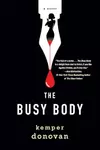
🎧 Listened in audio 📢 Narrated by Eva Kaminsky ⏱ Duration: 10 hours 🏷️ Publisher: Recorded Books Inc. / Penguin Random House Australia 📅 Published: January 23, 2024
I can't remember how this one landed on my radar. Maybe a forgotten book club recommendation? Either way, I'm so glad I pressed play on this brilliant meta premise, and that is what genuinely stood out for me in The Busy Body. Kemper Donovan plays with meta-narrative in a way that really pulled me into the story. The ghostwriter (deliberately nameless, and fascinatingly secretive about her identity) is telling the story in retrospect, occasionally commenting on how she would have said or acted differently in hindsight with the knowledge that she now possesses. That "if only I knew then" narrative layer gave the whole book a deliciously dramatic irony. You're reading a mystery, sure, but you're also watching someone process it in real time, looking back. That's such a clever device, and it worked beautifully in audio.
Dorothy Gibson is such an absolute force. I found myself deeply curious on who she might have been modeled after. A fiercely intelligent, politically independent woman with the kind of presence and gravitas, she ruled the pages she was on. Sharp, articulate, and much too human for the caricature she's become in the press, Dorothy feels like she could have walked out of a real-world campaign trail.
Eva Kaminsky's narration is pitch perfect. She captures both Dorothy's magnetic authority and the ghostwriter's quite observation. The twists kept coming, and I'll be honest, I figured out part of the mystery towards the end, but not nearly enough of it to feel smug about it. The rest genuinely caught me off-guard. If I had one gripe, it's the ghostwriter's ending. I won't say more, but let's just I had a different ending in mind for her, and closing that final chapter left me with a faint, specific disappointment. Not enough to sour me on the book, but enough to sit with me. Still, I'll absolutely be back for her next case without a second thought.
Would I recommend it? If you are a fan of cozy mysteries with literary backbone and a whodunit that actually delivers, this one belongs in your list. It's clever without being smug, warm without being saccharine, and twisty enough to earn its ending. Eva Kaminsky's narration brought the ghostwriter narration to life. The meta-narration alone makes this worth your attention.
🎧 Listened in audio 📢 Narrated by Eva Kaminsky ⏱ Duration: 10 hours 🏷️ Publisher: Recorded Books Inc. / Penguin Random House Australia 📅 Published: January 23, 2024
I can't remember how this one landed on my radar. Maybe a forgotten book club recommendation? Either way, I'm so glad I pressed play on this brilliant meta premise, and that is what genuinely stood out for me in The Busy Body. Kemper Donovan plays with meta-narrative in a way that really pulled me into the story. The ghostwriter (deliberately nameless, and fascinatingly secretive about her identity) is telling the story in retrospect, occasionally commenting on how she would have said or acted differently in hindsight with the knowledge that she now possesses. That "if only I knew then" narrative layer gave the whole book a deliciously dramatic irony. You're reading a mystery, sure, but you're also watching someone process it in real time, looking back. That's such a clever device, and it worked beautifully in audio.
Dorothy Gibson is such an absolute force. I found myself deeply curious on who she might have been modeled after. A fiercely intelligent, politically independent woman with the kind of presence and gravitas, she ruled the pages she was on. Sharp, articulate, and much too human for the caricature she's become in the press, Dorothy feels like she could have walked out of a real-world campaign trail.
Eva Kaminsky's narration is pitch perfect. She captures both Dorothy's magnetic authority and the ghostwriter's quite observation. The twists kept coming, and I'll be honest, I figured out part of the mystery towards the end, but not nearly enough of it to feel smug about it. The rest genuinely caught me off-guard. If I had one gripe, it's the ghostwriter's ending. I won't say more, but let's just I had a different ending in mind for her, and closing that final chapter left me with a faint, specific disappointment. Not enough to sour me on the book, but enough to sit with me. Still, I'll absolutely be back for her next case without a second thought.
Would I recommend it? If you are a fan of cozy mysteries with literary backbone and a whodunit that actually delivers, this one belongs in your list. It's clever without being smug, warm without being saccharine, and twisty enough to earn its ending. Eva Kaminsky's narration brought the ghostwriter narration to life. The meta-narration alone makes this worth your attention.

🎧 Listened in audio 📢 Narrated by Meg Josephson ⏱ Duration: 7 hours 🏷️ Publisher: Simon & Schuster Audio & Gallery Books
This book didn't just speak to me. It saw me. Meg Josephson doesn't just name fawning. She traces it all the way back. To the child who learned that being easy, agreeable, and small was the price of safety. To the girl who was taught to hug Uncle Richard whether she wanted to or not. To the version of you who stopped knowing what she liked, what she wanted, what felt like her, because she'd been adapting for so long she forgot there was a her to come back to. Listening to Meg Josephson narrate her own words felt like hearing a wiser, softer version of myself whispering truths I'd forgotten I knew. Her compassion never slips into cliche. Instead, she offers quiet revelations about what it means to find safety within yourself instead of searching for validations from those who may never give it. That's a gut punch with compassion wrapped around it, and Josephson delivers it so gently, you almost don't feel it landing until you're already crying.
What also hit hard was the section on healing, specifically, what healing actually means Moving forward while still holding the loss. And for women especially, this book goes somewhere a lot of other such books doesn't. It names the conditioning directly. The good girl. The cool girl. The caretaker. The one who was taught to want less, need less, be less. And then wondered why she felt so depleted and so far from herself. There's something deeply radical about how Josephson reframes self-care, not as bubble baths or affirmations, but as an act of rebellion in a world that profits from out self doubt.
Each chapter felt like slowly building trust with my inner child again, reminding her that she's not too much, not broken, and that it's safe to take up space. And by the end, you're left with a sense that you are not in trouble, you are not secretly a bad person, and healing at your own pace is exactly the pace you're supposed to be at.
Would I recommend it? This book moved me in a way few nonfiction titles ever have. It's for anyone who has spent years apologizing for their own existence or hustling for love that never felt secure. This book doesn't just explain people-pleasing. It honours the journey back to yourself. It's warm, it's precise, it's deeply humane, and it gave language to things I didn't know I needed named. If you've ever shrunk yourself to fit a room, carried guilt that was never yours, or wondered why you're still people-pleasing even when you know better, this is your book!
🎧 Listened in audio 📢 Narrated by Meg Josephson ⏱ Duration: 7 hours 🏷️ Publisher: Simon & Schuster Audio & Gallery Books
This book didn't just speak to me. It saw me. Meg Josephson doesn't just name fawning. She traces it all the way back. To the child who learned that being easy, agreeable, and small was the price of safety. To the girl who was taught to hug Uncle Richard whether she wanted to or not. To the version of you who stopped knowing what she liked, what she wanted, what felt like her, because she'd been adapting for so long she forgot there was a her to come back to. Listening to Meg Josephson narrate her own words felt like hearing a wiser, softer version of myself whispering truths I'd forgotten I knew. Her compassion never slips into cliche. Instead, she offers quiet revelations about what it means to find safety within yourself instead of searching for validations from those who may never give it. That's a gut punch with compassion wrapped around it, and Josephson delivers it so gently, you almost don't feel it landing until you're already crying.
What also hit hard was the section on healing, specifically, what healing actually means Moving forward while still holding the loss. And for women especially, this book goes somewhere a lot of other such books doesn't. It names the conditioning directly. The good girl. The cool girl. The caretaker. The one who was taught to want less, need less, be less. And then wondered why she felt so depleted and so far from herself. There's something deeply radical about how Josephson reframes self-care, not as bubble baths or affirmations, but as an act of rebellion in a world that profits from out self doubt.
Each chapter felt like slowly building trust with my inner child again, reminding her that she's not too much, not broken, and that it's safe to take up space. And by the end, you're left with a sense that you are not in trouble, you are not secretly a bad person, and healing at your own pace is exactly the pace you're supposed to be at.
Would I recommend it? This book moved me in a way few nonfiction titles ever have. It's for anyone who has spent years apologizing for their own existence or hustling for love that never felt secure. This book doesn't just explain people-pleasing. It honours the journey back to yourself. It's warm, it's precise, it's deeply humane, and it gave language to things I didn't know I needed named. If you've ever shrunk yourself to fit a room, carried guilt that was never yours, or wondered why you're still people-pleasing even when you know better, this is your book!

🎧 Listened in audio 📢 Narrated by Fiona Hampton ⏱ Duration: 9 hours 🏷️ Publisher: Books on Tape / Random House Audio
A locked room mystery wrapped in corsets, with a heroine who'd rather read crime reports than practice the planoforte! How can I not get intrigued? Beatrice Steele is the kind of heroine you'd root for quietly. She's clever, observant, and absolutely out of step with her oh-so-proper world. Her curiosity about crime felt refreshing, even rebellious, but I couldn't help arguing with her over her life choices. I mean, girl, you spent half the novel carefully guarding your secret passion for true crime, and then walked directly into the crime scene like you owned the place. Make it make sense!! I get the appeal of finally having your moment. I do! but the logic didn't hold up, and that niggled at me throughout.
Fiona Hampton's narration sold me on the setting. Julia Seales is clearly having the time of her life poking fun at the Regency convention, and it shows. The world of Swampshire is delightfully absurt. Names that telegraph exactly who these people are, social rules that border on performance art, and a cast of characters that feels like Austen wrote them after one too many brandies. The romance with Vivek Drake sneaks up on you in the best possible way.
Where the story lost me was in its pacing. Just when I was leaning in, the mystery kept getting politely interrupted by balls, suitor assessments, and ongoing saga of Louisa's marriage prospects. I understand why. That's the whole comedic tension of the book. But it all felt a little too well-mannered for its own good. The killer reveal though! I didn't see that one coming, and that earned the book a significant goodwill. A satisfying final chapter does a lot of heavy lifting for a book.
Would I recommend it? If you've ever wished Bridgerton had a body count, this is your book. It's witty, it's absurd in all the right ways, and the killer reveal alone makes the slower middle worth sitting through. The audiobook narration is a genuinely great match for the material. I had fun, I just wasn't obsessed, and I probably won't be picking up the next Beatrice Steele adventure. But for a one-time romp through murderous Regency England, it was absolutely worth your 9 hours.
🎧 Listened in audio 📢 Narrated by Fiona Hampton ⏱ Duration: 9 hours 🏷️ Publisher: Books on Tape / Random House Audio
A locked room mystery wrapped in corsets, with a heroine who'd rather read crime reports than practice the planoforte! How can I not get intrigued? Beatrice Steele is the kind of heroine you'd root for quietly. She's clever, observant, and absolutely out of step with her oh-so-proper world. Her curiosity about crime felt refreshing, even rebellious, but I couldn't help arguing with her over her life choices. I mean, girl, you spent half the novel carefully guarding your secret passion for true crime, and then walked directly into the crime scene like you owned the place. Make it make sense!! I get the appeal of finally having your moment. I do! but the logic didn't hold up, and that niggled at me throughout.
Fiona Hampton's narration sold me on the setting. Julia Seales is clearly having the time of her life poking fun at the Regency convention, and it shows. The world of Swampshire is delightfully absurt. Names that telegraph exactly who these people are, social rules that border on performance art, and a cast of characters that feels like Austen wrote them after one too many brandies. The romance with Vivek Drake sneaks up on you in the best possible way.
Where the story lost me was in its pacing. Just when I was leaning in, the mystery kept getting politely interrupted by balls, suitor assessments, and ongoing saga of Louisa's marriage prospects. I understand why. That's the whole comedic tension of the book. But it all felt a little too well-mannered for its own good. The killer reveal though! I didn't see that one coming, and that earned the book a significant goodwill. A satisfying final chapter does a lot of heavy lifting for a book.
Would I recommend it? If you've ever wished Bridgerton had a body count, this is your book. It's witty, it's absurd in all the right ways, and the killer reveal alone makes the slower middle worth sitting through. The audiobook narration is a genuinely great match for the material. I had fun, I just wasn't obsessed, and I probably won't be picking up the next Beatrice Steele adventure. But for a one-time romp through murderous Regency England, it was absolutely worth your 9 hours.

🎧 Listened in audio 📢 Narrated by: Nissae Isen ⏱ Duration: 6 hours 🏷️ Publisher: Tundra Books Group
I have a soft spot for YA and middle-grade mysteries that sneak in lessons about real life under the cover of fun. Death by Whoopee Cushion does just that. Manya is exactly the right kind of twelve-year-old protagonist. She's sharp enough to carry the plot, self-aware enough to be funny, and emotionally messy in all the ways that feel true. She's growing up in her parents' joke shop, where fart gags and fake poop are serious business, but her real love is science. The cringe-worthy parent dynamic is played beautifully. It's not just a punchline, it's the whole emotional engine of the book. You feel the love underneath the embarrassment, and the tension behind"I love you but please stop" is something readers of every age will recognize immediately. The writing never over-explains. It just lives there, quietly doing the heavy-lifting.
What really got me though was the found family thread running through it all. Isaac's mom stepping up to protect Manya when her world falls apart, hit differently. The science woven into the mystery is clever enough without feeling like homework. It actually made me want to look things up, which is exactly what a good middle grade book should do. The pacing is tight. The mystery earns its resolution, and Nissae Isen's narration keeps the energy exactly where it's needed for six hours straight. This is the kind of book you'd hand to a kid and then quietly read it yourself.
Would I recommend it? This one's clever, heartfelt, and surprisingly profound for a story about prank gadgets. This book is not just for 12-year-olds but for everyone. It's a mystery that respects young adults enough to give them real stakes, real science, and real feelings. Vicki Grant knows exactly what she's doing, and the result is genuinely delightful. Perfect, though, for young readers who love science, humor, and good mysteries with actual heart.
🎧 Listened in audio 📢 Narrated by: Nissae Isen ⏱ Duration: 6 hours 🏷️ Publisher: Tundra Books Group
I have a soft spot for YA and middle-grade mysteries that sneak in lessons about real life under the cover of fun. Death by Whoopee Cushion does just that. Manya is exactly the right kind of twelve-year-old protagonist. She's sharp enough to carry the plot, self-aware enough to be funny, and emotionally messy in all the ways that feel true. She's growing up in her parents' joke shop, where fart gags and fake poop are serious business, but her real love is science. The cringe-worthy parent dynamic is played beautifully. It's not just a punchline, it's the whole emotional engine of the book. You feel the love underneath the embarrassment, and the tension behind"I love you but please stop" is something readers of every age will recognize immediately. The writing never over-explains. It just lives there, quietly doing the heavy-lifting.
What really got me though was the found family thread running through it all. Isaac's mom stepping up to protect Manya when her world falls apart, hit differently. The science woven into the mystery is clever enough without feeling like homework. It actually made me want to look things up, which is exactly what a good middle grade book should do. The pacing is tight. The mystery earns its resolution, and Nissae Isen's narration keeps the energy exactly where it's needed for six hours straight. This is the kind of book you'd hand to a kid and then quietly read it yourself.
Would I recommend it? This one's clever, heartfelt, and surprisingly profound for a story about prank gadgets. This book is not just for 12-year-olds but for everyone. It's a mystery that respects young adults enough to give them real stakes, real science, and real feelings. Vicki Grant knows exactly what she's doing, and the result is genuinely delightful. Perfect, though, for young readers who love science, humor, and good mysteries with actual heart.

🎧 Listened in audio 📢 Narrated by Dr. Jennifer Gunter ⏱ Duration: 18 hours 🏷️ Publisher: Random House Canada
The title best describes the book. It's supposed to have some sharp debunking of menstruation myths, and Dr. Jen Gunter absolutely delivers it. The book left me with a kind of quiet, slow-burning anger that only comes from realizing how much information has been deliberately kept from us, wrapped in shame and passed off as normal. Dr Jen Gunter explains away centuries of weaponized ignorance, with a frankness that feels like finally sitting across from a doctor who actually has time for your questions. Her narration feels equal parts doctor, teacher, and big sister who's just done with societal nonsense.
The best parts about this book are the myth-bursting chapters. Each time Gunter connects a ridiculous cultural belief about periods (think menstrual blood as face mask because of the "medicinal properties", or ancient rituals rooted in fear of women's bodies) to the actual science of why that narrative exists, I came out of it with equal parts fascination and anger. The message is clear and powerful: your body is yours. Your comfort is yours. For your comfort and relief, you owe no one any apology.
That said, the audio book is dense. I love a good scientific deep-dive, but at times, it felt like getting lost in a medical journal. the 18-hour listen occasionally dragged, especially when the data took precedence over storytelling or cultural critique. Around the 15- hour mark, I found myself satisfied enough to stop, partly because the key takeaway had already sunk in for me: my body, my comfort, my rules!
Still, the combination of history, medicine, and haunting cultural insight makes this book essential reading. It's empowering, educational, and thoroughly dismantles shame in a space that desperately needs candor and compassion.
Would I recommend it? This is a required reading for anyone who wants to understand how deeply shame and misinformation have shaped women's healthcare, and how science, culture, and gender politics intersect. It's not a breezy listen, and it can be dense in some stretches, but the moments of clarity and empowerment make it worth the effort. Dr Gunter's work is bold, factual, and deeply validating. Think of it as a book your body deserved long before now.
🎧 Listened in audio 📢 Narrated by Dr. Jennifer Gunter ⏱ Duration: 18 hours 🏷️ Publisher: Random House Canada
The title best describes the book. It's supposed to have some sharp debunking of menstruation myths, and Dr. Jen Gunter absolutely delivers it. The book left me with a kind of quiet, slow-burning anger that only comes from realizing how much information has been deliberately kept from us, wrapped in shame and passed off as normal. Dr Jen Gunter explains away centuries of weaponized ignorance, with a frankness that feels like finally sitting across from a doctor who actually has time for your questions. Her narration feels equal parts doctor, teacher, and big sister who's just done with societal nonsense.
The best parts about this book are the myth-bursting chapters. Each time Gunter connects a ridiculous cultural belief about periods (think menstrual blood as face mask because of the "medicinal properties", or ancient rituals rooted in fear of women's bodies) to the actual science of why that narrative exists, I came out of it with equal parts fascination and anger. The message is clear and powerful: your body is yours. Your comfort is yours. For your comfort and relief, you owe no one any apology.
That said, the audio book is dense. I love a good scientific deep-dive, but at times, it felt like getting lost in a medical journal. the 18-hour listen occasionally dragged, especially when the data took precedence over storytelling or cultural critique. Around the 15- hour mark, I found myself satisfied enough to stop, partly because the key takeaway had already sunk in for me: my body, my comfort, my rules!
Still, the combination of history, medicine, and haunting cultural insight makes this book essential reading. It's empowering, educational, and thoroughly dismantles shame in a space that desperately needs candor and compassion.
Would I recommend it? This is a required reading for anyone who wants to understand how deeply shame and misinformation have shaped women's healthcare, and how science, culture, and gender politics intersect. It's not a breezy listen, and it can be dense in some stretches, but the moments of clarity and empowerment make it worth the effort. Dr Gunter's work is bold, factual, and deeply validating. Think of it as a book your body deserved long before now.

🎧 Listened in audio 📢 Narrated by the author ⏱ Duration: 5 hours 🏷️ Published by Books on Tape and Ten Speed Press, February 13, 2018 📚 Genre: Non-fiction
Okay, full disclosure: I went into this book expecting a lecture. The kind of "put your phone down and go touch grass" energy that makes you feel personally attacked before chapter two. What I got instead was Catherine Price essentially sitting across from me, completely non-judgemental, going "Yeah, I get it. I was the same. Let's figure this out together", because, let's be honest, we've all had that moment when a "quick check" of social media turns into a 45-minute abyss.
The tone of the book makes a whole world of difference. The science section hits hard. The way Catherine Price breaks down how apps are deliberately designed to hijack your dopamine loop isn't just eye-opening, it's quietly destabilizing too. She doesn't get preachy throughout the book. She's realistic, witty, and most of all, kind. She understands the modern-day struggle between staying informed and staying sane.
Price divides the book into two smart parts: understanding why we're hooked, and how to unhook ourselves without panic-inducing disconnections. The practical tips are where this book earns its place on the shelf. Small, bite-sized, manageable changes. Not a cold-turkey digital detox fantasy that you'll abandon by Day 3. I'm someone who averages about 3 hours of screen time daily, and after applying just a handful of her suggestions (the ones I could actually live with), I've dropped down to 1.5 to 2 hours. That's real. That's measurable. That's the kind of result that makes you recommend a book unprompted at dinner.
Would I recommend it? If you've ever caught yourself reaching for your phone with zero reason and zero memory of how it got in your hand, this book is for you. It won't shame you into change. It'll science you into it, which honestly works much better. This one isn't about deleting your apps and retreating into the woods. It's about balance. Not every suggestion will land, and that's okay. Pick the ones you can live with. That's the whole point. Price offers doable changes that feel empowering rather than punishing.
🎧 Listened in audio 📢 Narrated by the author ⏱ Duration: 5 hours 🏷️ Published by Books on Tape and Ten Speed Press, February 13, 2018 📚 Genre: Non-fiction
Okay, full disclosure: I went into this book expecting a lecture. The kind of "put your phone down and go touch grass" energy that makes you feel personally attacked before chapter two. What I got instead was Catherine Price essentially sitting across from me, completely non-judgemental, going "Yeah, I get it. I was the same. Let's figure this out together", because, let's be honest, we've all had that moment when a "quick check" of social media turns into a 45-minute abyss.
The tone of the book makes a whole world of difference. The science section hits hard. The way Catherine Price breaks down how apps are deliberately designed to hijack your dopamine loop isn't just eye-opening, it's quietly destabilizing too. She doesn't get preachy throughout the book. She's realistic, witty, and most of all, kind. She understands the modern-day struggle between staying informed and staying sane.
Price divides the book into two smart parts: understanding why we're hooked, and how to unhook ourselves without panic-inducing disconnections. The practical tips are where this book earns its place on the shelf. Small, bite-sized, manageable changes. Not a cold-turkey digital detox fantasy that you'll abandon by Day 3. I'm someone who averages about 3 hours of screen time daily, and after applying just a handful of her suggestions (the ones I could actually live with), I've dropped down to 1.5 to 2 hours. That's real. That's measurable. That's the kind of result that makes you recommend a book unprompted at dinner.
Would I recommend it? If you've ever caught yourself reaching for your phone with zero reason and zero memory of how it got in your hand, this book is for you. It won't shame you into change. It'll science you into it, which honestly works much better. This one isn't about deleting your apps and retreating into the woods. It's about balance. Not every suggestion will land, and that's okay. Pick the ones you can live with. That's the whole point. Price offers doable changes that feel empowering rather than punishing.

- Jim Butcher
- Kerrie L. Hughes
- Kevin Hearne
- Holly Black
- Isla Jewell
- Tanya Huff
- Jennifer Blackstream
- Maurice Broaddus
- Kim Harrison
- Faith Hunter
- R.L. King
- R.R. Virdi
📱📖 Read on Kindle 📃 352 pages ⏱ Read time: 5 hours 🏷️ Publisher: Ace 📅 ARC provided by NetGalley 🗓️ Release Date: April 14, 2026
I came into this one already a little biased. Hand me anything with a Dresden Files label and I'm basically a golden retriever who just heard the word "walk". The Goodman Grey story Mister Petty absolutely delivered. Grey is Harry Dresden without the moral hand-wringing, and watching him operate in his own spotlight felt like being a handed a gift. If Butcher ever decides to give Grey a full novel, I will pre-order it at midnight without blinking.
The anthology as a whole is a solid sampler platter of urban fantasy. You've got witches, demons, vampires, and at least one ghost with a serious grudge, which honestly, is the energy we all deserve. The theme of payback ties everything together just enough to give it cohesion without feeling forced. Some stories introduced me to worlds and author I hadn't explored before, and a few of those are already on my TBR now. That's exactly what a good anthology should do. It's a speed-dating event for book series, and I left with a few numbers.
If you are a fan of The Dresden Files or urban fantasy in general, this collection offers enough sparks to keep you turning pages.
Would I recommend it? It's a solid read, especially for fans of Harry Dresden Universe. It's a genuinely fun read with some standout moments, a few new authors worth following, and at least one story (you know which one, Grey fans) that'll have you grinning. Not every story hits home, but enough did to make it worth the few hours I spent with it.
📱📖 Read on Kindle 📃 352 pages ⏱ Read time: 5 hours 🏷️ Publisher: Ace 📅 ARC provided by NetGalley 🗓️ Release Date: April 14, 2026
I came into this one already a little biased. Hand me anything with a Dresden Files label and I'm basically a golden retriever who just heard the word "walk". The Goodman Grey story Mister Petty absolutely delivered. Grey is Harry Dresden without the moral hand-wringing, and watching him operate in his own spotlight felt like being a handed a gift. If Butcher ever decides to give Grey a full novel, I will pre-order it at midnight without blinking.
The anthology as a whole is a solid sampler platter of urban fantasy. You've got witches, demons, vampires, and at least one ghost with a serious grudge, which honestly, is the energy we all deserve. The theme of payback ties everything together just enough to give it cohesion without feeling forced. Some stories introduced me to worlds and author I hadn't explored before, and a few of those are already on my TBR now. That's exactly what a good anthology should do. It's a speed-dating event for book series, and I left with a few numbers.
If you are a fan of The Dresden Files or urban fantasy in general, this collection offers enough sparks to keep you turning pages.
Would I recommend it? It's a solid read, especially for fans of Harry Dresden Universe. It's a genuinely fun read with some standout moments, a few new authors worth following, and at least one story (you know which one, Grey fans) that'll have you grinning. Not every story hits home, but enough did to make it worth the few hours I spent with it.

📢 🎧 Listened in audio 📢 Narrated by: Adam Aleksic ⏱ Duration: 6 hours 🏷️ Publisher: Books on Tape / Knopf 🎧 Released: July 15, 2025 Genre: Non-fiction, Linguistics
I didn't expect a linguistics book to make me laugh and rethink my vocabulary, but that's exactly what I got. A full-on existential moment about whether I still speak the same language as the next generation (Spoiler alert: I don't!). Algospeak: How Social Media Is Transforming the Future of Language is as sharp as it is weirdly comforting in a reminder that language, even at its most chaotic, is just us trying to make sense of connections in new spaces. Adam Aleksic takes complex linguistic theories and translates them into examples that'll make any TikTok scroller nod in instant recognition. "Slayed it", "core aesthetics", "unalive" are terms I used to eye suspiciously but after reading this book, makes perfect sense in the broader linguistic puzzles.
What makes this book land so well is that Aleksic is writing from the inside. He's not a dusty academic peering at Gen Z through binoculars. He is the internet, with three million followes and a Harvard linguistics degree somehow coexisting in one human. That dual fluency gives the book a voice that's both credible and genuinely fun to listen to. Even better is listening in his own voice, that adds a layer of authenticity, like the Internet literally explaining itself to you. The sections on algorithm-shaped echo chambers,, the way Instagram curates your feed to become a unique only-for-you bubble, and how slang from minority communities get absorbed and stripped off their context by the mainstream, all hits differently in his own voice.
This book left me genuinely unsettled in the best way. We could sit across from two teenagers speaking English and not understand a single word. That's not dystopia anymore. That's just another Tuesday! "Vibes", anyone?
Would I recommend it? If you're curious about technology, language, or why your brain short-circuits every time someone says "rizz" unironically, this one's for you. Algospeak is crisp, curious, and deeply relevant exploration of language in the digital age. If you've ever wondered how "lol" became small talk, or even why every trend ends with "-core", read this book to find out. This is the kind of book that'll have everyone talking, in whichever language we're apparently speaking now-a-days.
📢 🎧 Listened in audio 📢 Narrated by: Adam Aleksic ⏱ Duration: 6 hours 🏷️ Publisher: Books on Tape / Knopf 🎧 Released: July 15, 2025 Genre: Non-fiction, Linguistics
I didn't expect a linguistics book to make me laugh and rethink my vocabulary, but that's exactly what I got. A full-on existential moment about whether I still speak the same language as the next generation (Spoiler alert: I don't!). Algospeak: How Social Media Is Transforming the Future of Language is as sharp as it is weirdly comforting in a reminder that language, even at its most chaotic, is just us trying to make sense of connections in new spaces. Adam Aleksic takes complex linguistic theories and translates them into examples that'll make any TikTok scroller nod in instant recognition. "Slayed it", "core aesthetics", "unalive" are terms I used to eye suspiciously but after reading this book, makes perfect sense in the broader linguistic puzzles.
What makes this book land so well is that Aleksic is writing from the inside. He's not a dusty academic peering at Gen Z through binoculars. He is the internet, with three million followes and a Harvard linguistics degree somehow coexisting in one human. That dual fluency gives the book a voice that's both credible and genuinely fun to listen to. Even better is listening in his own voice, that adds a layer of authenticity, like the Internet literally explaining itself to you. The sections on algorithm-shaped echo chambers,, the way Instagram curates your feed to become a unique only-for-you bubble, and how slang from minority communities get absorbed and stripped off their context by the mainstream, all hits differently in his own voice.
This book left me genuinely unsettled in the best way. We could sit across from two teenagers speaking English and not understand a single word. That's not dystopia anymore. That's just another Tuesday! "Vibes", anyone?
Would I recommend it? If you're curious about technology, language, or why your brain short-circuits every time someone says "rizz" unironically, this one's for you. Algospeak is crisp, curious, and deeply relevant exploration of language in the digital age. If you've ever wondered how "lol" became small talk, or even why every trend ends with "-core", read this book to find out. This is the kind of book that'll have everyone talking, in whichever language we're apparently speaking now-a-days.

📱📖 Read on Kindle 📃 208 pages ⏱ Duration: 3 hours 🏷️ Publisher: Podium Publishing 📅 Release Date: May 5, 2026 🎁 ARC provided by NetGalley
Harry Dresden is back! He's older, bruised, wiser, and still dropping one-liners that could set a ghoul on fire. Outlaw gives us a quieter, more introspective side of Chicago’s favorite wizard, while keeping all the gritty, high-stakes energy this series is known for. Out Law is a novella that punches well above its weight. It's got everything that makes Dresden Files addictive: the sharp-tongued wizard in over his head, action sequences that leave you breathless, and that signature Butcher wit that makes you snort-laugh in public and feel zero shame about it.
Tripp’s attempt to “go the nice route” might sound laughable in Marcone’s world, but Butcher writes it with such heart that you can’t help rooting for him. And Harry, our walking disaster with a moral compass forged in stubbornness, becomes the unlikely mentor you didn’t know you needed. And watching him give Tripp, a man Harry openly doesn't trust or even like, genuine, thoughtful advice on how to live an honest life hit different. That's growth, baby.
The plot is tight and doesn't overstay its welcome. Marcone calling in a life debt, a morally bankrupt side character trying to turn over a new leaf, a demon with a centuries-long grudge, the IRS (somehow scarier than the demon), and a cast of fan-favourite returning characters including Bob the Skull and Bear, Harry's seven-foot Valkyrie bodyguard. At 208 pages, there's no fat on this story. Every scene earns its place. The pacing is relentless in the best way, and the stakes feel genuinely high even in a shorter format.
Nineteen books in, and Butcher still finds new ways to deepen this universe. The action sings, the humor lands (as always), and by the end, I was grinning, a little misty-eyed, and ready for book 19 proper.
Would I recommend it? If you're a Dresden Files fan, this is a non-negotiable read. Don't even think about skipping it. And if you've never read this series? Out Law is set a bit deep in the lore to be your entry point, but consider this your sign to start from Storm Front and work your way here. Because the payoff of watching Harry Dresden become this version of himself? Absolutely worth every page.
📱📖 Read on Kindle 📃 208 pages ⏱ Duration: 3 hours 🏷️ Publisher: Podium Publishing 📅 Release Date: May 5, 2026 🎁 ARC provided by NetGalley
Harry Dresden is back! He's older, bruised, wiser, and still dropping one-liners that could set a ghoul on fire. Outlaw gives us a quieter, more introspective side of Chicago’s favorite wizard, while keeping all the gritty, high-stakes energy this series is known for. Out Law is a novella that punches well above its weight. It's got everything that makes Dresden Files addictive: the sharp-tongued wizard in over his head, action sequences that leave you breathless, and that signature Butcher wit that makes you snort-laugh in public and feel zero shame about it.
Tripp’s attempt to “go the nice route” might sound laughable in Marcone’s world, but Butcher writes it with such heart that you can’t help rooting for him. And Harry, our walking disaster with a moral compass forged in stubbornness, becomes the unlikely mentor you didn’t know you needed. And watching him give Tripp, a man Harry openly doesn't trust or even like, genuine, thoughtful advice on how to live an honest life hit different. That's growth, baby.
The plot is tight and doesn't overstay its welcome. Marcone calling in a life debt, a morally bankrupt side character trying to turn over a new leaf, a demon with a centuries-long grudge, the IRS (somehow scarier than the demon), and a cast of fan-favourite returning characters including Bob the Skull and Bear, Harry's seven-foot Valkyrie bodyguard. At 208 pages, there's no fat on this story. Every scene earns its place. The pacing is relentless in the best way, and the stakes feel genuinely high even in a shorter format.
Nineteen books in, and Butcher still finds new ways to deepen this universe. The action sings, the humor lands (as always), and by the end, I was grinning, a little misty-eyed, and ready for book 19 proper.
Would I recommend it? If you're a Dresden Files fan, this is a non-negotiable read. Don't even think about skipping it. And if you've never read this series? Out Law is set a bit deep in the lore to be your entry point, but consider this your sign to start from Storm Front and work your way here. Because the payoff of watching Harry Dresden become this version of himself? Absolutely worth every page.

📱📖 Read on Kindle 📃 320 pages ⏱ 4 hours 🏷️ Publisher: Berkley 📌 ARC provided by NetGalley | Expected Publication: May 12, 2026
Look, I'll start by saying this: It's me. It really is. When a series has sustained itself for over 60 books with near-consistent ratings, something is clearly working, and working well, for a very devoted readership. I came in as a total outside, with no prior books, no deep TV nostalgia. Just a cozy mystery premise that sounded charming enough. Trivia tournaments! Hollywood! A murder on a game show set! I was sold on the concept before I even opened the first page.
But somewhere around the 30% mark, I had to put it down and ask myself a genuinely uncomfortable question: do I actually know what's happening here? The honest answer was no. I could see the pieces moving, but I never felt fully invited into the story. I realized I was just... floating. The multiple subplots layered on top didn't help either. Haunted mansions, mysterious phone calls, love triangles, Irish pub openings back home. It was a lot to hold without a foundation.
By the time I put the book down, it wasn't with anger, just a kind of resigned disappointment, at myself I could intellectually see why this series has stayed alive for decades and why it absolutely work for its core fans, but I never found that emotional anchor or narrative spark I need to stay up late reading "just one more chapter". If you've got history with Jessica Fletcher, this is probably a delightful reunion. If you don't, you might feel like you walked into someone else's family dinner and smiled politely for four hours.
Would I recommend it? With a heavy heart and full awareness that I am not the target audience here: not as your first entry into the series. For longtime Murder, She Wrote readers, this will likely be another comfortable, familiar visit with Jessica Fletcher and friends, especially if you enjoy TV-style mysteries and meta nods to classic detective shows. For the cozy mystery curious who haven't met Jessica Fletcher yet? Start elsewhere, then work your way here.
📱📖 Read on Kindle 📃 320 pages ⏱ 4 hours 🏷️ Publisher: Berkley 📌 ARC provided by NetGalley | Expected Publication: May 12, 2026
Look, I'll start by saying this: It's me. It really is. When a series has sustained itself for over 60 books with near-consistent ratings, something is clearly working, and working well, for a very devoted readership. I came in as a total outside, with no prior books, no deep TV nostalgia. Just a cozy mystery premise that sounded charming enough. Trivia tournaments! Hollywood! A murder on a game show set! I was sold on the concept before I even opened the first page.
But somewhere around the 30% mark, I had to put it down and ask myself a genuinely uncomfortable question: do I actually know what's happening here? The honest answer was no. I could see the pieces moving, but I never felt fully invited into the story. I realized I was just... floating. The multiple subplots layered on top didn't help either. Haunted mansions, mysterious phone calls, love triangles, Irish pub openings back home. It was a lot to hold without a foundation.
By the time I put the book down, it wasn't with anger, just a kind of resigned disappointment, at myself I could intellectually see why this series has stayed alive for decades and why it absolutely work for its core fans, but I never found that emotional anchor or narrative spark I need to stay up late reading "just one more chapter". If you've got history with Jessica Fletcher, this is probably a delightful reunion. If you don't, you might feel like you walked into someone else's family dinner and smiled politely for four hours.
Would I recommend it? With a heavy heart and full awareness that I am not the target audience here: not as your first entry into the series. For longtime Murder, She Wrote readers, this will likely be another comfortable, familiar visit with Jessica Fletcher and friends, especially if you enjoy TV-style mysteries and meta nods to classic detective shows. For the cozy mystery curious who haven't met Jessica Fletcher yet? Start elsewhere, then work your way here.
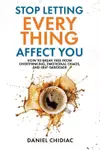
🎧 Listened in audio 📢 Narrated by: Daniel Chidiac ⏱ Duration: 4 hours 🏷️ Publisher: Undercover Publishing House Pt Ltd. 📅 Released: July 1, 2025 📚 Genre: Non Fiction
I'm in this zone for mental health development, and this book felt to be right up my alley. Except... the audiobook started and so did my suffering. Daniel Chidiac narrates his own book, which can work beautifully because of the author's passion towards their own book. Here, though, the delivery was flat in a way that even his Australian accent (which is usually an automatic charm offensive) couldn't save. I waited for the monotone to shift, but that never happened.
There are small moments where his observations about emotional triggers make sense, like recognizing when guilt isn't yours to carry, for instance. However, they get buried under the motivational poster gallery quotes you'd have already walked through a dozen times.
Stop overthinking Look at the big picture You're a small but significant spec in the universe, so why stress about last Tuesday's meeting?
Every person who has ever lain awake at 2 am mentally re-editing a conversation from 3 years ago knows it's not possible to stop overthinking based on these comments above. Telling an overthinker to not overthink is like telling someone in quicksand to "just walk it off".
I made it three hours before deciding peace might actually be in not finishing the book. For a short listen, it felt surprisingly long. If you're looking for something with more depth on emotional loops and thought spirals, try Are You Mad at Me? by Meg Josephson instead. It approaches the same anxiety-driven patterns with more warmth, nuance, and practicality
Would I recommend it? The premise sounds strong, but the delivery never lands. It's well-intentioned, but if you've consumed any modern self-help media, you've already heard all of the content before, often in more engaging ways. It's likely to feel like reheated advice served at room temperature. The audiobook format made it harder, and not easier. I genuinely tried, but I couldn't get there.
🎧 Listened in audio 📢 Narrated by: Daniel Chidiac ⏱ Duration: 4 hours 🏷️ Publisher: Undercover Publishing House Pt Ltd. 📅 Released: July 1, 2025 📚 Genre: Non Fiction
I'm in this zone for mental health development, and this book felt to be right up my alley. Except... the audiobook started and so did my suffering. Daniel Chidiac narrates his own book, which can work beautifully because of the author's passion towards their own book. Here, though, the delivery was flat in a way that even his Australian accent (which is usually an automatic charm offensive) couldn't save. I waited for the monotone to shift, but that never happened.
There are small moments where his observations about emotional triggers make sense, like recognizing when guilt isn't yours to carry, for instance. However, they get buried under the motivational poster gallery quotes you'd have already walked through a dozen times.
Stop overthinking Look at the big picture You're a small but significant spec in the universe, so why stress about last Tuesday's meeting?
Every person who has ever lain awake at 2 am mentally re-editing a conversation from 3 years ago knows it's not possible to stop overthinking based on these comments above. Telling an overthinker to not overthink is like telling someone in quicksand to "just walk it off".
I made it three hours before deciding peace might actually be in not finishing the book. For a short listen, it felt surprisingly long. If you're looking for something with more depth on emotional loops and thought spirals, try Are You Mad at Me? by Meg Josephson instead. It approaches the same anxiety-driven patterns with more warmth, nuance, and practicality
Would I recommend it? The premise sounds strong, but the delivery never lands. It's well-intentioned, but if you've consumed any modern self-help media, you've already heard all of the content before, often in more engaging ways. It's likely to feel like reheated advice served at room temperature. The audiobook format made it harder, and not easier. I genuinely tried, but I couldn't get there.
🎧 Listened in audio 📢 Narrated by: Daniel Chidiac ⏱ Duration: 4 hours 🏷️ Publisher: Undercover Publishing House Pt Ltd. 📅 Released: July 1, 2025 📚 Genre: Non Fiction
I'm in this zone for mental health development, and this book felt to be right up my alley. Except... the audiobook started and so did my suffering. Daniel Chidiac narrates his own book, which can work beautifully because of the author's passion towards their own book. Here, though, the delivery was flat in a way that even his Australian accent (which is usually an automatic charm offensive) couldn't save. I waited for the monotone to shift, but that never happened.
There are small moments where his observations about emotional triggers make sense, like recognizing when guilt isn't yours to carry, for instance. However, they get buried under the motivational poster gallery quotes you'd have already walked through a dozen times.
Stop overthinking Look at the big picture You're a small but significant spec in the universe, so why stress about last Tuesday's meeting?
Every person who has ever lain awake at 2 am mentally re-editing a conversation from 3 years ago knows it's not possible to stop overthinking based on these comments above. Telling an overthinker to not overthink is like telling someone in quicksand to "just walk it off".
I made it three hours before deciding peace might actually be in not finishing the book. For a short listen, it felt surprisingly long. If you're looking for something with more depth on emotional loops and thought spirals, try Are You Mad at Me? by Meg Josephson instead. It approaches the same anxiety-driven patterns with more warmth, nuance, and practicality
Would I recommend it? The premise sounds strong, but the delivery never lands. It's well-intentioned, but if you've consumed any modern self-help media, you've already heard all of the content before, often in more engaging ways. It's likely to feel like reheated advice served at room temperature. The audiobook format made it harder, and not easier. I genuinely tried, but I couldn't get there.
🎧 Listened in audio 📢 Narrated by: Daniel Chidiac ⏱ Duration: 4 hours 🏷️ Publisher: Undercover Publishing House Pt Ltd. 📅 Released: July 1, 2025 📚 Genre: Non Fiction
I'm in this zone for mental health development, and this book felt to be right up my alley. Except... the audiobook started and so did my suffering. Daniel Chidiac narrates his own book, which can work beautifully because of the author's passion towards their own book. Here, though, the delivery was flat in a way that even his Australian accent (which is usually an automatic charm offensive) couldn't save. I waited for the monotone to shift, but that never happened.
There are small moments where his observations about emotional triggers make sense, like recognizing when guilt isn't yours to carry, for instance. However, they get buried under the motivational poster gallery quotes you'd have already walked through a dozen times.
Stop overthinking Look at the big picture You're a small but significant spec in the universe, so why stress about last Tuesday's meeting?
Every person who has ever lain awake at 2 am mentally re-editing a conversation from 3 years ago knows it's not possible to stop overthinking based on these comments above. Telling an overthinker to not overthink is like telling someone in quicksand to "just walk it off".
I made it three hours before deciding peace might actually be in not finishing the book. For a short listen, it felt surprisingly long. If you're looking for something with more depth on emotional loops and thought spirals, try Are You Mad at Me? by Meg Josephson instead. It approaches the same anxiety-driven patterns with more warmth, nuance, and practicality
Would I recommend it? The premise sounds strong, but the delivery never lands. It's well-intentioned, but if you've consumed any modern self-help media, you've already heard all of the content before, often in more engaging ways. It's likely to feel like reheated advice served at room temperature. The audiobook format made it harder, and not easier. I genuinely tried, but I couldn't get there.
🎧 Listened in audio 📢 Narrated by: Daniel Chidiac ⏱ Duration: 4 hours 🏷️ Publisher: Undercover Publishing House Pt Ltd. 📅 Released: July 1, 2025 📚 Genre: Non Fiction
I'm in this zone for mental health development, and this book felt to be right up my alley. Except... the audiobook started and so did my suffering. Daniel Chidiac narrates his own book, which can work beautifully because of the author's passion towards their own book. Here, though, the delivery was flat in a way that even his Australian accent (which is usually an automatic charm offensive) couldn't save. I waited for the monotone to shift, but that never happened.
There are small moments where his observations about emotional triggers make sense, like recognizing when guilt isn't yours to carry, for instance. However, they get buried under the motivational poster gallery quotes you'd have already walked through a dozen times.
Stop overthinking Look at the big picture You're a small but significant spec in the universe, so why stress about last Tuesday's meeting?
Every person who has ever lain awake at 2 am mentally re-editing a conversation from 3 years ago knows it's not possible to stop overthinking based on these comments above. Telling an overthinker to not overthink is like telling someone in quicksand to "just walk it off".
I made it three hours before deciding peace might actually be in not finishing the book. For a short listen, it felt surprisingly long. If you're looking for something with more depth on emotional loops and thought spirals, try Are You Mad at Me? by Meg Josephson instead. It approaches the same anxiety-driven patterns with more warmth, nuance, and practicality
Would I recommend it? The premise sounds strong, but the delivery never lands. It's well-intentioned, but if you've consumed any modern self-help media, you've already heard all of the content before, often in more engaging ways. It's likely to feel like reheated advice served at room temperature. The audiobook format made it harder, and not easier. I genuinely tried, but I couldn't get there.
🎧 Listened in audio 📢 Narrated by: Daniel Chidiac ⏱ Duration: 4 hours 🏷️ Publisher: Undercover Publishing House Pt Ltd. 📅 Released: July 1, 2025 📚 Genre: Non Fiction
I'm in this zone for mental health development, and this book felt to be right up my alley. Except... the audiobook started and so did my suffering. Daniel Chidiac narrates his own book, which can work beautifully because of the author's passion towards their own book. Here, though, the delivery was flat in a way that even his Australian accent (which is usually an automatic charm offensive) couldn't save. I waited for the monotone to shift, but that never happened.
There are small moments where his observations about emotional triggers make sense, like recognizing when guilt isn't yours to carry, for instance. However, they get buried under the motivational poster gallery quotes you'd have already walked through a dozen times.
Stop overthinking Look at the big picture You're a small but significant spec in the universe, so why stress about last Tuesday's meeting?
Every person who has ever lain awake at 2 am mentally re-editing a conversation from 3 years ago knows it's not possible to stop overthinking based on these comments above. Telling an overthinker to not overthink is like telling someone in quicksand to "just walk it off".
I made it three hours before deciding peace might actually be in not finishing the book. For a short listen, it felt surprisingly long. If you're looking for something with more depth on emotional loops and thought spirals, try Are You Mad at Me? by Meg Josephson instead. It approaches the same anxiety-driven patterns with more warmth, nuance, and practicality
Would I recommend it? The premise sounds strong, but the delivery never lands. It's well-intentioned, but if you've consumed any modern self-help media, you've already heard all of the content before, often in more engaging ways. It's likely to feel like reheated advice served at room temperature. The audiobook format made it harder, and not easier. I genuinely tried, but I couldn't get there.
🎧 Listened in audio 📢 Narrated by: Daniel Chidiac ⏱ Duration: 4 hours 🏷️ Publisher: Undercover Publishing House Pt Ltd. 📅 Released: July 1, 2025 📚 Genre: Non Fiction
I'm in this zone for mental health development, and this book felt to be right up my alley. Except... the audiobook started and so did my suffering. Daniel Chidiac narrates his own book, which can work beautifully because of the author's passion towards their own book. Here, though, the delivery was flat in a way that even his Australian accent (which is usually an automatic charm offensive) couldn't save. I waited for the monotone to shift, but that never happened.
There are small moments where his observations about emotional triggers make sense, like recognizing when guilt isn't yours to carry, for instance. However, they get buried under the motivational poster gallery quotes you'd have already walked through a dozen times.
Stop overthinking Look at the big picture You're a small but significant spec in the universe, so why stress about last Tuesday's meeting?
Every person who has ever lain awake at 2 am mentally re-editing a conversation from 3 years ago knows it's not possible to stop overthinking based on these comments above. Telling an overthinker to not overthink is like telling someone in quicksand to "just walk it off".
I made it three hours before deciding peace might actually be in not finishing the book. For a short listen, it felt surprisingly long. If you're looking for something with more depth on emotional loops and thought spirals, try Are You Mad at Me? by Meg Josephson instead. It approaches the same anxiety-driven patterns with more warmth, nuance, and practicality
Would I recommend it? The premise sounds strong, but the delivery never lands. It's well-intentioned, but if you've consumed any modern self-help media, you've already heard all of the content before, often in more engaging ways. It's likely to feel like reheated advice served at room temperature. The audiobook format made it harder, and not easier. I genuinely tried, but I couldn't get there.
🎧 Listened in audio 📢 Narrated by: Daniel Chidiac ⏱ Duration: 4 hours 🏷️ Publisher: Undercover Publishing House Pt Ltd. 📅 Released: July 1, 2025 📚 Genre: Non Fiction
I'm in this zone for mental health development, and this book felt to be right up my alley. Except... the audiobook started and so did my suffering. Daniel Chidiac narrates his own book, which can work beautifully because of the author's passion towards their own book. Here, though, the delivery was flat in a way that even his Australian accent (which is usually an automatic charm offensive) couldn't save. I waited for the monotone to shift, but that never happened.
There are small moments where his observations about emotional triggers make sense, like recognizing when guilt isn't yours to carry, for instance. However, they get buried under the motivational poster gallery quotes you'd have already walked through a dozen times.
Stop overthinking Look at the big picture You're a small but significant spec in the universe, so why stress about last Tuesday's meeting?
Every person who has ever lain awake at 2 am mentally re-editing a conversation from 3 years ago knows it's not possible to stop overthinking based on these comments above. Telling an overthinker to not overthink is like telling someone in quicksand to "just walk it off".
I made it three hours before deciding peace might actually be in not finishing the book. For a short listen, it felt surprisingly long. If you're looking for something with more depth on emotional loops and thought spirals, try Are You Mad at Me? by Meg Josephson instead. It approaches the same anxiety-driven patterns with more warmth, nuance, and practicality
Would I recommend it? The premise sounds strong, but the delivery never lands. It's well-intentioned, but if you've consumed any modern self-help media, you've already heard all of the content before, often in more engaging ways. It's likely to feel like reheated advice served at room temperature. The audiobook format made it harder, and not easier. I genuinely tried, but I couldn't get there.

🎧 Listened in audio 📢 Narrated by Kirsten Potten ⏱ Duration: 13 hours 🏷️ Publisher: Books on Tape / Penguin Press 📆 Published: October 6, 2015 📚 Genre: Non-Fiction
Sherry Turkle isn't anti-technology. She's pro-human, and that distinction matters. The book holds up a mirror on how our devices are quietly taking over our lives. It asks you to look at what you're trading away every time you reach for the phone mid-conversation. Spoiler: A lot!! Empathy. Presence. Your own inner monologue. The stories are rich with actual research, from homes, schools, and offices. Listening to this book made me aware of how often I reached for my phone mid-conversation or filled quiet moments with scrolling. Having a one-year old niece, I started thinking hard about the example I'm setting for her. I don't want her memories of me to be of someone always half-present, thumb hovering over a screen.
What hit me the hardest was the part about multitasking, specifically about how the expectation to multitask has gotten so deep into our bones that we're now incapable of living one thing our full attention. Even just one conversation. I caught myself in this trap while listening. There's something poetically ironic about listening to a book about distraction on 2x speed while scrolling, until the book made me slow down to 1.5x and put my phone face down. I also caught myself texting while talking, skimming my thoughts before speaking them loud. Since the book, I made concrete changes in my life, like deleting social media apps, trying to do only one thing at a time, and even put a daily screen time tracker on my home screen to limit my phone time. I even looked up at a team meeting and actually participated in a conversation I would have previously tuned out. That's the kind of read-yourself-caught moment that separates a good book from a genuinely transformative one. The part about our older generations slowly losing their storytelling audiences, and our younger ones losing the muscle for empathy, stayed with me in a way I didn't expect.
What makes this book special isn't just the critique of tech, but how deeply humane it is. Turkle doesn't say "throw away your phone", but rather urges us to remember what makes us human. Her call to "reclaim conversation" feels less like an advice, and more like a reclamation of life itself. This book didn't just change the way I think. It changed what I did the next day. That's rare.
Would I recommend it? If you've ever caught yourself texting someone in the same room, avoiding a phone call because a text feels easier to control, or scrolling through your phone while someone you love is talking, this one's for you. Kirsten Potter's narration gives it an intimacy that matches the subject matter perfectly. This is one of those rare non-fiction reads that doesn't just shift your perspective, but also changes your habits. It's profound, practical, and personal all at once.
🎧 Listened in audio 📢 Narrated by Kirsten Potten ⏱ Duration: 13 hours 🏷️ Publisher: Books on Tape / Penguin Press 📆 Published: October 6, 2015 📚 Genre: Non-Fiction
Sherry Turkle isn't anti-technology. She's pro-human, and that distinction matters. The book holds up a mirror on how our devices are quietly taking over our lives. It asks you to look at what you're trading away every time you reach for the phone mid-conversation. Spoiler: A lot!! Empathy. Presence. Your own inner monologue. The stories are rich with actual research, from homes, schools, and offices. Listening to this book made me aware of how often I reached for my phone mid-conversation or filled quiet moments with scrolling. Having a one-year old niece, I started thinking hard about the example I'm setting for her. I don't want her memories of me to be of someone always half-present, thumb hovering over a screen.
What hit me the hardest was the part about multitasking, specifically about how the expectation to multitask has gotten so deep into our bones that we're now incapable of living one thing our full attention. Even just one conversation. I caught myself in this trap while listening. There's something poetically ironic about listening to a book about distraction on 2x speed while scrolling, until the book made me slow down to 1.5x and put my phone face down. I also caught myself texting while talking, skimming my thoughts before speaking them loud. Since the book, I made concrete changes in my life, like deleting social media apps, trying to do only one thing at a time, and even put a daily screen time tracker on my home screen to limit my phone time. I even looked up at a team meeting and actually participated in a conversation I would have previously tuned out. That's the kind of read-yourself-caught moment that separates a good book from a genuinely transformative one. The part about our older generations slowly losing their storytelling audiences, and our younger ones losing the muscle for empathy, stayed with me in a way I didn't expect.
What makes this book special isn't just the critique of tech, but how deeply humane it is. Turkle doesn't say "throw away your phone", but rather urges us to remember what makes us human. Her call to "reclaim conversation" feels less like an advice, and more like a reclamation of life itself. This book didn't just change the way I think. It changed what I did the next day. That's rare.
Would I recommend it? If you've ever caught yourself texting someone in the same room, avoiding a phone call because a text feels easier to control, or scrolling through your phone while someone you love is talking, this one's for you. Kirsten Potter's narration gives it an intimacy that matches the subject matter perfectly. This is one of those rare non-fiction reads that doesn't just shift your perspective, but also changes your habits. It's profound, practical, and personal all at once.

🎧 Listened in audio 📢 Narrated by Cathy O’Neil ⏱ Duration: 6 hours 🏷️ Publisher: Random House Audio & Crown Publishing
Every AI and tech book I'd picked up in the last year had Cathy O'Neil's name in the footnotes, whispering go read this, it explains everything. This is the book everyone name-drops when talking about AI, algorithms, and the dark side of data. O'Neil delivers exactly what the references promised. The argument is airtight. The examples are damning. The picture she paints of how big data and algorithmic bias quietly wreck real lives is thorough, well-researched, and frankly a little terrifying. If you've ever wondered how a zip code can tank your credit score or how a personality test filters out job applicants before a human even glances at the pile, this book explains the machinery behind it all.
Here's my honest confession though: I DNF'd at 40%. I’m not mathematically inclined, and while O’Neil does work hard at analogy and explanation, the book still leans more “math and modeling primer” than narrative nonfiction in places. I found myself disconnecting as she dug into the mechanics of models and feedback loops, even though I was fully on board with the message about inequality and systemic harm. The technical framing that makes it credible and rigorous is the exact same thing that kept pulling me out of it. I'd find myself re-listening to paragraphs, losing the thread, and zoning out somewhere between the regression models and the recidivism scores.
This is a sit-down-with-a-highlighter kind of book, and I gave it a walking-around-doing-laundry kind of attention. That mismatch is on me. Still, I think readers who are analytically inclined, or who are deep in the AI/tech policy space, will find this essential, not just interesting. I can absolutely see why this is a foundational text in the “AI harms / big data ethics” conversation, but for my personal taste and attention span, it turned into more homework than compelling nonfiction.
Would I recommend it? If you're already fluent in data science, tech ethics, or policy, absolutely, non-negotiable, add it to your shelf immediately. I’d recommend Weapons of Math Destruction to readers who are comfortable with more technical explanations and want a foundational, early look at how algorithms scale inequality. For me, this landed as a respectful DNF at 40%.
🎧 Listened in audio 📢 Narrated by Cathy O’Neil ⏱ Duration: 6 hours 🏷️ Publisher: Random House Audio & Crown Publishing
Every AI and tech book I'd picked up in the last year had Cathy O'Neil's name in the footnotes, whispering go read this, it explains everything. This is the book everyone name-drops when talking about AI, algorithms, and the dark side of data. O'Neil delivers exactly what the references promised. The argument is airtight. The examples are damning. The picture she paints of how big data and algorithmic bias quietly wreck real lives is thorough, well-researched, and frankly a little terrifying. If you've ever wondered how a zip code can tank your credit score or how a personality test filters out job applicants before a human even glances at the pile, this book explains the machinery behind it all.
Here's my honest confession though: I DNF'd at 40%. I’m not mathematically inclined, and while O’Neil does work hard at analogy and explanation, the book still leans more “math and modeling primer” than narrative nonfiction in places. I found myself disconnecting as she dug into the mechanics of models and feedback loops, even though I was fully on board with the message about inequality and systemic harm. The technical framing that makes it credible and rigorous is the exact same thing that kept pulling me out of it. I'd find myself re-listening to paragraphs, losing the thread, and zoning out somewhere between the regression models and the recidivism scores.
This is a sit-down-with-a-highlighter kind of book, and I gave it a walking-around-doing-laundry kind of attention. That mismatch is on me. Still, I think readers who are analytically inclined, or who are deep in the AI/tech policy space, will find this essential, not just interesting. I can absolutely see why this is a foundational text in the “AI harms / big data ethics” conversation, but for my personal taste and attention span, it turned into more homework than compelling nonfiction.
Would I recommend it? If you're already fluent in data science, tech ethics, or policy, absolutely, non-negotiable, add it to your shelf immediately. I’d recommend Weapons of Math Destruction to readers who are comfortable with more technical explanations and want a foundational, early look at how algorithms scale inequality. For me, this landed as a respectful DNF at 40%.