
Voodoomary




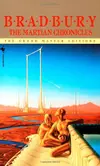
I did not expect this book to hit me like a train, nor did I expect its nostalgic Twilight Zone vibe. Once I made that connection, I understood why the book works well. Bradbury uses Mars the way Serling used the supernatural. The distance lets you look at things that would be too painful to examine straight on. Social commentary, racial violence, the destruction of beauty by progress, and the fragility of what humans build arrive wrapped in red dust and rocket ships. The stories land harder for the wrapping.
The tonal range makes this extraordinary rather than good. A lesser writer would create whiplash moving between dark satire, quiet elegy, gleeful vindication, and devastating loss. Bradbury moves between these modes without losing the thread of his sensibility. He is a poet that layers an elegiac melancholy is the underneath everything, whether he is being funny or breaking your heart. The stories do not bleed together or jar against each other. They accumulate.
I cried more than once. Bradbury mourns things without condemning existence for taking them, which is a rare, generous emotional register. This is in my top ten. I wish it were longer.
I did not expect this book to hit me like a train, nor did I expect its nostalgic Twilight Zone vibe. Once I made that connection, I understood why the book works well. Bradbury uses Mars the way Serling used the supernatural. The distance lets you look at things that would be too painful to examine straight on. Social commentary, racial violence, the destruction of beauty by progress, and the fragility of what humans build arrive wrapped in red dust and rocket ships. The stories land harder for the wrapping.
The tonal range makes this extraordinary rather than good. A lesser writer would create whiplash moving between dark satire, quiet elegy, gleeful vindication, and devastating loss. Bradbury moves between these modes without losing the thread of his sensibility. He is a poet that layers an elegiac melancholy is the underneath everything, whether he is being funny or breaking your heart. The stories do not bleed together or jar against each other. They accumulate.
I cried more than once. Bradbury mourns things without condemning existence for taking them, which is a rare, generous emotional register. This is in my top ten. I wish it were longer.


The cover calls this a "novel of the plague," and it is, but this fictionalized account of Shakespeare's family is also a novel about the profound, transformative experience of grief. The famous playwright is never named; instead, all the action revolves around his wife, Agnes. She is an outsider with a hint of magic in the margins of her character, firmly confident in her abilities and choices, and I want her in my life.
I saw the film first and am glad I did. As intense as it was on screen, I would have struggled to spend this much time with the source material unprepared. O'Farrell's prose is like a decadent, lush cake. It is delicious enough that you cannot consume a lot at once, yet it never feels overwhelming. It demands to be savored.
The grief in this novel is not masochistic. It is bone-deep and honest. If you have ever lost someone, you will feel it here. Yet there is something healing in the pages that is difficult to put into words.
What stays with me is this: the death of one small boy moved a human being to create a work of staggering power and beauty that has lasted hundreds of years. It continues to move people who never knew him, who were not even alive when he was. Grief never lessens. We grow larger around it so we can carry it without breaking. Art does that too.
The cover calls this a "novel of the plague," and it is, but this fictionalized account of Shakespeare's family is also a novel about the profound, transformative experience of grief. The famous playwright is never named; instead, all the action revolves around his wife, Agnes. She is an outsider with a hint of magic in the margins of her character, firmly confident in her abilities and choices, and I want her in my life.
I saw the film first and am glad I did. As intense as it was on screen, I would have struggled to spend this much time with the source material unprepared. O'Farrell's prose is like a decadent, lush cake. It is delicious enough that you cannot consume a lot at once, yet it never feels overwhelming. It demands to be savored.
The grief in this novel is not masochistic. It is bone-deep and honest. If you have ever lost someone, you will feel it here. Yet there is something healing in the pages that is difficult to put into words.
What stays with me is this: the death of one small boy moved a human being to create a work of staggering power and beauty that has lasted hundreds of years. It continues to move people who never knew him, who were not even alive when he was. Grief never lessens. We grow larger around it so we can carry it without breaking. Art does that too.

Not her best, but still Foley. The setup is fun and the Paris atmosphere does a lot of heavy lifting, but some unnecessary pieces drag the pace and a few coincidences tip into goofy territory.
What saves it is that Foley never takes herself too seriously, which makes the more ludicrous elements easier to swallow than they would be in a writer with more literary pretension.
She tells a good story, stays consistent in her own logic, and is reliably entertaining even when she's not firing on all cylinders. I like some of her other books better, but I'll read whatever she writes.
Not her best, but still Foley. The setup is fun and the Paris atmosphere does a lot of heavy lifting, but some unnecessary pieces drag the pace and a few coincidences tip into goofy territory.
What saves it is that Foley never takes herself too seriously, which makes the more ludicrous elements easier to swallow than they would be in a writer with more literary pretension.
She tells a good story, stays consistent in her own logic, and is reliably entertaining even when she's not firing on all cylinders. I like some of her other books better, but I'll read whatever she writes.

