Voodoomary


Five voices, one family, one impossible situation. Kingsolver gives each woman a distinct consciousness; you always know whose mind you inhabit. Dragged to the Belgian Congo in 1959 by a father of absolute certainty and absolute ignorance, the Price family becomes the centerpiece of a masterclass dissecting colonialism, religious tyranny, and patriarchal arrogance. Nathan Price is not a complex villain; he is a system, and Kingsolver is clear-eyed about what that means.
What makes this extraordinary is its refusal of easy conclusions. The sins visited on the Price daughters are distributed equally, yet very distinct human beings emerge from the same horror, representing divergent responses to a system of privilege and harm. Rachel embodies unconscious perpetuation; Leah, conscious atonement; Adah, radical self-reconstruction; and Ruth May, the innocent witness. Behind them all stands Orleanna, embodying the paralysis of a mother who saw, couldn't act, and must live with the cost.
The Congo is never backdrop; it is a living, political reality that existed long before the Prices and continues long after they scatter. Nathan Price didn't create the system he served; he was simply one of its smallest, most certain instruments.
Ultimately, the novel recognizes that colonialism doesn't end when the colonizers leave. It restructures itself, leaving artificial borders, extracted resources, and destabilized governments in its wake, while the people who never asked for any of it continue to bear the cost. Kingsolver refuses to let her characters, or her readers, look away from their place in that history.
Five voices, one family, one impossible situation. Kingsolver gives each woman a distinct consciousness; you always know whose mind you inhabit. Dragged to the Belgian Congo in 1959 by a father of absolute certainty and absolute ignorance, the Price family becomes the centerpiece of a masterclass dissecting colonialism, religious tyranny, and patriarchal arrogance. Nathan Price is not a complex villain; he is a system, and Kingsolver is clear-eyed about what that means.
What makes this extraordinary is its refusal of easy conclusions. The sins visited on the Price daughters are distributed equally, yet very distinct human beings emerge from the same horror, representing divergent responses to a system of privilege and harm. Rachel embodies unconscious perpetuation; Leah, conscious atonement; Adah, radical self-reconstruction; and Ruth May, the innocent witness. Behind them all stands Orleanna, embodying the paralysis of a mother who saw, couldn't act, and must live with the cost.
The Congo is never backdrop; it is a living, political reality that existed long before the Prices and continues long after they scatter. Nathan Price didn't create the system he served; he was simply one of its smallest, most certain instruments.
Ultimately, the novel recognizes that colonialism doesn't end when the colonizers leave. It restructures itself, leaving artificial borders, extracted resources, and destabilized governments in its wake, while the people who never asked for any of it continue to bear the cost. Kingsolver refuses to let her characters, or her readers, look away from their place in that history.

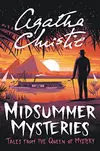
This collection is a newer release of classic Christie short stories, just repackaged in a different order. As someone who has read almost all of her mystery writing, I’m always looking for a good excuse to revisit it. This series is supposed to be centered around the seasons; while some of these stories are wonderfully "beachy," others just don't mention rain, which I guess is close enough for a summer vibe.
The best part of this collection is the variety. While Hercule Poirot and Miss Marple are her famous headliners, some readers might not know about Tommy and Tuppence, Parker Pyne, or my favorite, Harley Quin (not from Batman - calm down, nerds). If you're curious about her lesser-known characters, this collection serves as a fantastic introduction.
This collection is a newer release of classic Christie short stories, just repackaged in a different order. As someone who has read almost all of her mystery writing, I’m always looking for a good excuse to revisit it. This series is supposed to be centered around the seasons; while some of these stories are wonderfully "beachy," others just don't mention rain, which I guess is close enough for a summer vibe.
The best part of this collection is the variety. While Hercule Poirot and Miss Marple are her famous headliners, some readers might not know about Tommy and Tuppence, Parker Pyne, or my favorite, Harley Quin (not from Batman - calm down, nerds). If you're curious about her lesser-known characters, this collection serves as a fantastic introduction.