
Lauren

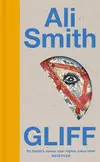
Gliff seems to be set in a not-too-distant future (maybe even present day depending where you are in the world). In it you follow two siblings, Briar and Rose. While their ages are never given, Briar seems to be a tween-early teen, and Rose is his younger yet very intelligent sister. Due to a sick Aunt their mother needs to take care of in another country and a boyfriend who is (presumably) more worried about his own well being, the siblings end up on their own. This book was strange. The over all messaging was very clear (to me at least). I understood some of what the author wanted me to walk away with, and I will admit the story was terrifying relevant to society today (particularly in the “western world”). That being said, I would approach this book at more literary fiction than dystopian. While there are dystopian themes, you should not go into this story expecting to understand this world. While it parallels ours in many ways, it is different, and there is little to no world building. It’s really more a story about society while almost reading a character study on Briar. None of those things are bad. I actually think this book had a lot of good. However, this book is not for everyone, and I think I might be included in that. To be honest, I’m conflicted because I am curious about the sequel/companion novel releasing later this year (2026).
The main thing this didn’t work for me was the writing style. I know it’s a thing with some authors (and I’m sure there is a reason for it), but I can’t get behind not using quotations to mark when someone is speaking. It makes for a needlessly confusing read (I like confusing books, but not in this way). I truly hate it. Not only does it makes it confusing and cause me to have to reread sometimes pages at a time, but it also makes for repetitive “he said” or “she said” after talking, which my brain latches onto and I struggle to let go of. It makes the writing feel stilted. Which is then jolting, because so much of this book reads as a rambling, almost stream of consciousness. I’ve never read one of her books, so I may be way off the mark, but from what I heard I imagine this reads similar to a Sally Rooney, but make it dystopian-ish.
Without spoilers, there is also a section where two people are talking, but we only get one side of the conversation (this isn’t taking place on the phone, we should get both sides). Each time the side we don’t get has a question or says something, their dialogue is replaced with a question mark. I can maybe see this a symbolism for censorship, but it doesn’t make sense as that since the side we do get interprets what the other person said when they replied. I also hated the audiobook narrator. I really love immersive reading (thank you to my library for making this possible), but I couldn’t with this book. The audiobook narrator was very monotone and never made it clear when someone else was talking, which added to my confusion.
I think this book is best for people who like unique writing systems and literary fiction. I also think because it is so short, it’s worth giving a try if it seems interesting. Like I said, I didn’t love this, I didn’t hate it. I might pick up the next one solely because of how it ended.
Gliff seems to be set in a not-too-distant future (maybe even present day depending where you are in the world). In it you follow two siblings, Briar and Rose. While their ages are never given, Briar seems to be a tween-early teen, and Rose is his younger yet very intelligent sister. Due to a sick Aunt their mother needs to take care of in another country and a boyfriend who is (presumably) more worried about his own well being, the siblings end up on their own. This book was strange. The over all messaging was very clear (to me at least). I understood some of what the author wanted me to walk away with, and I will admit the story was terrifying relevant to society today (particularly in the “western world”). That being said, I would approach this book at more literary fiction than dystopian. While there are dystopian themes, you should not go into this story expecting to understand this world. While it parallels ours in many ways, it is different, and there is little to no world building. It’s really more a story about society while almost reading a character study on Briar. None of those things are bad. I actually think this book had a lot of good. However, this book is not for everyone, and I think I might be included in that. To be honest, I’m conflicted because I am curious about the sequel/companion novel releasing later this year (2026).
The main thing this didn’t work for me was the writing style. I know it’s a thing with some authors (and I’m sure there is a reason for it), but I can’t get behind not using quotations to mark when someone is speaking. It makes for a needlessly confusing read (I like confusing books, but not in this way). I truly hate it. Not only does it makes it confusing and cause me to have to reread sometimes pages at a time, but it also makes for repetitive “he said” or “she said” after talking, which my brain latches onto and I struggle to let go of. It makes the writing feel stilted. Which is then jolting, because so much of this book reads as a rambling, almost stream of consciousness. I’ve never read one of her books, so I may be way off the mark, but from what I heard I imagine this reads similar to a Sally Rooney, but make it dystopian-ish.
Without spoilers, there is also a section where two people are talking, but we only get one side of the conversation (this isn’t taking place on the phone, we should get both sides). Each time the side we don’t get has a question or says something, their dialogue is replaced with a question mark. I can maybe see this a symbolism for censorship, but it doesn’t make sense as that since the side we do get interprets what the other person said when they replied. I also hated the audiobook narrator. I really love immersive reading (thank you to my library for making this possible), but I couldn’t with this book. The audiobook narrator was very monotone and never made it clear when someone else was talking, which added to my confusion.
I think this book is best for people who like unique writing systems and literary fiction. I also think because it is so short, it’s worth giving a try if it seems interesting. Like I said, I didn’t love this, I didn’t hate it. I might pick up the next one solely because of how it ended.