
Alexia Dominique Reyes


Thank you, author or publisher, for giving me an eARC! But this is not a paid book review!
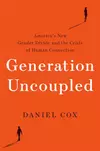
Woah. I liked how he ended it. It even made me laugh, and really laugh. The book was actually an easy read for someone like me, who has read more difficult books than this. This is a social science book, which may bore many people, especially those who have short attention spans and a closed mind due to their social media addiction and lack of perspective. And let me talk about social media addiction because that's a huge topic discussed here.
Social media had an initial goal of connecting us to each other, no matter how large the distance is. But now, it has become a major cause of social disparity and gender wars. If we want to learn about others, we go through their social media profiles. And if we see something we don't like, like maybe they have a different political belief, that is enough for us to hate them. We don't even take the time to understand the context: For sure, if someone believes in something, there is a reason why; the reason may be unreasonable to us, but reasonable to them given their circumstances.
"Tribes" were also mentioned. We tend to associate ourselves with those who share the same perspective, which is normal. What's not normal is that we think that other perspectives are wrong. We justify our beliefs and criticize others. This is my own opinion, not the author's: There are feminists who belittle women who want to be housewives, but isn't feminism about having a choice? It's not about being professionally successful as a woman. So, if a woman can choose between working and staying at home, and she chooses staying at home, that could be feminism. But radical feminists might cancel her. It is hard to voice out an unpopular opinion or to simply have a different belief due to cancel culture.
The author was fair. He laid out different perspectives, backed by research. So, before you say, "No way that this is right!" he would mention data from reputable sources and might present a counterargument or a counterstatement immediately after, which would also be data-driven. Overall, the book is good. However, I doubt that the people who need to read this will read this (the Gen Z and social media addicts) because they are too busy curating their personal brand on social media. This focused on the United States, but I am from the Philippines, and our country is also facing the same problems.
Thank you, author or publisher, for giving me an eARC! But this is not a paid book review!
Woah. I liked how he ended it. It even made me laugh, and really laugh. The book was actually an easy read for someone like me, who has read more difficult books than this. This is a social science book, which may bore many people, especially those who have short attention spans and a closed mind due to their social media addiction and lack of perspective. And let me talk about social media addiction because that's a huge topic discussed here.
Social media had an initial goal of connecting us to each other, no matter how large the distance is. But now, it has become a major cause of social disparity and gender wars. If we want to learn about others, we go through their social media profiles. And if we see something we don't like, like maybe they have a different political belief, that is enough for us to hate them. We don't even take the time to understand the context: For sure, if someone believes in something, there is a reason why; the reason may be unreasonable to us, but reasonable to them given their circumstances.
"Tribes" were also mentioned. We tend to associate ourselves with those who share the same perspective, which is normal. What's not normal is that we think that other perspectives are wrong. We justify our beliefs and criticize others. This is my own opinion, not the author's: There are feminists who belittle women who want to be housewives, but isn't feminism about having a choice? It's not about being professionally successful as a woman. So, if a woman can choose between working and staying at home, and she chooses staying at home, that could be feminism. But radical feminists might cancel her. It is hard to voice out an unpopular opinion or to simply have a different belief due to cancel culture.
The author was fair. He laid out different perspectives, backed by research. So, before you say, "No way that this is right!" he would mention data from reputable sources and might present a counterargument or a counterstatement immediately after, which would also be data-driven. Overall, the book is good. However, I doubt that the people who need to read this will read this (the Gen Z and social media addicts) because they are too busy curating their personal brand on social media. This focused on the United States, but I am from the Philippines, and our country is also facing the same problems.

Shucks. I thought I would give this 4 stars because the second half, especially the love story plot, was quick. Until the plot twist, and then the reason for the quickness was revealed. Haha! From the plot twist onward, I was emotional, especially at the end. In the last chapter, the author said something like: "The Americans give us their leftovers, just like we give our leftovers to cats and dogs." The Americans treated Filipinos poorly during the American colonization. Is that still the case now? Hm.
This got me teary-eyed because this tackled the Filipinas who got impregnated by American men who ended up leaving them because, actually, these men had wives and kids back in the United States. So, the babies grew up without knowing their fathers. Steve even called Magda a wh*re to justify his irresponsibility.
And then the last words were something like this: "As long as there are aircraft and ships bringing Americans to the Philippines, there will be Magda and Dolores" (Magda and Dolores in the story were Filipinas who were both impregnated by Americans who didn't take responsibility). Wow. Great last words, because I think that those words are relevant today. And when was the book published? 1988.
Now, I understand why this is an award-winning book, and why this hasn't been turned into a movie, even though the other works of the author have movie adaptations. Controversial. Provocative. I don't have any hate toward the Americans or the United States, but I'm aware of the impacts of not just the American occupation, but also the Spanish and the Japanese occupations, on the Philippines.
Also, I know someone who doesn't want to get romantically involved with any foreigner because she would be put down to the level of a wh*re who is after monetary gain by a lot of people, especially Filipinos. Even Filipinos judge their fellow Filipinos who are with foreigners, even if the relationship is based on love. I won't tell you who that someone is.
Shucks. I thought I would give this 4 stars because the second half, especially the love story plot, was quick. Until the plot twist, and then the reason for the quickness was revealed. Haha! From the plot twist onward, I was emotional, especially at the end. In the last chapter, the author said something like: "The Americans give us their leftovers, just like we give our leftovers to cats and dogs." The Americans treated Filipinos poorly during the American colonization. Is that still the case now? Hm.
This got me teary-eyed because this tackled the Filipinas who got impregnated by American men who ended up leaving them because, actually, these men had wives and kids back in the United States. So, the babies grew up without knowing their fathers. Steve even called Magda a wh*re to justify his irresponsibility.
And then the last words were something like this: "As long as there are aircraft and ships bringing Americans to the Philippines, there will be Magda and Dolores" (Magda and Dolores in the story were Filipinas who were both impregnated by Americans who didn't take responsibility). Wow. Great last words, because I think that those words are relevant today. And when was the book published? 1988.
Now, I understand why this is an award-winning book, and why this hasn't been turned into a movie, even though the other works of the author have movie adaptations. Controversial. Provocative. I don't have any hate toward the Americans or the United States, but I'm aware of the impacts of not just the American occupation, but also the Spanish and the Japanese occupations, on the Philippines.
Also, I know someone who doesn't want to get romantically involved with any foreigner because she would be put down to the level of a wh*re who is after monetary gain by a lot of people, especially Filipinos. Even Filipinos judge their fellow Filipinos who are with foreigners, even if the relationship is based on love. I won't tell you who that someone is.

Gosh. I needed to double-check the genre of this book just to know who was in the wrong. I was! I thought that this was a collection of poems, so I thought I could finish this quickly. But this contained mostly prose, and then the poems could be prose if they weren't broken down. And this lacks organization. You'll read a poem now, and then prose, and then prose, and then a poem, and then a poem again, and then five prose, two poems, three prose. So random!
Honestly, I almost DNFed this. However, it is my rule in life that I should finish a book I start, no matter how terrible it is. Skip some parts if cringe, but finish it. So, I finished this, but I skipped many parts. I've outgrown the "you deserve happiness, love, whatever" type of motivational statements because I know they don't mean it. I mean, if I say here, dear reader, that you deserve love, I don't even know the specifics of your life to say that! You might be a narcissist who has broken the hearts of many good women! Do you deserve love?
Well, asking that question is actually against my will because I don't think we should believe that we deserve anything.
Gosh. I needed to double-check the genre of this book just to know who was in the wrong. I was! I thought that this was a collection of poems, so I thought I could finish this quickly. But this contained mostly prose, and then the poems could be prose if they weren't broken down. And this lacks organization. You'll read a poem now, and then prose, and then prose, and then a poem, and then a poem again, and then five prose, two poems, three prose. So random!
Honestly, I almost DNFed this. However, it is my rule in life that I should finish a book I start, no matter how terrible it is. Skip some parts if cringe, but finish it. So, I finished this, but I skipped many parts. I've outgrown the "you deserve happiness, love, whatever" type of motivational statements because I know they don't mean it. I mean, if I say here, dear reader, that you deserve love, I don't even know the specifics of your life to say that! You might be a narcissist who has broken the hearts of many good women! Do you deserve love?
Well, asking that question is actually against my will because I don't think we should believe that we deserve anything.


Of course, prioritiezzz. I need to leave by 7 AM but it is 1 AM and I'm still writing this instead of sleeping.
So, basic cultural fact: the West values individualism, and the East values relationships. The author basically explained in a very detailed manner, focusing on Confucian teachings, why individualism is a threat to social harmony and why there is no such thing as an "individual." Can you answer the "who are you" question without referring to your social role? Yes, for sure. You could be a writer, a pianist, whatever.
But then, what if you can't write anymore? Or can't play the piano? Who will you become? The thing is, you can accurately answer that question only at present because things will change in the future. The ones that you can't change are that you are the child of your parents, the parent of your children, the cousin of your cousins, the pretty chill godmother of little Sophie (I am that godmother). I focused on familial connections because Confucianism is huge on families, which is actually sensible.
Our families have a huge influence on our identities. Personally, I don't curse because my parents scolded me when I did as a child (I think they also hit me with a broom, which is a very Asian way of disciplining a child). In your case, you might be dealing with a mental health issue because of childhood trauma. Childhood trauma seems to be the cause of many adult problems and it is, in most cases, caused by a family member. And if you grew up in a healthy family, then that is why you have a secure attachment style.
Another thing that was mentioned in the last chapter was that if you want to understand a particular culture, you must look at it from their perspective, not yours. Also, people aren't just their races. An American grandmother and a Filipino grandmother may be different, but they can connect with each other because they have a similarity: both grandmothers. And someone from Europe can fall in love with a Japanese person because they may be culturally different, but they are also a man and a woman. Or a man and a man, or a woman and a woman, for homosexuals.
Some highlights below:
- "Based supposedly on competition, even at its best, capitalism must generate losers as well as winners. And as the winners win more, they grow fewer in number while the losers increase."
- "The view of human beings as most fundamentally free and rational, autonomous individual selves is almost certainly false, and more than that, mischievous: Its celebration and defense of freedom comes at the expense of social justice, and peace."
- "Developing ethics in a global context will be less difficult if we stop thinking about different peoples and cultures having 'different values,' and instead think of different people in the same or different cultures having different orderings of values virtually every human being holds at some level, or must be presumed to hold if ethical dialogue across cultures is to have any chance of succeeding."
- "No matter what side of the abortion issue my readers might be on, I suspect strongly that, like me, they know intelligent, thoroughly decent people on the other side, as I suggested above. Why is this? It must be due to the fact that we can see that such people do indeed behave ethically, but rank the values we all hold differently in some areas, and/or have different beliefs in related areas, either or both being sufficient to guide their actions in different directions."
- "In order to learn not simply about, but from other cultures, we must endeavor to let their thinkers speak to us as much as possible in their terms, not ours."
- "There is a difference between first, and second, and third person patterns of identification. Attempting to answer the question to ourselves when we ask it is not the same as identifying ourselves to or for others."
- "The extent to which people think of themselves as being separate and distinct from all of their fellow human beings is surely psycho-physical in significant measure, but is just as surely influenced, perhaps very heavily influenced, by their family environments and cultural milieu with specific circumstances therein."
- "At a very simple level, we are tempted to think we each have something about us, something essential that makes us uniquely who we are and not anyone else. But attempting a description of that unique essence proves to be extremely difficult so long as we ignore the relatedness of human beings and think only of their purported aloneness."
- "If you don't accept that you are the sum of the roles you live, then we're back to the question, "Who are you?" which is very difficult for most of us to answer. On the other hand, if you do accept that you are constituted by the roles you live, of what value is the concept of an autonomous individual self? What conceptual work does it do? Why do we need it?"
- "If we are essentially free, then it would seem to follow that no one, and especially no government, should curtail our freedom to say whatever we want to say, to associate with whomever we wish, to embrace any set of religious beliefs we hold to be true, and to dispose of any property or material goods we have legally acquired as we see fit."
- On why the West doesn't focus on family: "A great many of the more well-known philosophers of the West (Descartes, Leibniz and Spinoza, Locke, Berkeley and Hume, Kant, Nietzsche, Schopenhauer, etc.) have been bachelors and hence had little if any experience of family life beyond their own childhood."
- "Much of our material well-being comes at the expense of the less fortunate."
- "Every human being should have as one of their basic drives a desire to leave this Earth in better condition than they found it; or if it was in good condition, to keep it that way."
End of highlights!
Of course, prioritiezzz. I need to leave by 7 AM but it is 1 AM and I'm still writing this instead of sleeping.
So, basic cultural fact: the West values individualism, and the East values relationships. The author basically explained in a very detailed manner, focusing on Confucian teachings, why individualism is a threat to social harmony and why there is no such thing as an "individual." Can you answer the "who are you" question without referring to your social role? Yes, for sure. You could be a writer, a pianist, whatever.
But then, what if you can't write anymore? Or can't play the piano? Who will you become? The thing is, you can accurately answer that question only at present because things will change in the future. The ones that you can't change are that you are the child of your parents, the parent of your children, the cousin of your cousins, the pretty chill godmother of little Sophie (I am that godmother). I focused on familial connections because Confucianism is huge on families, which is actually sensible.
Our families have a huge influence on our identities. Personally, I don't curse because my parents scolded me when I did as a child (I think they also hit me with a broom, which is a very Asian way of disciplining a child). In your case, you might be dealing with a mental health issue because of childhood trauma. Childhood trauma seems to be the cause of many adult problems and it is, in most cases, caused by a family member. And if you grew up in a healthy family, then that is why you have a secure attachment style.
Another thing that was mentioned in the last chapter was that if you want to understand a particular culture, you must look at it from their perspective, not yours. Also, people aren't just their races. An American grandmother and a Filipino grandmother may be different, but they can connect with each other because they have a similarity: both grandmothers. And someone from Europe can fall in love with a Japanese person because they may be culturally different, but they are also a man and a woman. Or a man and a man, or a woman and a woman, for homosexuals.
Some highlights below:
- "Based supposedly on competition, even at its best, capitalism must generate losers as well as winners. And as the winners win more, they grow fewer in number while the losers increase."
- "The view of human beings as most fundamentally free and rational, autonomous individual selves is almost certainly false, and more than that, mischievous: Its celebration and defense of freedom comes at the expense of social justice, and peace."
- "Developing ethics in a global context will be less difficult if we stop thinking about different peoples and cultures having 'different values,' and instead think of different people in the same or different cultures having different orderings of values virtually every human being holds at some level, or must be presumed to hold if ethical dialogue across cultures is to have any chance of succeeding."
- "No matter what side of the abortion issue my readers might be on, I suspect strongly that, like me, they know intelligent, thoroughly decent people on the other side, as I suggested above. Why is this? It must be due to the fact that we can see that such people do indeed behave ethically, but rank the values we all hold differently in some areas, and/or have different beliefs in related areas, either or both being sufficient to guide their actions in different directions."
- "In order to learn not simply about, but from other cultures, we must endeavor to let their thinkers speak to us as much as possible in their terms, not ours."
- "There is a difference between first, and second, and third person patterns of identification. Attempting to answer the question to ourselves when we ask it is not the same as identifying ourselves to or for others."
- "The extent to which people think of themselves as being separate and distinct from all of their fellow human beings is surely psycho-physical in significant measure, but is just as surely influenced, perhaps very heavily influenced, by their family environments and cultural milieu with specific circumstances therein."
- "At a very simple level, we are tempted to think we each have something about us, something essential that makes us uniquely who we are and not anyone else. But attempting a description of that unique essence proves to be extremely difficult so long as we ignore the relatedness of human beings and think only of their purported aloneness."
- "If you don't accept that you are the sum of the roles you live, then we're back to the question, "Who are you?" which is very difficult for most of us to answer. On the other hand, if you do accept that you are constituted by the roles you live, of what value is the concept of an autonomous individual self? What conceptual work does it do? Why do we need it?"
- "If we are essentially free, then it would seem to follow that no one, and especially no government, should curtail our freedom to say whatever we want to say, to associate with whomever we wish, to embrace any set of religious beliefs we hold to be true, and to dispose of any property or material goods we have legally acquired as we see fit."
- On why the West doesn't focus on family: "A great many of the more well-known philosophers of the West (Descartes, Leibniz and Spinoza, Locke, Berkeley and Hume, Kant, Nietzsche, Schopenhauer, etc.) have been bachelors and hence had little if any experience of family life beyond their own childhood."
- "Much of our material well-being comes at the expense of the less fortunate."
- "Every human being should have as one of their basic drives a desire to leave this Earth in better condition than they found it; or if it was in good condition, to keep it that way."
End of highlights!

Well, okay, this isn't the first time I will leave a review on Amanda Lovelace's work. As much as I want to say something positive or better than what I said before on other books, I just can't find any better words. But I felt something here: anger and hatred, toward men even. So, the writing style was quite straightforward; this passed as a poetry book because, as usual, she broke down the sentences.
her
poems
looked
like
this
and
they
hurt
my
eyes
There was one that I liked, though. In sentence form: "How can she possibly be a gold digger if she's clearly the motherf*cking gold?" Not that I think I am "gold," but many men think women have nothing or only a few things to offer, when, if we look at the common marriage or family dynamics, men may bring in financial stability, but nothing more. But women (at least the healthy kind) can give them a comfortable home, a safe space where they can be vulnerable, loving children, and more.
Women can provide themselves with financial stability, but only a few men can give themselves emotional stability, emotional comfort, loving children, and other intangible things, which matter more in the grand scheme of things.
Well, okay, this isn't the first time I will leave a review on Amanda Lovelace's work. As much as I want to say something positive or better than what I said before on other books, I just can't find any better words. But I felt something here: anger and hatred, toward men even. So, the writing style was quite straightforward; this passed as a poetry book because, as usual, she broke down the sentences.
her
poems
looked
like
this
and
they
hurt
my
eyes
There was one that I liked, though. In sentence form: "How can she possibly be a gold digger if she's clearly the motherf*cking gold?" Not that I think I am "gold," but many men think women have nothing or only a few things to offer, when, if we look at the common marriage or family dynamics, men may bring in financial stability, but nothing more. But women (at least the healthy kind) can give them a comfortable home, a safe space where they can be vulnerable, loving children, and more.
Women can provide themselves with financial stability, but only a few men can give themselves emotional stability, emotional comfort, loving children, and other intangible things, which matter more in the grand scheme of things.

I felt different emotions. I found 4 or 5 poems I could relate to. The ones that used the ocean as a metaphor for emotions stood out in particular because I wrote a poem back then where I did the same. I even thought while reading those ocean poems by her, "Is this a sequel to my poem?" But I don't have a copy of my ocean (or sea) poem anymore, so I can't clearly see the similarity or connection.
Actually, I read this because I wanted a quick read, as it's taking me so long to finish Against Individualism (but I am liking it so far). I also want to mention that I turned an old phone into a mini Kindle! I discovered Send-to-Kindle, and my books and reading progress sync across my devices! I love that I can take it anywhere, because my tablet is so heavy with the keyboard case.
Anyway, here are the poems I connected to (but I will write them in sentence form):
- "I never told you, but I want you to know that even if I felt heavy, I tried making it light for you. And when I was full of dark, I pushed you towards the sun. You had no idea how weak I was, as I always remained strong for you."
- "Love felt home, until we hugged, and the arms around my waist became a cage."
- "Sitting on the seashore, I relish the waves caressing my feet. It instills fear in me, for I could drown, yet I must learn to swim, as I am in love with the sea once again."
- "I am stabbed by my thoughts, and nobody can see me bleed."
I think I want to write poems again, and then I'll be surprised by what I will have written because I myself am unsure of what I feel.
I felt different emotions. I found 4 or 5 poems I could relate to. The ones that used the ocean as a metaphor for emotions stood out in particular because I wrote a poem back then where I did the same. I even thought while reading those ocean poems by her, "Is this a sequel to my poem?" But I don't have a copy of my ocean (or sea) poem anymore, so I can't clearly see the similarity or connection.
Actually, I read this because I wanted a quick read, as it's taking me so long to finish Against Individualism (but I am liking it so far). I also want to mention that I turned an old phone into a mini Kindle! I discovered Send-to-Kindle, and my books and reading progress sync across my devices! I love that I can take it anywhere, because my tablet is so heavy with the keyboard case.
Anyway, here are the poems I connected to (but I will write them in sentence form):
- "I never told you, but I want you to know that even if I felt heavy, I tried making it light for you. And when I was full of dark, I pushed you towards the sun. You had no idea how weak I was, as I always remained strong for you."
- "Love felt home, until we hugged, and the arms around my waist became a cage."
- "Sitting on the seashore, I relish the waves caressing my feet. It instills fear in me, for I could drown, yet I must learn to swim, as I am in love with the sea once again."
- "I am stabbed by my thoughts, and nobody can see me bleed."
I think I want to write poems again, and then I'll be surprised by what I will have written because I myself am unsure of what I feel.

Okay, wow. The best poetry book I've read so far this year. It was easy to read, and I felt her emotions. The next poem was built on the previous poem, and that was the case throughout. It followed a timeline, so I learned about how she was before she realized her sexuality, what she felt when she first came out, and what happened after her coming out. It was like a memoir but written in poetry form. I love it.
But I kept thinking about my own sexuality while reading. Am I sure I'm straight? A few people have asked me that, actually, because I've been single for over 15 years now and have never engaged even in casual situations. "Why? Maybe you like women!" Well, not as a romantic partner. But I don't want men, either.
But I want a specific man.
Okay, wow. The best poetry book I've read so far this year. It was easy to read, and I felt her emotions. The next poem was built on the previous poem, and that was the case throughout. It followed a timeline, so I learned about how she was before she realized her sexuality, what she felt when she first came out, and what happened after her coming out. It was like a memoir but written in poetry form. I love it.
But I kept thinking about my own sexuality while reading. Am I sure I'm straight? A few people have asked me that, actually, because I've been single for over 15 years now and have never engaged even in casual situations. "Why? Maybe you like women!" Well, not as a romantic partner. But I don't want men, either.
But I want a specific man.

Ooooooooh I am conflicted. I'm very much aware of the controversies and accusations surrounding the author, but I became aware of them halfway through the book. However, I've known her since because her face has been all over social media. I wasn't a fan, but my familiarity with her made me pick up this book. I was also curious about the red flags to look out for.
I'd say that a lot of good points were raised here, but because I saw many of the videos "exposing" her, and I saw how she responded to those videos, it's hard to believe that she wrote this book. She advised everyone to be authentic, but she doesn't seem so. She also sounded level-headed in the book, as well as in many interviews, but outside her work, that doesn't seem to be the case.
Someone pointed it out, though: She claims she's a psychologist, but psychologists (licensed) must follow a code of conduct to retain their license (just like us teachers). Isn't she worried that her license might get suspended or something because of her behavior online? But she said that she doesn't need to follow the code outside of work and when talking to people who aren't her clients.
Or, maybe, why would she be worried when her being a psychologist might not be real? It can't be proven. She can't show proof. She faked her credentials, according to many people. (Note: In some interviews, she says she doesn't claim to be a psychologist but you can see it in her website's tagline, in the tab.)
As much as I want to share the book's good points here, I don't trust the source.
Ooooooooh I am conflicted. I'm very much aware of the controversies and accusations surrounding the author, but I became aware of them halfway through the book. However, I've known her since because her face has been all over social media. I wasn't a fan, but my familiarity with her made me pick up this book. I was also curious about the red flags to look out for.
I'd say that a lot of good points were raised here, but because I saw many of the videos "exposing" her, and I saw how she responded to those videos, it's hard to believe that she wrote this book. She advised everyone to be authentic, but she doesn't seem so. She also sounded level-headed in the book, as well as in many interviews, but outside her work, that doesn't seem to be the case.
Someone pointed it out, though: She claims she's a psychologist, but psychologists (licensed) must follow a code of conduct to retain their license (just like us teachers). Isn't she worried that her license might get suspended or something because of her behavior online? But she said that she doesn't need to follow the code outside of work and when talking to people who aren't her clients.
Or, maybe, why would she be worried when her being a psychologist might not be real? It can't be proven. She can't show proof. She faked her credentials, according to many people. (Note: In some interviews, she says she doesn't claim to be a psychologist but you can see it in her website's tagline, in the tab.)
As much as I want to share the book's good points here, I don't trust the source.

I don't understand why I didn't fall asleep while listening to the audiobook? I even typed notes while listening because I heard some good points! I'm so tired because I have a class tomorrow (wow) and earlier worked on my slides plus some articles, but my body is super awake right now that I even want to read (really read with my eyes) another book!
But regarding As a Man Thinketh, I agree that the mind has a huge influence over one's actions. I've been productive for many days now because of how I tackle my tasks. For instance, believing that I have a class every Tuesday pushes me to create slides every Monday. The result is that Sociopolitischool has a new video every Wednesday.
And then I have 6 articles ready for the future, so Sociopoliticool will be updated on time. A month's worth of posts has been scheduled on social media, too! I create my own circumstances. You create yours, too! Below are some learnings from the book (but with added interpretations or explanations from me):
- Sometimes, good qualities cause suffering. Think about being generous. It makes you empty if you overdo it. I know that very well because being overly generous drained me.
- Thoughts aren't hidden because they become habits over time, and others see habits. If you think your job sucks, it may show up in your timesheet: late clock-in, early clock-out.
- Others see only the results and never the process, so they call it "luck." Ouch if someone tells me that. I sacrificed financial stability for the freedom I have now. And I may still find some time to read, and I may start my work at around noon, but I will end it at almost 12 AM!
- It is your mind that limits you. If you think you can't change the world, or even just yourself, then change won't happen. The big names you hear and see everywhere are humans just like you, but they believed in their seemingly impossible goals and you didn't.
- But having a "big" name shouldn't be the ultimate goal because, at the end of the day, inner peace is what will make your life better. Materialism will just keep you seeking more and more and more. Be content and invest in who you are rather than what you have.
- Improve yourself, your inner life and your thoughts, to improve your circumstances.
Only you can control yourself, so don't blame others if you feel stuck. You'll just be mad if they, we, I drag you out of your comfort zone. Right, you are stuck because you feel comfortable where you are. It is your choice.
I don't understand why I didn't fall asleep while listening to the audiobook? I even typed notes while listening because I heard some good points! I'm so tired because I have a class tomorrow (wow) and earlier worked on my slides plus some articles, but my body is super awake right now that I even want to read (really read with my eyes) another book!
But regarding As a Man Thinketh, I agree that the mind has a huge influence over one's actions. I've been productive for many days now because of how I tackle my tasks. For instance, believing that I have a class every Tuesday pushes me to create slides every Monday. The result is that Sociopolitischool has a new video every Wednesday.
And then I have 6 articles ready for the future, so Sociopoliticool will be updated on time. A month's worth of posts has been scheduled on social media, too! I create my own circumstances. You create yours, too! Below are some learnings from the book (but with added interpretations or explanations from me):
- Sometimes, good qualities cause suffering. Think about being generous. It makes you empty if you overdo it. I know that very well because being overly generous drained me.
- Thoughts aren't hidden because they become habits over time, and others see habits. If you think your job sucks, it may show up in your timesheet: late clock-in, early clock-out.
- Others see only the results and never the process, so they call it "luck." Ouch if someone tells me that. I sacrificed financial stability for the freedom I have now. And I may still find some time to read, and I may start my work at around noon, but I will end it at almost 12 AM!
- It is your mind that limits you. If you think you can't change the world, or even just yourself, then change won't happen. The big names you hear and see everywhere are humans just like you, but they believed in their seemingly impossible goals and you didn't.
- But having a "big" name shouldn't be the ultimate goal because, at the end of the day, inner peace is what will make your life better. Materialism will just keep you seeking more and more and more. Be content and invest in who you are rather than what you have.
- Improve yourself, your inner life and your thoughts, to improve your circumstances.
Only you can control yourself, so don't blame others if you feel stuck. You'll just be mad if they, we, I drag you out of your comfort zone. Right, you are stuck because you feel comfortable where you are. It is your choice.
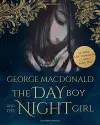
I started this three times, but finished only once. The first time: I listened to the audiobook and fell asleep. The second time: I listened again to the audiobook and fell asleep. The third time: I decided to read the book and finished it. Yey! Now I know why parents read to their kids at night. No one read to me as a kid, so I just learned that bedtime stories would work on me. I wonder if my future kids would inherit that trait, if that can be inherited.
Anyway, I loved the story because I saw it as a love story between a woman with strong senses and a man who is strong physically. The woman can help the man during the dark times because she has a better hold of the emotional, spiritual, and other intangible aspects of the relationship, and then the man will protect the woman during the normal days, where potential threats in human or animal form can hurt her.
I love it. I think I want that kind of a relationship.
I started this three times, but finished only once. The first time: I listened to the audiobook and fell asleep. The second time: I listened again to the audiobook and fell asleep. The third time: I decided to read the book and finished it. Yey! Now I know why parents read to their kids at night. No one read to me as a kid, so I just learned that bedtime stories would work on me. I wonder if my future kids would inherit that trait, if that can be inherited.
Anyway, I loved the story because I saw it as a love story between a woman with strong senses and a man who is strong physically. The woman can help the man during the dark times because she has a better hold of the emotional, spiritual, and other intangible aspects of the relationship, and then the man will protect the woman during the normal days, where potential threats in human or animal form can hurt her.
I love it. I think I want that kind of a relationship.

Added to listSociopoliticoolwith 24 books.


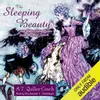
While it's ridiculous to me that the Beast fell in love with Beauty within a questionable time, I almost cried when Beauty wanted to leave him for two months because she missed her family. He couldn't tell her his feelings because of the curse, and she should agree to marry him at her will, so he was so lonely and bottling up his feelings. I even wished I was there with him to comfort him.
This collection has four stories in total: Sleeping Beauty, Blue Beard, Cinderella, and Beauty and the Beast. It was the first time I heard of the Blue Beard story, so it was exciting to hear, as I was trying to predict the ending. And my prediction was wrong. I thought he was killing women because of a curse, like maybe a bad witch made him a killer, and he would kill until he met the right woman. But he was really just a killer. And then he was killed in the end.
And if I remember correctly, in modern Cinderella stories, there was only one night ball. But in this edition, there were two, and then Cinderella left one glass slipper at the castle on the second night. I read somewhere before that there was a Cinderella version where one of the step-sisters cut her toes so that her foot could fit in the glass slipper, and I was hoping this would be it. But no.
I have nothing to say about Sleeping Beauty.
While it's ridiculous to me that the Beast fell in love with Beauty within a questionable time, I almost cried when Beauty wanted to leave him for two months because she missed her family. He couldn't tell her his feelings because of the curse, and she should agree to marry him at her will, so he was so lonely and bottling up his feelings. I even wished I was there with him to comfort him.
This collection has four stories in total: Sleeping Beauty, Blue Beard, Cinderella, and Beauty and the Beast. It was the first time I heard of the Blue Beard story, so it was exciting to hear, as I was trying to predict the ending. And my prediction was wrong. I thought he was killing women because of a curse, like maybe a bad witch made him a killer, and he would kill until he met the right woman. But he was really just a killer. And then he was killed in the end.
And if I remember correctly, in modern Cinderella stories, there was only one night ball. But in this edition, there were two, and then Cinderella left one glass slipper at the castle on the second night. I read somewhere before that there was a Cinderella version where one of the step-sisters cut her toes so that her foot could fit in the glass slipper, and I was hoping this would be it. But no.
I have nothing to say about Sleeping Beauty.

Answered a promptWhat are your favorite books of all time?


Oh, well. Kind of hard to admit that there were some pieces here that I liked, as I had only complaints about the poetry books I read before this. But I liked this one a bit. Still, the writing style was messy and inconsistent, and many pieces could've been social media posts. I wonder why the publisher decided to publish this. Anyway, here are the ones I liked:
- "Before you ask her what she will bring to the table, it's best to make sure it's sturdy."
- "Loneliness will not trap her back into your snares. She is learning to accept her own presence and growing in the understanding that the absence of a partner isn't the absence of love."
- "Broken people depending on love to make them whole often break more hearts than they love on."
- "Her slowly closing to you is giving you a chance to do what it takes to reopen the door or to at least put your foot against it and pause to talk about how you keep it from closing."
- "Depleted she became after she gave and gave."
But it's the "before you ask her what she will bring to the table, it's best to make sure it's sturdy" that made me chuckle. I'm not actively dating, but I think it would be funny to me if a guy asked me what I bring to the table and then I hit back with, "Is the table sturdy?" I really don't care about a man's finances, but he shouldn't ask me that question if he brings nothing to the table, even emotional sturdiness (especially emotional sturdiness).
Oh, well. Kind of hard to admit that there were some pieces here that I liked, as I had only complaints about the poetry books I read before this. But I liked this one a bit. Still, the writing style was messy and inconsistent, and many pieces could've been social media posts. I wonder why the publisher decided to publish this. Anyway, here are the ones I liked:
- "Before you ask her what she will bring to the table, it's best to make sure it's sturdy."
- "Loneliness will not trap her back into your snares. She is learning to accept her own presence and growing in the understanding that the absence of a partner isn't the absence of love."
- "Broken people depending on love to make them whole often break more hearts than they love on."
- "Her slowly closing to you is giving you a chance to do what it takes to reopen the door or to at least put your foot against it and pause to talk about how you keep it from closing."
- "Depleted she became after she gave and gave."
But it's the "before you ask her what she will bring to the table, it's best to make sure it's sturdy" that made me chuckle. I'm not actively dating, but I think it would be funny to me if a guy asked me what I bring to the table and then I hit back with, "Is the table sturdy?" I really don't care about a man's finances, but he shouldn't ask me that question if he brings nothing to the table, even emotional sturdiness (especially emotional sturdiness).

He didn't like everyone. He was full of resentment and liked to push people away, or scare people away. All he thought about was his work and himself, and he became rich by doing so. He didn't have a wife and children, so all his money was his; it became in the possession of others, others who weren't family or friends, only when he died, because no one would inherit it.
They were happy to have his money, while his dead body was abandoned under his bed because he hadn't built good, loving relationships while he was alive. No one cared about him, only his money, because he himself hadn't cared about anyone else. He turned into that lifeless creature because of past circumstances, but the past is not a good place to be in.
That would be the summary of Scrooge's life story if he didn't realize the importance of relationships.
And if you felt that I was describing you, that would be your life in a nutshell if you kept focusing on the things that don't really matter in the long run.
He didn't like everyone. He was full of resentment and liked to push people away, or scare people away. All he thought about was his work and himself, and he became rich by doing so. He didn't have a wife and children, so all his money was his; it became in the possession of others, others who weren't family or friends, only when he died, because no one would inherit it.
They were happy to have his money, while his dead body was abandoned under his bed because he hadn't built good, loving relationships while he was alive. No one cared about him, only his money, because he himself hadn't cared about anyone else. He turned into that lifeless creature because of past circumstances, but the past is not a good place to be in.
That would be the summary of Scrooge's life story if he didn't realize the importance of relationships.
And if you felt that I was describing you, that would be your life in a nutshell if you kept focusing on the things that don't really matter in the long run.
