
Alexia Dominique Reyes


Well, okay, this isn't the first time I will leave a review on Amanda Lovelace's work. As much as I want to say something positive or better than what I said before on other books, I just can't find any better words. But I felt something here: anger and hatred, toward men even. So, the writing style was quite straightforward; this passed as a poetry book because, as usual, she broke down the sentences.
her
poems
looked
like
this
and
they
hurt
my
eyes
There was one that I liked, though. In sentence form: "How can she possibly be a gold digger if she's clearly the motherfucking gold?" Not that I think I am "gold," but many men think women have nothing or only a few things to offer, when if we look at the common marriage or family dynamics, men may bring in financial stability, but nothing more. But women (at least the healthy kind) can give them a comfortable home, a safe space where they can be vulnerable, loving children, and more.
Women can provide themselves financial stability, but only a few men can give themselves emotional stability, emotional comfort, loving children, and other intangible things, which matter more in the grand scheme of things.


I felt different emotions. I found 4 or 5 poems I could relate to. The ones that used the ocean as a metaphor for emotions stood out in particular because I wrote a poem back then where I did the same. I even thought while reading those ocean poems by her, "Is this a sequel to my poem?" But I don't have a copy of my ocean (or sea) poem anymore, so I can't clearly see the similarity or connection.
Actually, I read this because I wanted a quick read, as it's taking me so long to finish Against Individualism (but I am liking it so far). I also want to mention that I turned an old phone into a mini Kindle! I discovered Send-to-Kindle, and my books and reading progress sync across my devices! I love that I can take it anywhere, because my tablet is so heavy with the keyboard case.
Anyway, here are the poems I connected to (but I will write them in sentence form):
- "I never told you, but I want you to know that even if I felt heavy, I tried making it light for you. And when I was full of dark, I pushed you towards the sun. You had no idea how weak I was, as I always remained strong for you."
- "Love felt home, until we hugged, and the arms around my waist became a cage."
- "Sitting on the seashore, I relish the waves caressing my feet. It instills fear in me, for I could drown, yet I must learn to swim, as I am in love with the sea once again."
- "I am stabbed by my thoughts, and nobody can see me bleed."
I think I want to write poems again, and then I'll be surprised by what I will have written because I myself am unsure of what I feel.


Ooooooooh I am conflicted. I'm very much aware of the controversies and accusations surrounding the author, but I became aware of them halfway through the book. However, I've known her since because her face has been all over social media. I wasn't a fan, but my familiarity with her made me pick up this book. I was also curious about the red flags to look out for.
I'd say that a lot of good points were raised here, but because I saw many of the videos "exposing" her, and I saw how she responded to those videos, it's hard to believe that she wrote this book. She advised everyone to be authentic, but she doesn't seem so. She also sounded level-headed in the book, as well as in many interviews, but outside her work, that doesn't seem to be the case.
Someone pointed it out, though: She claims she's a psychologist, but psychologists (licensed) must follow a code of conduct to retain their license (just like us teachers). Isn't she worried that her license might get suspended or something because of her behavior online? But she said that she doesn't need to follow the code outside of work and when talking to people who aren't her clients.
Or, maybe, why would she be worried when her being a psychologist might not be real? It can't be proven. She can't show proof. She faked her credentials, according to many people. (Note: In some interviews, she says she doesn't claim to be a psychologist but you can see it in her website's tagline, in the tab.)
As much as I want to share the book's good points here, I don't trust the source.


Okay, wow. The best poetry book I've read so far this year. It was easy to read, and I felt her emotions. The next poem was built on the previous poem, and that was the case throughout. It followed a timeline, so I learned about how she was before she realized her sexuality, what she felt when she first came out, and what happened after her coming out. It was like a memoir but written in poetry form. I love it.
But I kept thinking about my own sexuality while reading. Am I sure I'm straight? A few people have asked me that, actually, because I've been single for over 15 years now and have never engaged even in casual situations. "Why? Maybe you like women!" Well, not as a romantic partner. But I don't want men, either.
But I want a specific man.


I don't understand why I didn't fall asleep while listening to the audiobook? I even typed notes while listening because I heard some good points! I'm so tired because I have a class tomorrow (wow) and earlier worked on my slides plus some articles, but my body is super awake right now, that I even want to read (really read with my eyes) another book!
But regarding As a Man Thinketh, I agree that the mind has a huge influence over one's actions. I've been productive for many days now because of how I tackle my tasks. For instance, believing that I have a class every Tuesday pushes me to create slides every Monday. The result is that Sociopolitischool has a new video every Wednesday.
And then I have 6 articles ready for the future, so Sociopoliticool will be updated on time. A month's worth of posts has been scheduled on social media, too! I create my own circumstances. You create yours, too! Below are some learnings from the book (but with added interpretations or explanations from me):
- Sometimes, good qualities cause suffering. Think about being generous. It makes you empty if you overdo it. I know that very well because being overly generous drained me.
- Thoughts aren't hidden because they become habits over time, and others see habits. If you think your job sucks, it may show up in your timesheet: late clock-in, early clock-out.
- Others see only the results and never the process, so they call it "luck." Ouch if someone tells me that. I sacrificed financial stability for the freedom I have now. And I may still find some time to read, and I may start my work at around noon, but I will end it at almost 12 AM!
- It is your mind that limits you. If you think you can't change the world, or even just yourself, then change won't happen. The big names you hear and see everywhere are humans just like you, but they believed in their seemingly impossible goals and you didn't.
- But having a "big" name shouldn't be the ultimate goal because, at the end of the day, inner peace is what will make your life better. Materialism will just keep you seeking more and more and more. Be content and invest in who you are rather than what you have.
- Improve yourself, your inner life and your thoughts, to improve your circumstances.
Only you can control yourself, so don't blame others if you feel stuck. You'll just be mad if they, we, I drag you out of your comfort zone. Right, you are stuck because you feel comfortable where you are. It is your choice.


I started this three times, but finished only once. The first time: I listened to the audiobook and fell asleep. The second time: I listened again to the audiobook and fell asleep. The third time: I decided to read the book and finished it. Yey! Now I know why parents read to their kids at night. No one read to me as a kid, so I just learned that bedtime stories would work on me. I wonder if my future kids would inherit that trait, if that can be inherited.
Anyway, I loved the story because I saw it as a love story between a woman with strong senses and a man who is strong physically. The woman can help the man during the dark times because she has a better hold of the emotional, spiritual, and other intangible aspects of the relationship, and then the man will protect the woman during the normal days, where potential threats in human or animal form can hurt her.
I love it. I think I want that kind of a relationship.


While it's ridiculous to me that the Beast fell in love with Beauty within a questionable time, I almost cried when Beauty wanted to leave him for two months because she missed her family. He couldn't tell her his feelings because of the curse, and she should agree to marry him at her will, so he was so lonely and bottling up his feelings, that I even wished I was there with him to comfort him.
This collection has four stories in total: Sleeping Beauty, Blue Beard, Cinderella, and Beauty and the Beast. It was the first time I heard of the Blue Beard story, so it was exciting to hear, as I was trying to predict the ending. And my prediction was wrong. I thought he was killing women because of a curse, like maybe a bad witch made him a killer, and he would kill until he met the right woman. But he was really just a killer. And then he was killed in the end.
And if I remember correctly, in modern Cinderella stories, there was only one night ball. But in this edition, there were two, and then Cinderella left one glass slipper at the castle on the second night. I read somewhere before that there was a Cinderella version where one of the step-sisters cut her toes so that her foot could fit in the glass slipper, and I was hoping this would be it. But no.
I have nothing to say about Sleeping Beauty.


Oh, well. Kind of hard to admit that there were some pieces here that I liked, as I had only complaints about the poetry books I read before this. But I liked this one a bit. Still, the writing style was messy and inconsistent, and many pieces could've been social media posts. I wonder why the publisher decided to publish this. Anyway, here are the ones I liked:
- "Before you ask her what she will bring to the table, it's best to make sure it's sturdy."
- "Loneliness will not trap her back into your snares. She is learning to accept her own presence and growing in the understanding that the absence of a partner isn't the absence of love."
- "Broken people depending on love to make them whole often break more hearts than they love on."
- "Her slowly closing to you is giving you a chance to do what it takes to reopen the door or to at least put your foot against it and pause to talk about how you keep it from closing."
- "Depleted she became after she gave and gave."
But it's the "before you ask her what she will bring to the table, it's best to make sure it's sturdy" that made me chuckle. I'm not actively dating, but I think it would be funny to me if a guy asked me what I bring to the table and then I hit back with, "Is the table sturdy?" I really don't care about a man's finances, but he shouldn't ask me that question if he brings nothing to the table, even emotional sturdiness (especially emotional sturdiness).


He didn't like everyone. He was full of resentment and liked to push people away, or scare people away. All he thought about was his work and himself, and he became rich by doing so. He didn't have a wife and children, so all his money was his; it became in the possession of others, others who weren't family or friends, only when he died, because no one would inherit it.
They were happy to have his money, while his dead body was abandoned under his bed because he hadn't built good, loving relationships while he was alive. No one cared about him, only his money, because he himself hadn't cared about anyone else. He turned into that lifeless creature because of past circumstances, but the past is not a good place to be in.
That would be the summary of Scrooge's life story if he didn't realize the importance of relationships.
And if you felt that I was describing you, that would be your life in a nutshell if you kept focusing on the things that don't really matter in the long run.


This edition by Penguin Classics has around 88% annotations, commentaries, etc. and the 12% is the actual manifesto. If you want to read just The Communist Manifesto, read a different edition.
Initially, I read and listened at the same time, but "bourgeoisie" was mentioned many, many times throughout the book, so I heard it many, many times, too. The narrator started to become like a broken record! I don't dislike the word, but its sound isn't something I hear on a regular basis. Anyway, I wonder, have those who use "communist" as an insult read The Communist Manifesto? Because, honestly, I kind of get the communists.
I don't think working hard alone will make a person rich because the hardest-working people I know are in the working class, as well as the middle class, and we all know that they aren't the richest. Instead, they are making their employers rich! That's unfair, right? Why are those who are doing the actual work not totally benefiting from their efforts???
However, does it mean that I agree that private property must be abolished? That capitalism is bad? Well, look at what I am doing in my life. I am considered a capitalist because I own a publication, a baby business that may not be profitable now but will be. And I don't want it to be taken away from me. I am not exploiting anyone, though!
Some highlights!
- "The bourgeoisie has stripped of its halo every occupation hitherto honoured and looked up to with reverent awe. It has converted the physician, the lawyer, the priest, the poet, the man of science, into its paid wage-labourers."
- "The bourgeoisie has subjected the country to the rule of the towns. It has created enormous cities, has greatly increased the urban population as compared with the rural, and has thus rescued a considerable part of the population from the idiocy of rural life. Just as it has made barbarian and semi-barbarian countries dependent on the civilized ones, nations of peasants on nations of bourgeois, the East on the West."
- "Owing to the extensive use of machinery and to division of labour, the work of the proletarians has lost all individual character, and, consequently, all charm for the workman. He becomes an appendage of the machine, and it is only the most simple, most monotonous, and most easily acquired knack, that is required of him."
- "Masses of labourers, crowded into the factory, are organized like soldiers. As privates of the industrial army, they are placed under the command of a perfect hierarchy of officers and sergeants. Not only are they slaves of the bourgeois class, and of the bourgeois State; they are daily and hourly enslaved by the machine, by the overlooker, and, above all, by the individual bourgeois manufacturer himself."
- "Every form of society has been based, as we have already seen, on the antagonism of oppressing and oppressed classes."
- "The distinguishing feature of Communism is not the abolition of property generally, but the abolition of bourgeois property. But modern bourgeois private property is the final and most complete expression of the system of producing and appropriating products, that is based on class antagonisms, on the exploitation of the many by the few. In this sense, the theory of the Communists may be summed up in the single sentence: Abolition of private property."
- "To be a capitalist is to have not only a purely personal but a social status in production. Capital is a collective product, and only by the united action of many members, nay, in the last resort, only by the united action of all members of society, can it be set in motion. Capital is, therefore, not a personal, it is a social power. When, therefore, capital is converted into common property, into the property of all members of society, personal property is not thereby transformed into social property. It is only the social character of the property that is changed. It loses its class character."
- "The average price of wage labour is the minimum wage, i.e., that quantum of the means of subsistence which is absolutely requisite to keep the labourer in bare existence as a labourer. What, therefore, the wage-labourer appropriates by means of his labour, merely suffices to prolong and reproduce a bare existence."
- "Bourgeois society ought long ago to have gone to the dogs through sheer idleness; for those of its members who work, acquire nothing, and those who acquire anything, do not work."
- "What else does the history of ideas prove, than that intellectual production changes in character in proportion as material production is changed? The ruling ideas of each age have ever been the ideas of its ruling class. When people speak of ideas that revolutionize society, they do but express the fact, that within the old society, the elements of a new one have been created, and that the dissolution of the old ideas keeps even pace with the dissolution of the old conditions of existence."
- "The history of all past society has consisted in the development of class antagonisms, antagonisms that assumed different forms at different epochs. But whatever form they may have taken, one fact is common to all past ages, viz., the exploitation of one part of society by the other."
But honestly, "communism" has a negative tone to it whenever I hear it, but I don't think The Communist Manifesto has that negative tone?


This was about change, comfort zones, and facing fears. I listened to the audiobook, but I didn't get sleepy because I enjoyed it! I could relate so much to the four mice. When I was a teenager up to 20-21, I wasn't stepping out of my comfort zone and felt entitled. I didn't want to do anything, was so protective of whatever I had, and when people tried to take it away from me, I would be mad and frustrated because, well, what made them think that they could take it away from me?
But I am 30, and I don't even think I deserve anything because I see it as entitlement. If you think that you deserve something, you think that you must have or receive it. I've let go of that mindset, that I must receive anything specific. I'm just grateful for whatever I receive, as I have received what I really wanted: peace.
Some ideas from the book stuck in my mind. Whenever we think of making a change, why do we think that it will lead to a negative outcome? And that's what scares us. Even when we think about trying something new, why do we think that it may be dangerous? Think of a maze. It is scary when you're in it because you don't know where to go, where a specific turn will lead you. But if you look at the bigger picture, like if you fly above the maze and see its entirety, there's no danger.
We fear the unknown because we overthink it. If we simply walk and enjoy the walk, our fear will lessen. And then when we face obstacles or make mistakes along the way, we think of them as ways to make ourselves stronger and more knowledgeable to overcome more challenging obstacles we have yet to face. Once we reach the end, once we exit the maze, we're better people.
When your cheese disappears, instead of asking or getting mad at who moved it, be willing to step out of your comfort zone, face your fears, and change yourself so that you can go on a journey that will take you to a place with better cheese.


I read and listened to this book at the same time, because listening alone was making me sleepy!
The author talked about his life in a concentration camp during the Second World War. What was the ultimate experience at the time? Suffering. We tend to think that if we are suffering, that is the end of us. We can't change our lives anymore because the external events are blocking our way. And if we keep believing that we can't change our lives anymore, our bodies start to believe it, too. And then we're dead. Turns out that there's a connection between mental hopelessness and physical deterioration.
But suffering is one way to find meaning in life, according to the book. We can't avoid it, and we shouldn't. Instead, while we can't control the external events we deal with, we can change our attitude toward them. If we think of suffering as life's way of making us stronger or more resilient, or even more open-minded and empathetic about other people's suffering, then we'll feel less pain as we go through it. The book revolved around the idea of suffering because, again, the author pulled learnings and insights from his experience during the war. But maybe you're wondering, "What is the ultimate meaning of life?"
There is no single meaning. You create your meaning depending on your situation and what life demands from you. Here's what the author said about it: "Questions about the meaning of life can never be answered by sweeping statements. 'Life' does not mean something vague, but something very real and concrete, just as life's tasks are also very real and concrete. They form man's destiny, which is different and unique for each individual. No man and no destiny can be compared with any other man or any other destiny. No situation repeats itself, and each situation calls for a different response."
Some highlights, because I didn't just listen to this book. I read it!
- "Who can throw a stone at a man who favors his friends under circumstances when, sooner or later, it is a question of life or death? No man should judge unless he asks himself in absolute honesty whether in a similar situation he might not have done the same."
- "The experiences of camp life show that man does have a choice of action. We who lived in concentration camps can remember the men who walked through the huts comforting others, giving away their last piece of bread. They may have been few in number, but they offer sufficient proof that everything can be taken from a man but one thing: the last of the human freedoms—to choose one's attitude in any given set of circumstances, to choose one's own way."
- "The sort of person the prisoner became was the result of an inner decision, and not the result of camp influences alone. Fundamentally, therefore, any man can, even under such circumstances, decide what shall become of him, mentally and spiritually. He may retain his dignity even in a concentration camp."
- "A man who let himself decline because he could not see any future goal found himself occupied with retrospective thoughts. In a different connection, we have already spoken of the tendency there was to look into the past, to help make the present, with all its horrors, less real. But in robbing the present of its reality, there lay a certain danger. It became easy to overlook the opportunities to make something positive of camp life, opportunities which really did exist."
- "The prisoner who had lost faith in the future, his future, was doomed. With his loss of belief in the future, he also lost spiritual hold; he let himself decline and became subject to mental and physical decay."
- "We had to learn ourselves and, furthermore, we had to teach the despairing men, that it did not really matter what we expected from life, but rather what life expected from us. We needed to stop asking about the meaning of life, and instead to think of ourselves as those who were being questioned by life, daily and hourly."
- "Not only our experiences, but all we have done, whatever great thoughts we may have had, and all we have suffered, all this is not lost, though it is past; we have brought it into being. 'Having been' is also a kind of being, and perhaps the surest kind."
- "Mental health is based on a certain degree of tension, the tension between what one has already achieved and what one still ought to accomplish, or the gap between what one is and what one should become."
- "Ultimately, man should not ask what the meaning of his life is, but rather he must recognize that it is he who is asked. In a word, each man is questioned by life, and he can only answer to life by answering for his own life; to life he can only respond by being responsible."
- "Being human always points, and is directed, to something, or someone, other than himself, be it a meaning to fulfill or another human being to encounter. The more one forgets himself, by giving himself to a cause to serve or another person to love, the more human he is and the more he actualizes himself."
- "Love is the only way to grasp another human being in the innermost core of his personality. No one can become fully aware of the very essence of another human being unless he loves him."
- "As for the third issue, addiction, I am reminded of the findings by Annemarie von Forstmeyer who noted that, as evidenced by tests and statistics, 90 percent of the alcoholics she studied had suffered from an abysmal feeling of meaninglessness. Of the drug addicts studied by Stanley Krippner, 100 percent believed that 'things seemed meaningless.' "
If you are in search of your life's meaning, you create that meaning.


Out of all the books I read so far this year, this was the only one I read until the end. The real end: acknowledgments, about the author, etc. Gosh. Even as I type this, I can't describe what I feel because it's a mixture of different feelings, but I am happy. And I feel the love between Psyche and Eros. I am smiling lol. I am also amazed that this was the author's debut novel. Well-written.
Anyway, I'll be honest: When I was close to the end, I was a little disappointed that they would end up together. But when I actually reached the end, I felt happy for them. My bitterness briefly visited me. I am still in search of an unhappy ending, as I can't relate to happy endings. There was a specific part similar to East of the Sun, West of the Moon, and it gave me chills while reading that part.
I didn't expect that there would be highlight-ables, but there were. I'll emphasize this one: "Truly great lovers rarely make their way into the public eye. They are too busy with one another." I want a relationship that isn't public because we are busy with one another. We satisfy each other, especially emotionally, and therefore don't need external validation.
Below are some more highlights, and I highlighted these because of how they made me feel:
- Eros: "Desire could be the cause of pain rather than joy. My arrows might fester in a wounded heart, spreading like an infection. Or perhaps love itself had been rotten from the start."
- Eros: "If love was a weapon, I would wield it well."
- Psyche: " 'I am Psyche, Princess of Mycenae.' I declared. 'Who are you?' The stranger did not reply. I heard a gulp as he swallowed and felt his throat throb bob against the metal of the knife. I pressed it closer to his skin in warning. 'Your husband,' he answered at last."
- Eros: " 'And he was cruel to the woman who loved him,' I finished."
- Eros: " 'It's safer for her this way,' I said. 'Is that what you've told yourself? All these vain attempts to keep her in the dark will not ensure she stays at your side. Lies always catch up to you,' (said Prometheus)."
- Medusa: "Monstrous things have been done to me. Was it any surprise that I became a monster myself?"
- Demeter: "Separation cannot kill love, as you know, but it is an agony nonetheless."
- Psyche: " 'You have changed,' the nymph called Medusa said to me. 'You are not what you once were. The girl who appeared to me before was brash, headstrong, and more than a little full of herself. There's a certain kindness to you now that can only come from pain.' 'Is that so?' I asked."
- Psyche: "There were no other travellers along the road, and I marvelled at how empty the Underworld was. For the destination of all living souls, it was an intensely solitary place. Then again, the living world could be quite lonely as well."
- Eros: "In her I have found my peace, and if she is taken from me then none of you will ever have peace again."
- Eros: "When Psyche had loved me before, it had been in darkness. I was none too sure she would want me in the light."
Should I read a novel about Narcissus and Echo? Let me see if I can find one. Update: I found one!


I first read Meditations over two years ago, if I remember correctly. But I think that the one I read back then was a shorter edition and much easier to understand. It doesn't matter.
So, he mentioned many times that we keep worrying about what other people think of us, and we shouldn't be. But he also mentioned that we shouldn't go against our nature. Now, here's the thing: Marcus Aurelius existed many centuries ago, and people-pleasing was already an "issue" at the time. If people back then and people now share a similar trait (in this case, people-pleasing), is it sensible to say that "people-pleasing" is part of human nature? If so, then why is it an issue? Why go against it?
I see "human nature" as something that exists in all people regardless of time. I mean, it existed in the Neanderthals and ancient Greeks, and it exists in myself and everyone at this time. If people back then were people-pleasers and people today are people-pleasers, is "people-pleasing" part of human nature? Then why avoid it, or fix it? In many philosophies, why does "human nature" oftentimes refer only to positive human nature, and then anything negative is bad and must be fixed?
But what is positive, and what is negative? Those are big questions in philosophy, too! And I am not questioning philosophers. I am just wondering! Some highlights below:
- "People who labor all their lives but have no purpose to direct every thought and impulse toward are wasting their time, even when hard at work."
- "The sin committed out of pleasure deserves a harsher rebuke than the one committed out of pain. The angry man is more like a victim of wrongdoing, provoked by pain to anger. The other man rushes into wrongdoing on his own, moved to action by desire."
- "The present is the same for everyone; its loss is the same for everyone; and it should be clear that a brief instant is all that is lost. For you can't lose either the past or the future; how could you lose what you don't have?"
- "People who are excited by posthumous fame forget that the people who remember them will soon die too. And those after them in turn. Until their memory, passed from one to another like a candle flame, gutters and goes out."
- "Beautiful things of any kind are beautiful in themselves and sufficient to themselves. Praise is extraneous. The object of praise remains what it was, no better and no worse."
- "Most of what we say and do is not essential. If you can eliminate it, you'll have more time, and more tranquility. Ask yourself at every moment, 'Is this necessary?' But we need to eliminate unnecessary assumptions as well. To eliminate the unnecessary actions that follow."
- "Nothing that goes on in anyone else's mind can harm you. Nor can the shifts and changes in the world around you. Then where is harm to be found? In your capacity to see it. Stop doing that and everything will be fine. Let the part of you that makes that judgment keep quiet even if the body it's attached to is stabbed or burnt, or stinking with pus, or consumed by cancer."
- "Human lives are brief and trivial. Yesterday a blob of semen; tomorrow embalming fluid, ash. To pass through this brief life as nature demands. To give it up without complaint. Like an olive that ripens and falls. Praising its mother, thanking the tree it grew on."
- "To feel affection for people even when they make mistakes is uniquely human. You can do it, if you simply recognize: that they're human too, that they act out of ignorance, against their will, and that you'll both be dead before long. And, above all, that they haven't really hurt you. They haven't diminished your ability to choose."
- "Treat what you don't have as nonexistent. Look at what you have, the things you value most, and think of how much you'd crave them if you didn't have them. But be careful. Don't feel such satisfaction that you start to overvalue them, that it would upset you to lose them."
- "Think of yourself as dead. You have lived your life. Now take what's left and live it properly."
- "Remember that to change your mind and to accept correction are free acts too. The action is yours, based on your own will, your own decision, and your own mind."
- "External things are not the problem. It's your assessment of them, which you can erase right now. If the problem is something in your own character, who's stopping you from setting your mind straight? And if it's that you're not doing something you think you should be, why not just do it?"
- "You want praise from people who kick themselves every fifteen minutes, the approval of people who despise themselves."
- "The existence of evil does not harm the world. And an individual act of evil does not harm the victim. Only one person is harmed by it, and he can stop being harmed as soon as he decides to."
- "When you run up against someone else's shamelessness, ask yourself this: Is a world without shamelessness possible? No. Then don't ask the impossible. There have to be shameless people in the world. This is one of them."
- "To stop talking about what the good man is like, and just be one."
- "Learn to ask of all actions, 'Why are they doing that?' Starting with your own."
- "To live a good life: We have the potential for it. If we can learn to be indifferent to what makes no difference. This is how we learn: by looking at each thing, both the parts and the whole. Keeping in mind that none of them can dictate how we perceive it. They don't impose themselves on us. They hover before us, unmoving. It is we who generate the judgments, inscribing them on ourselves. And we don't have to. We could leave the page blank, and if a mark slips through, erase it instantly."
- "That you've made enough mistakes yourself. You're just like them. Even if there are some you've avoided, you have the potential. Even if cowardice has kept you from them. Or fear of what people would say. Or some equally bad reason."
- "To expect bad people not to injure others is crazy. It's to ask the impossible. And to let them behave like that to other people but expect them to exempt you is arrogant."
- "We all love ourselves more than other people, but care more about their opinion than our own."
Stoicism is my favorite ISM in the social sciences because life is tough, but we must be tougher!


I read the book before I even cared to know when it was published, and it was published many years before I was born. However, I learned a lot lot lot from this, and there are specific systems and documents I want to create for Sociopoliticool that I think will help, as they will provide a good foundation for the plans I'll implement in the future. I have a business plan, but I realized how incomplete it is. Good thing, I have a one-month break from graduate school, so there's a great amount of energy to get those done properly.
That's all I want to say (but I have a lot to do). Here are some highlights:
- "The problem is that everybody who goes into business is actually three-people-in-one: The Entrepreneur, The Manager, and The Technician. And the problem is compounded by the fact that while each of these personalities wants to be the boss, none of them wants to have a boss."
- "The Entrepreneur lives in the future, never in the past, rarely in the present. He's happiest when left free to construct images of what-if and if-when."
- "As long as The Technician is working, he is happy, but only on one thing at a time. He knows that two things can't get done simultaneously; only a fool would try. So he works steadily and is happiest when he is in control of the workflow. As a result, The Technician mistrusts those he works for, because they are always trying to get more work done than is either possible or necessary."
- "Don't you see? If your business depends on you, you don't own a business. You have a job. And it's the worst job in the world because you're working for a lunatic! And, besides, that's not the purpose of going into business. The purpose of going into business is to get free of a job so you can create jobs for other people."
- "Once you recognize that the purpose of your life is not to serve your business, but that the primary purpose of your business is to serve your life, you can then go to work on your business, rather than in it, with a full understanding of why it is absolutely necessary for you to do so."
- "Innovation is often thought of as creativity. But as Harvard Professor Theodore Levitt points out, the difference between creativity and innovation is the difference between thinking about getting things done in the world and getting things done. Says Professor Levitt, 'Creativity thinks up new things. Innovation does new things.' "
- "If you want it done, you're going to have to create an environment in which 'doing it' is more important to your people than not doing it. Where 'doing it' well becomes a way of life for them."
- "There is no such thing as undesirable work. There are only people who see certain kinds of work as undesirable."
- "People suffer in isolation from one another. In a world without purpose, without meaningful values, what have we to share but our emptiness, the needy fragments of our superficial selves?"
- "What I know to be true from my own life experience is that you will not truly rediscover your 'spirit' in the past but will discover it is waiting for you in the future on the path you have now chosen. Your spirit isn't behind you. It is way ahead of you; it has already made its choice! All that needed to happen was for you to make yours, and you were together again!"
I just remembered that the most important thing I learned is how to disconnect from my business. I shouldn't work depending on my mood but instead ask myself every single morning, "What does Sociopoliticool need from me today?" And then give it what it needs, regardless of what I feel.


Thomas More basically described what he thought was the ideal society in a more interesting way than the others who did the same in his time. But the particulars that stuck in my mind were kind of related to gender roles: In Utopia, the husband was the stable entity in the household, and his wife and his children were considered his dependents. Women could get married at 18, but men at 22. Sex was prohibited outside of marriage to increase the number of people who would marry, because they needed it to have access to sex.
How did people know about sex, though? I just thought of that question while reading. How can science explain how human beings function? Okay, there are chemicals and hormones in the body that make humans think or behave a certain way, but why do they have certain functions, and who created them in the first place? I think St. Thomas Aquinas makes more sense than scientists in terms of the origin of humans. And that is irrelevant to Utopia, but Utopia made me think about that.
Like, how did the first humans know about sex? By doing it, of course. But then, why did they even think of doing that? What made the first man think of putting it inside a woman? Because that's the only way to discover that sex leads to pleasure and pregnancy, right? Even if we say that humans evolved from apes, how did apes know about sex? And who created apes? In science, the universe is the origin of the world. Who created the universe?
- "Just how absurd it is to punish theft and murder in the same way. Once the thief realizes that theft carries no less a penalty than if he were convicted of murder, then that thought alone will drive him to kill the victim, whom otherwise he might just have robbed. Quite apart from the fact that he stands in no greater jeopardy if caught, there's greater safety in murder and a better hope of concealment if he gets rid of the witness."
- "When people have been reluctant to match their morals to the standard of Christ, canny preachers have accommodated his precepts to fit their morals, just like some leaden yardstick, so that at least there might be some connection between the two. I can't see what this achieves except that people may be bad with a lighter conscience."
- "The wisest of men clearly saw that the one and only way to social well-being is equality of possessions; and I doubt whether this can ever be practiced where each individual has his own property. For when everyone is entitled to claw together as much as he can get for himself, then, no matter how great the resources available, a small number end up dividing the whole lot among themselves, and the remainder are stuck in poverty."
- "For it is certain that among all living creatures, greed and aggression are driven by the fear of want; only among mankind are they stirred by pride, which considers it glorious to outshine others by flaunting one's possessions."
- "For the Utopians are amazed that anyone can take delight in the transitory glitter of a tiny jewel or precious stone when he is free to gaze at a star, or even at the sun itself. Equally, they are amazed that anyone can be so mad as to think himself of nobler stock just because he is clothed in finer wool. However finely spun the wool, a sheep wore it first, and remained just a sheep."
- "They anticipate that unless people are strictly restrained from casual sex, few would undertake marriage, with its lifelong commitment to a single partner and all the other irksome demands which that entails."
- "When I survey and assess all the different political systems flourishing today, nothing else presents itself but a conspiracy of the rich, who look after their own interests under the name and title of the commonwealth."
- "Pride measures prosperity not by her own good fortune but rather by the ill-fortune of others. She wouldn't even want to be a goddess unless some wretches remained whom she could taunt and push around, by whose misfortunes her own happiness would shine more brightly and whose poverty she might vex and provoke by flaunting her wealth."
I wish he included pictures of the Utopia, or did he in other editions? It is available online, but I'm not sure if that was how Thomas More envisioned it.


For a brief moment, I forgot I was reading a book about history, so when empires and sociopolitical stuff showed up as examples, I was confused (I even asked myself if I was reading Machiavelli's The Prince). There were many, many detailed examples, and none stuck on my mind. I only remember the points raised. The author's intelligence is beyond mine, so there were moments that my brain became foggy and couldn't understand a thing. So, it took me many weeks to finish this.
The first part was easy to understand, though. But it became all scientific on the latter part, and science (natural, not social) has always been my least-favorite subject. I also want to mention that this is "a brief history of humankind," but it is too long for me. Here are some highlights:
- "The Agricultural Revolution certainly enlarged the sum total of food at the disposal of humankind, but the extra food did not translate into a better diet or more leisure. Rather, it translated into population explosions and pampered elites. The average farmer worked harder than the average forager, and got a worse diet in return. The Agricultural Revolution was history's biggest fraud."
- "The new agricultural tasks demanded so much time that people were forced to settle permanently next to their wheat fields. This completely changed their way of life. We did not domesticate wheat. It domesticated us."
- Cultivating wheat provided much more food per unit of territory, and thereby enabled Homo sapiens to multiply exponentially."
- "Even if by some superhuman effort I succeed in freeing my personal desires from the grip of the imagined order, I am just one person. In order to change the imagined order, I must convince millions of strangers to cooperate with me. For the imagined order is not a subjective order existing in my own imagination; it is rather an inter-subjective order, existing in the shared imagination of thousands and millions of people."
- "There is no way out of the imagined order. When we break down and run towards freedom, we are in fact running into the more spacious exercise yard of a bigger prison."
- "Culture tends to argue that it forbids only that which is unnatural. But from a biological perspective, nothing is unnatural. Whatever is possible is by definition also natural. A truly unnatural behavior, one that goes against the laws of nature, simply cannot exist, so it would need no prohibition. No culture has ever bothered to forbid men to photosynthesize, women to run faster than the speed of light, or negatively charged electrons to be attracted to each other."
- "There simply is no direct correlation between physical strength and social power among humans. People in their sixties usually exercise power over people in their twenties, even though twentysomethings are much stronger than their elders."
- "Since females need external help, they are obliged to develop their social skills and learn how to cooperate and appease. They construct all-female social networks that help each member raise her children. Males, meanwhile, spend their time fighting and competing. Their social skills and social bonds remain underdeveloped."
- "Myths and fictions accustomed people, nearly from the moment of birth, to think in certain ways, to behave in accordance with certain standards, to want certain things, and to observe certain rules. They thereby created artificial instincts that enabled millions of strangers to cooperate effectively. This network of artificial instincts is called 'culture.' "
- "Money isn't a material reality; it is a psychological construct. It works by converting matter into mind."
- "Gautama's insight was that no matter what the mind experiences, it usually reacts with craving, and craving always involves dissatisfaction. When the mind experiences something distasteful, it craves to be rid of the irritation. When the mind experiences something pleasant, it craves that the pleasure will remain and will intensify. Therefore, the mind is always dissatisfied and restless."
- "If the mind of a person is free of all craving, no god can make him miserable. Conversely, once craving arises in a person's mind, all the gods in the universe cannot save him from suffering."
- "The single most remarkable and defining moment of the past 500 years came at 05:29:45 on 16 July 1945. At that precise second, American scientists detonated the first atomic bomb at Alamogordo, New Mexico. From that point onward, humankind had the capability not only to change the course of history, but to end it."
- "The figures for 2002 are even more surprising. Out of 57 million dead, only 172,000 people died in war and 569,000 died of violent crime (a total of 741,000 victims of human violence). In contrast, 873,000 people committed suicide. It turns out that in the year following the 9/11 attacks, despite all the talk of terrorism and war, the average person was more likely to kill himself than to be killed by a terrorist, a soldier, or a drug dealer."
- "Most people don't appreciate just how peaceful an era we live in. None of us was alive a thousand years ago, so we easily forget how much more violent the world used to be."
- "Happiness does not really depend on objective conditions of either wealth, health, or even community. Rather, it depends on the correlation between objective conditions and subjective expectations. If you want a bullock-cart and get a bullock-cart, you are content. If you want a brand-new Ferrari and get only a second-hand Fiat, you feel deprived."
I have more highlights, but this review is now long!


This is about huge start-ups that need investors, so not applicable to me. I was able to finish this quickly because I skipped many parts, specifically those about venture capitalists, employee management, and also technology. I bootstrapped Sociopoliticool and don't have any plan to seek investors or have a co-founder. I'm giving this 3 stars because it's not the author's fault that I didn't enjoy this. Maybe owners of huge start-ups can learn a lot from this.


This was published by a well-known publisher with in-house editors and more, but I saw a typo: "She didn't used to think that was possible." I checked whether it was really a typo because English is my second language, and I might be wrong. But "didn't used to" was really wrong. I am not a grammar Nazi or whatever, but this underwent several stages before it got published, so my expectation was quite higher than usual.
Anyway, I think the poems were straightforward, so they didn't leave any room for decoding. Poetry should be metaphorical and symbolic, but her popularity might have caused her to write just for the sake of having another book published, because that's what her fans wanted. I didn't feel her heart here.
Or maybe it's my own heart I'm not feeling.


I saw a contradiction here. She said (and allow me to write this in sentence form), "I think I finally understand why men love dogs so much. They're unquestionably loyal. They're easy to command. They hate me because I refuse to be either of those things." And then the poem after that, literally after that, was, "Tell me who your dream girl is. Give me a list a forest long. I'll be her. I'll be anyone you want me to be." But isn't that being commanded to do something? And she just said she refuses to be commanded? Huh?
I think she reached a point where she writes just to have a new book published. Not from the heart anymore. Or maybe the case is that she gets inspiration from the same life stories she's had, so her poems and prose have become repetitive but written in different ways.
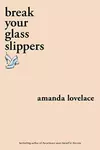

Okay, well. Knowing that I finished this in less than 30 minutes was more impactful than any of the poems and prose in this book, but I noticed that the style was less creative then her older works. I tried to look for any piece worth highlighting, but I couldn't find any. I've outgrown fairy tales and read a lot of self-love stories, so I struggled to relate and saw nothing new. But this was published in 2020. If my 2020 self read this, she might feel something.


Niccolò Machiavelli included many examples of empires that succeeded and failed, and I struggled to understand those because I don't know empire language. Lots of what, and lots of who: What are skirmishes? Mercenary and auxiliary soldiers, what's the difference? And who was Pope Julius? Scipio? Philopoemen? And oh, there was a sultan in Turkey?
But I enjoyed the second half because the ultra-famous "is it better to be feared than to be loved" was discussed there.
Is it better to be feared than to be loved? Actually, Machiavelli was the most interesting political thinker to me in college because "to be feared vs. to be loved" was an interesting topic to debate on. I think I sided with "to be loved," being a people-pleaser at the time lol. But I really can't remember. I might have agreed with him, that it was better to be feared, because of my frequent eye-rolling. I might have wanted to be feared that's why I was unapproachable.
I'll list down only the short highlights and those with only a few empire words in case you also don't understand empire language:
- "In general, you must either pamper people or destroy them; harm them just a little and they'll hit back; harm them seriously and they won't be able to. So if you're going to do people harm, make sure you needn't worry about their reaction."
- "To help another ruler to grow powerful is to prepare your own ruin; because it takes flair or military strength to build up a new power, and both will seem threatening to the person who has benefited from them."
- "If you haven't laid the foundations before becoming king, it takes very special qualities to do it afterwards, and even then, it'll be tough for the architect and risky for the building."
- "A ruler's power must be based on solid foundations; otherwise, he's bound to fall. And the main foundations of any state, whether it be new, or old, or a new territory acquired by an old regime, are good laws and good armed forces."
- "Sensible rulers have always avoided using auxiliaries and mercenaries, relying instead on their own men and even preferring to lose with their own troops than to win with others, on the principle that a victory won with foreign forces is not a real victory at all."
- "A ruler in power and a man seeking power are two different things. For the ruler already in power, generosity is dangerous; for the man seeking power, it is essential."
- "Is it better to be loved rather than feared, or vice versa? The answer is that one would prefer to be both but, since they don't go together easily, if you have to choose, it's much safer to be feared than loved."
- "While a ruler can't expect to inspire love when making himself feared, he must avoid arousing hatred. Actually, being feared is perfectly compatible with not being hated. And a ruler won't be hated if he keeps his hands off his subjects' property and their women. If he really has to have someone executed, he should only do it when he has proper justification and manifest cause."
- "There are two ways of doing battle: using the law and using force. Typically, humans use laws and animal force. But since playing by the law often proves inadequate, it makes sense to resort to force as well. Hence, a ruler must be able to exploit both the man and the beast in himself to the full."
- "A ruler must take advice, but only when he wants it, not when others want to give it to him. In fact, he should discourage people from giving him advice unasked."
- "Fortune varies but men go on regardless. When their approach suits the times, they're successful, and when it doesn't, they're not."
It is almost 2 AM and I'm going to sleep now zzzzzzzzzz. Or I might read another book until I fall asleep.


I am not a secret drug addict, so some parts were boring to me. But I'm giving this book 4 stars because it gave me insights into the life of a secret drug addict (or at least one of the drug addicts).
It was mentioned that dysfunction begins not from a person's childhood but maybe in the childhood of that person's great-great-great-great-grandparent. An "inherited tragedy." For a long time, I've been thinking about whether it is possible to be with someone who is your equal psychologically and emotionally, because many people are very particular about meeting an equal. And for a long time, too, my answer has been "no," so I don't emphasize that in my life.
I know that I have a better support system than others. If I meet someone, or fall in love with someone, who grew up in a dysfunctional environment or have lived a difficult life growing up, will it be good if I stay away? Can I just say, "Gosh, I am not their therapist! I don't want a man who needs help!"? I don't think so. Because looking back, as much as I want to say that I have overcome my own demons by myself, my friends weren't there, but my mom and my siblings were there. They didn't know what I was dealing with, but their presence gave me hope.
And some people don't have parents and siblings. And some do have them, but they are unreliable, too, given their own issues they haven't overcome. The guy who wrote the book, who wanted to be anonymous, had that problem and started to appreciate life only when he met his wife (who also was a drug addict, now sober) and had a daughter.
Drug addicts are lonely, so those who sell and manufacture drugs make many people lonelier. They are getting rich from other people's loneliness, but they may not be seeing the problem with that because they are consumed by their own loneliness, too, as drug pushers are also drug users. Or they may not be seeing their own loneliness because they aren't in their right mind to begin with, according to the author of the book, not me.
I'll just share one highlight here because I said a lot of things: "Addicts die alone. They die young. They run out of friends. It's an incredibly sad existence. Their funerals are sparsely attended, and they cease to exist. No one talking about them, no one talking about what an amazing impact they had on their lives and what a great loss it is."
Do you want to die alone?


I reread the Art of War because I'm rereading the books I need to review for Sociopoliticool. The only thing I want to say is that, earlier, I was looking at the sky and realized how peaceful my life is. This is better, I thought. The board exam results were released yesterday, and I wasn't sad that I "just" passed it. This is better. Maybe the universe really knows what I deeply want. Because if I had topped it, I would be stressed out by the attention. And deep inside me, I never liked attention.
Many people today do everything to get attention. They put themselves into deep debt or put up a fake persona just to be noticed. They want to be at the top so that they can look down on others. What was my motivation for setting that "topnotcher" goal? Did I want to prove something to everyone? Everyone, who doesn't even matter to me? So, I started to appreciate what I got. "Comparing up versus comparing down." The 16,560 who failed would love to be in my position. It was a win. I won the war.
LOL. It wasn't a war. But whatever I said above was what I thought when I asked myself about what it means to be a winner. And a winner is someone who is content. Anyway, some highlights:
- "We have all heard of victories that result from a quick strike by a mediocre opponent, but we have yet to hear of a single victory gained by clever schemers who let the hostilities drag on. In short, there has never been a single instance where the court has profited from lengthy engagements."
- "The expert in deploying troops will humble the enemy without ever engaging them in battle. He will take their cities without ever attacking, and topple the ruling house without protracted engagements. For always, when contending in the realm, success means keeping yourself whole."
- "If you do not know the enemy, but you know yourself, then you will win and lose by turns. If you know neither the enemy nor yourself, you will lose every battle, certainly."
- "Whoever excels in battle can make himself invincible, but he cannot always make the enemy vulnerable."
- "To be prepared everywhere is to be strong nowhere."
- "The ultimate skill in determining formations lies in assuming no set formation. If there is no form, then their spies embedded in your camp will not be able to discern it, nor will the wisest of their counsellors be able to lay plans against it."
- "If the enemy is close but quiet, he relies on his strategic position."
- "A most important consideration in war is speed. With speed, you can exploit whatever is beyond the enemy's reach. You can take the routes he least expects, and you can attack him before he's prepared."
- "When the enemy gives you an opening, rush in. Tempt him with whatever he lusts for, and then by subtle means determine the date for battle. Never let him know the timing of your attack. The only steadfast rule is to adapt to the enemy's moves, in order to determine the course and outcome of the battle."
- "As the phrase goes, 'He who hesitates is lost.' Hence the saying, 'The brilliant ruler thinks it through, while good commanders refine the plan.' When nought's to gain, move not. Over things of little worth, fight not. Save in direst need, war not."
Okay, that's enough. My backbone hurts. But my last words are: "The supreme art of war is to subdue the enemy without fighting." My life is peaceful because I stopped fighting for anything. It will if it must. Stoicism is the cure for stress.


I'm kind of all over the place because I HELL-YEAH-ed to a lot of things, and then I bought a second monitor that smells headache-inducingly new, so I had to reread some parts several times to understand them. I feel bad for not giving this book my full attention because my mind is chaotic at the moment.
Nonetheless, the "hell yeah or no" idea was actually good. I first heard of it years or months ago on an interview (I forgot what) where Derek Sivers was a guest, and then I forgot about it. I remembered it again when it was mentioned on a YouTube video I watched last week, so I got to finish the book just today.
Some highlights (because this is mandatory for me to remember what the book is about):
- "Holding on to an old title gives you satisfaction without action. But success comes from doing, not declaring. By using a title without doing the work, you fool yourself into thinking that future success is assured, thinking, 'This is who I am!' But that premature sense of satisfaction can keep you from doing the hard work necessary."
- "It's liberating to speak in the past tense about what you've done, and only speak in the present tense about what you're actually doing."
- "Some careers come with excuses: The classic novelist thrives in solitude, alone in a cabin in the woods, writing books that reach millions. The classic journalist thrives in a crowd, talking with everyone, building the story from a thousand accounts. The quiet librarian. The aggressive lawyer. The flaky artist. No explanation needed. But when you go against the stereotype, people get confused. The entrepreneur who's not into money. The musician who avoids crowds. The ambitious conservationist. The artist who's into discipline. If you expect criticism in advance and take pride in your unusual stance, you can bash on with a smile, being who you want to be."
- "Public comments are just feedback on something you made. They're worth reading to see how this thing has been perceived. You can even take it as feedback on the public image you've created. All people know is what you've chosen to show them. So if your public persona is coming across wrong, try tweaking it. Never forget that the public you is not you."
- "This is how I feel about culture. We're so surrounded by it that it's impossible to see. Many things we think are true are really just our local culture. We can't see it until we get outside of it."
- "Before you start something, think of the ways it could end. Sometimes, the smart choice is to say no to the whole game."
- "Comparing up versus comparing down: Your happiness depends on where you're focusing. The metaphor is easy to understand, but hard to remember in regular life. If you catch yourself burning with envy or resentment, think like the bronze medalist, not the silver. Change your focus. Instead of comparing up to the next-higher situation, compare down to the next-lower one."
- "The problem is taking any one person's advice too seriously. Ideally, asking advice should be like echolocation. Bounce ideas off of all your surroundings, and listen to all the echoes to get the whole picture. Ultimately, only you know what to do, based on all the feedback you've received and all your personal nuances that no one else knows."
- "Most people overestimate what they can do in one year, and underestimate what they can do in ten years."
- "Some say, 'Just be happy. That's all that matters.' It sounds so simple, it must be profoundly true, right? But, as in Aesop's fable of 'The Ant and the Grasshopper,' you'll be full of regrets if you think of nothing but today and don't prepare for tough times."
- "Sometimes, the world is the same, but my situation has changed. What got me here won't get me there."
- "Once you do something that scared you, you're not scared of it anymore! As you go through life, doing everything that scares you, you fear less and less in the world."
And now, I say hell no to more highlights! Also, I'll slow down my reading from here on because I have more important things to do.