
altlovesbooks


Added to listHistorical Fictionwith 67 books.


Added to listAudiobooks Readwith 123 books.


A historical fiction book about The Wizard of Oz? Sure, sign me up. Sounds delightfully offbeat. Except that it kind of wasn’t and felt a little bland.
This book uses two points in time to tell its story: First, Maud Baum in 1939 trying her best to see her late husband’s creation done justice on the big screen. But to her that seems to mean word-for-word, scene-for-scene, authentic to the book, when this movie was intended to be a technicolor wonder for the masses. She also disagrees with the casting of Dorothy, and has to work through her hangups about both the movie and the actress to see both done right. Interspersed with this tale from Hollywood is Maud’s own life story about how she met Frank, how their whirlwind (heehee) romance led her down some unexpected and rocky paths, and how their experiences, highs, and lows translated into the book that Frank Baum is known for.
I just….wish I liked this book more. I tried very hard to like it since I have friends and family that all highly recommended it, but I kind of thought it was boring. Maud doesn’t seem to have a very likeable personality, either in old Maud being a seemingly stubborn curmudgeon on set to everyone around her about what Frank would have wanted, or in young Maud finding fault with Frank’s flights of fancy and trying her hardest to step on everything he loved so that they could have a "normal" life together. I thought the bits about Judy’s time on set were interesting (in a depressing child-actress-in-the-1930s sort of way), but there wasn’t a lot of that to build a story off of. And I really felt for Frank trying to make it as a creative type in the 1880s when that sort of profession was frowned up and not considered a respectable line of work. But the rest was kind of a slog to get through, and I didn’t really feel particularly connected with either story being told. It felt like most (all?) of the not-main characters were two dimensional and existed just in name as a placeholder in the story, which made large parts of the book a little hard to get through for me.
Still, it’s fairly highly rated, so if fluffy historical fiction is your thing and you love the Oz movie, give this a go. I found it flat and boring, but I’m also not really into really fluffy books either. YMMV.
A historical fiction book about The Wizard of Oz? Sure, sign me up. Sounds delightfully offbeat. Except that it kind of wasn’t and felt a little bland.
This book uses two points in time to tell its story: First, Maud Baum in 1939 trying her best to see her late husband’s creation done justice on the big screen. But to her that seems to mean word-for-word, scene-for-scene, authentic to the book, when this movie was intended to be a technicolor wonder for the masses. She also disagrees with the casting of Dorothy, and has to work through her hangups about both the movie and the actress to see both done right. Interspersed with this tale from Hollywood is Maud’s own life story about how she met Frank, how their whirlwind (heehee) romance led her down some unexpected and rocky paths, and how their experiences, highs, and lows translated into the book that Frank Baum is known for.
I just….wish I liked this book more. I tried very hard to like it since I have friends and family that all highly recommended it, but I kind of thought it was boring. Maud doesn’t seem to have a very likeable personality, either in old Maud being a seemingly stubborn curmudgeon on set to everyone around her about what Frank would have wanted, or in young Maud finding fault with Frank’s flights of fancy and trying her hardest to step on everything he loved so that they could have a "normal" life together. I thought the bits about Judy’s time on set were interesting (in a depressing child-actress-in-the-1930s sort of way), but there wasn’t a lot of that to build a story off of. And I really felt for Frank trying to make it as a creative type in the 1880s when that sort of profession was frowned up and not considered a respectable line of work. But the rest was kind of a slog to get through, and I didn’t really feel particularly connected with either story being told. It felt like most (all?) of the not-main characters were two dimensional and existed just in name as a placeholder in the story, which made large parts of the book a little hard to get through for me.
Still, it’s fairly highly rated, so if fluffy historical fiction is your thing and you love the Oz movie, give this a go. I found it flat and boring, but I’m also not really into really fluffy books either. YMMV.

"How nice it is to be two happy people on a purple moon."
You guys.
You guys.
For the short story fans out there, for the grounded sci-fi lovers on my list, even for the “I need a short book to pad out my Goodreads goal already” people, I ask that you keep this one on your list or in your mind for March. I’m going through a rough mental patch this last week or two, and this book was everything I needed to hear in all the right ways.
August lives in a Spire on a world of purple sand. A Spire is essentially a self-contained tower of people, like a vertical city. If you’re familiar with the term “arcology”, it’s like that. August herself is a rarity, in that she’s half human, half spyren, an alien race who are spiritually and physically connected with the world, and share memories and emotions through the sand around them. Her mother (the spyren) left the Spire when she was very little to return to her people, while her father left as soon as August was old enough to live on her own. They’ve remained out of her life since. She’s since made a living on the Spire as a sand reader, someone the residents can go to to have memories in the sand read for them (like a medium), but the job is taking a terrible toll on her mental health. She opts to take a sabbatical and find something new to do with her life. It’s through this that she meets Alix, a painter, and Lekka, a gardener who maintains the plants on the outside of the Spire (like a window washer, but…plant maintainer). As she slowly starts connecting with these two and finding where she belongs now that she feels she can’t go back to sand reading, the past intrudes on her new happiness.
It bills itself as a cozy science fantasy novella, and I agree with that assessment. It’s sci-fi in setting, fantasy in terms of sand reading, and grounded in the feelings of fear, inadequacy, and awkwardness we all feel when leaving something familiar behind and branching out into something new. The writing is stellar (badumtssss), and very quiet and deliberate in terms of setting the scene. I absolutely want to live on the Spire as described. It’s more family drama than action packed, so temper your expectations accordingly, but it really was the thing I needed to read right now.
Thank you to BookSirens and the publisher for providing me with a free eBook copy in exchange for an honest review.
"How nice it is to be two happy people on a purple moon."
You guys.
You guys.
For the short story fans out there, for the grounded sci-fi lovers on my list, even for the “I need a short book to pad out my Goodreads goal already” people, I ask that you keep this one on your list or in your mind for March. I’m going through a rough mental patch this last week or two, and this book was everything I needed to hear in all the right ways.
August lives in a Spire on a world of purple sand. A Spire is essentially a self-contained tower of people, like a vertical city. If you’re familiar with the term “arcology”, it’s like that. August herself is a rarity, in that she’s half human, half spyren, an alien race who are spiritually and physically connected with the world, and share memories and emotions through the sand around them. Her mother (the spyren) left the Spire when she was very little to return to her people, while her father left as soon as August was old enough to live on her own. They’ve remained out of her life since. She’s since made a living on the Spire as a sand reader, someone the residents can go to to have memories in the sand read for them (like a medium), but the job is taking a terrible toll on her mental health. She opts to take a sabbatical and find something new to do with her life. It’s through this that she meets Alix, a painter, and Lekka, a gardener who maintains the plants on the outside of the Spire (like a window washer, but…plant maintainer). As she slowly starts connecting with these two and finding where she belongs now that she feels she can’t go back to sand reading, the past intrudes on her new happiness.
It bills itself as a cozy science fantasy novella, and I agree with that assessment. It’s sci-fi in setting, fantasy in terms of sand reading, and grounded in the feelings of fear, inadequacy, and awkwardness we all feel when leaving something familiar behind and branching out into something new. The writing is stellar (badumtssss), and very quiet and deliberate in terms of setting the scene. I absolutely want to live on the Spire as described. It’s more family drama than action packed, so temper your expectations accordingly, but it really was the thing I needed to read right now.
Thank you to BookSirens and the publisher for providing me with a free eBook copy in exchange for an honest review.

Added to listShort Storieswith 8 books.

Added to listArcwith 39 books.

Added to listSci Fiwith 45 books.
Added to list2024 Favoriteswith 2 books.
"How nice it is to be two happy people on a purple moon."
You guys.
You guys.
For the short story fans out there, for the grounded sci-fi lovers on my list, even for the “I need a short book to pad out my Goodreads goal already” people, I ask that you keep this one on your list or in your mind for March. I’m going through a rough mental patch this last week or two, and this book was everything I needed to hear in all the right ways.
August lives in a Spire on a world of purple sand. A Spire is essentially a self-contained tower of people, like a vertical city. If you’re familiar with the term “arcology”, it’s like that. August herself is a rarity, in that she’s half human, half spyren, an alien race who are spiritually and physically connected with the world, and share memories and emotions through the sand around them. Her mother (the spyren) left the Spire when she was very little to return to her people, while her father left as soon as August was old enough to live on her own. They’ve remained out of her life since. She’s since made a living on the Spire as a sand reader, someone the residents can go to to have memories in the sand read for them (like a medium), but the job is taking a terrible toll on her mental health. She opts to take a sabbatical and find something new to do with her life. It’s through this that she meets Alix, a painter, and Lekka, a gardener who maintains the plants on the outside of the Spire (like a window washer, but…plant maintainer). As she slowly starts connecting with these two and finding where she belongs now that she feels she can’t go back to sand reading, the past intrudes on her new happiness.
It bills itself as a cozy science fantasy novella, and I agree with that assessment. It’s sci-fi in setting, fantasy in terms of sand reading, and grounded in the feelings of fear, inadequacy, and awkwardness we all feel when leaving something familiar behind and branching out into something new. The writing is stellar (badumtssss), and very quiet and deliberate in terms of setting the scene. I absolutely want to live on the Spire as described. It’s more family drama than action packed, so temper your expectations accordingly, but it really was the thing I needed to read right now.
Thank you to NetGalley and the publisher for providing me with a free eBook copy in exchange for an honest review.
"How nice it is to be two happy people on a purple moon."
You guys.
You guys.
For the short story fans out there, for the grounded sci-fi lovers on my list, even for the “I need a short book to pad out my Goodreads goal already” people, I ask that you keep this one on your list or in your mind for March. I’m going through a rough mental patch this last week or two, and this book was everything I needed to hear in all the right ways.
August lives in a Spire on a world of purple sand. A Spire is essentially a self-contained tower of people, like a vertical city. If you’re familiar with the term “arcology”, it’s like that. August herself is a rarity, in that she’s half human, half spyren, an alien race who are spiritually and physically connected with the world, and share memories and emotions through the sand around them. Her mother (the spyren) left the Spire when she was very little to return to her people, while her father left as soon as August was old enough to live on her own. They’ve remained out of her life since. She’s since made a living on the Spire as a sand reader, someone the residents can go to to have memories in the sand read for them (like a medium), but the job is taking a terrible toll on her mental health. She opts to take a sabbatical and find something new to do with her life. It’s through this that she meets Alix, a painter, and Lekka, a gardener who maintains the plants on the outside of the Spire (like a window washer, but…plant maintainer). As she slowly starts connecting with these two and finding where she belongs now that she feels she can’t go back to sand reading, the past intrudes on her new happiness.
It bills itself as a cozy science fantasy novella, and I agree with that assessment. It’s sci-fi in setting, fantasy in terms of sand reading, and grounded in the feelings of fear, inadequacy, and awkwardness we all feel when leaving something familiar behind and branching out into something new. The writing is stellar (badumtssss), and very quiet and deliberate in terms of setting the scene. I absolutely want to live on the Spire as described. It’s more family drama than action packed, so temper your expectations accordingly, but it really was the thing I needed to read right now.
Thank you to NetGalley and the publisher for providing me with a free eBook copy in exchange for an honest review.

"At Least He Never Walked"
Where I’m an avid Haruki Murakami fan, me and running are casual acquaintances at best. I don’t enjoy running the way other runners seem to, and even trying to understand the mentality is foreign to me. I have incredible respect for people who are runners, let alone ultramarathon runners and triathlon competitors, it’s just not something for me. So when a gathering of friends decided to get together to read this book (as we all respect Murakami as a writer to varying degrees), I almost passed. I’m actually glad I didn’t, because there’s more to this book than a man talking about how much he loves running.
I mean, there’s tons of that too. Murakami is an accomplished runner as well as an author, and he has all the right to talk to us about how he prepares for marathons and approaches running in general. He lives an incredibly disciplined lifestyle, makes time for a considerable amount of running each day, and generally takes very good care of himself. There’s lots here for the people who run, where Murakami finds the motivation to do so, how deep he has to dig when he’s in the thick of a marathon, the mental preparations he goes through leading up to a race. I mean, at the core of it, it’s just a matter of strapping on some sneakers and going at it, but it’s easy to say that on paper and a thousand times harder to actually do.
For the rest of us like me, who find running a chore and something to only trot out when escaping a bear or something, there’s good thoughts here too. I liked Murakami’s thoughts on persistence, approaching tough problems, and many other little things that I can apply to everyday life. The troubleshooting he goes through to figure out a problem (like his swimming form) and the importance of just keeping at something are good things to keep in the back of your brain. While you may not be swimming, being able to identify a problem exists and trying to figure out how to fix it rather than just scrapping the whole thing/idea/race/hobby will get you far.
Not a long book, but I appreciated this look into his head as he runs.
"At Least He Never Walked"
Where I’m an avid Haruki Murakami fan, me and running are casual acquaintances at best. I don’t enjoy running the way other runners seem to, and even trying to understand the mentality is foreign to me. I have incredible respect for people who are runners, let alone ultramarathon runners and triathlon competitors, it’s just not something for me. So when a gathering of friends decided to get together to read this book (as we all respect Murakami as a writer to varying degrees), I almost passed. I’m actually glad I didn’t, because there’s more to this book than a man talking about how much he loves running.
I mean, there’s tons of that too. Murakami is an accomplished runner as well as an author, and he has all the right to talk to us about how he prepares for marathons and approaches running in general. He lives an incredibly disciplined lifestyle, makes time for a considerable amount of running each day, and generally takes very good care of himself. There’s lots here for the people who run, where Murakami finds the motivation to do so, how deep he has to dig when he’s in the thick of a marathon, the mental preparations he goes through leading up to a race. I mean, at the core of it, it’s just a matter of strapping on some sneakers and going at it, but it’s easy to say that on paper and a thousand times harder to actually do.
For the rest of us like me, who find running a chore and something to only trot out when escaping a bear or something, there’s good thoughts here too. I liked Murakami’s thoughts on persistence, approaching tough problems, and many other little things that I can apply to everyday life. The troubleshooting he goes through to figure out a problem (like his swimming form) and the importance of just keeping at something are good things to keep in the back of your brain. While you may not be swimming, being able to identify a problem exists and trying to figure out how to fix it rather than just scrapping the whole thing/idea/race/hobby will get you far.
Not a long book, but I appreciated this look into his head as he runs.
"At Least He Never Walked"
Where I’m an avid Haruki Murakami fan, me and running are casual acquaintances at best. I don’t enjoy running the way other runners seem to, and even trying to understand the mentality is foreign to me. I have incredible respect for people who are runners, let alone ultramarathon runners and triathlon competitors, it’s just not something for me. So when a gathering of friends decided to get together to read this book (as we all respect Murakami as a writer to varying degrees), I almost passed. I’m actually glad I didn’t, because there’s more to this book than a man talking about how much he loves running.
I mean, there’s tons of that too. Murakami is an accomplished runner as well as an author, and he has all the right to talk to us about how he prepares for marathons and approaches running in general. He lives an incredibly disciplined lifestyle, makes time for a considerable amount of running each day, and generally takes very good care of himself. There’s lots here for the people who run, where Murakami finds the motivation to do so, how deep he has to dig when he’s in the thick of a marathon, the mental preparations he goes through leading up to a race. I mean, at the core of it, it’s just a matter of strapping on some sneakers and going at it, but it’s easy to say that on paper and a thousand times harder to actually do.
For the rest of us like me, who find running a chore and something to only trot out when escaping a bear or something, there’s good thoughts here too. I liked Murakami’s thoughts on persistence, approaching tough problems, and many other little things that I can apply to everyday life. The troubleshooting he goes through to figure out a problem (like his swimming form) and the importance of just keeping at something are good things to keep in the back of your brain. While you may not be swimming, being able to identify a problem exists and trying to figure out how to fix it rather than just scrapping the whole thing/idea/race/hobby will get you far.
Not a long book, but I appreciated this look into his head as he runs.
"At Least He Never Walked"
Where I’m an avid Haruki Murakami fan, me and running are casual acquaintances at best. I don’t enjoy running the way other runners seem to, and even trying to understand the mentality is foreign to me. I have incredible respect for people who are runners, let alone ultramarathon runners and triathlon competitors, it’s just not something for me. So when a gathering of friends decided to get together to read this book (as we all respect Murakami as a writer to varying degrees), I almost passed. I’m actually glad I didn’t, because there’s more to this book than a man talking about how much he loves running.
I mean, there’s tons of that too. Murakami is an accomplished runner as well as an author, and he has all the right to talk to us about how he prepares for marathons and approaches running in general. He lives an incredibly disciplined lifestyle, makes time for a considerable amount of running each day, and generally takes very good care of himself. There’s lots here for the people who run, where Murakami finds the motivation to do so, how deep he has to dig when he’s in the thick of a marathon, the mental preparations he goes through leading up to a race. I mean, at the core of it, it’s just a matter of strapping on some sneakers and going at it, but it’s easy to say that on paper and a thousand times harder to actually do.
For the rest of us like me, who find running a chore and something to only trot out when escaping a bear or something, there’s good thoughts here too. I liked Murakami’s thoughts on persistence, approaching tough problems, and many other little things that I can apply to everyday life. The troubleshooting he goes through to figure out a problem (like his swimming form) and the importance of just keeping at something are good things to keep in the back of your brain. While you may not be swimming, being able to identify a problem exists and trying to figure out how to fix it rather than just scrapping the whole thing/idea/race/hobby will get you far.
Not a long book, but I appreciated this look into his head as he runs.


Added to list2024 Favoriteswith 1 book.
Added to listSci Fiwith 44 books.
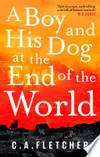
"You can fall out of your own safe life that quickly, and nothing you thought you knew will ever be the same again."
I’m going to spoil this up front for everyone concerned before reading. Here’s my doestshedogdie.com report: The dog does not die.
New year, new amazing 5 star book! Teeeeechnically I started this in 2023, but the only date that counts is the date you log it as read, right? Right. If the rest of my 2024 reads could be this good, I’d be a happy camper.
The world has ended long ago, so long ago that Griz only knows it from tales passed down, and from what he finds when scavenging. His family lives on an island (maybe in the Scotland region? Being not from that side of the planet, I’m fuzzy on actual geography, but the setting/feeling sounds right), and very rarely sees other people. They’re a very close family, especially Griz and his two dogs Jess and Jip. A strange man arrives with a ready smile and a quick tale, and suddenly Griz is one dog less. What follows is Griz’s quest to get his dog back across a post-apocalyptic Britain. John Wick would approve.
First, to get out ahead of the complaints, this is a bit of a slow burn. Rather than it being a fast paced thriller of a sci-fi book, this takes place in the form of a journal Griz keeps of his journey, where we get to read his thoughts, his musings, and what he understands about the remnants of the world around him. It’s quiet in many places and doesn’t feature many characters (what with most of the population being, y’know, dead and all). But it was just so damn atmospheric and bittersweet, reading about how things have changed and how Griz approaches the world. This was all the slow parts about Station Eleven by Emily St. John Mandel that I liked best, wrapped up into one neat little package without all that pesky interpersonal drama getting in the way.
Major plot twist spoilers (seriously, don’t click this unless you’ve finished the book): And that 80% twist? I absolutely didn’t see it coming. I was really curious about the hints dropped by Griz all throughout the book, but I wasn’t expecting what was delivered. I guess I take book titles too literally.
I will say, what is it with the stylistic choice to not use quotation marks to indicate dialogue? This isn’t the first book I’ve read like this, and I still dislike the decision. But the book was just so damn good for me that I’m willing to overlook it just this once.
Just a really fantastic book to start my 2024. Read this if you like the idea of a quiet, introspective, post apocalyptic John Wick without killing.
"You can fall out of your own safe life that quickly, and nothing you thought you knew will ever be the same again."
I’m going to spoil this up front for everyone concerned before reading. Here’s my doestshedogdie.com report: The dog does not die.
New year, new amazing 5 star book! Teeeeechnically I started this in 2023, but the only date that counts is the date you log it as read, right? Right. If the rest of my 2024 reads could be this good, I’d be a happy camper.
The world has ended long ago, so long ago that Griz only knows it from tales passed down, and from what he finds when scavenging. His family lives on an island (maybe in the Scotland region? Being not from that side of the planet, I’m fuzzy on actual geography, but the setting/feeling sounds right), and very rarely sees other people. They’re a very close family, especially Griz and his two dogs Jess and Jip. A strange man arrives with a ready smile and a quick tale, and suddenly Griz is one dog less. What follows is Griz’s quest to get his dog back across a post-apocalyptic Britain. John Wick would approve.
First, to get out ahead of the complaints, this is a bit of a slow burn. Rather than it being a fast paced thriller of a sci-fi book, this takes place in the form of a journal Griz keeps of his journey, where we get to read his thoughts, his musings, and what he understands about the remnants of the world around him. It’s quiet in many places and doesn’t feature many characters (what with most of the population being, y’know, dead and all). But it was just so damn atmospheric and bittersweet, reading about how things have changed and how Griz approaches the world. This was all the slow parts about Station Eleven by Emily St. John Mandel that I liked best, wrapped up into one neat little package without all that pesky interpersonal drama getting in the way.
Major plot twist spoilers (seriously, don’t click this unless you’ve finished the book): And that 80% twist? I absolutely didn’t see it coming. I was really curious about the hints dropped by Griz all throughout the book, but I wasn’t expecting what was delivered. I guess I take book titles too literally.
I will say, what is it with the stylistic choice to not use quotation marks to indicate dialogue? This isn’t the first book I’ve read like this, and I still dislike the decision. But the book was just so damn good for me that I’m willing to overlook it just this once.
Just a really fantastic book to start my 2024. Read this if you like the idea of a quiet, introspective, post apocalyptic John Wick without killing.