altlovesbooks

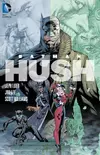
Like, woah, right?
I missed this when it came out originally, and also when it came out in its 10th and 15th anniversary editions evidently. But not this time! This time, for its 20th anniversary, I read it! Worth the wait? Heck yes!
This was a fantastic trip down memory lane for anyone familiar with the Batman universe. Aside from Hush himself, basically everyone else he interacts with are all old favorites. All of his classic rogues gallery are here, and a number of side characters and Bat Family-adjacent friends and allies are too. If you're looking for new ground to be covered, maybe give this a pass, but there's a reason this one is one of the classics.
The art is striking, the story left me wondering the entire time about the identity of Hush, and I loved the inclusion of the alt cover art and annotated script. The annotations in particular pointed out things I had missed when reading it the first time through. There's also some PHENOMENAL black and white sketches at the end that I loved.
Great edition of a great story, perfect for anyone who just wants a great story with some familiar faces.
Like, woah, right?
I missed this when it came out originally, and also when it came out in its 10th and 15th anniversary editions evidently. But not this time! This time, for its 20th anniversary, I read it! Worth the wait? Heck yes!
This was a fantastic trip down memory lane for anyone familiar with the Batman universe. Aside from Hush himself, basically everyone else he interacts with are all old favorites. All of his classic rogues gallery are here, and a number of side characters and Bat Family-adjacent friends and allies are too. If you're looking for new ground to be covered, maybe give this a pass, but there's a reason this one is one of the classics.
The art is striking, the story left me wondering the entire time about the identity of Hush, and I loved the inclusion of the alt cover art and annotated script. The annotations in particular pointed out things I had missed when reading it the first time through. There's also some PHENOMENAL black and white sketches at the end that I loved.
Great edition of a great story, perfect for anyone who just wants a great story with some familiar faces.


I thought a weird mashup of post-apocalyptic Earth and Buddhism would somehow be more interesting than it ended up being. Don’t get me wrong, there’s stuff to like here, but the overall story never seemed to rise to the point where I got interested and engaged with what was going on.
Karma (yeah? yeahhh? get it???) is a boy growing up in a village on the post-apocalyptic Tibetan plateau. Six cataclysms happened a long time before (six suns) which changed the world drastically and killed the majority of the population. A prophesied seventh sun is foretold to be inevitable and will result in the remaining world to be destroyed (get used to this, the rhyme/prophecy for it is retold a lot throughout the course of the book). But to Karma, all of this is just a story, because he’s more concerned with his missing father, and the fact that his uncle basically hates him for existing. He learns that there’s a way to avert this guaranteed calamity, if the lama child is found in time and brought to a mystical stone in a mountain, and his missing father may know where the mountain is to be found. So, familial duty being what it is, he’s off on this quest to find his father and the seeing stone which will, somehow, stop the world’s death.
It has all the makings of something I’d be into, and don’t get me wrong, the prose is fantastic, but the story itself never seemed to come together. There’s a lot of quiet philosophy in these pages, which made my post-apocalyptic romp a bit more tedious than I would have liked. Additionally, the actual action parts of the book were basically all the same–Karma gets captured by bandits, Karma escapes from bandits/is rescued from bandits/is released by bandits. Always the same bandit band too. I guess when you’re the last bandit band on Earth, you’re simultaneously the greatest band ever and the worst band ever. Not a lot of credentials needed. The ending also felt really rushed and especially confusing, which knocked off a star right there for me immediately. The majority of the book had careful, deliberate (see also: slow) pacing, but the ending is suddenly flying through events and revelations like the author had a page count limit thrown at him, and it just felt incredibly disjointed.
I don’t know, it’s an interesting concept and it was almost something great, but there was just not a lot of connection between me and what was going on at any given time.
I thought a weird mashup of post-apocalyptic Earth and Buddhism would somehow be more interesting than it ended up being. Don’t get me wrong, there’s stuff to like here, but the overall story never seemed to rise to the point where I got interested and engaged with what was going on.
Karma (yeah? yeahhh? get it???) is a boy growing up in a village on the post-apocalyptic Tibetan plateau. Six cataclysms happened a long time before (six suns) which changed the world drastically and killed the majority of the population. A prophesied seventh sun is foretold to be inevitable and will result in the remaining world to be destroyed (get used to this, the rhyme/prophecy for it is retold a lot throughout the course of the book). But to Karma, all of this is just a story, because he’s more concerned with his missing father, and the fact that his uncle basically hates him for existing. He learns that there’s a way to avert this guaranteed calamity, if the lama child is found in time and brought to a mystical stone in a mountain, and his missing father may know where the mountain is to be found. So, familial duty being what it is, he’s off on this quest to find his father and the seeing stone which will, somehow, stop the world’s death.
It has all the makings of something I’d be into, and don’t get me wrong, the prose is fantastic, but the story itself never seemed to come together. There’s a lot of quiet philosophy in these pages, which made my post-apocalyptic romp a bit more tedious than I would have liked. Additionally, the actual action parts of the book were basically all the same–Karma gets captured by bandits, Karma escapes from bandits/is rescued from bandits/is released by bandits. Always the same bandit band too. I guess when you’re the last bandit band on Earth, you’re simultaneously the greatest band ever and the worst band ever. Not a lot of credentials needed. The ending also felt really rushed and especially confusing, which knocked off a star right there for me immediately. The majority of the book had careful, deliberate (see also: slow) pacing, but the ending is suddenly flying through events and revelations like the author had a page count limit thrown at him, and it just felt incredibly disjointed.
I don’t know, it’s an interesting concept and it was almost something great, but there was just not a lot of connection between me and what was going on at any given time.

I sort of expected more from this book, particularly where important topics related to marginalized groups are addressed. I thought this book would be a good platform for discussion about the treatment of indigenous groups in America through the story of girls going missing, but it missed the mark with me.
Anna Horn and her sister Grace go to the same high school, but have very different social lives. Where Grace wants to conform to what the rest of her high school members expect of a teenager, Anna doesn’t feel compelled to. As the older sister, Anna is also employed as a housekeeper at her reservation’s casino, and it’s here that Anna starts getting the feeling that something is amiss on the eighth floor. Rather than bring her concerns to literally anyone else within the hotel, she starts investigating for herself, but not before Grace becomes involved in the whole affair.
I think this book suffers mostly from trying to do too much in too few pages. There’s the threads of good indigenous people/coming of age stories here, but it honestly felt like none of the threads were handled very carefully. There’s Anna’s struggle against expected gender roles with her sister and her high school. There’s Anna’s interest in the preservation of her tribe’s history, counter to what the rest of the tribe wants for itself. There’s the obvious mystery/thriller about indigenous women going missing. All of these could be handled on their own, but when blended together in one book kind of makes the whole a bit of a mess. When you get the issues bookended against each other, it feels all out of place.
The story is also initially written out of sequence, where you’re fed the beginning of the mystery climax up front and then are brought back and forth between “current time” Anna showing how all this started and “future Anna” neck deep in the climax. I think it’s supposed to create tension in making the reader wonder how things started and how it all converges together, but it came off a bit disjointed in execution. I also felt like the story, after the two sequences converge and we start closing in on what it all means, wasn’t a very compelling thriller. And rather than go all-in on what can happen to indigenous women who go missing, we get a rather unfulfilling epilogue where you can certainly draw inferences but nothing is outright explained. If the author wanted to discuss the hardships faced by indigenous women (as the author’s note seems to indicate), punches shouldn’t have been pulled in the end.
I guess it’s a fine book, but I don’t know if I’d consider it a thriller, a horror story, or anything that really pushes the envelope about social issues.
I sort of expected more from this book, particularly where important topics related to marginalized groups are addressed. I thought this book would be a good platform for discussion about the treatment of indigenous groups in America through the story of girls going missing, but it missed the mark with me.
Anna Horn and her sister Grace go to the same high school, but have very different social lives. Where Grace wants to conform to what the rest of her high school members expect of a teenager, Anna doesn’t feel compelled to. As the older sister, Anna is also employed as a housekeeper at her reservation’s casino, and it’s here that Anna starts getting the feeling that something is amiss on the eighth floor. Rather than bring her concerns to literally anyone else within the hotel, she starts investigating for herself, but not before Grace becomes involved in the whole affair.
I think this book suffers mostly from trying to do too much in too few pages. There’s the threads of good indigenous people/coming of age stories here, but it honestly felt like none of the threads were handled very carefully. There’s Anna’s struggle against expected gender roles with her sister and her high school. There’s Anna’s interest in the preservation of her tribe’s history, counter to what the rest of the tribe wants for itself. There’s the obvious mystery/thriller about indigenous women going missing. All of these could be handled on their own, but when blended together in one book kind of makes the whole a bit of a mess. When you get the issues bookended against each other, it feels all out of place.
The story is also initially written out of sequence, where you’re fed the beginning of the mystery climax up front and then are brought back and forth between “current time” Anna showing how all this started and “future Anna” neck deep in the climax. I think it’s supposed to create tension in making the reader wonder how things started and how it all converges together, but it came off a bit disjointed in execution. I also felt like the story, after the two sequences converge and we start closing in on what it all means, wasn’t a very compelling thriller. And rather than go all-in on what can happen to indigenous women who go missing, we get a rather unfulfilling epilogue where you can certainly draw inferences but nothing is outright explained. If the author wanted to discuss the hardships faced by indigenous women (as the author’s note seems to indicate), punches shouldn’t have been pulled in the end.
I guess it’s a fine book, but I don’t know if I’d consider it a thriller, a horror story, or anything that really pushes the envelope about social issues.