
Aaron


This book is what happens when you mix equal parts 500 Days of Summer and House of Leaves, but fail to capitalize on the emotional/relational turmoil and supernatural mystery that made those two works of art so poignant.
I really liked this novel's beginning. Mike's initial sense of unexplained panic and the backstory that brought him to the current point is intriguing enough to settle the reader in. Futhermore, his random meetings with the mysterious Gepetto serve to heighten the sense of high strangeness that is encroaching on Mike's life.
The problem with this story is its overall execution. Too often, characters are introduced without rhyme or reason and fade off into the background without any explanation of why they appeared in the first place. Inexplicable events occur and although Mike does a good job of mirroring what readers inevitably feel (“why?”), answers are all too often lacking. The biggest frustration comes from a reunion scene in which Mike is given the most bland, boring excuse for why his life has shifted so radically; it's a letdown of the highest order and serves only to drain the story of whatever suspense it had left.
This story has all the hallmarks of an author who has definite talent, but (at this stage in his career) lacks the ability to pull a story into a tight, cohesive weave. So, as a recommendation, I would say that if a friend/family member already has this on their shelf, give it a shot.


Son of a...
Let's start with The Magicians. At the time, I thought it was “okay” - being a fan of series like Harry Potter, The Chronicles of Narnia, etc., I had a difficult time merging new-age teenage sullenness - no matter how true-to-life - with my idea of those playful, magical fantasy worlds established elsewhere. That said, I thought The Magicians explored some very interesting themes: disillusionment with one's current status/life/the state of the universe, the adolescent feeling of invincibility that comes with college life, the somewhat stagnant realization that life-after-college isn't all its cracked up to be (even when infused with magic), etc.
I picked up The Magician King because there was enough in the first book to interest me. I wasn't expecting a lot, but I thought I'd give it a shot.
Boy, did this book catch me off guard. It was good. It was very good (much, much better than I'd expected).
Quentin, the main character, has landed on top of the magical world: he's the king of Fillory, the fantasy land that he's idolized his entire life. However, even after gaining everything he ever wanted, he's bored. He needs some sort of quest because, after all, that's what every fantasy hero needs (and no one knows that cliche - and that it is a cliche - better than Quentin). So, along with his fellow King (Eliot) and Queens (Janet and Julia), our hero sets off to find his adventure.
What follows is a multi-layered tapestry of discovery, adventure, pain, suffering loss, disbelief, love, and destiny. The story bobs and weaves between time and space, switching between the present story of Quentin's adventures, the past story of Julia's transformation from Stanford-bound know-it-all to power-hungry hedge witch, and the strange, heart-wrenching thread that ties these two plotlines together.
I loved this book. However, let's go back to that first sentence. I won't spoil it, but the story's ending is a sure-as-shootin' cliffhanger. It's okay - even exciting - that Lev Grossman plans to write a third novel in this series; however, this book ends too quickly and quirkily, as if Grossman needed to stop before he wove his third time into this one.
Oh well. Minor quibble. The Magician King (and, truly, this whole series) is flawed, yes, but so is the reality it describe: our reality. These books speak to the deep part of us that, like Quentin, wishes magic could solve the world's problems. Give this one (and its a predecessor, if you haven't already) a shot.


First off, know this about me: I am simultaneously a man of intense faith and rigorous scientific/analytical background. I believe in God. I am also an computer engineer/scientist. My life is a constant journey toward understanding the harmony between spirituality and science.
Before deciding to read this book, I prayed. I asked God to give me guidance. If this was a deceptive work whose purpose was to entangle my mind in crazy, supernatural delusions (and their accompanying flights of fantasy), I asked that He turn me away. If, on the other hand, there was a message within worth hearing, I asked Him to give me the proverbial “eyes to see and ears to hear”.
The result? It's currently been 5 hours since I purchased the book. Between then and now, I stopped only to eat dinner; in every other second, I devoured this text. And now, having completed it, here I am, carrying a heart that simultaneously feels immense hope and incredible heaviness.
Without spoiling the particulars, this book details (in narrative form) the author's encounter with a man who makes statements befitting a slightly modernized Old Testament prophet. As his base of discussion, this man uses scripture found in Isaiah 9:10 (which details Israel's defiant response to the siege laid against it by Assyria); what follows is an amazing, heart-wrenching account of how those same events – and their consequences – have come to unfold in the United States.
10 pages in, I was interested. 50 pages in, I was slightly skeptical. 125 pages in, I began to consider the validity of what was being said. 150 pages in...and my eyes began to open. This is a grand story that teeters on the edge of impossible, but which, when considered carefully, strikes a chord that often accompanies the deepest truth.
Once I'd completed this, I went to my Bible. With apologies for how “do-this-for-me” my request seemed, I asked God to once more show me if what I'd read had any measure of truth. I asked Him to show me through Scripture (which doesn't conform to – and isn't bound by – fantasy or supernatural leaps of nonsense) whether this meant anything.
Somehow, I opened directly to Isaiah 9:10. I'm not one to believe in chance or happenstance; you be the judge as to whether this was coincidence.
For the reader who is brave enough to read this book, put its contents under the microscope of whatever world view he subscribes to, and merely listen, there is much to examine here. At its core, it is simultaneously a message of hope and ominousness, disobedience and repentance, rebellion and the call to return. Try, for a moment, to suspend the box into which you fit the world; allow yourself the opportunity to consider something outside of your everyday experience.
You won't regret it.


As I man of both deep spiritual faith and scientific acumen, I found myself shaken to the core by this book. I truly wonder what it will mean for my life going forward.
In short, this book covers a conversation between the author and a man who came into his hotel room late one night. What followed were incredible claims about the nature of our relationship to God, the true nature of sin, and humanity's destiny (should it choose to be courageous enough).
Is there any way to prove any of this? Of course not. All Average Joe can do is read these words and see if some deep part of himself reacts. I myself was initially skeptical, but after giving this a shot, I have to wonder whether the realm of reality has been expanded for me.
To every skeptic: I understand. You have every right to disbelieve. My only invitation to you: this book is short and won't take months to read. What it potentially offers is so much more. Give it a shot and be open to its ideas.


Early on, I was going to give this book 4 stars. The opening chapters are exciting and while they may or may not be true, they inspire a sense of the mystery that has surrounded Area 51.
Unfortunately, the wheels begin to come off in the middle of the book.
Jacobsen's treatise on Area 51's use as a nuclear testing facility during the cold war - via former Nazi engineers relocated to the U.S. during the ultra-secret Operation Paperclip - is fairly riveting. However, the next several chapters - which detail the development of spy planes (such as the Oxcart) at Area 51 - follow the same weary pattern: a plane is tested, it crashes somewhere, and "The Agency" rushes out to collect the remains before anyone could find out. I know that I shouldn't be so callous, but that gets extremely boring after a while.Throughout the book, Jacobsen alludes to "the dark purpose of Area 51" - however, it takes until the very last chapter for her to about-face and actually confront a very intriguing scenario: that the UFOs that crashes in Roswell were Russian-made remote-controlled hover drones, and that their "alien" pilots were actually genetically-altered humans designed to inspire fear in the American public (similar to the War of the Worlds radio broadcast).*This* is the kind of exciting stuff that I think about when pondering Area 51. Late in the book, Jacobsen details a discussion with one of her chief informants, who tells her that these kinds of genetic experiments are still going on at Area 51, and that if a crouton detailed what the public knew about Area 51, its entire truth would be the size of a long dining table and chairs. Wow, right?Sadly, Jacobsen's floundering writing style - which jumps around far too much to inspire intrigue - and an seeming obsession with the elements that of Area 51 that, today, are common knowledge (Predator drones, the SR-71 and F-117, etc.) just don't shed much light into the story of Area 51.
For what could have been and what ended up being: 2 stars.


At its heart, this is a tremendous story about a company's fall from grace and return to the top of its industry. Although he is by no means a perfect writer, it is obvious that Howard Schultz's success as Starbucks' CEO comes from his sense of spirit and desire to enrich the lives of everyone that the company comes into contact with. A wonderful read, and one that I would recommend to every business leader.
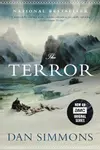


What a disappointment.
After truly enjoying the mysterious, enthralling tale provided by Drood, I thought that Simmons' prior work of historical fiction would be just as alluring. Unfortunately, The Terror suffers from the same main problem that plagued Drood: the story's buildup and the shroud of mystery surrounding the main antagonist lead to extreme letdown. However, whereas the entirety of Drood's story somewhat made up for its anticlimactic ending, The Terror's story - while chilling in many ways - just isn't good enough to survive its “ending-letdown.”
Simmons does a great job weaving 700+ pages worth of the horrific nature of Arctic sailing, where incessant cold, poisoned food, scurvy, and the unknown create a constant state of unease; however, this tale never seems to go anywhere. Whereas Drood made me insanely curious to find out what would happen next, The Terror left me in a constant state of “Can we move on, please?” There are only so many times one can endure a repetitive chapter cycle - recount who is dead and how they died, wander down a long flashback that doesn't endear me to its character, etc. - before boredom begins to set in.
I give this book 3 stars because at its core, The Terror is a fantastic set piece that manages to sustain a constant state of unease and weave in fantastic scenes (such as the carnivale, the failed bear-blind, etc.). However, at its weakest points (including the final 100 pages, which, of all possible ending scenarios, sufficiently destroyed any suspense/intrigue/excitement that had been building up), The Terror drifts along, never truly sure of where it wants to go.


I was so excited to pick up the latest Brian Greene book; after devouring “The Elegant Universe” and “Fabric of the Cosmos,” I was certain that I would do the same here. I was mistaken.
Without belaboring the point, two features of this book caused my interest to wane extremely quickly. First, there seemed to be an inordinate amount of “free-pass” statements from Mr. Greene. After the third time of reading “If you are reaching saturation, feel free to skip this entire chapter,” I began to wonder if he had somewhat lost his previously uncanny ability to explain complex topics in a way that negated the desire to skip ahead. Second, nearly every “revelation” in this book followed up with the caveat that while it might be true, we don't (and may never have) the ability to prove it.
The book quickly went from cutting-edge research to conversation points designed to sell a book. Overall, very disappointing.


I truly enjoyed this gripping, chilling read. A smart blend of interesting historical fact and a well constructed mystery make Drood - not novels like The Da Vinci Code - a prime example of outstanding historical fiction.
Rather than spend pages talking about what I liked (which were numerous), allow me to be the critic and share the three points that kept me from giving this gem a full 5 stars.
1. At various points throughout the novel, Simmons goes a bit too far in his weaving of history into the plot. This practice normally serves a great purpose; however, when carried too long, it seems as though he is filling pages with long paragraphs of who-wrote-to-whom-in-which year.
2. Each time a puzzling moment came up in the book, Simmons did a great job in having Wilkie confirm my suspicion with some of his own. However, all too frequently, resolutions to those puzzles were never given, almost as if Simmons had forgotten to re-approach them.
3. The grandiose emotion of the book's plot, the sinister, ethereal, and extremely mysterious nature of its villain, and the ever-present sense of doom carry this book to an extreme height. However, this is often a tricky spot to land in, as only the most talented of authors can deliver a climax that stays that high. Drood's ending, while certainly brain-bending and interesting, doesn't carry the same level of excitement that it's plot does.
Overall, this is a book - and an author - not to be missed. Check it out as soon as you can.


It's difficult to explain why the Scott Pilgrim books are so good. They encompass so many interesting, unique qualities that blend together into a tapestry of epic epic-ness.
Here are a few ideas:
1. Scott Pilgrim exists in a world where the mechanics, ethos, and aura of video games (random fights with random robots, enemies exploding into heaps of coins - which may or may not be enough to cover bus fare - and other loot, etc.) are as common as breathing. And seriously, how can you dislike a guy whose band is named Sex Bob-omb?
2. Scott's paranoia, randomness, forgetfulness, and eccentricity - combined with the fact that underneath it all, he's a decent guy with the same problems as everyone else - make him an extremely likable character. The first time I saw Scott obsess over getting his hair cut - and what's more, freaking out that other people were getting haircuts before him - I was hooked.
3. At it's core, the Scott Pilgrim story is one that every guy can relate to: being utterly infatuated with a girl and knowing that you're going to have to kick some serious ass to get her. It's a story that stands the test of time.
Even if you despise comic books, graphic novels, etc., I encourage you to put aside your doubts and pick up this series. You're life will be changed for the better. 1-2-3-4!!!


This book was, unfortunately, rather disappointing. As a graduate of the University of Denver's MBA program, I was excited to read this book because I'd hoped it would glean some insight into the highly selective, greatly sought after experience at HBS. Although Broughton gave a fair amount of that, it was often punctuated by long stretches of academic material that seemed ripped from a business textbook. I suppose that one should expect some material like this, given that Broughton is recounting his experiences in business school; however, a true account of “Two Years at Harvard Business School” would, I think, focus a bit more on Harvard itself and not devote multiple pages to an explanation of Michael Porter's numerous frameworks.


I picked up this book after reading the fairly high acclaim it received on this site. Unfortunately, I abandoned it about 5 chapters in. There is too much derivative work in this book: an orphan/child-with-one-parent discovers his magical destiny via intense instruction. Honestly, I found myself replacing Greek gods and mythology with British wizards and re-reading a dumbed down version of Harry Potter.Don't get me wrong - derivative work, in and of itself, is not a bad thing (I look to [b:Wicked 37442 Wicked The Life and Times of the Wicked Witch of the West (Wicked Years, #1) Gregory Maguire http://photo.goodreads.com/books/1255675230s/37442.jpg 1479280] as a good example of an obviously derivative work that forged a drastically new path). However, I don't see enough unique content in this book to be excited about.


Just to say it: I really wanted to enjoy this book. I'm a bona fide football nut and I have a huge appreciation for Sal Paolantonio's editorial work on ESPN. Those two together should have made for a really enjoyable reading experience, but I just couldn't like this book.
Throughout, Sal attaches characteristics of football to those found in other “artifacts” of American history (Manifest Destiny, the unique American art form of jazz, etc.). While reading Sal's conclusions, I consistently found myself saying, “Well, I guess you could make that connection...” Too often, the conclusions that Sal arrives at are beyond what one would normally think of.
The other major detractor of this book is its organization (or lack thereof). The best way I can describe it is this: it's as though Sal researched various topics, followed trails that led back to other topics, produced a whole pile of disparate notes, then stapled the whole thing together for the publisher.
Sorry, Sal - I like you as a reporter, but not as an author.


Freakonomics 2.0, this is not. Unfortunately, Ian Ayres only occasionally manages to capture the spark and charisma that Steven Levitt so easily wielded in Freakonomics.
Much of this book is spent reiterating previously made points (if I have to hear about regressions' ability to explain results AND error factor one more time, I'm going to scream). Ayers frequently trails off into personal opinion, something that is grossly distracting and serves only to shine a light on Super Crunchers' more solid “cousin.”
Do yourself a favor: read Freakonomics and avoid Super Crunchers. You won't miss anything.


I can't exactly describe why I'm giving this book 2 stars instead of 1. Perhaps it's a stilted sense of respect to a “classic.” Who knows. The point is, I put this on my “abandoned” bookshelf for a reason.
First, a little backstory. I picked up this book after seeing The Mothman Prophecies movie, which, although sub-par overall, did have some suspenseful moments. Therefore, it seemed logical that the book might carry the same quasi-suspenseful feeling. WRONG.
Keel's manner of reporting-as-a-book doesn't sit well. His method of creating/collecting various reports, stapling them together, and calling the result a book destroys any level of continuity. That wouldn't be so much of a problem if some of the stuff in the book was actually threatening/scary ... but it just isn't. All too often, Keel's descriptions fail to carry any sense of excitement, peril, or true mystery. Do yourself a favor and don't waste time with this one.


This book definitely delivers on the promise of “a hair-raising experience.” Crichton is a master of creating suspense and holding secrets until a good way into the book.
That said, this was not one of my favorites. While the book started favorably enough, it lost its suspense about 200 pages in. While I thoroughly enjoyed the segues into biological studies, they tended to detract from the main story - so much so that once I was 5/6 through the book, I began to think, “He's running out of room to create a really smash-up ending.” The unfortunate result is that I hardly felt any suspense during what should have been a climactic ending.
A good (and fast read), but definitely not the late Crichton's best work.


At first, the one distinct thought this book gave me was, “What the...?” The topic of this book - an adolescent alien hunter searching for his parents' extraterrestrial killer - is somewhat of a departure from Patterson's usual mystery works.
However, as I progressed through this book, I started to really enjoy it. Patterson's lending of a sassy demeanor to his main character produces an excellent sense of adventure (not to mention that the kid's powers of creation are pretty darn cool).
While the story progresses nicely, Patterson leaves some very loose ends. The Prayer - the beastly thing that murders Daniel's parents in the opening chapter - isn't seen again through the rest of the book (the great majority of the story revolves around Daniel's hunt of alien #6, Seth). This may mean Patterson intends to continue this story elsewhere, but it didn't seem terribly clear.
Overall, Patterson's writing style (including his trademark 1-2 page chapters) and his craft of an intriguing story make this an excellent read.


I waited for months to obtain this book from my library. When I finally received it, it didn't disappoint.The story revolves around Jesus Christ's second return to Earth, in which he decides to run for President of the United States. He chooses a variety of “suspect” individuals for his crew of campaigners/assistants: a TV reporter, his girlfriend, parents, and brother (who has Down Syndrome) a low-income boyfriend/girlfriend pair, and various others.What I really liked about this book was the powerful message that Merullo communicates through his depiction of Jesus: what would it look like if the inhabitants of arguably the most affluent nation in the world addressed the root causes of their disagreements, rather than their symptoms? An especially powerful example concerns abortion - when questioned by reporters about his stance on this issue, Jesus states that some people feel like begins at conception, and others that life begins at birth - rather than nitpick over which is “right,” could proponents of both sides sit down and discuss a resolution (not necessarily regarding abortion, but addressing the division that issue has caused the inhabitants of the USA).The depiction of some of Jesus' ideas will no doubt grind against some of traditional Christian belief (in much the same way [b:The Shack 1812457 The Shack William P. Young http://photo.goodreads.com/books/1188677589s/1812457.jpg 2666268] did. However, the historical perspective that Jesus exists to break apart preconceived notions on life exist easily here.While very well written, the one difficulty with the book is the ending. Sufficed to say, it leaves one with a feeling of, “After all that story, that's it?” It's unfortunate that such a well written book ends so abruptly; a more devised ending would have wrapped up an otherwise tremendous story.