
Sterling Parker


Added to listOwnedwith 6 books.


This book lists two authors and I'm not sure which one to blame. A good chunk of the story contains some surprisingly skilled writing and light philosophical musings. But it's mixed with another writing style that I can best describe as "clunky" and amateurish. For example, early in the book the dialogue between several crew members has each say the full name of the planet in successive sentences to each other. It's very grating. I can only imagine the text was initially drafted by one author, and then filled in by the other, as the shift between styles happens within scenes and chapters.
Other than that, the plot is solid OG Trek and would slot near-perfectly into the TV show itself. A late fakeout regarding the demise of a primary character feels a bit cheap, but the show was also not above this. Several passages feel oddly prescient in regards to modern "AI" computing models, and musings on the simulation hypothesis seem more obscure than they would two years later with the release of The Matrix. I applaud whichever of the two authors managed to take this from a thin rehash of Talos IV and craft it into something more meaningful.
This book lists two authors and I'm not sure which one to blame. A good chunk of the story contains some surprisingly skilled writing and light philosophical musings. But it's mixed with another writing style that I can best describe as "clunky" and amateurish. For example, early in the book the dialogue between several crew members has each say the full name of the planet in successive sentences to each other. It's very grating. I can only imagine the text was initially drafted by one author, and then filled in by the other, as the shift between styles happens within scenes and chapters.
Other than that, the plot is solid OG Trek and would slot near-perfectly into the TV show itself. A late fakeout regarding the demise of a primary character feels a bit cheap, but the show was also not above this. Several passages feel oddly prescient in regards to modern "AI" computing models, and musings on the simulation hypothesis seem more obscure than they would two years later with the release of The Matrix. I applaud whichever of the two authors managed to take this from a thin rehash of Talos IV and craft it into something more meaningful.

I actually read this as a kid, before watching virtually any Star Trek at all, and it was mesmerizing. Now that I'm grown it's almost hilarious. Fan service and indulgent lore references so dense that you almost lose the plot in the midst of being reminded of 100 other iconic Star Trek moments. Still a good fun romp through the 23rd century.
I actually read this as a kid, before watching virtually any Star Trek at all, and it was mesmerizing. Now that I'm grown it's almost hilarious. Fan service and indulgent lore references so dense that you almost lose the plot in the midst of being reminded of 100 other iconic Star Trek moments. Still a good fun romp through the 23rd century.

This is one of the earliest Star Trek books I remember reading, somewhere around the age of 10 or 11. Today, enemies to reluctant allies is one of my favorite tropes in fiction. I believe that was heavily shaped by this book.
Reading it again as an adult, the writing is pulpy and thin but still effective. The battle scenes and tactics have imagery that sticks in my memory. The story leans in hard to the classic Trek style of highly competent people solving complex problems with a combination of wit and grit. Unfortunately the ending is a bit of a rushed letdown, and the alien race of the Narr get precious little page time compared to how interesting they seem.
Still, I'm happy this is a childhood favorite that holds up nicely to an adult re-read.
This is one of the earliest Star Trek books I remember reading, somewhere around the age of 10 or 11. Today, enemies to reluctant allies is one of my favorite tropes in fiction. I believe that was heavily shaped by this book.
Reading it again as an adult, the writing is pulpy and thin but still effective. The battle scenes and tactics have imagery that sticks in my memory. The story leans in hard to the classic Trek style of highly competent people solving complex problems with a combination of wit and grit. Unfortunately the ending is a bit of a rushed letdown, and the alien race of the Narr get precious little page time compared to how interesting they seem.
Still, I'm happy this is a childhood favorite that holds up nicely to an adult re-read.
Added to listOwnedwith 5 books.


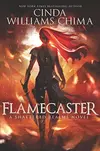


Predictable and trope-y, but also creative and engaging. I enjoyed the dragon lore and world setting, and the characters feel unique and identifiable with reasonably clear motivations/rationale. Enjoyed less the cartoonishly edgy tone; it felt really tryhard and forced sometimes.
More generally, characters touching explicitly on topics like "consent" and "toxicity" is a good way to score points with Tumblr and BookTok but feels really out of place in the setting. I feel it could have been handled more subtly. I also can't quite tell if the ridiculously over-the-top "training" is a critique/satire of warrior cult mentality, or a genuine rule-of-cool expression of it. Doesn't help that the main character's perspective is so completely normalized to the culture that she barely even questions it.
But, questions perhaps the sequels will answer. I'm intrigued enough to keep going.
Predictable and trope-y, but also creative and engaging. I enjoyed the dragon lore and world setting, and the characters feel unique and identifiable with reasonably clear motivations/rationale. Enjoyed less the cartoonishly edgy tone; it felt really tryhard and forced sometimes.
More generally, characters touching explicitly on topics like "consent" and "toxicity" is a good way to score points with Tumblr and BookTok but feels really out of place in the setting. I feel it could have been handled more subtly. I also can't quite tell if the ridiculously over-the-top "training" is a critique/satire of warrior cult mentality, or a genuine rule-of-cool expression of it. Doesn't help that the main character's perspective is so completely normalized to the culture that she barely even questions it.
But, questions perhaps the sequels will answer. I'm intrigued enough to keep going.