
Carla


I love Stevie Bell. I hope this series continues, and continues to be narrated by Kate Rudd.
I love Stevie Bell. I hope this series continues, and continues to be narrated by Kate Rudd.


I was quite excited to spend my monthly Audible credit on this book; what a fascinating idea! I, unfortunately, have returned it to Audible. Each house is well-chosen: the Lemp mansion, for example, as a haunted touchstone in American history and culture...and then debunked as an actual, or at least a full as-known haunting by the author. Chapter after chapter. I hung on until the author stated repeatedly that Spiritualism didn't last, it was dead, it was no longer a thriving practice in the United States. Then I stopped reading. Why? I had reached poor scholarship and research. There is an entire town of Spiritualists who live and work as such, in plain sight, and have done so for years: Lily Dale. Both a documentary and a book are available about Lily Dale, New York, and both are easy to find:[bc:Lily Dale : The True Story of the Town that Talks to the Dead 227324 Lily Dale The True Story of the Town that Talks to the Dead Christine Wicker https://images.gr-assets.com/books/1441110606s/227324.jpg 220195]Lily Dale: The Town That Talks to the Dead and HBO Documentaries: No One Dies in Lily Dale
I was quite excited to spend my monthly Audible credit on this book; what a fascinating idea! I, unfortunately, have returned it to Audible. Each house is well-chosen: the Lemp mansion, for example, as a haunted touchstone in American history and culture...and then debunked as an actual, or at least a full as-known haunting by the author. Chapter after chapter. I hung on until the author stated repeatedly that Spiritualism didn't last, it was dead, it was no longer a thriving practice in the United States. Then I stopped reading. Why? I had reached poor scholarship and research. There is an entire town of Spiritualists who live and work as such, in plain sight, and have done so for years: Lily Dale. Both a documentary and a book are available about Lily Dale, New York, and both are easy to find:[bc:Lily Dale : The True Story of the Town that Talks to the Dead 227324 Lily Dale The True Story of the Town that Talks to the Dead Christine Wicker https://images.gr-assets.com/books/1441110606s/227324.jpg 220195]Lily Dale: The Town That Talks to the Dead and HBO Documentaries: No One Dies in Lily Dale
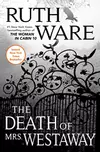
I couldn't finish this. Too many other books I desperately want to read, and too many things about this book bothered me. Errors (Gypsy Rose Lee was a burlesque dancer, not a fortune teller), oddities (the nursery rhyme about counting birds is specifically about crows, not magpies), and word overuse (I stopped at the umpteenth usage of “shivered”. It was sometimes used twice in the same paragraph, and was pulling me out of the story. Finding it over and over was like hearing an unwanted beat in my head.) I truly wanted to like this novel, and I hung on longer than I wanted to out of hope.
I couldn't finish this. Too many other books I desperately want to read, and too many things about this book bothered me. Errors (Gypsy Rose Lee was a burlesque dancer, not a fortune teller), oddities (the nursery rhyme about counting birds is specifically about crows, not magpies), and word overuse (I stopped at the umpteenth usage of “shivered”. It was sometimes used twice in the same paragraph, and was pulling me out of the story. Finding it over and over was like hearing an unwanted beat in my head.) I truly wanted to like this novel, and I hung on longer than I wanted to out of hope.

A Plague of Murder
There were many factual errors in the prologue—about what a serial killer is, about the history of serial murder, about the facts concerning the Jack the Ripper case, for crying out loud. But I held on.
Then the first chapter was on pornography and sexual serial murder. Oh, no.
In it, the authors actually stated that rape and rape-murder were not as prevalent when sex workers were more prevalent and brothers and sisters slept in the same beds. Seriously. More sexy time all ‘round, and rape, and I quote, wasn't worth going to the gallows for.
That's not how that works. I went to grad school for this, and I refuse to read further in a book that has this statement in it. It insults my intelligence.
There were many factual errors in the prologue—about what a serial killer is, about the history of serial murder, about the facts concerning the Jack the Ripper case, for crying out loud. But I held on.
Then the first chapter was on pornography and sexual serial murder. Oh, no.
In it, the authors actually stated that rape and rape-murder were not as prevalent when sex workers were more prevalent and brothers and sisters slept in the same beds. Seriously. More sexy time all ‘round, and rape, and I quote, wasn't worth going to the gallows for.
That's not how that works. I went to grad school for this, and I refuse to read further in a book that has this statement in it. It insults my intelligence.

The Son of Seven Mothers
Over halfway done, and there's not enough information about the Tony and Susan Alamo cult, and too much explicit child abuse, and too much information about the author's eleven-year-old's erections. I wish that were hyperbole. Literal and repeated descriptions of his tucking it in and its popping out as he discovers girls on the compound...this is not what I signed up for.
Over halfway done, and there's not enough information about the Tony and Susan Alamo cult, and too much explicit child abuse, and too much information about the author's eleven-year-old's erections. I wish that were hyperbole. Literal and repeated descriptions of his tucking it in and its popping out as he discovers girls on the compound...this is not what I signed up for.

Couldn't continue after the author, whose work I normally love, stopped discussing the case to claim colleagueship with Ann Rule and Jack Olsen. Then he unfavorably compared them for no reason, claiming all of Ann Rule's victims were attractive and lit up a room, while Olsen's writing was “nuanced”. Not only was this jab out of nowhere—he stops the case narrative to deliver it—but it's not true. I've read most of Rule's work, and found it to be most measured and fair, while Jack Olsen's was uneven and repetitive sometimes; I have DNF'd one of his, but never, ever one of Rule's engrossing books.
Even if I agreed with the author, this is highly inappropriate, throwing in his opinion about his area's famous true crime authors mid-stream. He mentioned his first book, related to this one (again), lets the reader know both authors blurbed it for him, and then writes the above opinion for two pages, finishing with the unprofessional coup de grace:
“Not surprisingly, rivals Jack and Ann hated each other.”
And then swings right back into writing about Ida Stutzman's murder. How disrespectful to the memories of all three people. Four, if you count the subject of the first book, Ida's son, Danny.
Couldn't continue after the author, whose work I normally love, stopped discussing the case to claim colleagueship with Ann Rule and Jack Olsen. Then he unfavorably compared them for no reason, claiming all of Ann Rule's victims were attractive and lit up a room, while Olsen's writing was “nuanced”. Not only was this jab out of nowhere—he stops the case narrative to deliver it—but it's not true. I've read most of Rule's work, and found it to be most measured and fair, while Jack Olsen's was uneven and repetitive sometimes; I have DNF'd one of his, but never, ever one of Rule's engrossing books.
Even if I agreed with the author, this is highly inappropriate, throwing in his opinion about his area's famous true crime authors mid-stream. He mentioned his first book, related to this one (again), lets the reader know both authors blurbed it for him, and then writes the above opinion for two pages, finishing with the unprofessional coup de grace:
“Not surprisingly, rivals Jack and Ann hated each other.”
And then swings right back into writing about Ida Stutzman's murder. How disrespectful to the memories of all three people. Four, if you count the subject of the first book, Ida's son, Danny.

Gossipy and fuzzy in actual forensic detail. I expect more from Dr. Wecht than commentary on TMZ's coverage of the case. It felt like I was reading a book on reality tv, rather than a book written by one of the most experienced American forensic pathologists. Then we move to a non celebrity case, and his presentation is unclear and confusing. I was taught how to present a forensic anthropology case, and this isn't it.
Gossipy and fuzzy in actual forensic detail. I expect more from Dr. Wecht than commentary on TMZ's coverage of the case. It felt like I was reading a book on reality tv, rather than a book written by one of the most experienced American forensic pathologists. Then we move to a non celebrity case, and his presentation is unclear and confusing. I was taught how to present a forensic anthropology case, and this isn't it.


The New Yorker's article on how this book falls apart under a professional fact-checker's work: “The Story That “Hillbilly Elegy” Doesn't Tell”, August 16, 2024
“When Vance Told Appalachians to Leave Appalachia”
A decade ago, Vance wrote that the Appalachian poor should abandon their “destructive” communities and stop blaming others for their misery. Now, all he does is blame.
We've learned, painfully, that for the multigenerational poor, home might be the worst enemy. Appalachian loyalty to the land is the stuff of legend, yet the stubbornness of poverty in the region means that those who stay risk being poor forever. When the government paved thousands of miles of roads in Appalachia, it hoped to provide employment for the masses and infrastructure to sustain future economic growth. But the best and most lasting effect of those roads was to give people a faster way out. If we cannot improve the urban ghetto or the mountain hollow—and the evidence suggests we can't — then the best anti-poverty program is a ticket to somewhere else.—J. D. Vance, 2014
The New Yorker's article on how this book falls apart under a professional fact-checker's work: “The Story That “Hillbilly Elegy” Doesn't Tell”, August 16, 2024
“When Vance Told Appalachians to Leave Appalachia”
A decade ago, Vance wrote that the Appalachian poor should abandon their “destructive” communities and stop blaming others for their misery. Now, all he does is blame.
We've learned, painfully, that for the multigenerational poor, home might be the worst enemy. Appalachian loyalty to the land is the stuff of legend, yet the stubbornness of poverty in the region means that those who stay risk being poor forever. When the government paved thousands of miles of roads in Appalachia, it hoped to provide employment for the masses and infrastructure to sustain future economic growth. But the best and most lasting effect of those roads was to give people a faster way out. If we cannot improve the urban ghetto or the mountain hollow—and the evidence suggests we can't — then the best anti-poverty program is a ticket to somewhere else.—J. D. Vance, 2014


Updated a reading goal:
Read 130 books in 2026
Progress so far: 30 / 130 23%