
Nguyet Tran


Bulgakov can be my new favorite author
Bulgakov can be my new favorite author


It took me three attempts in 7 years to finish this book for a reason: the dull writing of multiple extraneous passages.
The premise is very promising, the solution is somewhat intriguing. However, they are negated by the writing quality. (1) there are many extraneous parts that divert the audience's attention. (2) there are many unsolved mysteries, and the practicality is lacking. If the writer can fix this, this can be a hit.
It took me three attempts in 7 years to finish this book for a reason: the dull writing of multiple extraneous passages.
The premise is very promising, the solution is somewhat intriguing. However, they are negated by the writing quality. (1) there are many extraneous parts that divert the audience's attention. (2) there are many unsolved mysteries, and the practicality is lacking. If the writer can fix this, this can be a hit.
Added to listOwnedwith 20 books.


Phenomenal theme and metaphors are diminished by the dull writing. Overall this is still a good read.
Phenomenal theme and metaphors are diminished by the dull writing. Overall this is still a good read.

- Kuang's writing skill is solid, natural and super engaging. It's been a while since I've read a fiction that is so well written by young authors.
2. Helen Laser's versatile narration makes the story much more vivid. I believe that if I had read the book instead of listening to the audiobook, I might have given a lower rating.
3. Although Kuang has provided many interesting discussions, some of them are quite superficial. It would be interesting if she had dug deeper into the dynamics between race and class.
4. I really like the book. I've listened to 5-6 audiobooks and this is the first time I could focus throughout 12 hours because it was just so captivating (except for the last few chapters when June had a major meltdown)
- Kuang's writing skill is solid, natural and super engaging. It's been a while since I've read a fiction that is so well written by young authors.
2. Helen Laser's versatile narration makes the story much more vivid. I believe that if I had read the book instead of listening to the audiobook, I might have given a lower rating.
3. Although Kuang has provided many interesting discussions, some of them are quite superficial. It would be interesting if she had dug deeper into the dynamics between race and class.
4. I really like the book. I've listened to 5-6 audiobooks and this is the first time I could focus throughout 12 hours because it was just so captivating (except for the last few chapters when June had a major meltdown)

Insightful read. The book attributes Poverty in the States to systemic reasons.
1. Lacking labor rights. Many people have to work for subminimum wages and can be fired easily without compensation.
2. Misused funding. Different states are using funding for the wrong purposes instead of directly supporting people in need.
3. Lacking banking support. Many high fees or high minimum balance required. Many low-income people have to use a third-party service to receive their salary, and lose a part of their income for it. Additionally, they cannot get access to certain loans, mortgages, and have to subject themselves to excessive rent (much higher than mortgages) or loan sharks.
4. Segregated communities prevent low-income people from receiving the same benefits as the other groups, which impacts their education, lifestyles, etc.
5. Inaccessible support. Many supports are difficult to get, costly, or unbeknownst to people in need.
The author convincingly argues that poor people stay poor due to the system. He also provides research results showing that if these are changed, many benefits are reaped. However, the solution is a bit naive, in my opinion.
The book would have been worth 5 stars if he could argue that investment in poverty abolishment could bring better economic impact than other investments.
Additionally, a non-segregated community is difficult to achieve. As a middle-class woman growing up in a developing country and currently living in a poorer part of a developed country's capital, I understand why segregation exists. Even the author agrees that in the non-segregated community where he used to live in, there were day crimes in the park. The author says the benefit is a welcoming and diverse community, but I would rather live in an aloof but safer community.
Insightful read. The book attributes Poverty in the States to systemic reasons.
1. Lacking labor rights. Many people have to work for subminimum wages and can be fired easily without compensation.
2. Misused funding. Different states are using funding for the wrong purposes instead of directly supporting people in need.
3. Lacking banking support. Many high fees or high minimum balance required. Many low-income people have to use a third-party service to receive their salary, and lose a part of their income for it. Additionally, they cannot get access to certain loans, mortgages, and have to subject themselves to excessive rent (much higher than mortgages) or loan sharks.
4. Segregated communities prevent low-income people from receiving the same benefits as the other groups, which impacts their education, lifestyles, etc.
5. Inaccessible support. Many supports are difficult to get, costly, or unbeknownst to people in need.
The author convincingly argues that poor people stay poor due to the system. He also provides research results showing that if these are changed, many benefits are reaped. However, the solution is a bit naive, in my opinion.
The book would have been worth 5 stars if he could argue that investment in poverty abolishment could bring better economic impact than other investments.
Additionally, a non-segregated community is difficult to achieve. As a middle-class woman growing up in a developing country and currently living in a poorer part of a developed country's capital, I understand why segregation exists. Even the author agrees that in the non-segregated community where he used to live in, there were day crimes in the park. The author says the benefit is a welcoming and diverse community, but I would rather live in an aloof but safer community.

I think the title doesn't do justice to the book because the book discusses much more on a meta level and is not specific to feminism. Some key learnings I really like in the book:
- We should be curious about and open to new language trends. Grammars and vocabs are not static, they have changed a lot throughout history. Our currently so-called correct grammar used to be considered incorrect in the past. Hence, you should not argue that “it's grammatically incorrect” to refuse to use the new language trends like “they/them”. You should also not judge someone's diction, voice tone, etc, because they are all the results of their intentions and cultural movements. Thanks to the book, I now have a more open mind about this topic.
- Creating new languages to promote a cultural movement would not work unless there IS one. The cultural movement will help the languages be picked up, not vice versa.
- There are many negative cuss words, which we can reclaim with a positive meaning. For example, “queer” used to have a negative connotation, but it's now publicly and proudly owned by the queer community. Same with “bitch”, now it can be used to describe a cool woman (like “Bad Bitch” from Rihanna and Beyonce). The reverse can also happen, and it's a non-stop tug of war.
I think the title doesn't do justice to the book because the book discusses much more on a meta level and is not specific to feminism. Some key learnings I really like in the book:
- We should be curious about and open to new language trends. Grammars and vocabs are not static, they have changed a lot throughout history. Our currently so-called correct grammar used to be considered incorrect in the past. Hence, you should not argue that “it's grammatically incorrect” to refuse to use the new language trends like “they/them”. You should also not judge someone's diction, voice tone, etc, because they are all the results of their intentions and cultural movements. Thanks to the book, I now have a more open mind about this topic.
- Creating new languages to promote a cultural movement would not work unless there IS one. The cultural movement will help the languages be picked up, not vice versa.
- There are many negative cuss words, which we can reclaim with a positive meaning. For example, “queer” used to have a negative connotation, but it's now publicly and proudly owned by the queer community. Same with “bitch”, now it can be used to describe a cool woman (like “Bad Bitch” from Rihanna and Beyonce). The reverse can also happen, and it's a non-stop tug of war.

I feel embarrassed writing this review because now the internet and all my friends will know I read this book. However, I feel a deep sense of duty to warn society against this mess and a strong desperation to vent. If any friend of mine read this, in my defense, I read the Dutch translation to improve my Dutch as the chapters are short and the writing seems simple, not because I like this kind of thing. And I even had to turn to the English version for the last half because I could not prolong the torture to myself.
First, why isn't this book cancelled? It's literally promoting misogyny. Belly literally slut shamed her best friend and there's one freaking chapter to talk about two best friends competing for male gaze. Okay I would expect that if Belly and Taylor were just teenagers, they might have that phase and they would grow up. However, it was not resolved at all by the end of the book, which clearly shows that Jenny Han is definitely not a girl's girl. Additionally, the whole book revolves around Belly becoming pretty and everyone loving her for being pretty. Isn't that super shallow? It would be a hundred times better if Jenny Han can write more about her other qualities. Instead, she made this super selfish, self-centred character that is so annoying, obnoxious, and delusional, but somehow, everyone falls for her. Do people really buy this?
Second, Jenny Han, I really question your ethics. Why are you violating the bro codes? Why is your protagonist mingling with TWO BIOLOGICAL BROTHERS?????? AND EVEN TWO OTHER BOOKS TO CONTINUE MINGLING WITH TWO BIOLOGICAL BROTHERS?????
Third, I think Jenny Han has some unhealthy fantasies. Belly disliked Cam because he asked for her permissions before kissing and he respected her boundaries and he didn't smoke, drink, or do anything crazy. Belly fell for Conrad who was mentally unstable and emotionally unavailable, who was constantly toying with her emotions. Guess who's the chosen one. I'm really concerned that teenagers might have the wrong perception because of Jenny Han. Respecting others' boundaries is a good thing, you shouldn't discourage it Jenny Han!
The book is so bad that it makes the tv series look like an Oscar-worthy material.
I feel embarrassed writing this review because now the internet and all my friends will know I read this book. However, I feel a deep sense of duty to warn society against this mess and a strong desperation to vent. If any friend of mine read this, in my defense, I read the Dutch translation to improve my Dutch as the chapters are short and the writing seems simple, not because I like this kind of thing. And I even had to turn to the English version for the last half because I could not prolong the torture to myself.
First, why isn't this book cancelled? It's literally promoting misogyny. Belly literally slut shamed her best friend and there's one freaking chapter to talk about two best friends competing for male gaze. Okay I would expect that if Belly and Taylor were just teenagers, they might have that phase and they would grow up. However, it was not resolved at all by the end of the book, which clearly shows that Jenny Han is definitely not a girl's girl. Additionally, the whole book revolves around Belly becoming pretty and everyone loving her for being pretty. Isn't that super shallow? It would be a hundred times better if Jenny Han can write more about her other qualities. Instead, she made this super selfish, self-centred character that is so annoying, obnoxious, and delusional, but somehow, everyone falls for her. Do people really buy this?
Second, Jenny Han, I really question your ethics. Why are you violating the bro codes? Why is your protagonist mingling with TWO BIOLOGICAL BROTHERS?????? AND EVEN TWO OTHER BOOKS TO CONTINUE MINGLING WITH TWO BIOLOGICAL BROTHERS?????
Third, I think Jenny Han has some unhealthy fantasies. Belly disliked Cam because he asked for her permissions before kissing and he respected her boundaries and he didn't smoke, drink, or do anything crazy. Belly fell for Conrad who was mentally unstable and emotionally unavailable, who was constantly toying with her emotions. Guess who's the chosen one. I'm really concerned that teenagers might have the wrong perception because of Jenny Han. Respecting others' boundaries is a good thing, you shouldn't discourage it Jenny Han!
The book is so bad that it makes the tv series look like an Oscar-worthy material.

I quickly skimmed through the English version because I do not have the patience to read the Dutch version and prolong this folly any longer.
I think all characters need therapy.
I quickly skimmed through the English version because I do not have the patience to read the Dutch version and prolong this folly any longer.
I think all characters need therapy.

Apparently, I'm a masochist because after the disastrous first book, I still pushed myself through the second one. On the bright side, I learned almost 300 new Dutch words and slangs. On the not so bright side I spent hours listening to out-of-touch issues from rich teenagers.
Apparently, I'm a masochist because after the disastrous first book, I still pushed myself through the second one. On the bright side, I learned almost 300 new Dutch words and slangs. On the not so bright side I spent hours listening to out-of-touch issues from rich teenagers.

I'm struck dumb that this book has so many good reviews because there are so many inherent issues with it.
First, I must acknowledge that there are some interesting takes. For example, I enjoyed the first part in which he discussed the benefits of free play to children. However, Haidt became over-ambitious and destroyed the book with his groundless overgeneralizations, flawed rationale, and deliberate cherry-picking.
1. His logic was fundamentally flawed when he tried to blame social media/phones for the sudden rise in mental illness among teenagers globally. His logic was (1) the rise of phone usage and the rise of mental health happened at the same time, and (2) the cause was not failing economy, climate change, etc., so it must be social media that caused mental illness. Hadt is so eager to point the finger at social media/phones that (1) he just used this weak reasoning to publish the book instead of trying to find the causation, and (2) he totally neglected the possibility of another factor existing that could cause the issue.
2. So many discussions are merely speculations rather than actual research. He often cherry-picks the research results that suit his agenda. For example, he simply quoted the survey result from Monitoring the Future to show that US students increasingly find life meaningless, which he then blamed on social media while the study never mentioned the correlation to social media. What he should have done was to find a study that can prove the causation or at least correlation between them rather than just quoting an irrelevant survey result to push for his agenda.
3. The book itself is quite repetitive. It could be 30% shorter.
4. Haidt wrote a book about the negative impact of phones/social media on teenagers, but I don't think he's putting the effort into understanding how teenagers use phones/social media at all; he merely wants to paint social media in a bad light. For example, throughout the book, he talks as if the only use of social media is dumb scrolling, while in fact, teenagers can also use social media as a texting app or learning resource. He also mentions frequently that social media reduces teenagers' sense of community and meaningful connections. At the same time, he fails to realize that social media can bring people with niche hobbies together and even foster real-life connections. If he truly wanted to understand the impact of social media on teenagers, he would have approached this very differently and tried to understand it through the lens of teenagers. Instead, he simply pushed for his boomer outdated view.
Overall, it feels like Haidt already had a hypothesis in his head, and he just wanted to write a book to satisfy it rather than put effort into finding the truth. What a waste of time for me.
I'm struck dumb that this book has so many good reviews because there are so many inherent issues with it.
First, I must acknowledge that there are some interesting takes. For example, I enjoyed the first part in which he discussed the benefits of free play to children. However, Haidt became over-ambitious and destroyed the book with his groundless overgeneralizations, flawed rationale, and deliberate cherry-picking.
1. His logic was fundamentally flawed when he tried to blame social media/phones for the sudden rise in mental illness among teenagers globally. His logic was (1) the rise of phone usage and the rise of mental health happened at the same time, and (2) the cause was not failing economy, climate change, etc., so it must be social media that caused mental illness. Hadt is so eager to point the finger at social media/phones that (1) he just used this weak reasoning to publish the book instead of trying to find the causation, and (2) he totally neglected the possibility of another factor existing that could cause the issue.
2. So many discussions are merely speculations rather than actual research. He often cherry-picks the research results that suit his agenda. For example, he simply quoted the survey result from Monitoring the Future to show that US students increasingly find life meaningless, which he then blamed on social media while the study never mentioned the correlation to social media. What he should have done was to find a study that can prove the causation or at least correlation between them rather than just quoting an irrelevant survey result to push for his agenda.
3. The book itself is quite repetitive. It could be 30% shorter.
4. Haidt wrote a book about the negative impact of phones/social media on teenagers, but I don't think he's putting the effort into understanding how teenagers use phones/social media at all; he merely wants to paint social media in a bad light. For example, throughout the book, he talks as if the only use of social media is dumb scrolling, while in fact, teenagers can also use social media as a texting app or learning resource. He also mentions frequently that social media reduces teenagers' sense of community and meaningful connections. At the same time, he fails to realize that social media can bring people with niche hobbies together and even foster real-life connections. If he truly wanted to understand the impact of social media on teenagers, he would have approached this very differently and tried to understand it through the lens of teenagers. Instead, he simply pushed for his boomer outdated view.
Overall, it feels like Haidt already had a hypothesis in his head, and he just wanted to write a book to satisfy it rather than put effort into finding the truth. What a waste of time for me.

A concise book with interesting takes
A concise book with interesting takes

Well discussed fundamentals about Web Design. Some UI aspects and examples are outdated. The chapter of user testing is interesting and insightful.
Well discussed fundamentals about Web Design. Some UI aspects and examples are outdated. The chapter of user testing is interesting and insightful.

interesting viewpoints, engaging narration, and concise argument.
interesting viewpoints, engaging narration, and concise argument.

This book has so much potential to be better. I watched the series first and I saw how poignant it was, so it's really unfortunate that the intentional simplistic writing could not convey the gravity of the characters' struggles.
I like the fact that the characters did grow. They missed so many opportunities together due to their own insecurities and miscommunication, which is definitely common to young people. In the final chapters, both Connell and Marianne became frank to each other, but the book ending fell flat compared to the series in portraying the growth of the characters in dealing with the final miscommunication.
This book has so much potential to be better. I watched the series first and I saw how poignant it was, so it's really unfortunate that the intentional simplistic writing could not convey the gravity of the characters' struggles.
I like the fact that the characters did grow. They missed so many opportunities together due to their own insecurities and miscommunication, which is definitely common to young people. In the final chapters, both Connell and Marianne became frank to each other, but the book ending fell flat compared to the series in portraying the growth of the characters in dealing with the final miscommunication.

everything is okay but i'm not a big fan of short novels
everything is okay but i'm not a big fan of short novels

A nice read overall. I would have given it 5 stars if it had discussed why marriage is so important, as the chapter on infidelity really put me off.
A nice read overall. I would have given it 5 stars if it had discussed why marriage is so important, as the chapter on infidelity really put me off.

4 stars for the plot, +1 for the creative and unique writing
i did not realize that i also wanted an edgy boy from my imagination
4 stars for the plot, +1 for the creative and unique writing
i did not realize that i also wanted an edgy boy from my imagination

3.5/5. It was captivating and pretty unique despite the plot contrivance.
3.5/5. It was captivating and pretty unique despite the plot contrivance.

3.5/5. Great concepts, uneven pacing. The 1998 plot drags, but the magical 1908 storyline shines. The 1908 storyline is like Twilight with incest twist and smarter Bella
3.5/5. Great concepts, uneven pacing. The 1998 plot drags, but the magical 1908 storyline shines. The 1908 storyline is like Twilight with incest twist and smarter Bella

3.5/5. Short, wholesome, easy to read. The overall idea is to create a gift economy where people prioritize sharing over personal hoarding. I can see how this works in a small community, but I doubt how this can work on a large scale. The book would have been better if the author had discussed how the gift economy has helped the Indigenous community on a large scale.
Btw I love the shade thrown at ExxonMobile CEO.
If you like this book, you can consider The heart of Buddha's Teaching of Thich Nhat Hanh.
3.5/5. Short, wholesome, easy to read. The overall idea is to create a gift economy where people prioritize sharing over personal hoarding. I can see how this works in a small community, but I doubt how this can work on a large scale. The book would have been better if the author had discussed how the gift economy has helped the Indigenous community on a large scale.
Btw I love the shade thrown at ExxonMobile CEO.
If you like this book, you can consider The heart of Buddha's Teaching of Thich Nhat Hanh.

3.5/5. The book offers practical, useful advice not only for startups but also for launching new features or products within established companies. That said, the writing often feels unfocused and could be more concise and to the point.
3.5/5. The book offers practical, useful advice not only for startups but also for launching new features or products within established companies. That said, the writing often feels unfocused and could be more concise and to the point.

Unique, magical, and immersive like a long fever dream in my childhood. I'm not sure I fully grasp the book's meaning, but I love how it makes me feel. The feeling is almost indescribable: a longing for a home I've never been to, as if I'm living on someone else's shelf while my real life waits somewhere beyond reach. And yet I'm aware this might be an illusion. Or maybe it isn't. Still, I feel content, not at all disappointed. My heart is somehow both empty and full.
Unique, magical, and immersive like a long fever dream in my childhood. I'm not sure I fully grasp the book's meaning, but I love how it makes me feel. The feeling is almost indescribable: a longing for a home I've never been to, as if I'm living on someone else's shelf while my real life waits somewhere beyond reach. And yet I'm aware this might be an illusion. Or maybe it isn't. Still, I feel content, not at all disappointed. My heart is somehow both empty and full.
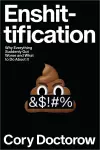
3.5/5. I didn't like the book at first because the tone in the first part felt overly sassy and distracting. However, the later discussion on regulation is much more serious and genuinely interesting.
The book mainly focuses on (1) how tech companies pursue monopoly power and gradually worsen their products, and (2) how to counter this through competition, regulation, interoperability, and worker power. A few concepts stood out to me:
1. The book's framing of rents vs. profits, updated from the classic farmers vs. landlords dynamic to today's high-tech context, is easily comprehensible.
2. The examples of big tech's wrongdoings are also eye-opening. I'll stay away from Amazon as much as possible. I'm even considering jailbreaking my Kindle.
3. After reading it, I empathize more with Europe's heavier regulatory approach.
4. I used to love cloud-based and subscription-based services for their convenience and low initial cost, but the book helped me understand the downsides of losing ownership.
That said, the book would have been significantly stronger if the author had addressed a few key questions:
1. Regulation may be necessary to break monopolies, but it can also have real costs. If Europe is the only region enforcing heavy regulation, tech companies will move their headquarters elsewhere along with talent, which can slow Europe's growth and weaken its economy. This has been a phenomenon for the past decades. How should policymakers balance these trade-offs? And in practice, is the U.S., despite having more monopolies, doing better than Europe because it regulates less?
2. Evidence is missing. Are there studies, simulations, or real-world data supporting the book's proposed solutions? I'm especially curious about unintended consequences and side effects, which the author largely doesn't explore.
3.5/5. I didn't like the book at first because the tone in the first part felt overly sassy and distracting. However, the later discussion on regulation is much more serious and genuinely interesting.
The book mainly focuses on (1) how tech companies pursue monopoly power and gradually worsen their products, and (2) how to counter this through competition, regulation, interoperability, and worker power. A few concepts stood out to me:
1. The book's framing of rents vs. profits, updated from the classic farmers vs. landlords dynamic to today's high-tech context, is easily comprehensible.
2. The examples of big tech's wrongdoings are also eye-opening. I'll stay away from Amazon as much as possible. I'm even considering jailbreaking my Kindle.
3. After reading it, I empathize more with Europe's heavier regulatory approach.
4. I used to love cloud-based and subscription-based services for their convenience and low initial cost, but the book helped me understand the downsides of losing ownership.
That said, the book would have been significantly stronger if the author had addressed a few key questions:
1. Regulation may be necessary to break monopolies, but it can also have real costs. If Europe is the only region enforcing heavy regulation, tech companies will move their headquarters elsewhere along with talent, which can slow Europe's growth and weaken its economy. This has been a phenomenon for the past decades. How should policymakers balance these trade-offs? And in practice, is the U.S., despite having more monopolies, doing better than Europe because it regulates less?
2. Evidence is missing. Are there studies, simulations, or real-world data supporting the book's proposed solutions? I'm especially curious about unintended consequences and side effects, which the author largely doesn't explore.