
Nguyet Tran


Contains spoilers
Very interesting premise. Both the writing and the audiobook narration were engaging. I was very hooked at first, but ultimately left disappointed.
The book seemed to lack sympathy for women, which feels contradictory because the book was meant for women. Natalie was undeniably misogynistic and abusive. However, she was also born into a traditional family, married into a misogynistic and dysfunctional household, suffered from PPD with no real support system, and was clearly mentally unstable in the final third of her life. Despite all of this, the book treated her with very little sympathy.
It was also unclear why her sister escaped that fate while Natalie did not. Of course, different people have different personalities, and one could argue that Natalie was too prideful to admit her marriage was failing. Still, what fundamentally made her so different from her sister, who was able to accept reality and leave? For a book seemingly aimed at exploring women’s experiences, I wish the author had examined more deeply how systems and societal expectations shaped each woman’s choices and behavior, instead of leaving it so vague and attributing everything to personality.
Additionally, when Natalie was clearly losing her mind, Caleb did almost nothing to help her. She went to jail for child neglect, but shouldn’t Caleb, the fully functional adult in the situation, also have been held severely accountable? Instead, the ending seemed laser-focused on Natalie’s downfall, portraying it in the most pathetic and humiliating way possible.
Overall, it felt like the author simply wanted the worst possible outcome for Natalie and forced the story in that direction.
That said, I still think it’s a very engrossing book. If you’re mainly looking for entertainment and plot twists, it definitely works.


First half: 💀🥀😔🌀🖤⛓️😵
Second half: 🌱☀️✨🌈❤️🩹🧘🙏
My overall impressions:
1. Leo Tolstoy was incredibly rational and articulate. Whether or not I agree with all of his conclusions, I can clearly see how deeply he thought through everything. He explained his inner thoughts with vivid metaphors that make abstract existential dread feel understandable. I’ve had similar existential crises since I was a teenager, but I never had the ability to describe those feelings so clearly.
2. His turn toward faith felt irrationally rational, which is what makes the book so fascinating. Tolstoy concluded that if life was rationally meaningless, then reason alone cannot save a person from despair. Faith, although irrational, becomes then capable of giving life meaning. This still feels relevant today, since many people ultimately fall back on faith, spirituality, or belief during difficult times in order to keep going.
3. I admire that Tolstoy approached faith critically rather than blindly. He fully acknowledged that organized religion contained both truth and falsehood, and could sometimes even justify atrocities, such as the Russian Orthodox Church supporting war and killing back then. This awareness separated him from blind believers who may act against the very teachings they claimed to follow. What Tolstoy truly valued seemed to be the compassionate and moral teachings at the core of religion, while still preserving his own conscience and sense of righteousness.
4. One thing that annoyed me was his claim that people who do not recognize life’s meaninglessness are either young, unintelligent, or women. I know it's way back then in the past, but I'm still annoyed.
Favorite quotes:
- “I united myself with my forefathers: the father, mother, and grandparents I loved. They and all my predecessors believed and lived, and they produced me.”
- “In order for the truth to be attained there must be no separation; and for there to be no separation we must love and make peace with those who are not in agreement with us.”
- "I realized that there was no meaning to be found here. It was the activities of the labouring people, those who produce life, that presented itself to me as the only true way. I realized that the meaning provided by this life was truth and I accepted it."


Pretty interesting book about how linguistic tactics can surprisingly and powerfully manipulate people. I like that the book doesn’t just discuss cults, but also other forms such as MLMs, workout cults, and social media gurus. They all feel highly relevant and relatable. Being able to recognize and call out these tactics can help readers become less susceptible to them.
Some other fun facts I like from the books: 1. Studies show that while people with lower education levels might be more prone to beliefs like Satanic possession or UFO landings, test subjects with the most education are actually likeliest to believe in New Age ideas, such as the power of the mind to heal disease. 2. Using the word "cult" with negative/problematic connotation can delegitimise minority groups, dehumanize the members, and shut down understanding.


Mid. Many things happened, but they didn’t really have substance. The way Zeus spoke really put me off. I think Lynn Painter isn’t very good at writing from a male POV, because both Wes and Zeus talked too much about lips and legs, which came across as pervy. By the end of the book, I felt like nothing really got resolved. It’s just a long, mediocre book.


I love the movie and have watched it at least five times, so I was a bit worried that the book wouldn’t meet my expectations. However, unlike the film’s distinctive exaggerated, highly visual scenes, the book captivates readers through its raw emotional and deeply personal confessions. It evokes a different kind of chill, one rooted in desperation.


The book presents some interesting arguments and practical advice. However, it’s nowhere near as good as The Psychology of Money. Many of the arguments rely on anecdotes rather than studies or statistics, which makes them feel like generalizations from the author’s viewpoints and confirmation biased cherry picking. This significantly weakens the overall credibility.
That said, I do like the concept of independence, and the level-based framework for independence is particularly helpful.


WHAT. AN. INCREDIBLE. BOOK!!!!
Literally, the stories were just batshit crazy, and they kept getting more and more insane.
Overall, the book has everything I like: big tech, biography, geopolitics, and batshit crazy office gossip. I've always known about Meta's issues with content regulation, but for the longest time, I thought it was a tough scaling problem to crack, as their platform is too huge and trolls/bad actors are everywhere. However, now I know that the platform is shitty by choice. The blatant misogyny in the office is crazy, and the leadership doesn't really have any redemption arcs. Well, thanks, Sarah, for exposing them.
I agree with people's general notion that Sarah's lack of accountability is quite annoying. I wish she could discuss more about how she gaslit herself into turning a blind eye, or how the guilt pressed her down. The fact that she was fired, not that she resigned by guilt, also reflects her lack of accountability in Meta's bad acts. However, the fact that she's putting herself on the line to write this book is brave enough to compensate for it.


I'm going to hell. Apparently, I'm a huge hypocrite, because instead of feeling repulsed, I actually felt heart-wrenched by the love stories here. Doris is so good with words. In less than 120 pages, she made me feel torn, yearning, loved, unloved, insecure, lonely, disgusted, hopeless, self-loathing, and turbulent.


2.5/5. This is a very short book about “Twenty Lessosn from the Twentieth Century On Tyranny.” Because each lesson is so short, there's little room for meaningful, in-depth discussion or for exploring possible counterarguments.
I also found the title somewhat misleading. I expected to learn more about different types of tyranny or authoritarian regimes, but only a few notable examples are briefly mentioned, often with the assumption that readers are already well informed about the historical context.
Overall, I didn't feel that I learned as much as I had hoped.


Did this inspire 500 Days of Summer??? The lonely dreamer chasing love from the “dream girl” he barely knows at all???
I kind of wish I had read this in my teenage years. Back then, I also caught myself up in my own fantasies and made the same mistakes like the protagonist. This could have saved me from so many heartbreaks.


As a woman working in tech, I thought I was already well aware of how rapidly advancing technologies can reinforce misogyny. However, this book made me realize that I was only aware of perhaps 30% of what is actually happening today. My key takeaway is that women are often the primary victims of the misuse of technologies largely invented and shaped by men, and that the industry is frequently willing to overlook these harms in pursuit of rapid growth. The argument for rapid growth cannot excuse such intentional negligence.


Very readable, but ultimately not very memorable. I didn't find anything particularly striking about it. The characters felt flat, and I didn't see much organic growth, so I wasn't emotionally moved.
Margot, in particular, comes across as simply mean without much convincing justification. I also struggle with stories where privileged characters prey on the less privileged. It's a dynamic I find hard to sit with. I felt deeply frustrated by the unfair situation Funke was trapped in, as well as by Liv's reckless behavior and Margot's repeated atrocities without meaningful accountability. It reminded me of the protagonist in The Kite Runner, which I ended up DNFing because I was just so angry the whole time.


Another memoir of a child actress exploited by a dysfunctional family and a broken industry. Alyson's audiobook narration is lively, engaging but also very gentle, which initially surprised me, then I remembered her years of experience as a voice actor on Phineas & Ferb. I'm genuinely glad she seems to be doing well now.
The final chapter, where she highlights the gaps in the current system, stood out to me. It shows she's not just recounting what happened, but actually cares about change and wants to make a difference. The chapter about her SA was heartbreaking. I really hope she got the justice she deserved, and that the man responsible was held accountable.
Finally, I'm a big fan of Step Up series and Disney Channel movies, so I was eager to learn about her experiences. However, it was sad to know how poorly she was treated in those productions.


I loved the series, so I was really excited to read the book. However, even though the storyline is almost identical, the book felt like it relied too heavily on spicy scenes so much that they started to bore me. Every time I found the plot cute, the characters would just start hooking up again, and I genuinely found myself wondering why they couldn't build a platonic connection for more than 5 minutes.
In the series, the acting and directing were excellent, and I felt a real emotional connection between the characters. But the writing in the book didn't create the same depth or pull me in emotionally in the same way.
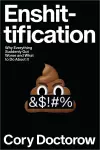


3.5/5. I didn't like the book at first because the tone in the first part felt overly sassy and distracting. However, the later discussion on regulation is much more serious and genuinely interesting.
The book mainly focuses on (1) how tech companies pursue monopoly power and gradually worsen their products, and (2) how to counter this through competition, regulation, interoperability, and worker power. A few concepts stood out to me:
1. The book's framing of rents vs. profits, updated from the classic farmers vs. landlords dynamic to today's high-tech context, is easily comprehensible.
2. The examples of big tech's wrongdoings are also eye-opening. I'll stay away from Amazon as much as possible. I'm even considering jailbreaking my Kindle.
3. After reading it, I empathize more with Europe's heavier regulatory approach.
4. I used to love cloud-based and subscription-based services for their convenience and low initial cost, but the book helped me understand the downsides of losing ownership.
That said, the book would have been significantly stronger if the author had addressed a few key questions:
1. Regulation may be necessary to break monopolies, but it can also have real costs. If Europe is the only region enforcing heavy regulation, tech companies will move their headquarters elsewhere along with talent, which can slow Europe's growth and weaken its economy. This has been a phenomenon for the past decades. How should policymakers balance these trade-offs? And in practice, is the U.S., despite having more monopolies, doing better than Europe because it regulates less?
2. Evidence is missing. Are there studies, simulations, or real-world data supporting the book's proposed solutions? I'm especially curious about unintended consequences and side effects, which the author largely doesn't explore.


I must admit that the book is engrossing. McCurdy's portrayal of a teenager's emptiness and self-destructive behavior stemming from a lack of love feels painfully realistic. The parallel between the mother and the teenager is particularly well executed. However, the repeated encounters between Waldo and the teacher are extremely disturbing. While I understand this is intentional, they left me feeling too unsettled to comfortably rate the book. Additionally, I would have liked to see more self-reflection from Waldo. The novel ends on a rather flat note, and I believe it could have been far more impactful.


The book offers interesting, insightful perspectives on a more realistic and inclusive definition of feminism, especially in contrast to the privileged and exclusive version that has dominated public discourse since around 2015. I really appreciated her critiques of highly praised pop culture representation of so-called feminism, such as The Help and Girls, which are both eye-opening and grounded. That said, readers who aren't particularly interested in pop culture may find the book less engaging.


It was an interesting and insightful read. I learned that criminalizing sex work doesn't protect sex workers; instead, it prevents them from accessing fair wages, legal protection, and viable pathways out of the industry. It also restricts access to proper healthcare and can even put their savings at risk.
That said, the consistently bitter tone was uncomfortable at times, and the stories could have been more clearly organized.


Unique, magical, and immersive like a long fever dream in my childhood. I'm not sure I fully grasp the book's meaning, but I love how it makes me feel. The feeling is almost indescribable: a longing for a home I've never been to, as if I'm living on someone else's shelf while my real life waits somewhere beyond reach. And yet I'm aware this might be an illusion. Or maybe it isn't. Still, I feel content, not at all disappointed. My heart is somehow both empty and full.