
Nguyet Tran


Did this inspire 500 Days of Summer??? The lonely dreamer chasing love from the “dream girl” he barely knows at all???
I kind of wish I had read this in my teenage years. Back then, I also caught myself up in my own fantasies and made the same mistakes like the protagonist. This could have saved me from so many heartbreaks.
Did this inspire 500 Days of Summer??? The lonely dreamer chasing love from the “dream girl” he barely knows at all???
I kind of wish I had read this in my teenage years. Back then, I also caught myself up in my own fantasies and made the same mistakes like the protagonist. This could have saved me from so many heartbreaks.

2.5/5. This is a very short book about “Twenty Lessosn from the Twentieth Century On Tyranny.” Because each lesson is so short, there's little room for meaningful, in-depth discussion or for exploring possible counterarguments.
I also found the title somewhat misleading. I expected to learn more about different types of tyranny or authoritarian regimes, but only a few notable examples are briefly mentioned, often with the assumption that readers are already well informed about the historical context.
Overall, I didn't feel that I learned as much as I had hoped.
2.5/5. This is a very short book about “Twenty Lessosn from the Twentieth Century On Tyranny.” Because each lesson is so short, there's little room for meaningful, in-depth discussion or for exploring possible counterarguments.
I also found the title somewhat misleading. I expected to learn more about different types of tyranny or authoritarian regimes, but only a few notable examples are briefly mentioned, often with the assumption that readers are already well informed about the historical context.
Overall, I didn't feel that I learned as much as I had hoped.

The book presents some interesting arguments and practical advice. However, it’s nowhere near as good as The Psychology of Money. Many of the arguments rely on anecdotes rather than studies or statistics, which makes them feel like generalizations from the author’s viewpoints and confirmation biased cherry picking. This significantly weakens the overall credibility.
That said, I do like the concept of independence, and the level-based framework for independence is particularly helpful.
The book presents some interesting arguments and practical advice. However, it’s nowhere near as good as The Psychology of Money. Many of the arguments rely on anecdotes rather than studies or statistics, which makes them feel like generalizations from the author’s viewpoints and confirmation biased cherry picking. This significantly weakens the overall credibility.
That said, I do like the concept of independence, and the level-based framework for independence is particularly helpful.

I love the movie and have watched it at least five times, so I was a bit worried that the book wouldn’t meet my expectations. However, unlike the film’s distinctive exaggerated, highly visual scenes, the book captivates readers through its raw emotional and deeply personal confessions. It evokes a different kind of chill, one rooted in desperation.
I love the movie and have watched it at least five times, so I was a bit worried that the book wouldn’t meet my expectations. However, unlike the film’s distinctive exaggerated, highly visual scenes, the book captivates readers through its raw emotional and deeply personal confessions. It evokes a different kind of chill, one rooted in desperation.
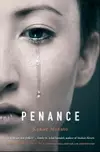
3.5/5. It was intriguing and easy to read that I finished it in one go. However, some events are far too coincidental to be believable, which weakens the overall plot.
3.5/5. It was intriguing and easy to read that I finished it in one go. However, some events are far too coincidental to be believable, which weakens the overall plot.
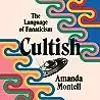
Pretty interesting book about how linguistic tactics can surprisingly and powerfully manipulate people. I like that the book doesn’t just discuss cults, but also other forms such as MLMs, workout cults, and social media gurus. They all feel highly relevant and relatable. Being able to recognize and call out these tactics can help readers become less susceptible to them.
Some other fun facts I like from the books: 1. Studies show that while people with lower education levels might be more prone to beliefs like Satanic possession or UFO landings, test subjects with the most education are actually likeliest to believe in New Age ideas, such as the power of the mind to heal disease. 2. Using the word "cult" with negative/problematic connotation can delegitimise minority groups, dehumanize the members, and shut down understanding.
Pretty interesting book about how linguistic tactics can surprisingly and powerfully manipulate people. I like that the book doesn’t just discuss cults, but also other forms such as MLMs, workout cults, and social media gurus. They all feel highly relevant and relatable. Being able to recognize and call out these tactics can help readers become less susceptible to them.
Some other fun facts I like from the books: 1. Studies show that while people with lower education levels might be more prone to beliefs like Satanic possession or UFO landings, test subjects with the most education are actually likeliest to believe in New Age ideas, such as the power of the mind to heal disease. 2. Using the word "cult" with negative/problematic connotation can delegitimise minority groups, dehumanize the members, and shut down understanding.

Added to listPhilosophywith 4 books.


First half: 💀🥀😔🌀🖤⛓️😵
Second half: 🌱☀️✨🌈❤️🩹🧘🙏
My overall impressions:
1. Leo Tolstoy was incredibly rational and articulate. Whether or not I agree with all of his conclusions, I can clearly see how deeply he thought through everything. He explained his inner thoughts with vivid metaphors that make abstract existential dread feel understandable. I’ve had similar existential crises since I was a teenager, but I never had the ability to describe those feelings so clearly.
2. His turn toward faith felt irrationally rational, which is what makes the book so fascinating. Tolstoy concluded that if life was rationally meaningless, then reason alone cannot save a person from despair. Faith, although irrational, becomes then capable of giving life meaning. This still feels relevant today, since many people ultimately fall back on faith, spirituality, or belief during difficult times in order to keep going.
3. I admire that Tolstoy approached faith critically rather than blindly. He fully acknowledged that organized religion contained both truth and falsehood, and could sometimes even justify atrocities, such as the Russian Orthodox Church supporting war and killing back then. This awareness separated him from blind believers who may act against the very teachings they claimed to follow. What Tolstoy truly valued seemed to be the compassionate and moral teachings at the core of religion, while still preserving his own conscience and sense of righteousness.
4. One thing that annoyed me was his claim that people who do not recognize life’s meaninglessness are either young, unintelligent, or women. I know it's way back then in the past, but I'm still annoyed.
Favorite quotes:
- “I united myself with my forefathers: the father, mother, and grandparents I loved. They and all my predecessors believed and lived, and they produced me.”
- “In order for the truth to be attained there must be no separation; and for there to be no separation we must love and make peace with those who are not in agreement with us.”
- "I realized that there was no meaning to be found here. It was the activities of the labouring people, those who produce life, that presented itself to me as the only true way. I realized that the meaning provided by this life was truth and I accepted it."
First half: 💀🥀😔🌀🖤⛓️😵
Second half: 🌱☀️✨🌈❤️🩹🧘🙏
My overall impressions:
1. Leo Tolstoy was incredibly rational and articulate. Whether or not I agree with all of his conclusions, I can clearly see how deeply he thought through everything. He explained his inner thoughts with vivid metaphors that make abstract existential dread feel understandable. I’ve had similar existential crises since I was a teenager, but I never had the ability to describe those feelings so clearly.
2. His turn toward faith felt irrationally rational, which is what makes the book so fascinating. Tolstoy concluded that if life was rationally meaningless, then reason alone cannot save a person from despair. Faith, although irrational, becomes then capable of giving life meaning. This still feels relevant today, since many people ultimately fall back on faith, spirituality, or belief during difficult times in order to keep going.
3. I admire that Tolstoy approached faith critically rather than blindly. He fully acknowledged that organized religion contained both truth and falsehood, and could sometimes even justify atrocities, such as the Russian Orthodox Church supporting war and killing back then. This awareness separated him from blind believers who may act against the very teachings they claimed to follow. What Tolstoy truly valued seemed to be the compassionate and moral teachings at the core of religion, while still preserving his own conscience and sense of righteousness.
4. One thing that annoyed me was his claim that people who do not recognize life’s meaninglessness are either young, unintelligent, or women. I know it's way back then in the past, but I'm still annoyed.
Favorite quotes:
- “I united myself with my forefathers: the father, mother, and grandparents I loved. They and all my predecessors believed and lived, and they produced me.”
- “In order for the truth to be attained there must be no separation; and for there to be no separation we must love and make peace with those who are not in agreement with us.”
- "I realized that there was no meaning to be found here. It was the activities of the labouring people, those who produce life, that presented itself to me as the only true way. I realized that the meaning provided by this life was truth and I accepted it."
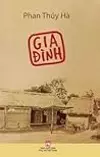
Thực sự là đọc mà rơi nước mắt.
Với 1/3 nhân chứng đến từ quê nội mình, thực sự là đọc mà thấy thương quá.
Thực sự là đọc mà rơi nước mắt.
Với 1/3 nhân chứng đến từ quê nội mình, thực sự là đọc mà thấy thương quá.
Thực sự là đọc mà rơi nước mắt.
Với 1/3 nhân chứng đến từ quê nội mình, thực sự là đọc mà thấy thương quá.
Thực sự là đọc mà rơi nước mắt.
Với 1/3 nhân chứng đến từ quê nội mình, thực sự là đọc mà thấy thương quá.

Added to listLanguage Nerdswith 2 books.
Pretty interesting book about how linguistic tactics can surprisingly and powerfully manipulate people. I like that the book doesn’t just discuss cults, but also other forms such as MLMs, workout cults, and social media gurus. They all feel highly relevant and relatable. Being able to recognize and call out these tactics can help readers become less susceptible to them.
Some other fun facts I like from the books: 1. Studies show that while people with lower education levels might be more prone to beliefs like Satanic possession or UFO landings, test subjects with the most education are actually likeliest to believe in New Age ideas, such as the power of the mind to heal disease. 2. Using the word "cult" with negative/problematic connotation can delegitimise minority groups, dehumanize the members, and shut down understanding.
Pretty interesting book about how linguistic tactics can surprisingly and powerfully manipulate people. I like that the book doesn’t just discuss cults, but also other forms such as MLMs, workout cults, and social media gurus. They all feel highly relevant and relatable. Being able to recognize and call out these tactics can help readers become less susceptible to them.
Some other fun facts I like from the books: 1. Studies show that while people with lower education levels might be more prone to beliefs like Satanic possession or UFO landings, test subjects with the most education are actually likeliest to believe in New Age ideas, such as the power of the mind to heal disease. 2. Using the word "cult" with negative/problematic connotation can delegitimise minority groups, dehumanize the members, and shut down understanding.

It was a fun read. However, the characters of the second book didnt have as much chemistry as those in the first book. They were also less relatable and less explored in depth
It was a fun read. However, the characters of the second book didnt have as much chemistry as those in the first book. They were also less relatable and less explored in depth
Added to listNew Perspectiveswith 11 books.


Added to listBiographywith 14 books.


Added to listJournalismwith 3 books.


Added to listFavouriteswith 22 books.


Added to listOverrated Overhypedwith 17 books.


Added to listFictionwith 128 books.


Mid. Many things happened, but they didn’t really have substance. The way Zeus spoke really put me off. I think Lynn Painter isn’t very good at writing from a male POV, because both Wes and Zeus talked too much about lips and legs, which came across as pervy. By the end of the book, I felt like nothing really got resolved. It’s just a long, mediocre book.
Mid. Many things happened, but they didn’t really have substance. The way Zeus spoke really put me off. I think Lynn Painter isn’t very good at writing from a male POV, because both Wes and Zeus talked too much about lips and legs, which came across as pervy. By the end of the book, I felt like nothing really got resolved. It’s just a long, mediocre book.


Bulgakov can be my new favorite author
Bulgakov can be my new favorite author