
Hernando


Comencé a leer este libro simplemente porque estaba basado en los inicios de la vida pública de Julio Cesar y desde hace mucho había querido leer a Posteguillo.
Al inicio mientras leía me tomó desprevenido el uso de onomatopeyas, no me lo esperaba, pero no influyó en nada mi apreciación por el libro en general.
Es un libro elegante, en el cual creo que la forma de contar la historia que realiza Posteguillo es lo mejor. Quizás se deba a mi parcialidad de mi interés por la Roma antigua, pero en esas 700 algo páginas el libro nunca se hace aburrido, aun siendo del tamaño que es.
No hay mucho en los libros de historia sobre Julio Cesar cuando era abogado, por lo que el hecho de que el libro vaya contando los eventos desde esa perspectiva es algo que en lo personal me gustó.
Aquí también se encuentran interacciones interesantes entre Silas (Sulla), Mario, Dolabela, Cinna, la familia de Julio Cesar y hasta un joven Cicerón.
El único pero (que muy mínimo) que le encuentro es que hay un suceso específico (relacionado con Dolabela), que se describe como algo sobrenatural, algo que no esperaba ya que todo lo acontecido había sido sin ningún tinte fantasioso.
En términos generales, excelente libro.
Note: There is finally an english-translated version of this book called 'I Am Rome'.
It is quite surprising that at this point there has not been english translation of any of his books, considering that he is a best selling author.
Here is hoping for more to come.
Comencé a leer este libro simplemente porque estaba basado en los inicios de la vida pública de Julio Cesar y desde hace mucho había querido leer a Posteguillo.
Al inicio mientras leía me tomó desprevenido el uso de onomatopeyas, no me lo esperaba, pero no influyó en nada mi apreciación por el libro en general.
Es un libro elegante, en el cual creo que la forma de contar la historia que realiza Posteguillo es lo mejor. Quizás se deba a mi parcialidad de mi interés por la Roma antigua, pero en esas 700 algo páginas el libro nunca se hace aburrido, aun siendo del tamaño que es.
No hay mucho en los libros de historia sobre Julio Cesar cuando era abogado, por lo que el hecho de que el libro vaya contando los eventos desde esa perspectiva es algo que en lo personal me gustó.
Aquí también se encuentran interacciones interesantes entre Silas (Sulla), Mario, Dolabela, Cinna, la familia de Julio Cesar y hasta un joven Cicerón.
El único pero (que muy mínimo) que le encuentro es que hay un suceso específico (relacionado con Dolabela), que se describe como algo sobrenatural, algo que no esperaba ya que todo lo acontecido había sido sin ningún tinte fantasioso.
En términos generales, excelente libro.
Note: There is finally an english-translated version of this book called 'I Am Rome'.
It is quite surprising that at this point there has not been english translation of any of his books, considering that he is a best selling author.
Here is hoping for more to come.

A book about the lives of the first emperors of Rome, plus Julius Caesar. Written by Suetonious, a historian who, at the time, had access to Emperor Hadrian's library.
It has been framed as a historical book and some other times just like a gossip account about the emperors.
Suetonius describes their most famous achievements, some disgraceful actions, and even how they look physically. Though the very first characters get more time, I guess mainly because he was not Hadrian's personal secretary anymore before finishing the book, or because there was not much interest in the later ones, or maybe it's just that they did not do much in Suetonius's eyes. For instance, Julius Caesar and Augustus will get more ink pages than Vespasian, Titus and Domitian combined.
A good accompanying material for this book is listening to the first 30–40 episodes of the podcast Emperors of Rome by La Trobe University, roughly up until episode XL or so, where they talk about Emperor Domitian. In this podcast, Rhiannon Evans talks in detail about other significant events during this period of Roman history, including commentaries on not only Suetonious work but also Livi, Tacitus, etc.
A book about the lives of the first emperors of Rome, plus Julius Caesar. Written by Suetonious, a historian who, at the time, had access to Emperor Hadrian's library.
It has been framed as a historical book and some other times just like a gossip account about the emperors.
Suetonius describes their most famous achievements, some disgraceful actions, and even how they look physically. Though the very first characters get more time, I guess mainly because he was not Hadrian's personal secretary anymore before finishing the book, or because there was not much interest in the later ones, or maybe it's just that they did not do much in Suetonius's eyes. For instance, Julius Caesar and Augustus will get more ink pages than Vespasian, Titus and Domitian combined.
A good accompanying material for this book is listening to the first 30–40 episodes of the podcast Emperors of Rome by La Trobe University, roughly up until episode XL or so, where they talk about Emperor Domitian. In this podcast, Rhiannon Evans talks in detail about other significant events during this period of Roman history, including commentaries on not only Suetonious work but also Livi, Tacitus, etc.


This book hooked me from the very first 20 pages. One of the best generation ship stories I have ever read.
There is such a sense of wonder when the book tries to explore an idea , which is basically impossible to achieve with current technology, while trying to keep the very idea grounded in modern understanding of physics and playing with the speculative tech of the future.
A few thousand people aboard a sentient or semi sentient ship wanting to go far and beyond our solar system to settle and make a new home is the main premise of the book. The plan for them is to terraform one of our neighbor planetary systems (home of the Tau Ceti star) or at least one of the main planet's moon.
All kinds of situation start happening when they find out that things are not going as expected with the biological system of the sentient ship.
I have seen many people disliking the end of the book, but to me it was just excellent. It gave the needed doses of adrenaline and makes you really think about what lies ahead of human exploration and all the risk that comes with it.
This book hooked me from the very first 20 pages. One of the best generation ship stories I have ever read.
There is such a sense of wonder when the book tries to explore an idea , which is basically impossible to achieve with current technology, while trying to keep the very idea grounded in modern understanding of physics and playing with the speculative tech of the future.
A few thousand people aboard a sentient or semi sentient ship wanting to go far and beyond our solar system to settle and make a new home is the main premise of the book. The plan for them is to terraform one of our neighbor planetary systems (home of the Tau Ceti star) or at least one of the main planet's moon.
All kinds of situation start happening when they find out that things are not going as expected with the biological system of the sentient ship.
I have seen many people disliking the end of the book, but to me it was just excellent. It gave the needed doses of adrenaline and makes you really think about what lies ahead of human exploration and all the risk that comes with it.


What a chore.
Finally got around the very first book of this acclaimed novel series.
So unfunny and pointless, even by its own internal standards.
Well, at least I can now understand some of the references from other sources. I guess.
What a chore.
Finally got around the very first book of this acclaimed novel series.
So unfunny and pointless, even by its own internal standards.
Well, at least I can now understand some of the references from other sources. I guess.

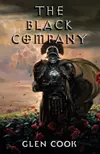
Tried this book just for the sake of wanting to dig a bit more into fantasy stuff.
Well, I enjoyed the writing style, and that was most of my takeaway. No idea what's happening until way past the middle of the book. Very cool.
The plot is not very deep. It is basically a tale of a mercenary band full of unusual characters going places. Places not so easy to spot by the reader. You literally don't know where these guys are until you see some hints here and there.
Also, even though the scope is not huge, the world-building (from what you can understand) is good enough.
I am not an avid fantasy reader, but in summary, the puzzle writing and the diverse cast were the best here.
Not sure if I want to continue the series, though.
Tried this book just for the sake of wanting to dig a bit more into fantasy stuff.
Well, I enjoyed the writing style, and that was most of my takeaway. No idea what's happening until way past the middle of the book. Very cool.
The plot is not very deep. It is basically a tale of a mercenary band full of unusual characters going places. Places not so easy to spot by the reader. You literally don't know where these guys are until you see some hints here and there.
Also, even though the scope is not huge, the world-building (from what you can understand) is good enough.
I am not an avid fantasy reader, but in summary, the puzzle writing and the diverse cast were the best here.
Not sure if I want to continue the series, though.

Like its predecessor, this is a very predictable book, but this time without the surprise element.
I am pretty sure this book was written to get some prospect contracts for screen formats or something.
The worst thing is reading it right after Dark Matter, because then its flaws are easier to spot. But that's what most people actually do.
PS: The author does not seem to know what recursion really is. I had to force myself to give it another definition in order to finish the book.
Like its predecessor, this is a very predictable book, but this time without the surprise element.
I am pretty sure this book was written to get some prospect contracts for screen formats or something.
The worst thing is reading it right after Dark Matter, because then its flaws are easier to spot. But that's what most people actually do.
PS: The author does not seem to know what recursion really is. I had to force myself to give it another definition in order to finish the book.

What's a better way of reading about Rome's conquest of Gaul than reading from the man himself? Julius Caesar.
This, of course, is not an exercise in getting the facts of the event. Lots of propaganda from the author. Instead, it is an exercise in getting into the mind of one of the most famous historical figures.
I liked this book for what it was. An inaccurate but personal account of Julius Caesar and his troops during their time fighting, living, and conquering Gaul.
A preambulatory event of the civil war.
What's a better way of reading about Rome's conquest of Gaul than reading from the man himself? Julius Caesar.
This, of course, is not an exercise in getting the facts of the event. Lots of propaganda from the author. Instead, it is an exercise in getting into the mind of one of the most famous historical figures.
I liked this book for what it was. An inaccurate but personal account of Julius Caesar and his troops during their time fighting, living, and conquering Gaul.
A preambulatory event of the civil war.

Superb!. TMoD is a very unique and different book. It’s a neat SF with massive chunks of philosophy. It has also some sort-of-poetic lines, i.e :
“As was my habit, I followed the afternoon to the ocean and ended up lounging on a shore of corroded boulders. The waters golden, the horizon blood. The squawking of mindless seagulls. Alone, leering at passersby, I grinned as Saturn brightened and watched feral waves swallow the fireball, savoring the taste.”
“Come midnight, a turquoise aurora hung over the land. Not as a fragile drape gliding down against the stars, but as a slow whip to bleed the firmament of its mysteries. A though out of those celestial wounds she would divine the whereabouts of the men she hunted.”
Often times the author is more straightforward:
“Even though we have more time, it’s the wrong kind of time. Everything moves so fast, and there’s barely a moment to stop and think and-“ “And people don’t understand each other at all, and we have wider but more superficial knowledge, and good ideas get lost in the noise”.
“We had lived in a present built on tomorrows. Wasted tomorrows.”
And sometimes existentialism fills the void:
“-Do you think we have free will?. -I think about it. I don’t think about thinking about it.”
The philosophical stuff is more dense and harder to grasp in one of the three narratives, specially when the character is deep-thinking.
The thing is, you can still enjoy the book even if you don’t care about the philosophical and the different prose and by just following the plot. But it is certainty a much better experience at least trying to understand the “book-in-itself”. It was so good that I was tempted to reread it right away after finishing it.
Superb!. TMoD is a very unique and different book. It’s a neat SF with massive chunks of philosophy. It has also some sort-of-poetic lines, i.e :
“As was my habit, I followed the afternoon to the ocean and ended up lounging on a shore of corroded boulders. The waters golden, the horizon blood. The squawking of mindless seagulls. Alone, leering at passersby, I grinned as Saturn brightened and watched feral waves swallow the fireball, savoring the taste.”
“Come midnight, a turquoise aurora hung over the land. Not as a fragile drape gliding down against the stars, but as a slow whip to bleed the firmament of its mysteries. A though out of those celestial wounds she would divine the whereabouts of the men she hunted.”
Often times the author is more straightforward:
“Even though we have more time, it’s the wrong kind of time. Everything moves so fast, and there’s barely a moment to stop and think and-“ “And people don’t understand each other at all, and we have wider but more superficial knowledge, and good ideas get lost in the noise”.
“We had lived in a present built on tomorrows. Wasted tomorrows.”
And sometimes existentialism fills the void:
“-Do you think we have free will?. -I think about it. I don’t think about thinking about it.”
The philosophical stuff is more dense and harder to grasp in one of the three narratives, specially when the character is deep-thinking.
The thing is, you can still enjoy the book even if you don’t care about the philosophical and the different prose and by just following the plot. But it is certainty a much better experience at least trying to understand the “book-in-itself”. It was so good that I was tempted to reread it right away after finishing it.
