
Jessica

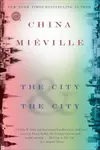
So this is the first of Miéville I've read, and I have to say it's made me keen to read more. This even though the book is very complicated, and the denouement had me frowning in confusion – I feel like the last quarter all unfolded too fast, or else that I wasn't taking enough time to read it.
But regardless. This is more than a crime novel; it's an illustration of this weird concept Miéville has come up with, the uneasy coexistence of the cities of Besźel and Ul Qoma. These cities don't just intersect, but parts of them (the “crosshatched” areas) are parts of both, and citizens of each city go out of their way to “unsee” or “unsense” whatever's taking place in the other, lest they “breach” – the most grievous crime that exists in this society. It's really complicated, but as you read the novel it becomes clear how things work. It also becomes clear that the cities are kept apart as much by nationalism, capitalist ideology, as by geographical quirk; the fact that this setting is not quite divorced from our own world, and comments on social issues affecting our Eastern Europe as well as the one here, appealed to me.
So for fans of fantasy or crime fiction (but preferably both) I really recommend this. Just to comment on the quality of the Kindle edition though, for some reason it always shows the name of Besźel as “Besel” (sometimes broken between the ‘s' and the ‘e' over a line break), and the font had me thinking Ul Qoma was UI Qoma until about halfway through the novel. I can't really blame the publisher or the Kindle platform for my inability to decipher ‘Ul Qoma', but misspelling ‘Besźel'? Seriously? I guess Miéville depicted a place just too foreign for my Kindle, hey...
So this is the first of Miéville I've read, and I have to say it's made me keen to read more. This even though the book is very complicated, and the denouement had me frowning in confusion – I feel like the last quarter all unfolded too fast, or else that I wasn't taking enough time to read it.
But regardless. This is more than a crime novel; it's an illustration of this weird concept Miéville has come up with, the uneasy coexistence of the cities of Besźel and Ul Qoma. These cities don't just intersect, but parts of them (the “crosshatched” areas) are parts of both, and citizens of each city go out of their way to “unsee” or “unsense” whatever's taking place in the other, lest they “breach” – the most grievous crime that exists in this society. It's really complicated, but as you read the novel it becomes clear how things work. It also becomes clear that the cities are kept apart as much by nationalism, capitalist ideology, as by geographical quirk; the fact that this setting is not quite divorced from our own world, and comments on social issues affecting our Eastern Europe as well as the one here, appealed to me.
So for fans of fantasy or crime fiction (but preferably both) I really recommend this. Just to comment on the quality of the Kindle edition though, for some reason it always shows the name of Besźel as “Besel” (sometimes broken between the ‘s' and the ‘e' over a line break), and the font had me thinking Ul Qoma was UI Qoma until about halfway through the novel. I can't really blame the publisher or the Kindle platform for my inability to decipher ‘Ul Qoma', but misspelling ‘Besźel'? Seriously? I guess Miéville depicted a place just too foreign for my Kindle, hey...