
Jessica


Updated a reading goal:
Read 8k pages in 2026
Progress so far: 2117 / 8000 26%

There were some (scant) moments when I almost liked this book, but overall, it is so slow and one of the POV characters in particular (María/Sabine) is so unlikeable, holy shit. Alice was much more likeable, but even her chapters were filled with boring flashbacks to seemingly every single thing that ever happened in her childhood in Scotland. Personally I felt like the second half of the book was better, because María/Sabine's chapters got replaced with Lottie's, and Lottie was a more sympathetic character on the whole (although she definitely lost me when she decided to kill her lover, Penny, after María/Sabine turned Penny into a vampire. It's one thing to be like, "I don't want to turn my lovers into vampires like me because while it might be an immortal life, it's a cursed life" and another thing to be like, "however if one of them does become a vampire I will instantly murder her even though I just spent twenty chapters ramming home how much I really really hate killing innocents"). I mean okay, an extremely unsubtle point in this book, which I believe multiple characters explicitly repeat, is that vampirism is not eternal life; instead you rot from the inside out, steadily losing your humanity, until you are such a hollow, devouring shell that you get stupid and careless and something kills you. So maybe that explains Lottie… María/Sabine was always fucking terrible, though. It was not clear to me why María couldn't refrain from killing the original Sabine when that Sabine was in the process of making her a vampire, when no one else in this entire book seemed to have that issue. I guess the intended answer is really just "María sucks" but in the moment it seemed to be more of a "loss of self-control in such a primal moment as the moment of death" thing, which seemed like it could happen to anyone. As a result of this happening fairly early in the book, I expected vampires to be more aware that siring further vampires was a risky endeavour, and it was bewildering to me that they were not.
Anyway, what more can I say? It's one of those books where most of the story is backstory so I can't really criticise it for that, but a lot of it was overly belaboured and extremely low-tension. Some of the present-day chapters were like this too – there was one towards the end which was like three pages of "Alice went outside and took some deep breaths" and SERIOUSLY this book needed an editor to NIX THAT. There's also a lot of unsubtle repetition of this story's vampire lore. It just felt like it took so long to get anywhere. The ending was actually okay though – Lottie tricked Alice into killing Sabine (with a very obvious lie…). Alice did that, and then also killed Lottie, knowing that Lottie was going to kill her just like she did Penny (and, again, despite this story's love of overexplaining a multitude of points I really do not feel like it explained Lottie's 180 on killing innocent people). Then Alice got a phone call from her dad and the conclusion seemed to be that, while María and Lottie completely vanished from their old lives when they became vampires, Alice didn't have to and wasn't going to. Obviously that's no long-term strategy but I guess it might work for a while (until people start to question why she still looks eighteen when she's definitely much older than eighteen), and a while is a good start. I guess she might run into problems if "trying to lead a normal life" requires her to do anything during daylight hours, too. Anyway, whatever, I'm glad I'm no longer stuck on this book!
There were some (scant) moments when I almost liked this book, but overall, it is so slow and one of the POV characters in particular (María/Sabine) is so unlikeable, holy shit. Alice was much more likeable, but even her chapters were filled with boring flashbacks to seemingly every single thing that ever happened in her childhood in Scotland. Personally I felt like the second half of the book was better, because María/Sabine's chapters got replaced with Lottie's, and Lottie was a more sympathetic character on the whole (although she definitely lost me when she decided to kill her lover, Penny, after María/Sabine turned Penny into a vampire. It's one thing to be like, "I don't want to turn my lovers into vampires like me because while it might be an immortal life, it's a cursed life" and another thing to be like, "however if one of them does become a vampire I will instantly murder her even though I just spent twenty chapters ramming home how much I really really hate killing innocents"). I mean okay, an extremely unsubtle point in this book, which I believe multiple characters explicitly repeat, is that vampirism is not eternal life; instead you rot from the inside out, steadily losing your humanity, until you are such a hollow, devouring shell that you get stupid and careless and something kills you. So maybe that explains Lottie… María/Sabine was always fucking terrible, though. It was not clear to me why María couldn't refrain from killing the original Sabine when that Sabine was in the process of making her a vampire, when no one else in this entire book seemed to have that issue. I guess the intended answer is really just "María sucks" but in the moment it seemed to be more of a "loss of self-control in such a primal moment as the moment of death" thing, which seemed like it could happen to anyone. As a result of this happening fairly early in the book, I expected vampires to be more aware that siring further vampires was a risky endeavour, and it was bewildering to me that they were not.
Anyway, what more can I say? It's one of those books where most of the story is backstory so I can't really criticise it for that, but a lot of it was overly belaboured and extremely low-tension. Some of the present-day chapters were like this too – there was one towards the end which was like three pages of "Alice went outside and took some deep breaths" and SERIOUSLY this book needed an editor to NIX THAT. There's also a lot of unsubtle repetition of this story's vampire lore. It just felt like it took so long to get anywhere. The ending was actually okay though – Lottie tricked Alice into killing Sabine (with a very obvious lie…). Alice did that, and then also killed Lottie, knowing that Lottie was going to kill her just like she did Penny (and, again, despite this story's love of overexplaining a multitude of points I really do not feel like it explained Lottie's 180 on killing innocent people). Then Alice got a phone call from her dad and the conclusion seemed to be that, while María and Lottie completely vanished from their old lives when they became vampires, Alice didn't have to and wasn't going to. Obviously that's no long-term strategy but I guess it might work for a while (until people start to question why she still looks eighteen when she's definitely much older than eighteen), and a while is a good start. I guess she might run into problems if "trying to lead a normal life" requires her to do anything during daylight hours, too. Anyway, whatever, I'm glad I'm no longer stuck on this book!


I liked Purple Hibiscus, but I think I was spoiled by reading "Half of a Yellow Sun" first. That book is so grand in scope, and this one is much smaller. It really just explores the insular world of fifteen-year-old Kambili, who grows up in a very wealthy, but stifling and abusive, household in Enugu. This you can tell from the blurb.
For me, a lot of the most interesting things were on the margins of the novel. I really liked the character of Kambili's cousin Amaka, who's outspoken and fiercely attached to Nigeria, talking contemptuously about the US in comparison. Another (very minor) character has studied at Cambridge, and tries to discourage Kambili's auntie from emigrating on the basis of white racism. I guess what I'm trying to say is that my favourite part of the novel was the political commentary, but this was much less extensive than in "Half of a Yellow Sun" or her anthology, "The Thing Around Your Neck".
I found it hard to get attached to Kambili; I kept getting frustrated that she never stood up to anyone (not even her cousin), even though this makes sense for someone who's been raised in the environment she has. Even by the end of the book, while she's grown somewhat, I wouldn't exactly describe her as a strong character. Which is fine, because a lot of people are like that, and I wouldn't criticise the characterisation exactly, but it did frustrate me more than it made me sympathetic. I found her brother Jaja more interesting, overcoming that rearing instead. As for the character of her father, I didn't really understand him. He seemed to throw money around too indiscriminately for someone who despised anyone who wasn't a devout Catholic... did he only bother telling his family his opinions on religion? Considering he made such a big deal of them, that would seem weird, but it's the only thing that makes sense.
I thought the ending was brilliant.
All in all, definitely worth reading, although I'd probably prioritise her other books.
I liked Purple Hibiscus, but I think I was spoiled by reading "Half of a Yellow Sun" first. That book is so grand in scope, and this one is much smaller. It really just explores the insular world of fifteen-year-old Kambili, who grows up in a very wealthy, but stifling and abusive, household in Enugu. This you can tell from the blurb.
For me, a lot of the most interesting things were on the margins of the novel. I really liked the character of Kambili's cousin Amaka, who's outspoken and fiercely attached to Nigeria, talking contemptuously about the US in comparison. Another (very minor) character has studied at Cambridge, and tries to discourage Kambili's auntie from emigrating on the basis of white racism. I guess what I'm trying to say is that my favourite part of the novel was the political commentary, but this was much less extensive than in "Half of a Yellow Sun" or her anthology, "The Thing Around Your Neck".
I found it hard to get attached to Kambili; I kept getting frustrated that she never stood up to anyone (not even her cousin), even though this makes sense for someone who's been raised in the environment she has. Even by the end of the book, while she's grown somewhat, I wouldn't exactly describe her as a strong character. Which is fine, because a lot of people are like that, and I wouldn't criticise the characterisation exactly, but it did frustrate me more than it made me sympathetic. I found her brother Jaja more interesting, overcoming that rearing instead. As for the character of her father, I didn't really understand him. He seemed to throw money around too indiscriminately for someone who despised anyone who wasn't a devout Catholic... did he only bother telling his family his opinions on religion? Considering he made such a big deal of them, that would seem weird, but it's the only thing that makes sense.
I thought the ending was brilliant.
All in all, definitely worth reading, although I'd probably prioritise her other books.

Really enjoyed this, in large part due to the shining beacon of chaos that is Tennalhin Halkana. At the start of the book he's in hiding for unspecified reasons, but making use of the time to go on a self-destructive bender. But as it turns out, his aunt is the legislator, which seems to mean the ruler of this corner of space, and to get him out of the way and make him stop embarrassing her, she arranges to (illegally) conscript him into the army… and Tennal's smiling defiance of military authority is one of the best things about this book.
There's a lot more to it, of course. There's the legacy of sinister "neuromodification" experiments, by which the government created a number of "readers" (who can read others' minds) and "architects" (who can psychically control other people). Tennal is a reader, and then Surit, the other main character, is an architect. Surit is a good character, too, very caught up in his sense of propriety, and trying to escape the shadow of his mother (who was a traitor to the regime). As the novel progresses, a political struggle takes place between the legislator and another contender for absolute power, which Tennal and Surit find themselves involved in. There's a lot of Weird Space Stuff, which actually reminded me a lot of the narrative-heavy game "I Was a Teenage Exocolonist" with its wormhole. So if you enjoyed one, you might well enjoy the other, idk.
The weakest element of this book was probably the romance between Tennal and Surit. I feel like the potential complications of any romance between them were developed pretty well, and then the whole issue got pushed to the backburner as so much else was happening in the story. Their inevitable hooking up got relegated to the epilogue because there was just no room for it any earlier. I have no constructive suggestions for how it could've been done differently… I just feel like it wasn't ideal, the way it was. Still, there was a lot else to like in this book. Four stars!
Really enjoyed this, in large part due to the shining beacon of chaos that is Tennalhin Halkana. At the start of the book he's in hiding for unspecified reasons, but making use of the time to go on a self-destructive bender. But as it turns out, his aunt is the legislator, which seems to mean the ruler of this corner of space, and to get him out of the way and make him stop embarrassing her, she arranges to (illegally) conscript him into the army… and Tennal's smiling defiance of military authority is one of the best things about this book.
There's a lot more to it, of course. There's the legacy of sinister "neuromodification" experiments, by which the government created a number of "readers" (who can read others' minds) and "architects" (who can psychically control other people). Tennal is a reader, and then Surit, the other main character, is an architect. Surit is a good character, too, very caught up in his sense of propriety, and trying to escape the shadow of his mother (who was a traitor to the regime). As the novel progresses, a political struggle takes place between the legislator and another contender for absolute power, which Tennal and Surit find themselves involved in. There's a lot of Weird Space Stuff, which actually reminded me a lot of the narrative-heavy game "I Was a Teenage Exocolonist" with its wormhole. So if you enjoyed one, you might well enjoy the other, idk.
The weakest element of this book was probably the romance between Tennal and Surit. I feel like the potential complications of any romance between them were developed pretty well, and then the whole issue got pushed to the backburner as so much else was happening in the story. Their inevitable hooking up got relegated to the epilogue because there was just no room for it any earlier. I have no constructive suggestions for how it could've been done differently… I just feel like it wasn't ideal, the way it was. Still, there was a lot else to like in this book. Four stars!
Updated a reading goal:
Read 8k pages in 2026
Progress so far: 1582 / 8000 19%
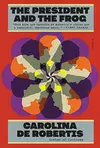
Well, what you see is really what you get with this book. It's a fictionalised retelling of the life of Uruguayan ex-president José Mujica, from his youth through his revolutionary guerrilla days and his time imprisoned (and tortured) by the dictatorial regime to his life in retirement as an old man. And it imagines that during his years in solitary confinement he engaged in conversation with an annoying talking frog, because why not, I guess.
Where this book really loses me is with the political argument that it makes, which is basically, "Just vote, for liberal candidates, and everything will be fine." It conflates the very idea of revolution with an armed struggle by a self-appointed minority, and thus dismisses it as an impractical dream and tells us, as I said, to Just Vote. Like those are the only two options. Politically it's crap, which makes me pretty unforgiving of it as a work of literature. This is a shame, because I've liked all of de Robertis' previous novels. I would recommend any of them ahead of this, but I guess particularly "Perla", if you were interested in the "South American dictatorships" theme.
Well, what you see is really what you get with this book. It's a fictionalised retelling of the life of Uruguayan ex-president José Mujica, from his youth through his revolutionary guerrilla days and his time imprisoned (and tortured) by the dictatorial regime to his life in retirement as an old man. And it imagines that during his years in solitary confinement he engaged in conversation with an annoying talking frog, because why not, I guess.
Where this book really loses me is with the political argument that it makes, which is basically, "Just vote, for liberal candidates, and everything will be fine." It conflates the very idea of revolution with an armed struggle by a self-appointed minority, and thus dismisses it as an impractical dream and tells us, as I said, to Just Vote. Like those are the only two options. Politically it's crap, which makes me pretty unforgiving of it as a work of literature. This is a shame, because I've liked all of de Robertis' previous novels. I would recommend any of them ahead of this, but I guess particularly "Perla", if you were interested in the "South American dictatorships" theme.
Updated a reading goal:
Read 8k pages in 2026
Progress so far: 1358 / 8000 16%

I never really got into this book because the first two POV characters (Miryem and Wanda) were just so cold-hearted at the beginning, even though they were both described as having rough upbringings (in different ways) that made them that way. As the book went on, they both developed an ability to care about a wider layer of people than just themselves and their mothers, so that was good. And you could say that I complain all the time about fantasy feudal settings that idealise feudalism, and at least this novel depicts feudalism as brutal and hard... which is like, yeah it does... but maybe what I really want is to not read books about feudalism at all, I dunno.
Anyway, the book engaged me enough to read it to the end, but in addition to the hard-to-like characters, I did find it fairly complicated with a lot of overlapping subplots and POVs (not all of whom had very distinct voices – I confused Wanda with her youngest brother Stepon more than once, since the book never uses chapter headings or anything to tell you whose POV you're about to read), and in the end I did not even understand the magical process by which the villain was defeated. I wouldn't say this book is bad, just that it never grabbed me, which was disappointing after how much I loved "Uprooted".
I never really got into this book because the first two POV characters (Miryem and Wanda) were just so cold-hearted at the beginning, even though they were both described as having rough upbringings (in different ways) that made them that way. As the book went on, they both developed an ability to care about a wider layer of people than just themselves and their mothers, so that was good. And you could say that I complain all the time about fantasy feudal settings that idealise feudalism, and at least this novel depicts feudalism as brutal and hard... which is like, yeah it does... but maybe what I really want is to not read books about feudalism at all, I dunno.
Anyway, the book engaged me enough to read it to the end, but in addition to the hard-to-like characters, I did find it fairly complicated with a lot of overlapping subplots and POVs (not all of whom had very distinct voices – I confused Wanda with her youngest brother Stepon more than once, since the book never uses chapter headings or anything to tell you whose POV you're about to read), and in the end I did not even understand the magical process by which the villain was defeated. I wouldn't say this book is bad, just that it never grabbed me, which was disappointing after how much I loved "Uprooted".
Updated a reading goal:
Read 8k pages in 2026
Progress so far: 896 / 8000 11%