
Jessica


I really adored this book. It's paced pretty much perfectly, never seems slow or boring, and there's a lot of dry humour that I really appreciate in the first half, that gradually fades away as the narrative turns more sombre and melancholy.
I have little more to say than that - it's so hard to think of things to say when a book was pretty much perfect. Read it!


No sé qué decir de eso. Supongo que me gustó, pero no es un libro compulsivo, si eso tiene sentido. La mayoría del libro sigue Eva Luna mientras una larga serie de cosas le pasan; sólo al final estas cosas me parecían ponerse conectadas. Por eso, fue difícil motivarme leer más después de cada vez que terminaba un capítulo. Hay interés en el libro pero todavía luchaba :p


This is a book that I read and adored when I was 13, and rereading it now, my opinion didn't change very much.
You can probably read the blurb for yourself, but it encompasses a lot of themes that I find really interesting - there's a dystopian, futuristic society, there's a bunch of rebellious youths struggling to create a new kind of society, and there's creepy stuff around brain surgery changing the way people think, making them placid and happy all the time. The first time I read the book, the first few chapters seemed kind of boring, but they establish the setting of the book efficiently and it's not like they're hard to read, so you can race through them and get to the good bit soon enough.
The novel can certainly seem a bit heavy-handed - the words “ugly” and “pretty” are used so many times that they can start to seem like they're not even real words, and there are quite a few tangents (whether spouted by a character in dialogue, or as a monologue from narrator Tally's own head) about the absurdity of judging people by their looks, how this leads to societal problems like anorexia or discrimination against ugly people or just everyone feeling really miserable in their own skins all the time. This is all true but I think the book overdoes its denunciations a bit - no one consciously thinks this obsession with appearance is a good thing, after all.
Overall though, the plot is good, the setting is fascinating, and towards the end of this book and, I think, in the other two of the trilogy, there's some stuff that comes up to make you pause and think. It's not a five-star book for the reasons I've outlined, but I love it deeply nonetheless.


Where do I even begin?
This book reads like a first draft. What's more, it reads like a NaNoWriMo first draft, with oodles and oodles of pointless description that seem to serve no purpose but to pad the page count. But unlike the NaNoWriMo requirement, this book is really long. According to my phone's Kindle app, it is 580 pages long. There might be 300 pages' worth of content in there. Look, there's nothing wrong with your first draft being overlong and unwieldy with lots of pointless stuff that needs to be cut out, but if the finished product is like this, it's a big problem. Most of my antipathy for this book is probably due to this.
Considering the 580 page length, it feels like not a lot really happens, either. Looking back on it, I guess stuff happened, but the way I remember it is: something happened at 10% in, another thing happened at 42% in... and although reviews on Goodreads had suggested that the book would get better in the second half, it really didn't. It continued to be a slow and plodding story in which I was desperate for something, anything interesting to happen. At 54% into the book she did seem to die, which fit my criteria quite admirably, but unfortunately she didn't actually die and kept on narrating from the spirit realm. And then returned back into the "real" realm, where she discovered that she had a brother who was a giant cat. Mmhmm.
What did happen in the second half was narrator Cat randomly crushing on her would-be murderer and general vain and conceited twerp, Andevai. As well, in the last 20% of the book, we suddenly found ourselves in the midst of a vast, popular uprising, but not to worry, as if this novel would spend much time contemplating that! Instead, we hear all about Cat's aforementioned sudden inexplicable love for Andevai. I'm assuming that this is what the next two books in the trilogy are going to be about (the sudden inexplicable love that is, I wouldn't hold out any hope it'll be about the uprising) but I don't really intend to find out.
My review might seem unrelentingly negative, but honestly I'm just frustrated that I spent so long reading this book, which was set in the lead-up to a mass uprising with a woman of colour for a protagonist, and it was so boring. How do you even have a beginning like this and make it so boring? How is this even possible?? Like, there's potential here, and it's completely squandered and buried under hundreds of pages of hardly anything ever happening. Ugh. If you'd like me to begrudgingly admit some things that I liked:
1. the demonisation of Camjiata over the whole book - I don't recall any huge block of exposition at once, but he's gradually depicted as some incredibly evil, dangerous guy, who challenged the political order (even though we can see this order is really bad) - before it's revealed that he's a radical who isn't too bad.
2. that Cat is a member of a minority group... this got annoying when it was 755867968 characters commenting on her shiny black hair, but it was good when it involved her explaining how the Romans had demonised her people, for instance. It wasn't a whitewashed vision of alternate-universe nineteenth-century Europe, which I appreciated.
3. the basic story around Cat's parentage, I guess... except IF IT COULD HAVE BEEN GOT THROUGH A BIT FASTER, THAT WOULD HAVE BEEN GREAT.
Yeah.


This is definitely my favourite book that I've read so far this year - and I know that it being February means that there's plenty of time for that to change, but the point is, I thought that this book was amazing.
The problem with loving a book so much is that I don't have much to put in a review of it. The one thing I didn't get was why parts two and three are in the order they are. That is, chronologically part three comes before part two (the rest of the parts being in order) and I just don't know what the purpose of that was? All it meant was that I spent part two mildly frustrated at this mystery being built up surrounding the circumstances of Baby's birth, and by the time I was reading part three I already knew how everything was going to turn out - that Olanna would forgive Odenigbo and Kainene would forgive Richard, because I'd just read about them being perfectly happy in part two. And also, that the baby would end up being raised by Olanna and Odenigbo, because that's what was happening in part two, after all.
But it didn't bother me that much - the novel works the way it is, I just think it also would have worked without the middle two parts being swapped, and I don't understand what swapping them really achieved.
Anyway. The novel as a whole has a sense of the inevitable about it, so maybe that's another reason why it didn't bother me. After all, it's a historical novel, and honestly I had never heard of Biafra before reading this book, so I was pretty sure they were going to lose their war of independence. But within that, there was still suspense. Bad things would happen, but what bad things? Characters were dying left right and centre, with only the five characters at the novel's core seeming immune - so I guessed that at the end something bad, like death, would befall one of them and that would be the climax... but that didn't really happen. There was the fake-out where Ugwu seemed to have died, but then he came back and recovered, and of course there was Kainene's mysterious disappearance that DEVASTATED ME FOREVER because she was the most engaging character to me, but her disappearance didn't seem much of a "climax" to the book, even though it happened at the end. In the end, the way the book ends seems to mirror the end of the war it's set in; it's exhausted and devastated, and there's nothing left to go wrong because there's nothing left.
I skim-read some reviews here on Goodreads and there were some complaints about the characters - that they were unrealistic, too perfect, or unengaging. I found none of these to be the case. To the contrary, they were all very imperfect but you could see how their backgrounds and social positions made them what they were. In particular, one of the reviews I skimmed complained that Richard was so anti-racist it was painful, but I still thought he was anti-racist in a very “privileged white person” way. He gets excited about Biafra's declaration of independence because he thinks this means he can be a native Biafran, and he spends half the book irritated that this or that person considers him an outsider, when can't they hear he speaks Igbo?! (Even though at some point late in the book he admits that "idioms and dialects elude him" - which would seem to mean a lot of spoken Igbo...) The point is that he, just like every other character, has flaws.
Another of the criticisms I read is that this book is hard to understand if you don't know anything about Nigerian history; well honestly, I knew practically nothing, and got completely absorbed in this book all the same. So while it may have been the experience of that person, I really don't think people should avoid the book, or postpone reading it in favour of another one, for that reason.
In fact, I would recommend this book to anyone who likes historical fiction. The characters are very real and engaging, I found the storyline compelling, the book never seemed to drag in spite of its length. There's a lot of sex scenes, if that influences your decision. Just read it because I loved it, and I'm sure that people aside from me would love it, too.


So... this book is slooooooow. It's mostly descriptive, with SOME conflict here and there but uh, mostly no. In fact, there are way more potential sources of conflict than actual sources of conflict.
As well, the start of the book kind of antagonised me, seeming to be more a polemic in the form of a novel than a novel itself. This feeling DEFINITELY went away, maybe a quarter of the way in (I forget exactly). The thing that irritates me is when writers create characters with perfect politics, and then make the whole book about this skilled political analyst existing in a particular situation. Given that the narrator is a late twentieth-century woman existing in an oppressive, pseudoreligious patriarchy, I got worried that that was what I was in for. But I wasn't. I was relieved.
Once that fear went away, I could better enjoy the flashbacks to life before, and especially the chapter that went through how the system changed. I am unconvinced that the explanation for how things changed is likely, but it didn't irritate me too much. As I said, there isn't really much conflict that over arches everything – there are more these flashes of conflict, especially in the flashbacks or in retrospect. At 81% done I had no idea where the climax was going to come from; at 92% no idea... then at 94% the narrative ended suddenly and I was really confused.
The epilogue contextualises things a bit better but I feel like SOME of that context could have been IN THE NOVEL (in particular, it is never mentioned even once – as I recall – that this is a recording on a cassette tape. She mentioned once that she was monologuing to herself, I think, so I thought the novel was supposed to represent the stream-of-consciousness from her head).
I actually really liked the epilogue. As a history student, once I read this series of letters by a particular woman, and there's no record of what happened to her after the letters cease either – so it's like, there's this whole story but some of the context is missing and we have to guess. Either way, it's an interesting form, to write in the form of historical documents – even if it's a bit late to be all, “By the way, that's what I was going for,” in the epilogue of the book I think.
Anyway! I did enjoy this overall, but it didn't grip me. If half-stars were a thing I might give it three and a half, but I'm not feeling very generous today, haha. So that's that.


So... I really liked this book.
Anyway, I don't know why the blurb calls it “impossibly funny”, because I don't really think it is (aside from laughing at Humbert's misery when Lolita finally escapes him, of course). However, the use of language is beautiful – so lyrical, my favourite style of writing – and the story it tells may be disturbing, but it's so self-consciously disturbing. I thought it was great.
I did feel it dragged in places, especially around the two-thirds mark. But it ended well. Lolita – who actually, more than once in the course of the novel (accurately) accuses Humbert of having raped her, despite his earlier protestations that it was her who seduced him – manages at last to escape, he is devastated, three years pass, he finally tracks her down and she's perfectly polite but clearly regards him as the pathetic sex criminal that he is. Then Humbert goes and kills the man who helped her to escape, but the point I'm trying to make is this...
Lolita is no mere victim. She pursues what she wants, she escapes, and she's able to build a new and functional life in spite of how Humbert controlled and abused her for so long – and it's him who becomes the wreck. I derived some satisfaction from that.
A closing comment – there HAS to be a TV Tropes page for the wealthy, French-speaking pervert, right? I swear I'm not TRYING to read books about such characters (real life is enough, thanks) but there they appear, again and again and again. This is nothing short of a literary conspiracy.
Sorry for the incoherence of my review; I'll try to fix it up when I'm less sleepy if I remember. Good night!


So, I liked it. The main problem I felt it suffered from was that it was more of a political treatise than a novel, about how being militantly anti-religion is just as crappy as being militantly religious. I suppose.
There's not really a LOT of conflict – there is some – and the novel all wraps up far too neatly, I feel. Mostly there are lots of spiritual stories. But I don't know, it intrigued me. I feel like with a rewrite, and some more conflict (for instance, the novel is set in a totalitarian state with menacing secret police (well they weren't very secret I guess, but certainly menacing), and maybe they could actually have done something to justify that reputation!), this could have been better.


Overall I really liked this book, but not everything about it. For instance, corporate espionage does not really intrigue me as a theme, so the saga around Wennerstrom was a little tedious. Similarly, pretty much everything about the finances or internal operations of the magazine, Millennium, was not interesting. Luckily, there was more to the novel than that...
Mostly I really liked Lisbeth Salander, and her attitude to revenge. Actually, now I think of it, Salander was by far the main thing I liked about this book. I also liked Mikael, although he clearly spent too much time fussing about Millennium. (Actually, I just realised that's the name of the trilogy? Damn...)
Most of the characters in this book are quite wealthy, either capitalists or really well-off journalists, and I've gotta say that this is not my favourite segment of society to read novels about, which is probably why Salander appealed to me so much. Not only was she not a member of the upper classes, she also had an excellent contempt for cops and state authorities in general, which I appreciated. As for those rich, at least a lot of the members of the Vanger dynasty were portrayed as self-obsessed, nasty pieces of work, or even Nazis... I don't know if that's a positive though because there were SO MANY OF THEM and they got hard to tell apart.
Like I said, overall I really liked this – it's a page-turner, salacious enough to not get boring, etc.. Except for the corporate intrigue, that was boring. But aside from that!


By the time I got to the last section of this book, I was crying, which is my usual way of distinguishing a 5-star book from a 4-star one.
Either way, I loved this book. The characters are warm and seem real, the narration is quirky, and the setting of Nazi Germany is painted very matter-of-factly, which I appreciated. I am on a boat with an Internet connection that didn't even exist up to here, so I might leave this here, but regardless – excellent book.
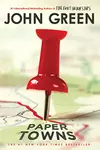


This book was very readable, I got through it quickly enough, but I wasn't a huge fan. Basically, I think the best part of the book is the banter between the protagonist and his friends, and some of the quotes about paper towns (I can type up what I marked in my Kindle once I have a more reliable Internet connection!). The weaknesses include ~Margo Roth Spiegelman~, the unrealistic paragon of all that is exciting in the world, and the fact that most of the entire book revolves around a quest for her after she takes off. The book is narrated by the protagonist, so her perfection can be passed off as reflecting the way HE idealises her, but for me it got boring.
Also, I think this is the first time I've partaken in high school-set fiction that's made me think I'm maybe getting a bit too old for high school-set fiction. So, there's that.


Siguiendo [b:Cien años de soledad|370523|Cien años de soledad|Gabriel García Márquez|https://d202m5krfqbpi5.cloudfront.net/books/1347626503s/370523.jpg|3295655], con su lección que todas las mujeres se enamoran con los que las violen, hay El amor en los tiempos del cólera que enseña que si persigues a una mujer por 50+ años, aunque te ha dicho (básicamente) que te vayas a la mierda más que una vez, ¡¡quizá la vas a persuadir!!
En serio, es verdad que me gustaba este libro más que Cien años de soledad, pero es lejos de perfecto. Cuenta la historia de un hombre, un seductor superhumano, que tiene 622 “pequeños romances” pero es completamente obsesionado con una mujer con la que se enamoraba cuando era joven. Ella rompió con él y se casó con otro hombre, pero al protagonista de este libro, no es un obstáculo insurmontable – va a esperar hasta que el esposo muera. ¡Simple!
El libro pasa MUY LENTAMENTE (pues, quizá me sentía así por mi malo castellano, pero lo he oído de otros también), pero en el segundo medio creo que mejora. También, los caracteres no me parecen muy agradables. El protagonista, ya he explicado, pero el mujer también no me cae bien. En inglés la llamaría una “snob”. O “snooty”.
Perdóneme por mi malo español; cuando ecribí esto había pasado 15 horas del día en autobuses y estaba muy agotada. Es completamente posible que todavía hay errores que no he visto desde entonces. Sin embargo, he vuelto a esta crítica porque creo que estaba demasiado generosa la primera vez. En realidad no me gustaba este libro – puedo recordar muchas más cosas que odiaba que me gustaban – y dos estrellas es todo que puedo dar. Honestamente esto y Cien años de soledad me han hecho pensar que García Márquez es un sexista repugnante.


I'm not sure what to say about this book, really! I dashed through it in the time it took to listen to 2.5 albums. The writing is tense – short sentences, all action, no detail. The central message of the book is, or seemed to me to be, that working life sucks and life is pointless. It's the protagonist's hatred for his life that spawns his alter ego Tyler, and thus instigates all the events of the book. The thrill of violence, of cruelty, appeals to the men who fight because it's the only escape their have from their monotonous and deeply pointless existence. Of course, the reality is that most working class people's lives are monotonous and miserable, and the book is reasonably class conscious, with for instance this amazing paragraph:
The people you're trying to step on, we're everyone you depend on. We're the people who do your laundry and cook your food and serve your dinner. We make your bed. We guard you while you're asleep. We drive the ambulances. We direct your call. We are the cooks and the taxi drivers and we know everything about you. We process your insurance claims and credit card charges. We control every part of your life.
The protagonist actually does react against this to a certain extent and claims that Tyler's gone too far, but this is purely out of self-interest - he doesn't want to lose his body to his alter ego Tyler, he doesn't want to be castrated, and he doesn't want Marla (who he's developed some affection for) to die.
could


For the first three-quarters of this book, the impression that I couldn't get away from was that it was basically a less painful version of “One Hundred Years of Solitude”. Both books essentially detail the fortunes of a particular family over the generations - but at least in the case of “House of the Spirits”, it's over a few less generations, and Allende also knows a greater variety of names.
At any rate, the first three-quarters of the book are very slow, and they're okay but honestly not very memorable. Every time I put the book down for a few days, I'd struggle to remember who all the characters were or what had happened to them when I picked it up again. By the time I finally got three quarters of the way through the book, my memory for it had improved a little... which was good, as the last quarter of the book is where it picks up a lot.
Basically, as this book is partly a portrait of Chile over the twentieth century as well as one of this family, the last quarter of the book is where Salvador Allende's government comes to power, and then there is the coup, and then the dictatorship. The impact this has on the family made me feel like those 300 pages of establishing all these characters in laborious and painstaking detail were almost worthwhile.
Overall, I did enjoy this book - I really did - but the first three quarters were just so slow and it got a bit tiresome. It's the kind of book that is probably much better the faster you read it, so you don't forget who the characters are between reading sessions - and maybe it'd seem less slow if I'd done that, too.


Leí esto porque necesitaba practicar/usar mi castellano antes de viajar a América del Sur, y este libro es corto y lo encontré junto con su traducción en inglés. De hecho nunca necesité abrir la traducción; el libro está escrito en un castellano bastante simple que podía entender sin problemas...
La historia es triste y no sé lo que debo decir de ella. Es de una pareja pobre, un hombre (“el coronel”) que participó en una guerra civil hace 15 años, pero nunca ha recibido su pensión, y su esposa. Su hijo está muerto pero tienen un gallo que (me parece) tratan de vender durante la mejor parte del libro. Básicamente, me parece como una exploración de su hambre, su pobreza, y las dificultades de su matrimonio... está bien pero no me fascina.
Por favor perdóneme si hice errores :)


In short, this book was amazing. I struggled to know whether to give it four or five stars, but in the end I relented and gave it the highest possible score. I just loved it so much, in spite of the fact that it was so long that it took me two weeks to read it.
The book has quite an ensemble cast, drawn from a range of race and class backgrounds. The first half of the book is set in the French colony of Saint-Domingue in the late eighteenth century; with the great revolt in which slaves won their independence, the action moves to Louisiana. I felt that all Allende's characters were skilfully depicted, and obviously the products of the backgrounds they'd come from - this is probably one of my main criteria in judging a novel - it came across as really left-wing, because of how it COULD show that individuals are the products of their situations and all that.
There are definitely some characters I absolutely despised - I annotated the novel as I went in my Kindle, and I think 90% of my notes are yelling at Valmorain. His character is a plantation owner who deludes himself about how enlightened and generous he is because he doesn't mistreat his slaves quite as badly as his neighbour Lacroix, so I think you can see how I'd get frustrated. I was pretty sure I wouldn't hate anyone in the novel as much as him, but then along came Hortense Guizot... it was a hard-fought battle but I think she triumphed in the end. Valmorain DID rape Tété on a regular basis for years and treat her appallingly in general, and apparently considered raping his daughter Rosette as well... but then Hortense was deliberately malicious and murdered Rosette by proxy so... tough as this decision was to make...
Anyway, in summary - although I reserve the right to edit this review if I think of something more to add - this was an amazing exploration of French colonial society, with characters that I felt were hugely true to life and logical, much as I hated some of them. Well worth reading!


Probably two and a half would be more accurate, but Goodreads won't let me do that, so...
Anyway. I picked up this book in a clearance sale, one bag of books for a dollar. Apparently it's the second in a series, but I clearly didn't read the first one and I followed along just fine, so no worries on that account! The book is short - I read it in a couple of hours - and there are three or so subplots, all of which roll along at a rapid pace. Narratively, it's structured well.
All in all if I had to describe the book I'd describe it as “ridiculous”, though. Around twenty pages in, I felt that I wasn't reading a novel at all, but a polemic. I know there are others out there who love reading books that are just naked expressions of a particular politics, but I just don't. To me it feels artificial and soulless. Especially since the topic of this polemic was, “rape is bad and frequently traumatic”. o rly? That sounds like something I could already have told you.
So... the politics of this book are a bit bleh. The narrator is a petit-bourgeois woman who's been running her own businesses for over a decade. While it's not explicitly said, it's implied that every failure to report rape to the police is a tragedy - certainly there's no recognition anywhere of the detrimental effect that police have on society. Also, the narrator seems to think she's left-wing because she's a lesbian who doesn't date Republicans, which... no...
There are very few male characters; the only one I can remember who's not a violent rapist is a twelve-year-old boy, so uh, yep. The female characters are all very, very similar to each other, too. Almost all of them are just generic “feisty women” and a lot of them traumatised by sexual violence. I will say that this is far from the worst sin an author could commit, and a cast of generic feisty women is better than a lot of other possibilities, but it did mean that I never got particularly invested in the outcome of the book. The character of Fran was pretty cool though, I liked her. An elderly-ish woman unafraid to be sexual and a hella competent detective - what's not to like!
So basically... this work struck me as very polemical and as a polemic whose politics are crap, I'm going to end up a bit unimpressed with that element of it. For me the best subplot was the romance between Kris and Destiny. I was kind of disappointed with how the main plot worked out (I don't want to spoil it but...).
It was an alright read, partly because it was so short, but yeah, not much more than that, I would say.


I don't want you to think this is a begrudging three stars; I really did like it. The book is very strange and weird, and I feel like a LOT of it went over my head, but... it was short (as I must have mentioned, this quality in a book will make me forgive a lot of sins), and it is highly quotable.
For instance, some quotes I got out of it - “Policemen are not human beings so how can police dogs be animals?” and “the notoriously pig-headed race of Britain...” (as an Anglo, this one cracked me up quite a lot.)
I also like the idea of writing about old women who've been basically cast out by their families, because they're too old to be considered properly “human” any more. And that's such a depressing idea, so I like that this book was quite light-hearted and good-humoured about it, without shying away from it at all.
It's just, like I said, I felt like a lot went over my head... and at one point there was a 27-page diversion to describe the history of some people and I tend to dislike it when books do that. But yeah. Overall, I liked it, and that's what three stars is meant to suggest so there!


This collection was recommended to me as a bunch of feminist rewritings of fairytales that I would really enjoy, and enjoy them I did, so good recommendation then! Overall, there's a very poetic style of writing; most of the time the words flow like a melody, creating imagery and sense and it's quite beautiful. As the introduction astutely warns, there's not a lot of dialogue, and as it does not warn some of the stories don't seem to make sense, although it's possible that if I'd thought about each of them a bit more and discussed them with someone, they would have. There's a lot of metaphor in the collection too - particularly for menstruation and loss of virginity, surprise surprise - and it's possible that what I didn't understand was just metaphors I didn't understand (as I am not particularly renowned for my grasp of metaphors).
The story after which the collection is named, “The Bloody Chamber”, is certainly the best in my view, essentially telling the tale of a depraved French aristocrat and his newest, youngest wife. My other favourites were “The Lady of the House of Love”, about a vampiress, and “Puss-in-Boots”, which had me cracking up all over the place. For me, the other stories ranged between “good” and “um what”.
Overall, I really recommend this collection, although perhaps break it up a bit more than I did - one story every few days, rather than going through 3-4 in each sitting like I did. I think having more time for contemplation (especially of the confusing ones) wouldn't have gone astray. Either way, it was good, read it!


This is another of those books I had to read for class; I only really read half before I had to submit the essay I was reading it for, but it was really good, so I wanted to read the rest of it in my own time.
Basically, it's an account of Aboriginal resistance in the 1920s, particularly about the influence of Black nationalism, the AAPA - an all-Aboriginal organisation - and Fred Maynard, a leading activist. In one of the early chapters there's a lot of fascinating stuff about links between Aboriginal activism and activism of other black peoples around the world. And at other points it talks about the leading roles played by women in the AAPA - that they weren't just politically dismissed the say women in many political organisations of the era were.
Basically, so interesting! And important to know about.


My favourite memory of this book is when I was reading along, thoroughly hating everything, and then the book abruptly ended fifty pages before I was expecting it to because it turns out the rest of it is all appendices.
I don't even know where to begin reviewing this book, although the rant I launched into on Tumblr taught me I had many things to say. Perhaps I was doomed to dislike this book when I started at page one and discovered that its two main characters were named Paul and Jessica. Still, I moved past that; I'd heard this book was good, I was going to persevere. Then on page 20 or so Paul was obnoxious and sexist and I got frustrated. And then, it has to be said, Paul never really did anything to redeem himself for being generally obnoxious. Mostly he just oscillated between continuing to be obnoxious and being some all-seeing, all-knowing dispenser of wisdom and neither of those personas was particularly endearing.
Honestly, I was annoyed for a lot of the book that Paul had all of these special mental abilities that supposedly had never been had by men before, only women, and Paul was such an arrogant twerp anyway that I strongly disliked him being some kind of Chosen One. I felt that Frank Herbert was going to have this rule that only women can have these powers, the character of Paul should have been a woman then. But then it seems that the entire point of the plot is that he IS the first man to have this abilities - the Kwisatz Haderach or however it's supposed to be spelt - so then I guess it just annoyed me that there was this deep gender essentialism in something that should not have anything to do with gender at all (the innate abilities of the brain...).
Aside from that! This book also had approximately 9658976897579668 male characters who I couldn't tell the difference between. Towards the end there some guy named Guernsey or something turned up and supposedly he was Paul's friend from way back but I had no clue who he was and nor was I entirely sure I was supposed to. The female characters who existed seemed mostly interested in basking in the glory of Paul (probably he had a halo or something too, idk). Chani was nothing more than his love interest. That woman he won (as property) by killing Jamis was the same. Alia barely even did anything. Jessica was by far the most developed of the female characters, but even she was really disappointing because literally everyone spent the entire book talking about what a threat she posed to Paul and like, no, she didn't in any way whatsoever. PAUL HIMSELF at one point identified Jessica as his “true enemy” and well, I guess he's not all-seeing and all-knowing after all because that was LITERALLY NEVER FOLLOWED UP ON. All she did was disapprove of his relationship with Chani because she's an utter snob and disapproved of him seeing a “desert girl”. Wow. I'm shaking in my boots, Jessica.
There are some defences to be made of this book - for instance, Herbert was obviously not trying to write about anything other than a deeply sexist society, so the fact that women get treated as property and evaluated in terms of their marriageability is not a flaw of the writer so much as the deeply annoying society he invented. Nonetheless, there were not enough female characters and those characters that did exist were not strong enough to counteract this. But then again, the male characters weren't very strong either, hence why I mixed them all up, so... really...
Anyway, I was dithering about whether to give this book two stars or three (mostly because I'd heard it was so good and I thought I'd judged it unfairly just because of the names-of-the-characters thing making me hostile from the off). BUT THEN I READ THE LAST PAGE.
NO JOKE, the last page is about how Paul has to marry this Princess Irulan to secure peace across the kingdoms or something but NO WORRIES because he's going to treat Princess Irulan like a worthless piece of shit forever because his true love is Chani! And Jessica is really pleased about this because she no longer hates Chani and she apparently thinks Princess Irulan deserves to live a life of misery because, y'know, she dared to be born a woman into a family that would force her into an arranged marriage and that is definitely all her fault.
Seriously, I hate you Jessica.
And basically everyone in this book, really. I guess Chani was okay, if not very well developed. Also the woman Paul won off Jamis, she was sassy, except I forgot her name so I guess not that sassy.
In conclusion...
This book is hyped beyond all proportion. I didn't understand it and it annoyed me but if you like long books with irritating and indistinguishable characters, go for your life.
(EDIT: I decided to demote this book from two stars to one star, because I actually really hated it so two stars was bizarrely generous. I don't remember anything I liked about this book. Don't read it.)


I spent a lot of the novel wondering whether the novelist was a terrible racist and sexist or merely the narrator he'd created. I'm leaning towards the former. Basically the entire novel is about this battle between a cynical Briton and an optimistic yet deeply stupid American to win and retain the affections of a Vietnamese woman, Phuong, during the French occupation in the 1950s. Phuong is truly depicted as an object - the narrator claims that Vietnamese don't feel emotion as Europeans do, as if this were some justification for writing her character as a mere object of affection - and it's extremely annoying.
Like I didn't HATE the book I guess (thus two stars, not one) but I didn't like it by a long stretch...


I didn't finish, but I DID finish the assignment on it, so haha cheating and adding it to my “read” shelf.
This book is really legalistic, and basically argues that the fiction of terra nullius is at the heart of Australian property law and it shouldn't be. But in the finest of liberal traditions, it also rejects actual radical change for social justice, only changing the law, which is like... sigh.