

@jennareadsbooks
Jenna
Jenna's Books by Status
591 Books
See all


Jenna's Reading Goals
Jenna's Most Popular Reviews


I love Kent Haruf. I'm a huge fan of his books. Granted, I've only read two of them (this one - Plainsong - and Our Souls at Night) but both were so well done and moving, I just want to savor everything he ever wrote.
Haruf's books, including this one, are set in the fictional small town of Holt, Colorado. Plainsong tells the stories of some of the town's characters, including twins and their dad who were abandoned by their mom, a pregnant teen with nowhere to turn, and a couple of old farmers. Their stories come together in such a lovely way.
Haruf's writing gives you such a strong sense of place, and the feelings of both desperation and hope. It is unassuming yet so moving, and manages to be both bleak and hopeful. The story has ugly parts, but is so beautiful overall. I just absolutely love the town of Holt, Haruf's modest and almost sparse way of telling a story, the way he includes the perfect amount of detail so that you aren't bogged down yet you can picture Holt so clearly, the bleak feelings created, the sanguine feelings created... all of it.
If you like reading about small town America, I highly recommend this book. Our Souls at Night is also set in Holt, and slightly more forgiving than this one, and also has a bonus Netflix movie with Jane Fonda and Robert Redford. I recommend both!


Bel Canto is shockingly my first Ann Patchett! This story follows a group of hostages taken at a party in an unnamed South American country. The party was meant to honor a Japanese business executive, featuring a performance by a renowned opera singer who had been used to lure him there. My favorite character was Gen, the translator, who seemingly speaks every language and becomes essential to nearly everyone. I thought it was endearing how he tried to keep it professional and not insert himself, even though he was a literal hostage. As time passes, the hostages and captors fall into a mostly comfortable routine, despite the circumstances.
The slow pacing and somewhat sleepy writing style actually took away from any real sense of tension - I think the story could have benefited from more suspense. Still, Patchett's writing kept me engaged enough that I ended up rooting for certain captor/hostage pairs, even knowing their situation couldn't last forever. While I was drawn into the story and complicated relationships, the ending felt abrupt and not entirely believable - particularly the epilogue-style section after the main crisis is resolved. I found myself wishing for a different ending.
I would recommend this one to literary fiction fans, especially if you don't mind a slower pace. I'll definitely read more Ann Patchett since I enjoyed her writing style overall.


I was not a huge fan of How to Share an Egg by Bonny Reichert. The book is about the author's father's Holocaust experience and how that trauma affected her as a second-generation survivor, but it was barely that. Instead, it felt more like Reichert processing her own anxiety about the Holocaust without really diving deep into the actual experiences that her father went through. I get that this is technically her memoir, not her father's. But so much of the book was about how she was going to write about his experiences, how he kept asking her to tell his story, how terrifying it was for her to even think about it. And then when we finally get glimpses of his actual survival story, they felt so rushed and surface level. I barely learned anything about what he actually went through, just that talking about it made her nauseous and anxious. The food writing wasn't even that great, honestly. For a culinary memoir, nothing really felt explored in depth. The descriptions were fine but surface level, and the connections between food and memory felt like they could have gone so much deeper. Like the food was just used as a tool to break up the book into chapters. I kept wanting to know more about her dad and less about her own feelings about engaging with his trauma. The whole thing read like someone working through their own stuff on the page but too soon, like she hasn't really processed enough before writing this book. If you're going to promise a book about intergenerational Holocaust trauma and your father's survival, you need to actually deliver on that, not just circle around your own discomfort with it. Not one I'd recommend.
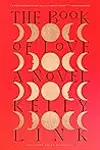

The Book of Love by Kelly Link was a wild ride that I think I sometimes enjoyed, even though I'm still not entirely sure what happened. The vibe was definitely unique with a weird magical atmosphere that is pretty original, and I do like magic in my books, so that part worked for me. However this book is LONG long when it doesn't really need to be. The story follows four teenagers who return from the dead and must navigate magical challenges to remain among the living, but there's so much happening and I'm not convinced it all needed to be there. Re: the magic system... I'm still confused. I honestly cannot fully explain the rules or what actually went down in the ending. Also the whole Malo Mogge storyline was just bizarre and kind of took over everything. And pls, can someone explain the title to me? I never really understood where “The Book of Love” came from or how it connected to the actual story, and if it was in there I forget (forgive me as it has been a few months between reading and review). The character dynamics were hit or miss. I actually really liked the relationship between Anabin and Bogomil and wanted way more of their backstory. But we got so much time with Bowie and Thomas, and I could have done without most of that. And why are these teenagers constantly hanging out at bars? The ages did not make sense at all. That said, there were elements I enjoyed! Link's writing pulled me in, even when the plot felt bloated. If you love weird, atmospheric literary magical fiction and don't mind being somewhat confused, you might enjoy this. Just be prepared for a commitment, both in page count and in accepting that you may never fully understand the magic.


The Sun Does Shine by Anthony Ray Hinton has stayed with me long since I finished it. This is Hinton's memoir after having spent 28 years on Alabama's death row for murders he didn't commit, and his story is both devastating and inspiring. The injustice he faced is genuinely unbelievable. The prosecution's only evidence at trial was a statement that (flawed) ballistics tests showed crime scene bullets matched Hinton's mother's gun. No fingerprints or eyewitness testimony were introduced. In fact eyewitness testimony stating that Hinton was locked in a warehouse working his job at the time of the murders was ignored. That's what put him on death row for nearly three decades. The case against him was shockingly weak (because he was innocent), and yet the system fought his release for years even after multiple forensic experts proved the bullets didn't match the gun. The lengths the state of Alabama went to in order to keep him behind bars even after that is so inhumane and shocking. It's heartbreaking. It's so sad to learn that Hinton's mother died while he was still imprisoned so she never got to see him freed. So many people from his life abandoned him over those 30 years, just forgot about him, which makes his friendship with Lester Bailey all the more moving. Bailey visited him weekly throughout his incarceration and never stopped showing up. Hinton is such a strong person. His ability to maintain hope, start a book club on death row, and even befriend a former KKK member shows an extraordinary humanity that most of us couldn't imagine sustaining under such circumstances. This is an important read that exposes deep flaws in our criminal justice system. Highly recommend.