
jphil2


I was hesitant mostly just from seeing all the glowing reviews. I’ve been tricked by marketing machines in social media before. However, I enjoyed this book much more than I originally thought I would.
I had a false start at the end of 2025. It happens and I get in a funk where I don’t like anything I start reading. In those cases, I gravitate towards non-fiction as a sort of palette cleanser. I decided to start fresh in the new year and breezed through it. It’s not especially deep, but the characters are likable. Also, I can understand how they have produced so many sequels. With this type of output, I usually run out of interest before the end, but I will definitely read the next in the series.


I really enjoy the half star scoring on Hardcover.app. This book is better than the average read, but I wouldn't put it in the great category. However, this series definitely has the ability to enter great territory. I may update my score after reading book 2.
The tactical maneuvers and military fiction is very good. It seems the author has knowledge of naval tactics. Additionally, I enjoyed the interpersonal arguments that Jack Geary and the other captains had throughout the book. Time will tell if my relationship to the characters grow deeper and make me feel more attached than I do after the first read. The relationship between the myth and reality seemed a little light, but I remain optimistic for the future.


So I went into this sequel without reading about it. I always read about the sequels because they are often a tangent that I don't care for. As was the case in this instance. The first half of the book was pretty dreadful. The relationships showed the age of the book, but felt more like the 60's than the 80's. I don't care about the characters that are described non-stop for the first half of the book. They do nothing to earn my interest.
The second half of the book was much better. It felt like a sequel to Rendezvous with Rama. By the end, I care a little for the characters, but not much. The book should be about Rama and the cosmonauts should just be the reader surrogate.


Enjoyed this book tremendously. For someone who loves sci-fi novels, I have read surprisingly little of the older works. I'm generally concerned about outdated power dynamics and other general creepiness that I would prefer not to read unless the work proves to be worth it. The pacing of this story is superb in my mind and asks many relevant questions without providing surface level explanations.
Often, I will read the first book in a series and then want a break before continuing the story. In this instance, I am looking forward to reading what's next without looking at reviews to see if there is a major drop-off in quality.


Just wasn't really my thing. I rode the Jaws ride as a child and then again as an adult with kids. It was very enjoyable, if a little campy. If you have true nostalgia over that ride, then this book was made for you. I don't think the stories from the making of the ride were that interesting. The subject seems like a section of a book rather than the whole thing.


I read this book because there has been so much chatter about AI and how it will someday replace us. This book couldn't have been further away then what current “experts” are anticipating. Andrew is the mirror from which we view ourselves. His purpose is to show us our own beauty and humanity.
These older sci-fi books have so much feeling and empathy. It makes me wonder if something hasn't been lost by every aspect of human art being commodified and packaged for the largest possible profit. Or maybe, time has allowed for the better novels and authors to be remembered.


The anecdotes read like low level employees should go without food to take care of a customer instead of the corporation fixing policies and procedures. Like many other business books, this one reduces complexity and nuance to catch phrases.
The thinking could be useful if the anecdotes focused on not blaming others for your bad behaviors or thoughts. However, an anecdote where a check out clerk would pay for a customers order because the corporate procedure was so bad that it would infuriate a line of customers is the wrong answer to the question. Then to gleefully say that said employee couldn't accept a tip, per corporate policy, and instead chose to donate it to a group pizza party account (I'm assuming that is funded by the employees as well) is sending a terrible message.
This mantra is best used by upper level management to not blame poor customer service on the rank and file employees. People generally do not want to hate their jobs and perform poorly. The underlying questions revolve around inflexible policies put in place by people removed from the very scenarios for which those policies are created. If making change is so painful to both employee and customer that a minimum wage employee is willing to pay for the item, the problem is not that other clerks won't do the same, it is that the policy is terrible and needs to be changed. It's not that hard.


Don't read the author's note before reading this book. I listened to the audio book version and the climax of the book was read to me by Mr. King himself. This foreword is in all of the Richard Bachman series of books if I'm correct. I heard it before the Long Walk as well. Unfortunately it did take away from my enjoyment of what I probably would have given 5 stars. It is an excellent book. Do someone a favor (maybe yourself) and tell them not to read / listen to the foreword before reading this book.


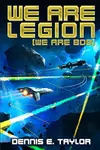


This is the perfect voice for this kind of story. I've seen it compared to Hitchhiker's Guide to the Galaxy. With a little fear of cosmic retribution, I believe I prefer this book's voice more. I'm not sure about whether the story is better, but Bob more closely fits my humor. Also, I can't help but be a little jealous of Bob having himself to keep him company. I've been told by more than a few that I don't like people.

