
Kam

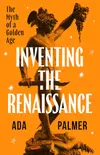
So this was a LOT denser than I was expecting, but still a very good read! The book’s prose and general trajectory are similar (albeit in nonfiction form) to the author’s Terra Ignota series, which is pretty heavy for a scifi story because it deliberately tries to align with the prose of Enlightenment-era writers like Voltaire and Jonathan Swift. But that’s not a bad thing, since the author’s skill at creating a narrative works just as well for nonfiction as it does for fiction.
Another similarity this book and the Terra Ignota series share is that they’re both focused on ideas, with the scifi series functioning as a kind of narrative exploration of Enlightenment ideas, while this book is an academic exploration of the concept (or concepts) of the Renaissance, and tracing the history of this concepts while simultaneously dismantling some and reframing others. That might seem a bit odd on the surface, tracing the history of an idea, but the way the author tackles it in this book is actually very clear and lucid. It’s not necessarily the EASIEST to grasp - this is a slow book for a reason, and no, it’s not because the prose is bad - it’s just that the theses the author puts forth can be confusing for laypeople, and she takes the time to really explain it to the reader so they understand the points she’s trying to make.
Which, in my opinion, is a good thing, and not just for people who consider themselves “fans” of the Renaissance (of which I am one). What this book is really about is not just the Renaissance, but about how historians analyze and dissect history - not just for the “facts”, but also to show how the way we study and understand history affects not just how that history is perceived, but how it’s used in the present for reasons ranging from tourism to world politics. With the Renaissance as her subject, the author shows how the WAY history is studied and presented can affect how that history is understood - how the same set of events and people, which all factually happened and existed, can be used to say so many different and sometimes opposite things. And in doing so, she shows the reader a way to understand how history is being used today, and how such understanding can affect the way one sees and understands current events. This is important, I think, especially as fascistic and dictatorial governments and corporate interests all around the world co-opt and in many cases rewrite history to suit their own ends.
Overall, this is not necessarily the easiest book to read, but it is certainly very interesting, and certainly rewarding for anyone who decides to push through it. The author’s prose is lucid and uncomplicated, even if the concepts she tries to explain can get rather complicated. Despite that, though, there’s plenty of insight to be gained from this book, especially when it comes to understanding how history as we know it is made, and how it was, and still is, used for various ends.
Originally posted at kamreadsandrecs.tumblr.com.
So this was a LOT denser than I was expecting, but still a very good read! The book’s prose and general trajectory are similar (albeit in nonfiction form) to the author’s Terra Ignota series, which is pretty heavy for a scifi story because it deliberately tries to align with the prose of Enlightenment-era writers like Voltaire and Jonathan Swift. But that’s not a bad thing, since the author’s skill at creating a narrative works just as well for nonfiction as it does for fiction.
Another similarity this book and the Terra Ignota series share is that they’re both focused on ideas, with the scifi series functioning as a kind of narrative exploration of Enlightenment ideas, while this book is an academic exploration of the concept (or concepts) of the Renaissance, and tracing the history of this concepts while simultaneously dismantling some and reframing others. That might seem a bit odd on the surface, tracing the history of an idea, but the way the author tackles it in this book is actually very clear and lucid. It’s not necessarily the EASIEST to grasp - this is a slow book for a reason, and no, it’s not because the prose is bad - it’s just that the theses the author puts forth can be confusing for laypeople, and she takes the time to really explain it to the reader so they understand the points she’s trying to make.
Which, in my opinion, is a good thing, and not just for people who consider themselves “fans” of the Renaissance (of which I am one). What this book is really about is not just the Renaissance, but about how historians analyze and dissect history - not just for the “facts”, but also to show how the way we study and understand history affects not just how that history is perceived, but how it’s used in the present for reasons ranging from tourism to world politics. With the Renaissance as her subject, the author shows how the WAY history is studied and presented can affect how that history is understood - how the same set of events and people, which all factually happened and existed, can be used to say so many different and sometimes opposite things. And in doing so, she shows the reader a way to understand how history is being used today, and how such understanding can affect the way one sees and understands current events. This is important, I think, especially as fascistic and dictatorial governments and corporate interests all around the world co-opt and in many cases rewrite history to suit their own ends.
Overall, this is not necessarily the easiest book to read, but it is certainly very interesting, and certainly rewarding for anyone who decides to push through it. The author’s prose is lucid and uncomplicated, even if the concepts she tries to explain can get rather complicated. Despite that, though, there’s plenty of insight to be gained from this book, especially when it comes to understanding how history as we know it is made, and how it was, and still is, used for various ends.
Originally posted at kamreadsandrecs.tumblr.com.