
Kam

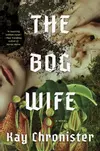
So this didn’t turn out to be as scary as I thought it would be, and is instead something more eerie, but it’s still a beautifully-told story.
There’s a saying about how all families are messed up, just that the details vary from family to family. The Haddesleys are a VERY unique and disturbing kind of messed up, but there’s enough there that might be familiar to readers from close, tightly-knit families with heavy dependence on each other that may make the recognition feel a little uncomfortable. It certainly felt familiar to me, especially where Eda is concerned. Her role as the parentified eldest daughter keeping her family functioning in spite of everything will likely strike a chord in readers who are in a similar position, or used to be in that position.
Equally interesting is reading how this family reacts when its central truths - its internal history - is proven to be untrue. Every family has its own stories that it tells itself, enough that in some cases those stories can be elevated to the status of unchallenged and unchallengeable mythology. But what happens when those stories are revealed to be lies? What happens when a family learns that the stories it tells itself are in fact far more mundane and banal than they’d been led to believe? Reading how the Haddesleys deal with this is, in my opinion, one of the story’s strongest plot threads.
This tug-of-war between transformation and staticity is also reflected in the bog itself, and the Haddesleys’ relationship to it. For generations the Haddesleys have treated the bog in a specific way, but over time the bog itself has changed, and no matter what the Haddesleys try to do, it does not respond to them as it used to, and this further erodes their belief in their family’s foundational myths, while also showing how little control humanity has over nature.
In line with that, the novel also explores what happens when outside influences reach into the bog itself - specifically: climate change. There is clear research indicating that climate change is affecting precipitation levels in the Appalachians; it should not take any great stretch of the imagination for the reader to see how this could affect the isolated Haddesleys, who must manage the bog in a specific way so that it meets their needs. While not explicitly explored in the novel, given that the Haddesleys were raised in such a way that the very notion of climate change would probably be foreign to them, the novel does attempt to point out that living in isolation does not guarantee that one will be unaffected by the wider world - not when corporations, land developers, and tech startups can affect the climate itself.
Overall, this was a lovely, bittersweet read. The Haddesley siblings are fascinating, complicated characters, and their relationship to each other and the world beyond their homestead makes for compelling reading. The themes of familial trauma; erosion of family mythology; and the exploitation of nature are woven together and explored quite well, and while this is not a horror novel in the traditional sense, it can still be quite eerie to see one’s own self, or one’s own family, in the Haddesleys, making this quite an uncanny experience.
Originally posted at kamreadsandrecs.tumblr.com.
So this didn’t turn out to be as scary as I thought it would be, and is instead something more eerie, but it’s still a beautifully-told story.
There’s a saying about how all families are messed up, just that the details vary from family to family. The Haddesleys are a VERY unique and disturbing kind of messed up, but there’s enough there that might be familiar to readers from close, tightly-knit families with heavy dependence on each other that may make the recognition feel a little uncomfortable. It certainly felt familiar to me, especially where Eda is concerned. Her role as the parentified eldest daughter keeping her family functioning in spite of everything will likely strike a chord in readers who are in a similar position, or used to be in that position.
Equally interesting is reading how this family reacts when its central truths - its internal history - is proven to be untrue. Every family has its own stories that it tells itself, enough that in some cases those stories can be elevated to the status of unchallenged and unchallengeable mythology. But what happens when those stories are revealed to be lies? What happens when a family learns that the stories it tells itself are in fact far more mundane and banal than they’d been led to believe? Reading how the Haddesleys deal with this is, in my opinion, one of the story’s strongest plot threads.
This tug-of-war between transformation and staticity is also reflected in the bog itself, and the Haddesleys’ relationship to it. For generations the Haddesleys have treated the bog in a specific way, but over time the bog itself has changed, and no matter what the Haddesleys try to do, it does not respond to them as it used to, and this further erodes their belief in their family’s foundational myths, while also showing how little control humanity has over nature.
In line with that, the novel also explores what happens when outside influences reach into the bog itself - specifically: climate change. There is clear research indicating that climate change is affecting precipitation levels in the Appalachians; it should not take any great stretch of the imagination for the reader to see how this could affect the isolated Haddesleys, who must manage the bog in a specific way so that it meets their needs. While not explicitly explored in the novel, given that the Haddesleys were raised in such a way that the very notion of climate change would probably be foreign to them, the novel does attempt to point out that living in isolation does not guarantee that one will be unaffected by the wider world - not when corporations, land developers, and tech startups can affect the climate itself.
Overall, this was a lovely, bittersweet read. The Haddesley siblings are fascinating, complicated characters, and their relationship to each other and the world beyond their homestead makes for compelling reading. The themes of familial trauma; erosion of family mythology; and the exploitation of nature are woven together and explored quite well, and while this is not a horror novel in the traditional sense, it can still be quite eerie to see one’s own self, or one’s own family, in the Haddesleys, making this quite an uncanny experience.
Originally posted at kamreadsandrecs.tumblr.com.