
Kam

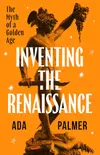
So this was a LOT denser than I was expecting, but still a very good read! The book’s prose and general trajectory are similar (albeit in nonfiction form) to the author’s Terra Ignota series, which is pretty heavy for a scifi story because it deliberately tries to align with the prose of Enlightenment-era writers like Voltaire and Jonathan Swift. But that’s not a bad thing, since the author’s skill at creating a narrative works just as well for nonfiction as it does for fiction.
Another similarity this book and the Terra Ignota series share is that they’re both focused on ideas, with the scifi series functioning as a kind of narrative exploration of Enlightenment ideas, while this book is an academic exploration of the concept (or concepts) of the Renaissance, and tracing the history of this concepts while simultaneously dismantling some and reframing others. That might seem a bit odd on the surface, tracing the history of an idea, but the way the author tackles it in this book is actually very clear and lucid. It’s not necessarily the EASIEST to grasp - this is a slow book for a reason, and no, it’s not because the prose is bad - it’s just that the theses the author puts forth can be confusing for laypeople, and she takes the time to really explain it to the reader so they understand the points she’s trying to make.
Which, in my opinion, is a good thing, and not just for people who consider themselves “fans” of the Renaissance (of which I am one). What this book is really about is not just the Renaissance, but about how historians analyze and dissect history - not just for the “facts”, but also to show how the way we study and understand history affects not just how that history is perceived, but how it’s used in the present for reasons ranging from tourism to world politics. With the Renaissance as her subject, the author shows how the WAY history is studied and presented can affect how that history is understood - how the same set of events and people, which all factually happened and existed, can be used to say so many different and sometimes opposite things. And in doing so, she shows the reader a way to understand how history is being used today, and how such understanding can affect the way one sees and understands current events. This is important, I think, especially as fascistic and dictatorial governments and corporate interests all around the world co-opt and in many cases rewrite history to suit their own ends.
Overall, this is not necessarily the easiest book to read, but it is certainly very interesting, and certainly rewarding for anyone who decides to push through it. The author’s prose is lucid and uncomplicated, even if the concepts she tries to explain can get rather complicated. Despite that, though, there’s plenty of insight to be gained from this book, especially when it comes to understanding how history as we know it is made, and how it was, and still is, used for various ends.
Originally posted at kamreadsandrecs.tumblr.com.
So this was a LOT denser than I was expecting, but still a very good read! The book’s prose and general trajectory are similar (albeit in nonfiction form) to the author’s Terra Ignota series, which is pretty heavy for a scifi story because it deliberately tries to align with the prose of Enlightenment-era writers like Voltaire and Jonathan Swift. But that’s not a bad thing, since the author’s skill at creating a narrative works just as well for nonfiction as it does for fiction.
Another similarity this book and the Terra Ignota series share is that they’re both focused on ideas, with the scifi series functioning as a kind of narrative exploration of Enlightenment ideas, while this book is an academic exploration of the concept (or concepts) of the Renaissance, and tracing the history of this concepts while simultaneously dismantling some and reframing others. That might seem a bit odd on the surface, tracing the history of an idea, but the way the author tackles it in this book is actually very clear and lucid. It’s not necessarily the EASIEST to grasp - this is a slow book for a reason, and no, it’s not because the prose is bad - it’s just that the theses the author puts forth can be confusing for laypeople, and she takes the time to really explain it to the reader so they understand the points she’s trying to make.
Which, in my opinion, is a good thing, and not just for people who consider themselves “fans” of the Renaissance (of which I am one). What this book is really about is not just the Renaissance, but about how historians analyze and dissect history - not just for the “facts”, but also to show how the way we study and understand history affects not just how that history is perceived, but how it’s used in the present for reasons ranging from tourism to world politics. With the Renaissance as her subject, the author shows how the WAY history is studied and presented can affect how that history is understood - how the same set of events and people, which all factually happened and existed, can be used to say so many different and sometimes opposite things. And in doing so, she shows the reader a way to understand how history is being used today, and how such understanding can affect the way one sees and understands current events. This is important, I think, especially as fascistic and dictatorial governments and corporate interests all around the world co-opt and in many cases rewrite history to suit their own ends.
Overall, this is not necessarily the easiest book to read, but it is certainly very interesting, and certainly rewarding for anyone who decides to push through it. The author’s prose is lucid and uncomplicated, even if the concepts she tries to explain can get rather complicated. Despite that, though, there’s plenty of insight to be gained from this book, especially when it comes to understanding how history as we know it is made, and how it was, and still is, used for various ends.
Originally posted at kamreadsandrecs.tumblr.com.

So this was a less serious book than I thought it would be, though the Stephen Colbert tag on the cover ought to have given that away. The assumption is entirely on me.
Despite that, though, I think this was a pretty interesting exploration of the process of canonization. Despite having been educated in Catholic schools all my life, I don’t recall canonization being taught in our catechism classes (yes, we DO have them here), so it was interesting getting to read an, admittedly, abridged version of that in this book.
One element I appreciated about this book was how the author didn’t hesitate to call out the Church’s hypocrisies. There’s a lot of politics involved in the Church’s processes as a whole, but studying the process of canonization specifically was a great way of illustrating how often the Church contradicts itself in its own doctrines. To be clear: there was nothing mean-spirited about how this book pointed out those hypocrisies, though I suspect they didn’t feel mean-spirited to me because my relationship with Catholicism has since been tempered by what I know of the institution’s history and practice. More devout Catholics, however, might not always appreciate the tone this book takes when tackling certain issues, like the Church’s fraught relationship with feminism and queer politics.
One thing I do wish this book had done better, though, was dig just a bit deeper into the process of canonization itself. I felt there were plenty of places where the book could have dug in just a bit deeper, especially in relation to saintly relics and the Church’s history with such items. The fact that the book only mentions them, but does not tackle them directly, is a bit disappointing, given how important relics are to the history of the Church, and how they reveal an entire raft of very weird history that could have been tackled in this book.
Overall, this was a nice, humorous overview of a process that’s unfamiliar even to some Catholics, while also pointing out the Church’s hypocrisies without being overly mean-spirited about it. While I personally wish that it had gone a bit more in-depth on certain aspects of canonization (talking about relics was a missed opportunity), this was still a pretty good, generalized look at the process.
Originally posted at kamreadsandrecs.tumblr.com.
So this was a less serious book than I thought it would be, though the Stephen Colbert tag on the cover ought to have given that away. The assumption is entirely on me.
Despite that, though, I think this was a pretty interesting exploration of the process of canonization. Despite having been educated in Catholic schools all my life, I don’t recall canonization being taught in our catechism classes (yes, we DO have them here), so it was interesting getting to read an, admittedly, abridged version of that in this book.
One element I appreciated about this book was how the author didn’t hesitate to call out the Church’s hypocrisies. There’s a lot of politics involved in the Church’s processes as a whole, but studying the process of canonization specifically was a great way of illustrating how often the Church contradicts itself in its own doctrines. To be clear: there was nothing mean-spirited about how this book pointed out those hypocrisies, though I suspect they didn’t feel mean-spirited to me because my relationship with Catholicism has since been tempered by what I know of the institution’s history and practice. More devout Catholics, however, might not always appreciate the tone this book takes when tackling certain issues, like the Church’s fraught relationship with feminism and queer politics.
One thing I do wish this book had done better, though, was dig just a bit deeper into the process of canonization itself. I felt there were plenty of places where the book could have dug in just a bit deeper, especially in relation to saintly relics and the Church’s history with such items. The fact that the book only mentions them, but does not tackle them directly, is a bit disappointing, given how important relics are to the history of the Church, and how they reveal an entire raft of very weird history that could have been tackled in this book.
Overall, this was a nice, humorous overview of a process that’s unfamiliar even to some Catholics, while also pointing out the Church’s hypocrisies without being overly mean-spirited about it. While I personally wish that it had gone a bit more in-depth on certain aspects of canonization (talking about relics was a missed opportunity), this was still a pretty good, generalized look at the process.
Originally posted at kamreadsandrecs.tumblr.com.

Okay so. I’ve had this on my TBR for a VERY long time now, but I got around to it now because it was the book my friends’ book club selected for November, and while there was plenty about it that I liked, there were also some aspects that didn’t sit quite so well with me.
The first thing that didn’t sit well with me were the moments of rather heavy-handed thematic exposition - not development, EXPOSITION. This was most obvious in the conversations between Jenks and Lovey, but they happen between all the characters at different points throughout the novel. While there’s generally nothing wrong with such bald-faced, explicit exposition and expounding on themes, especially given the very minimal or total absence of literacy a certain subset of readers bring to the metaphorical table, I did find it a bit boring and lacking in artistry. There are many ways to expand upon the themes tackled in this book; straightforward explanation via character conversations is ONE of those ways, but it’s not the kind I personally enjoy.
This leads me to another issue I have with this book: the very minimal friction, not just between the characters, but between the characters and the universe they inhabit. In the crew of the Wayfarer, the only point of conflict amongst the characters is Corbin, whose general misanthropy is an interesting point of contention when he deals with the crew, but the story doesn’t really tackle it much except where the plot needs to in order to move forward. Similarly, when the crew encounters trouble in the universe (for example: giant carnivorous bugs trapping them on a homestead in an underdeveloped moon), the story glosses that entire trouble over, implying that the characters remained safe and sound all throughout their stay in the face of the swarm. As with my previous comment on the lack of subtlety in developing themes, the minimal friction is something that some readers find appealing, but which I, personally, don’t enjoy.
What this means is that the narrative tends towards episodic moments, which is something I CAN enjoy in certain narratives, but in this case, I didn’t particularly like. Sadly, I think it’s the only narrative structure that would have been able to sustain the low-stakes, low-friction tone of the overall story, since any complications can be either resolved quickly or are hand-waved away, thus precluding the need for any kind of sustained arc.
That being said, I did really like the characters - yes, even (or maybe especially) Corbin. They were a fun bunch to read about, and while I might not have liked some of their interactions, I did like the way they dealt with each other and other people, for the most part. They are the sort of characters I might like as people, and not just as characters.
Overall, this wasn’t that bad a read, but I did have some issues with it, with the bald-faced exposition of themes and minimal narrative friction being the most notable ones. I understand that the explicit discussion of themes and the low-stakes plot are a draw for some readers, and that it’s a big-enough audience to warrant the creation of an entire subgenre of SFF (i.e. cozy SFF), but I really don’t think it’s for me. At least the characters were interesting.
Originally posted at kamreadsandrecs.tumblr.com.
Okay so. I’ve had this on my TBR for a VERY long time now, but I got around to it now because it was the book my friends’ book club selected for November, and while there was plenty about it that I liked, there were also some aspects that didn’t sit quite so well with me.
The first thing that didn’t sit well with me were the moments of rather heavy-handed thematic exposition - not development, EXPOSITION. This was most obvious in the conversations between Jenks and Lovey, but they happen between all the characters at different points throughout the novel. While there’s generally nothing wrong with such bald-faced, explicit exposition and expounding on themes, especially given the very minimal or total absence of literacy a certain subset of readers bring to the metaphorical table, I did find it a bit boring and lacking in artistry. There are many ways to expand upon the themes tackled in this book; straightforward explanation via character conversations is ONE of those ways, but it’s not the kind I personally enjoy.
This leads me to another issue I have with this book: the very minimal friction, not just between the characters, but between the characters and the universe they inhabit. In the crew of the Wayfarer, the only point of conflict amongst the characters is Corbin, whose general misanthropy is an interesting point of contention when he deals with the crew, but the story doesn’t really tackle it much except where the plot needs to in order to move forward. Similarly, when the crew encounters trouble in the universe (for example: giant carnivorous bugs trapping them on a homestead in an underdeveloped moon), the story glosses that entire trouble over, implying that the characters remained safe and sound all throughout their stay in the face of the swarm. As with my previous comment on the lack of subtlety in developing themes, the minimal friction is something that some readers find appealing, but which I, personally, don’t enjoy.
What this means is that the narrative tends towards episodic moments, which is something I CAN enjoy in certain narratives, but in this case, I didn’t particularly like. Sadly, I think it’s the only narrative structure that would have been able to sustain the low-stakes, low-friction tone of the overall story, since any complications can be either resolved quickly or are hand-waved away, thus precluding the need for any kind of sustained arc.
That being said, I did really like the characters - yes, even (or maybe especially) Corbin. They were a fun bunch to read about, and while I might not have liked some of their interactions, I did like the way they dealt with each other and other people, for the most part. They are the sort of characters I might like as people, and not just as characters.
Overall, this wasn’t that bad a read, but I did have some issues with it, with the bald-faced exposition of themes and minimal narrative friction being the most notable ones. I understand that the explicit discussion of themes and the low-stakes plot are a draw for some readers, and that it’s a big-enough audience to warrant the creation of an entire subgenre of SFF (i.e. cozy SFF), but I really don’t think it’s for me. At least the characters were interesting.
Originally posted at kamreadsandrecs.tumblr.com.

Awww, this was a really adorable little romance. It manages to create what feels like a genuine emotional arc between the two characters, in a way that feels satisfying despite the book’s relatively short length. It’s not often that a story is the exact right size for itself, and this is one of those times.
Originally posted at kamreadsandrecs.tumblr.com.
Awww, this was a really adorable little romance. It manages to create what feels like a genuine emotional arc between the two characters, in a way that feels satisfying despite the book’s relatively short length. It’s not often that a story is the exact right size for itself, and this is one of those times.
Originally posted at kamreadsandrecs.tumblr.com.

GOSH but I really enjoyed this book! It’s been a while since I read a book with prose like this, and not gonna lie, I thought it was great. It’s very lush and rich, heavy on the descriptions and artistic flourishes, in a way that reminds me of art nouveau, almost. Not everyone’s going to like it, but readers who enjoy that sort of thing will DEFINITELY love the writing style here.
I also really enjoyed the way the author twined the two different narratives together, in such a way that the timeline wasn’t entirely clear. In other novels this would be a failing, but in this novel it’s one of the highlights: the reader’s never really sure what events take place when, unless they’re able to pick up on the clues that are scattered throughout the text to indicate which events take place when. I thought it played a big role in slowly revealing to the reader who certain characters would turn out to be, which helped in understanding the history not just of the characters and their connections to each other, but of the city of Tiliard as a whole.
Speaking of Tiliard, I really liked how the city was a character in its own right, in a way that reminded me of Jeff VanderMeer’s City of Saints and Madmen. It was fascinating reading how the city was more than just a backdrop against which the rest of the story happened; instead, it was both a focal point for the plot, and a powerful force in shaping the characters. It has its own identity, a sense of itself, and seems to actively accept or resist the ways in which the characters try to shape it.
While there are plenty of themes that one can draw from this novel - the relationship between class, power, and art; the nature of monstrosity; and the concept of revolution as disease, among many others - but the one that still sticks with me now and which I don’t think is mentioned in other reviews is the cyclical nature of history, and how easy it is to manipulate the historical narrative. Throughout the story the powerful attempt to control the historical narrative for their own ends, often doing so to ensure that they remain in power. This is best reflected in the way they use the arts like painting and theatre: there is a line in the novel, about how nothing is worth remembering unless it is sung about, and throughout the book it is shown how the powerful attempt to control that history by controlling artists through a patronage system, as well as through state censorship. If the reader sees any parallels to real world attempts to control the arts and what the arts express, well… There is a good reason for that.
As for the cyclical nature of history, this is portrayed most clearly by the city itself, as well as the motifs around growth, rot, and regrowth that dominate the worldbuilding, and in the offhand remarks characters make about previous events. This also ties into the theatre motif: the actors might change, but the scripts and roles remain more or less the same. Any true break from the cycle requires extremely radical change, but even then, it doesn’t guarantee that the change will really stick. Like the stump on which Tiliard stands, and the river that flows beneath it, some forces are just too powerful to change in a single moment, and believing so is a futile hope.
If this book might be said to have a weakness, I personally think it’s the characters. Some are standouts, but there are moments when they fall a bit flat. Fortunately, those moments are fairly infrequent, or fairly easy to ignore in favor of the other elements of the story.
Overall, this was an excellent read. The prose is luscious, the worldbuilding is fantastic, and while the characters come across a bit flat at times, the rest of the novel does enough heavy lifting that some lapses in characterization are forgivable - especially when the city of Tiliard itself looms large as a character in its own right. That being said, the writing style might not sit well with some readers, so if one prefers a more spare, less ornate type of prose, then this is not a book one will enjoy.
Originally posted at kamreadsandrecs.tumblr.com.
GOSH but I really enjoyed this book! It’s been a while since I read a book with prose like this, and not gonna lie, I thought it was great. It’s very lush and rich, heavy on the descriptions and artistic flourishes, in a way that reminds me of art nouveau, almost. Not everyone’s going to like it, but readers who enjoy that sort of thing will DEFINITELY love the writing style here.
I also really enjoyed the way the author twined the two different narratives together, in such a way that the timeline wasn’t entirely clear. In other novels this would be a failing, but in this novel it’s one of the highlights: the reader’s never really sure what events take place when, unless they’re able to pick up on the clues that are scattered throughout the text to indicate which events take place when. I thought it played a big role in slowly revealing to the reader who certain characters would turn out to be, which helped in understanding the history not just of the characters and their connections to each other, but of the city of Tiliard as a whole.
Speaking of Tiliard, I really liked how the city was a character in its own right, in a way that reminded me of Jeff VanderMeer’s City of Saints and Madmen. It was fascinating reading how the city was more than just a backdrop against which the rest of the story happened; instead, it was both a focal point for the plot, and a powerful force in shaping the characters. It has its own identity, a sense of itself, and seems to actively accept or resist the ways in which the characters try to shape it.
While there are plenty of themes that one can draw from this novel - the relationship between class, power, and art; the nature of monstrosity; and the concept of revolution as disease, among many others - but the one that still sticks with me now and which I don’t think is mentioned in other reviews is the cyclical nature of history, and how easy it is to manipulate the historical narrative. Throughout the story the powerful attempt to control the historical narrative for their own ends, often doing so to ensure that they remain in power. This is best reflected in the way they use the arts like painting and theatre: there is a line in the novel, about how nothing is worth remembering unless it is sung about, and throughout the book it is shown how the powerful attempt to control that history by controlling artists through a patronage system, as well as through state censorship. If the reader sees any parallels to real world attempts to control the arts and what the arts express, well… There is a good reason for that.
As for the cyclical nature of history, this is portrayed most clearly by the city itself, as well as the motifs around growth, rot, and regrowth that dominate the worldbuilding, and in the offhand remarks characters make about previous events. This also ties into the theatre motif: the actors might change, but the scripts and roles remain more or less the same. Any true break from the cycle requires extremely radical change, but even then, it doesn’t guarantee that the change will really stick. Like the stump on which Tiliard stands, and the river that flows beneath it, some forces are just too powerful to change in a single moment, and believing so is a futile hope.
If this book might be said to have a weakness, I personally think it’s the characters. Some are standouts, but there are moments when they fall a bit flat. Fortunately, those moments are fairly infrequent, or fairly easy to ignore in favor of the other elements of the story.
Overall, this was an excellent read. The prose is luscious, the worldbuilding is fantastic, and while the characters come across a bit flat at times, the rest of the novel does enough heavy lifting that some lapses in characterization are forgivable - especially when the city of Tiliard itself looms large as a character in its own right. That being said, the writing style might not sit well with some readers, so if one prefers a more spare, less ornate type of prose, then this is not a book one will enjoy.
Originally posted at kamreadsandrecs.tumblr.com.


Okay, so. Mostly a charming, escapist read, with not a lot of thematic heft, but is entertaining enough.
I honestly don’t think there’s much to say about this book, except that it gets the job done. Which, I think, is my primary disappointment with it. I don’t always expect the books I read to have some kind of profound, earth-shattering thing to say, but I do want them to give me something to untangle, to give my brain something to chew on while it entertains me. And this book…does not give me even that. It’s kind of the equivalent of ultra-processed food: delicious, but nutritionally empty. Which is unfortunate because all the discussion of Italian food could have gone somewhere interesting, but it doesn’t go deeper than what the plot requires.
Overall, this is adequate for entertainment, but doesn’t offer much depth beyond surface entertainment, despite opportunities throughout the book to do so.
Originally posted at kamreadsandrecs.tumblr.com.
Okay, so. Mostly a charming, escapist read, with not a lot of thematic heft, but is entertaining enough.
I honestly don’t think there’s much to say about this book, except that it gets the job done. Which, I think, is my primary disappointment with it. I don’t always expect the books I read to have some kind of profound, earth-shattering thing to say, but I do want them to give me something to untangle, to give my brain something to chew on while it entertains me. And this book…does not give me even that. It’s kind of the equivalent of ultra-processed food: delicious, but nutritionally empty. Which is unfortunate because all the discussion of Italian food could have gone somewhere interesting, but it doesn’t go deeper than what the plot requires.
Overall, this is adequate for entertainment, but doesn’t offer much depth beyond surface entertainment, despite opportunities throughout the book to do so.
Originally posted at kamreadsandrecs.tumblr.com.

Okay, so. This wasn’t entirely bad, but it’s not really something I’d say is awesome from the get-go.
My main issue with it is that it starts of VERY slow - and I mean, the story doesn’t really get going until around the halfway point. Most of the time this sort of issue can sort of be mitigated if the narrator, protagonist/s, or setting are in any way interesting, but none of those things can be considered all that gripping. Which is personally disappointing, because I was hoping that, at the very least, the setting would prove to be fascinating, but alas, there isn’t enough world-building done for the story to be all that interesting. I honestly considered DNFing it at around the 30% point because it was THAT SLOW getting going.
I attribute this mostly to something I learned about in the Author’s Notes. According to the author, the first half of the book is lifted (almost word-for-word in some cases, apparently) from first-hand accounts of the event that inspired this whole book in the first place: the defloration of a young Florentine woman by Vincenzo Gonzaga in order to prove his virility, and thus allow him to marry the daughter of Florence’s Grand Duke and Duchess at the time. While it’s admirable of the author to want to draw heavily from the primary sources for this story, I think the novel actually suffers because of that reliance. It’s clear that the author aimed to tell the story (mostly) from the point of view of the victim in this whole scenario, but there isn’t a lot of characterization done for her at all. A lot of things happen TO her, but there’s no groundwork laid to actually make her feel like a living, breathing person. That she existed isn’t in question here; what’s important is that she is written in a way that makes her exist again for the reader. Victimized once, in life, it almost feels like she’s victimized again in this novel, made into a puppet moved by the narrative.
As I mentioned earlier, this novel only really picks up past the halfway point, which is the point when the author is clearly no longer relying on historical documents to carry the story and instead creating a proper plot. While there’s still not much characterization being done for any of the characters, the plot is at least interesting enough to carry the story forward. It’s only unfortunate that this happens in the novel’s latter half. The first half could certainly have used some of that storytelling energy to really make the novel interesting from the get-go.
What makes this whole affair even more unfortunate is that there are some interesting themes here about power: how helpless one can be in the face of those who wield greater power, money, and authority than oneself, yes, but also how even those in power are themselves at the mercy of others (though of course to a much different degree than ordinary folk). This is especially true for how it tackles how power is exerted by those in power on the bodies of the exploited, especially for labor. There is something in those themes that could have rung true to today’s contemporary sociopolitical situation, but the utter lack of characterization and interesting plot in the novel’s first half badly hampers any kind of explication this novel might have been able to do on those themes.
Overall, this is a read that requires some stubbornness to get through, because the first half lacks any character development for the protagonist/narrator, making it a bit of a slog to get through since she is not compelling enough to make the reader want to stick around (something which would not be too much of a problem if she’d gotten more character development). There IS some more plot (and some character development - but only a little) in the novel’s latter half, but the reader still needs to get through that first half to get to the last half, and unfortunately I’m not entirely sure if that storytelling in the latter half is really worth it.
Originally posted at kamreadsandrecs.tumblr.com.
Okay, so. This wasn’t entirely bad, but it’s not really something I’d say is awesome from the get-go.
My main issue with it is that it starts of VERY slow - and I mean, the story doesn’t really get going until around the halfway point. Most of the time this sort of issue can sort of be mitigated if the narrator, protagonist/s, or setting are in any way interesting, but none of those things can be considered all that gripping. Which is personally disappointing, because I was hoping that, at the very least, the setting would prove to be fascinating, but alas, there isn’t enough world-building done for the story to be all that interesting. I honestly considered DNFing it at around the 30% point because it was THAT SLOW getting going.
I attribute this mostly to something I learned about in the Author’s Notes. According to the author, the first half of the book is lifted (almost word-for-word in some cases, apparently) from first-hand accounts of the event that inspired this whole book in the first place: the defloration of a young Florentine woman by Vincenzo Gonzaga in order to prove his virility, and thus allow him to marry the daughter of Florence’s Grand Duke and Duchess at the time. While it’s admirable of the author to want to draw heavily from the primary sources for this story, I think the novel actually suffers because of that reliance. It’s clear that the author aimed to tell the story (mostly) from the point of view of the victim in this whole scenario, but there isn’t a lot of characterization done for her at all. A lot of things happen TO her, but there’s no groundwork laid to actually make her feel like a living, breathing person. That she existed isn’t in question here; what’s important is that she is written in a way that makes her exist again for the reader. Victimized once, in life, it almost feels like she’s victimized again in this novel, made into a puppet moved by the narrative.
As I mentioned earlier, this novel only really picks up past the halfway point, which is the point when the author is clearly no longer relying on historical documents to carry the story and instead creating a proper plot. While there’s still not much characterization being done for any of the characters, the plot is at least interesting enough to carry the story forward. It’s only unfortunate that this happens in the novel’s latter half. The first half could certainly have used some of that storytelling energy to really make the novel interesting from the get-go.
What makes this whole affair even more unfortunate is that there are some interesting themes here about power: how helpless one can be in the face of those who wield greater power, money, and authority than oneself, yes, but also how even those in power are themselves at the mercy of others (though of course to a much different degree than ordinary folk). This is especially true for how it tackles how power is exerted by those in power on the bodies of the exploited, especially for labor. There is something in those themes that could have rung true to today’s contemporary sociopolitical situation, but the utter lack of characterization and interesting plot in the novel’s first half badly hampers any kind of explication this novel might have been able to do on those themes.
Overall, this is a read that requires some stubbornness to get through, because the first half lacks any character development for the protagonist/narrator, making it a bit of a slog to get through since she is not compelling enough to make the reader want to stick around (something which would not be too much of a problem if she’d gotten more character development). There IS some more plot (and some character development - but only a little) in the novel’s latter half, but the reader still needs to get through that first half to get to the last half, and unfortunately I’m not entirely sure if that storytelling in the latter half is really worth it.
Originally posted at kamreadsandrecs.tumblr.com.

Okay, so. This wasn’t all that bad a read; in fact, it was pretty entertaining. It’s just that the execution is a bit off in certain places in ways that I didn’t particularly enjoy.
First: the things I enjoyed. I liked how this book mimicked the epistolary style of Stoker’s original, with the narrative taking on the form of a series of letters (or one VERY long letter) to Rizal’s Austrian friend Ferdinand Blumentritt. I also enjoyed the nods to the events and characters of Stoker’s novel: it’s a good way of reminding the reader which specific version of Dracula the author is writing about, though it’s not JUST Stoker’s narrative that’s in play here. Readers who’ve seen the 1992 movie Bram Stoker’s Dracula, directed by Francis Ford Coppola, may catch references to the film throughout the novel; this is unsurprising, given the author’s work as a filmmaker.
References to Jose Rizal’s own life and history are also rife throughout this novel - which makes sense, given that he is the main character, but amidst those references is included an interesting speculation regarding his sexuality. It’s a joke that Rizal was extremely charismatic (call him “Rizz-al” hehe - okay I’ll show myself out now), given his dalliances with women both in the Philippines and in Europe, but there has been some speculation that he may have been bisexual, or even homosexual. That comes into play in this novel in a rather interesting way, and while I won’t say that the theory is true (determining a historical figure’s sexuality is a process that is difficult and fraught), the way the novel plays around with the possibility frames Rizal in an interesting light and opened some intriguing possibilities in the plot.
Now that I’ve mentioned Rizal, I rather liked the way he was characterized in this novel. There’s an arrogance and carelessness that makes sense, given what is known of him, but there was also a kindness that balanced out the pride and the vanity. What I liked most, though, were his anger and his frustration: anger towards the Church, and his frustration towards the government. Both sentiments are writ large across his two novels, but I thought it was pretty great getting to see Rizal rage against the corruption he saw and experienced.
And what of his nemesis? Using Dracula as the main antagonist of this novel was an interesting choice, and I rather liked the way he was written, but he acts kind of like a black hole in this novel, warping everything else around him to make his presence work. I can’t get into it too much because of spoilers, but past a certain point of the novel things got rather ridiculous and I found myself unable to suspend disbelief. I think that if the vampire had been an original character, with their own lore and history, they would have been more accommodating to the narrative. Dracula simply has such a firmly-established mythos that everything else needs to be bent out of shape to make room for it, instead of fitting comfortably.
There were also parts of the novel that I think could have been trimmed out and the narrative would not have been affected much; a more rigorous editor might have been able to polish some of those scenes or had them trimmed out. But what REALLY got me was a scene that I wish didn’t exist at all. I won’t detail it for spoiler reasons, but suffice to say that specific scene felt more masturbatory than functional for the narrative, and the story could have done without it.
Overall, this was a fun ride for the most part. The premise is of course the main hook, and for the most part, the story delivers. The portrayal of Rizal is interesting and very human, and the characterization of Dracula was also quite well done. However, the sheer weight of Dracula’s mythos forces the narrative to contort in rather strange ways, especially towards the end, when those contortions become rather ridiculous and can destroy any suspension of disbelief. This book could also probably have used a more judicious editor, because some of the fat could still stand to be trimmed, and one entire scene ought to either be removed or reworded entirely.
Originally posted at kamreadsandrecs.tumblr.com.
Okay, so. This wasn’t all that bad a read; in fact, it was pretty entertaining. It’s just that the execution is a bit off in certain places in ways that I didn’t particularly enjoy.
First: the things I enjoyed. I liked how this book mimicked the epistolary style of Stoker’s original, with the narrative taking on the form of a series of letters (or one VERY long letter) to Rizal’s Austrian friend Ferdinand Blumentritt. I also enjoyed the nods to the events and characters of Stoker’s novel: it’s a good way of reminding the reader which specific version of Dracula the author is writing about, though it’s not JUST Stoker’s narrative that’s in play here. Readers who’ve seen the 1992 movie Bram Stoker’s Dracula, directed by Francis Ford Coppola, may catch references to the film throughout the novel; this is unsurprising, given the author’s work as a filmmaker.
References to Jose Rizal’s own life and history are also rife throughout this novel - which makes sense, given that he is the main character, but amidst those references is included an interesting speculation regarding his sexuality. It’s a joke that Rizal was extremely charismatic (call him “Rizz-al” hehe - okay I’ll show myself out now), given his dalliances with women both in the Philippines and in Europe, but there has been some speculation that he may have been bisexual, or even homosexual. That comes into play in this novel in a rather interesting way, and while I won’t say that the theory is true (determining a historical figure’s sexuality is a process that is difficult and fraught), the way the novel plays around with the possibility frames Rizal in an interesting light and opened some intriguing possibilities in the plot.
Now that I’ve mentioned Rizal, I rather liked the way he was characterized in this novel. There’s an arrogance and carelessness that makes sense, given what is known of him, but there was also a kindness that balanced out the pride and the vanity. What I liked most, though, were his anger and his frustration: anger towards the Church, and his frustration towards the government. Both sentiments are writ large across his two novels, but I thought it was pretty great getting to see Rizal rage against the corruption he saw and experienced.
And what of his nemesis? Using Dracula as the main antagonist of this novel was an interesting choice, and I rather liked the way he was written, but he acts kind of like a black hole in this novel, warping everything else around him to make his presence work. I can’t get into it too much because of spoilers, but past a certain point of the novel things got rather ridiculous and I found myself unable to suspend disbelief. I think that if the vampire had been an original character, with their own lore and history, they would have been more accommodating to the narrative. Dracula simply has such a firmly-established mythos that everything else needs to be bent out of shape to make room for it, instead of fitting comfortably.
There were also parts of the novel that I think could have been trimmed out and the narrative would not have been affected much; a more rigorous editor might have been able to polish some of those scenes or had them trimmed out. But what REALLY got me was a scene that I wish didn’t exist at all. I won’t detail it for spoiler reasons, but suffice to say that specific scene felt more masturbatory than functional for the narrative, and the story could have done without it.
Overall, this was a fun ride for the most part. The premise is of course the main hook, and for the most part, the story delivers. The portrayal of Rizal is interesting and very human, and the characterization of Dracula was also quite well done. However, the sheer weight of Dracula’s mythos forces the narrative to contort in rather strange ways, especially towards the end, when those contortions become rather ridiculous and can destroy any suspension of disbelief. This book could also probably have used a more judicious editor, because some of the fat could still stand to be trimmed, and one entire scene ought to either be removed or reworded entirely.
Originally posted at kamreadsandrecs.tumblr.com.

Oh but this got me in some VERY soft places, it really did. I don’t know what I was expecting, but getting teary-eyed once every chapter was certainly NOT it. (This is a compliment, btw.)
I found it interesting how the author anchored aspects of her life story to some of the notable cats she rescued and cared for after she and her partner moved into their house in Poets Square. There are many themes discussed in this memoir - feminism in the context of animal welfare; the economic pressures of having to survive in the United States; the knock-on effects of mental illness on one’s life - but the way they’re framed, grounded in the story of a cat that the author has cared for, brings a kind of immediacy to the storytelling that can definitely bring on the waterworks for some readers (as it certainly did for me).
While the cats certainly are important to the stories told in this memoir, the people are just as important. My personal favorite story - and one of the ones that I think deserves the most attention - was the story of the Desert Palms cat colony. The cats might have been the reason that brought the author to that place, but I like how she focused more on the poverty-stricken, homeless individuals who lived in the area. Like the cats, they, too, were suffering - but unlike the cats, people were always so willing to offer them the empathy and help they so desperately needed. The author was right to point out that wherever cats suffer, there are people suffering too: she makes this clear by pointing out that there are no feral cats in upper class neighborhoods, while there are great numbers of them in lower class neighborhoods. Both cats and people suffer under systemic oppression and injustice, but only cats are deemed worthy of unquestioning compassion. It all boils down to the puritanical view of suffering as divine punishment that feels so damn AMERICAN at times: cats don’t “deserve” to suffer, because they are animals and therefore innocent. People, on the other hand, are sinful creatures, and so therefore if a person suffers, they must have done something to “deserve” it.
This leads me to another point about this memoir: it does not attempt to sugarcoat how hard working in animal welfare in general and cat rescue in particular can be. The author does not stint in describing how she manages her grief; how she has to confront situations where she will find dead kittens, dead cats; and how, so often, cats will inevitably just die in the vet clinic or even before she can even get to their location to rescue them. She says she knows all the ways a cat can suffer, all the ways an animal can suffer - but crucially, she does not claim it makes her a better person. Suffering is not something that will make one stronger; it just compounds and compounds until one does not want to face the world again. But inevitably, she says, one must do so, because that’s how life works. One must keep going - for the cats, certainly, but for the people around oneself, too.
Of course, being able to keep going with life would be much easier if one had the ability to mitigate the rest of life’s difficulties, which means: money. Not necessarily billionaire levels of it, but enough to support the exigencies and contingencies of living. And in the memoir, the author describes how, in a capitalist society, only the privileged few will be able to have that level of security - and she is among them. I appreciated this open admission of how much luck was involved in her ability to keep her current life secure, because it would have been so terribly easy to turn this entire narrative into a “pull yourself up by the bootstraps” story, and that would have rung horrifically false.
But for all that there’s plenty that’s sad and heart-breaking in this memoir, there’s plenty of bright spots too - and it’s not just the cats. Oftentimes, it’s those moments when the author finds a sense of community with other people that shine the brightest: whether it’s with her fellow cat rescuers, or faceless strangers on the internet, or even a random man in a gold Mustang who throws hotdogs onto a property to feed the cats he left behind. This could so easily have been about just the cats, but I like how the author brings in the people around her into the story too, and shows how important they are.
Overall, this was a very touching read, one that doesn’t stint in showing the darker side of cat rescue, people, and society as a whole, along with the lighter side. It doesn’t try to be inspirational, but instead tries to show how community (of both cats and people) have changed the author’s life for the better - and, maybe, they can do the same for the reader, as well.
Originally posted at kamreadsandrecs.tumblr.com.
Oh but this got me in some VERY soft places, it really did. I don’t know what I was expecting, but getting teary-eyed once every chapter was certainly NOT it. (This is a compliment, btw.)
I found it interesting how the author anchored aspects of her life story to some of the notable cats she rescued and cared for after she and her partner moved into their house in Poets Square. There are many themes discussed in this memoir - feminism in the context of animal welfare; the economic pressures of having to survive in the United States; the knock-on effects of mental illness on one’s life - but the way they’re framed, grounded in the story of a cat that the author has cared for, brings a kind of immediacy to the storytelling that can definitely bring on the waterworks for some readers (as it certainly did for me).
While the cats certainly are important to the stories told in this memoir, the people are just as important. My personal favorite story - and one of the ones that I think deserves the most attention - was the story of the Desert Palms cat colony. The cats might have been the reason that brought the author to that place, but I like how she focused more on the poverty-stricken, homeless individuals who lived in the area. Like the cats, they, too, were suffering - but unlike the cats, people were always so willing to offer them the empathy and help they so desperately needed. The author was right to point out that wherever cats suffer, there are people suffering too: she makes this clear by pointing out that there are no feral cats in upper class neighborhoods, while there are great numbers of them in lower class neighborhoods. Both cats and people suffer under systemic oppression and injustice, but only cats are deemed worthy of unquestioning compassion. It all boils down to the puritanical view of suffering as divine punishment that feels so damn AMERICAN at times: cats don’t “deserve” to suffer, because they are animals and therefore innocent. People, on the other hand, are sinful creatures, and so therefore if a person suffers, they must have done something to “deserve” it.
This leads me to another point about this memoir: it does not attempt to sugarcoat how hard working in animal welfare in general and cat rescue in particular can be. The author does not stint in describing how she manages her grief; how she has to confront situations where she will find dead kittens, dead cats; and how, so often, cats will inevitably just die in the vet clinic or even before she can even get to their location to rescue them. She says she knows all the ways a cat can suffer, all the ways an animal can suffer - but crucially, she does not claim it makes her a better person. Suffering is not something that will make one stronger; it just compounds and compounds until one does not want to face the world again. But inevitably, she says, one must do so, because that’s how life works. One must keep going - for the cats, certainly, but for the people around oneself, too.
Of course, being able to keep going with life would be much easier if one had the ability to mitigate the rest of life’s difficulties, which means: money. Not necessarily billionaire levels of it, but enough to support the exigencies and contingencies of living. And in the memoir, the author describes how, in a capitalist society, only the privileged few will be able to have that level of security - and she is among them. I appreciated this open admission of how much luck was involved in her ability to keep her current life secure, because it would have been so terribly easy to turn this entire narrative into a “pull yourself up by the bootstraps” story, and that would have rung horrifically false.
But for all that there’s plenty that’s sad and heart-breaking in this memoir, there’s plenty of bright spots too - and it’s not just the cats. Oftentimes, it’s those moments when the author finds a sense of community with other people that shine the brightest: whether it’s with her fellow cat rescuers, or faceless strangers on the internet, or even a random man in a gold Mustang who throws hotdogs onto a property to feed the cats he left behind. This could so easily have been about just the cats, but I like how the author brings in the people around her into the story too, and shows how important they are.
Overall, this was a very touching read, one that doesn’t stint in showing the darker side of cat rescue, people, and society as a whole, along with the lighter side. It doesn’t try to be inspirational, but instead tries to show how community (of both cats and people) have changed the author’s life for the better - and, maybe, they can do the same for the reader, as well.
Originally posted at kamreadsandrecs.tumblr.com.

This was a very interesting read. Tickled parts of my brain that haven’t been tickled in a while.
The most notable aspect of this novel is the language. The author writes beautifully, with a lot of emphasis on language that relates to photography: the play of light and shadow, for instance, or describing the way shadows and light play together in a particular scene. The structure of narrative also plays with the idea of photography, with the story being told in snapshots and snippets of varying length. I find this really interesting, since it does some work towards framing JIn as a character whose chosen form of self-expression and creation is the art of photography.
Extending that photography metaphor a little bit, all the characters in this novel appear “framed”, in some way, in Jin’s eyes: the way she describes them, the way she talks about them, even the way she thinks about them is all about giving them a particular framing - especially true with her mother, her spouse Philip, and even more so with Lidija, since Jin’s interactions with her involve not just the metaphorical camera of Jin’s mind and narration, but also Jin’s actual camera. Even Jin attempts to control the way she frames her own self as she tells the story - most noticeable in the way she tackles things she does *not* want to think about. When she encounters something she’d much rather not deal with, she either tells the reader about it in a brief, cursory manner, or simply alludes to it happening, instead of giving all loving details that the reader KNOWS she is fully capable of doing. Throughout the novel the reader gets the sense that she’s always holding something back, always trying to choose her words when she talks about something. While this doesn’t necessarily make her an unreliable narrator, it does make her feel more distant. This is something some critics have pointed out as a negative, but I kind of like the way Jin tries to hold herself back, even when she’s supposedly talking to no one but herself.
The concept of photography also plays into novel’s overall themes. The primary focus is feminism, but the way the author tackles various aspects of it, such as feminism in the context of race, motherhood, and the arts, feels a lot more nuanced in comparison to some other stories, especially given how they all seem compacted together into the space of a single novel without losing too much depth. The novel takes the theme of feminism as a whole, but breaks it up into separate frames, separate photos, so to speak, without diminishing its power - kind of like the way a photographer can shoot a subject from different angles, and each photo will not quite look the same, but will be related to all the other photos of the same subject.
Ballet also plays a role in framing the theme of feminism in this novel. While it doesn’t extend itself all over the rest of the narrative the same way photography does, ballet’s history and its aesthetics do play a role in addressing the concepts of beauty and societal roles that women play in culture and in life in general.
Overall this was a lovely gem of a read, quite mirific (to borrow a new word I learned from this book), something my brain desperately needed after some of my previous reads didn’t scratch an itch I had in my brain. The writing is exquisite, and the exploration of themes multi-layered, but some readers might bounce off the fragmented narrative style and the more elevated language.
Originally posted at kamreadsandrecs.tumblr.com.
This was a very interesting read. Tickled parts of my brain that haven’t been tickled in a while.
The most notable aspect of this novel is the language. The author writes beautifully, with a lot of emphasis on language that relates to photography: the play of light and shadow, for instance, or describing the way shadows and light play together in a particular scene. The structure of narrative also plays with the idea of photography, with the story being told in snapshots and snippets of varying length. I find this really interesting, since it does some work towards framing JIn as a character whose chosen form of self-expression and creation is the art of photography.
Extending that photography metaphor a little bit, all the characters in this novel appear “framed”, in some way, in Jin’s eyes: the way she describes them, the way she talks about them, even the way she thinks about them is all about giving them a particular framing - especially true with her mother, her spouse Philip, and even more so with Lidija, since Jin’s interactions with her involve not just the metaphorical camera of Jin’s mind and narration, but also Jin’s actual camera. Even Jin attempts to control the way she frames her own self as she tells the story - most noticeable in the way she tackles things she does *not* want to think about. When she encounters something she’d much rather not deal with, she either tells the reader about it in a brief, cursory manner, or simply alludes to it happening, instead of giving all loving details that the reader KNOWS she is fully capable of doing. Throughout the novel the reader gets the sense that she’s always holding something back, always trying to choose her words when she talks about something. While this doesn’t necessarily make her an unreliable narrator, it does make her feel more distant. This is something some critics have pointed out as a negative, but I kind of like the way Jin tries to hold herself back, even when she’s supposedly talking to no one but herself.
The concept of photography also plays into novel’s overall themes. The primary focus is feminism, but the way the author tackles various aspects of it, such as feminism in the context of race, motherhood, and the arts, feels a lot more nuanced in comparison to some other stories, especially given how they all seem compacted together into the space of a single novel without losing too much depth. The novel takes the theme of feminism as a whole, but breaks it up into separate frames, separate photos, so to speak, without diminishing its power - kind of like the way a photographer can shoot a subject from different angles, and each photo will not quite look the same, but will be related to all the other photos of the same subject.
Ballet also plays a role in framing the theme of feminism in this novel. While it doesn’t extend itself all over the rest of the narrative the same way photography does, ballet’s history and its aesthetics do play a role in addressing the concepts of beauty and societal roles that women play in culture and in life in general.
Overall this was a lovely gem of a read, quite mirific (to borrow a new word I learned from this book), something my brain desperately needed after some of my previous reads didn’t scratch an itch I had in my brain. The writing is exquisite, and the exploration of themes multi-layered, but some readers might bounce off the fragmented narrative style and the more elevated language.
Originally posted at kamreadsandrecs.tumblr.com.
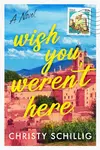
Oh that was a fine little delight! Doesn’t attempt to do more than what it promises, and handily delivers on that promise.
I keep comparing this to The Little Venice Bookshop, which might be unfair but their plots do fit the same general mold: woman goes out into the world (specifically Italy) to find herself. She has a sad past involving her mother, and this journey is part of honoring said mother’s last wishes. Along the way, she finds home, love, and family, and lives happily ever after, the end. Except where The Little Venice Bookshop fails, this book succeeds - and I mean that in every single metric one can think of, from characterization to plot to just the general writing style.
That being said, there’s nothing all that revolutionary about this book. It is what it says on the tin, just done decently enough that it won’t give the reader a headache or leave a bad taste in their mouth when they’re done, as compared to some other books I have already mentioned.
Overall, this was a light, delightful read that’s not too demanding while still being decently-crafted enough in comparison to some other books like it: good for some light escapism.
Originally posted at kamreadsandrecs.tumblr.com.
Oh that was a fine little delight! Doesn’t attempt to do more than what it promises, and handily delivers on that promise.
I keep comparing this to The Little Venice Bookshop, which might be unfair but their plots do fit the same general mold: woman goes out into the world (specifically Italy) to find herself. She has a sad past involving her mother, and this journey is part of honoring said mother’s last wishes. Along the way, she finds home, love, and family, and lives happily ever after, the end. Except where The Little Venice Bookshop fails, this book succeeds - and I mean that in every single metric one can think of, from characterization to plot to just the general writing style.
That being said, there’s nothing all that revolutionary about this book. It is what it says on the tin, just done decently enough that it won’t give the reader a headache or leave a bad taste in their mouth when they’re done, as compared to some other books I have already mentioned.
Overall, this was a light, delightful read that’s not too demanding while still being decently-crafted enough in comparison to some other books like it: good for some light escapism.
Originally posted at kamreadsandrecs.tumblr.com.

Okay, I think that was a delightful read, but it’s also got some issues.
This wasn’t as challenging as some people are making it out to be, both pre- and post-release. The author does use academic language and conceits, but it’s honestly Academic Lite compared to some other novels I’ve read. I admit that my previous experience in academia serves me well here, but in truth the prose is not that difficult. Any previous experience in reading academic papers will suffice, as will previous experience reading classic literature (American or British will do; no need to go chasing the Russians or the French for this).
As for the references, they aren’t really that deep - certainly not to the same level as the references to Edmund Spenser’s The Faerie Queene and the Scottish ballad Tam Lin in Pamela Dean’s Tam Lin, or to Greek tragedy in Donna Tartt’s The Secret History. The references in this book feel more like a passing nod to the texts they refer back to, but do not feel like they deeply inform the story. It’s more like they’re being used to show how clever and well-read the characters are, instead of being a fundamental part of the narrative. Which can be fun: intertextuality, after all, is a fine game for authors and readers to play with each other. But in order for that game to truly be enjoyable, the author has to try to anticipate and match their readership’s depth and breadth of experience - and sadly, in this case, it would appear the author is playing in the Minor Leagues, when I was expecting the Majors.
(I do want to point out that, of all my previous experiences with narrative across various media, the one reference point that I found most cogent while reading this book was Hiromu Arakawa’s Fullmetal Alchemist. Those familiar with that manga/anime will see what I mean, and those who are not- Well, I highly recommend it.)
Despite that, though, the story was pretty fun: Alice and Peter were lovely characters to read about - especially Alice, with all her complicated feelings about being an Asian woman in academia. Peter was a darling, though I do wish we’d been more strongly developed. The way the novel explores the highs and lows of academia - its light and its shadows, its glories and its abuses - through Alice and Peter’s narratives was deeply relatable and felt accurate on the emotional level and in the broader strokes of the narrative, but of course readers must remember that it’s not a completely accurate, one-is-to-one portrayal. People vary, courses vary, and universities and colleges vary; one person’s experience of academic life will be different from what is portrayed in this book.
Overall, this was a fun story to get lost in, but I do wish that there had been more meat on its bones. I can see what the author was trying to do, what the author was trying to build, and can’t help but think she could have done more with the material they were using. It could have been so much deeper, so much richer, if the literary references were more than just winked at, or if the characters had been given more development. This will serve well, I suppose, as an introduction to more complex work, but it is not, in and of itself, very complex at all.
Originally posted at kamreadsandrecs.tumblr.com.
Okay, I think that was a delightful read, but it’s also got some issues.
This wasn’t as challenging as some people are making it out to be, both pre- and post-release. The author does use academic language and conceits, but it’s honestly Academic Lite compared to some other novels I’ve read. I admit that my previous experience in academia serves me well here, but in truth the prose is not that difficult. Any previous experience in reading academic papers will suffice, as will previous experience reading classic literature (American or British will do; no need to go chasing the Russians or the French for this).
As for the references, they aren’t really that deep - certainly not to the same level as the references to Edmund Spenser’s The Faerie Queene and the Scottish ballad Tam Lin in Pamela Dean’s Tam Lin, or to Greek tragedy in Donna Tartt’s The Secret History. The references in this book feel more like a passing nod to the texts they refer back to, but do not feel like they deeply inform the story. It’s more like they’re being used to show how clever and well-read the characters are, instead of being a fundamental part of the narrative. Which can be fun: intertextuality, after all, is a fine game for authors and readers to play with each other. But in order for that game to truly be enjoyable, the author has to try to anticipate and match their readership’s depth and breadth of experience - and sadly, in this case, it would appear the author is playing in the Minor Leagues, when I was expecting the Majors.
(I do want to point out that, of all my previous experiences with narrative across various media, the one reference point that I found most cogent while reading this book was Hiromu Arakawa’s Fullmetal Alchemist. Those familiar with that manga/anime will see what I mean, and those who are not- Well, I highly recommend it.)
Despite that, though, the story was pretty fun: Alice and Peter were lovely characters to read about - especially Alice, with all her complicated feelings about being an Asian woman in academia. Peter was a darling, though I do wish we’d been more strongly developed. The way the novel explores the highs and lows of academia - its light and its shadows, its glories and its abuses - through Alice and Peter’s narratives was deeply relatable and felt accurate on the emotional level and in the broader strokes of the narrative, but of course readers must remember that it’s not a completely accurate, one-is-to-one portrayal. People vary, courses vary, and universities and colleges vary; one person’s experience of academic life will be different from what is portrayed in this book.
Overall, this was a fun story to get lost in, but I do wish that there had been more meat on its bones. I can see what the author was trying to do, what the author was trying to build, and can’t help but think she could have done more with the material they were using. It could have been so much deeper, so much richer, if the literary references were more than just winked at, or if the characters had been given more development. This will serve well, I suppose, as an introduction to more complex work, but it is not, in and of itself, very complex at all.
Originally posted at kamreadsandrecs.tumblr.com.

So: this wasn’t all that bad a read, but I’ve got a few issues with it.
The concept is pretty entertaining: an entire street/neighborhood being haunted instead of just a house or a building. It allowed for an exploration of suburbia as the site of horror: of how evil hides behind a facade of civility, how the American Dream really is just a dream. I know there are other books that explore the dark side of suburbia, but this novel makes those evils very explicit - enough that I kind of wish it had dialed it back a bit and left some things to the imagination.
I think the author could have spent more time developing certain characters a bit more. While I understand the focus on Talitha, and how, because of the way this book is narrated, she and Brett get the lion’s share of character development, I think that the narrative overall would have been better-balanced if other characters had been given more opportunities to shine. Enid, in particular, could have used a lot more development, especially because of her role in the narrative. Her role was so important to the overall story that I was expecting she’d be a bit more fleshed out over the course of the novel, but unfortunately, that’s not the case. I also wish Grace had been more fleshed out, again because of her importance to the narrative, but that doesn’t come to pass either. This is unfortunate, as they seem to have very interesting stories of their own, and it’s a pity the reader doesn’t get more than a glimpse of those stories.
I also wish attention had been given to the research team, especially the way they treated Talitha. There really is something horrific about the tragedy of one’s life being reduced to research items for dissection and debate, how utterly dehumanizing that is. The narrative could also have explored the ethics of true crime and the fascination with it, as well as the industry of podcasts, Youtube videos, documentaries, and books both fictional and non-fictional that make bank off the tragedies that befall others. The story could have done a really deep dive into the horrors of that idea, and it was poised to do so, but it doesn’t really bother to go there.
Overall, this wasn’t that bad a read, but it did feel like it could have done more in a few places. While the exploration of the hidden evils of suburbia and the concept of a haunted neighborhood are both interesting, the development of some characters wasn’t as strong as I wanted it to be, and certain themes were left unexplored when they really should have been delved into.
Originally posted at kamreadsandrecs.tumblr.com.
So: this wasn’t all that bad a read, but I’ve got a few issues with it.
The concept is pretty entertaining: an entire street/neighborhood being haunted instead of just a house or a building. It allowed for an exploration of suburbia as the site of horror: of how evil hides behind a facade of civility, how the American Dream really is just a dream. I know there are other books that explore the dark side of suburbia, but this novel makes those evils very explicit - enough that I kind of wish it had dialed it back a bit and left some things to the imagination.
I think the author could have spent more time developing certain characters a bit more. While I understand the focus on Talitha, and how, because of the way this book is narrated, she and Brett get the lion’s share of character development, I think that the narrative overall would have been better-balanced if other characters had been given more opportunities to shine. Enid, in particular, could have used a lot more development, especially because of her role in the narrative. Her role was so important to the overall story that I was expecting she’d be a bit more fleshed out over the course of the novel, but unfortunately, that’s not the case. I also wish Grace had been more fleshed out, again because of her importance to the narrative, but that doesn’t come to pass either. This is unfortunate, as they seem to have very interesting stories of their own, and it’s a pity the reader doesn’t get more than a glimpse of those stories.
I also wish attention had been given to the research team, especially the way they treated Talitha. There really is something horrific about the tragedy of one’s life being reduced to research items for dissection and debate, how utterly dehumanizing that is. The narrative could also have explored the ethics of true crime and the fascination with it, as well as the industry of podcasts, Youtube videos, documentaries, and books both fictional and non-fictional that make bank off the tragedies that befall others. The story could have done a really deep dive into the horrors of that idea, and it was poised to do so, but it doesn’t really bother to go there.
Overall, this wasn’t that bad a read, but it did feel like it could have done more in a few places. While the exploration of the hidden evils of suburbia and the concept of a haunted neighborhood are both interesting, the development of some characters wasn’t as strong as I wanted it to be, and certain themes were left unexplored when they really should have been delved into.
Originally posted at kamreadsandrecs.tumblr.com.

Okay so. I can see why there were attempts by Meta to make sure this book was sunk before it even reached wider publication, because of what it reveals of the culture inside the company.
The title is incredibly apt, because the head honchos at Meta really just don’t give a fuck about anybody except themselves and their inner circle. This lack of care was entrenched in the company’s culture from the very beginning, as evidenced by the author’s story about how she got into Meta (then Facebook) in the first place.
What’s horrifying, though, is seeing how that lack of care and empathy grows as the company grows. The entire book is about just how little Meta’s leadership cares about anyone else; they lack anything resembling what Filipinos would call delicadeza in dealing with other people. What’s even more upsetting and tragic is that these people are responsible for putting ENTIRE COUNTRIES into dire political straits - mine included. They have destroyed, and are destroying, millions of lives all over the world and they just do not give a fuck.
And while I’m slightly sympathetic to the author’s situation, given her health problems and her children, as well as being a victim of horrendous sexual harassment, I still can’t muster more than that because her inaction directly led to Meta becoming what it is today. She saw what was going on, and not ONCE thought to become a whistleblower - actually, no: she DID think about becoming a whistleblower, but crucially, DID NOT ACTUALLY BECOME ONE. And partially because of her, dozens of innocents like Kian delos Santos are dead, thanks to the Facebook-fueled election of Rodrigo Duterte: an election that not only killed hundreds of people, but continues to leave the Philippines more deeply-entrenched in corruption, and has altered the political landscape so much that it’s gotten harder to dig the country out of its current nightmare spiral. Compared to that, it’s hard to muster up sympathy for a white woman from a First World country with a US dollar Facebook salary, despite what she’s been through.
Overall, this was an interesting, if rage-inducing, read. I don’t think anyone will be too surprised by what is going on with Meta/Facebook, given revelations across the news in recent years, but it’s still possible to be caught off-guard by how deeply the apathy, carelessness, greed, and sociopathy run in the company’s upper echelons. It may also be possible to spare some sympathy for the author, but given the enormity of the effects of her decisions (as well as her silence on some crucial elements to this story, such as the role of Cambridge Analytica in influencing elections through social media), that sympathy will be very thin indeed, if readers can manage to muster it.
Originally posted at kamreadsandrecs.tumblr.com.
Okay so. I can see why there were attempts by Meta to make sure this book was sunk before it even reached wider publication, because of what it reveals of the culture inside the company.
The title is incredibly apt, because the head honchos at Meta really just don’t give a fuck about anybody except themselves and their inner circle. This lack of care was entrenched in the company’s culture from the very beginning, as evidenced by the author’s story about how she got into Meta (then Facebook) in the first place.
What’s horrifying, though, is seeing how that lack of care and empathy grows as the company grows. The entire book is about just how little Meta’s leadership cares about anyone else; they lack anything resembling what Filipinos would call delicadeza in dealing with other people. What’s even more upsetting and tragic is that these people are responsible for putting ENTIRE COUNTRIES into dire political straits - mine included. They have destroyed, and are destroying, millions of lives all over the world and they just do not give a fuck.
And while I’m slightly sympathetic to the author’s situation, given her health problems and her children, as well as being a victim of horrendous sexual harassment, I still can’t muster more than that because her inaction directly led to Meta becoming what it is today. She saw what was going on, and not ONCE thought to become a whistleblower - actually, no: she DID think about becoming a whistleblower, but crucially, DID NOT ACTUALLY BECOME ONE. And partially because of her, dozens of innocents like Kian delos Santos are dead, thanks to the Facebook-fueled election of Rodrigo Duterte: an election that not only killed hundreds of people, but continues to leave the Philippines more deeply-entrenched in corruption, and has altered the political landscape so much that it’s gotten harder to dig the country out of its current nightmare spiral. Compared to that, it’s hard to muster up sympathy for a white woman from a First World country with a US dollar Facebook salary, despite what she’s been through.
Overall, this was an interesting, if rage-inducing, read. I don’t think anyone will be too surprised by what is going on with Meta/Facebook, given revelations across the news in recent years, but it’s still possible to be caught off-guard by how deeply the apathy, carelessness, greed, and sociopathy run in the company’s upper echelons. It may also be possible to spare some sympathy for the author, but given the enormity of the effects of her decisions (as well as her silence on some crucial elements to this story, such as the role of Cambridge Analytica in influencing elections through social media), that sympathy will be very thin indeed, if readers can manage to muster it.
Originally posted at kamreadsandrecs.tumblr.com.

This was a little shorter than I strictly liked, but not half-bad for the most part. The story works just at the length it has, but I think it could have benefited from being a few more pages longer just to let the plot breathe a bit.
I’m not sure I liked the narrative style very much. It was ACCURATE to the character, but the sleepy languidness of the storytelling is not really something I personally enjoy.
I did like the moments when the narrative pokes at climate change and misogyny though, as well as economic uncertainty for working people. Also really liked the narrator’s sympathy for the villain in this story, emphasizing how much people are a product of their respective backgrounds - and how what one views as good might not necessarily be good for everyone else in the world. I also thought the illustrations were a lovely touch, not least because they look like manga/manhwa panels. It’s a great nod to the original magical girls that influenced this story.
Overall this was a lovely story that deals with some heavy themes while managing to maintain a rather light and wondrous tone. There were aspects of it that I personally didn’t enjoy, but it is otherwise a good novella.
Originally posted at kamreadsandrecs.tumblr.com.
This was a little shorter than I strictly liked, but not half-bad for the most part. The story works just at the length it has, but I think it could have benefited from being a few more pages longer just to let the plot breathe a bit.
I’m not sure I liked the narrative style very much. It was ACCURATE to the character, but the sleepy languidness of the storytelling is not really something I personally enjoy.
I did like the moments when the narrative pokes at climate change and misogyny though, as well as economic uncertainty for working people. Also really liked the narrator’s sympathy for the villain in this story, emphasizing how much people are a product of their respective backgrounds - and how what one views as good might not necessarily be good for everyone else in the world. I also thought the illustrations were a lovely touch, not least because they look like manga/manhwa panels. It’s a great nod to the original magical girls that influenced this story.
Overall this was a lovely story that deals with some heavy themes while managing to maintain a rather light and wondrous tone. There were aspects of it that I personally didn’t enjoy, but it is otherwise a good novella.
Originally posted at kamreadsandrecs.tumblr.com.

Okay so. After sitting on this for a while I think I’ve got a better handle of what this does and what it doesn’t.
What it does well: portray the life of an immigrant worker in an increasingly dystopian tech industry. Social media moderation and its deleterious effects have been covered in the Filipino movie Deleter (2022), and will be covered in the upcoming movie American Sweatshop (2025). While Deleter had mixed reviews, it at least had the advantage of accurately portraying who actually handles content moderation for the big social media outlets: people, typically women, from Third World countries willing to accept a fraction of the pay and thrice the psychological abuse their white counterparts would be willing to put up with. American Sweatshop, on the other hand, has a VERY pale cast, so I find myself intensely doubtful of its quality based on that alone.
Moderation, however, shows the truth. The moderation team of Reeden, the fictional tech company the protagonist Girlie nominally works for (”nominally” because, like her other fellow moderators, she is a contract worker hired via staffing agency, the name of which changes every year to save costs on things like providing benefits and health insurance to employees), have more in common with the nurses, caregivers, and domestic helpers whom Girlie calls her “ancestors”, and who make up her family: people willing to clean up the shit and slop the Western world generates and refuses to deal with.
Another of the novel’s strengths is how it portrays the way tech companies work: the greed, the rapacious acquisitiveness, the tendency to strip anything and anyone for everything useful and leaving the rest behind as soon as it is convenient. Everything that doesn’t materially contribute to the company’s bottom line can be sacrificed, tossed aside: from people to values to politics. Nothing matters more than the pursuit of endless growth, no matter how mythical that is. And the novel highlights the effects of such thinking - and nowhere more clearly than in Girlie’s cynicism towards the world around her: a cynicism that, ironically, makes her one of the best moderators.
Alongside the themes of tech dystopia are the themes of family - especially immigrant family - life. The one that stuck with me the most was how the novel tackles the concept of utang na loob towards one’s family, especially one’s parents. Girlie’s relationship with her mother is fraught, mostly because she blames her mother’s poor decision-making leading to them losing the family home in Milpitas during the 2008 financial crisis. On top of this, there is lingering resentment towards the expectation that Girlie alter the course of her entire life, just to keep her family, and especially her mother, afloat. The moments when Girlie lets her resentment show are someone of the sharpest indictments of utang na loob I’ve read about in a while, and they speak to me very personally.
But while the novel handles these ideas quite well, I do find myself wishing that the romance hadn’t interfered so much with the aforementioned themes, especially towards the end. While there is absolutely nothing wrong with a romance in a novel like this (not least because it’s a well-executed slow burn of the kind I personally enjoy), I found that the focus on it in the novel’s ending reduced the power of the narrative’s earlier concerns. While a conclusive ending isn’t necessary, I would have appreciated a more sustained focus on the issues of tech labor, immigration, and family that were a core of most of the novel.
Overall, this is a very different novel from America is Not the Heart, but still a delightful read regardless. Girlie is a very fun character to read about, as well as an engaging narrator, with the writing style giving her a personality that some readers may find themselves relating to deeply. However, while the romance is pretty good, I do wish that it had not been quite so prominent towards the end, when tackling the themes of Big Tech’s failings and its effects on people like Girlie would have been a more interesting - and more timely - focus.
Originally posted at kamreadsandrecs.tumblr.com.
Okay so. After sitting on this for a while I think I’ve got a better handle of what this does and what it doesn’t.
What it does well: portray the life of an immigrant worker in an increasingly dystopian tech industry. Social media moderation and its deleterious effects have been covered in the Filipino movie Deleter (2022), and will be covered in the upcoming movie American Sweatshop (2025). While Deleter had mixed reviews, it at least had the advantage of accurately portraying who actually handles content moderation for the big social media outlets: people, typically women, from Third World countries willing to accept a fraction of the pay and thrice the psychological abuse their white counterparts would be willing to put up with. American Sweatshop, on the other hand, has a VERY pale cast, so I find myself intensely doubtful of its quality based on that alone.
Moderation, however, shows the truth. The moderation team of Reeden, the fictional tech company the protagonist Girlie nominally works for (”nominally” because, like her other fellow moderators, she is a contract worker hired via staffing agency, the name of which changes every year to save costs on things like providing benefits and health insurance to employees), have more in common with the nurses, caregivers, and domestic helpers whom Girlie calls her “ancestors”, and who make up her family: people willing to clean up the shit and slop the Western world generates and refuses to deal with.
Another of the novel’s strengths is how it portrays the way tech companies work: the greed, the rapacious acquisitiveness, the tendency to strip anything and anyone for everything useful and leaving the rest behind as soon as it is convenient. Everything that doesn’t materially contribute to the company’s bottom line can be sacrificed, tossed aside: from people to values to politics. Nothing matters more than the pursuit of endless growth, no matter how mythical that is. And the novel highlights the effects of such thinking - and nowhere more clearly than in Girlie’s cynicism towards the world around her: a cynicism that, ironically, makes her one of the best moderators.
Alongside the themes of tech dystopia are the themes of family - especially immigrant family - life. The one that stuck with me the most was how the novel tackles the concept of utang na loob towards one’s family, especially one’s parents. Girlie’s relationship with her mother is fraught, mostly because she blames her mother’s poor decision-making leading to them losing the family home in Milpitas during the 2008 financial crisis. On top of this, there is lingering resentment towards the expectation that Girlie alter the course of her entire life, just to keep her family, and especially her mother, afloat. The moments when Girlie lets her resentment show are someone of the sharpest indictments of utang na loob I’ve read about in a while, and they speak to me very personally.
But while the novel handles these ideas quite well, I do find myself wishing that the romance hadn’t interfered so much with the aforementioned themes, especially towards the end. While there is absolutely nothing wrong with a romance in a novel like this (not least because it’s a well-executed slow burn of the kind I personally enjoy), I found that the focus on it in the novel’s ending reduced the power of the narrative’s earlier concerns. While a conclusive ending isn’t necessary, I would have appreciated a more sustained focus on the issues of tech labor, immigration, and family that were a core of most of the novel.
Overall, this is a very different novel from America is Not the Heart, but still a delightful read regardless. Girlie is a very fun character to read about, as well as an engaging narrator, with the writing style giving her a personality that some readers may find themselves relating to deeply. However, while the romance is pretty good, I do wish that it had not been quite so prominent towards the end, when tackling the themes of Big Tech’s failings and its effects on people like Girlie would have been a more interesting - and more timely - focus.
Originally posted at kamreadsandrecs.tumblr.com.

I’m glad I decided to reread Blood and Beauty before starting this novel, not only to refresh my memory of the Borgia’s story, but also to experience the full arc of their history as interpreted by the author. Or nearly full, anyway, given where this novel cuts off.
Plotwise there’s a bit less drama between the Borgias in this one than there was in the first novel, since the focus of this book is more on the political intrigue and scheming that Cesare, Alexander, and Lucrezia engage in as part of the project to elevate the Borgia family to the greatest heights possible. But whatever drama there is, is pretty well done - especially where Lucrezia is concerned. As in the first novel, she appears to have received the best characterization, even though the arc of her development follows what other authors who’ve written about Lucrezia have done: which is to say, they tend to paint Lucrezia in a more sympathetic light than the historical accounts have. But even though other authors have already done the same thing, the author’s specific characterization of Lucrezia is distinct, and makes her an utter delight to read.
Unfortunately the same cannot exactly be said for Cesare and, to a lesser extent, Alexander. Alexander’s personality seems to have remained largely static, though that’s in some ways forgivable because a lot of people become set in their ways as they age. Cesare, though, is a different story. The histories record Cesare as a vicious sociopathic monster of a man, and his characterization in this novel certainly follows that - but that’s all it does. There is no additional depth, no additional nuance to add complexity to Cesare as a character. Unlike Lucrezia’s characterization, which portrays her as largely innocent of the more egregious accusations levelled at her by history, while still being a flawed person, Cesare’s portrayal feels a bit one-note. I don’t expect the novel to absolve him of his sins, or make him less evil, but surely there was a way to portray him as the complex, complicated man he likely was while he was alive?
Honestly this is a similar issue I had in the first book, mostly with the portrayal of Juan. As with Cesare, I never expected Juan to be absolved of any of his sins, but his portrayal did feel rather one-note. In my review for that novel, I opined that, as a work of fiction, surely there was room to add more facets to Juan than to simply follow what the historical accounts said about him? After all, what would be the point of writing a fictional account if one doesn’t fictionalize a little bit, right? I raise that same question again in this review, but this time for Cesare: adhering to historical accounts is all well and good, but this is a novel, a work of fiction, for a reason. Surely it would have been possible to add depth and nuance to Cesare’s characterization by fictionalizing his character a bit, instead of just sticking to what the historical accounts said about him? Accounts that, by and large, were biased against him in the first place?
Another issue I have is with the way Machiavelli was used in this novel. When I found out that he was going to be in the novel I was very interested; after all, Machiavelli’s book The Prince was supposedly inspired by Cesare, especially by his actions while conquering the Romagna in the early 1500s. In this novel, his primary role appears to be to comment on what Cesare is doing (or not doing, as the case may be), but he doesn’t really grow beyond that. In fact, he seems to just pop up at random moments throughout the novel, comment on what he thinks Cesare is doing, and then disappears again. Given that he’s the character that opens, and ends, this novel, I was hoping that he’d been a bit more important to the narrative than he actually is, or that he’d have better characterization. Sadly, he gets neither, which is sad because I rather like him as a character: there’s a certain level of nuance and complexity to him that doesn’t get explored as fully as I might like.
Overall, this novel isn’t that bad a read, and wraps up the story of the Borgias in a way that’s satisfying enough, but not necessarily worthy of a standing ovation, so to speak. Lucrezia is the standout character, as she was in the previous novel, but Cesare suffers from being a bit flat, lacking the kind of depth and complexity Lucrezia is written with. As for Machiavelli, he could have been a potentially interesting character, but he too suffers from a certain lack of development. This is a problem I also noticed in the previous novel, and it is one that carries over into this one: sad, given that it would have been very interesting to see an author as skilled as this one try to portray people as complicated and complex as Cesare Borgia and Niccolo Machiavelli as characters in a story.
Originally posted at kamreadsandrecs.tumblr.com.
I’m glad I decided to reread Blood and Beauty before starting this novel, not only to refresh my memory of the Borgia’s story, but also to experience the full arc of their history as interpreted by the author. Or nearly full, anyway, given where this novel cuts off.
Plotwise there’s a bit less drama between the Borgias in this one than there was in the first novel, since the focus of this book is more on the political intrigue and scheming that Cesare, Alexander, and Lucrezia engage in as part of the project to elevate the Borgia family to the greatest heights possible. But whatever drama there is, is pretty well done - especially where Lucrezia is concerned. As in the first novel, she appears to have received the best characterization, even though the arc of her development follows what other authors who’ve written about Lucrezia have done: which is to say, they tend to paint Lucrezia in a more sympathetic light than the historical accounts have. But even though other authors have already done the same thing, the author’s specific characterization of Lucrezia is distinct, and makes her an utter delight to read.
Unfortunately the same cannot exactly be said for Cesare and, to a lesser extent, Alexander. Alexander’s personality seems to have remained largely static, though that’s in some ways forgivable because a lot of people become set in their ways as they age. Cesare, though, is a different story. The histories record Cesare as a vicious sociopathic monster of a man, and his characterization in this novel certainly follows that - but that’s all it does. There is no additional depth, no additional nuance to add complexity to Cesare as a character. Unlike Lucrezia’s characterization, which portrays her as largely innocent of the more egregious accusations levelled at her by history, while still being a flawed person, Cesare’s portrayal feels a bit one-note. I don’t expect the novel to absolve him of his sins, or make him less evil, but surely there was a way to portray him as the complex, complicated man he likely was while he was alive?
Honestly this is a similar issue I had in the first book, mostly with the portrayal of Juan. As with Cesare, I never expected Juan to be absolved of any of his sins, but his portrayal did feel rather one-note. In my review for that novel, I opined that, as a work of fiction, surely there was room to add more facets to Juan than to simply follow what the historical accounts said about him? After all, what would be the point of writing a fictional account if one doesn’t fictionalize a little bit, right? I raise that same question again in this review, but this time for Cesare: adhering to historical accounts is all well and good, but this is a novel, a work of fiction, for a reason. Surely it would have been possible to add depth and nuance to Cesare’s characterization by fictionalizing his character a bit, instead of just sticking to what the historical accounts said about him? Accounts that, by and large, were biased against him in the first place?
Another issue I have is with the way Machiavelli was used in this novel. When I found out that he was going to be in the novel I was very interested; after all, Machiavelli’s book The Prince was supposedly inspired by Cesare, especially by his actions while conquering the Romagna in the early 1500s. In this novel, his primary role appears to be to comment on what Cesare is doing (or not doing, as the case may be), but he doesn’t really grow beyond that. In fact, he seems to just pop up at random moments throughout the novel, comment on what he thinks Cesare is doing, and then disappears again. Given that he’s the character that opens, and ends, this novel, I was hoping that he’d been a bit more important to the narrative than he actually is, or that he’d have better characterization. Sadly, he gets neither, which is sad because I rather like him as a character: there’s a certain level of nuance and complexity to him that doesn’t get explored as fully as I might like.
Overall, this novel isn’t that bad a read, and wraps up the story of the Borgias in a way that’s satisfying enough, but not necessarily worthy of a standing ovation, so to speak. Lucrezia is the standout character, as she was in the previous novel, but Cesare suffers from being a bit flat, lacking the kind of depth and complexity Lucrezia is written with. As for Machiavelli, he could have been a potentially interesting character, but he too suffers from a certain lack of development. This is a problem I also noticed in the previous novel, and it is one that carries over into this one: sad, given that it would have been very interesting to see an author as skilled as this one try to portray people as complicated and complex as Cesare Borgia and Niccolo Machiavelli as characters in a story.
Originally posted at kamreadsandrecs.tumblr.com.

So this was a pretty entertaining little ride - at least, while it lasted. Now that the ride’s over I’m not feeling quite so copacetic.
The initial premise felt very interesting, and the buildup of the mystery felt pretty engaging: writing felt snappy and easy to read, and the worldbuilding didn’t feel very challenging since it’s more a near-future than a far-future, and operates on climate change projections that most readers will already be familiar with. So, while one is reading the novel, there isn’t a lot of- I think “friction” might be a good way to describe this. The friction in this novel comes from the mystery: trying to figure out whodunit, and why. And to that end, the novel mostly works: it gives the reader enough friction to keep them wondering who committed the crime, and why the crime was committed.
But that’s not my problem with this book; my problem is that that’s ALL it does. It’s an amusing mystery, sure, but it doesn’t offer anything more than that - which is unfortunate, because there is A LOT it could actually be doing, both in terms of worldbuilding and in terms of themes.
In terms of worldbuilding, there could have been a lot more work done on the Logi. While there’s nothing wrong with not spending a lot of time describing what they physically look like, I feel like a lot more time could have been devoted to explaining what their culture is like, not least because it ties in so deeply to the novel’s central mystery. It’s not necessary to explain every single aspect of it, and I understand having to understate or leave out other parts for the mystery to work, but there also needs to be a lot more development than what the reader actually gets in this novel because without it, the Logi feel like props, instead of actual characters.
Developing the Logi also opens up and strengthens other aspects of the novel, such as the themes. As the novel stands there aren’t a lot of themes that are explored to any great depth, which is unfortunate because there was a lot of potential to tackle ideas like police corruption, or how the academe supports non-progressive ideologies. Those are themes that would be relevant, especially given current world events, but they are instead left unaddressed because, again, there just isn’t a lot of development beyond what was needed to keep the plot going.
And speaking of plot, there were a lot of storylines that did not receive any reasonable conclusion. By this I don’t mean they needed to be tied up in a neat bow; a reader can’t always expect to have all plot threads dealt with conclusively, and I don’t expect that to always happen - provided, of course, it’s done so in a way that makes sense. Unfortunately, that wasn’t the case here, as there were a couple of rather important plot threads that didn’t receive any decent conclusion by the end of the novel. This also affects the themes: developing and concluding these threads in some fashion would have helped in developing certain themes that, as I mentioned earlier, weren’t treated with enough depth.
Overall, this was fun read, but that’s all it is: fun. No deeper exploration of themes, no true worldbuilding. There isn’t a lot of meat on these bones, so readers looking for something with a bit more bite really should look elsewhere.
Originally posted at kamreadsandrecs.tumblr.com.
So this was a pretty entertaining little ride - at least, while it lasted. Now that the ride’s over I’m not feeling quite so copacetic.
The initial premise felt very interesting, and the buildup of the mystery felt pretty engaging: writing felt snappy and easy to read, and the worldbuilding didn’t feel very challenging since it’s more a near-future than a far-future, and operates on climate change projections that most readers will already be familiar with. So, while one is reading the novel, there isn’t a lot of- I think “friction” might be a good way to describe this. The friction in this novel comes from the mystery: trying to figure out whodunit, and why. And to that end, the novel mostly works: it gives the reader enough friction to keep them wondering who committed the crime, and why the crime was committed.
But that’s not my problem with this book; my problem is that that’s ALL it does. It’s an amusing mystery, sure, but it doesn’t offer anything more than that - which is unfortunate, because there is A LOT it could actually be doing, both in terms of worldbuilding and in terms of themes.
In terms of worldbuilding, there could have been a lot more work done on the Logi. While there’s nothing wrong with not spending a lot of time describing what they physically look like, I feel like a lot more time could have been devoted to explaining what their culture is like, not least because it ties in so deeply to the novel’s central mystery. It’s not necessary to explain every single aspect of it, and I understand having to understate or leave out other parts for the mystery to work, but there also needs to be a lot more development than what the reader actually gets in this novel because without it, the Logi feel like props, instead of actual characters.
Developing the Logi also opens up and strengthens other aspects of the novel, such as the themes. As the novel stands there aren’t a lot of themes that are explored to any great depth, which is unfortunate because there was a lot of potential to tackle ideas like police corruption, or how the academe supports non-progressive ideologies. Those are themes that would be relevant, especially given current world events, but they are instead left unaddressed because, again, there just isn’t a lot of development beyond what was needed to keep the plot going.
And speaking of plot, there were a lot of storylines that did not receive any reasonable conclusion. By this I don’t mean they needed to be tied up in a neat bow; a reader can’t always expect to have all plot threads dealt with conclusively, and I don’t expect that to always happen - provided, of course, it’s done so in a way that makes sense. Unfortunately, that wasn’t the case here, as there were a couple of rather important plot threads that didn’t receive any decent conclusion by the end of the novel. This also affects the themes: developing and concluding these threads in some fashion would have helped in developing certain themes that, as I mentioned earlier, weren’t treated with enough depth.
Overall, this was fun read, but that’s all it is: fun. No deeper exploration of themes, no true worldbuilding. There isn’t a lot of meat on these bones, so readers looking for something with a bit more bite really should look elsewhere.
Originally posted at kamreadsandrecs.tumblr.com.

Oh godsdamnit I wasn’t expecting this to hit as deep in the emotional gut as it did, but it definitely hit in a good way.
When this first came out it was promoted as a horror novel something along the lines of Stephen Graham-Jones’ The Only Good Indians: different types of horror, sure, but still similar in that they would both touch upon the horrors of colonialism and land and cultural theft faced by Native Americans across history and into the present. I actually thought, based on the book’s summary, that it would focus on the numerous disappearances of Native women that, if I recall correctly, was a topic that had traction on the wider internet at the time the novel was published.
But where The Only Good Indians reckons primarily with colonial history and brutality, and how those affect the lives of Native Americans in the present, this novel reckons with grief and loss: not just personal (though that does make up the bulk of the story), but also generational grief, the kind that comes from having one’s entire people and culture being brutalized and victimized in every possible way by white colonizers. It’s not something addressed directly, but it’s an undercurrent that runs throughout the novel, one that is brought up every now and then in small moments, like when Mackenzie describes what happened to her hometown during the oil field boom, and then what happened after when the oil fields were no longer viable.
But while the novel does address those wider themes, what it really focuses on is personal: Mackenzie’s grief, and relationship with her family. I won’t get into it much to avoid spoilers, but suffice to say that this is essentially the novel’s emotional heart. Through Mackenzie, the reader comes to understand how grief can be a wound that cuts not just through individuals, but through entire groups of people, and how the wound can deepen and fester until it breaks a person - a community - apart.
At the same time, though, the novel acknowledges that grief is not something that a person can confront alone. Grief is a burden best shared with those one loves, even if one thinks one does not deserve to be loved - or rather, ESPECIALLY if one thinks one does not deserve to be loved. Running away from grief, or from any problem for that matter, will only isolate one further from one’s support system; the idea that one must keep this pain to oneself for fear that it will hurt others will only deepen the pain and make it permanent. Share it, though, and the burden lessens, becomes easier to bear, and heals - not immediately, but over time.
The emphasis on the value of community was especially well done here, and rooted in the cultural context of Mackenzie’s Cree identity. It also didn’t escape my notice that Mackenzie’s community is primarily made up of women and queer people: people who have stood on the margins for decades, if not hundreds, of years, and who, more than anyone else, understand the power of coming together to face any challenge. While I understand that being close to one’s blood family might not always be possible for a lot of people, that doesn’t change the fact that community is still value of having community in the first place - if not of blood, then of culture, and of the heart.
Overall, this was a powerful read that sucker-punched me in the emotional gut. While there are some aspects of horror to the story, it is largely a meditation on grief, loss, and the power of community in the face of tragedy: an idea that more people could stand to remember, in the face of the challenges the world as currently stands has in store for everyone.
Originally posted at kamreadsandrecs.tumblr.com.
Oh godsdamnit I wasn’t expecting this to hit as deep in the emotional gut as it did, but it definitely hit in a good way.
When this first came out it was promoted as a horror novel something along the lines of Stephen Graham-Jones’ The Only Good Indians: different types of horror, sure, but still similar in that they would both touch upon the horrors of colonialism and land and cultural theft faced by Native Americans across history and into the present. I actually thought, based on the book’s summary, that it would focus on the numerous disappearances of Native women that, if I recall correctly, was a topic that had traction on the wider internet at the time the novel was published.
But where The Only Good Indians reckons primarily with colonial history and brutality, and how those affect the lives of Native Americans in the present, this novel reckons with grief and loss: not just personal (though that does make up the bulk of the story), but also generational grief, the kind that comes from having one’s entire people and culture being brutalized and victimized in every possible way by white colonizers. It’s not something addressed directly, but it’s an undercurrent that runs throughout the novel, one that is brought up every now and then in small moments, like when Mackenzie describes what happened to her hometown during the oil field boom, and then what happened after when the oil fields were no longer viable.
But while the novel does address those wider themes, what it really focuses on is personal: Mackenzie’s grief, and relationship with her family. I won’t get into it much to avoid spoilers, but suffice to say that this is essentially the novel’s emotional heart. Through Mackenzie, the reader comes to understand how grief can be a wound that cuts not just through individuals, but through entire groups of people, and how the wound can deepen and fester until it breaks a person - a community - apart.
At the same time, though, the novel acknowledges that grief is not something that a person can confront alone. Grief is a burden best shared with those one loves, even if one thinks one does not deserve to be loved - or rather, ESPECIALLY if one thinks one does not deserve to be loved. Running away from grief, or from any problem for that matter, will only isolate one further from one’s support system; the idea that one must keep this pain to oneself for fear that it will hurt others will only deepen the pain and make it permanent. Share it, though, and the burden lessens, becomes easier to bear, and heals - not immediately, but over time.
The emphasis on the value of community was especially well done here, and rooted in the cultural context of Mackenzie’s Cree identity. It also didn’t escape my notice that Mackenzie’s community is primarily made up of women and queer people: people who have stood on the margins for decades, if not hundreds, of years, and who, more than anyone else, understand the power of coming together to face any challenge. While I understand that being close to one’s blood family might not always be possible for a lot of people, that doesn’t change the fact that community is still value of having community in the first place - if not of blood, then of culture, and of the heart.
Overall, this was a powerful read that sucker-punched me in the emotional gut. While there are some aspects of horror to the story, it is largely a meditation on grief, loss, and the power of community in the face of tragedy: an idea that more people could stand to remember, in the face of the challenges the world as currently stands has in store for everyone.
Originally posted at kamreadsandrecs.tumblr.com.
Okay so: not half-bad a read, but I only got really invested midway through the book, when the earlier, more juvenile tone of the narrative gave way to something more mature. I know that it makes sense for Kaikeyi to “sound” younger and less mature in the first half, when she is quite literally a child (or a teenager, at least), but I was worried that the tone wouldn’t shift at all. Thankfully, it did, and just in time too, given that the book began dealing with some of the weightier themes just as the narrative turned to Kaikeyi’s adulthood.
Kaikeyi is intriguing too, both as a narrator and as a character in her own right. She’s flawed in her own way, and she doesn’t always do the right thing, but her determination to improve the lot of women is endearing. Watching her master the Binding Place and using her connections to people to tip the scales in her favor is interesting - not least because it’s a rather questionable ability when one thinks about it. Even Kaikeyi seems to understand the questionable nature of her power when she decides not to use it on her children.
Another element I found interesting was Kaikeyi’s belief that the gods were not going to help her, and that it was up to her to bring about change. This runs up against how the gods (when they do show up) tell her that she has an inescapable destiny: something that Kaikeyi herself rejects in favor of doing what she thinks is right. This does NOT work out well for her, or for the people she holds closest to her, but the fact that she stood up against the gods themselves is fascinating, and says a lot about how individuals CAN enact change even when everything else stands against them.
This also applies to how Kaikeyi stands up against systemic misogyny. When a belief is woven into the fabric of an entire culture, it can feel as if one is challenging the gods themselves when one stands up against them. But just the act of standing up against such beliefs is important, because doing so erodes that belief and makes space for other ideas, other possibilities. The tangible effects might not arrive in time to change one’s life, but it might arrive in time to change the lives of other people, or the next generations - which is what happened with Kaikeyi and the commoners of Ayodhya.
It is this idea - that change can be brought about even in the face of deep systemic challenges -that really stands out to me, especially given what the world is like right now. Even at the height of her power, Kaikeyi’s actions don’t change her fate, or the fates of those around her. But she DOES manage to change the fate of the women of Ayodhya, the commoners whose suffering was different from, but in some ways similar to, hers. It’s a great reminder that even small steps towards progressivism are better than nothing at all.
Many readers have compared this novel to Madeline Miller’s Circe, and I can definitely see the similarities: maligned female characters given voices of their own in which to tell their story, which reframes the more widely-known tale (the Odyssey, the Ramayana), and exposes the underlying misogyny of the original text. Ever since Miller’s Circe came out there have been many authors who’ve tried to capture the same feel, but not many have managed to do so. This novel, though, gets very close, while also maintaining its own identity.
Overall, this was a lovely read, and certainly appealing even to readers who have not yet read the Ramayana or its many versions and iterations in other cultures. While it doesn’t break any new ground in terms of themes, the portrayal of characters, especially the female characters, is quite well done, and Kaikeyi’s narrative voice makes for very fine reading once one is past the novel’s first third.
Originally posted at kamreadsandrecs.tumblr.com.
Okay so: not half-bad a read, but I only got really invested midway through the book, when the earlier, more juvenile tone of the narrative gave way to something more mature. I know that it makes sense for Kaikeyi to “sound” younger and less mature in the first half, when she is quite literally a child (or a teenager, at least), but I was worried that the tone wouldn’t shift at all. Thankfully, it did, and just in time too, given that the book began dealing with some of the weightier themes just as the narrative turned to Kaikeyi’s adulthood.
Kaikeyi is intriguing too, both as a narrator and as a character in her own right. She’s flawed in her own way, and she doesn’t always do the right thing, but her determination to improve the lot of women is endearing. Watching her master the Binding Place and using her connections to people to tip the scales in her favor is interesting - not least because it’s a rather questionable ability when one thinks about it. Even Kaikeyi seems to understand the questionable nature of her power when she decides not to use it on her children.
Another element I found interesting was Kaikeyi’s belief that the gods were not going to help her, and that it was up to her to bring about change. This runs up against how the gods (when they do show up) tell her that she has an inescapable destiny: something that Kaikeyi herself rejects in favor of doing what she thinks is right. This does NOT work out well for her, or for the people she holds closest to her, but the fact that she stood up against the gods themselves is fascinating, and says a lot about how individuals CAN enact change even when everything else stands against them.
This also applies to how Kaikeyi stands up against systemic misogyny. When a belief is woven into the fabric of an entire culture, it can feel as if one is challenging the gods themselves when one stands up against them. But just the act of standing up against such beliefs is important, because doing so erodes that belief and makes space for other ideas, other possibilities. The tangible effects might not arrive in time to change one’s life, but it might arrive in time to change the lives of other people, or the next generations - which is what happened with Kaikeyi and the commoners of Ayodhya.
It is this idea - that change can be brought about even in the face of deep systemic challenges -that really stands out to me, especially given what the world is like right now. Even at the height of her power, Kaikeyi’s actions don’t change her fate, or the fates of those around her. But she DOES manage to change the fate of the women of Ayodhya, the commoners whose suffering was different from, but in some ways similar to, hers. It’s a great reminder that even small steps towards progressivism are better than nothing at all.
Many readers have compared this novel to Madeline Miller’s Circe, and I can definitely see the similarities: maligned female characters given voices of their own in which to tell their story, which reframes the more widely-known tale (the Odyssey, the Ramayana), and exposes the underlying misogyny of the original text. Ever since Miller’s Circe came out there have been many authors who’ve tried to capture the same feel, but not many have managed to do so. This novel, though, gets very close, while also maintaining its own identity.
Overall, this was a lovely read, and certainly appealing even to readers who have not yet read the Ramayana or its many versions and iterations in other cultures. While it doesn’t break any new ground in terms of themes, the portrayal of characters, especially the female characters, is quite well done, and Kaikeyi’s narrative voice makes for very fine reading once one is past the novel’s first third.
Originally posted at kamreadsandrecs.tumblr.com.

Okay so: this expands on the events of the previous novel in the series, while also upping the ante on the danger. But what makes this different is that, because most of the world-building’s already been done in the first book, the focus is more on the character dynamics and the politics of the setting.
It’s an oft-repeated observation that fiction tends to reflect reality to a certain degree, even in SFF settings. This novel is no different. The main characters might be aliens, but the world in which they operate and their own, individual concerns will very definitely feel familiar to the reader. It was already shown in the last book that there are lingering tensions between the different species in this story, and while this novel does show those tensions, it also shows how those tensions can be overcome - and how IMPORTANT overcoming those prejudices are, if the threat they are facing is to eventually be defeated.
In order to convey that, the novel really explores the characters themselves, and how they interact with each other. Iari and Gaer are at the forefront of this, and it is their relationship that keeps the plot moving forward. The events of the first book bonded them together, but this book tests that bond in some very interesting ways. Faith and trust are key themes for these two: to trust someone else with not just one’s own life, but the lives of others; to know that they will come through, no matter what; that they will somehow have one’s best interests at heart, even if their methods might frustrate one. Their relationship is the emotional glue that keeps this novel together, even as the plot itself hurtles forward.
But for all that Iari and Gaer are the stars, they do not diminish the other characters who also come to the fore in this novel. Char and Winter Bite, for instance, really come into their own as characters in their own right, with their own interesting complications given that they are riev, and what it means that they’ve gained a sense of sentient identity: a sense of “I”, as opposed to the “we” that riev used to be. It’s unfortunate that this theme isn’t explored and expanded upon more in this novel, because it would be interesting to see how the world reacts to the change. Corso, too, comes to the fore, especially in terms of how he and Gaer interact when it comes to Iari.
Other new (and some familiar) characters develop in interesting ways too: Knight-Marshal Tobin, for instance, was introduced in the first book but in this one, the reader begins to see more facets of their personality. Sister Iphigenia, Iffy, also gets some time to shine, though not so much in terms of character development as it is in terms of her abilities; I still wish there’d been more opportunity to explore her personality. Notch, who was introduced briefly in the previous novel, becomes an important secondary character in this one, as does Luki. While the depth of their characterization doesn’t come quite close to what the reader sees happen for Iari, Gaer, Char, and Winterbite, they definitely have to the potential to be amazing characters in their own right - if they are given more time.
Which leads me to my main complaint about this book, and this series in general: it feels too open-ended. I understand that not every story needs to be wrapped up in a tidy bow, but at the very least there needs to be a certain level of conclusiveness to the narrative to make it feel like it’s reached its end. This novel, unfortunately, doesn’t have that; in fact, I get the feeling this series may have been intended to be longer than a duology, maybe a trilogy or a quartet, but for some reason the subsequent books in the series haven’t been picked up by publishers. And so the reader is left hanging at the end, wishing for more of the characters and the setting, and likely never to get it.
Overall, this was a great continuation of the first book, one that really expanded on Iari and Gaer’s relationship and personalities, but also expanding on the world-building and on the other characters around them. The only issue with it is that it ends in a way that’s clear the series was meant to have more than two books, but since the other novels haven’t been picked up, the reader is left hanging and hoping for more that might never come.
Originally posted at kamreadsandrecs.tumblr.com.
Okay so: this expands on the events of the previous novel in the series, while also upping the ante on the danger. But what makes this different is that, because most of the world-building’s already been done in the first book, the focus is more on the character dynamics and the politics of the setting.
It’s an oft-repeated observation that fiction tends to reflect reality to a certain degree, even in SFF settings. This novel is no different. The main characters might be aliens, but the world in which they operate and their own, individual concerns will very definitely feel familiar to the reader. It was already shown in the last book that there are lingering tensions between the different species in this story, and while this novel does show those tensions, it also shows how those tensions can be overcome - and how IMPORTANT overcoming those prejudices are, if the threat they are facing is to eventually be defeated.
In order to convey that, the novel really explores the characters themselves, and how they interact with each other. Iari and Gaer are at the forefront of this, and it is their relationship that keeps the plot moving forward. The events of the first book bonded them together, but this book tests that bond in some very interesting ways. Faith and trust are key themes for these two: to trust someone else with not just one’s own life, but the lives of others; to know that they will come through, no matter what; that they will somehow have one’s best interests at heart, even if their methods might frustrate one. Their relationship is the emotional glue that keeps this novel together, even as the plot itself hurtles forward.
But for all that Iari and Gaer are the stars, they do not diminish the other characters who also come to the fore in this novel. Char and Winter Bite, for instance, really come into their own as characters in their own right, with their own interesting complications given that they are riev, and what it means that they’ve gained a sense of sentient identity: a sense of “I”, as opposed to the “we” that riev used to be. It’s unfortunate that this theme isn’t explored and expanded upon more in this novel, because it would be interesting to see how the world reacts to the change. Corso, too, comes to the fore, especially in terms of how he and Gaer interact when it comes to Iari.
Other new (and some familiar) characters develop in interesting ways too: Knight-Marshal Tobin, for instance, was introduced in the first book but in this one, the reader begins to see more facets of their personality. Sister Iphigenia, Iffy, also gets some time to shine, though not so much in terms of character development as it is in terms of her abilities; I still wish there’d been more opportunity to explore her personality. Notch, who was introduced briefly in the previous novel, becomes an important secondary character in this one, as does Luki. While the depth of their characterization doesn’t come quite close to what the reader sees happen for Iari, Gaer, Char, and Winterbite, they definitely have to the potential to be amazing characters in their own right - if they are given more time.
Which leads me to my main complaint about this book, and this series in general: it feels too open-ended. I understand that not every story needs to be wrapped up in a tidy bow, but at the very least there needs to be a certain level of conclusiveness to the narrative to make it feel like it’s reached its end. This novel, unfortunately, doesn’t have that; in fact, I get the feeling this series may have been intended to be longer than a duology, maybe a trilogy or a quartet, but for some reason the subsequent books in the series haven’t been picked up by publishers. And so the reader is left hanging at the end, wishing for more of the characters and the setting, and likely never to get it.
Overall, this was a great continuation of the first book, one that really expanded on Iari and Gaer’s relationship and personalities, but also expanding on the world-building and on the other characters around them. The only issue with it is that it ends in a way that’s clear the series was meant to have more than two books, but since the other novels haven’t been picked up, the reader is left hanging and hoping for more that might never come.
Originally posted at kamreadsandrecs.tumblr.com.