
Karen


Added to list2026 Ngaio Marsh Award Submission Listwith 30 books.


The subtitle of this book is "A misfit's story of love, connection and the glorious power of letting go" and if there was ever a statement that succinctly defines what's wrong with this world, it's that.
Gina Chick should never be made to feel like a misfit. The rest of us, those who don't get what she is, how she lives, how she sees the world - at least should just shut up and move along. Better still, do the shut up thing, and listen, watch and see a woman who deserves her place in the world, and has so much to teach everyone about the importance of difference, and thought, and strength.
This is an amazing memoir, honest, clear sighted, open and incredibly generous. All the things that the author seems to carry with her so effortlessly. Her childhood was difficult but formative - her family life supportive, generous and fun, her school life blighted by morons. The sort of morons that are petty, small-minded and foolish beyond all belief. (I'm restraining myself hard here - these idiots are of voting age. Explains a hell of a lot).
In the middle of the warts and all descriptions of life there are moments of absolute joy, finding acceptance in communities in Sydney who value and celebrate so called "difference", her struggles with love and then finding it. The battle for a child, cancer, then the death of that much longed for baby girl. Letting go of the love of her life and finding a deep friendship with him instead. Amazing strength, resilience and compassion.
This is exactly the sort of story we need told in a world that's shot to hell. Now if we could all just put some effort into ways of getting more Gina's and less idiots ...
Originally posted at www.austcrimefiction.org.
The subtitle of this book is "A misfit's story of love, connection and the glorious power of letting go" and if there was ever a statement that succinctly defines what's wrong with this world, it's that.
Gina Chick should never be made to feel like a misfit. The rest of us, those who don't get what she is, how she lives, how she sees the world - at least should just shut up and move along. Better still, do the shut up thing, and listen, watch and see a woman who deserves her place in the world, and has so much to teach everyone about the importance of difference, and thought, and strength.
This is an amazing memoir, honest, clear sighted, open and incredibly generous. All the things that the author seems to carry with her so effortlessly. Her childhood was difficult but formative - her family life supportive, generous and fun, her school life blighted by morons. The sort of morons that are petty, small-minded and foolish beyond all belief. (I'm restraining myself hard here - these idiots are of voting age. Explains a hell of a lot).
In the middle of the warts and all descriptions of life there are moments of absolute joy, finding acceptance in communities in Sydney who value and celebrate so called "difference", her struggles with love and then finding it. The battle for a child, cancer, then the death of that much longed for baby girl. Letting go of the love of her life and finding a deep friendship with him instead. Amazing strength, resilience and compassion.
This is exactly the sort of story we need told in a world that's shot to hell. Now if we could all just put some effort into ways of getting more Gina's and less idiots ...
Originally posted at www.austcrimefiction.org.


ORIGINALLY PUBLISHED AT NEWTOWN REVIEW OF BOOKS: https://newtownreviewofbooks.com.au/adrian-hyland-the-wiregrass-reviewed-by-karen-chisholm/
In Adrian Hyland's latest crime novel, Jesse Redpath is back, stationed in a new town during a time of stormy weather.
The much anticipated follow-up to Canticle Creek, The Wiregrass is set in the temperate rainforest area of Victoria in the fictional town of Satellite. Jesse Redpath is a cop, recently transferred from the Northern Territory to a new job in the town after the events of Canticle Creek.
If you’re not familiar with Adrian Hyland’s crime fiction, you’ll find that he has a keen eye for character, pace and environment, all of which intertwine to create atmospheric and tense storytelling. The Wiregrass opens in the middle of a major storm, with emergency services stretched to the limit by floods, landslips, downed trees and people drink driving or attempting to cross flooded rivers. New to the station, and undergoing a baptism-by-weather, Jess is working with Senior Constable Lance Cunningham at the site of a drunken-driver car accident when they are called to a downed tree that’s killed somebody.
A series of obstacles – a couple of skids and a washout, a minor bog – meant the trip took a little longer than expected. By the time we arrived at Wycliff there were other emergency works on the scene: ambos, fireys, State Emergency Services, police.
The later were from Greendale. The vehicle was a BMW M3 Competition, the best and newest car in the fleet. That suggested somebody senior.
There are trees dropping everywhere in this weather and the fact that this one has taken out a local farmer on his Fergie tractor does seem like one of those tragic accidents – until the bells ringing start to deafen Jesse and she takes a closer look. Though not before she has to drag somebody attempting to cross a flooded bridge to safety, and finds herself a tricky new love interest who has rescued a turtle from in front of the police car.
I did my best to drive carefully, but it had been a long couple of days and I may have slipped into autopilot. The rain hammered unabated, visibility was shit. I was a minute down the road when I caught sight of a strange object – a rock? A fragment of wood? In the middle of the bitumen. I slammed on the brakes, but it was too late. I was going to collect it.
Then, somehow, a shadowy, shrouded figure flew in the from the left …
The shadowy figure is Nash, a gentle sort of bloke who lives a quiet, secluded life and, it transpires, is instantly attractive. Attractive enough that within a few hours of meeting they are very preoccupied in front of an open fire when Nash receives some unexpected visitors.
I kicked out at another attacker, connected, followed up with a double punch, likewise. Somebody grabbed me by the waist and dragged me down. How many of them were there?
Then discernible words emerged from the chaos.
‘Armed police!’
Perhaps it was his rescuing of injured wedgetail eagles, maybe it was the soup he’d made on a bitterly cold wet night, but Jesse’s convinced this is a mistake. The Homicide Squad have got the wrong man for his neighbour’s death by falling tree. There’s no way Nash has killed somebody. Although it turns out there is quite a bit more to Nash’s story that maybe Jesse should have found out before falling into a sexual encounter with him. As the head of the Homicide Squad explains when Jesse confronts him:
‘Aside from the fact that your boyfriend’s a convicted killer whose prints were found on a chainsaw file at the Wycliff crime scene and who was heard making threats against the victim a few days ago, not much. We might have more by the time we’ve finished examining his house and car.’
Naturally Jesse sets out to prove that Nash had nothing to do with the death on the night of the storm, if only to show that her judgement wasn’t off the mark. Along the way, Nash’s connection with the remote parts of the area stir a similar reaction in Jesse, and she and his dog Flinders prowl the history of his earlier conviction – along with the evidence and locations involved in this current case – to demonstrate that Nash is no more a killer than she is. Luckily, she’s not completely alone in this endeavour, with some support from locals, and from within the force.
He must have called in every favour and collected every debt he was ever owed. He’d gone over every significant case in which Nash had been involved, done a load of cutting and pasting, attached extra information – press clippings, records of evidence and witness statements, photographs – wherever it seemed relevant.
Jesse is sure the answer to all of this lies in the past. Nash was raised within a dangerous cult that, despite the supposed deaths of the two ringleaders, seems very much alive still. There also seem to be a lot of people who would much rather she wasn’t doing this. The cult had help in a lot of places:
‘The Patmoses had an undercover army of experts – doctors, accountants, even coppers, rumour had it – who were ready to do their bidding: carry out autopsies, forge papers, bury the evidence and cover their tracks …’
The influence of the Revelators, as the cult was known, is still wide and, it turns out, runs much deeper than Jesse could ever have imagined. But Jesse isn’t easy to dissuade once she starts down an investigative path, regardless of what’s happening around her. Her living arrangements are decidedly poor, her career is under threat, her personal comfort non-existent, and the weather is constantly atrocious. Flinders is injured (and survives, for those who can’t cope with animal cruelty), and Jesse stays doggedly in pursuit of the facts. There is a bit of a feeling that she’s doing this because of the attraction she feels for Nash, but there’s also an unwavering commitment to the truth that’s been obvious since the first novel in this series.
There is much about the location that will ring bells for anybody who is aware of what temperate rainforest can feel like – constantly wet and foggy, or on fire (Canticle Creek). They can be places of extremes, including people with extreme beliefs. There are circumstances here that are clearly reminiscent of a real-life group in a similar location that could echo very loudly for a lot of readers.
Originally posted at www.austcrimefiction.org.
ORIGINALLY PUBLISHED AT NEWTOWN REVIEW OF BOOKS: https://newtownreviewofbooks.com.au/adrian-hyland-the-wiregrass-reviewed-by-karen-chisholm/
In Adrian Hyland's latest crime novel, Jesse Redpath is back, stationed in a new town during a time of stormy weather.
The much anticipated follow-up to Canticle Creek, The Wiregrass is set in the temperate rainforest area of Victoria in the fictional town of Satellite. Jesse Redpath is a cop, recently transferred from the Northern Territory to a new job in the town after the events of Canticle Creek.
If you’re not familiar with Adrian Hyland’s crime fiction, you’ll find that he has a keen eye for character, pace and environment, all of which intertwine to create atmospheric and tense storytelling. The Wiregrass opens in the middle of a major storm, with emergency services stretched to the limit by floods, landslips, downed trees and people drink driving or attempting to cross flooded rivers. New to the station, and undergoing a baptism-by-weather, Jess is working with Senior Constable Lance Cunningham at the site of a drunken-driver car accident when they are called to a downed tree that’s killed somebody.
A series of obstacles – a couple of skids and a washout, a minor bog – meant the trip took a little longer than expected. By the time we arrived at Wycliff there were other emergency works on the scene: ambos, fireys, State Emergency Services, police.
The later were from Greendale. The vehicle was a BMW M3 Competition, the best and newest car in the fleet. That suggested somebody senior.
There are trees dropping everywhere in this weather and the fact that this one has taken out a local farmer on his Fergie tractor does seem like one of those tragic accidents – until the bells ringing start to deafen Jesse and she takes a closer look. Though not before she has to drag somebody attempting to cross a flooded bridge to safety, and finds herself a tricky new love interest who has rescued a turtle from in front of the police car.
I did my best to drive carefully, but it had been a long couple of days and I may have slipped into autopilot. The rain hammered unabated, visibility was shit. I was a minute down the road when I caught sight of a strange object – a rock? A fragment of wood? In the middle of the bitumen. I slammed on the brakes, but it was too late. I was going to collect it.
Then, somehow, a shadowy, shrouded figure flew in the from the left …
The shadowy figure is Nash, a gentle sort of bloke who lives a quiet, secluded life and, it transpires, is instantly attractive. Attractive enough that within a few hours of meeting they are very preoccupied in front of an open fire when Nash receives some unexpected visitors.
I kicked out at another attacker, connected, followed up with a double punch, likewise. Somebody grabbed me by the waist and dragged me down. How many of them were there?
Then discernible words emerged from the chaos.
‘Armed police!’
Perhaps it was his rescuing of injured wedgetail eagles, maybe it was the soup he’d made on a bitterly cold wet night, but Jesse’s convinced this is a mistake. The Homicide Squad have got the wrong man for his neighbour’s death by falling tree. There’s no way Nash has killed somebody. Although it turns out there is quite a bit more to Nash’s story that maybe Jesse should have found out before falling into a sexual encounter with him. As the head of the Homicide Squad explains when Jesse confronts him:
‘Aside from the fact that your boyfriend’s a convicted killer whose prints were found on a chainsaw file at the Wycliff crime scene and who was heard making threats against the victim a few days ago, not much. We might have more by the time we’ve finished examining his house and car.’
Naturally Jesse sets out to prove that Nash had nothing to do with the death on the night of the storm, if only to show that her judgement wasn’t off the mark. Along the way, Nash’s connection with the remote parts of the area stir a similar reaction in Jesse, and she and his dog Flinders prowl the history of his earlier conviction – along with the evidence and locations involved in this current case – to demonstrate that Nash is no more a killer than she is. Luckily, she’s not completely alone in this endeavour, with some support from locals, and from within the force.
He must have called in every favour and collected every debt he was ever owed. He’d gone over every significant case in which Nash had been involved, done a load of cutting and pasting, attached extra information – press clippings, records of evidence and witness statements, photographs – wherever it seemed relevant.
Jesse is sure the answer to all of this lies in the past. Nash was raised within a dangerous cult that, despite the supposed deaths of the two ringleaders, seems very much alive still. There also seem to be a lot of people who would much rather she wasn’t doing this. The cult had help in a lot of places:
‘The Patmoses had an undercover army of experts – doctors, accountants, even coppers, rumour had it – who were ready to do their bidding: carry out autopsies, forge papers, bury the evidence and cover their tracks …’
The influence of the Revelators, as the cult was known, is still wide and, it turns out, runs much deeper than Jesse could ever have imagined. But Jesse isn’t easy to dissuade once she starts down an investigative path, regardless of what’s happening around her. Her living arrangements are decidedly poor, her career is under threat, her personal comfort non-existent, and the weather is constantly atrocious. Flinders is injured (and survives, for those who can’t cope with animal cruelty), and Jesse stays doggedly in pursuit of the facts. There is a bit of a feeling that she’s doing this because of the attraction she feels for Nash, but there’s also an unwavering commitment to the truth that’s been obvious since the first novel in this series.
There is much about the location that will ring bells for anybody who is aware of what temperate rainforest can feel like – constantly wet and foggy, or on fire (Canticle Creek). They can be places of extremes, including people with extreme beliefs. There are circumstances here that are clearly reminiscent of a real-life group in a similar location that could echo very loudly for a lot of readers.
Originally posted at www.austcrimefiction.org.

Answered a promptWhat are your favorite books of all time?


We've all done it - lost the car keys and then found them again. Misplaced the notebook, torn the place apart, then found it weeks later exactly where we thought it should have been. We've had emails go missing, meetings reset, appointments changed. There have been times when most of us have contemplated the possibility that we're starting to go slightly mad. Which is exactly the reaction that Sophie has when weird things start happening to her. Although the fuzziness in her head, the strange losses and reappearances, and the peculiar mistakes are nothing at all compared to blacking out and killing somebody. Something that happens to her more than once.
The first part of the book concentrates on Sophie's life - from the way that she goes into hiding when the young boy in her care is found dead, through to the manner in which she re-invents herself is realistically portrayed. There's something matter-of-fact about the ruthlessness with which she hides out, she's so capable in the way that she drops from sight, the way she hides her secrets. At the same time she's in such doubt about what has happened to her, racked with guilt over her "madness", that she's a tricky character for a reader to connect with. She's present for so many aspects of her story, and yet somehow oddly absent for others.
The explanation, when it starts to reveal itself isn't necessarily going to be a total surprise for readers, but that's not the point, and whatever you might think it is, there will definitely be more to the outcome. It's very much about Sophie and her survival, it's about ruthless pursuit and determination. It's claustrophobic and intense, and whilst the early part of Sophie's story may have a slightly languid feel to it, that changes rapidly.
BLOOD WEDDING is one of those psychological thrillers that's finely balanced between confusion and clarity, disconnection and absorption, obsession and real affection. Starting out in a slow and calculated manner, rapidly shifting into something that's compelling and absolutely absorbing BLOOD WEDDING is gripping and very cleverly constructed.
Originally posted at www.austcrimefiction.org.
We've all done it - lost the car keys and then found them again. Misplaced the notebook, torn the place apart, then found it weeks later exactly where we thought it should have been. We've had emails go missing, meetings reset, appointments changed. There have been times when most of us have contemplated the possibility that we're starting to go slightly mad. Which is exactly the reaction that Sophie has when weird things start happening to her. Although the fuzziness in her head, the strange losses and reappearances, and the peculiar mistakes are nothing at all compared to blacking out and killing somebody. Something that happens to her more than once.
The first part of the book concentrates on Sophie's life - from the way that she goes into hiding when the young boy in her care is found dead, through to the manner in which she re-invents herself is realistically portrayed. There's something matter-of-fact about the ruthlessness with which she hides out, she's so capable in the way that she drops from sight, the way she hides her secrets. At the same time she's in such doubt about what has happened to her, racked with guilt over her "madness", that she's a tricky character for a reader to connect with. She's present for so many aspects of her story, and yet somehow oddly absent for others.
The explanation, when it starts to reveal itself isn't necessarily going to be a total surprise for readers, but that's not the point, and whatever you might think it is, there will definitely be more to the outcome. It's very much about Sophie and her survival, it's about ruthless pursuit and determination. It's claustrophobic and intense, and whilst the early part of Sophie's story may have a slightly languid feel to it, that changes rapidly.
BLOOD WEDDING is one of those psychological thrillers that's finely balanced between confusion and clarity, disconnection and absorption, obsession and real affection. Starting out in a slow and calculated manner, rapidly shifting into something that's compelling and absolutely absorbing BLOOD WEDDING is gripping and very cleverly constructed.
Originally posted at www.austcrimefiction.org.
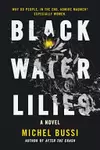
Michel Bussi is a renowned crime fiction writer and winner of many awards in his native France, BLACK WATER LILIES being the second of his books translated into English. It would appear from both of them (the first was AFTER THE CRASH) he is particularly good at unusual, absolutely enthralling scenarios.
Start reading BLACK WATER LILIES and you could be forgiven for double-checking the classification of this book. It doesn't read at all like a crime novel, but then it's not immediately clear where this is heading at all. You're introduced to three female characters - the young girl, the beautiful older woman and the all-seeing old, wise woman. There's also a feeling of overwhelming doom associated with each of these characters, disconcerting when it's so easy to become immediately engaged with these women, more so as the narrative progresses. From the young, artistically gifted girl, through to the slightly more shadowy older woman, trapped in a loveless marriage, onto the strongest and most prevalent voice - the old woman invisible in her community, at the centre of everything. The context immediately becomes unclear - at points it feels like it might be heading into family saga territory, but there's something "other" about it as well - mystical or supernatural. But there's also a murder and it's obvious somebody knows a lot about that, and there are secrets everywhere.
The setting, Monet's home village of Giverny, is gloriously depicted. From the gardens and the water sources from his paintings, to the narrow winding streets this small village sits in the middle of farmland which also weaves its way into the story, as it did Monet's paintings. There is the beautiful and mysterious mill; the hotels and the bars and cafes; and the village school with its lovely and popular young teacher. Into this scenario a couple of policemen step when the body of a local man is found in the river in the town. The local cop, with his pregnant wife and bbq collection, the younger and more senior in the force, from another part of France - an outsider whose job it is to get inside the heads of the locals.
BLACK WATER LILIES weaves an hypnotic tale around these three women, the town, Monet's work, murder and the tourism that threatens to overwhelm this small place. It pulls in threads from the art world, and the obsession with collection and ownership that great artworks engender in people. It balances the competing priorities of place and circumstances with strong, clever and believable characters. It subtly draws the readers eye to the biases and perceptions that can be built up about people - young girls with single mothers, old women who disappear into the background, loveless marriages, convenience, and those secrets. Always at the bottom of everything in BLACK WATER LILIES there are secrets. Along with manipulation and self-interest.
But BLACK WATER LILIES's greatest strength is in the homage to all things impressionistic. Just like the great paintings of that school, different viewpoints reveal different aspects, and what is seen in close up is very different to that from some distance. Just like with those paintings, for a large part of this novel, shapes swirl and patterns move across the eye. Just as the reader feels that everything is falling into place, a step back, and the story solidifies into something unexpected. It's cleverly done, elegantly presented, a case of pitch-perfect show don't tell, ensuring that the reader is unlikely to come away feeling manipulated or cheated. Emotional and a bit like you've been put through a wringer sure, but not manipulated.
Originally posted at www.austcrimefiction.org.
Michel Bussi is a renowned crime fiction writer and winner of many awards in his native France, BLACK WATER LILIES being the second of his books translated into English. It would appear from both of them (the first was AFTER THE CRASH) he is particularly good at unusual, absolutely enthralling scenarios.
Start reading BLACK WATER LILIES and you could be forgiven for double-checking the classification of this book. It doesn't read at all like a crime novel, but then it's not immediately clear where this is heading at all. You're introduced to three female characters - the young girl, the beautiful older woman and the all-seeing old, wise woman. There's also a feeling of overwhelming doom associated with each of these characters, disconcerting when it's so easy to become immediately engaged with these women, more so as the narrative progresses. From the young, artistically gifted girl, through to the slightly more shadowy older woman, trapped in a loveless marriage, onto the strongest and most prevalent voice - the old woman invisible in her community, at the centre of everything. The context immediately becomes unclear - at points it feels like it might be heading into family saga territory, but there's something "other" about it as well - mystical or supernatural. But there's also a murder and it's obvious somebody knows a lot about that, and there are secrets everywhere.
The setting, Monet's home village of Giverny, is gloriously depicted. From the gardens and the water sources from his paintings, to the narrow winding streets this small village sits in the middle of farmland which also weaves its way into the story, as it did Monet's paintings. There is the beautiful and mysterious mill; the hotels and the bars and cafes; and the village school with its lovely and popular young teacher. Into this scenario a couple of policemen step when the body of a local man is found in the river in the town. The local cop, with his pregnant wife and bbq collection, the younger and more senior in the force, from another part of France - an outsider whose job it is to get inside the heads of the locals.
BLACK WATER LILIES weaves an hypnotic tale around these three women, the town, Monet's work, murder and the tourism that threatens to overwhelm this small place. It pulls in threads from the art world, and the obsession with collection and ownership that great artworks engender in people. It balances the competing priorities of place and circumstances with strong, clever and believable characters. It subtly draws the readers eye to the biases and perceptions that can be built up about people - young girls with single mothers, old women who disappear into the background, loveless marriages, convenience, and those secrets. Always at the bottom of everything in BLACK WATER LILIES there are secrets. Along with manipulation and self-interest.
But BLACK WATER LILIES's greatest strength is in the homage to all things impressionistic. Just like the great paintings of that school, different viewpoints reveal different aspects, and what is seen in close up is very different to that from some distance. Just like with those paintings, for a large part of this novel, shapes swirl and patterns move across the eye. Just as the reader feels that everything is falling into place, a step back, and the story solidifies into something unexpected. It's cleverly done, elegantly presented, a case of pitch-perfect show don't tell, ensuring that the reader is unlikely to come away feeling manipulated or cheated. Emotional and a bit like you've been put through a wringer sure, but not manipulated.
Originally posted at www.austcrimefiction.org.

One of the very best things about reading the entrants in the 2024 Ngaio Marsh Awards is just how varied a bunch of books they were. BIRNAM WOOD is a eco-thriller, set on New Zealand's South Island, serving up a hefty dose of challenges for the reader to be going on with.
The story is built around members of the Birnam Wood "collective" - a group involved in eco-activism through guerrilla gardening. As the blurb puts it:
An undeclared, unregulated, sometimes-criminal, sometimes-philanthropic gathering of friends, this activist collective plants crops wherever no one will notice: on the sides of roads, in forgotten parks, and neglected backyards.
Financially, they've always struggled, so when a series of minor earthquakes trigger a landslide near a small town on the South Island, an isolated, and seemingly abandoned farming property there, Thorndike, catches Mira's notice. This could be the way for the group to set up long term, under the radar, with room to expand. Only Mira's not the only person with an interest in this property, there's an enigmatic American billionaire, Robert Lemoine who has snatched up the place, keen on building a safe, secure, underground bunker, a prepper's paradise.
Meanwhile Mira's personal life is all over the place with her partner Shelley planning to leave the group and her, and ex-member, Tony, turning up after years away. There is a lot of tension amongst the Birnam Wood members, partly because of this latest move, partly because Mira's such a tricky character and partly because, well people.
On the face of it, there's cross over between Mira and Lemoine's aims, and the offer by him to allow Birnam Wood's working of the land seems above board. The tension in this story is all about whether or not they can trust each other, to say nothing of the triggers it's likely to pull for some readers.
There's something unflinching about the way that Catton dissects and perpetuates both the political zietgiest and societal norms, creating a hefty cast of expected characterisations, with unpleasant characters responsible for dealing out some hefty messaging along the way. Grating characters are always an interesting choice, and one that this author seems to be particularly adept at, even if at times this one went from demonstrating the awfulness of the world to being slightly inclined to lecture about it. It's also incredibly detailed writing, descriptive to the point of overblown, both lulling the reader into a flow that's slowed as a result, tipping towards irritation before finding a way back to story and intent.
Just to defy the sense of never-ending meandering about, the ending slipped effortlessly, albeit slightly surprisingly, into high-stakes thriller territory, which, to be frank, startled this reader to the point where I wondered if I'd accidentally flipped over to another book for a while. But then, as with THE LUMINARIES, this author is not about lulling the reader into a false sense of security, or predictability. I wrote of my experience with that book at the time:
Whilst the beauty of the writing doesn't let go, the plotting and devices used bury much of that in a frantic desire for something, anything passionate, committed or unexpected to happen. Something that says that yes, these are people who believe in what they are saying / doing / commenting on.
BIRNAM WOOD gave me the passionate, committed and, in the end, a bit of the unexpected as this reader finally twigged to the satire, the blackness of denial, the failure to snap out of it and see the obvious environmental challenges. But did these characters, this group of people believe in what they were saying / doing / commenting on? Couldn't tell, and I think that's part of what made it weirdly appealing.
Originally posted at www.austcrimefiction.org.
One of the very best things about reading the entrants in the 2024 Ngaio Marsh Awards is just how varied a bunch of books they were. BIRNAM WOOD is a eco-thriller, set on New Zealand's South Island, serving up a hefty dose of challenges for the reader to be going on with.
The story is built around members of the Birnam Wood "collective" - a group involved in eco-activism through guerrilla gardening. As the blurb puts it:
An undeclared, unregulated, sometimes-criminal, sometimes-philanthropic gathering of friends, this activist collective plants crops wherever no one will notice: on the sides of roads, in forgotten parks, and neglected backyards.
Financially, they've always struggled, so when a series of minor earthquakes trigger a landslide near a small town on the South Island, an isolated, and seemingly abandoned farming property there, Thorndike, catches Mira's notice. This could be the way for the group to set up long term, under the radar, with room to expand. Only Mira's not the only person with an interest in this property, there's an enigmatic American billionaire, Robert Lemoine who has snatched up the place, keen on building a safe, secure, underground bunker, a prepper's paradise.
Meanwhile Mira's personal life is all over the place with her partner Shelley planning to leave the group and her, and ex-member, Tony, turning up after years away. There is a lot of tension amongst the Birnam Wood members, partly because of this latest move, partly because Mira's such a tricky character and partly because, well people.
On the face of it, there's cross over between Mira and Lemoine's aims, and the offer by him to allow Birnam Wood's working of the land seems above board. The tension in this story is all about whether or not they can trust each other, to say nothing of the triggers it's likely to pull for some readers.
There's something unflinching about the way that Catton dissects and perpetuates both the political zietgiest and societal norms, creating a hefty cast of expected characterisations, with unpleasant characters responsible for dealing out some hefty messaging along the way. Grating characters are always an interesting choice, and one that this author seems to be particularly adept at, even if at times this one went from demonstrating the awfulness of the world to being slightly inclined to lecture about it. It's also incredibly detailed writing, descriptive to the point of overblown, both lulling the reader into a flow that's slowed as a result, tipping towards irritation before finding a way back to story and intent.
Just to defy the sense of never-ending meandering about, the ending slipped effortlessly, albeit slightly surprisingly, into high-stakes thriller territory, which, to be frank, startled this reader to the point where I wondered if I'd accidentally flipped over to another book for a while. But then, as with THE LUMINARIES, this author is not about lulling the reader into a false sense of security, or predictability. I wrote of my experience with that book at the time:
Whilst the beauty of the writing doesn't let go, the plotting and devices used bury much of that in a frantic desire for something, anything passionate, committed or unexpected to happen. Something that says that yes, these are people who believe in what they are saying / doing / commenting on.
BIRNAM WOOD gave me the passionate, committed and, in the end, a bit of the unexpected as this reader finally twigged to the satire, the blackness of denial, the failure to snap out of it and see the obvious environmental challenges. But did these characters, this group of people believe in what they were saying / doing / commenting on? Couldn't tell, and I think that's part of what made it weirdly appealing.
Originally posted at www.austcrimefiction.org.

In 2022 Jacqueline Bublitz's novel BEFORE YOU KNEW MY NAME won both the Best Novel and Best First Novel categories of the Ngaio Marsh awards. It was the first time this had occurred since the award was established in 2010, and there are some really good reasons for that.
There's also some reasons for the delay in posting this review, mostly because when something is this good, writing words about such excellent words is more than a bit daunting. It's taken a long while to decide whether or not I could say anything that was vaguely coherent, other than plead with as many people as possible to read this book. I'm going to cheat a bit though and quote one of the blurbs from the book cover - because it sums it up perfectly:
'This astonishing debut turns the traditional crime story on its head... Darkly funny, deeply insightful and completely heartbreaking.' Petronella McGovern, author of SIX MINUTES
The other blurb worth repeating is simple:
This is not just another novel about a dead girl
On the same day in New York City, two women arrived, each in their own way looking for a fresh start. On her eighteenth birthday, Alice Lee stepped off a bus from Wisconsin with $600 cash and a stolen camera. Thirty-six-year-old Ruby Jones flew in from Melbourne, a long way to travel to be more lonely than before. Four weeks later Ruby Jones finds the battered body of Alice Lee while jogging beside the Hudson River.
This novel takes the reader way beyond the standard fare of "victim" and "jogger who found the body" - this is the story of Alice Lee and Ruby Jones and it's powerful, moving and profound. There's a connection between these two characters that goes way beyond their initial "meeting". The story is narrated by Alice, who believes Ruby is the person who will solve the mystery of her life and death. Ruby on the other hand, is unable to let go without the ending she believes Alice deserves.
Bublitz has deliberately centred the story on Alice, a young woman who did not deserve to die at the hands of another. Someone who should never be defined in terms of who killed her and how she died. In the same way that Ruby isn't a "jogger who found the body", or that person who feels compelled to be a version of herself that her lover wants her to be.
The message within BEFORE YOU KNEW MY NAME is very much that of women's experience - of the men around them, of the reduction that happens by deliberate coercion, or involuntary submission, and in particular the manner in which female victims of violence are ranked as "worthy" or "tragic". A continuation of the "if only she hadn't (worn those shoes / walked home / breathed / glanced at that stranger) ... " argument. The argument so infuriating, reductive, and lazy it will trigger an aneurysm in this reader one day.
BEFORE YOU KNEW MY NAME, on the other hand, was none of those things. It's the emotional, powerful, moving, insightful and eloquent story of a crime, and the affect that it had on Alice Lee and Ruby Jones.
Originally posted at www.austcrimefiction.org.
In 2022 Jacqueline Bublitz's novel BEFORE YOU KNEW MY NAME won both the Best Novel and Best First Novel categories of the Ngaio Marsh awards. It was the first time this had occurred since the award was established in 2010, and there are some really good reasons for that.
There's also some reasons for the delay in posting this review, mostly because when something is this good, writing words about such excellent words is more than a bit daunting. It's taken a long while to decide whether or not I could say anything that was vaguely coherent, other than plead with as many people as possible to read this book. I'm going to cheat a bit though and quote one of the blurbs from the book cover - because it sums it up perfectly:
'This astonishing debut turns the traditional crime story on its head... Darkly funny, deeply insightful and completely heartbreaking.' Petronella McGovern, author of SIX MINUTES
The other blurb worth repeating is simple:
This is not just another novel about a dead girl
On the same day in New York City, two women arrived, each in their own way looking for a fresh start. On her eighteenth birthday, Alice Lee stepped off a bus from Wisconsin with $600 cash and a stolen camera. Thirty-six-year-old Ruby Jones flew in from Melbourne, a long way to travel to be more lonely than before. Four weeks later Ruby Jones finds the battered body of Alice Lee while jogging beside the Hudson River.
This novel takes the reader way beyond the standard fare of "victim" and "jogger who found the body" - this is the story of Alice Lee and Ruby Jones and it's powerful, moving and profound. There's a connection between these two characters that goes way beyond their initial "meeting". The story is narrated by Alice, who believes Ruby is the person who will solve the mystery of her life and death. Ruby on the other hand, is unable to let go without the ending she believes Alice deserves.
Bublitz has deliberately centred the story on Alice, a young woman who did not deserve to die at the hands of another. Someone who should never be defined in terms of who killed her and how she died. In the same way that Ruby isn't a "jogger who found the body", or that person who feels compelled to be a version of herself that her lover wants her to be.
The message within BEFORE YOU KNEW MY NAME is very much that of women's experience - of the men around them, of the reduction that happens by deliberate coercion, or involuntary submission, and in particular the manner in which female victims of violence are ranked as "worthy" or "tragic". A continuation of the "if only she hadn't (worn those shoes / walked home / breathed / glanced at that stranger) ... " argument. The argument so infuriating, reductive, and lazy it will trigger an aneurysm in this reader one day.
BEFORE YOU KNEW MY NAME, on the other hand, was none of those things. It's the emotional, powerful, moving, insightful and eloquent story of a crime, and the affect that it had on Alice Lee and Ruby Jones.
Originally posted at www.austcrimefiction.org.


