
Karen


Ten years ago six teenagers hiked into the wilderness and five of them came back alive. They were school friends. Ed (whose family farm was their starting off point), Hugh, Charlotte, Laura, Jack and Alex, close, but with the sorts of slightly complicated romantic attachments and fractures that you find in groups of kids of that age. Nobody for a moment thought that this would be a dangerous hike, they were experienced walkers, fit, and Ed knew this area from a childhood growing up here. Only Ed died, and for the ten years since his mother Mary has had plenty of time to think about her beloved only child's death.
Maybe it was triggered by the anniversary, maybe it was too much time on her hands since the inquest into her son's death, then the suicide of her husband, Ed's father, but the house wasn't the same happy place that the five returned to, invited by Mary for an anniversary weekend. The once immaculate place is ramshackle and neglected, and there's something very odd about Mary. The problem is that none of remaining five friends could ever have imagined just how obsessed, how determined to get to the truth she is, until it's almost too late for all of them.
Told in a series of differing POV chapters, the early part of the book will require some concentration on the part of the reader as you're taken back to each person's teenage years, as well as who they are as adults. There's reminiscence and past transgressions to be fleshed out, as well as present life changes including marriages, pregnancy, careers that have taken some in unexpected directions. Importantly, there are the connections between them then and now, events that shaped their interactions and relationships, and the cryptic questions laid out in notes that they start to find around the property, as they search for ways out of the intricate and very specific trap set for them.
Whilst it's a thriller in nature, there's also something surprisingly reflective about THE REUNION. Whether it's the contrasting experiences and pasts of the main characters, including Ed, and the sorts of secrets they have been keeping for a very long time, or their individual responses to pressure, these are adults forced into confronting their pasts and who they were and have become. Making the reader unsure at every step of where this is heading, setting up some really tricky characters as people that you may just end up with some respect for, leading to a resolution that did feel like it might be surprisingly gentle on a lot of very traumatised people. Until a final kick in the tail that readers less rattled may say they could see coming, but put this reader, by then, in the thoroughly rattled camp.
A debut novel, THE REUNION, started out as a bit of a sleeper, ended up as a haunter of nights.
Originally posted at www.austcrimefiction.org.
Ten years ago six teenagers hiked into the wilderness and five of them came back alive. They were school friends. Ed (whose family farm was their starting off point), Hugh, Charlotte, Laura, Jack and Alex, close, but with the sorts of slightly complicated romantic attachments and fractures that you find in groups of kids of that age. Nobody for a moment thought that this would be a dangerous hike, they were experienced walkers, fit, and Ed knew this area from a childhood growing up here. Only Ed died, and for the ten years since his mother Mary has had plenty of time to think about her beloved only child's death.
Maybe it was triggered by the anniversary, maybe it was too much time on her hands since the inquest into her son's death, then the suicide of her husband, Ed's father, but the house wasn't the same happy place that the five returned to, invited by Mary for an anniversary weekend. The once immaculate place is ramshackle and neglected, and there's something very odd about Mary. The problem is that none of remaining five friends could ever have imagined just how obsessed, how determined to get to the truth she is, until it's almost too late for all of them.
Told in a series of differing POV chapters, the early part of the book will require some concentration on the part of the reader as you're taken back to each person's teenage years, as well as who they are as adults. There's reminiscence and past transgressions to be fleshed out, as well as present life changes including marriages, pregnancy, careers that have taken some in unexpected directions. Importantly, there are the connections between them then and now, events that shaped their interactions and relationships, and the cryptic questions laid out in notes that they start to find around the property, as they search for ways out of the intricate and very specific trap set for them.
Whilst it's a thriller in nature, there's also something surprisingly reflective about THE REUNION. Whether it's the contrasting experiences and pasts of the main characters, including Ed, and the sorts of secrets they have been keeping for a very long time, or their individual responses to pressure, these are adults forced into confronting their pasts and who they were and have become. Making the reader unsure at every step of where this is heading, setting up some really tricky characters as people that you may just end up with some respect for, leading to a resolution that did feel like it might be surprisingly gentle on a lot of very traumatised people. Until a final kick in the tail that readers less rattled may say they could see coming, but put this reader, by then, in the thoroughly rattled camp.
A debut novel, THE REUNION, started out as a bit of a sleeper, ended up as a haunter of nights.
Originally posted at www.austcrimefiction.org.

Set amid the ferocious cold of a Canadian winter, Ashley Kalagian Blunt’s new novel continues her exploration of the threats of life online. Full review at Newtown Review of Books https://newtownreviewofbooks.com.au/ashley-kalagian-blunt-cold-truth-reviewed-by-karen-chisholm/
Originally posted at newtownreviewofbooks.com.au.
Set amid the ferocious cold of a Canadian winter, Ashley Kalagian Blunt’s new novel continues her exploration of the threats of life online. Full review at Newtown Review of Books https://newtownreviewofbooks.com.au/ashley-kalagian-blunt-cold-truth-reviewed-by-karen-chisholm/
Originally posted at newtownreviewofbooks.com.au.
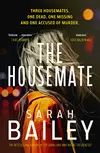
A standalone from the author of the well-known Gemma Woodstock series, THE HOUSEMATE is a story told in two timelines. Back to nine years ago when three housemates were sharing a property, one of them is killed, one goes missing, one is accused of murder. The current timeline sees journalist Oli Groves, who worked on the original murder story as a junior reporter, still a reporter, drawn back to a case she has always been obsessed with, when the missing housemate turns up, possibly as a suicide, at a Dandenong Ranges property.
The basis of this story is an intriguing one. The reasons for the three housemates supposed falling out was never really explained, their lives at the time of the murder never fleshed out, the missing girl never located. The problem is now the housemate accused of murder is out of jail, the missing girl is assumed dead by suicide, and there's something in the past that everyone's trying to keep quiet. Cue Oli back on the case, only this time, reporting has changed, and the paper she is working for have decided that podcasting is the new thing, so Oli is paired up with Cooper Ng, a young, relentlessly cheerful millennial producer. These two are destined to clash, and yet they might also be able to find a way to work together.
That is if Oli can dig herself out of the personal mess that she's buried herself in, and her obsessive nature. Engaged now, to the widower of the original police detective on "The Housemate" case, who was killed in a mysterious hit and run leaving her husband with two small twin daughters to raise. Only he was having an affair with Oli in the past, she was in a relationship with one of the cops that's now on the case, the twins are now older, and he mostly seems to be looking for a live in childcare provider, or something that certainly doesn't feel right. The personal story in this is novel is BIG, and it's complicated, messy and more than a bit overwhelming. In fact, I wouldn't recommend THE HOUSEMATE to anybody with an allergy to huge chunks of personal angst. Needless to say, the ex-boyfriend's the good bloke, the fiance a controlling creep, and Oli seems to be unable to sort out her feelings about the personal or professional. There are times when Ng's relentless upbeatness is a bit of a relief to be honest.
In amongst all the personal stuff there is a crime story lurking, with the story leading up to the original murder likely to explain the current housemate death. Or not. There are plenty of red herrings, complications, missteps and misleading elements in there - more than enough to keep a reader guessing. That aspect of the story was interesting, and cleverly constructed, but for this reader, not quite cleverly enough to have it rise beyond the soap opera threatening to subsume it.
Originally posted at www.austcrimefiction.org.
A standalone from the author of the well-known Gemma Woodstock series, THE HOUSEMATE is a story told in two timelines. Back to nine years ago when three housemates were sharing a property, one of them is killed, one goes missing, one is accused of murder. The current timeline sees journalist Oli Groves, who worked on the original murder story as a junior reporter, still a reporter, drawn back to a case she has always been obsessed with, when the missing housemate turns up, possibly as a suicide, at a Dandenong Ranges property.
The basis of this story is an intriguing one. The reasons for the three housemates supposed falling out was never really explained, their lives at the time of the murder never fleshed out, the missing girl never located. The problem is now the housemate accused of murder is out of jail, the missing girl is assumed dead by suicide, and there's something in the past that everyone's trying to keep quiet. Cue Oli back on the case, only this time, reporting has changed, and the paper she is working for have decided that podcasting is the new thing, so Oli is paired up with Cooper Ng, a young, relentlessly cheerful millennial producer. These two are destined to clash, and yet they might also be able to find a way to work together.
That is if Oli can dig herself out of the personal mess that she's buried herself in, and her obsessive nature. Engaged now, to the widower of the original police detective on "The Housemate" case, who was killed in a mysterious hit and run leaving her husband with two small twin daughters to raise. Only he was having an affair with Oli in the past, she was in a relationship with one of the cops that's now on the case, the twins are now older, and he mostly seems to be looking for a live in childcare provider, or something that certainly doesn't feel right. The personal story in this is novel is BIG, and it's complicated, messy and more than a bit overwhelming. In fact, I wouldn't recommend THE HOUSEMATE to anybody with an allergy to huge chunks of personal angst. Needless to say, the ex-boyfriend's the good bloke, the fiance a controlling creep, and Oli seems to be unable to sort out her feelings about the personal or professional. There are times when Ng's relentless upbeatness is a bit of a relief to be honest.
In amongst all the personal stuff there is a crime story lurking, with the story leading up to the original murder likely to explain the current housemate death. Or not. There are plenty of red herrings, complications, missteps and misleading elements in there - more than enough to keep a reader guessing. That aspect of the story was interesting, and cleverly constructed, but for this reader, not quite cleverly enough to have it rise beyond the soap opera threatening to subsume it.
Originally posted at www.austcrimefiction.org.

Between 1865 and 1910 Mary Fortune wrote over 500 crime stories, set in the Victorian goldfields, Melbourne and the outback. Published initially in newspapers and the like, they form the first detective fiction series written by a woman, although she was published under a series of pseudonyms hiding both her real identity and her gender from the wider world. At the same time as this collection was released a biography of Fortune, and her career-criminal son George, entitled Outrageous Fortunes has been published - which is well worth reading in tandem.
This reviewer was particularly struck by the intended "pun" of the title of the biography and did wonder whether Fortune would be chuffed by it. There's a sly, dry sense of humour at the heart of many of this collection that makes me hope she would. I was also struck most forcibly whilst listening to a talk by the two editors in Ballarat recently, when something was mentioned about the difference between male and female writers of the time. Men having a tendency to embellish (dare I suggest show off) their "education" with florid language, and the inclusion of Latin and other classical language words and phrases. This collection, on the other hand, hints at the gender of its writer more strongly in that the language is pretty direct, there is that sly sense of humour, and a strong sense of support for the underdog. To say nothing of some overt language of affection for other men in the stories that seemed to be hinting at one of two potential scenarios.
The thing that you'll find most about NOTHING BUT MURDERS AND BLOODSHED AND HANGING (a title taken from one of Fortune's own stories), is that it's such a readable and enlightening set of stories. They are all about murder and mayhem, and there's a sense of real knowledge of policing of the time (there is conjecture that her marriage to a local policeman in the Dunolly area might have been part of her source of information) but it seemed to this reader that Fortune must have been possessed of a keen eye and ear for her fellow citizens. As well as that strong sense of justice - perhaps because of the fortunes of her own son George, who went from a street urchin to a career criminal, whilst Fortune was battling plenty of her own demons. She has, it seems, one hell of a personal backstory, and whilst there are possibly glimpses of the struggles in the stories themselves, there are also wonderful depictions of society, the environs, and the sensibilities of the time.
For those of us residing on the Goldfields today there are plenty of references to places that will ring bells, as are there likely to be for those in the inner city of Melbourne, although the mark of the gold diggings is still very visible to this day - mullock heaps, mine shafts and all. It's also a cleverly combined set of stories, taking the reader through a range of subjects including murder, bushrangers, bootlegging, sexual violence and armed robbery. Has to be said that this reviewer found the inclusion of women's viewpoints, sexual violence, manipulation and the difficulties of life in that period for women particularly illuminating. It's a viewpoint that is too often just ignored, or white-washed. Yet another period in history that a return to the restrictions and prejudices of, should be resisted at all costs.
There are also many hints of her Irish background, and the well known antipathy on the Goldfields between the miners and the authorities, leading of course to some of the defining moments in Australian political history. It's sobering to think that her anonymity, and her sad and unfortunate death in 1911 meant that her work, and her identity were very nearly lost. What Sussex and Brown have done (for periods of 35 and 25 years* respectively) is a great service to Australian literature, but also truth-telling in history. Mary Fortune was undoubtedly a trailblazer, and we should know her name, and her work.
* Number of years quoted from my memory from something said at the talk mentioned earlier. It may be slightly inaccurate, but it's close.
Originally posted at www.austcrimefiction.org.
Between 1865 and 1910 Mary Fortune wrote over 500 crime stories, set in the Victorian goldfields, Melbourne and the outback. Published initially in newspapers and the like, they form the first detective fiction series written by a woman, although she was published under a series of pseudonyms hiding both her real identity and her gender from the wider world. At the same time as this collection was released a biography of Fortune, and her career-criminal son George, entitled Outrageous Fortunes has been published - which is well worth reading in tandem.
This reviewer was particularly struck by the intended "pun" of the title of the biography and did wonder whether Fortune would be chuffed by it. There's a sly, dry sense of humour at the heart of many of this collection that makes me hope she would. I was also struck most forcibly whilst listening to a talk by the two editors in Ballarat recently, when something was mentioned about the difference between male and female writers of the time. Men having a tendency to embellish (dare I suggest show off) their "education" with florid language, and the inclusion of Latin and other classical language words and phrases. This collection, on the other hand, hints at the gender of its writer more strongly in that the language is pretty direct, there is that sly sense of humour, and a strong sense of support for the underdog. To say nothing of some overt language of affection for other men in the stories that seemed to be hinting at one of two potential scenarios.
The thing that you'll find most about NOTHING BUT MURDERS AND BLOODSHED AND HANGING (a title taken from one of Fortune's own stories), is that it's such a readable and enlightening set of stories. They are all about murder and mayhem, and there's a sense of real knowledge of policing of the time (there is conjecture that her marriage to a local policeman in the Dunolly area might have been part of her source of information) but it seemed to this reader that Fortune must have been possessed of a keen eye and ear for her fellow citizens. As well as that strong sense of justice - perhaps because of the fortunes of her own son George, who went from a street urchin to a career criminal, whilst Fortune was battling plenty of her own demons. She has, it seems, one hell of a personal backstory, and whilst there are possibly glimpses of the struggles in the stories themselves, there are also wonderful depictions of society, the environs, and the sensibilities of the time.
For those of us residing on the Goldfields today there are plenty of references to places that will ring bells, as are there likely to be for those in the inner city of Melbourne, although the mark of the gold diggings is still very visible to this day - mullock heaps, mine shafts and all. It's also a cleverly combined set of stories, taking the reader through a range of subjects including murder, bushrangers, bootlegging, sexual violence and armed robbery. Has to be said that this reviewer found the inclusion of women's viewpoints, sexual violence, manipulation and the difficulties of life in that period for women particularly illuminating. It's a viewpoint that is too often just ignored, or white-washed. Yet another period in history that a return to the restrictions and prejudices of, should be resisted at all costs.
There are also many hints of her Irish background, and the well known antipathy on the Goldfields between the miners and the authorities, leading of course to some of the defining moments in Australian political history. It's sobering to think that her anonymity, and her sad and unfortunate death in 1911 meant that her work, and her identity were very nearly lost. What Sussex and Brown have done (for periods of 35 and 25 years* respectively) is a great service to Australian literature, but also truth-telling in history. Mary Fortune was undoubtedly a trailblazer, and we should know her name, and her work.
* Number of years quoted from my memory from something said at the talk mentioned earlier. It may be slightly inaccurate, but it's close.
Originally posted at www.austcrimefiction.org.

The opening line of HUMIDITY made me laugh:
Word gets 'round when you're a nude model in a small country town.
That would most definitely get around our nearby small country town, even though it could never be said that we have the rampant violence and hellish humidity referred to in the book's blurb.
An unusual crime novel, HUMIDITY is set in a one of those small towns that has lost most of its economic basis and is slowly dying as a result. The story revolves around Ben, a broke, desperately lonely, lost sort of a young man with a sad family backstory, who lobbed into town and ended up working as a nude model for the local art class. He lives in a tiny, mould infested granny flat at the back of the house his best mate shares with his elderly Granny, and sort of just mooches about. Until he falls for the local barmaid. Marty's whip smart, violent, and rapidly muscling in on her own brother's drug and gun-running business, dragging Ben with her, who frankly is more than a bit sex struck and in way over his head - sex, relationship, business, and friendship wise.
It may take a little while to get into the swing of HUMIDITY because there's a lot of nothing in Ben's life, and his lost and directionless act plays out slowly, and in a slightly meandering manner. Until it's not anymore, and there are bikies, drugs, guns and violence aplenty, as well as some athletic sex and unexpected interpersonal relationships building. The story is kind of less a murder mystery, although there are dead bodies, and more how the hell are these people going to keep living mystery though. As well as a little too realistic a portrayal of a lost young man who got himself into the wrong company and missteps constantly in his attempts to get back out again.
Slyly funny in places, mightily violent in others, the build up is steady, the resolution twisty and unclear, and the reality of the whole thing shone, sadly, through.
Originally posted at www.austcrimefiction.org.
The opening line of HUMIDITY made me laugh:
Word gets 'round when you're a nude model in a small country town.
That would most definitely get around our nearby small country town, even though it could never be said that we have the rampant violence and hellish humidity referred to in the book's blurb.
An unusual crime novel, HUMIDITY is set in a one of those small towns that has lost most of its economic basis and is slowly dying as a result. The story revolves around Ben, a broke, desperately lonely, lost sort of a young man with a sad family backstory, who lobbed into town and ended up working as a nude model for the local art class. He lives in a tiny, mould infested granny flat at the back of the house his best mate shares with his elderly Granny, and sort of just mooches about. Until he falls for the local barmaid. Marty's whip smart, violent, and rapidly muscling in on her own brother's drug and gun-running business, dragging Ben with her, who frankly is more than a bit sex struck and in way over his head - sex, relationship, business, and friendship wise.
It may take a little while to get into the swing of HUMIDITY because there's a lot of nothing in Ben's life, and his lost and directionless act plays out slowly, and in a slightly meandering manner. Until it's not anymore, and there are bikies, drugs, guns and violence aplenty, as well as some athletic sex and unexpected interpersonal relationships building. The story is kind of less a murder mystery, although there are dead bodies, and more how the hell are these people going to keep living mystery though. As well as a little too realistic a portrayal of a lost young man who got himself into the wrong company and missteps constantly in his attempts to get back out again.
Slyly funny in places, mightily violent in others, the build up is steady, the resolution twisty and unclear, and the reality of the whole thing shone, sadly, through.
Originally posted at www.austcrimefiction.org.

Not for a moment would this reviewer wish to suggest that this is a time in history when the murder of an obnoxious rich person, on a luxury island, busily engaged in being obnoxious and threatening to all and sundry is an enjoyable idea, but it did come across, in this novel, as particularly pleasing. In a not as uncomfortable as as you'd think way.
THE PRIVATE ISLAND by Ali Lowe is a take on a locked room scenario, combined with some filthy rich unpleasant people and some not so filthy rich, but guests as well people, who all come together with a lot of motives to want somebody dead. As the blurb describes the main players:
The billionaire's daughter, glamorous, untouchable, hungry for her inheritance. The start-up founder, out of money, and out of time. The young dive instructor, in way over his head and struggling to stay afloat. The husband, blinded by desire, in all the wrong ways. And the lover, hidden in the shadows, where no one can see them....
This list doesn't include a deeply put upon wife, an estranged and angry sister, and a quietly determined and clear-eyed Head of Housekeeping and Aunt.
It all comes together in a very engaging combination of characters, and idyllic setting. A tropical island preparing to see in the new year with a masked party, champagne, fireworks and a few more deaths than the staff are quite used to dealing with. Whilst one death seems natural, the second, on the other hand, is quite obviously anything but. The problem is that there are more than enough suspects, almost too many of them really.
THE PRIVATE ISLAND very quickly became very compulsive reading. Got to love an author with the skill to write deeply unpleasant people with this much joie de vivre. The author's that is - the characters demonstrated just how money does not make you happy, or human for that matter. The standout "investigator" in the bunch is definitely housekeeper Una although the put upon wife Kitty, eventually emerges from her internal conflict to become both an ally, and a lot more that's particularly unexpected.
The setting serves as a great exclusive locked room resort, but there's also connections between some of the characters and the place which help to bring the staff and the client's together when required, and all the while, there's trouble brewing, and murderous intent that includes the distinct possibility that there's more sympathy for the main suspect than there ever could be for the victim.
Right from the very start THE PRIVATE ISLAND was engaging, entertaining, and an excellent whodunnit. The why always seemed pretty obvious, the only mystery there seemed to be why it took so long for somebody to kill a person that obnoxious, but the lovely twist in the tail was that second to final reveal. It was so... base, so nasty, so apt. And then there's an ultimate reveal.
Originally posted at www.austcrimefiction.org.
Not for a moment would this reviewer wish to suggest that this is a time in history when the murder of an obnoxious rich person, on a luxury island, busily engaged in being obnoxious and threatening to all and sundry is an enjoyable idea, but it did come across, in this novel, as particularly pleasing. In a not as uncomfortable as as you'd think way.
THE PRIVATE ISLAND by Ali Lowe is a take on a locked room scenario, combined with some filthy rich unpleasant people and some not so filthy rich, but guests as well people, who all come together with a lot of motives to want somebody dead. As the blurb describes the main players:
The billionaire's daughter, glamorous, untouchable, hungry for her inheritance. The start-up founder, out of money, and out of time. The young dive instructor, in way over his head and struggling to stay afloat. The husband, blinded by desire, in all the wrong ways. And the lover, hidden in the shadows, where no one can see them....
This list doesn't include a deeply put upon wife, an estranged and angry sister, and a quietly determined and clear-eyed Head of Housekeeping and Aunt.
It all comes together in a very engaging combination of characters, and idyllic setting. A tropical island preparing to see in the new year with a masked party, champagne, fireworks and a few more deaths than the staff are quite used to dealing with. Whilst one death seems natural, the second, on the other hand, is quite obviously anything but. The problem is that there are more than enough suspects, almost too many of them really.
THE PRIVATE ISLAND very quickly became very compulsive reading. Got to love an author with the skill to write deeply unpleasant people with this much joie de vivre. The author's that is - the characters demonstrated just how money does not make you happy, or human for that matter. The standout "investigator" in the bunch is definitely housekeeper Una although the put upon wife Kitty, eventually emerges from her internal conflict to become both an ally, and a lot more that's particularly unexpected.
The setting serves as a great exclusive locked room resort, but there's also connections between some of the characters and the place which help to bring the staff and the client's together when required, and all the while, there's trouble brewing, and murderous intent that includes the distinct possibility that there's more sympathy for the main suspect than there ever could be for the victim.
Right from the very start THE PRIVATE ISLAND was engaging, entertaining, and an excellent whodunnit. The why always seemed pretty obvious, the only mystery there seemed to be why it took so long for somebody to kill a person that obnoxious, but the lovely twist in the tail was that second to final reveal. It was so... base, so nasty, so apt. And then there's an ultimate reveal.
Originally posted at www.austcrimefiction.org.

This is a small collection of short stories, fictional, about life in the Australian country. It's a combination of stories about families, individuals, farms and small towns. Some of them are funny, some of them heartbreaking, and all of them pitch perfect little exponents of their place and their community. As the blurb puts it "showcases the beauty of lives lived outside city walls." Because there is much to recommend life away from the cities, where resilience and personal fortitude come with the territory and the battle for survival is trickier due to the lack of hand holding and delivered to your doorstep resources. None of which matter when you compare it to the wide skies, and the natural world and the sheer humour and gritty determination that's reflected in this collection.
Picked it up in part because Margaret Hickey is now high on my will read come hell or drought list, and because, as a smallish volume it felt like a great little distraction from a heap of reading I "should" be doing. Worked on all levels, this is clever writing from someone who knows the world, the people, and the up and downs.
Originally posted at www.austcrimefiction.org.
This is a small collection of short stories, fictional, about life in the Australian country. It's a combination of stories about families, individuals, farms and small towns. Some of them are funny, some of them heartbreaking, and all of them pitch perfect little exponents of their place and their community. As the blurb puts it "showcases the beauty of lives lived outside city walls." Because there is much to recommend life away from the cities, where resilience and personal fortitude come with the territory and the battle for survival is trickier due to the lack of hand holding and delivered to your doorstep resources. None of which matter when you compare it to the wide skies, and the natural world and the sheer humour and gritty determination that's reflected in this collection.
Picked it up in part because Margaret Hickey is now high on my will read come hell or drought list, and because, as a smallish volume it felt like a great little distraction from a heap of reading I "should" be doing. Worked on all levels, this is clever writing from someone who knows the world, the people, and the up and downs.
Originally posted at www.austcrimefiction.org.

Originally published in 2022, this is a series that slipped past me, but something drew my attention to the setting mostly, and after this last awful summer, reading about Mallee towns in the heat sounded like a fictional pursuit that might distract from the reality outside the door.
In this series, Greg Bowker is a young senior constable who got himself in a bit of bother in Ballarat, and was transferred to a one-officer station in Manangatang, town that is still going despite all declarations of the imminent death. In an interesting twist the author was raised on a farm in country Victoria, and at the time of writing the blurbs for his books, was living in Ballarat. So a reverse Bowker if you like. Either way he's certainly very good at writing the heat and dust of places like Manang, and the references to nearby locations such as Ouyen (with it's mind-blowingly hot summers and frequently cool to cold winters). He's also particularly good at conveying the complications of being the only cop in a massive area that he doesn't know, with not a lot of people in it into the bargain.
The conveying of small town policing is pretty good as well. As is the way that he and his young wife have to adjust to the community and the sport / what is it with these places and bloody tennis and football! (I know, no need for correspondence on the issue - I just can't stand either pursuit), whilst dealing with a couple of delinquent teenagers and some deeply buried family secrets.
There's a realistic feeling of small bush town's in the 1980's though, and the treatment / attitudes to women, people with any sort of difference to the white, tanned to leather farmer types, and outsiders in general. And strangely enough the feeling of dark and deception flagged in the blurb kind of fitted in with a world of heat, dust, snakes, and physical as well as mental challenges.
Originally posted at hardcover.app.
Originally published in 2022, this is a series that slipped past me, but something drew my attention to the setting mostly, and after this last awful summer, reading about Mallee towns in the heat sounded like a fictional pursuit that might distract from the reality outside the door.
In this series, Greg Bowker is a young senior constable who got himself in a bit of bother in Ballarat, and was transferred to a one-officer station in Manangatang, town that is still going despite all declarations of the imminent death. In an interesting twist the author was raised on a farm in country Victoria, and at the time of writing the blurbs for his books, was living in Ballarat. So a reverse Bowker if you like. Either way he's certainly very good at writing the heat and dust of places like Manang, and the references to nearby locations such as Ouyen (with it's mind-blowingly hot summers and frequently cool to cold winters). He's also particularly good at conveying the complications of being the only cop in a massive area that he doesn't know, with not a lot of people in it into the bargain.
The conveying of small town policing is pretty good as well. As is the way that he and his young wife have to adjust to the community and the sport / what is it with these places and bloody tennis and football! (I know, no need for correspondence on the issue - I just can't stand either pursuit), whilst dealing with a couple of delinquent teenagers and some deeply buried family secrets.
There's a realistic feeling of small bush town's in the 1980's though, and the treatment / attitudes to women, people with any sort of difference to the white, tanned to leather farmer types, and outsiders in general. And strangely enough the feeling of dark and deception flagged in the blurb kind of fitted in with a world of heat, dust, snakes, and physical as well as mental challenges.
Originally posted at hardcover.app.

Mounted Trooper Augustus Hawkins was introduced to readers in Fioretti's first novel, BONE LANDS. Returned from active service in the Boer War, he's scarred physically and mentally, tortured by what happened in combat, damaged again by the love he found in the first novel having been cruelly torn away from him by a snobby family and society's expectations about class and more pointedly, money.
SKULL RIVER finds him transferred to a new post in the small, fading gold town of Colley in New South Wales. A day's ride from Bathurst, you'd think there wasn't going to be much to this place: a few drunks needing locking up, stock rustling crimes, the occasional breakout of violence amongst the miners still scratching around the area, and the constant need to move on prostitutes and other less "savoury" aspects of life on petering out goldfields. His first day finds him heading straight out of town to a nearby settlement and reports of trouble there, caught up instead in the ambush shooting murder of his junior officer, the burning down of the police station, and a level of tension and terror he was not really prepared for.
What comes after that are problems with accommodation, for him, the police office, and the reinforcements that eventually arrive, around a markedly hostile reception from the local hotel owner. To say nothing of the discovery of an unidentified body in the smouldering remains of the police lockup, some very dodgy procedural bending in police communication lines, all the current police records destroyed in the fire, and a dead trooper who would have known who the man in the lockup was, had he not been killed, his body ritualistically maimed, and returned to town on the back of his own horse.
A lot happens in very short time in SKULL RIVER, alongside Hawkins trying to work out who was who and how everything and everybody in the town fits together, and what he did and didn't do here. He's been in Colley once before, when he was drinking way too much and the PTSD was at its worst. He might not remember everything that happened back then, but there are a few locals who are all too able to recall.
Meanwhile, the ambush shooting turns into a tricky investigation, not helped by the reinforcements being inexperienced young troopers, easily spooked, and the assigned detective a useless drunk, along with the higher ups in Bathurst being shiny bummed and antagonistic. Because hatred of the mounted troopers is nothing new in early white settlement days, as is the overt racism, sexism, puritanical zeal, sexual misbehaviour, violence, and utter disregard for human and animal lives alike, the suspect pool is well populated, murky and more than a bit on the nose. Although there are moments of lightness, Mrs Owen, her goats and her ministrations, a young boy with Downs Syndrome and his mother, and a band of prostitutes who start out providing a bit of harmless insult slinging, and turn out to have had their own problems with that aforementioned pool.
The novel probably should come with a trigger warning though - there are a lot of violent horse deaths in particular in this story, as well as cattle, and whilst Hawkins feels these and they aren't necessarily gratuitous but clear indicators of attitudes and the reality of the time, there is the potential for some readers to find it confronting.
At the centre of both these novels however, is a man broken by his personal experience of war, and disappointment, in a country of the verge of change, with a life that he needs to get control of. He has a close connection to his father, mostly by stint of letters they share, and he's basically a decent man, who made mistakes when obviously in the thrall of severe shell shock / PTSD. His attempts to improve his own life, and do right by the people he's pledged to protect and serve are wonderfully evoked, as is his love for the stray dog that he forms a close attachment to. Alfie's a great character in is own right, and surely the epitome of a service dog in the making. Alfie, and the sly, sometimes very dry sense of humour that this author has given her main character make this dark but not always desperate reading though - and the sense of time and place are vivid and fascinating. Hawkins is not a man "longing for the green fields of home", he's a white Australian who gets the beauty of the landscape, even if large parts of it have been battered by gold mining and the pollution and disruption left in its wake.
Whilst the killer of young trooper is eventually identified, there's damage, and fall out that the town is going to take a while to recover from, if ever. And Hawkins has a decision to make about his own future, having turned down the potential of returning to the LIghthorse, he's aware that his activities as a Mounted Trooper are causing him more stress than solace. And then there's that love interest, a woman about to be married off for her family's fortunes to be improved. He's already mulling his future, when a blast from the past limps up the hill to the police paddock he's pitched his tent in until the station is rebuilt.
Originally posted at www.austcrimefiction.org.
Mounted Trooper Augustus Hawkins was introduced to readers in Fioretti's first novel, BONE LANDS. Returned from active service in the Boer War, he's scarred physically and mentally, tortured by what happened in combat, damaged again by the love he found in the first novel having been cruelly torn away from him by a snobby family and society's expectations about class and more pointedly, money.
SKULL RIVER finds him transferred to a new post in the small, fading gold town of Colley in New South Wales. A day's ride from Bathurst, you'd think there wasn't going to be much to this place: a few drunks needing locking up, stock rustling crimes, the occasional breakout of violence amongst the miners still scratching around the area, and the constant need to move on prostitutes and other less "savoury" aspects of life on petering out goldfields. His first day finds him heading straight out of town to a nearby settlement and reports of trouble there, caught up instead in the ambush shooting murder of his junior officer, the burning down of the police station, and a level of tension and terror he was not really prepared for.
What comes after that are problems with accommodation, for him, the police office, and the reinforcements that eventually arrive, around a markedly hostile reception from the local hotel owner. To say nothing of the discovery of an unidentified body in the smouldering remains of the police lockup, some very dodgy procedural bending in police communication lines, all the current police records destroyed in the fire, and a dead trooper who would have known who the man in the lockup was, had he not been killed, his body ritualistically maimed, and returned to town on the back of his own horse.
A lot happens in very short time in SKULL RIVER, alongside Hawkins trying to work out who was who and how everything and everybody in the town fits together, and what he did and didn't do here. He's been in Colley once before, when he was drinking way too much and the PTSD was at its worst. He might not remember everything that happened back then, but there are a few locals who are all too able to recall.
Meanwhile, the ambush shooting turns into a tricky investigation, not helped by the reinforcements being inexperienced young troopers, easily spooked, and the assigned detective a useless drunk, along with the higher ups in Bathurst being shiny bummed and antagonistic. Because hatred of the mounted troopers is nothing new in early white settlement days, as is the overt racism, sexism, puritanical zeal, sexual misbehaviour, violence, and utter disregard for human and animal lives alike, the suspect pool is well populated, murky and more than a bit on the nose. Although there are moments of lightness, Mrs Owen, her goats and her ministrations, a young boy with Downs Syndrome and his mother, and a band of prostitutes who start out providing a bit of harmless insult slinging, and turn out to have had their own problems with that aforementioned pool.
The novel probably should come with a trigger warning though - there are a lot of violent horse deaths in particular in this story, as well as cattle, and whilst Hawkins feels these and they aren't necessarily gratuitous but clear indicators of attitudes and the reality of the time, there is the potential for some readers to find it confronting.
At the centre of both these novels however, is a man broken by his personal experience of war, and disappointment, in a country of the verge of change, with a life that he needs to get control of. He has a close connection to his father, mostly by stint of letters they share, and he's basically a decent man, who made mistakes when obviously in the thrall of severe shell shock / PTSD. His attempts to improve his own life, and do right by the people he's pledged to protect and serve are wonderfully evoked, as is his love for the stray dog that he forms a close attachment to. Alfie's a great character in is own right, and surely the epitome of a service dog in the making. Alfie, and the sly, sometimes very dry sense of humour that this author has given her main character make this dark but not always desperate reading though - and the sense of time and place are vivid and fascinating. Hawkins is not a man "longing for the green fields of home", he's a white Australian who gets the beauty of the landscape, even if large parts of it have been battered by gold mining and the pollution and disruption left in its wake.
Whilst the killer of young trooper is eventually identified, there's damage, and fall out that the town is going to take a while to recover from, if ever. And Hawkins has a decision to make about his own future, having turned down the potential of returning to the LIghthorse, he's aware that his activities as a Mounted Trooper are causing him more stress than solace. And then there's that love interest, a woman about to be married off for her family's fortunes to be improved. He's already mulling his future, when a blast from the past limps up the hill to the police paddock he's pitched his tent in until the station is rebuilt.
Originally posted at www.austcrimefiction.org.

Fans of Jane Austen are going to feel right at home with Miss Caroline Bingley for a lot of reasons - the style of this novel fits right into the period, the central characters are reimagined versions of those straight out of Pride and Prejudice, and the sense of place and time is strong. Granted Miss Bingley and her dear friend Georgiana are considerably more ... what's the word .. active, maybe freer than the original version. Granted also it's been a long time since I read Pride and Prejudice and I'm no Janeite (if that's the right word).
Set a couple of years after the events of Pride & Prejudice, Miss Bingley is visiting her brother's estate in Derbyshire, bored by the cold weather, and light amusements. Despite her loss in the battle for Mr Darcy's affections she has remained close to Georgiana, Mr Darcy's younger sister, and it is when her Indian maid, Jayani, disappears from Pemberley that Miss Bingley turns Private Detective and she and Miss Darcy head off to London in pursuit of the maid, accompanied by Bingley's loyal manservant Gordon.
Alas the tracing of Jayani (aka Jade) plunges them into the investigation of a brutal murder, and finds them face to face with a world that previously would not have existed for such privileged people, let alone women. Deep in the world of poverty, and brutal colonialism this novel takes the reader into the truth of the East India Company, the cruelty, exploitation and abuse that provided abject misery for many, and luxury and wealth for the few.
It's hard to avoid the feeling that the authors of this novel have purposely dragged a character who was more than a bit haughty and conceited into a world that suits her personality, and allows her to expand her expectations and interests. She comes across in this novel as witty, sharp, pointed and more than a bit opinionated, and that sits considerably more comfortably with the role of intrepid sleuth, someone whose disapproval is now able to be targeted more aptly.
Cosy in nature, mostly because of the style, and leaving aside the question of a brutal murder at its heart, MISS BINGLEY, PRIVATE DETECTIVE is obviously a novel that will work well for those of the Janeite persuasion. It would work for general fans of cosier novels as well. It's engaging and highly entertaining, sticking with its sense and sensibility all the way through.
Originally posted at www.austcrimefiction.org.
Fans of Jane Austen are going to feel right at home with Miss Caroline Bingley for a lot of reasons - the style of this novel fits right into the period, the central characters are reimagined versions of those straight out of Pride and Prejudice, and the sense of place and time is strong. Granted Miss Bingley and her dear friend Georgiana are considerably more ... what's the word .. active, maybe freer than the original version. Granted also it's been a long time since I read Pride and Prejudice and I'm no Janeite (if that's the right word).
Set a couple of years after the events of Pride & Prejudice, Miss Bingley is visiting her brother's estate in Derbyshire, bored by the cold weather, and light amusements. Despite her loss in the battle for Mr Darcy's affections she has remained close to Georgiana, Mr Darcy's younger sister, and it is when her Indian maid, Jayani, disappears from Pemberley that Miss Bingley turns Private Detective and she and Miss Darcy head off to London in pursuit of the maid, accompanied by Bingley's loyal manservant Gordon.
Alas the tracing of Jayani (aka Jade) plunges them into the investigation of a brutal murder, and finds them face to face with a world that previously would not have existed for such privileged people, let alone women. Deep in the world of poverty, and brutal colonialism this novel takes the reader into the truth of the East India Company, the cruelty, exploitation and abuse that provided abject misery for many, and luxury and wealth for the few.
It's hard to avoid the feeling that the authors of this novel have purposely dragged a character who was more than a bit haughty and conceited into a world that suits her personality, and allows her to expand her expectations and interests. She comes across in this novel as witty, sharp, pointed and more than a bit opinionated, and that sits considerably more comfortably with the role of intrepid sleuth, someone whose disapproval is now able to be targeted more aptly.
Cosy in nature, mostly because of the style, and leaving aside the question of a brutal murder at its heart, MISS BINGLEY, PRIVATE DETECTIVE is obviously a novel that will work well for those of the Janeite persuasion. It would work for general fans of cosier novels as well. It's engaging and highly entertaining, sticking with its sense and sensibility all the way through.
Originally posted at www.austcrimefiction.org.

According to the author's notes at the end of the novel LYREBIRD, the idea for this story came on a walk in the bush one day, when Caro crossed paths with a lyrebird. Having previously lived in an area where the sounds heard never quite seemed to match what was going on around us, it's not that difficult to picture the scenario where a lyrebird is filmed mimicking the sounds of a woman screaming in terror, begging for her life. It's also very easy to image the shock that would be for anybody, let along a young, hung over PHD student, out in the bush studying birds. All on her own, having earlier heard unidentifiable noises nearby, the shock, surprise and fright would be astounding. The sounds of that call would go on to haunt Jessica Weston for years to come.
It was mostly confusing for the young, new to the job detective, Megan Blaxland who was assigned to the potential case. Quite how or what you'd be investigating with the call of a territorial bird and therefore at least an area of impenetrable rainforest to look into your only clues. No missing persons reports, no obvious victim, no obvious attack site. The case goes cold quickly.
Until 20 years later and a body appears as a result of a landslide. By that stage Weston's a biology professor, Blaxland a retired, widowed detective, and a cold case in the middle of a dangerous, threatening bushfire season suddenly becomes an active investigation. Called back from retirement as a consultant because it was her case all those years ago, Blaxland is teamed up with her original partner, and a small team of eager young cops, who find more than they bargained for in that dense forest - more bodies, and their only clue to identity, a home made shoelace.
There's lots of personal dynamics at play in this novel, Blaxland dealing with the grief of loss, Weston with the difficulties of a divorce and a teenage daughter right slap bang in the middle of the rebellious years. There's a bit of guilt from the old partner of Blaxland's as well - he poo-pooed the evidence of the call back in the day, and now he's part of a serial killer investigation. A man with enough personal problems of his own, Blaxland finds their working relationship is all over the place after her year or so away from the job.
It should be noted that this is a story which revolves around human trafficking and sexual abuse, so the subject matter can be quite confrontational and the circumstances that the women who ultimately ended up in graves in the bush like that difficult to process. There's also some aspects of the portrayal of their lives and that of a transgender witness from back in the day that some readers may find challenging. Also challenging is the way that the case story builds alongside the bushfire threat, culminating in a major firestorm and some very risky actions on the part of Blaxland's team. The way that the author has conveyed the reality of trying to function in a huge bushfire was pretty accurate - the lack of hearing (from the roar of the fire and wind), the lack of visibility from smoke, the heat, and the way they combine to affect your breathing, and your thinking, all of that felt very realistic (worth again checking the author's notes, she had some very experienced advice in all aspects of this novel).
It's also a novel that fires some shots across the bows on climate change, lack of resourcing for agencies responsible for managing natural areas, problems in funding educational institutions, and the never-ending misery and viciousness of people trafficking and enforced sex work. All barrows that I think anybody who knows even a smidgen about Caro's background and interests could expect to have included in a crime fiction novel by her. None of which came across as from the pulpit, all of the elements woven in the story fairly seamlessly.
I was slow out of the blocks in starting this novel, but once that initial setup, and that calling lyrebird, and the impact it had on a younger Jessica were revealed it became a couple of sittings read. Another good example of crime fiction that takes a long, hard look at real issues in society, and whilst the serial killer aspect is there, it's not the point. The point is the victims, the survivors and the greyness around the edges.
Originally posted at www.austcrimefiction.org.
According to the author's notes at the end of the novel LYREBIRD, the idea for this story came on a walk in the bush one day, when Caro crossed paths with a lyrebird. Having previously lived in an area where the sounds heard never quite seemed to match what was going on around us, it's not that difficult to picture the scenario where a lyrebird is filmed mimicking the sounds of a woman screaming in terror, begging for her life. It's also very easy to image the shock that would be for anybody, let along a young, hung over PHD student, out in the bush studying birds. All on her own, having earlier heard unidentifiable noises nearby, the shock, surprise and fright would be astounding. The sounds of that call would go on to haunt Jessica Weston for years to come.
It was mostly confusing for the young, new to the job detective, Megan Blaxland who was assigned to the potential case. Quite how or what you'd be investigating with the call of a territorial bird and therefore at least an area of impenetrable rainforest to look into your only clues. No missing persons reports, no obvious victim, no obvious attack site. The case goes cold quickly.
Until 20 years later and a body appears as a result of a landslide. By that stage Weston's a biology professor, Blaxland a retired, widowed detective, and a cold case in the middle of a dangerous, threatening bushfire season suddenly becomes an active investigation. Called back from retirement as a consultant because it was her case all those years ago, Blaxland is teamed up with her original partner, and a small team of eager young cops, who find more than they bargained for in that dense forest - more bodies, and their only clue to identity, a home made shoelace.
There's lots of personal dynamics at play in this novel, Blaxland dealing with the grief of loss, Weston with the difficulties of a divorce and a teenage daughter right slap bang in the middle of the rebellious years. There's a bit of guilt from the old partner of Blaxland's as well - he poo-pooed the evidence of the call back in the day, and now he's part of a serial killer investigation. A man with enough personal problems of his own, Blaxland finds their working relationship is all over the place after her year or so away from the job.
It should be noted that this is a story which revolves around human trafficking and sexual abuse, so the subject matter can be quite confrontational and the circumstances that the women who ultimately ended up in graves in the bush like that difficult to process. There's also some aspects of the portrayal of their lives and that of a transgender witness from back in the day that some readers may find challenging. Also challenging is the way that the case story builds alongside the bushfire threat, culminating in a major firestorm and some very risky actions on the part of Blaxland's team. The way that the author has conveyed the reality of trying to function in a huge bushfire was pretty accurate - the lack of hearing (from the roar of the fire and wind), the lack of visibility from smoke, the heat, and the way they combine to affect your breathing, and your thinking, all of that felt very realistic (worth again checking the author's notes, she had some very experienced advice in all aspects of this novel).
It's also a novel that fires some shots across the bows on climate change, lack of resourcing for agencies responsible for managing natural areas, problems in funding educational institutions, and the never-ending misery and viciousness of people trafficking and enforced sex work. All barrows that I think anybody who knows even a smidgen about Caro's background and interests could expect to have included in a crime fiction novel by her. None of which came across as from the pulpit, all of the elements woven in the story fairly seamlessly.
I was slow out of the blocks in starting this novel, but once that initial setup, and that calling lyrebird, and the impact it had on a younger Jessica were revealed it became a couple of sittings read. Another good example of crime fiction that takes a long, hard look at real issues in society, and whilst the serial killer aspect is there, it's not the point. The point is the victims, the survivors and the greyness around the edges.
Originally posted at www.austcrimefiction.org.

This book should have come with a warning - I mean a blurb that simply said 'Lawyers, drugs, deaths, and sneakiness, in New Zealand.' just doesn't cut it.
It should have mentioned:
- Shouldn't be read in public unless you want people to think you're having a breakdown;
- Definitely shouldn't be read if you're planning a serious and earnest career in the law;
- Might not necessarily reflect the reality of the practice of law in New Zealand (that one's more of fervent hope than a warning);
- Will make you laugh at the MOST inappropriate things;
- Don't climb any ladders to fiddle with any smoke alarms whilst reading.
The story revolves around Van Stilton, lawyer to FatMan (aka Fred Turner) whom he came across one Sunday morning in 2019. An odd phone call that included a hint:
'I have said nothing thus far.'
Thus?
Leading to the introduction to the reader (not Stilton) of his junior, a baby lawyer referred to as Grasshopper. I'll leave you to work out the implications.
The story evolves. Fatman is in a spot of bother over cocaine dealing, Stilton is in a spot of bother trying to get his client out of a tricky position, Grasshopper is hanging on to the wildest ride of her life. Potential jurors are being assessed:
The first six were unremarkable. The seventh a large blonde woman who looked like she hadn't even considered the brooking of any kind of nonsense since 1974.
The story gets madder, the action gets crazy, the potential for serious jail time switches around, Fatman gets into trouble, Stilton finds himself even deeper in the potential mire and Grasshopper, well she hangs onto the wildest ride of her life.
And I laughed more than I should have at what is essentially a criminal ride of excess, death, a bit of gore and a ladder. Oh and at passages like this:
The judge gave her decision immediately. She began by stating the facts of the search as she had determined them to be. Then she considered the wording of section 30 of the Evidence Act, and gave due regard to previous decisions by the Court of Appeal as to how section 30 should be applied. Then she undertook an overall balancing process, giving approximate weight to the impropriety of the search, but also taking proper account of the need for an effective and credible system of justice that would not easily let offenders avoid the consequences of their actions. Eventually, she came down in favour of the side that had not said that her head was up her arse.
More please.
Originally posted at www.austcrimefiction.org.
This book should have come with a warning - I mean a blurb that simply said 'Lawyers, drugs, deaths, and sneakiness, in New Zealand.' just doesn't cut it.
It should have mentioned:
- Shouldn't be read in public unless you want people to think you're having a breakdown;
- Definitely shouldn't be read if you're planning a serious and earnest career in the law;
- Might not necessarily reflect the reality of the practice of law in New Zealand (that one's more of fervent hope than a warning);
- Will make you laugh at the MOST inappropriate things;
- Don't climb any ladders to fiddle with any smoke alarms whilst reading.
The story revolves around Van Stilton, lawyer to FatMan (aka Fred Turner) whom he came across one Sunday morning in 2019. An odd phone call that included a hint:
'I have said nothing thus far.'
Thus?
Leading to the introduction to the reader (not Stilton) of his junior, a baby lawyer referred to as Grasshopper. I'll leave you to work out the implications.
The story evolves. Fatman is in a spot of bother over cocaine dealing, Stilton is in a spot of bother trying to get his client out of a tricky position, Grasshopper is hanging on to the wildest ride of her life. Potential jurors are being assessed:
The first six were unremarkable. The seventh a large blonde woman who looked like she hadn't even considered the brooking of any kind of nonsense since 1974.
The story gets madder, the action gets crazy, the potential for serious jail time switches around, Fatman gets into trouble, Stilton finds himself even deeper in the potential mire and Grasshopper, well she hangs onto the wildest ride of her life.
And I laughed more than I should have at what is essentially a criminal ride of excess, death, a bit of gore and a ladder. Oh and at passages like this:
The judge gave her decision immediately. She began by stating the facts of the search as she had determined them to be. Then she considered the wording of section 30 of the Evidence Act, and gave due regard to previous decisions by the Court of Appeal as to how section 30 should be applied. Then she undertook an overall balancing process, giving approximate weight to the impropriety of the search, but also taking proper account of the need for an effective and credible system of justice that would not easily let offenders avoid the consequences of their actions. Eventually, she came down in favour of the side that had not said that her head was up her arse.
More please.
Originally posted at www.austcrimefiction.org.

It often pays not to read the blurb of a novel - can't help thinking something that's based in the "fascinating world of Victorian funeral customs and featuring Sydney's first female undertaker", may not scream read me to your average crime fiction reader. If there is such a thing.
Historical fiction author Deborah Challinor has created firstly a brilliant character in Tatty (Tatiana) Caldwell, and secondly a fascinating scenario which is packed with lively dialogue, a great supporting cast, and a clever and quite subtle plot with a central idea that's particularly unusual.
Tatty had an idyllic childhood in London, the only child of doting parents, who die in quick succession, leaving her destitute and heartbroken. Her parent's also had unusual backgrounds, and if there was one thing she learnt from both of them, it's that a woman can and should be independently and financially secure. So at 17 she leaves behind her dear friends and companions in her parent's home and emigrates to Sydney, which, in 1864, is a far cry from London, but starting to develop into a city of services and structure.
Her first job, as an undertaker's assistant with Crowe Funeral Services, sees her eventually married to the profoundly awful Titus Crowe, who, not long after dies, leaving Tatty to inherit the business and become Sydney's only female undertaker. Who is then left to fight off a rival, who accuses her of poisoning her husband, leading to Tatty having to fight dirty in response. The battle between the potential of a murder charge, and the search for something to use against her rival, sees her undertake some particularly gruesome, and quite risky activities.
Absolutely riveting, BLACK SILK AND SYMPATHY has a lot of good strings to its bow. Firstly Tatty is a wonderful character, full of determination and absolute grit, she's also always been able to surround herself with good people who she looks after. Each and every "reveal" in this novel is done in a wonderfully low key sort of a way, allowing the reader plenty of "well of course" type moments, to say nothing of the chance to really cheer on a woman who is standing up for herself in a world run by some very substandard men. Not to say it's all yeah the women / boo the men. The men who work with her, and support her, are a great bunch, and I must admit I loved the touches of animal kindness and concern exhibited by them. Plus, just for a change, it's the men dealing with romantic ups and downs, whilst the women press on with the unsavoury bits of the job.
In the author's note at the back of the book Challinor outlines the extensive research she did for this novel, all of which really did illustrate how much of a masterclass BLACK SILK AND SYMPATHY was in not letting the research get in the way of an engaging story.
Whilst this review might be making this novel sound a bit like a feminist treatise, it's really not. It's a clever, subtle and most enjoyable novel that has, at its heart, a young person who is forging a path ahead, despite the vested interests working against them.
Originally posted at www.austcrimefiction.org.
It often pays not to read the blurb of a novel - can't help thinking something that's based in the "fascinating world of Victorian funeral customs and featuring Sydney's first female undertaker", may not scream read me to your average crime fiction reader. If there is such a thing.
Historical fiction author Deborah Challinor has created firstly a brilliant character in Tatty (Tatiana) Caldwell, and secondly a fascinating scenario which is packed with lively dialogue, a great supporting cast, and a clever and quite subtle plot with a central idea that's particularly unusual.
Tatty had an idyllic childhood in London, the only child of doting parents, who die in quick succession, leaving her destitute and heartbroken. Her parent's also had unusual backgrounds, and if there was one thing she learnt from both of them, it's that a woman can and should be independently and financially secure. So at 17 she leaves behind her dear friends and companions in her parent's home and emigrates to Sydney, which, in 1864, is a far cry from London, but starting to develop into a city of services and structure.
Her first job, as an undertaker's assistant with Crowe Funeral Services, sees her eventually married to the profoundly awful Titus Crowe, who, not long after dies, leaving Tatty to inherit the business and become Sydney's only female undertaker. Who is then left to fight off a rival, who accuses her of poisoning her husband, leading to Tatty having to fight dirty in response. The battle between the potential of a murder charge, and the search for something to use against her rival, sees her undertake some particularly gruesome, and quite risky activities.
Absolutely riveting, BLACK SILK AND SYMPATHY has a lot of good strings to its bow. Firstly Tatty is a wonderful character, full of determination and absolute grit, she's also always been able to surround herself with good people who she looks after. Each and every "reveal" in this novel is done in a wonderfully low key sort of a way, allowing the reader plenty of "well of course" type moments, to say nothing of the chance to really cheer on a woman who is standing up for herself in a world run by some very substandard men. Not to say it's all yeah the women / boo the men. The men who work with her, and support her, are a great bunch, and I must admit I loved the touches of animal kindness and concern exhibited by them. Plus, just for a change, it's the men dealing with romantic ups and downs, whilst the women press on with the unsavoury bits of the job.
In the author's note at the back of the book Challinor outlines the extensive research she did for this novel, all of which really did illustrate how much of a masterclass BLACK SILK AND SYMPATHY was in not letting the research get in the way of an engaging story.
Whilst this review might be making this novel sound a bit like a feminist treatise, it's really not. It's a clever, subtle and most enjoyable novel that has, at its heart, a young person who is forging a path ahead, despite the vested interests working against them.
Originally posted at www.austcrimefiction.org.

Melbourne author Fiona Hardy has broken very different ground with her crime fiction debut Unbury the Dead. Full review at Newtown Review of Books: Unbury the Dead, Fiona Hardy (https://newtownreviewofbooks.com.au/fiona-hardy-unbury-the-dead-reviewed-by-karen-chisholm/)
Originally posted at newtownreviewofbooks.com.au.
Melbourne author Fiona Hardy has broken very different ground with her crime fiction debut Unbury the Dead. Full review at Newtown Review of Books: Unbury the Dead, Fiona Hardy (https://newtownreviewofbooks.com.au/fiona-hardy-unbury-the-dead-reviewed-by-karen-chisholm/)
Originally posted at newtownreviewofbooks.com.au.

Following on from the excellent debut THE FALL BETWEEN, author Darcy Tindale's BURNING MOUNTAIN shows absolutely no sign of the dreaded "second novel syndrome". The action here is as believable, and relevant to the place as in the earlier novel, Detective Rebecca Giles as hardworking as before, the team she works with as full of the small problems of life whilst also tackling a difficult job with dedication, and the past is allowed to leak into the current in a very apt, and sometimes personal manner.
For those that didn't read the first novel (you really should btw), Detective Rebecca Giles is back in the town of her birth, where her father is succumbing to an awful, and deadly, ailment. She had one of those childhoods, mother dead at a very young age, she was a typical country kid, raised by a caring but frequently overworked cop, Superintendent Benjamin Giles. Until she was suddenly sent away to boarding school, something she never quite understood, although the discovery of a skeleton buried on Mount Wingen sets off a chain of events, and unearths a suspect who starts to bring back some worrying memories.
The skeleton is eventually identified as fifteen-year-old Oliver who went missing in 2006 when he was hiking on nearby Burning Mountain with 4 school-friends. Supposedly, after a bit of a kids spat, at the top of the mountain, he'd hiked back to the pickup point where his mother expected to meet him, on his own. He wasn't there when she arrived and despite Giles senior pulling out all the stops with search parties combing the area, no trace of him was ever found. Until a skull is unearthed in that nearby location by a dog on a walk with its owner, and a well dug grave is then identified. Cue the difficulties associated with the forensic search for the body, then the retrieval, and finally identification, although the investigation itself has a bit of a head start because there aren't that many missing people in the area and there are clues on the skull that indicate a rough age for the victim.
Luckily Giles senior is still well enough to have his memories of the case, and the ability to talk about it, and he provides Giles the younger with an unexpected name, based on the loose idea that he was in the area at the time, and there were rumours, reports and worries about that man already. A time when the suspect lived next door to the Giles family home, and exhibited a lot of behaviour that looking at it with the eyes of an adult, Rebecca Giles can clearly see as the grooming of children.
Those revelations send her on a spiral of remembering, whilst also being very keen to catch this man, still resident in the area, still suspected it turns out. It's only the pointed guidance of her senior officer that stops her from doing some really precipitous things, as the investigation into who killed and buried young Oliver links up with old allegations of child abuse and child grooming. But Tindale isn't finished with her readers - not by a long shot, so there are plenty of twists and turns in this story, including (hard not to feel some pleasure in) the death of a domestic violence perpetrator and the story of his wife and child, before the final revelations fall into place.
Rebecca Giles is a great character - very real and believable. Her relationship with her Dad is touching, and his illness all the more sad because he was obviously a bloody good cop, and a loving, caring, if only slightly haphazard Dad. The sense of place is well delivered and the way that crimes intertwine with the life of small rural locations works, as does that idea of the things that people knew in the past and present and didn't talk about, being part of the stuff that comes back to bite hard years later.
Originally posted at www.austcrimefiction.org.
Following on from the excellent debut THE FALL BETWEEN, author Darcy Tindale's BURNING MOUNTAIN shows absolutely no sign of the dreaded "second novel syndrome". The action here is as believable, and relevant to the place as in the earlier novel, Detective Rebecca Giles as hardworking as before, the team she works with as full of the small problems of life whilst also tackling a difficult job with dedication, and the past is allowed to leak into the current in a very apt, and sometimes personal manner.
For those that didn't read the first novel (you really should btw), Detective Rebecca Giles is back in the town of her birth, where her father is succumbing to an awful, and deadly, ailment. She had one of those childhoods, mother dead at a very young age, she was a typical country kid, raised by a caring but frequently overworked cop, Superintendent Benjamin Giles. Until she was suddenly sent away to boarding school, something she never quite understood, although the discovery of a skeleton buried on Mount Wingen sets off a chain of events, and unearths a suspect who starts to bring back some worrying memories.
The skeleton is eventually identified as fifteen-year-old Oliver who went missing in 2006 when he was hiking on nearby Burning Mountain with 4 school-friends. Supposedly, after a bit of a kids spat, at the top of the mountain, he'd hiked back to the pickup point where his mother expected to meet him, on his own. He wasn't there when she arrived and despite Giles senior pulling out all the stops with search parties combing the area, no trace of him was ever found. Until a skull is unearthed in that nearby location by a dog on a walk with its owner, and a well dug grave is then identified. Cue the difficulties associated with the forensic search for the body, then the retrieval, and finally identification, although the investigation itself has a bit of a head start because there aren't that many missing people in the area and there are clues on the skull that indicate a rough age for the victim.
Luckily Giles senior is still well enough to have his memories of the case, and the ability to talk about it, and he provides Giles the younger with an unexpected name, based on the loose idea that he was in the area at the time, and there were rumours, reports and worries about that man already. A time when the suspect lived next door to the Giles family home, and exhibited a lot of behaviour that looking at it with the eyes of an adult, Rebecca Giles can clearly see as the grooming of children.
Those revelations send her on a spiral of remembering, whilst also being very keen to catch this man, still resident in the area, still suspected it turns out. It's only the pointed guidance of her senior officer that stops her from doing some really precipitous things, as the investigation into who killed and buried young Oliver links up with old allegations of child abuse and child grooming. But Tindale isn't finished with her readers - not by a long shot, so there are plenty of twists and turns in this story, including (hard not to feel some pleasure in) the death of a domestic violence perpetrator and the story of his wife and child, before the final revelations fall into place.
Rebecca Giles is a great character - very real and believable. Her relationship with her Dad is touching, and his illness all the more sad because he was obviously a bloody good cop, and a loving, caring, if only slightly haphazard Dad. The sense of place is well delivered and the way that crimes intertwine with the life of small rural locations works, as does that idea of the things that people knew in the past and present and didn't talk about, being part of the stuff that comes back to bite hard years later.
Originally posted at www.austcrimefiction.org.

I borrowed a copy of this audio from the library recently on a whim. No idea what drew me to it, but boy am I glad I did. Two sitting listens aren't common in these parts but I was so enthralled by DEAD MILE, I ended up sneaking the earbuds in and pretending to be getting on with other things, glued to the story of a locked room mystery on an inescapable section of freeway (motorway in English parlance).
Sergeant Belinda Kidd (unsurprisingly with the nickname of 'Billy') is on return from a career sabbatical in Australia, ready to resign from the police after a series of events that have left her traumatised. Combine that with a bad menopause experience and she's fed up, lacking in confidence, and in a hire car, sleep deprived and jet-lagged to hell. As the motorway she's on is forced into gridlock by a series of planned, and carefully executed terrorist bombings, her problems turn out to be more immediate when the body of a man is found in a black sedan also stuck in the traffic. Only nobody was seen going near the sedan, nobody seems to know who he is and she's the only emergency services officer in cooee.
Killed by a metal skewer in the back of his neck, obviously the murder had to have been done at the same time as traffic ground to a halt, but how did nobody in any of the surrounding cars see anyone, and where on earth would they have gone. Which makes the traffic jam an interesting problem - if the traffic clears, she could lose any potential suspects, but she's got no equipment, no help, and no idea where to start with an investigation. It's also hot, and everybody in the vicinity is fractious and scared, given the terrorist bombings occurring around London.
This was absolutely riveting for reasons that I really can't explain fully. It's a very current day locked room scenario - motorway and terrorist threats combining. Billy Kidd is a great character, an older woman who is resourceful, determined, and a bloody good cop for all her personal doubts and insecurities. There were some other really good characters around her on that road, and some nice twisty sub-plots to work through, keeping the pace high, and the hits coming from all directions.
I suspect it might work as well in the written form, but the audio of this was absolutely absorbing. Just make sure you've got plenty of stuff to do that makes you look like you're really busy, so everyone leaves you alone to get on with it.
Originally posted at www.austcrimefiction.org.
I borrowed a copy of this audio from the library recently on a whim. No idea what drew me to it, but boy am I glad I did. Two sitting listens aren't common in these parts but I was so enthralled by DEAD MILE, I ended up sneaking the earbuds in and pretending to be getting on with other things, glued to the story of a locked room mystery on an inescapable section of freeway (motorway in English parlance).
Sergeant Belinda Kidd (unsurprisingly with the nickname of 'Billy') is on return from a career sabbatical in Australia, ready to resign from the police after a series of events that have left her traumatised. Combine that with a bad menopause experience and she's fed up, lacking in confidence, and in a hire car, sleep deprived and jet-lagged to hell. As the motorway she's on is forced into gridlock by a series of planned, and carefully executed terrorist bombings, her problems turn out to be more immediate when the body of a man is found in a black sedan also stuck in the traffic. Only nobody was seen going near the sedan, nobody seems to know who he is and she's the only emergency services officer in cooee.
Killed by a metal skewer in the back of his neck, obviously the murder had to have been done at the same time as traffic ground to a halt, but how did nobody in any of the surrounding cars see anyone, and where on earth would they have gone. Which makes the traffic jam an interesting problem - if the traffic clears, she could lose any potential suspects, but she's got no equipment, no help, and no idea where to start with an investigation. It's also hot, and everybody in the vicinity is fractious and scared, given the terrorist bombings occurring around London.
This was absolutely riveting for reasons that I really can't explain fully. It's a very current day locked room scenario - motorway and terrorist threats combining. Billy Kidd is a great character, an older woman who is resourceful, determined, and a bloody good cop for all her personal doubts and insecurities. There were some other really good characters around her on that road, and some nice twisty sub-plots to work through, keeping the pace high, and the hits coming from all directions.
I suspect it might work as well in the written form, but the audio of this was absolutely absorbing. Just make sure you've got plenty of stuff to do that makes you look like you're really busy, so everyone leaves you alone to get on with it.
Originally posted at www.austcrimefiction.org.

The second novel from Australian writer Paula Gleeson, BONEY CREEK is set in the dying town of the same name, a hot, dusty, dry place that the world forgot about when the highway bypassed it.
After a traumatic experience in the city, Abbie and Toby move there, the new owners of the town general store, service station and post office - the sort of combination one stop shop that's very familiar to country residents. Groceries, fuel, the mail, odds and ends, and in more modern times, a place to get a coffee and sometimes some hot food and baked goods made by the store owner.
Only this is a town with secrets, Toby has a secret reason for them ending up there, while Abbie is keeping secrets about their experience in the city. Which makes for a lot of uncomfortable discoveries, and conversations. Especially as it quickly becomes apparent that there are seven questionable deaths in this community.
Turning from her previous role of journalism to that of an amateur detective / blogger, Abbie finds herself drawn into the town's story. Toby already had an in to events, but it's Abbie who really find herself deep in trying to understand what's happening in this strange little place.
And strange is the word that I keep coming back to as I sit down to write this review. BONEY CREEK is written by an Australian writer, who has the cadence and style of an Australian - you can pick it immediately. But the spelling and some (but not all) of the terminology is American. Every occurrence of "Mom" stood out, as did a severe shortage of u's. The story is very careful to not mention where Boney Creek is, yet it felt Australian rural, which made the inconsistent American-English usage jar. Whilst there was a sense of a small dying town in the heat, dry and dust, that inability to firmly locate it somewhere gave the novel a floaty feeling. Obviously this won't be an issue for US readers, and quite possibly that's the intended audience.
But the feeling did feed through to some of the plot points, in particular, Toby's revelations about his reason for choosing Boney Creek floated into view very early on in the plot, only to float away again until the last chapters of the book - which was strange. It seemed an integral part of the central premise, which overall had huge potential, but wasn't best served as well by the floaty, almost flighty nature of the two main characters, both of whom never quite managed to maintain a consistent believability. Overly dramatic when things were low key and almost blasé around the big stuff, for the longest time this reader was wondering about unreliable narrators. And I'm still not sure why, but the final chapters seemed to allow them both to let some very big stuff go straight through to the keeper.
Readers may also find an interesting juxtaposition of violent intent and reaction - you can't have seven suspect deaths without expecting that it's not all tea and scones after all, yet the style is lighter, veering towards cosy in places. The language of the blog that Abbie uses as her way of getting the story out, without going full on journalist, isn't quite what this reader had had expected of someone with her background, although her ability with the coffee machine, as somebody who had worked their way through Uni as a barista was.
Couldn't help but think I'd be very pleased to come across an espresso or a mocha the way Abbie makes them in a small service station in a dead town off the main highway. But that wouldn't come as too much of a surprise in Australia nowadays. All in all BONEY CREEK is going to very much be a YMMV.
Originally posted at www.austcrimefiction.org.
The second novel from Australian writer Paula Gleeson, BONEY CREEK is set in the dying town of the same name, a hot, dusty, dry place that the world forgot about when the highway bypassed it.
After a traumatic experience in the city, Abbie and Toby move there, the new owners of the town general store, service station and post office - the sort of combination one stop shop that's very familiar to country residents. Groceries, fuel, the mail, odds and ends, and in more modern times, a place to get a coffee and sometimes some hot food and baked goods made by the store owner.
Only this is a town with secrets, Toby has a secret reason for them ending up there, while Abbie is keeping secrets about their experience in the city. Which makes for a lot of uncomfortable discoveries, and conversations. Especially as it quickly becomes apparent that there are seven questionable deaths in this community.
Turning from her previous role of journalism to that of an amateur detective / blogger, Abbie finds herself drawn into the town's story. Toby already had an in to events, but it's Abbie who really find herself deep in trying to understand what's happening in this strange little place.
And strange is the word that I keep coming back to as I sit down to write this review. BONEY CREEK is written by an Australian writer, who has the cadence and style of an Australian - you can pick it immediately. But the spelling and some (but not all) of the terminology is American. Every occurrence of "Mom" stood out, as did a severe shortage of u's. The story is very careful to not mention where Boney Creek is, yet it felt Australian rural, which made the inconsistent American-English usage jar. Whilst there was a sense of a small dying town in the heat, dry and dust, that inability to firmly locate it somewhere gave the novel a floaty feeling. Obviously this won't be an issue for US readers, and quite possibly that's the intended audience.
But the feeling did feed through to some of the plot points, in particular, Toby's revelations about his reason for choosing Boney Creek floated into view very early on in the plot, only to float away again until the last chapters of the book - which was strange. It seemed an integral part of the central premise, which overall had huge potential, but wasn't best served as well by the floaty, almost flighty nature of the two main characters, both of whom never quite managed to maintain a consistent believability. Overly dramatic when things were low key and almost blasé around the big stuff, for the longest time this reader was wondering about unreliable narrators. And I'm still not sure why, but the final chapters seemed to allow them both to let some very big stuff go straight through to the keeper.
Readers may also find an interesting juxtaposition of violent intent and reaction - you can't have seven suspect deaths without expecting that it's not all tea and scones after all, yet the style is lighter, veering towards cosy in places. The language of the blog that Abbie uses as her way of getting the story out, without going full on journalist, isn't quite what this reader had had expected of someone with her background, although her ability with the coffee machine, as somebody who had worked their way through Uni as a barista was.
Couldn't help but think I'd be very pleased to come across an espresso or a mocha the way Abbie makes them in a small service station in a dead town off the main highway. But that wouldn't come as too much of a surprise in Australia nowadays. All in all BONEY CREEK is going to very much be a YMMV.
Originally posted at www.austcrimefiction.org.

The 4th book now in the DS Lucas Walker series, those who are new to it might need a tiny bit of background. Walker is with the Australian Federal Police, but it was on his personal home territory, in outback Australia where he first met Barbara (in book one to be precise), when she heads from her native Germany to the area to look for her missing sister. Long story short, her sister endured an horrific experience, but survived, there was the spark of something between Walker and Barbara, and their lives moved on. Having kept in touch since that time, it's NEMESIS now that brings them back together on Barbara's home territory, in Berlin. She's working a mysterious multiple murder by plant toxins at a collection of rustic cabins lakeside, out of Berlin, and he's in town to try to catch the bikie Stefan Markovich that was also part of the earlier storyline.
Is this therefore a novel that won't work as a standalone? Not if you crave the full backstory to Barbara and Rita's ordeal, and Walker's involvement. If you're happy to let a lot of that just be, then yes, because the personal romantic tension / will they / won't they is a big part of this outing, as is Barbara's local case. It might help to have read the earlier books as well as the "fish out of water" aspects of this are tipped on their head here - deliberately - and there's a bit of a gotcha there in who handles what best.
But, Walker's in Berlin because the notorious Vandals motorcycle club leader Stefan Markovich has been tracked there. The whys and wherefore's of that are laid out at the start of the book, and then the action switches to the death of a man that is eluded to in the prologue. In an idyllic, rustic settlement made up of small off-grid cabins, a man dies horribly from a poisoning that is eventually identified as a plant based toxin. There are then more poisonings, and a local police service more than keen to make sure the Berlin incomers take the blame, rather than the local weirdo stalking around in the bushes. Meanwhile there's a developing romance between Barbara's sister Rita and her local offsider cop, and the will they / won't they thread around Barbara and Lucas. So quite a bit going on.
The local investigation is interesting, and it was great to get to "see" Barbara on her home turf, determined to solve this case in the light of feeling very much like her bosses don't appreciate her. Meanwhile Lucas is lurking alone, around the streets of Berlin, a country where he can't speak the language, with a cover story of being a forger, trying to flush Markovich in the face of a lot of disinterest from local police until a drive-by shooting is linked in, which leads to a bit more co-operation. To be honest a lot of the reasons for Lucas being in Berlin and the whole chasing Markovich thing didn't quite jell, it all felt a bit "hammered" into place to get Lucas to Berlin on any pretext so the relationship between the two could be explored. At one point I thought well just have him show up on a holiday and a romance fishing expedition - that would have worked as well, and not have had to led to some slightly distracting goings-on at one point around Barbara, and a final "storyline" which whilst had a bit of crash bang excitement about it, felt a bit plopped into place.
Which all makes this sound like the book wasn't an enjoyable read, which is unfair, because in most things it was. As a reader of the first couple of books, it was almost expected that there would be something between Lucas and Barbara and pushing that fish out of water angle to the other side was worthwhile. Her local investigation was also really well done, the use of plant based poisons really well explored, and the sense of place of those murders really strong.
Having said all of that, NEMESIS is definitely going to be a police procedural designed for people who like a hefty dose of tortured romantic attachment thrown in.
Originally posted at www.austcrimefiction.org.
The 4th book now in the DS Lucas Walker series, those who are new to it might need a tiny bit of background. Walker is with the Australian Federal Police, but it was on his personal home territory, in outback Australia where he first met Barbara (in book one to be precise), when she heads from her native Germany to the area to look for her missing sister. Long story short, her sister endured an horrific experience, but survived, there was the spark of something between Walker and Barbara, and their lives moved on. Having kept in touch since that time, it's NEMESIS now that brings them back together on Barbara's home territory, in Berlin. She's working a mysterious multiple murder by plant toxins at a collection of rustic cabins lakeside, out of Berlin, and he's in town to try to catch the bikie Stefan Markovich that was also part of the earlier storyline.
Is this therefore a novel that won't work as a standalone? Not if you crave the full backstory to Barbara and Rita's ordeal, and Walker's involvement. If you're happy to let a lot of that just be, then yes, because the personal romantic tension / will they / won't they is a big part of this outing, as is Barbara's local case. It might help to have read the earlier books as well as the "fish out of water" aspects of this are tipped on their head here - deliberately - and there's a bit of a gotcha there in who handles what best.
But, Walker's in Berlin because the notorious Vandals motorcycle club leader Stefan Markovich has been tracked there. The whys and wherefore's of that are laid out at the start of the book, and then the action switches to the death of a man that is eluded to in the prologue. In an idyllic, rustic settlement made up of small off-grid cabins, a man dies horribly from a poisoning that is eventually identified as a plant based toxin. There are then more poisonings, and a local police service more than keen to make sure the Berlin incomers take the blame, rather than the local weirdo stalking around in the bushes. Meanwhile there's a developing romance between Barbara's sister Rita and her local offsider cop, and the will they / won't they thread around Barbara and Lucas. So quite a bit going on.
The local investigation is interesting, and it was great to get to "see" Barbara on her home turf, determined to solve this case in the light of feeling very much like her bosses don't appreciate her. Meanwhile Lucas is lurking alone, around the streets of Berlin, a country where he can't speak the language, with a cover story of being a forger, trying to flush Markovich in the face of a lot of disinterest from local police until a drive-by shooting is linked in, which leads to a bit more co-operation. To be honest a lot of the reasons for Lucas being in Berlin and the whole chasing Markovich thing didn't quite jell, it all felt a bit "hammered" into place to get Lucas to Berlin on any pretext so the relationship between the two could be explored. At one point I thought well just have him show up on a holiday and a romance fishing expedition - that would have worked as well, and not have had to led to some slightly distracting goings-on at one point around Barbara, and a final "storyline" which whilst had a bit of crash bang excitement about it, felt a bit plopped into place.
Which all makes this sound like the book wasn't an enjoyable read, which is unfair, because in most things it was. As a reader of the first couple of books, it was almost expected that there would be something between Lucas and Barbara and pushing that fish out of water angle to the other side was worthwhile. Her local investigation was also really well done, the use of plant based poisons really well explored, and the sense of place of those murders really strong.
Having said all of that, NEMESIS is definitely going to be a police procedural designed for people who like a hefty dose of tortured romantic attachment thrown in.
Originally posted at www.austcrimefiction.org.

Our ancestor once lived close to the house where he was shot. She was at the river when a man approached her and offered her some peaches from a can, but then he attacked her.
KATARAINA is the much anticipated follow up to the, frankly, gut-wrenching AUĒ, which at the time I reviewed it, and since then, whenever I return to the book I remember saying:
Understanding the meaning of the verb auē doesn't quite cover the visceral, gut-wrenching capacity of it in the way that the novel AUĒ depicts it. The characters in this novel experience it in all sorts of ways, including love, lamentation, surprise, annoyance, and sorrow.
When the publishers got in touch to say this follow up was now available, the news bought anticipation and the slightest sense of trepidation. Whilst reading AUĒ was truly a gut wrenching experience though, KATARAINA is similar, but different.
The backstory is that in AUĒ, eight-year-old Ārama was taken by his brother, Taukiri, to live with Kat and Stu at the farm in Kaikōura, setting in train the tragedy that unfolded. Ārama’s aunty Kat was at the centre of events, but, silenced by abuse, her voice was absent. In KATARAINA, Kat and her whānau (family) step forward to tell of their childhood, and the relationships between them and the land around them. In particular the nearby swamp, which reflecting stories from all First Nations, is part of their very being - as she puts it "she feels the greenness of the swamp in her veins". The swamp that is partly their tears, exists in the land owned by Stu, a place that has been part of their story since the girl shot the man.
AUĒ was also a family story, exploring violence, connection, separation and redemption. KATARAINA is a more reflective, complex undertaking, still within the contexts from the earlier novel, but looking more closely at the past, future, present connections that bind, separate and create that complexity. Whilst it's not necessary to have read the earlier novel to get the undertones in KATARAINA they are interlinked, a construction of their place and time, woven together by this family impacted by so much pain and suffering, looking always to their surroundings, their relationships with each other and the land - the country that supports, heals and hides them.
KATARAINA is also an incredibly clever novel, told from a number of perspectives, that span family history. It will beguile the reader, despite the unusual, fractured timelines in which the story is told. There is the central incident that is constantly referred to without explanation "the girl who shot the man", and the timeframes are mostly before, and after that event, with a secondary thread about field study days running alongside. At points throughout the novel the introduction referred to at the start of this review is expanded, providing more snippets about the girl, man, river, and the peaches. All of which sounds complicated, but the reading of it simply flows. You will bounce backwards and forwards but it's seamless, partly because it's beautiful reading, intricate yet lyrical, with the forward momentum held in the shimmer of "the girl's" identity. And the why. If "the girl shot the man". Why? And always that beautiful, involving, sensuous prose that was there even in the desperation of AUĒ and given permission to rage in the hope of KATARAINA.
Woven throughout this text, with a glossary at the end of the novel for those that really struggle, the beauty and pointedness of te reo Māori, and the Kāi Tahu dialect is front and centre. Readers new to the language will have to work a bit to pick up meaning from context, or break the flow of the story a little to refer to it. Some, like this reader, with an understanding of the meaning of some of the words, didn't want to move away, instead just went with the flow, picking up the unknown from the reactions of the characters and their intent.
There is so much to KATARAINA and your reviewer lacks the language and nuance that the author has such a firm grip on to truly explain the impact of a novel like this one. It, and it's predecessor are now lurking on my keep forever shelves, filled with bookmarks at points where the storyline was so intense, moving or simply illuminating that I'm going back to look at them over and over again. These novels, like the work of some of the stellar authors of our own First Nations people (Melissa Lucashenko particularly comes to mind), have given this reader a glimpse into the thought patterns, and an understanding of the world through eyes more connected to a land on which they have lived for so many generations. It's a more experienced, more aware, more nuanced view, and I profoundly hope that writers like this keep writing.
Originally posted at www.austcrimefiction.org.
Our ancestor once lived close to the house where he was shot. She was at the river when a man approached her and offered her some peaches from a can, but then he attacked her.
KATARAINA is the much anticipated follow up to the, frankly, gut-wrenching AUĒ, which at the time I reviewed it, and since then, whenever I return to the book I remember saying:
Understanding the meaning of the verb auē doesn't quite cover the visceral, gut-wrenching capacity of it in the way that the novel AUĒ depicts it. The characters in this novel experience it in all sorts of ways, including love, lamentation, surprise, annoyance, and sorrow.
When the publishers got in touch to say this follow up was now available, the news bought anticipation and the slightest sense of trepidation. Whilst reading AUĒ was truly a gut wrenching experience though, KATARAINA is similar, but different.
The backstory is that in AUĒ, eight-year-old Ārama was taken by his brother, Taukiri, to live with Kat and Stu at the farm in Kaikōura, setting in train the tragedy that unfolded. Ārama’s aunty Kat was at the centre of events, but, silenced by abuse, her voice was absent. In KATARAINA, Kat and her whānau (family) step forward to tell of their childhood, and the relationships between them and the land around them. In particular the nearby swamp, which reflecting stories from all First Nations, is part of their very being - as she puts it "she feels the greenness of the swamp in her veins". The swamp that is partly their tears, exists in the land owned by Stu, a place that has been part of their story since the girl shot the man.
AUĒ was also a family story, exploring violence, connection, separation and redemption. KATARAINA is a more reflective, complex undertaking, still within the contexts from the earlier novel, but looking more closely at the past, future, present connections that bind, separate and create that complexity. Whilst it's not necessary to have read the earlier novel to get the undertones in KATARAINA they are interlinked, a construction of their place and time, woven together by this family impacted by so much pain and suffering, looking always to their surroundings, their relationships with each other and the land - the country that supports, heals and hides them.
KATARAINA is also an incredibly clever novel, told from a number of perspectives, that span family history. It will beguile the reader, despite the unusual, fractured timelines in which the story is told. There is the central incident that is constantly referred to without explanation "the girl who shot the man", and the timeframes are mostly before, and after that event, with a secondary thread about field study days running alongside. At points throughout the novel the introduction referred to at the start of this review is expanded, providing more snippets about the girl, man, river, and the peaches. All of which sounds complicated, but the reading of it simply flows. You will bounce backwards and forwards but it's seamless, partly because it's beautiful reading, intricate yet lyrical, with the forward momentum held in the shimmer of "the girl's" identity. And the why. If "the girl shot the man". Why? And always that beautiful, involving, sensuous prose that was there even in the desperation of AUĒ and given permission to rage in the hope of KATARAINA.
Woven throughout this text, with a glossary at the end of the novel for those that really struggle, the beauty and pointedness of te reo Māori, and the Kāi Tahu dialect is front and centre. Readers new to the language will have to work a bit to pick up meaning from context, or break the flow of the story a little to refer to it. Some, like this reader, with an understanding of the meaning of some of the words, didn't want to move away, instead just went with the flow, picking up the unknown from the reactions of the characters and their intent.
There is so much to KATARAINA and your reviewer lacks the language and nuance that the author has such a firm grip on to truly explain the impact of a novel like this one. It, and it's predecessor are now lurking on my keep forever shelves, filled with bookmarks at points where the storyline was so intense, moving or simply illuminating that I'm going back to look at them over and over again. These novels, like the work of some of the stellar authors of our own First Nations people (Melissa Lucashenko particularly comes to mind), have given this reader a glimpse into the thought patterns, and an understanding of the world through eyes more connected to a land on which they have lived for so many generations. It's a more experienced, more aware, more nuanced view, and I profoundly hope that writers like this keep writing.
Originally posted at www.austcrimefiction.org.

The second book in the historical series featuring Sergeant Akai Singh, A SHIPWRECK IN FIJI follows on from A DISAPPEARANCE IN FIJI. This series makes for particularly interesting reading if you're aware of the motivation behind the books, which Rao spells out in her author's notes. In this book she comments:
The short answer to 'why set a book in Fiji' is to explore my heritage. But who wants a short answer? .... I was born in Fiji of Indian descent, and my family moved to Australia when I was three. Growing up in North Queensland in the 1980s, I was focused on fitting in and didn't want to know anything about my heritage. ...
It's really worth knowing that aspect of the author's approach, as there is a really strong sense of the central character in these novels, Sergeant Singh, trying to work out his place in the world. Sent to Fiji as "punishment" for an indiscretion in Hong Kong, he's of Indian descent, with strong family connections there, as well as the connection back to Hong Kong. Arriving in Fiji, where the Indian diaspora's backstory is made up of indentured labourer's who are often poorly treated, and those that could have returned to India but didn't for various reasons. This sense of different people in a new place, there because they want, and more frequently because they can't leave, strikes a chord with him. It also has considerable resonance with current day refugee and immigrant experiences. In A SHIPWRECK IN FIJI Rao really sets out to understand the reasons for the Indian diaspora remaining in Fiji, but she also does not neglect the local Fijian First Nation's people. Again referring to the Author's Note:
In this book, I've taken a risk I wasn't brave enough to take in the first book. I've added a lot more about indigenous Fijian culture, the culture of the iTaukei (literally meaning 'owner') people. I avoided this in the first book because I was concerned about writing about a culture that I didn't feel like I was authentically in a position to talk about.
Looking back at the reading experience of A SHIPWRECK after finishing the Author's Note you can see that respect. The book doesn't ever move away from the core fundamental's of a police investigation - and a pretty confrontational one at that, as two Indian men are found dead on a tropical paradise, where Singh is ostensibly escorting a couple of English women back to the home of their brother and uncle. On the other hand, he's also searching for a small party of German's supposedly hiding out on the island, this being 1915 and wartime tensions having reached even this far. Whilst it's easy and obvious to want to blame the lurking Germans for the murders on the island, there's something else going on, with tensions within the Indian diaspora revealing themselves, and a complicated scenario of connections and pasts colliding.
Meanwhile there is tension between that party of shipwrecked Germans, trying to pass themselves off as Norwegian, and the village of Singh's sidekick Taviti Tukana, and the clash of traditional law and colonial overreach. All of which is delivered in a charming, readable, historical novel that's populated by wonderfully strong characters and a tremendous sense of place and time. It's a privilege to be taken along on the ride that is Nilima Rao's exploration of her own family background and history in such an engaging manner.
Originally posted at www.austcrimefiction.org.
The second book in the historical series featuring Sergeant Akai Singh, A SHIPWRECK IN FIJI follows on from A DISAPPEARANCE IN FIJI. This series makes for particularly interesting reading if you're aware of the motivation behind the books, which Rao spells out in her author's notes. In this book she comments:
The short answer to 'why set a book in Fiji' is to explore my heritage. But who wants a short answer? .... I was born in Fiji of Indian descent, and my family moved to Australia when I was three. Growing up in North Queensland in the 1980s, I was focused on fitting in and didn't want to know anything about my heritage. ...
It's really worth knowing that aspect of the author's approach, as there is a really strong sense of the central character in these novels, Sergeant Singh, trying to work out his place in the world. Sent to Fiji as "punishment" for an indiscretion in Hong Kong, he's of Indian descent, with strong family connections there, as well as the connection back to Hong Kong. Arriving in Fiji, where the Indian diaspora's backstory is made up of indentured labourer's who are often poorly treated, and those that could have returned to India but didn't for various reasons. This sense of different people in a new place, there because they want, and more frequently because they can't leave, strikes a chord with him. It also has considerable resonance with current day refugee and immigrant experiences. In A SHIPWRECK IN FIJI Rao really sets out to understand the reasons for the Indian diaspora remaining in Fiji, but she also does not neglect the local Fijian First Nation's people. Again referring to the Author's Note:
In this book, I've taken a risk I wasn't brave enough to take in the first book. I've added a lot more about indigenous Fijian culture, the culture of the iTaukei (literally meaning 'owner') people. I avoided this in the first book because I was concerned about writing about a culture that I didn't feel like I was authentically in a position to talk about.
Looking back at the reading experience of A SHIPWRECK after finishing the Author's Note you can see that respect. The book doesn't ever move away from the core fundamental's of a police investigation - and a pretty confrontational one at that, as two Indian men are found dead on a tropical paradise, where Singh is ostensibly escorting a couple of English women back to the home of their brother and uncle. On the other hand, he's also searching for a small party of German's supposedly hiding out on the island, this being 1915 and wartime tensions having reached even this far. Whilst it's easy and obvious to want to blame the lurking Germans for the murders on the island, there's something else going on, with tensions within the Indian diaspora revealing themselves, and a complicated scenario of connections and pasts colliding.
Meanwhile there is tension between that party of shipwrecked Germans, trying to pass themselves off as Norwegian, and the village of Singh's sidekick Taviti Tukana, and the clash of traditional law and colonial overreach. All of which is delivered in a charming, readable, historical novel that's populated by wonderfully strong characters and a tremendous sense of place and time. It's a privilege to be taken along on the ride that is Nilima Rao's exploration of her own family background and history in such an engaging manner.
Originally posted at www.austcrimefiction.org.

Years (sadly) ago now I read the first book by Femi Kayode, LIGHTSEEKERS, and loved it. Partly because it was very much a whydunnit and partly because the central character, acclaimed investigative psychologist, Philip Taiwo is such an interesting take on an investigator. Having lived most of his life in the US, he's now in Nigeria, with his family, reconnecting with his families origins, and, to be frank, looking for somewhere that everyone else looks like them.
In GASLIGHT, that project is not going so well on a personal level, with a lot of tension in the family around his young daughter who is struggling with the change in life and loss of friends and connection. On the professional side he finds himself drawn into the investigation of the disappearance of the young wife of his sister's megachurch's pastor. Whilst it might look like a simple enough undertaking, it rapidly becomes complicated with the church rife with infighting and resentments, and it turns out, a hefty dose of corruption and worse.
No fan of organised religion himself, Taiwo has to walk a very fine line between the influence of the church, the charismatic nature of their pastor, his sister's devotion and his responsibilities to work and family. When the missing First Lady is discovered dead, and a direct attack is launched on Taiwo's family, he rapidly comes to understand the threat, and the way that churches of this kind wield their considerable power and influence. Mind you, there's also the question marks over the death. Suicide or murder and is someone framing the Bishop?
I find these such fascinating stories. Steeped in a sense of place and people that's seen through the eyes of an outsider who, for all the world, should be an insider. Taiwo is ethnically Nigerian but emotionally from elsewhere. The culture shock is as fascinating to him as to the reader, although considerably more confronting for his family, and his teenage daughter in particular. At heart a dedicated and loving father he's struggling with the difficulties of raising this girl, as his wife and daughter clash, and his daughter struggles to sort out her place in the world. Add to that an interesting look inside the world of the megachurches in Nigeria, and the power, influence and control they wield, and the way that they can manipulate, and be manipulated in their own right. The whole thing is nicely messy, complex and feels very real, very human, and all too believable, including the way that Taiwo struggles, even with his absolute understanding of human nature, to see the wood for some very dense scrub.
Originally posted at www.austcrimefiction.org.
Years (sadly) ago now I read the first book by Femi Kayode, LIGHTSEEKERS, and loved it. Partly because it was very much a whydunnit and partly because the central character, acclaimed investigative psychologist, Philip Taiwo is such an interesting take on an investigator. Having lived most of his life in the US, he's now in Nigeria, with his family, reconnecting with his families origins, and, to be frank, looking for somewhere that everyone else looks like them.
In GASLIGHT, that project is not going so well on a personal level, with a lot of tension in the family around his young daughter who is struggling with the change in life and loss of friends and connection. On the professional side he finds himself drawn into the investigation of the disappearance of the young wife of his sister's megachurch's pastor. Whilst it might look like a simple enough undertaking, it rapidly becomes complicated with the church rife with infighting and resentments, and it turns out, a hefty dose of corruption and worse.
No fan of organised religion himself, Taiwo has to walk a very fine line between the influence of the church, the charismatic nature of their pastor, his sister's devotion and his responsibilities to work and family. When the missing First Lady is discovered dead, and a direct attack is launched on Taiwo's family, he rapidly comes to understand the threat, and the way that churches of this kind wield their considerable power and influence. Mind you, there's also the question marks over the death. Suicide or murder and is someone framing the Bishop?
I find these such fascinating stories. Steeped in a sense of place and people that's seen through the eyes of an outsider who, for all the world, should be an insider. Taiwo is ethnically Nigerian but emotionally from elsewhere. The culture shock is as fascinating to him as to the reader, although considerably more confronting for his family, and his teenage daughter in particular. At heart a dedicated and loving father he's struggling with the difficulties of raising this girl, as his wife and daughter clash, and his daughter struggles to sort out her place in the world. Add to that an interesting look inside the world of the megachurches in Nigeria, and the power, influence and control they wield, and the way that they can manipulate, and be manipulated in their own right. The whole thing is nicely messy, complex and feels very real, very human, and all too believable, including the way that Taiwo struggles, even with his absolute understanding of human nature, to see the wood for some very dense scrub.
Originally posted at www.austcrimefiction.org.

Whilst THE THRILL OF IT is a work of fiction, it is, as explained in the Author's Note, inspired and informed by the real-life brutal slayings of six older women on Sydney's North Shore by a man who came to be known as the Granny Killer (and god knows that's such a disrespectful moniker it's hard to know where to start). There is also a clear reference to the murder of the well-known Sydney identity, Florence Broadhurst. The author goes onto explain:
My hope is that THE THRILL OF IT can in some way restore agency and power to these older women, whose names - listed in the dedication of this novel - have been lost with time: women who were invisible and seemingly without a history, or a story as they aged. This, and the media's ongoing glorification and sensationalism of the lives and actions of perpetrators of violent crime, whilst so often ignoring the victims and their once rich and meaningful lives, speaks to the kind of society we have become.
An admirable aim and stance, making for a slightly unusual "crime" story read in that the focus is firstly on the granddaughter of Marlowe Kerr, grandmother, socialite, "identity", wallpaper designer and victim of an unsolved murder. Emmerson Kerr found her grandmother's dead body on the floor of her Paddington Studio, many years ago. The other focus is on a man, an English immigrant, pie salesman, a revolting controlling, horrible human being who kills, assaults and terrorises older women. Easy victim's the "blame" in his mind seems to be on his mother, his mother-in-law, his wife, everybody but the sick, twisted, nasty, revolting human being that he has allowed himself to be. You'll spend a bit of time in his head in chapters that take you through his actions and activities. It's not a great place to dwell. On the other hand, Emmerson is portrayed as a would be party girl, set up for life by her grandmother's legacy, who turns to investigation and the police force in an effort to identify her grandmother's killer, and give herself a purpose other than gadflying about town.
Flagged as a thriller (helped along by the title), this isn't really a thrilling read, it's about a sick man who kills for the thrill of it. Which makes it a confronting experience, even as it does come from a slightly different author perspective. Which you can see the author attempting to keep as the focus, although, frankly, the time spent in her killer's head is something that's hard to forget.
Definitely one for somebody who is looking for something from that different perspective, who doesn't mind time spent in the head of a disgusting human being, balanced against time spent with a young woman coming of age with an experience that has profoundly affected her hanging always there, in front of her, privilege and direction both gained through loss.
Originally posted at www.austcrimefiction.org.
Whilst THE THRILL OF IT is a work of fiction, it is, as explained in the Author's Note, inspired and informed by the real-life brutal slayings of six older women on Sydney's North Shore by a man who came to be known as the Granny Killer (and god knows that's such a disrespectful moniker it's hard to know where to start). There is also a clear reference to the murder of the well-known Sydney identity, Florence Broadhurst. The author goes onto explain:
My hope is that THE THRILL OF IT can in some way restore agency and power to these older women, whose names - listed in the dedication of this novel - have been lost with time: women who were invisible and seemingly without a history, or a story as they aged. This, and the media's ongoing glorification and sensationalism of the lives and actions of perpetrators of violent crime, whilst so often ignoring the victims and their once rich and meaningful lives, speaks to the kind of society we have become.
An admirable aim and stance, making for a slightly unusual "crime" story read in that the focus is firstly on the granddaughter of Marlowe Kerr, grandmother, socialite, "identity", wallpaper designer and victim of an unsolved murder. Emmerson Kerr found her grandmother's dead body on the floor of her Paddington Studio, many years ago. The other focus is on a man, an English immigrant, pie salesman, a revolting controlling, horrible human being who kills, assaults and terrorises older women. Easy victim's the "blame" in his mind seems to be on his mother, his mother-in-law, his wife, everybody but the sick, twisted, nasty, revolting human being that he has allowed himself to be. You'll spend a bit of time in his head in chapters that take you through his actions and activities. It's not a great place to dwell. On the other hand, Emmerson is portrayed as a would be party girl, set up for life by her grandmother's legacy, who turns to investigation and the police force in an effort to identify her grandmother's killer, and give herself a purpose other than gadflying about town.
Flagged as a thriller (helped along by the title), this isn't really a thrilling read, it's about a sick man who kills for the thrill of it. Which makes it a confronting experience, even as it does come from a slightly different author perspective. Which you can see the author attempting to keep as the focus, although, frankly, the time spent in her killer's head is something that's hard to forget.
Definitely one for somebody who is looking for something from that different perspective, who doesn't mind time spent in the head of a disgusting human being, balanced against time spent with a young woman coming of age with an experience that has profoundly affected her hanging always there, in front of her, privilege and direction both gained through loss.
Originally posted at www.austcrimefiction.org.

This was a happenstance discovery in the libraries audio listing, which I jumped at the chance of listening to. The narrator, Akira Matsumoto, has a very easy to listen to voice, and to hear the correct pronunciation of the Japanese words an absolute pleasure and an education.
Originally published in 1951, this story is set in post-war Tokyo, with the Tsubaki family in mourning for their patriarch, a brooding, troubled composer known as Viscount Tsubaki. As the family gather for a divination ceremony to conjure the spirit of the Viscount, another death befalls the household and the brilliant, and very eccentric Kosuke Kindaichi is called upon to investigate.
This is the eighth Kindachi story and the 5th in English translation order, the series relying on the observational and deductive reasoning of the detective who has a low key style, despite his various eccentricities.
This particular edition is part of the brilliant Pushkin Vertigo series, a list of books that I'm dedicated to getting hold of one by one although they keep pushing the list out longer and longer and I'm not getting any younger darn it all. https://pushkinpress.com/imprint/pushkin-vertigo/
Originally posted at www.austcrimefiction.org.
This was a happenstance discovery in the libraries audio listing, which I jumped at the chance of listening to. The narrator, Akira Matsumoto, has a very easy to listen to voice, and to hear the correct pronunciation of the Japanese words an absolute pleasure and an education.
Originally published in 1951, this story is set in post-war Tokyo, with the Tsubaki family in mourning for their patriarch, a brooding, troubled composer known as Viscount Tsubaki. As the family gather for a divination ceremony to conjure the spirit of the Viscount, another death befalls the household and the brilliant, and very eccentric Kosuke Kindaichi is called upon to investigate.
This is the eighth Kindachi story and the 5th in English translation order, the series relying on the observational and deductive reasoning of the detective who has a low key style, despite his various eccentricities.
This particular edition is part of the brilliant Pushkin Vertigo series, a list of books that I'm dedicated to getting hold of one by one although they keep pushing the list out longer and longer and I'm not getting any younger darn it all. https://pushkinpress.com/imprint/pushkin-vertigo/
Originally posted at www.austcrimefiction.org.

Mark Brandi has always been a writer of great male characters, from Ben and Fab in his standout debut WIMMERA, to Jimmy in SOUTHERN AURORA, Anton and Steve in THE RIP and Jacob in THE OTHERS, they are very real people. He's also not afraid to portray these boys and men as sometimes victims, sometimes perpetrators, struggling, living difficult lives from difficult circumstances, often as a result of societal expectations and failures. As it is now for Tom in EDEN.
Recently released from jail after a long stint for a crime that is eventually revealed, he's lost and drifting, without family, and the only thing he really wants, to repair the fractured relationship with his girlfriend, complicated by the theft of the cash he'd saved while in jail, and her moving on in Queensland. Stuck in Melbourne, after one night only with a roof over his head, he's on the streets and looking at the distinct possibility of going straight back to jail, when a chance encounter suggests a good place to doss down is the cemetery off to the edge of the city. He's safe there, hidden away in a rotunda far inside the locked cemetery grounds, or so he thinks, until the next morning when he's awoken by head gravedigger Cyril, with friendship and a surprising offer. Tom soon finds himself a paid employee, living in the gravedigger's shed, seemingly on his way to that trip to Queensland and reconciliation, only there's always something, and it turns out that a spidery sense, the words and an avenue that might have helped him stay out of jail in the first place, don't quite work out the same way this time around.
There are hints, and clues along the way for the astute reader, as the details of Tom's past are revealed, along with the story of what's really going on in the cemetery. But it's the arrival of a journalist on the scene, a man who reported on Tom's original trial that blows everything up and puts Tom in a really tricky position. The dilemma for Tom is to talk about the past to a man hell-bent on publishing his story and outing the truth, or talk about the present, and put himself in real danger. All whilst absolutely, utterly and totally on his own.
The strength's of Brandi's previous characterisations - that depiction of perpetrator and victim, men and boys in extreme circumstances, coalesce once again in EDEN. There are a lot of flawed people around Tom and there's obviously something about a lone individual, recently released from a very long stint in jail, that puts them in a particularly vulnerable position. And then there are the sorts of men who sense vulnerability and exploit it. In the past and now again in the present. The reader can't help but be left fervently hoping that something changes in the future.
Originally posted at www.austcrimefiction.org.
Mark Brandi has always been a writer of great male characters, from Ben and Fab in his standout debut WIMMERA, to Jimmy in SOUTHERN AURORA, Anton and Steve in THE RIP and Jacob in THE OTHERS, they are very real people. He's also not afraid to portray these boys and men as sometimes victims, sometimes perpetrators, struggling, living difficult lives from difficult circumstances, often as a result of societal expectations and failures. As it is now for Tom in EDEN.
Recently released from jail after a long stint for a crime that is eventually revealed, he's lost and drifting, without family, and the only thing he really wants, to repair the fractured relationship with his girlfriend, complicated by the theft of the cash he'd saved while in jail, and her moving on in Queensland. Stuck in Melbourne, after one night only with a roof over his head, he's on the streets and looking at the distinct possibility of going straight back to jail, when a chance encounter suggests a good place to doss down is the cemetery off to the edge of the city. He's safe there, hidden away in a rotunda far inside the locked cemetery grounds, or so he thinks, until the next morning when he's awoken by head gravedigger Cyril, with friendship and a surprising offer. Tom soon finds himself a paid employee, living in the gravedigger's shed, seemingly on his way to that trip to Queensland and reconciliation, only there's always something, and it turns out that a spidery sense, the words and an avenue that might have helped him stay out of jail in the first place, don't quite work out the same way this time around.
There are hints, and clues along the way for the astute reader, as the details of Tom's past are revealed, along with the story of what's really going on in the cemetery. But it's the arrival of a journalist on the scene, a man who reported on Tom's original trial that blows everything up and puts Tom in a really tricky position. The dilemma for Tom is to talk about the past to a man hell-bent on publishing his story and outing the truth, or talk about the present, and put himself in real danger. All whilst absolutely, utterly and totally on his own.
The strength's of Brandi's previous characterisations - that depiction of perpetrator and victim, men and boys in extreme circumstances, coalesce once again in EDEN. There are a lot of flawed people around Tom and there's obviously something about a lone individual, recently released from a very long stint in jail, that puts them in a particularly vulnerable position. And then there are the sorts of men who sense vulnerability and exploit it. In the past and now again in the present. The reader can't help but be left fervently hoping that something changes in the future.
Originally posted at www.austcrimefiction.org.

The third book in The Tea Ladies Mystery Series, sees Hazel, Betty and Irene take on one of their most dangerous challenges yet, with a real threat to Hazel's life on more than one occasion, Betty finding herself naked in front of a lot of strangers, and Irene hoicking a Molotov Cocktail straight back to where it came from.
All of which might come as a bit of a surprise, even to followers of this lovely series of books, because these three are tea ladies after all. I mean who tries to drown or truss up tea ladies and shove them in wardrobes. Or pitch Molotov Cocktails at them (okay well that's Irene and you could be forgiven ...).
But it's 1967, Hazel has a new job as a part time tea lady at the docks, and there's been a million gold coins vanish from a cargo ship, and a young man whose mother is very worried about him. Meanwhile back where Hazel used to work, at Empire Fashions, Pixie's had enough of her mother's ridiculous interference and she's looking to spread her wings. At the same time the Tea Ladies Guild has a fundraising challenge on their hand's and Merl's behaving like a prat again.
Needless to say readers will probably have to have read the earlier books (THE TEA LADIES and THE CRYPTIC CLUE) to have any chance of knowing who is who and what's going on. That shouldn't be much of a trial though - take it from somebody who spent a fair bit of time thinking this series probably wasn't for me - only to find myself rapidly hooked - this is a lot of fun. The characters are wonderful women on the slightly older side, they have had their trials and tribulations, jobs that aren't seen as much but they value, and do well, friendships that go back or are newly formed, husband's who are regretted or cherished, and some nicely eccentric behaviours. Unlikely friends all of them, they rub along, as Hazel reflects on at the end of THE DEADLY DISPUTE:
As they sit in companionable silence, Hazel experiences a moment of the breathless panic she felt trapped in the blackness of that wardrobe. It's the memory of loneliness, more than the fear, that comes back to her vividly in the night, and occasionally in the day. She takes a deep breath and calms herself.
They are books about crime and investigation, they are also books about female friendship and companionship in good, hard and downright dangerous times. They are also light, fun and populated by vivid and very engaging women.
Glancing up from her jigsaw, she looks across the room at Irene stretched out on the sofa, puffing away on her cigar, and Betty, busy knitting for the orphans. She takes a moment to appreciate the ordinary loveliness of this time together and feels a sense of contentment settle on her. She is home in the truest sense of the word.
Originally posted at www.austcrimefiction.org.
The third book in The Tea Ladies Mystery Series, sees Hazel, Betty and Irene take on one of their most dangerous challenges yet, with a real threat to Hazel's life on more than one occasion, Betty finding herself naked in front of a lot of strangers, and Irene hoicking a Molotov Cocktail straight back to where it came from.
All of which might come as a bit of a surprise, even to followers of this lovely series of books, because these three are tea ladies after all. I mean who tries to drown or truss up tea ladies and shove them in wardrobes. Or pitch Molotov Cocktails at them (okay well that's Irene and you could be forgiven ...).
But it's 1967, Hazel has a new job as a part time tea lady at the docks, and there's been a million gold coins vanish from a cargo ship, and a young man whose mother is very worried about him. Meanwhile back where Hazel used to work, at Empire Fashions, Pixie's had enough of her mother's ridiculous interference and she's looking to spread her wings. At the same time the Tea Ladies Guild has a fundraising challenge on their hand's and Merl's behaving like a prat again.
Needless to say readers will probably have to have read the earlier books (THE TEA LADIES and THE CRYPTIC CLUE) to have any chance of knowing who is who and what's going on. That shouldn't be much of a trial though - take it from somebody who spent a fair bit of time thinking this series probably wasn't for me - only to find myself rapidly hooked - this is a lot of fun. The characters are wonderful women on the slightly older side, they have had their trials and tribulations, jobs that aren't seen as much but they value, and do well, friendships that go back or are newly formed, husband's who are regretted or cherished, and some nicely eccentric behaviours. Unlikely friends all of them, they rub along, as Hazel reflects on at the end of THE DEADLY DISPUTE:
As they sit in companionable silence, Hazel experiences a moment of the breathless panic she felt trapped in the blackness of that wardrobe. It's the memory of loneliness, more than the fear, that comes back to her vividly in the night, and occasionally in the day. She takes a deep breath and calms herself.
They are books about crime and investigation, they are also books about female friendship and companionship in good, hard and downright dangerous times. They are also light, fun and populated by vivid and very engaging women.
Glancing up from her jigsaw, she looks across the room at Irene stretched out on the sofa, puffing away on her cigar, and Betty, busy knitting for the orphans. She takes a moment to appreciate the ordinary loveliness of this time together and feels a sense of contentment settle on her. She is home in the truest sense of the word.
Originally posted at www.austcrimefiction.org.