
Karen


Somewhere in this memoir there's a throw away comment from Ozzy about most of their fans / audiences being male and that made me doubly sad that I never did manage to catch Black Sabbath live. Led Zeppelin's 1972 tour wasn't something I'd even considered possible, and in 1974, no matter how dramatic the hissy fits I threw, for some reason my parents weren't keen on the idea of many hours driving just to deliver this teenage daughter to their Melbourne concert. In 1978 though I managed to catch Jethro Tull at Festival Hall, but from then on, whenever Sabbath were in Australia the concerts were in the wrong state or I was (in a different wrong state). Missed them. Never forgiven myself because I was a massive fan from a very young age, and then it was over.
Reading LAST RITES so soon after the sad, but I guess inevitable death of one of the truly nice ratbags of rock, was a bittersweet experience. The book touches on lots of things he did - the mad, the gloriously crazy, the sad and the bad. He's probably pulling some punches on the bad, but then again he's pretty honest about the things he f***ed up, the things he went back and fixed, and the ones he never got a chance to.
Aside from the rock, the roll, the drugs, the alcohol and the madness though you do get a feeling that despite the Black Prince, satanic trappings, Ozzy Osbourne was a really nice, if not quite "normal" bloke. A man who loved (and frequently was a bit scared of his wife Sharon), somebody who adored his kids, grandkids, dogs, life, and dealt with the cards that he could see when they appeared before him.
The later years are all here - the break up of Sabbath, the solo work and tours, and all the myriad of health problems - some of which were bad luck, a lot of which were self-inflicted. (Flying into bed at his age was always going to end badly, but I doubt anyone would have imagined just how badly).
It's pleasing to know that he made it home to England, that one last concert, to the place that started it all. It's really pleasing to know there's tributes to him in Birmingham, and it's really pleasing to know that along the way he must have had some serious fun. Loved the opening quote of this memoir:
People say to me, if you could do it all again, knowing what you know now, would you change anything? I'm like, f*** no. If I'd been clean and sober, I wouldn't be Ozzy. If I'd done normal, sensible things, I wouldn't be Ozzy.
Look, if it ends tomorrow, I can't complain. I've been all around the world. Seen a lot of things. I've done good... and I've done bad. But right now, I'm not ready to go anywhere.
Gone too young, astounding he got to the age he did. Thanks for all the fun and music when I was young, and thank you most particularly for having the good grace and sense to be Ozzy Osbourne regardless of what anybody said / thought / did.
Originally posted at www.austcrimefiction.org.
Somewhere in this memoir there's a throw away comment from Ozzy about most of their fans / audiences being male and that made me doubly sad that I never did manage to catch Black Sabbath live. Led Zeppelin's 1972 tour wasn't something I'd even considered possible, and in 1974, no matter how dramatic the hissy fits I threw, for some reason my parents weren't keen on the idea of many hours driving just to deliver this teenage daughter to their Melbourne concert. In 1978 though I managed to catch Jethro Tull at Festival Hall, but from then on, whenever Sabbath were in Australia the concerts were in the wrong state or I was (in a different wrong state). Missed them. Never forgiven myself because I was a massive fan from a very young age, and then it was over.
Reading LAST RITES so soon after the sad, but I guess inevitable death of one of the truly nice ratbags of rock, was a bittersweet experience. The book touches on lots of things he did - the mad, the gloriously crazy, the sad and the bad. He's probably pulling some punches on the bad, but then again he's pretty honest about the things he f***ed up, the things he went back and fixed, and the ones he never got a chance to.
Aside from the rock, the roll, the drugs, the alcohol and the madness though you do get a feeling that despite the Black Prince, satanic trappings, Ozzy Osbourne was a really nice, if not quite "normal" bloke. A man who loved (and frequently was a bit scared of his wife Sharon), somebody who adored his kids, grandkids, dogs, life, and dealt with the cards that he could see when they appeared before him.
The later years are all here - the break up of Sabbath, the solo work and tours, and all the myriad of health problems - some of which were bad luck, a lot of which were self-inflicted. (Flying into bed at his age was always going to end badly, but I doubt anyone would have imagined just how badly).
It's pleasing to know that he made it home to England, that one last concert, to the place that started it all. It's really pleasing to know there's tributes to him in Birmingham, and it's really pleasing to know that along the way he must have had some serious fun. Loved the opening quote of this memoir:
People say to me, if you could do it all again, knowing what you know now, would you change anything? I'm like, f*** no. If I'd been clean and sober, I wouldn't be Ozzy. If I'd done normal, sensible things, I wouldn't be Ozzy.
Look, if it ends tomorrow, I can't complain. I've been all around the world. Seen a lot of things. I've done good... and I've done bad. But right now, I'm not ready to go anywhere.
Gone too young, astounding he got to the age he did. Thanks for all the fun and music when I was young, and thank you most particularly for having the good grace and sense to be Ozzy Osbourne regardless of what anybody said / thought / did.
Originally posted at www.austcrimefiction.org.


In Melbourne, in 1868, theatre star Marie St Denis dies in the arms of her best friend, up and coming actress, Lola Sanchez. The accepted cause of death is suicide by laudanum overdose, something that Sanchez refuses to believe. Why would her brilliant, much admired, accomplished dear friend do such a thing? But then why would anyone kill St Denis? Sanchez turns for help to journalist and general cad about town, Magnus Scott, the writer of a compassionate obituary for St Denis, but there are quickly tensions between them. Very different backgrounds and positions in society make for a fractious relationship, which often overshadows the investigation they are supposed to be committed to.
MURDER IN PUNCH LANE evokes a time and place really well. Melbourne in 1868 was a wild place, full of criminals from all levels of society with corruption and questionable morality abounding. Readers will be reminded that an Underbelly wasn't a new concept back in the early 2000's when the term started to get bandied about again. The characterisations on the other hand are not so convincing. There's an immaturity and naivety to Sanchez that doesn't match well to somebody with the determination and ruthlessness required to investigate a death that the police and coroner have already declared verdicts on. Scott is also surprisingly naive about some things, and has a tendency to fade from view as his personal fortunes wane. The plot also veers dangerously close to unnecessary complexity too often, invoking less mystery, more just flat out confusion. Which was a little disappointing, as the writing here is very engaging, and as mentioned, the sense of place and time believable and immersive.
Originally posted at www.austcrimefiction.org.
In Melbourne, in 1868, theatre star Marie St Denis dies in the arms of her best friend, up and coming actress, Lola Sanchez. The accepted cause of death is suicide by laudanum overdose, something that Sanchez refuses to believe. Why would her brilliant, much admired, accomplished dear friend do such a thing? But then why would anyone kill St Denis? Sanchez turns for help to journalist and general cad about town, Magnus Scott, the writer of a compassionate obituary for St Denis, but there are quickly tensions between them. Very different backgrounds and positions in society make for a fractious relationship, which often overshadows the investigation they are supposed to be committed to.
MURDER IN PUNCH LANE evokes a time and place really well. Melbourne in 1868 was a wild place, full of criminals from all levels of society with corruption and questionable morality abounding. Readers will be reminded that an Underbelly wasn't a new concept back in the early 2000's when the term started to get bandied about again. The characterisations on the other hand are not so convincing. There's an immaturity and naivety to Sanchez that doesn't match well to somebody with the determination and ruthlessness required to investigate a death that the police and coroner have already declared verdicts on. Scott is also surprisingly naive about some things, and has a tendency to fade from view as his personal fortunes wane. The plot also veers dangerously close to unnecessary complexity too often, invoking less mystery, more just flat out confusion. Which was a little disappointing, as the writing here is very engaging, and as mentioned, the sense of place and time believable and immersive.
Originally posted at www.austcrimefiction.org.
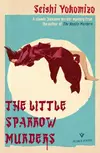
I've read all but one of this series, all out of order, and in different formats - this time THE LITTLE SPARROW MURDERS was available as an audio book via the local library which worked out brilliantly. The narrator (Akira Matsumoto) was extremely easy to listen to, used a non-grating number of voices for the characters, and gave me a lesson on pronunciation that I really appreciated.
The story here is based around Yokomizo's main character, Kosuke Kindaichi, a private detective frequently referred to as "scruffy" being invited to a remote mountain village to look, with fresh eyes, at a twenty-year-old murder case. As soon as Kindaichi arrives a new series of murders starts up, with bodies discovered in bizarre poses, the method of death matching the lyrics of an old children's song an elderly local woman is able to still sing. Needless to say, the murders have a connection to the tangled history of this small village, with its family rivalries and interwoven connections going back many generations.
Originally written in 1959, this outing has an even older feeling to it, with Kindaichi deep in rural, superstitious and very isolated Japan. The pace of these is slow, the storytelling intricate, with a detecting style straight out of the keep listening and talking to people until everything falls into place category.
Yokomizo's own life's experience has direct resonance in this series (spending time in remote areas recovering from illness as a starting point), as does his interest in traditional "western" detective fiction, hence his creation of PI Kosuke Kindaichi, and the way that he tackles unusual cases - as in this outing where he was initially willing to look into a twenty-year-old cold case. (Apropos of nothing, it's worth mentioning that his The Death's Head Stranger is widely regarded as the first successful adaption of Bram Stoker's Dracula).
Reflective, cleverly constructed, and reliant on interaction and observation, THE LITTLE SPARROW MURDERS in audio was an excellent way to learn something sobering, and oddly soothing, about human nature. Seems small villages and family grievances are pretty much the same the world over.
Originally posted at www.austcrimefiction.org.
I've read all but one of this series, all out of order, and in different formats - this time THE LITTLE SPARROW MURDERS was available as an audio book via the local library which worked out brilliantly. The narrator (Akira Matsumoto) was extremely easy to listen to, used a non-grating number of voices for the characters, and gave me a lesson on pronunciation that I really appreciated.
The story here is based around Yokomizo's main character, Kosuke Kindaichi, a private detective frequently referred to as "scruffy" being invited to a remote mountain village to look, with fresh eyes, at a twenty-year-old murder case. As soon as Kindaichi arrives a new series of murders starts up, with bodies discovered in bizarre poses, the method of death matching the lyrics of an old children's song an elderly local woman is able to still sing. Needless to say, the murders have a connection to the tangled history of this small village, with its family rivalries and interwoven connections going back many generations.
Originally written in 1959, this outing has an even older feeling to it, with Kindaichi deep in rural, superstitious and very isolated Japan. The pace of these is slow, the storytelling intricate, with a detecting style straight out of the keep listening and talking to people until everything falls into place category.
Yokomizo's own life's experience has direct resonance in this series (spending time in remote areas recovering from illness as a starting point), as does his interest in traditional "western" detective fiction, hence his creation of PI Kosuke Kindaichi, and the way that he tackles unusual cases - as in this outing where he was initially willing to look into a twenty-year-old cold case. (Apropos of nothing, it's worth mentioning that his The Death's Head Stranger is widely regarded as the first successful adaption of Bram Stoker's Dracula).
Reflective, cleverly constructed, and reliant on interaction and observation, THE LITTLE SPARROW MURDERS in audio was an excellent way to learn something sobering, and oddly soothing, about human nature. Seems small villages and family grievances are pretty much the same the world over.
Originally posted at www.austcrimefiction.org.

Right now, given what Richard Scolyer is dealing with health and personal wise, the fact that any book has been written is amazing (he worked with a writer to get this out). That he felt he was able to tell anything of his story, a successful and revolutionary medical career at the Melanoma Institute of Australia, and his life with a much loved family, and how that was affected by a devastating diagnosis of glioblastoma, an incurable brain cancer, is selfless and important.
I so deeply admire the effort and brilliance of his work, and his willingness to be open about the fears and worries that any cancer diagnosis brings, let alone one that is commonly called incurable.
That he was willing to put himself and his life on the line to test out the methodologies that he and joint director of the Melanoma Institute, Dr Georgina Long, had been working on for Melanoma cancers - and then the effort, input and involvement of the medical community that they reached out to... well these are the people that we, as a species, need to be lauding. These people are more than we deserve.
Originally posted at www.austcrimefiction.org.
Right now, given what Richard Scolyer is dealing with health and personal wise, the fact that any book has been written is amazing (he worked with a writer to get this out). That he felt he was able to tell anything of his story, a successful and revolutionary medical career at the Melanoma Institute of Australia, and his life with a much loved family, and how that was affected by a devastating diagnosis of glioblastoma, an incurable brain cancer, is selfless and important.
I so deeply admire the effort and brilliance of his work, and his willingness to be open about the fears and worries that any cancer diagnosis brings, let alone one that is commonly called incurable.
That he was willing to put himself and his life on the line to test out the methodologies that he and joint director of the Melanoma Institute, Dr Georgina Long, had been working on for Melanoma cancers - and then the effort, input and involvement of the medical community that they reached out to... well these are the people that we, as a species, need to be lauding. These people are more than we deserve.
Originally posted at www.austcrimefiction.org.

I'm not at all ashamed to admit that I'm a recent convert to football via the Matilda's. Fair to say men's football left me vaguely disinterested even though I did try to watch a World Cup once. But the Matilda's - well they were a revelation. Skilled at football (still don't understand any of the rules), but their on and off field behaviour, team spirit, demeanour was what really appealed. They have made me laugh, cheer loudly and gasp, and all at a game of football. I even know many of their names - Mackenzie Arnold, Courtnee Vine and Claire Polkinghorne are as recognisable now as Mary Fowler, Sam Kerr and Alana Kennedy, and so many more of these outstanding women.
Which made reading Macca a doddle when it came to working out who she was talking about - surprised myself how many of those names I just knew, shamefully how little of their background pathways through to the Matilda's I knew at the same time.
This was a lovely read, finding out about Macca's background and her path into football, how her determination overcame many obstacles and the shameful lack of support for female athletes like her, and other's with such outstanding capability there was. And the way that a few very good coaches and mentors steered her through the cruelty of inconsistent behaviour and that lack of support.
Well worth reading - let's hope more of the team get the chance and are interested in explaining their pathways as well. In the meantime I've just put a hold on THE MATILDA EFFECT by Fiona Crawford. Books about sport for goodness sake ... what's next!
Originally posted at www.austcrimefiction.org.
I'm not at all ashamed to admit that I'm a recent convert to football via the Matilda's. Fair to say men's football left me vaguely disinterested even though I did try to watch a World Cup once. But the Matilda's - well they were a revelation. Skilled at football (still don't understand any of the rules), but their on and off field behaviour, team spirit, demeanour was what really appealed. They have made me laugh, cheer loudly and gasp, and all at a game of football. I even know many of their names - Mackenzie Arnold, Courtnee Vine and Claire Polkinghorne are as recognisable now as Mary Fowler, Sam Kerr and Alana Kennedy, and so many more of these outstanding women.
Which made reading Macca a doddle when it came to working out who she was talking about - surprised myself how many of those names I just knew, shamefully how little of their background pathways through to the Matilda's I knew at the same time.
This was a lovely read, finding out about Macca's background and her path into football, how her determination overcame many obstacles and the shameful lack of support for female athletes like her, and other's with such outstanding capability there was. And the way that a few very good coaches and mentors steered her through the cruelty of inconsistent behaviour and that lack of support.
Well worth reading - let's hope more of the team get the chance and are interested in explaining their pathways as well. In the meantime I've just put a hold on THE MATILDA EFFECT by Fiona Crawford. Books about sport for goodness sake ... what's next!
Originally posted at www.austcrimefiction.org.

This review is ridiculously and embarrassingly overdue. The notes for it have been sitting in my queue for way too long, especially as I have always been sorely tempted to gobble read anything by this author as soon as I can get my hands on it. He's one of those authors that knows how to take an unlikely, unrealistic scenario and make it so matter of fact, whilst scaring the living daylights out of the reader, that the only doubt you may have is just before you start reading. My advice as always? Park the doubt. Read all his books.
In A KILLER HARVEST, young Joshua is convinced there is a family curse that's killed his parents, robbed him of his eyesight, and by extension caused the death of his much loved stepfather, police detective Logan. Logan's police partner managed to kill the suspect, Simon, but that doesn't really help Joshua. Or does it?
After this tragedy, Joshua is offered an opportunity he can't refuse - a pair of new eyes. Only a mishap during the surgery means that he unknowingly receives one eye from Logan, and one from Simon. As unlikely as that is, hold onto your hat as we're about to get into the question of cellular memory, and glimpses of previous sights that both men have encountered when alive.
Despite the inclusion of the teenage protagonist, this is very much an adult thriller, with distinct overtones of the horror / paranormal elements that often appear in Cleave's work. The memories or feelings that Joshua starts to experience post transplant draw out the concept of cellular memory and the idea of feelings or leanings from the donor creeping into the recipients consciousness. Although, at it's heart A KILLER HARVEST is very much a thriller in style, pace and plotting. The whole memory thing just slots into a plot that's all to do with revenge, and a very dangerous man intent on getting even for Simon's death.
The reader of my reviews might be aware that Paul Cleave is a particular favourite author of mine. Mostly because he is so adept at presenting something that I'd normally be highly allergic to, and making it not just acceptable, but compelling. Full of dark humour, great characterisations, and plot elements that will keep you awake, with the lights on, way past sensible hours, his prose is witty and sharp as a knife. The switching narratives in A KILLER HARVEST worked, the struggles of a young teenage boy who has had so much tragedy to deal with, and now, when something positive should have occurred, is once again threatening to spiral his life out of control were believable, touching and all the more worrying given the scent of revenge in the air.
Fans of dark crime fiction should be welded onto Paul Cleave's work like they've been stitched there. He's so very very good at this combining of the unexpected, and he's still, after all these years, frightening the hell out of me.
Originally posted at www.austcrimefiction.org.
This review is ridiculously and embarrassingly overdue. The notes for it have been sitting in my queue for way too long, especially as I have always been sorely tempted to gobble read anything by this author as soon as I can get my hands on it. He's one of those authors that knows how to take an unlikely, unrealistic scenario and make it so matter of fact, whilst scaring the living daylights out of the reader, that the only doubt you may have is just before you start reading. My advice as always? Park the doubt. Read all his books.
In A KILLER HARVEST, young Joshua is convinced there is a family curse that's killed his parents, robbed him of his eyesight, and by extension caused the death of his much loved stepfather, police detective Logan. Logan's police partner managed to kill the suspect, Simon, but that doesn't really help Joshua. Or does it?
After this tragedy, Joshua is offered an opportunity he can't refuse - a pair of new eyes. Only a mishap during the surgery means that he unknowingly receives one eye from Logan, and one from Simon. As unlikely as that is, hold onto your hat as we're about to get into the question of cellular memory, and glimpses of previous sights that both men have encountered when alive.
Despite the inclusion of the teenage protagonist, this is very much an adult thriller, with distinct overtones of the horror / paranormal elements that often appear in Cleave's work. The memories or feelings that Joshua starts to experience post transplant draw out the concept of cellular memory and the idea of feelings or leanings from the donor creeping into the recipients consciousness. Although, at it's heart A KILLER HARVEST is very much a thriller in style, pace and plotting. The whole memory thing just slots into a plot that's all to do with revenge, and a very dangerous man intent on getting even for Simon's death.
The reader of my reviews might be aware that Paul Cleave is a particular favourite author of mine. Mostly because he is so adept at presenting something that I'd normally be highly allergic to, and making it not just acceptable, but compelling. Full of dark humour, great characterisations, and plot elements that will keep you awake, with the lights on, way past sensible hours, his prose is witty and sharp as a knife. The switching narratives in A KILLER HARVEST worked, the struggles of a young teenage boy who has had so much tragedy to deal with, and now, when something positive should have occurred, is once again threatening to spiral his life out of control were believable, touching and all the more worrying given the scent of revenge in the air.
Fans of dark crime fiction should be welded onto Paul Cleave's work like they've been stitched there. He's so very very good at this combining of the unexpected, and he's still, after all these years, frightening the hell out of me.
Originally posted at www.austcrimefiction.org.
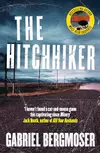
Fans of the Bee Gees might find themselves with psychological issues post reading or listening to THE HITCHHIKER. I'm not sure I'll hear the particular track that's on high rotation in the car at the centre of much of the action here without a slight twitch ever again to be honest.
A master of psychological suspense Bergmoser's gone all out with THE HITCHHIKER, creating a central character who starts off reasonably benign, rapidly being revealed as the sort of sick, depraved, just flat out creepy, awful bloke that you kind of know is probably out there, but could really live without knowing much about.
Based around three characters, the story starts out with the focus on "The Driver - Paul". Introducing "The Hitchhiker - Jesse" ramps up the creep, with something obviously not right about both these men, although who is the worst takes a tiny while to sort out. When it is clear, the question then becomes just how "not right" you can possibly get, with a psychological game being played that rapidly becomes overtly violent and shocking. Enter "The Fugitive - Maggie" who will be familiar to readers of other of Bergmoser's books. Everyone here may or may not be who they say they are, their reason for being on the road, in the middle of nowhere may or may not be as they claim, and their intentions, well, nothing's as straightforward as you'd hope with any of them.
This story is creepy, dark, confrontational and disconcerting to say the least. Actually that's not strong enough - this is hard to read. What starts out as the story of a man seemingly escaping the trauma of a broken marriage, driving into the outback as a way of challenging himself, doing the unexpected, gets more unexpected when he picks up a nervy, taciturn young hitchhiker who is obviously escaping something. Then there's the explosion when the fugitive arrives on the scene.
The shapeshifting, and reassessment of these characters starts out slow and steady, a search for enlightenment and testing of boundaries, or simply an escape, the reader is forced into a close up, uncomfortable relationship with them all as motivations and reactions get more and more out there. An exploration of weird, with a dose of Stockholm Syndrome thrown in, there's also the idea of like recognising like, which is very disconcerting.
Needless to say this is not a book for fans of cosy mysteries. It also might be a bit of a surprise for those who love noir, and psychological thrillers, because this gets pretty sick at points, and frankly, downright terrifying. There tension is intense, the creepy intense, the characterisations intense, the intent of everyone intense, and the desire to keep reading equally as intense.
Which might make readers, including this one, worry about themselves ever so slightly. I mean you'll have a lot of time to consider those sorts of questions, what with the being kept awake, with the lights on, and the twitch that you're going to inevitably develop whenever you see an interaction between people that seems, I don't know, a bit off maybe.
Originally posted at www.austcrimefiction.org.
Fans of the Bee Gees might find themselves with psychological issues post reading or listening to THE HITCHHIKER. I'm not sure I'll hear the particular track that's on high rotation in the car at the centre of much of the action here without a slight twitch ever again to be honest.
A master of psychological suspense Bergmoser's gone all out with THE HITCHHIKER, creating a central character who starts off reasonably benign, rapidly being revealed as the sort of sick, depraved, just flat out creepy, awful bloke that you kind of know is probably out there, but could really live without knowing much about.
Based around three characters, the story starts out with the focus on "The Driver - Paul". Introducing "The Hitchhiker - Jesse" ramps up the creep, with something obviously not right about both these men, although who is the worst takes a tiny while to sort out. When it is clear, the question then becomes just how "not right" you can possibly get, with a psychological game being played that rapidly becomes overtly violent and shocking. Enter "The Fugitive - Maggie" who will be familiar to readers of other of Bergmoser's books. Everyone here may or may not be who they say they are, their reason for being on the road, in the middle of nowhere may or may not be as they claim, and their intentions, well, nothing's as straightforward as you'd hope with any of them.
This story is creepy, dark, confrontational and disconcerting to say the least. Actually that's not strong enough - this is hard to read. What starts out as the story of a man seemingly escaping the trauma of a broken marriage, driving into the outback as a way of challenging himself, doing the unexpected, gets more unexpected when he picks up a nervy, taciturn young hitchhiker who is obviously escaping something. Then there's the explosion when the fugitive arrives on the scene.
The shapeshifting, and reassessment of these characters starts out slow and steady, a search for enlightenment and testing of boundaries, or simply an escape, the reader is forced into a close up, uncomfortable relationship with them all as motivations and reactions get more and more out there. An exploration of weird, with a dose of Stockholm Syndrome thrown in, there's also the idea of like recognising like, which is very disconcerting.
Needless to say this is not a book for fans of cosy mysteries. It also might be a bit of a surprise for those who love noir, and psychological thrillers, because this gets pretty sick at points, and frankly, downright terrifying. There tension is intense, the creepy intense, the characterisations intense, the intent of everyone intense, and the desire to keep reading equally as intense.
Which might make readers, including this one, worry about themselves ever so slightly. I mean you'll have a lot of time to consider those sorts of questions, what with the being kept awake, with the lights on, and the twitch that you're going to inevitably develop whenever you see an interaction between people that seems, I don't know, a bit off maybe.
Originally posted at www.austcrimefiction.org.
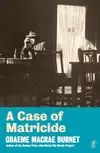
In a sign of just how ridiculously behind and disorganised I've been of late, A CASE OF MATRICIDE has been lurking around here for months now, and it's the third novel in a series that I'd failed to even start. Now I'm reading it back to front because this was such a fascinating read.
Fascinating partly because Burnet has a writing style that elegantly combines wry humour with detailed observational elements that never become overblown, blurring boundaries between characters and the reader, all whilst having a good rummage around in the darkest recesses of people's minds.
It's also partly because of the story behind this series that is ... complicated. The novels are purported to be fiction written by Raymond Burnet, translated and introduced posthumously by Graeme Macrea Burnet. Set shortly before 1992, the year in which Raymond supposedly committed suicide, A CASE OF MATRICIDE is located in Saint-Louis, the small French town where Raymond lived, an observer of the people around him, including Chief Inspector Georges Gorski (it's hard not to imagine there's a hat tip in that first name).
Whilst it all might sound a bit far fetched, even for metafiction, there's something about this artifice that works. It's delivered in a rather matter-of-fact manner, leaving the reader with plenty of room to flow with the premise, helped along the way by the gifted writer who is undertaking the challenge. The sense of place is pitch perfect, and the character's French in feeling and attitude, leading to no narrative bumps along the way. It even works as a standalone, certainly allowing a numerically challenged reader like myself to slip into this series at the wrong end, with ease.
Gorski is a policeman, who despite being a Chief Inspector, does things the old way. He does rounds in and about the town on foot, he talks to people, he drinks in small bars where he can overhear the gossip, and opinions. He's helped in this low-key, rambling pursuit of life by a recent divorce from a wife that nobody could ever quite work out how he married in this first place. Considerably above his station in life, Céline, is enjoying a nice holiday away at her father's expense, and his daughter, Clémence, is with her maternal grandparents. It's just Gorski and his failing mother in the small flat above the shop his father ran until his death. Keeping an eye on the older lady, the married woman who now runs a flower shop below them, seems to be the only person who gets how lonely, and lost Gorski seems. Despite a worklife that keeps him busy. In this novel, an investigation into a suspicious stranger alongside a couple of other odd cases - a housebound woman who is convinced her son killed her dog and is slowly poisoning her, then the heart-attack death of factory owner, a cause of death which Gorski doesn't buy.
Haunted by demons, Gorski struggles with the end of his marriage, with the failing health, and future of his mother, and events from his past. There's a story of a broken mustard spoon that has worried at him since childhood, an indication of how his parents regarded him, but even more, it's about how he processes guilt and involvement, and how his life has been consumed by small things. It's also his examination of external and internal musings, what people know about, and what we imagine they know. It fits with the sort of curtain twitching knowledge of others that happens in small villages like this. It's also a source of humour, as unlikely as that sounds, as musings on a mustard spoon demonstrates the little things that embarrass, that stay with us, blowing up in our minds to be more than, in this case, the future of a mother who is obviously going to need caring for, or what happened to make an unlikely marriage fizzle into nothing, or what a stranger is doing in a small village, and why another son and mother are at odds, and what to do about a florist.
If for absolutely no other reason, I'm grateful I finally managed to get some organisation into the stacks and read A CASE OF MATRICIDE. The two earlier books - The Accident on the A35 (2nd in the series) and The Disappearance of Adèle Bedeau (1st) are now here, ready to be read.
Originally posted at www.austcrimefiction.org.
In a sign of just how ridiculously behind and disorganised I've been of late, A CASE OF MATRICIDE has been lurking around here for months now, and it's the third novel in a series that I'd failed to even start. Now I'm reading it back to front because this was such a fascinating read.
Fascinating partly because Burnet has a writing style that elegantly combines wry humour with detailed observational elements that never become overblown, blurring boundaries between characters and the reader, all whilst having a good rummage around in the darkest recesses of people's minds.
It's also partly because of the story behind this series that is ... complicated. The novels are purported to be fiction written by Raymond Burnet, translated and introduced posthumously by Graeme Macrea Burnet. Set shortly before 1992, the year in which Raymond supposedly committed suicide, A CASE OF MATRICIDE is located in Saint-Louis, the small French town where Raymond lived, an observer of the people around him, including Chief Inspector Georges Gorski (it's hard not to imagine there's a hat tip in that first name).
Whilst it all might sound a bit far fetched, even for metafiction, there's something about this artifice that works. It's delivered in a rather matter-of-fact manner, leaving the reader with plenty of room to flow with the premise, helped along the way by the gifted writer who is undertaking the challenge. The sense of place is pitch perfect, and the character's French in feeling and attitude, leading to no narrative bumps along the way. It even works as a standalone, certainly allowing a numerically challenged reader like myself to slip into this series at the wrong end, with ease.
Gorski is a policeman, who despite being a Chief Inspector, does things the old way. He does rounds in and about the town on foot, he talks to people, he drinks in small bars where he can overhear the gossip, and opinions. He's helped in this low-key, rambling pursuit of life by a recent divorce from a wife that nobody could ever quite work out how he married in this first place. Considerably above his station in life, Céline, is enjoying a nice holiday away at her father's expense, and his daughter, Clémence, is with her maternal grandparents. It's just Gorski and his failing mother in the small flat above the shop his father ran until his death. Keeping an eye on the older lady, the married woman who now runs a flower shop below them, seems to be the only person who gets how lonely, and lost Gorski seems. Despite a worklife that keeps him busy. In this novel, an investigation into a suspicious stranger alongside a couple of other odd cases - a housebound woman who is convinced her son killed her dog and is slowly poisoning her, then the heart-attack death of factory owner, a cause of death which Gorski doesn't buy.
Haunted by demons, Gorski struggles with the end of his marriage, with the failing health, and future of his mother, and events from his past. There's a story of a broken mustard spoon that has worried at him since childhood, an indication of how his parents regarded him, but even more, it's about how he processes guilt and involvement, and how his life has been consumed by small things. It's also his examination of external and internal musings, what people know about, and what we imagine they know. It fits with the sort of curtain twitching knowledge of others that happens in small villages like this. It's also a source of humour, as unlikely as that sounds, as musings on a mustard spoon demonstrates the little things that embarrass, that stay with us, blowing up in our minds to be more than, in this case, the future of a mother who is obviously going to need caring for, or what happened to make an unlikely marriage fizzle into nothing, or what a stranger is doing in a small village, and why another son and mother are at odds, and what to do about a florist.
If for absolutely no other reason, I'm grateful I finally managed to get some organisation into the stacks and read A CASE OF MATRICIDE. The two earlier books - The Accident on the A35 (2nd in the series) and The Disappearance of Adèle Bedeau (1st) are now here, ready to be read.
Originally posted at www.austcrimefiction.org.

Somewhere between fantasy, science fiction and crime fiction, with a nod to family tragedy, chicklit style girls out of control, the ups and downs of long term friendships, romance and relationship tensions, there will need to be a sub-category that AN ETHICAL GUIDE TO MURDER will slot into. In other words, which shelf this one goes onto is going to be a creative choice, because it's nothing if not very different.
The story revolves around Thea, and her secret power of life and death. Just by touching someone she can tell how long they have to live. She can also transfer life from one person to another - something she finds out the hard way when her oldest, best friend Ruth suffers a head injury on a night out.
Other than this particular "life hack" Thea's a bit of a walking disaster area. After the death of her parents in a car crash (which she was also in) as a very young child she was taken in and raised by her grandfather. A distant, curmudgeonly old man who she loves, but doesn't always get. Her best friend Ruth was another "outsider" when they were young, both of them shy in their own ways, both had tricky childhoods (Ruth was very ill when young) and both of them have come out of that time as firm, but very different, friends. Thea pursued a career in the law (very haphazardly), ending up working in HR with an old flame of Ruth's as her constantly annoyed boss, Ruth went into medicine and works all hours in all sorts of places trying to cure everyone she comes across. Meanwhile Thea's got this power, and she's using it. Aided and abetted by an old flame / new love, lawyer Sam, they are on a bit of a crusade, creating the 'Ethical Guide to Murder' to identify and qualify victims, although Thea's not above a bit of personal score settling if the occasion arises.
A not even vaguely believable central conceit in this one is made considerably more appealing by the characterisations. Thea's a flake, Ruth's very serious, Sam seems a bit too good to be true. Thea's one of those women that is fun to read about, but would be a nightmare to know in real life (even without the killing / reading people's lifespans bit). She's often profoundly annoying and self-centred, something that considered, caring Ruth's kind of okay with, until she begins to realise that Thea and Sam are, indeed, up to something.
Connection with Thea, and a liking (probably not the right word) of her, is going to be the key for readers as there's not a lot of surprises in great chunks of this plot - the identification of the victims, the stealing of lifespan, and gifting it forward, does get repetitive at points, as does the "ethical" component of it which is mostly pretty black and white, alleviated by the twists and turns in the people that Thea chooses to "save". Hang in there though, because the big kicks come at the end, as Sam and Thea's lives start to implode, financial crimes come to light and Thea starts to question herself. Interestingly as the wheels start to fall off, what started out as an ethical approach to murder, switches gently into a moving morality play, and consequences and responsibility start to play on minds.
Originally posted at www.austcrimefiction.org.
Somewhere between fantasy, science fiction and crime fiction, with a nod to family tragedy, chicklit style girls out of control, the ups and downs of long term friendships, romance and relationship tensions, there will need to be a sub-category that AN ETHICAL GUIDE TO MURDER will slot into. In other words, which shelf this one goes onto is going to be a creative choice, because it's nothing if not very different.
The story revolves around Thea, and her secret power of life and death. Just by touching someone she can tell how long they have to live. She can also transfer life from one person to another - something she finds out the hard way when her oldest, best friend Ruth suffers a head injury on a night out.
Other than this particular "life hack" Thea's a bit of a walking disaster area. After the death of her parents in a car crash (which she was also in) as a very young child she was taken in and raised by her grandfather. A distant, curmudgeonly old man who she loves, but doesn't always get. Her best friend Ruth was another "outsider" when they were young, both of them shy in their own ways, both had tricky childhoods (Ruth was very ill when young) and both of them have come out of that time as firm, but very different, friends. Thea pursued a career in the law (very haphazardly), ending up working in HR with an old flame of Ruth's as her constantly annoyed boss, Ruth went into medicine and works all hours in all sorts of places trying to cure everyone she comes across. Meanwhile Thea's got this power, and she's using it. Aided and abetted by an old flame / new love, lawyer Sam, they are on a bit of a crusade, creating the 'Ethical Guide to Murder' to identify and qualify victims, although Thea's not above a bit of personal score settling if the occasion arises.
A not even vaguely believable central conceit in this one is made considerably more appealing by the characterisations. Thea's a flake, Ruth's very serious, Sam seems a bit too good to be true. Thea's one of those women that is fun to read about, but would be a nightmare to know in real life (even without the killing / reading people's lifespans bit). She's often profoundly annoying and self-centred, something that considered, caring Ruth's kind of okay with, until she begins to realise that Thea and Sam are, indeed, up to something.
Connection with Thea, and a liking (probably not the right word) of her, is going to be the key for readers as there's not a lot of surprises in great chunks of this plot - the identification of the victims, the stealing of lifespan, and gifting it forward, does get repetitive at points, as does the "ethical" component of it which is mostly pretty black and white, alleviated by the twists and turns in the people that Thea chooses to "save". Hang in there though, because the big kicks come at the end, as Sam and Thea's lives start to implode, financial crimes come to light and Thea starts to question herself. Interestingly as the wheels start to fall off, what started out as an ethical approach to murder, switches gently into a moving morality play, and consequences and responsibility start to play on minds.
Originally posted at www.austcrimefiction.org.

Martine Kropkowski’s debut crime fiction delves into the devastating consequences of the epidemic of violence against women.
Melissa, Bridie and Cassandra are friends, bonded over the sorts of things that connect young mothers – pressure, expectation, exhaustion and isolation. What starts out as a chance encounter leads to coffee meetings and what they thought would be long and abiding friendships. Only there used to be four of them. Full review at Newtown Review of Books: https://newtownreviewofbooks.com.au/martine-kropkowski-everywhere-we-look-reviewed-by-karen-chisholm/
Originally posted at newtownreviewofbooks.com.au.
Martine Kropkowski’s debut crime fiction delves into the devastating consequences of the epidemic of violence against women.
Melissa, Bridie and Cassandra are friends, bonded over the sorts of things that connect young mothers – pressure, expectation, exhaustion and isolation. What starts out as a chance encounter leads to coffee meetings and what they thought would be long and abiding friendships. Only there used to be four of them. Full review at Newtown Review of Books: https://newtownreviewofbooks.com.au/martine-kropkowski-everywhere-we-look-reviewed-by-karen-chisholm/
Originally posted at newtownreviewofbooks.com.au.

HOME TRUTHS is the second novel I've been lucky enough to read by author Charity Norman that uses characters and connections to drive home an important, and devastating message. In REMEMBER ME she explored the complications of family, dementia and secrets. HOME TRUTHS is again an exploration of family and secrets, but it's also about grief, guilt and the viciousness of manipulation.
Starting out with the attempted murder trial of Yorkshire based Probation officer Livia Denby, the story commences as the jury announces it has reached a verdict. We are then immediately taken back to the events that led to this situation, when Livia's husband Scott was a teacher, their children Heidi and Noah young, normal happy kids, and Scott's disabled brother was still alive. A happy, normal family, until a series of events leads up to the death, alone and calling for help, of Scott's disabled brother. This sends Scott into a spiral of grief and guilt, leading him into the world of conspiracy theories and manipulative alternative "truthers".
As Scott searches desperately for comfort, or answers, or something, he turns further and further away from rational thought, dragging Livia and the children into the mire with him. The end result is a major threat and another potential family tragedy that puts Livia in an impossible position.
The novel asks a lot of questions. What would you do if your child was in danger? More to the point, what would you do if their own father is a big part of the problem? Can a marriage and a family survive something like that? And the ultimate question - how do we, as a society, handle the grifters, manipulators, and particularly sick, vicious creatures, who co-opt the online sphere as a vehicle to trap, control and destroy lives. Whatever the motivation, the end result can be lifelong, as is the case in HOME TRUTHS.
Norman is a deft storyteller, ramping up the tension, stirring emotion, drawing readers into the world she's building, whilst tackling difficult subjects with care, precision and timeliness. The subject matter here is definitely timely, as is the chance for a reader to look at motivation - of those pedalling crap, and those who fall for it. It also uses precision in how it separates those that can see what's happening, from those that are caught up in it all, and there is care here in the way that all the victims are depicted - Scott, his brother, Livia, her children and their extended families and friends. Nobody gets out of this situation unchanged, although you have to wonder whether we've worked out yet how to handle the conspiracy pedallers and the grifters.
Originally posted at www.austcrimefiction.org.
HOME TRUTHS is the second novel I've been lucky enough to read by author Charity Norman that uses characters and connections to drive home an important, and devastating message. In REMEMBER ME she explored the complications of family, dementia and secrets. HOME TRUTHS is again an exploration of family and secrets, but it's also about grief, guilt and the viciousness of manipulation.
Starting out with the attempted murder trial of Yorkshire based Probation officer Livia Denby, the story commences as the jury announces it has reached a verdict. We are then immediately taken back to the events that led to this situation, when Livia's husband Scott was a teacher, their children Heidi and Noah young, normal happy kids, and Scott's disabled brother was still alive. A happy, normal family, until a series of events leads up to the death, alone and calling for help, of Scott's disabled brother. This sends Scott into a spiral of grief and guilt, leading him into the world of conspiracy theories and manipulative alternative "truthers".
As Scott searches desperately for comfort, or answers, or something, he turns further and further away from rational thought, dragging Livia and the children into the mire with him. The end result is a major threat and another potential family tragedy that puts Livia in an impossible position.
The novel asks a lot of questions. What would you do if your child was in danger? More to the point, what would you do if their own father is a big part of the problem? Can a marriage and a family survive something like that? And the ultimate question - how do we, as a society, handle the grifters, manipulators, and particularly sick, vicious creatures, who co-opt the online sphere as a vehicle to trap, control and destroy lives. Whatever the motivation, the end result can be lifelong, as is the case in HOME TRUTHS.
Norman is a deft storyteller, ramping up the tension, stirring emotion, drawing readers into the world she's building, whilst tackling difficult subjects with care, precision and timeliness. The subject matter here is definitely timely, as is the chance for a reader to look at motivation - of those pedalling crap, and those who fall for it. It also uses precision in how it separates those that can see what's happening, from those that are caught up in it all, and there is care here in the way that all the victims are depicted - Scott, his brother, Livia, her children and their extended families and friends. Nobody gets out of this situation unchanged, although you have to wonder whether we've worked out yet how to handle the conspiracy pedallers and the grifters.
Originally posted at www.austcrimefiction.org.

Following on from the excellent first novel in this series, BETTER THE BLOOD, RETURN TO BLOOD is centred, once again, around Hana Westerman. Only now she has turned in her police badge, abandoning a career as a detective in the Auckland CIB, she's returned to her hometown of Tātā Bay to do some running repairs. On her own psyche which is battered and bruised, on her relationships with extended family which are fractious and strained, and to spend time with her beloved father, Eru. Not that everything about Tātā Bay is a happy memory, there's a monument to her high school classmate that she runs past daily, a Māori man in jail for that murder, despite Eru's misgivings about the conviction.
All of which ends up interwoven with a more current case when Westerman's daughter Addison finds a skeleton in the sand dunes. There's something about the backstory of this victim - a young Māori woman who had led a difficult life - that pulls Westerman and Addison into this investigation, despite neither of them having an official capacity, or even any direct connection with the victim.
Michael Bennett's style in these novels (the third, CARVED IN BLOOD due out mid 2025) is a combination of investigation of crime, interwoven with cultural and community implications. In all cases, Māori sensibility, community and interactions are forefront, often with clear illustration of how incompatible, cack-handed and unnecessary colonial methods are in communities looking for tradition, culture and resilience.
The cast of characters revolving around Westerman, her daughter and her friend, the elders in their Māori community, relatives and long-term friends, as well as her ex-husband, and his new family are an interesting bunch, as is the way this sort of blended and extended family works. There's tensions between everyone, and there is a lot of understanding and acceptance along the way. Westerman's position in the sandwich generation is also clear - her father potentially failing, her daughter still finding her way, there's something universal about that depiction of the generation caught as the carer between kids and parents, each with very different requirements. It's a particularly interesting portrayal in someone who so patently doesn't have their own act together in so many ways, creating an interesting triangle of need between the three age groups.
There's a well known adage about second novel syndrome, and there are a few glimpses of that in RETURN TO BLOOD. It's a bit inclined to wander at points, higher on emotion and the personal, than perhaps the crime and the criminal. Aspects of the case plot were a bit predictable, feeling a little padded to allow for the personal issues being addressed. This might be an issue for readers who are on the lookout for plot dense, action focused crime fiction. For those who are prepared to take their crime with their personal, to have a look at the development of a character who arrived on the scene with a massive thump in the first novel, RETURN TO BLOOD will have them awaiting the third book very eagerly indeed.
Originally posted at www.austcrimefiction.org.
Following on from the excellent first novel in this series, BETTER THE BLOOD, RETURN TO BLOOD is centred, once again, around Hana Westerman. Only now she has turned in her police badge, abandoning a career as a detective in the Auckland CIB, she's returned to her hometown of Tātā Bay to do some running repairs. On her own psyche which is battered and bruised, on her relationships with extended family which are fractious and strained, and to spend time with her beloved father, Eru. Not that everything about Tātā Bay is a happy memory, there's a monument to her high school classmate that she runs past daily, a Māori man in jail for that murder, despite Eru's misgivings about the conviction.
All of which ends up interwoven with a more current case when Westerman's daughter Addison finds a skeleton in the sand dunes. There's something about the backstory of this victim - a young Māori woman who had led a difficult life - that pulls Westerman and Addison into this investigation, despite neither of them having an official capacity, or even any direct connection with the victim.
Michael Bennett's style in these novels (the third, CARVED IN BLOOD due out mid 2025) is a combination of investigation of crime, interwoven with cultural and community implications. In all cases, Māori sensibility, community and interactions are forefront, often with clear illustration of how incompatible, cack-handed and unnecessary colonial methods are in communities looking for tradition, culture and resilience.
The cast of characters revolving around Westerman, her daughter and her friend, the elders in their Māori community, relatives and long-term friends, as well as her ex-husband, and his new family are an interesting bunch, as is the way this sort of blended and extended family works. There's tensions between everyone, and there is a lot of understanding and acceptance along the way. Westerman's position in the sandwich generation is also clear - her father potentially failing, her daughter still finding her way, there's something universal about that depiction of the generation caught as the carer between kids and parents, each with very different requirements. It's a particularly interesting portrayal in someone who so patently doesn't have their own act together in so many ways, creating an interesting triangle of need between the three age groups.
There's a well known adage about second novel syndrome, and there are a few glimpses of that in RETURN TO BLOOD. It's a bit inclined to wander at points, higher on emotion and the personal, than perhaps the crime and the criminal. Aspects of the case plot were a bit predictable, feeling a little padded to allow for the personal issues being addressed. This might be an issue for readers who are on the lookout for plot dense, action focused crime fiction. For those who are prepared to take their crime with their personal, to have a look at the development of a character who arrived on the scene with a massive thump in the first novel, RETURN TO BLOOD will have them awaiting the third book very eagerly indeed.
Originally posted at www.austcrimefiction.org.

The first line of the blurb for THE CAMPERS describes it as "An engrossing and provocative exploration of privilege, hypocrisy and justice... " which is about as perfect a description as you'd ever want. This is discomforting, confusing, and confronting reading, a story that is classified as crime fiction for unusual reasons.
The first crime, and the obvious one, in this novel is the juxtaposition of the have and the have-nots. A safe, seemingly community-orientated enclave in the inner-city, "The Drove" is an idyllic location for those privileged enough to be able to live there. A community with its own messaging group, that shares abundance of produce, social interactions, and a desire to protect the natural beauty that they live within. You'd think it was a community that had nailed coherence and cooperation, until the itinerants set up camp in the park opposite the houses.
The catalyst to the second crime is in some of the wildly varying reactions to the "campers" as they are called by the community members. The resentment, the intrigue, the attraction and the virulent hatred that slowly builds in people who, on the face of it, have everything, to those who have nothing. That's not to say there weren't triggers and noise where there is normally none, and pointless vandalism, but the explosion had been building, as they argued about their reactions to the interlopers
The second overt crime is the rioting of the campers, a loud party leading to damage and wanton destruction (and yes some animal cruelty towards defenceless chickens), at which point the simmering rage community to outsiders, turns partially inwards as well and becomes a mishmash of hatred, power playing, resentment and tension.
At the heart of all of this are Leah, her older husband Moses, their young children Fleur and Harley, and his son Miguel from his first marriage. It's this family that holds the focus throughout this novel - with an externally happy marriage, beset with suspicion, and money problems. Leah's currently a stay at home mother, obsessed, in particular, with her baby son Harley, she was a tricky customer for this reader to deal with. Conflicted by the need to return to work, paralysed by a fear of loss of connection with Harley as he goes into childcare, she's suspicious of Moses having an affair, whilst sleeping once with the "leader" of the itinerant group - an alpha male type called Sholto, who is, manipulative, and quite obviously up to something. Even the other members of the camping group are aware that Sholto is not all that he seems, and his behaviour becomes increasingly threatening and overbearing, as the "Drovers" become increasingly fraught and snippy.
Reading this novel, you'll spend a lot of time in Leah's head, which frankly, is an uncomfortable place to be. Not only younger than her husband, she's one of those impulsive, but then regretful people who float around making bad decisions, judging everybody else, panicking about the implications of people knowing what's she's done with Sholto, and just being, off-putting. While she's dithering about though, the community around her is increasingly falling apart.
THE CAMPERS isn't a traditional crime novel in that the riot and the wanton destruction is the crime. There are arrests made over that, there are repercussions and there's a community, and a marriage and family left teetering on the edge. Maybe the real crime here is the reactions of everyone. The "get rid of them regardless" versus "but they have nothing". The "not our problem" versus "they need help", the uselessness of the authorities, the lack of options, services, preparation for events like the ones that play out here. Given that homelessness, mental health, the working poor, and the lack of services and options for people who find themselves on the fringes - frequently through no fault of their own - is an increasing problem, you have to wonder what it's going to take for everyone to wake up to the ramifications of lack of funding, preparation and empathy.
Originally posted at www.austcrimefiction.org.
The first line of the blurb for THE CAMPERS describes it as "An engrossing and provocative exploration of privilege, hypocrisy and justice... " which is about as perfect a description as you'd ever want. This is discomforting, confusing, and confronting reading, a story that is classified as crime fiction for unusual reasons.
The first crime, and the obvious one, in this novel is the juxtaposition of the have and the have-nots. A safe, seemingly community-orientated enclave in the inner-city, "The Drove" is an idyllic location for those privileged enough to be able to live there. A community with its own messaging group, that shares abundance of produce, social interactions, and a desire to protect the natural beauty that they live within. You'd think it was a community that had nailed coherence and cooperation, until the itinerants set up camp in the park opposite the houses.
The catalyst to the second crime is in some of the wildly varying reactions to the "campers" as they are called by the community members. The resentment, the intrigue, the attraction and the virulent hatred that slowly builds in people who, on the face of it, have everything, to those who have nothing. That's not to say there weren't triggers and noise where there is normally none, and pointless vandalism, but the explosion had been building, as they argued about their reactions to the interlopers
The second overt crime is the rioting of the campers, a loud party leading to damage and wanton destruction (and yes some animal cruelty towards defenceless chickens), at which point the simmering rage community to outsiders, turns partially inwards as well and becomes a mishmash of hatred, power playing, resentment and tension.
At the heart of all of this are Leah, her older husband Moses, their young children Fleur and Harley, and his son Miguel from his first marriage. It's this family that holds the focus throughout this novel - with an externally happy marriage, beset with suspicion, and money problems. Leah's currently a stay at home mother, obsessed, in particular, with her baby son Harley, she was a tricky customer for this reader to deal with. Conflicted by the need to return to work, paralysed by a fear of loss of connection with Harley as he goes into childcare, she's suspicious of Moses having an affair, whilst sleeping once with the "leader" of the itinerant group - an alpha male type called Sholto, who is, manipulative, and quite obviously up to something. Even the other members of the camping group are aware that Sholto is not all that he seems, and his behaviour becomes increasingly threatening and overbearing, as the "Drovers" become increasingly fraught and snippy.
Reading this novel, you'll spend a lot of time in Leah's head, which frankly, is an uncomfortable place to be. Not only younger than her husband, she's one of those impulsive, but then regretful people who float around making bad decisions, judging everybody else, panicking about the implications of people knowing what's she's done with Sholto, and just being, off-putting. While she's dithering about though, the community around her is increasingly falling apart.
THE CAMPERS isn't a traditional crime novel in that the riot and the wanton destruction is the crime. There are arrests made over that, there are repercussions and there's a community, and a marriage and family left teetering on the edge. Maybe the real crime here is the reactions of everyone. The "get rid of them regardless" versus "but they have nothing". The "not our problem" versus "they need help", the uselessness of the authorities, the lack of options, services, preparation for events like the ones that play out here. Given that homelessness, mental health, the working poor, and the lack of services and options for people who find themselves on the fringes - frequently through no fault of their own - is an increasing problem, you have to wonder what it's going to take for everyone to wake up to the ramifications of lack of funding, preparation and empathy.
Originally posted at www.austcrimefiction.org.

Having read the third in the series A CASE OF MATRICIDE very recently I was intrigued enough by the prospect of the two earlier books that I managed to get the 2nd via the local library. Hence it jumped quite a long way up the queue in order to be able to return it.
Luckily this doesn't seem to be a series that is suffering from my backwards approach. Georges Gorski is a fascinating sort of character, bought to life, as I said in the review linked to above, by a writing style that combines wry humour and detailed observations. Everything's wonderfully understated, with a gentle, but skewering analysis of human nature along the way.
In this story, Gorski's personal life is imploding, and his professional life seems to be caught up in the most mundane of small town goings on. What seems like a straightforward death in a road accident twists somewhat after Gorski visits the widow to deliver the bad news. Mme Barthelme, seems surprisingly unmoved by the news of the death of her husband, and her teenage son Raymond, who has some problems of his own, instigates his own search for the truth about his father's whereabouts on the night he died with devastating consequences.
The story turns on the question of personality, and control. The dead man's presence weighed heavily on his household, his behaviour a burden for them all. His beautiful wife might seem a little ineffectual, but she can manipulate, something Gorski must learn for himself. Their son has chafed against the control of his father, and you'd think, his curiosity about his father's activities might be a way to purge some demons, but nothing is ever as straightforward in these novels. Whilst Gorski is busy trying to piece together the timings, and paths that lead to the accident, young Raymond is trying to understand a father who was always aloof. An austere figure of rigid rules and behaviours, the lead up to his own death seems to be the most unpredictable thing about him.
As with the earlier book, this is another masterful psychological study of human nature and small town life. In the small moments, the day to day angst and small humiliations of growing up, and living lives closely observed by those around you, THE ACCIDENT ON THE A35 is as much about the death of a tyrant as it is the lives lived around him.
Originally posted at www.austcrimefiction.org.
Having read the third in the series A CASE OF MATRICIDE very recently I was intrigued enough by the prospect of the two earlier books that I managed to get the 2nd via the local library. Hence it jumped quite a long way up the queue in order to be able to return it.
Luckily this doesn't seem to be a series that is suffering from my backwards approach. Georges Gorski is a fascinating sort of character, bought to life, as I said in the review linked to above, by a writing style that combines wry humour and detailed observations. Everything's wonderfully understated, with a gentle, but skewering analysis of human nature along the way.
In this story, Gorski's personal life is imploding, and his professional life seems to be caught up in the most mundane of small town goings on. What seems like a straightforward death in a road accident twists somewhat after Gorski visits the widow to deliver the bad news. Mme Barthelme, seems surprisingly unmoved by the news of the death of her husband, and her teenage son Raymond, who has some problems of his own, instigates his own search for the truth about his father's whereabouts on the night he died with devastating consequences.
The story turns on the question of personality, and control. The dead man's presence weighed heavily on his household, his behaviour a burden for them all. His beautiful wife might seem a little ineffectual, but she can manipulate, something Gorski must learn for himself. Their son has chafed against the control of his father, and you'd think, his curiosity about his father's activities might be a way to purge some demons, but nothing is ever as straightforward in these novels. Whilst Gorski is busy trying to piece together the timings, and paths that lead to the accident, young Raymond is trying to understand a father who was always aloof. An austere figure of rigid rules and behaviours, the lead up to his own death seems to be the most unpredictable thing about him.
As with the earlier book, this is another masterful psychological study of human nature and small town life. In the small moments, the day to day angst and small humiliations of growing up, and living lives closely observed by those around you, THE ACCIDENT ON THE A35 is as much about the death of a tyrant as it is the lives lived around him.
Originally posted at www.austcrimefiction.org.

When three 16 year old boys on a school hiking trip run into perilous surf, the only witness is Grace Disher, the teacher in charge of the trip, who reluctantly defers to the first rule of rescue: don't create another casualty and stands helplessly by as the boys disappear.
Switch then to the remaining boys in the party, and the two other teachers who were with them on the hike as Disher was setting up for the group's arrival at their next destination. It was when she was hiking back in to meet them that she came across these three, who inexplicably it seems, simply ran straight into the ocean in conditions that nobody would think to swim in. Then to the frantic search for a phone signal, the arrival of police, SES and search and rescue. The remaining boys and the two (male) teachers are evacuated out to a nearby town and a motel for the night, but Disher opts (insists) on staying in the area, providing what assistance she can to the searchers, being interrogated by a local cop as to the circumstances of the drownings, and why she didn't try to rescue them.
The story rapidly becomes about that decision - should she have sacrificed her own life in what she could see would be a fruitless attempt to save the boys? As the story is taken up by the media, the witch hunt grows, Disher's safety is compromised, and her home life exposed. Assumptions are made about her competency and there's plenty of hints that a woman, worse still a lesbian, should not have been in the position she was in - in charge.
I have to confess to being very challenged by THREE BOYS GONE. On the one hand, one hell of a premise - should you follow that "rule" of rescue, or should you throw caution to the winds as the only adult in the area. Good point, and one that is well worth considering in these sorts of circumstances, as is the human tendency to blame when the inexplicable happens. On the other hand there's a lot to the delivery of the premise that seemed convenient. A lesbian, a woman, worse still a "not a mother" she stuffed up the risk assessment process, she was there when the boys entered the water, she didn't rescue them from the impossible conditions. It just seemed to take an age for anybody to ask what made the boys do what they did, and where were the male teachers who had been with them at the time? What were they doing? To say nothing of the oddness of the scenario - a bunch of traumatised kids put up in a motel miles from home after such an event, no parents charging in to collect them, a headmaster whose response was frankly weird, and then all IT gubbins which just didn't ever reach the vicinity of the general area of plausibility.
For this reader, as the implausibilities piled up, the inevitability of the twist at the end got more obvious and that original premise disappeared in a soup of stalkery, homophobic, misogynistic byways and assorted red herrings that went off and started to pong.
Originally posted at www.austcrimefiction.org.
When three 16 year old boys on a school hiking trip run into perilous surf, the only witness is Grace Disher, the teacher in charge of the trip, who reluctantly defers to the first rule of rescue: don't create another casualty and stands helplessly by as the boys disappear.
Switch then to the remaining boys in the party, and the two other teachers who were with them on the hike as Disher was setting up for the group's arrival at their next destination. It was when she was hiking back in to meet them that she came across these three, who inexplicably it seems, simply ran straight into the ocean in conditions that nobody would think to swim in. Then to the frantic search for a phone signal, the arrival of police, SES and search and rescue. The remaining boys and the two (male) teachers are evacuated out to a nearby town and a motel for the night, but Disher opts (insists) on staying in the area, providing what assistance she can to the searchers, being interrogated by a local cop as to the circumstances of the drownings, and why she didn't try to rescue them.
The story rapidly becomes about that decision - should she have sacrificed her own life in what she could see would be a fruitless attempt to save the boys? As the story is taken up by the media, the witch hunt grows, Disher's safety is compromised, and her home life exposed. Assumptions are made about her competency and there's plenty of hints that a woman, worse still a lesbian, should not have been in the position she was in - in charge.
I have to confess to being very challenged by THREE BOYS GONE. On the one hand, one hell of a premise - should you follow that "rule" of rescue, or should you throw caution to the winds as the only adult in the area. Good point, and one that is well worth considering in these sorts of circumstances, as is the human tendency to blame when the inexplicable happens. On the other hand there's a lot to the delivery of the premise that seemed convenient. A lesbian, a woman, worse still a "not a mother" she stuffed up the risk assessment process, she was there when the boys entered the water, she didn't rescue them from the impossible conditions. It just seemed to take an age for anybody to ask what made the boys do what they did, and where were the male teachers who had been with them at the time? What were they doing? To say nothing of the oddness of the scenario - a bunch of traumatised kids put up in a motel miles from home after such an event, no parents charging in to collect them, a headmaster whose response was frankly weird, and then all IT gubbins which just didn't ever reach the vicinity of the general area of plausibility.
For this reader, as the implausibilities piled up, the inevitability of the twist at the end got more obvious and that original premise disappeared in a soup of stalkery, homophobic, misogynistic byways and assorted red herrings that went off and started to pong.
Originally posted at www.austcrimefiction.org.