
Karen


HERO is the 5th book in the DS Lucas Walker series that has taken him from outback Queensland to Germany and back, and from the Australian Federal Police to the Queensland Police Force. One thing that stays the same though is the outreach of organised crime, which is surprisingly prevalent in these small Queensland towns.
Walker is stationed in the small outback town of Katima, driving distance from his home in Caloodie, working as a DS with a local cop who rapidly proves himself to be an able partner. For readers new to this series, there's been quite a bit happen in Walker's backstory, starting out when AFP DS Walker was at home in Caloodie on leave, only to find himself the only cop around to look into the disappearance of young German backpackers in OUTBACK. Which lead to a relationship with a German police officer - Barbara, and a run-in with organised crime and a major criminal bikie group, this time in Surfers Paradise, in the novel titled PARADISE. Back in the outback, and family involvement in OPAL, which then leads to Germany, and another close run in with the leader of that criminal bikie group in NEMESIS. All of which leads to the obvious question - is this a series that needs to be read in order, and pretty much that's a yes.
These novels centre heavily on DS Lucas Walker, his stuttering love life and his extended family. Why he still calls Caloodie home, living in his grandmother's house there, where Ginger the dog came from, how he ended up working as a Queensland Police Officer after years in the AFP is all background that is really going to help you understand how everything fits together. Especially as the action in HERO is mostly about corruption, and criminal activities again, only this time in the world of high-profile sport. Although there's a twist at the end.
The title of this novel refers to Caden Conroy, a famous fast bowler, a cricketer that everyone admires. Good at the game, a supporter of up and coming talent, he's made a lot of money in his life, and his brother Cameron and his wife and daughter, as well as his girlfriend Bronte and business Manager Ollie all work hard at ensuring that what Conroy wants and needs, he gets. Until he's found bashed to death in his palatial country estate just outside Katima.
Whilst Walker and his colleague are first on scene, it doesn't take long for the higher ups to fly in the elite murder investigation squad, and Walker finds himself back in Katima trying to work out the story behind the unknown man found hanging from a tree in the local park, and whether or not that death is connected to the unsolved death of another young unidentified man in the area a few years before.
In many aspects, HERO is a hark back to the first novel in the series, in that it's good old fashioned, boots on the ground, investigation and chasing down leads that ultimately means that they are able to solve those two local cases, and the death of a national hero along the way. There's a hefty dose of romantic personal angst in there as well as some career jeopardy, and some complications with his immediate family back in Caloodie that has a bit of a hattip to a common theme these days - sovcit's and their ridiculous carry on.
Whether or not that aspect is actually going to head somewhere in future novels it's hard to tell, and to be honest, one would hope so because it went nowhere pretty rapidly in this one, but that was a minor distraction from the whole question of sport, corruption, money and power. Walker's past in the AFP gave him plenty of ways to find out the things that a standard outback cop might not have access to, and there's plenty of meat to the main plotline, including a lot of things to think about when it comes to sporting heroes.
Originally posted at www.austcrimefiction.org.
HERO is the 5th book in the DS Lucas Walker series that has taken him from outback Queensland to Germany and back, and from the Australian Federal Police to the Queensland Police Force. One thing that stays the same though is the outreach of organised crime, which is surprisingly prevalent in these small Queensland towns.
Walker is stationed in the small outback town of Katima, driving distance from his home in Caloodie, working as a DS with a local cop who rapidly proves himself to be an able partner. For readers new to this series, there's been quite a bit happen in Walker's backstory, starting out when AFP DS Walker was at home in Caloodie on leave, only to find himself the only cop around to look into the disappearance of young German backpackers in OUTBACK. Which lead to a relationship with a German police officer - Barbara, and a run-in with organised crime and a major criminal bikie group, this time in Surfers Paradise, in the novel titled PARADISE. Back in the outback, and family involvement in OPAL, which then leads to Germany, and another close run in with the leader of that criminal bikie group in NEMESIS. All of which leads to the obvious question - is this a series that needs to be read in order, and pretty much that's a yes.
These novels centre heavily on DS Lucas Walker, his stuttering love life and his extended family. Why he still calls Caloodie home, living in his grandmother's house there, where Ginger the dog came from, how he ended up working as a Queensland Police Officer after years in the AFP is all background that is really going to help you understand how everything fits together. Especially as the action in HERO is mostly about corruption, and criminal activities again, only this time in the world of high-profile sport. Although there's a twist at the end.
The title of this novel refers to Caden Conroy, a famous fast bowler, a cricketer that everyone admires. Good at the game, a supporter of up and coming talent, he's made a lot of money in his life, and his brother Cameron and his wife and daughter, as well as his girlfriend Bronte and business Manager Ollie all work hard at ensuring that what Conroy wants and needs, he gets. Until he's found bashed to death in his palatial country estate just outside Katima.
Whilst Walker and his colleague are first on scene, it doesn't take long for the higher ups to fly in the elite murder investigation squad, and Walker finds himself back in Katima trying to work out the story behind the unknown man found hanging from a tree in the local park, and whether or not that death is connected to the unsolved death of another young unidentified man in the area a few years before.
In many aspects, HERO is a hark back to the first novel in the series, in that it's good old fashioned, boots on the ground, investigation and chasing down leads that ultimately means that they are able to solve those two local cases, and the death of a national hero along the way. There's a hefty dose of romantic personal angst in there as well as some career jeopardy, and some complications with his immediate family back in Caloodie that has a bit of a hattip to a common theme these days - sovcit's and their ridiculous carry on.
Whether or not that aspect is actually going to head somewhere in future novels it's hard to tell, and to be honest, one would hope so because it went nowhere pretty rapidly in this one, but that was a minor distraction from the whole question of sport, corruption, money and power. Walker's past in the AFP gave him plenty of ways to find out the things that a standard outback cop might not have access to, and there's plenty of meat to the main plotline, including a lot of things to think about when it comes to sporting heroes.
Originally posted at www.austcrimefiction.org.


A follow-on from SHEERWATER, LATER, ONLY LOVE REMAINS is a tense, spiralling, dark story built around three main characters, and the life changing events that are happening to them, some a result of their own actions. The story starts out introducing the reader to the main three characters as much as is possible, although reading the earlier novel would definitely help in creating an instant connection, particularly as there are some elements to the men in this story that are very confronting.
Jack Wolfe, survived childhood polio, going on to marry the love of his life. Driving the car that crashed killing is wife, he's retreated to a remote family shack in the Otways, a cold, wet, endlessly windy place, the shack is basic, his life full of remorse and plagued by memory, all he wants is solitude.
Into this life, come two people, firstly Lotus, a young, vibrant woman who insists on connection with Jack, her life has been upturned by her pregnancy, which makes for a family connection with Jack neither of them knows how to manage. In a more sinister way, late one wet and horrible night, after Jack's dog started howling, he discovers a desperate man hiding in his shed, a man who it subsequently turns out has committed an unthinkable act. Which leaves Jack with two choices. Keep Lotus at bay, maintain the solitude he desires, and then whether or not to help another stranger based on what he believes his late wife would have done.
Part of the fascination of this novel is the way that Jack has accidentally done the worst possible thing, Lawrence has deliberately done a dreadful thing, and Lotus seems, perhaps, to have the potential to be the least problematic, most normal of the three of them. All of which is delivered in a lyrical, gentle, rolling sort of a style, although with no punches pulled on the characters worst, and eventually, better traits.
There's no shying away from the reveal of Lawrence's actions early on in the story though - and this review has to warn readers - it involves filicide which will be confronting for some. Having said that, there is consideration and care in the handling of all these stories, nothing sensational, nothing overt.
All of the plotlines in LATER, ONLY LOVE REMAINS contribute to a novel that's ultimately about life, death, male violence, and a yearning for redemption. Balanced as always against love. It's exploring if it is true that at the end of the day, only love remains.
Originally posted at www.austcrimefiction.org.
A follow-on from SHEERWATER, LATER, ONLY LOVE REMAINS is a tense, spiralling, dark story built around three main characters, and the life changing events that are happening to them, some a result of their own actions. The story starts out introducing the reader to the main three characters as much as is possible, although reading the earlier novel would definitely help in creating an instant connection, particularly as there are some elements to the men in this story that are very confronting.
Jack Wolfe, survived childhood polio, going on to marry the love of his life. Driving the car that crashed killing is wife, he's retreated to a remote family shack in the Otways, a cold, wet, endlessly windy place, the shack is basic, his life full of remorse and plagued by memory, all he wants is solitude.
Into this life, come two people, firstly Lotus, a young, vibrant woman who insists on connection with Jack, her life has been upturned by her pregnancy, which makes for a family connection with Jack neither of them knows how to manage. In a more sinister way, late one wet and horrible night, after Jack's dog started howling, he discovers a desperate man hiding in his shed, a man who it subsequently turns out has committed an unthinkable act. Which leaves Jack with two choices. Keep Lotus at bay, maintain the solitude he desires, and then whether or not to help another stranger based on what he believes his late wife would have done.
Part of the fascination of this novel is the way that Jack has accidentally done the worst possible thing, Lawrence has deliberately done a dreadful thing, and Lotus seems, perhaps, to have the potential to be the least problematic, most normal of the three of them. All of which is delivered in a lyrical, gentle, rolling sort of a style, although with no punches pulled on the characters worst, and eventually, better traits.
There's no shying away from the reveal of Lawrence's actions early on in the story though - and this review has to warn readers - it involves filicide which will be confronting for some. Having said that, there is consideration and care in the handling of all these stories, nothing sensational, nothing overt.
All of the plotlines in LATER, ONLY LOVE REMAINS contribute to a novel that's ultimately about life, death, male violence, and a yearning for redemption. Balanced as always against love. It's exploring if it is true that at the end of the day, only love remains.
Originally posted at www.austcrimefiction.org.

Recently our senior cat died. Not completely unexpectedly, she'd had a bad heart murmur for a number of years, but still it was pretty quick - she was fine, albeit a bit wobbly for a day and dead the next morning. Which put a spanner in the works of crime fiction reading for a few days while I adjusted. For some reason I went looking at the library's ebook catalogue and there was THE MEMORY BOOKSHOP. No idea why I selected it, but I glad I did.
The story, it seems, has been a Korean sensation. I have to confess I'd never heard of it at all, but then it's magical realism, which is very much outside my normal area of interest. It's frankly beautiful, lyrical, weird and moving, just the right thing for me as I came to terms with a little furry big gap in my life.
Reading the blurb will give you an idea of the premise behind the story:
If you could relive the past with the time you have left – what would you choose?
Jiwon’s life has been slowly disintegrating since her mum died. Until one day, caught in a downpour, Jiwon comes across a mysterious bookstore. Uneasy, she turns to leave when a voice calls ‘If you open that door—You can leave, but you can never come back here.’
The Memory Bookshop stores all of one’s memories within an infinite number of books and appears to those who are looking for a reason to live. Its manager, 'K', offers visitors the chance to travel back three times, in exchange for part of their futures.
Browsing the shelves, Jiwon must choose whether to revisit three chapters of her life. But will changing the past really rewrite her future? Only The Memory Bookshop has the answers – and it’ll teach Jiwon about what it really means to live…
The journey that Jiwon willingly takes herself on is a rediscovery of family, connection and a chance to revisit important moments, she perceives she missed as a result of distraction, or lack of thought. It's the story of a teenager not recognising the moments that will come to mean so much in adult life - and haven't we all been there.
The author note at the end of the story touches on her motivations for the book, and how it's not meant to be an ultimate answer to navigating loss, but in many ways, it works exactly as that. It's reflective, gentle and surprisingly enthralling. Not a long ebook at 184 pages, it's not exactly a quick read either, as it's contemplative and involving. All in all, I loved this one and it came into my life at exactly the right time.
Originally posted at www.austcrimefiction.org.
Recently our senior cat died. Not completely unexpectedly, she'd had a bad heart murmur for a number of years, but still it was pretty quick - she was fine, albeit a bit wobbly for a day and dead the next morning. Which put a spanner in the works of crime fiction reading for a few days while I adjusted. For some reason I went looking at the library's ebook catalogue and there was THE MEMORY BOOKSHOP. No idea why I selected it, but I glad I did.
The story, it seems, has been a Korean sensation. I have to confess I'd never heard of it at all, but then it's magical realism, which is very much outside my normal area of interest. It's frankly beautiful, lyrical, weird and moving, just the right thing for me as I came to terms with a little furry big gap in my life.
Reading the blurb will give you an idea of the premise behind the story:
If you could relive the past with the time you have left – what would you choose?
Jiwon’s life has been slowly disintegrating since her mum died. Until one day, caught in a downpour, Jiwon comes across a mysterious bookstore. Uneasy, she turns to leave when a voice calls ‘If you open that door—You can leave, but you can never come back here.’
The Memory Bookshop stores all of one’s memories within an infinite number of books and appears to those who are looking for a reason to live. Its manager, 'K', offers visitors the chance to travel back three times, in exchange for part of their futures.
Browsing the shelves, Jiwon must choose whether to revisit three chapters of her life. But will changing the past really rewrite her future? Only The Memory Bookshop has the answers – and it’ll teach Jiwon about what it really means to live…
The journey that Jiwon willingly takes herself on is a rediscovery of family, connection and a chance to revisit important moments, she perceives she missed as a result of distraction, or lack of thought. It's the story of a teenager not recognising the moments that will come to mean so much in adult life - and haven't we all been there.
The author note at the end of the story touches on her motivations for the book, and how it's not meant to be an ultimate answer to navigating loss, but in many ways, it works exactly as that. It's reflective, gentle and surprisingly enthralling. Not a long ebook at 184 pages, it's not exactly a quick read either, as it's contemplative and involving. All in all, I loved this one and it came into my life at exactly the right time.
Originally posted at www.austcrimefiction.org.

In Jill Johnson’s new novel, Professor Eustacia Rose is done with murder – it’s time to settle down with the love of her life, Matilde.
For anybody new to this series, which began with Devil’s Breath, Professor Eustacia Rose is the Head of Botanical Toxicology at University College. An expert in rare and highly poisonous plants, she’s brilliant, neurodivergent, gay, and a very complicated person to be around. Luckily, her partner, Matilde, is patience personified, even if she is a little bit obsessed with home decorating – something that’s destined to discomfort Rose to the point of explosion, unless her failure to grasp the central premise of ‘done with murder’ drives Matilde back to Spain permanently first.
But I am not most people. I am Professor Eustacia Amelia Rose, Head of Botanical Toxicology at University College London. And I had chosen to walk through the arched entrance, and across the reception to the glassed-off area. I wasn’t here to make a complaint, or to report a crime, and I certainly wasn’t here to hand myself in. I was here because I’d received a phone call from Detective Chief Inspector Roberts not fifteen minutes before and it was imperative I find out why.
However, DCI Roberts – and others – seem to be more interested in finding a reason why they shouldn’t look into the death of a man from a plant toxin called gamma-coniceine. Despite his superiors’ tendency to regard Roberts and Rose as experts in the field of plant toxin murders, and Roberts’ reluctance, all hesitation is lost when Rose identifies the source of the poison as hemlock – one of the dangerous plants previously stolen from her rooftop garden – and the victim as somebody she’s recently been in very close contact with:
The man stepped out into the passageway. He was wearing a leather apron, the bulging pockets of which I assumed contained gardening gloves, secateurs, twine.
This series is currently made up of three novels: Devil’s Breath, Hell’s Bells, and Bella Donna, with a fourth, Blood Root,due for release in June 2026. It’s also a series that would definitely benefit from reading in order. Professor Rose is a complex woman with simple tastes and an incredibly complicated background. Raised mostly by her single father, whom she worshipped, she still wears his tweed suits and watch, and lives in the apartment they shared.
In the earlier novels she cared for a highly illegal and very dangerous rooftop garden full of illicitly obtained toxic plants, while also performing her role as Head of Botanical Toxicology. Her mother has also returned to her life after abandoning the family when Rose was very young, a relationship as fraught as you’d imagine after all these years. Roses’ neurodivergence manifests as extreme intelligence and laser-like focus on the things that interest her, but little ability, or desire, to interact with others – until things she started to see from her rooftop garden tempted her out into the world, and into the path of murderers with unique ways of killing. Many of these traits appear to circle back to her relationship with her father, and the world he built for his much loved daughter.
I lifted my eyes to the sky as a wave of shame rushed through me. I’d suffered panic attacks since childhood and only Father knew how to calm my racing heart, slow my rapid breathing, soothe away the panic. Only he knew that taking me for walks through the Oxford countryside, pointing out the different plants, teaching me their common and Latin names, patiently telling me about their properties, their toxicities, their folklore, would, as he’d called it, restore equilibrium. But Father was dead.
Her collection of rare plants was stolen as a result of one of the cases she was helping the police to investigate, and the latter novels have included the search to recover individual specimens, some of which appear to have fallen into the hands of organised crime gangs. It’s this background that readers may feel more comfortable understanding, as the links between Rose and the activities she walks straight into all come back to her single-minded determination to recover her beloved plants while not annoying her beloved Matilde – although that bit of human interaction is much much harder for her to deal with. To say nothing of how Rose deals with a new character on the scene – the exotic Zsa Zsa
Matilde let out a soft hum.
‘Should I be jealous?’
‘Of what?’
‘Of you finding a pretty plant for Zsa Zsa.’
I let out a guffaw.
‘That won’t happen.’
‘Why not?’
‘Because she isn’t pretty.’
On the contrary, Zsa Zsa is a very attractive and, it turns out, ruthless woman who is on the same trail as Rose, trying to recover some particularly dangerous plants. Meanwhile Rose and Matilde are navigating the complications of a relationship where one partner is trying hard to fit in with another determined to live their own version of a normal life. Meanwhile DCI Roberts is mostly trying to stay alive, and to stay out of the path of Professor Rose, who he admires and is driven insane by in equal measure.
The balance of Bella Donna is skewed slightly towards the personal relationships, with a number of threads from earlier novels being knitted into this story of organised crime and toxic plant murder. The initial victim, an intermediary that Rose had been in contact with before his death, has died very mysteriously, with no obvious ingestion of the poison that killed him. Subsequent murders have a more obvious cause, but the connections are vague, and the involvement of the gangs across multiple countries insidious and hard to unravel.
Nearly as hard to unravel, it turns out, as love and life. Something Professor Rose is continuing to struggle with, even as she proves herself again to be an intuitive solver of crimes.
Originally posted at newtownreviewofbooks.com.au.
In Jill Johnson’s new novel, Professor Eustacia Rose is done with murder – it’s time to settle down with the love of her life, Matilde.
For anybody new to this series, which began with Devil’s Breath, Professor Eustacia Rose is the Head of Botanical Toxicology at University College. An expert in rare and highly poisonous plants, she’s brilliant, neurodivergent, gay, and a very complicated person to be around. Luckily, her partner, Matilde, is patience personified, even if she is a little bit obsessed with home decorating – something that’s destined to discomfort Rose to the point of explosion, unless her failure to grasp the central premise of ‘done with murder’ drives Matilde back to Spain permanently first.
But I am not most people. I am Professor Eustacia Amelia Rose, Head of Botanical Toxicology at University College London. And I had chosen to walk through the arched entrance, and across the reception to the glassed-off area. I wasn’t here to make a complaint, or to report a crime, and I certainly wasn’t here to hand myself in. I was here because I’d received a phone call from Detective Chief Inspector Roberts not fifteen minutes before and it was imperative I find out why.
However, DCI Roberts – and others – seem to be more interested in finding a reason why they shouldn’t look into the death of a man from a plant toxin called gamma-coniceine. Despite his superiors’ tendency to regard Roberts and Rose as experts in the field of plant toxin murders, and Roberts’ reluctance, all hesitation is lost when Rose identifies the source of the poison as hemlock – one of the dangerous plants previously stolen from her rooftop garden – and the victim as somebody she’s recently been in very close contact with:
The man stepped out into the passageway. He was wearing a leather apron, the bulging pockets of which I assumed contained gardening gloves, secateurs, twine.
This series is currently made up of three novels: Devil’s Breath, Hell’s Bells, and Bella Donna, with a fourth, Blood Root,due for release in June 2026. It’s also a series that would definitely benefit from reading in order. Professor Rose is a complex woman with simple tastes and an incredibly complicated background. Raised mostly by her single father, whom she worshipped, she still wears his tweed suits and watch, and lives in the apartment they shared.
In the earlier novels she cared for a highly illegal and very dangerous rooftop garden full of illicitly obtained toxic plants, while also performing her role as Head of Botanical Toxicology. Her mother has also returned to her life after abandoning the family when Rose was very young, a relationship as fraught as you’d imagine after all these years. Roses’ neurodivergence manifests as extreme intelligence and laser-like focus on the things that interest her, but little ability, or desire, to interact with others – until things she started to see from her rooftop garden tempted her out into the world, and into the path of murderers with unique ways of killing. Many of these traits appear to circle back to her relationship with her father, and the world he built for his much loved daughter.
I lifted my eyes to the sky as a wave of shame rushed through me. I’d suffered panic attacks since childhood and only Father knew how to calm my racing heart, slow my rapid breathing, soothe away the panic. Only he knew that taking me for walks through the Oxford countryside, pointing out the different plants, teaching me their common and Latin names, patiently telling me about their properties, their toxicities, their folklore, would, as he’d called it, restore equilibrium. But Father was dead.
Her collection of rare plants was stolen as a result of one of the cases she was helping the police to investigate, and the latter novels have included the search to recover individual specimens, some of which appear to have fallen into the hands of organised crime gangs. It’s this background that readers may feel more comfortable understanding, as the links between Rose and the activities she walks straight into all come back to her single-minded determination to recover her beloved plants while not annoying her beloved Matilde – although that bit of human interaction is much much harder for her to deal with. To say nothing of how Rose deals with a new character on the scene – the exotic Zsa Zsa
Matilde let out a soft hum.
‘Should I be jealous?’
‘Of what?’
‘Of you finding a pretty plant for Zsa Zsa.’
I let out a guffaw.
‘That won’t happen.’
‘Why not?’
‘Because she isn’t pretty.’
On the contrary, Zsa Zsa is a very attractive and, it turns out, ruthless woman who is on the same trail as Rose, trying to recover some particularly dangerous plants. Meanwhile Rose and Matilde are navigating the complications of a relationship where one partner is trying hard to fit in with another determined to live their own version of a normal life. Meanwhile DCI Roberts is mostly trying to stay alive, and to stay out of the path of Professor Rose, who he admires and is driven insane by in equal measure.
The balance of Bella Donna is skewed slightly towards the personal relationships, with a number of threads from earlier novels being knitted into this story of organised crime and toxic plant murder. The initial victim, an intermediary that Rose had been in contact with before his death, has died very mysteriously, with no obvious ingestion of the poison that killed him. Subsequent murders have a more obvious cause, but the connections are vague, and the involvement of the gangs across multiple countries insidious and hard to unravel.
Nearly as hard to unravel, it turns out, as love and life. Something Professor Rose is continuing to struggle with, even as she proves herself again to be an intuitive solver of crimes.
Originally posted at newtownreviewofbooks.com.au.

Answered a promptWhat were your favorite childhood books?


Added to list2026 Ngaio Marsh Award Submission Listwith 53 books.


Originally Published at Newtown Review of Books
In Tom Baragwanath’s latest crime novel, Lorraine Henry knows only too well how small towns and close communities are a blessing and a curse.
Tom Baragwanath first introduced ‘Lo’ Henry in Paper Cage, a novel about a small but divided community and a string of missing children. In his latest release, Lucky Thing, Lo is back in a story again concentrating on the dangers that can impact younger people – this time teenagers dealing with petty jealousies, bullying, and partying, and the perils of attraction and social stigma. In a small town it’s easy to assume that because everyone knows who or what they are dealing with, kids should be safe.
A place like Masterton, it’s easy to slot someone away, categorised and neat. Trouble, or no trouble at all. Worth keeping an eye on, or not worth the worry.
While it’s definitely not necessary to have read the first book, Lo is an engaging character, and Paper Cage will give the reader a more complete understanding of how she fits into this place. Masterton is a small town in New Zealand, and Lo works as the files clerk for the local police, although her job has been getting more varied.
Mine has been quite the fluid job description lately. Fetching the biscuits for the staffroom, piecing together Dion’s spidery pages of notes into something the prosecutor’s office can read, covering the Chief’s updates to Head Office while he’s at Bunnings. Light child-recovery duties. And now, apparently, calls to next of kin.
Lo’s also in a unique position in the community. A Pākehā married into a Māori family, she is an insider and outsider in both communities. With no children of her own and her husband now dead after a workplace accident, she’s close to niece Sheena and Sheena’s young son Bradley. She’s used to dealing with young kids, recalcitrant teenagers, and tricky parents – she’s a sounding board for many in the community and the sort of woman who sees, hears, and figures out a lot.
Inside these wet eyes, a flash of colour passes in a brief moment of electricity. I’ve done this enough with Sheena, with Bradley. Shaking the brush and waiting for the bird.
The impending birth of Sheena’s new baby is the main thing on Lo’s mind until a young girl is found beaten and dumped in the cold bush. Jessica Mowbrie is lucky to be alive. But the next person isn’t so lucky, and the discovery of a body really stretches a police unit that’s under-resourced and physically isolated. Their commitment to finding who battered Jessica is unwavering, but the death means competing priorities take a lot of managing. For a force made up of boss Rick Ambrose, beat cop Dion, and a file clerk, it was already a big ask. Take Rick out of the picture due to a violent moment, and the stakes get higher.
The angle of the fall is all wrong, Rick’s arms pinned high and useless, his heavy torso coming down like a load of logs giving way. I move forward to reach him, but it isn’t enough; he hits the pavement, and his head strikes the sharpest edge of the camera.
The key to understanding why Jessica was battered, and the particularly chilling murder, comes down to the connections between people, the locations of events, and a lot of local knowledge. As with all small places, there are the monied few – landed gentry types, mostly white Pākehā families whose kids go to private schools, own a lot of land, and have a tendency to lord it over everyone. An attitude that is mirrored in the teenage community, with girls like Jessica and her cousin from working-class families trying to find a way to fit in with the ‘it’ crowd. As is often the case, the ‘it’ crowd are a bunch of bullies who are in too deep themselves. Not surprisingly, it’s Lo who hears a rumour that might explain some of the tension.
‘See what he knows about the debating club.’ I nod. ‘Apparently some of the Aquinas girls weren’t too keen on having Jessica there. He might have heard something.’
Baragwanath takes a deep dive into the nature of insider and outsider communities in Lucky Thing. Lo has always straddled the two worlds of Pākehā and Māori, landed gentry and working families. He expands that out with Jessica and her cousin, and the two young boys deeply involved in the story, Tāmati and Stu, all dealing with teenage angst against a background of those who have and those who have not so much. Then he takes that scenario right into a family who appears to have everything, and the past events that say a lot about who they are and what they stand for.
Maybe that’s the point of Lucky Thing – those who have everything may not be the luckiest people, because so much tangible ‘stuff’ was acquired by force or manipulation, and subsequent generations have struggled to hang onto it. Perhaps the lucky ones are those with a sense of community, family and connection. Not so tangible, not so easy to lose because of a momentary bad decision.
Originally posted at www.austcrimefiction.org.
Originally Published at Newtown Review of Books
In Tom Baragwanath’s latest crime novel, Lorraine Henry knows only too well how small towns and close communities are a blessing and a curse.
Tom Baragwanath first introduced ‘Lo’ Henry in Paper Cage, a novel about a small but divided community and a string of missing children. In his latest release, Lucky Thing, Lo is back in a story again concentrating on the dangers that can impact younger people – this time teenagers dealing with petty jealousies, bullying, and partying, and the perils of attraction and social stigma. In a small town it’s easy to assume that because everyone knows who or what they are dealing with, kids should be safe.
A place like Masterton, it’s easy to slot someone away, categorised and neat. Trouble, or no trouble at all. Worth keeping an eye on, or not worth the worry.
While it’s definitely not necessary to have read the first book, Lo is an engaging character, and Paper Cage will give the reader a more complete understanding of how she fits into this place. Masterton is a small town in New Zealand, and Lo works as the files clerk for the local police, although her job has been getting more varied.
Mine has been quite the fluid job description lately. Fetching the biscuits for the staffroom, piecing together Dion’s spidery pages of notes into something the prosecutor’s office can read, covering the Chief’s updates to Head Office while he’s at Bunnings. Light child-recovery duties. And now, apparently, calls to next of kin.
Lo’s also in a unique position in the community. A Pākehā married into a Māori family, she is an insider and outsider in both communities. With no children of her own and her husband now dead after a workplace accident, she’s close to niece Sheena and Sheena’s young son Bradley. She’s used to dealing with young kids, recalcitrant teenagers, and tricky parents – she’s a sounding board for many in the community and the sort of woman who sees, hears, and figures out a lot.
Inside these wet eyes, a flash of colour passes in a brief moment of electricity. I’ve done this enough with Sheena, with Bradley. Shaking the brush and waiting for the bird.
The impending birth of Sheena’s new baby is the main thing on Lo’s mind until a young girl is found beaten and dumped in the cold bush. Jessica Mowbrie is lucky to be alive. But the next person isn’t so lucky, and the discovery of a body really stretches a police unit that’s under-resourced and physically isolated. Their commitment to finding who battered Jessica is unwavering, but the death means competing priorities take a lot of managing. For a force made up of boss Rick Ambrose, beat cop Dion, and a file clerk, it was already a big ask. Take Rick out of the picture due to a violent moment, and the stakes get higher.
The angle of the fall is all wrong, Rick’s arms pinned high and useless, his heavy torso coming down like a load of logs giving way. I move forward to reach him, but it isn’t enough; he hits the pavement, and his head strikes the sharpest edge of the camera.
The key to understanding why Jessica was battered, and the particularly chilling murder, comes down to the connections between people, the locations of events, and a lot of local knowledge. As with all small places, there are the monied few – landed gentry types, mostly white Pākehā families whose kids go to private schools, own a lot of land, and have a tendency to lord it over everyone. An attitude that is mirrored in the teenage community, with girls like Jessica and her cousin from working-class families trying to find a way to fit in with the ‘it’ crowd. As is often the case, the ‘it’ crowd are a bunch of bullies who are in too deep themselves. Not surprisingly, it’s Lo who hears a rumour that might explain some of the tension.
‘See what he knows about the debating club.’ I nod. ‘Apparently some of the Aquinas girls weren’t too keen on having Jessica there. He might have heard something.’
Baragwanath takes a deep dive into the nature of insider and outsider communities in Lucky Thing. Lo has always straddled the two worlds of Pākehā and Māori, landed gentry and working families. He expands that out with Jessica and her cousin, and the two young boys deeply involved in the story, Tāmati and Stu, all dealing with teenage angst against a background of those who have and those who have not so much. Then he takes that scenario right into a family who appears to have everything, and the past events that say a lot about who they are and what they stand for.
Maybe that’s the point of Lucky Thing – those who have everything may not be the luckiest people, because so much tangible ‘stuff’ was acquired by force or manipulation, and subsequent generations have struggled to hang onto it. Perhaps the lucky ones are those with a sense of community, family and connection. Not so tangible, not so easy to lose because of a momentary bad decision.
Originally posted at www.austcrimefiction.org.

There's a school of thought that says that Bunny McGarry's done well to avoid jail up until now, although that school is a bit unreasonable, especially if you ignore the small matter of the death of his long term police partner, and the whole faked death thing, but ending up in jail under a fake identity, with the intention of breaking somebody else out of jail, at the request of a dodgy criminal gang who are holding the only nun that knows the whereabouts of his beloved Simone? Sure. Why not.
That the jail is supposedly unbreachable, the person he's supposed to take out with him has no idea it's happening, and is a bit on the "unusual" side, well all these things are by the by when the Sisters of The Saint dream up a plan it's going to work or somebody (not them) is going to get hurt trying (maybe Bunny), or possibly a tank full of snakes. You'll have to listen / read the story for yourself to find out.
Book 3 in the McGarry Stateside I do like the blurb's final line "The third book in the McGarry Stateside series is The Shawshank Redemption meets Ocean’s Eleven."
Originally posted at www.austcrimefiction.org.
There's a school of thought that says that Bunny McGarry's done well to avoid jail up until now, although that school is a bit unreasonable, especially if you ignore the small matter of the death of his long term police partner, and the whole faked death thing, but ending up in jail under a fake identity, with the intention of breaking somebody else out of jail, at the request of a dodgy criminal gang who are holding the only nun that knows the whereabouts of his beloved Simone? Sure. Why not.
That the jail is supposedly unbreachable, the person he's supposed to take out with him has no idea it's happening, and is a bit on the "unusual" side, well all these things are by the by when the Sisters of The Saint dream up a plan it's going to work or somebody (not them) is going to get hurt trying (maybe Bunny), or possibly a tank full of snakes. You'll have to listen / read the story for yourself to find out.
Book 3 in the McGarry Stateside I do like the blurb's final line "The third book in the McGarry Stateside series is The Shawshank Redemption meets Ocean’s Eleven."
Originally posted at www.austcrimefiction.org.


The blurb for HONEY starts out with a no punches pulled approach.
The first time, Yrsa doesn't intend to kill.
Which is going to mean that the style of this novel might come as a bit of a surprise to some readers. If you're one of those, like me, that was more than mildly put off by the chick lit tone of the opening sections, and felt just a little bit like something needs to happen soon... then hang in there. This goes from feeling all a bit silly to deadly (and I mean deadly) serious in the blink of an eye. A blink that might make you think you've missed something.
Having said that, the tone never does vary which makes for an astounding combination of disconnect and deep involvement in every single word, thought and action of the central character Yrsa.
A young university student and lecturer, Yrsa is bored with life, bored with her friends, bored with her active, and mostly self-initiated sex life, basically she's majoring in bored. Which you'd think would make her, as the narrator of her own story, also a bit boring, bordering on whingy. But she's engaging, probably because she's also profoundly confusing. A young woman who seems to have it all, a loving family, although she thinks her mother is overly pushy and her father too passive. She's also very good at poor decisions, impulsive actions, and what an outsider would be excused for assuming is complete and absolute self-involvement. With fleeting moments of compassion and concern for others, when she's not allowing her worst instincts to take over, and well, there's no other way to say this, and indulging in a bit of vigilante behaviour.
All of which sounds confusing I know and in this particular instance it's hard to write a review of this book without slipping into some major spoilers. Instead let's cut to the chase. The blurb also says:
Comic, sexy, addictive, unpredictable, Honey is about the not-always-righteous path of taking justice into your own hands.
Yes to all of that, and as to the question of whether or not I'd wholeheartedly recommend this - it's complicated. If you'd asked me that at the outset I'd have told you there's probably nothing to see here, quarter of the way in I'd still have been suggesting that moving along might be the best choice, halfway through I'd have asked you to go away because I was reading, and by the time the unresolved / will she / won't she / did she / what the hell just happened ending came around, I'd have said most definitely yes.
Originally posted at www.austcrimefiction.org.
The blurb for HONEY starts out with a no punches pulled approach.
The first time, Yrsa doesn't intend to kill.
Which is going to mean that the style of this novel might come as a bit of a surprise to some readers. If you're one of those, like me, that was more than mildly put off by the chick lit tone of the opening sections, and felt just a little bit like something needs to happen soon... then hang in there. This goes from feeling all a bit silly to deadly (and I mean deadly) serious in the blink of an eye. A blink that might make you think you've missed something.
Having said that, the tone never does vary which makes for an astounding combination of disconnect and deep involvement in every single word, thought and action of the central character Yrsa.
A young university student and lecturer, Yrsa is bored with life, bored with her friends, bored with her active, and mostly self-initiated sex life, basically she's majoring in bored. Which you'd think would make her, as the narrator of her own story, also a bit boring, bordering on whingy. But she's engaging, probably because she's also profoundly confusing. A young woman who seems to have it all, a loving family, although she thinks her mother is overly pushy and her father too passive. She's also very good at poor decisions, impulsive actions, and what an outsider would be excused for assuming is complete and absolute self-involvement. With fleeting moments of compassion and concern for others, when she's not allowing her worst instincts to take over, and well, there's no other way to say this, and indulging in a bit of vigilante behaviour.
All of which sounds confusing I know and in this particular instance it's hard to write a review of this book without slipping into some major spoilers. Instead let's cut to the chase. The blurb also says:
Comic, sexy, addictive, unpredictable, Honey is about the not-always-righteous path of taking justice into your own hands.
Yes to all of that, and as to the question of whether or not I'd wholeheartedly recommend this - it's complicated. If you'd asked me that at the outset I'd have told you there's probably nothing to see here, quarter of the way in I'd still have been suggesting that moving along might be the best choice, halfway through I'd have asked you to go away because I was reading, and by the time the unresolved / will she / won't she / did she / what the hell just happened ending came around, I'd have said most definitely yes.
Originally posted at www.austcrimefiction.org.


Followers of this series have probably read the second book THE LEWIS PASS, which when I reviewed it way back, I did mention:
The only downside is one of those endings that sort of reeks of "and in the next book", which may drive some readers bats, and might mean others are standing by in anticipation. All in all though, a series well worth keeping an eye on (from the very start if you can).
THE NIGHT BELONGS TO HER is that next book, and a lot of stuff is finally resolved, although this really is a series that needs to be read in order because there is a lot of "stuff" to be going on with.
Centred around disgraced, now exonerated DS Dylan Harper, who has now been reinstated at Sergeant level, he's working out of the station in small-town Westport (New Zealand). A location where he wasn't expecting a murder investigation quite so soon - but after a mysterious, barely audible phone call to him, two men are shot with a high-powered rifle through the window of a local bar, killing one and critically wounding the other. Detectives arrive, a strange sequence of letters are discovered etched into a bullet, and messages written in blood indicate that this is just the start of a killing spree - or at least so Harper believes. The detectives themselves don't seem quite so convinced, so it's left to the locals to take up the case. A case which gets very personal when somebody breaks into Harper's home as he sleeps. Is he a potential victim or is this something else entirely?
With an aim of getting his old job back in Christchurch, Harper is determined to solve this mystery, helped in motivation by the antagonism of the Detectives assigned to the case. It's a classic case of "the bosses" not appreciating the underling, complicated by Harper's own past, and just a heap of standard "you're just a country copper" bias. Whilst that's well worked over ground these days, in this series it is well written and the fast pace and complex plot provide plenty of meat for the reading detective to be going on with, the "angst" aspect never overblown.
It looks like this is the final novel in the series for now. Not sure if there are more planned.
Originally posted at www.austcrimefiction.org.
Followers of this series have probably read the second book THE LEWIS PASS, which when I reviewed it way back, I did mention:
The only downside is one of those endings that sort of reeks of "and in the next book", which may drive some readers bats, and might mean others are standing by in anticipation. All in all though, a series well worth keeping an eye on (from the very start if you can).
THE NIGHT BELONGS TO HER is that next book, and a lot of stuff is finally resolved, although this really is a series that needs to be read in order because there is a lot of "stuff" to be going on with.
Centred around disgraced, now exonerated DS Dylan Harper, who has now been reinstated at Sergeant level, he's working out of the station in small-town Westport (New Zealand). A location where he wasn't expecting a murder investigation quite so soon - but after a mysterious, barely audible phone call to him, two men are shot with a high-powered rifle through the window of a local bar, killing one and critically wounding the other. Detectives arrive, a strange sequence of letters are discovered etched into a bullet, and messages written in blood indicate that this is just the start of a killing spree - or at least so Harper believes. The detectives themselves don't seem quite so convinced, so it's left to the locals to take up the case. A case which gets very personal when somebody breaks into Harper's home as he sleeps. Is he a potential victim or is this something else entirely?
With an aim of getting his old job back in Christchurch, Harper is determined to solve this mystery, helped in motivation by the antagonism of the Detectives assigned to the case. It's a classic case of "the bosses" not appreciating the underling, complicated by Harper's own past, and just a heap of standard "you're just a country copper" bias. Whilst that's well worked over ground these days, in this series it is well written and the fast pace and complex plot provide plenty of meat for the reading detective to be going on with, the "angst" aspect never overblown.
It looks like this is the final novel in the series for now. Not sure if there are more planned.
Originally posted at www.austcrimefiction.org.

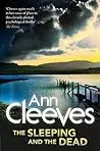
A standalone mystery novel from prolific author Ann Cleeves - I listened to this as an audio book borrowed from the library. Set in Northumberland, Detective Peter Porteous is called to Cranwell Lake, where a diving instructor has found the body of a teenager, clearly dead for many years. A quick trawl through missing person reports concludes that the body is that of an enigmatic and secretive young man who had been reported missing in the early 1970s (I'm pretty sure now that the blurb is wrong - wasn't he reported missing by a lawyer after his foster parents died...?).
The discovery comes as a particular shock to his old girlfriend, now prison officer, Hannah Morton - she'd been with him on the night he disappeared and there's something she's not telling anyone, although to be fair, it's hard to work out what with the depth and variety of red herrings being dumped about the place.
I'm not sure that this suffered from being a listen rather than a read, but the core mystery just seemed to keep going missing in the middle of what felt like a fish monger's at more than one point. There were so many red herrings, and so much attempted distraction from the truth, that it ended up distracting from the entire story which I really REALLY struggled to hang onto. And the conclusion, when it did arrive, was downloaded in such a hurry, particularly given the convoluted nature of the motive, I was very underwhelmed in the end - in fact my notes for the final chapter included say "lot of noise just to end up here...".
Normally I just love everything that Ann Cleeves writes - this is the first one that I came away from thinking well that was a bit of a disappointment. Maybe start with Shetland, or the wonderful Vera series if you're new to this writer's work.
Originally posted at www.austcrimefiction.org.
A standalone mystery novel from prolific author Ann Cleeves - I listened to this as an audio book borrowed from the library. Set in Northumberland, Detective Peter Porteous is called to Cranwell Lake, where a diving instructor has found the body of a teenager, clearly dead for many years. A quick trawl through missing person reports concludes that the body is that of an enigmatic and secretive young man who had been reported missing in the early 1970s (I'm pretty sure now that the blurb is wrong - wasn't he reported missing by a lawyer after his foster parents died...?).
The discovery comes as a particular shock to his old girlfriend, now prison officer, Hannah Morton - she'd been with him on the night he disappeared and there's something she's not telling anyone, although to be fair, it's hard to work out what with the depth and variety of red herrings being dumped about the place.
I'm not sure that this suffered from being a listen rather than a read, but the core mystery just seemed to keep going missing in the middle of what felt like a fish monger's at more than one point. There were so many red herrings, and so much attempted distraction from the truth, that it ended up distracting from the entire story which I really REALLY struggled to hang onto. And the conclusion, when it did arrive, was downloaded in such a hurry, particularly given the convoluted nature of the motive, I was very underwhelmed in the end - in fact my notes for the final chapter included say "lot of noise just to end up here...".
Normally I just love everything that Ann Cleeves writes - this is the first one that I came away from thinking well that was a bit of a disappointment. Maybe start with Shetland, or the wonderful Vera series if you're new to this writer's work.
Originally posted at www.austcrimefiction.org.