
Laith

Noir is a fickle genre. Finding a good story can be like searching for a needle in a haystack, but when you discover that perfect story, you find yourself inexplicably drawn into its world—taking your coffee black, dressing in wool, and packing heat. Maybe not literally, but you'll inevitably find yourself hunting for the next great noir narrative. That's precisely what happened to me with Jean-Patrick Manchette's work, which revealed an entire movement of European crime fiction from the 1980s that never fully crossed the Atlantic outside of cinema.
I stumbled across this author while doing research for my reviews of Robin Cook's crime series, He Died With His Eyes Open. Manchette, credited with reinvigorating the French crime novel, stands to France much like Robin Cook does to England. In fact, I'd wager Manchette may have influenced Cook, who spent considerable time in France before publishing his thematically similar works. Their works share in traditional noir premises and structures, but both authors treat the genre as a vehicle for their social commentary and world views.
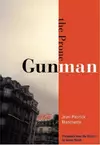
The Prone Gunman is a classic noir/thriller story: Martin Terrier, a successful hitman, is ready to leave the life and seeks to conclude his tenure with his shady employers. They "ask" him to do one last job to earn his freedom, and they turn the screws until he does it before attempting to permanently retire him.
When your first name ends in -Jean I expect your work to have a little French color, but this book might be the most "French" thing I've ever experienced—and I don't mean in the stereotypical "berets, bicycles, and baguettes" sense. Obviously, those types of things are present: from the make of the cars and weapons to the cigarettes and the alcohol, Martin Terrier's life is a vortex of Gauloises smoke, spilled Hennessy, and violence. I'm more referring to the thematic depth, atmospheric richness, and intrinsic *vibe* that accompanies your iconic French Literature. The closest comparison I can draw is ironically from an unexpected source: Frenchie's autobiographical issue in The Boys comic, though that leans more into broad cultural stereotypes. So many of the parody beats present in that issue of The Boys seemed aimed exactly at the character/archetype that this book embodies.
If you've watched a New Wave film by Truffaut or Goddard, this whole review will make a lot more sense, you will immediately recognize the narrative's spirit. For the uninitiated, the New Wave was an artistic movement in the 1960s French film scene with far-reaching cultural implications. Essentially, it was a push towards the auteur spirit—existentialist, ironic works that sought to iterate and innovate by deliberately challenging preceding artistic conventions. In film, that meant smoking slim cigarettes and holding the camera with your hands; making entirely new things. Manchette captures that spirit and imbues it into his version of the Contract on the Hitman, putting the emphasis on character interactions and dialogue while using the third person limited narration to imitate the up-close spontaneous feel of the handheld camera.
I got the same buzz off of this as I did when I first watched Breathless (1960). Clearly, those New Wave themes permeated French literature as well. There's surprising depth buried in an otherwise unassuming thriller, and it is one of the great joys of reading to discover books like this. I wouldn't call this the greatest thriller I've ever read, but it was interesting and well written, with just enough unique things about it to make it worth picking up despite the tired premise.
I'm sure that a lot of the subtle commentary on French society was totally lost on me as an American, and I'm sure that the prose is probably much better in the native French. But we work with what we get, and this was a solid 3.5 but closer to a 3 than a 4.
PS: I can’t believe I forgot to comment on this but damn the misogyny at work here is diabolical. Obviously that’s one of the drawbacks of the hard boiled noir genre, it is very much a relic of its age, but this possessory yet indifferent attitude the book has about women seems a step beyond what I consider the genre’s baseline. It’s offensive to the point where my hunch is its inclusion is some sort of social commentary that was lost in translation .
Noir is a fickle genre. Finding a good story can be like searching for a needle in a haystack, but when you discover that perfect story, you find yourself inexplicably drawn into its world—taking your coffee black, dressing in wool, and packing heat. Maybe not literally, but you'll inevitably find yourself hunting for the next great noir narrative. That's precisely what happened to me with Jean-Patrick Manchette's work, which revealed an entire movement of European crime fiction from the 1980s that never fully crossed the Atlantic outside of cinema.
I stumbled across this author while doing research for my reviews of Robin Cook's crime series, He Died With His Eyes Open. Manchette, credited with reinvigorating the French crime novel, stands to France much like Robin Cook does to England. In fact, I'd wager Manchette may have influenced Cook, who spent considerable time in France before publishing his thematically similar works. Their works share in traditional noir premises and structures, but both authors treat the genre as a vehicle for their social commentary and world views.
The Prone Gunman is a classic noir/thriller story: Martin Terrier, a successful hitman, is ready to leave the life and seeks to conclude his tenure with his shady employers. They "ask" him to do one last job to earn his freedom, and they turn the screws until he does it before attempting to permanently retire him.
When your first name ends in -Jean I expect your work to have a little French color, but this book might be the most "French" thing I've ever experienced—and I don't mean in the stereotypical "berets, bicycles, and baguettes" sense. Obviously, those types of things are present: from the make of the cars and weapons to the cigarettes and the alcohol, Martin Terrier's life is a vortex of Gauloises smoke, spilled Hennessy, and violence. I'm more referring to the thematic depth, atmospheric richness, and intrinsic *vibe* that accompanies your iconic French Literature. The closest comparison I can draw is ironically from an unexpected source: Frenchie's autobiographical issue in The Boys comic, though that leans more into broad cultural stereotypes. So many of the parody beats present in that issue of The Boys seemed aimed exactly at the character/archetype that this book embodies.
If you've watched a New Wave film by Truffaut or Goddard, this whole review will make a lot more sense, you will immediately recognize the narrative's spirit. For the uninitiated, the New Wave was an artistic movement in the 1960s French film scene with far-reaching cultural implications. Essentially, it was a push towards the auteur spirit—existentialist, ironic works that sought to iterate and innovate by deliberately challenging preceding artistic conventions. In film, that meant smoking slim cigarettes and holding the camera with your hands; making entirely new things. Manchette captures that spirit and imbues it into his version of the Contract on the Hitman, putting the emphasis on character interactions and dialogue while using the third person limited narration to imitate the up-close spontaneous feel of the handheld camera.
I got the same buzz off of this as I did when I first watched Breathless (1960). Clearly, those New Wave themes permeated French literature as well. There's surprising depth buried in an otherwise unassuming thriller, and it is one of the great joys of reading to discover books like this. I wouldn't call this the greatest thriller I've ever read, but it was interesting and well written, with just enough unique things about it to make it worth picking up despite the tired premise.
I'm sure that a lot of the subtle commentary on French society was totally lost on me as an American, and I'm sure that the prose is probably much better in the native French. But we work with what we get, and this was a solid 3.5 but closer to a 3 than a 4.
PS: I can’t believe I forgot to comment on this but damn the misogyny at work here is diabolical. Obviously that’s one of the drawbacks of the hard boiled noir genre, it is very much a relic of its age, but this possessory yet indifferent attitude the book has about women seems a step beyond what I consider the genre’s baseline. It’s offensive to the point where my hunch is its inclusion is some sort of social commentary that was lost in translation .