
Laith


Added to listFull Reviewswith 145 books.


Added to listFavoriteswith 52 books.


This is my second reading, and I really never thought I'd open this book again. When I first cracked this in college my feelings were typical of the general reception to the book: I found it excessive in its violence and sadism, nihilistic to a fault; the only apparent goal seemed to be to shock the reader. In fact I don't think I made it past chapter 42 (Girl) in my first reading, I know I put it down thinking that what I was reading was truly appalling and that 41 chapters and the movie had driven the point home well enough. This book is just as appalling the second time through, but- and maybe because my sense for this stuff has been dulled by I Was Dora Suarez or maybe it's my increased exposure to rich white assholes- I found myself looking past the smokescreen of insanity and violence and realizing just how prophetically reflective this book is.
Given the popularity and fidelity of the film adaptation I doubt that I need to tell anyone what American Psycho is about; Patrick Bateman is a part of the zeitgeist, for better or worse. That said it's not difficult to summarize the book, it's the diary of a crazed yuppie serial murder; a sensory experience rather than a traditional story-a manic episode of a novel. In fact, based on interviews with Ellis that's precisely the intention with which he sat down to write what was initially conceptualized as a continuation of his prior works (Less than Zero and Rules of Attraction).
I won't quote directly but Ellis held firm to a belief that the only remaining frontier in literature was sensationalism for the sake of sensationalism. So he sought to craft a story which evoked in the reader extreme feelings, sought to provide otherwise inaccessible experiences that would addict and alienate. This is lost on anyone who wasn't 20ish in the early 80's but Ellis was a rock star, authors could be rock stars- back then you see, people used to read. His two prior books were supremely popular with the MTV generation- his first an instant bestseller and quickly adapted for film, his second getting the same treatment. Since Ellis was eighteen he'd been thrust into the limelight, his name on NYC guest-lists second only to Andy Warhol, his evenings out recounted to him secondhand by the tabloids. It's from the isolating, surreal, and indulgent cocaine-fueled lifestyle of success and celebrity that Ellis was living where we get the seeds of Patrick Bateman.
If I were to judge this book based solely off of intention and execution then I would have to give it full marks. It was one of the most banned books of all time, sold shrink wrapped in Australia- from a perspective of shock and awe this book is a tour de force. But obviously that's not the sole criteria on which anyone would judge a book; a novel is judged on the quality of its world and narrative not just its sensory effects. This kind of judgement based on sensation was/is typically reserved exclusively for pieces in a visual medium, which begs the obvious question, are we to take this plainly repulsive and horrifying thing that Ellis made and treat it as a piece of art? This is the lens through which most people digest this book, as piece of concept art, a discourse of aesthetics.
That discourse is a surface level one, one that could be had with any other piece of transgressive lit. But, American Psycho captured the public's attention like nothing that came before. Unlike Crash or Naked Lunch, books which garnered immense critical praise and eventual cult popularity, Psycho ascended past cult status and into the mainstream almost immediately and its popularity has endured since- Why? Why is it that this specific piece of literature has shifted into mainstream awareness when all the other equally good-equally sensationalist pieces are just cult obscura in the modern day?
The simplest answer is that AP is shallow and accessible on its surface- this is a book about a consumerist serial killer in the 80s. Consumerism bad, Bateman bad, 80s bad, world is bad. It's not just a reflection on and of the culture of the time, it's also made for that self same culture- a kind of cultural Ouroboros. You don't even have to read through the whole thing to get yourself there, the themes may as well be printed on the dust jacket they're so loud. The magic of American Pyscho isn't in the portrayal of white collar douche-bags, for me it's what's subtly buried beneath the noise.
In many ways, despite its immediate popularity, this is a book that's waited for the current moment to unfold itself. What is Patrick Bateman if not the archetype of the modern conservative operator? It was lost on me in the initial reading but the exchange on politics in the first chapter is eerily close to what you'd hear at CPAC:
But we can’t ignore our social needs either. We have to stop people from abusing the welfare system. We have to provide food and shelter for the homeless and oppose racial discrimination and promote civil rights while also promoting equal rights for women but change the abortion laws to protect the right to life yet still somehow maintain women’s freedom of choice. We also have to control the influx of illegal immigrants. We have to encourage a return to traditional moral values and curb graphic sex and violence on TV, in movies, in popular music, everywhere. Most importantly we have to promote general social concern and less materialism in young people.
Bateman is plainly echoing the classic circular talking points that had already worn themselves out at the time of AP's publishing. The reader knows Bateman doesn't give a single care about anything he's talking about, he's saying what he says because he believes it to be the "correct" answer. Deep down at the core of Patrick Bateman is an all consuming void, he's an automaton in the thrall of his cyrenaic pursuits. His politics like his person are the mask by which he disguises his contempt for humanity and lust for power/control/violence.
There's also his incredibly coincidental obsession with Donald Trump, the man he views as paragon and benchmark. Is it coincidence? Ellis was likely in the first wave of NY socialites put off by Don's gaudy mien and rapacity, who better to symbolize the kind of person Bateman is than the Barron and his golden toilet. The fact that Ellis's icon of social rot became the President and pseudo-deity of the corrupt and malformed can't be coincidence. Ellis knew where we were going, I think he saw what American society valued and sought to paint its portrait. Like a modern day Stańczyk sat in his chair, Ellis presents us with truth dressed as the absurd, animals in clean and pressed Armani suits- something for us to ogle and gasp at, to mock and reference and laugh at- though he's the only person not laughing, the ever ironic Jester.
This is a completely different book from what I first read, though I think the point remains the same. American Psycho is a looking glass into a part of reality that is just not accessible from the normal vantage- it's nihilistic and insane, but that's the rub, the world is the same way, and just like Bateman the very worst of it hides in plain sight. This is fascinating and horrible, if you make it past the blood and gore you'll walk away with plenty to think about.
This is my second reading, and I really never thought I'd open this book again. When I first cracked this in college my feelings were typical of the general reception to the book: I found it excessive in its violence and sadism, nihilistic to a fault; the only apparent goal seemed to be to shock the reader. In fact I don't think I made it past chapter 42 (Girl) in my first reading, I know I put it down thinking that what I was reading was truly appalling and that 41 chapters and the movie had driven the point home well enough. This book is just as appalling the second time through, but- and maybe because my sense for this stuff has been dulled by I Was Dora Suarez or maybe it's my increased exposure to rich white assholes- I found myself looking past the smokescreen of insanity and violence and realizing just how prophetically reflective this book is.
Given the popularity and fidelity of the film adaptation I doubt that I need to tell anyone what American Psycho is about; Patrick Bateman is a part of the zeitgeist, for better or worse. That said it's not difficult to summarize the book, it's the diary of a crazed yuppie serial murder; a sensory experience rather than a traditional story-a manic episode of a novel. In fact, based on interviews with Ellis that's precisely the intention with which he sat down to write what was initially conceptualized as a continuation of his prior works (Less than Zero and Rules of Attraction).
I won't quote directly but Ellis held firm to a belief that the only remaining frontier in literature was sensationalism for the sake of sensationalism. So he sought to craft a story which evoked in the reader extreme feelings, sought to provide otherwise inaccessible experiences that would addict and alienate. This is lost on anyone who wasn't 20ish in the early 80's but Ellis was a rock star, authors could be rock stars- back then you see, people used to read. His two prior books were supremely popular with the MTV generation- his first an instant bestseller and quickly adapted for film, his second getting the same treatment. Since Ellis was eighteen he'd been thrust into the limelight, his name on NYC guest-lists second only to Andy Warhol, his evenings out recounted to him secondhand by the tabloids. It's from the isolating, surreal, and indulgent cocaine-fueled lifestyle of success and celebrity that Ellis was living where we get the seeds of Patrick Bateman.
If I were to judge this book based solely off of intention and execution then I would have to give it full marks. It was one of the most banned books of all time, sold shrink wrapped in Australia- from a perspective of shock and awe this book is a tour de force. But obviously that's not the sole criteria on which anyone would judge a book; a novel is judged on the quality of its world and narrative not just its sensory effects. This kind of judgement based on sensation was/is typically reserved exclusively for pieces in a visual medium, which begs the obvious question, are we to take this plainly repulsive and horrifying thing that Ellis made and treat it as a piece of art? This is the lens through which most people digest this book, as piece of concept art, a discourse of aesthetics.
That discourse is a surface level one, one that could be had with any other piece of transgressive lit. But, American Psycho captured the public's attention like nothing that came before. Unlike Crash or Naked Lunch, books which garnered immense critical praise and eventual cult popularity, Psycho ascended past cult status and into the mainstream almost immediately and its popularity has endured since- Why? Why is it that this specific piece of literature has shifted into mainstream awareness when all the other equally good-equally sensationalist pieces are just cult obscura in the modern day?
The simplest answer is that AP is shallow and accessible on its surface- this is a book about a consumerist serial killer in the 80s. Consumerism bad, Bateman bad, 80s bad, world is bad. It's not just a reflection on and of the culture of the time, it's also made for that self same culture- a kind of cultural Ouroboros. You don't even have to read through the whole thing to get yourself there, the themes may as well be printed on the dust jacket they're so loud. The magic of American Pyscho isn't in the portrayal of white collar douche-bags, for me it's what's subtly buried beneath the noise.
In many ways, despite its immediate popularity, this is a book that's waited for the current moment to unfold itself. What is Patrick Bateman if not the archetype of the modern conservative operator? It was lost on me in the initial reading but the exchange on politics in the first chapter is eerily close to what you'd hear at CPAC:
But we can’t ignore our social needs either. We have to stop people from abusing the welfare system. We have to provide food and shelter for the homeless and oppose racial discrimination and promote civil rights while also promoting equal rights for women but change the abortion laws to protect the right to life yet still somehow maintain women’s freedom of choice. We also have to control the influx of illegal immigrants. We have to encourage a return to traditional moral values and curb graphic sex and violence on TV, in movies, in popular music, everywhere. Most importantly we have to promote general social concern and less materialism in young people.
Bateman is plainly echoing the classic circular talking points that had already worn themselves out at the time of AP's publishing. The reader knows Bateman doesn't give a single care about anything he's talking about, he's saying what he says because he believes it to be the "correct" answer. Deep down at the core of Patrick Bateman is an all consuming void, he's an automaton in the thrall of his cyrenaic pursuits. His politics like his person are the mask by which he disguises his contempt for humanity and lust for power/control/violence.
There's also his incredibly coincidental obsession with Donald Trump, the man he views as paragon and benchmark. Is it coincidence? Ellis was likely in the first wave of NY socialites put off by Don's gaudy mien and rapacity, who better to symbolize the kind of person Bateman is than the Barron and his golden toilet. The fact that Ellis's icon of social rot became the President and pseudo-deity of the corrupt and malformed can't be coincidence. Ellis knew where we were going, I think he saw what American society valued and sought to paint its portrait. Like a modern day Stańczyk sat in his chair, Ellis presents us with truth dressed as the absurd, animals in clean and pressed Armani suits- something for us to ogle and gasp at, to mock and reference and laugh at- though he's the only person not laughing, the ever ironic Jester.
This is a completely different book from what I first read, though I think the point remains the same. American Psycho is a looking glass into a part of reality that is just not accessible from the normal vantage- it's nihilistic and insane, but that's the rub, the world is the same way, and just like Bateman the very worst of it hides in plain sight. This is fascinating and horrible, if you make it past the blood and gore you'll walk away with plenty to think about.

I nearly abandoned The Secret History after its opening pages. This isn't my genre, but the pacing felt glacial, the setup endless, and I found myself questioning whether Donna Tartt’s literary darling deserved the praise it has continued to receive. Had I truly dropped this book where I wanted to, it would have been entirely my loss. What emerges after the first 1/4 is a novel that envelops you so completely that the fictional world becomes more vivid than your actual surroundings.
The story follows Richard Papen, a working-class California transplant who becomes obsessed with an elite group of classics students at the prestigious Hampden College in Vermont. Under the exclusive tutelage of the charismatic Professor Julian Morrow, students Henry Winter, Bunny Corcoran, Francis Abernathy, and twins Charles and Camilla Macaulay have formed their own insular circle which Richard seeks desperately to join. But these students aren't all that they appear to be, and the story opens on their murder of Bunny. The novel unfolds backwards from this revelation.
The atmosphere is what everyone comments on, and for good reason, it’s so complete that Hampden College functions as its own character, brought to life through Tartt’s masterful voice. This isn’t accidental. The Hampden of the novel is the Bennington of reality, where Tartt attended college, and it’s astounding how much of that real place saturates these pages. From the campus rendering to the characters themselves, Tartt has created a time capsule. Through interviews with Tartt’s classmates and contemporaries, we learn that many of her central characters—Bunny, Henry, and especially the enigmatic Julian—are based on real people who dressed, talked, and embodied the very personas that populate her fiction.
(I didn't know any of this off the top of my head either, I have to plug the "Once upon a time... at Bennington" podcast, it's over 15 hours of interviews and discussion of Donna Tartt and the rest of the literary brat pack who attended Bennington during the 80s. If you loved the book I highly recommend this podcast)
This preservation extends beyond simple character work into something more profound. Tartt was documenting a campus that was genuinely atypical: Bennington had no tests or grades, and their professors weren’t just teachers but actual practitioners of their arts. The mythical culture of collegiate excess, of cafe-culture elites rubbing shoulders with the working class, it's a lived experience that Tartt brings completely to life, one that echoes in other works of the era, ironically best observed in "Animal House" - one that doesn’t exist anymore, nor in the specific case of Hampden did it ever exist outside of Bennington. It's into this novel atmosphere that Tartt injects an Oxfordian air into her classics students (one the originals truly did possess) that had already ceased to exist by the time she was writing, creating a vision of intellectual campus life that has fundamentally changed our cultural perception of what college should be and look like.
This cultural impact became especially pronounced during the COVID lock-down, when The Secret History experienced a remarkable resurgence in popularity. An entire generation of incoming freshmen, forced to remain indoors and learn online, absorbed Tartt’s mythological Hampden into their psyche. Her scholarly atmosphere tinged with youthful excess became the imagery of their college daydream, possibly reinforcing the educational priority and purpose of higher education. Whether this influence proves positive or negative remains to be seen, if the Hampden vibe is what students now crave it's up to them to cultivate it. The expectations Hampden sets are certainly unrealistic, colleges are not the free-wheeling intellectual cradles we all wished them to be, but a few disappointed freshmen doesn’t constitute a educational crisis. Honestly, knowing as much as I do about the real Bennington of the 1980s makes me long for such a place — a college designed for people whom the standard scholastic mold simply didn’t fit.
The Secret History continues to have its moment in the sun, inspiring hordes of imitators in what we now call “dark academia.” Recent works like M.L. Rio’s "If We Were Villains", R.F. Kuang’s "Babel", and Olivie Blake’s "The Atlas Six" all bear Tartt’s influence to some degree, a testament to the enduring power of her vision.
The book’s literary merit is also undeniable. Say what you will about Donna Tartt, but you must admit she’s a gifted writer. Her prose is simply untouchable. Consider lines like “Beauty is terror. Whatever we call beautiful, we quiver before it,” or her luminous descriptions of Vermont: “The mountains looked lavender in the setting sun, and the snow looked lavender, too, piled up in great soft slopes and drifts.” She demonstrates remarkable skill in blending registers, classical allusions flowing seamlessly into contemporary dialogue and observation.
More sophisticated still is her adoption of the tragic structure of The Bacchae, modernizing it by adapting its themes not just as part of the narrative but mirrored right down to the anachronism of her characters. These Oxfordian students ensconced within a facsimile of the most non-traditional college of its time create multiple layers of temporal displacement that mirror the classical tragic form.
Does this book break one of my biggest rules with its terribly slow opening? Yes, in fact it loses a whole star for it. But here’s my final advice: stopping before page 170 would be doing all the hard labor for none of the reward. Take that slow opening in bits and chunks, don’t try to power through it in marathon sessions. I’ve come to realize that the job of those deliberate early pages is to lure you into the universe, to have you inhabit Hampden alongside these characters. Once that world has you in its grip, you’ll understand why this book has shaped a generation’s vision of what collegiate life can be, even if such a place exists now only in our collective imagination.
I nearly abandoned The Secret History after its opening pages. This isn't my genre, but the pacing felt glacial, the setup endless, and I found myself questioning whether Donna Tartt’s literary darling deserved the praise it has continued to receive. Had I truly dropped this book where I wanted to, it would have been entirely my loss. What emerges after the first 1/4 is a novel that envelops you so completely that the fictional world becomes more vivid than your actual surroundings.
The story follows Richard Papen, a working-class California transplant who becomes obsessed with an elite group of classics students at the prestigious Hampden College in Vermont. Under the exclusive tutelage of the charismatic Professor Julian Morrow, students Henry Winter, Bunny Corcoran, Francis Abernathy, and twins Charles and Camilla Macaulay have formed their own insular circle which Richard seeks desperately to join. But these students aren't all that they appear to be, and the story opens on their murder of Bunny. The novel unfolds backwards from this revelation.
The atmosphere is what everyone comments on, and for good reason, it’s so complete that Hampden College functions as its own character, brought to life through Tartt’s masterful voice. This isn’t accidental. The Hampden of the novel is the Bennington of reality, where Tartt attended college, and it’s astounding how much of that real place saturates these pages. From the campus rendering to the characters themselves, Tartt has created a time capsule. Through interviews with Tartt’s classmates and contemporaries, we learn that many of her central characters—Bunny, Henry, and especially the enigmatic Julian—are based on real people who dressed, talked, and embodied the very personas that populate her fiction.
(I didn't know any of this off the top of my head either, I have to plug the "Once upon a time... at Bennington" podcast, it's over 15 hours of interviews and discussion of Donna Tartt and the rest of the literary brat pack who attended Bennington during the 80s. If you loved the book I highly recommend this podcast)
This preservation extends beyond simple character work into something more profound. Tartt was documenting a campus that was genuinely atypical: Bennington had no tests or grades, and their professors weren’t just teachers but actual practitioners of their arts. The mythical culture of collegiate excess, of cafe-culture elites rubbing shoulders with the working class, it's a lived experience that Tartt brings completely to life, one that echoes in other works of the era, ironically best observed in "Animal House" - one that doesn’t exist anymore, nor in the specific case of Hampden did it ever exist outside of Bennington. It's into this novel atmosphere that Tartt injects an Oxfordian air into her classics students (one the originals truly did possess) that had already ceased to exist by the time she was writing, creating a vision of intellectual campus life that has fundamentally changed our cultural perception of what college should be and look like.
This cultural impact became especially pronounced during the COVID lock-down, when The Secret History experienced a remarkable resurgence in popularity. An entire generation of incoming freshmen, forced to remain indoors and learn online, absorbed Tartt’s mythological Hampden into their psyche. Her scholarly atmosphere tinged with youthful excess became the imagery of their college daydream, possibly reinforcing the educational priority and purpose of higher education. Whether this influence proves positive or negative remains to be seen, if the Hampden vibe is what students now crave it's up to them to cultivate it. The expectations Hampden sets are certainly unrealistic, colleges are not the free-wheeling intellectual cradles we all wished them to be, but a few disappointed freshmen doesn’t constitute a educational crisis. Honestly, knowing as much as I do about the real Bennington of the 1980s makes me long for such a place — a college designed for people whom the standard scholastic mold simply didn’t fit.
The Secret History continues to have its moment in the sun, inspiring hordes of imitators in what we now call “dark academia.” Recent works like M.L. Rio’s "If We Were Villains", R.F. Kuang’s "Babel", and Olivie Blake’s "The Atlas Six" all bear Tartt’s influence to some degree, a testament to the enduring power of her vision.
The book’s literary merit is also undeniable. Say what you will about Donna Tartt, but you must admit she’s a gifted writer. Her prose is simply untouchable. Consider lines like “Beauty is terror. Whatever we call beautiful, we quiver before it,” or her luminous descriptions of Vermont: “The mountains looked lavender in the setting sun, and the snow looked lavender, too, piled up in great soft slopes and drifts.” She demonstrates remarkable skill in blending registers, classical allusions flowing seamlessly into contemporary dialogue and observation.
More sophisticated still is her adoption of the tragic structure of The Bacchae, modernizing it by adapting its themes not just as part of the narrative but mirrored right down to the anachronism of her characters. These Oxfordian students ensconced within a facsimile of the most non-traditional college of its time create multiple layers of temporal displacement that mirror the classical tragic form.
Does this book break one of my biggest rules with its terribly slow opening? Yes, in fact it loses a whole star for it. But here’s my final advice: stopping before page 170 would be doing all the hard labor for none of the reward. Take that slow opening in bits and chunks, don’t try to power through it in marathon sessions. I’ve come to realize that the job of those deliberate early pages is to lure you into the universe, to have you inhabit Hampden alongside these characters. Once that world has you in its grip, you’ll understand why this book has shaped a generation’s vision of what collegiate life can be, even if such a place exists now only in our collective imagination.

Book Club for July (In September) _______
I realize I forgot to review this, and its been a little while since I read it so this review will be short. If you've read Joe Abercrombie before then you should just implicitly trust him to deliver a solid fantasy romp. This is his twist on the fantasy comedy genre, so really it's a much more vulgar Colour of Magic with the blood and gore turned up several notches.
I did enjoy the premise-though its less imaginative than Discworld. We join Brother Diaz, the newly appointed head of "The Temple of the Holy Expediency", which is a fancy name given to an order of monsters and blasphemers the church finds too useful just to execute- think vampires, werewolves, elves, you name it. We join brother Diaz and his gang on their first mission for the pope, to restore the recently rediscovered princess Alexia to the throne of Troy. This does take place in a fictionalized Europe but they're basically working for the Catholic church, it's not 1:1 but it's close, the politics of this different religion pretty much follow reality.
I don't have much more to say- most of the charm is in meeting the quirky cast so I won't expound. This book was good, the dialogue in particular is always a strength of Abercrombie's, and this is no exception. The character work is also extremely solid for a self contained story, there's depth and backstory for each of the "Devils". If you're in the mood for something on the lighter side but doesn't throw the stakes out the window I think you'll enjoy this. I think this is too well done just for 3 stars but personally this didn't grab me in the way 4 or 5 star books do: 3.5/5.
Book Club for July (In September) _______
I realize I forgot to review this, and its been a little while since I read it so this review will be short. If you've read Joe Abercrombie before then you should just implicitly trust him to deliver a solid fantasy romp. This is his twist on the fantasy comedy genre, so really it's a much more vulgar Colour of Magic with the blood and gore turned up several notches.
I did enjoy the premise-though its less imaginative than Discworld. We join Brother Diaz, the newly appointed head of "The Temple of the Holy Expediency", which is a fancy name given to an order of monsters and blasphemers the church finds too useful just to execute- think vampires, werewolves, elves, you name it. We join brother Diaz and his gang on their first mission for the pope, to restore the recently rediscovered princess Alexia to the throne of Troy. This does take place in a fictionalized Europe but they're basically working for the Catholic church, it's not 1:1 but it's close, the politics of this different religion pretty much follow reality.
I don't have much more to say- most of the charm is in meeting the quirky cast so I won't expound. This book was good, the dialogue in particular is always a strength of Abercrombie's, and this is no exception. The character work is also extremely solid for a self contained story, there's depth and backstory for each of the "Devils". If you're in the mood for something on the lighter side but doesn't throw the stakes out the window I think you'll enjoy this. I think this is too well done just for 3 stars but personally this didn't grab me in the way 4 or 5 star books do: 3.5/5.

Book club for June
I didn't think I had this much to say, but damn, I guess I cooked. _________________
I was really excited about this pick, it’s rare that the book club selects something that I was already interested in reading. Maybe it was having expectations that made this a gut punch for me. I don’t want to call this a bad book, it’s not bad at all, it’s fairly interesting and relatively solid when you consider it’s also an author debut, but I was let down.
Do you remember that episode of Futurama where Fry eats an egg sandwich and gets those parasitic worms that make him smart? Not necessarily the part where the crew shrinks down to fight the worms, but the part where Fry has to decide between being the “new” him and being his natural self.
What about Animorphs- do you remember the evil slug guys that would crawl into someone’s ear at the start of every book, the Yeerks?
The Lives of Tao remembers.
In fact, The Lives of Tao is a mashup of those two ideas. What if the Yeerks had a civil war, one fought right here on Earth—one which altered the course of human evolution, and now the war hinges on a new, Fry-esque, host. I am oversimplifying it, but not by much—the aliens aren’t slugs (not really sure what they are? A type of gas?) and they aren’t necessarily evil either, rather they’re just trying to get home.
The setup: Roen Tan is an out-of-shape IT guy whose life gets turned upside down when an ancient alien entity called Tao takes up residence in his body. These aliens, the Quasing, have been inhabiting humans for millennia, secretly influencing history and evolution. They’re split into two factions: the Prophus (the “good” aliens who want to help humanity develop so they can eventually build ships to get home) and the Genjix (the “bad” aliens who want to strip-mine Earth’s resources and leave). Tao, a Prophus agent, needs to train the hapless Roen into a competent operative to continue their shadow war against the Genjix
That premise had me hooked. Body-snatchers stories are criminally underused, and when they’re done right, they deliver a specific kind of psychological thriller: the creeping paranoia of never knowing which characters are threats, the mounting tension of whether you can trust the voice in your head. The best part of having an alien passenger should be that constant question mark—is this thing actually helping me, or am I being manipulated? Are the “good aliens” really good?
But I never felt that sense of unease with the Prophus. They pass every moral litmus test because they’re simply “the good aliens.” The book does flirt with this tension—there’s a moment where Roen questions his own sanity, and Tao “proves” he’s real by rattling off the capital of ancient Assyria. Roen takes this completely at face value and never bothers to verify it himself. There’s even a callback to this moment later, as if it settled the matter! The story plays with the idea of making us doubt Tao, but it’s Roen and his apparent 17 IQ points that prevent this from going anywhere meaningful.
Which brings me to my biggest issue with the book: Roen’s transformation from couch potato to combat-effective secret agent. We’re told repeatedly that he’s this lazy, out-of-shape guy who can’t get a grip on his own life, but somehow he becomes a willing participant in an ancient alien war without any convincing psychological journey to get him there.
The most glaring example comes when Roen, who’s been getting flattened in combat training, somehow manages to repel a gang of trained attackers by himself. What makes this particularly frustrating is that it happens during a moment when he’s regressing into his old habits—his victory feels completely unearned because of it. After this scene, you’d expect Roen to have some kind of reckoning about the danger he’s putting his friends and family in, right? He does eventually think about it, but only after the metaphorical gun is put into his hand at the conclusion, (view spoiler). It's this moment, (view spoiler) that finally spurs Roen's half-hearted attempt to address the danger at the very end of the book. But it comes much too late to be anything but hindsight.
Instead, Roen just goes along with Tao despite his reservations, seemingly for no other reason than it’s his character trait to obey orders. He never tries to back out of the arrangement, never really pushes back in any meaningful way. The story frames this as ultimately Roen’s choice, but it never feels like he needed any convincing—or if he did, it all happened off-screen while we weren’t looking.
This points to a bigger structural problem throughout the book: important developments keep happening off-screen or between chapters, leaving you feeling like you missed crucial scenes. Roen’s training progresses in time jumps, but we never see the changes reflected in any meaningful way other than these weird action sequences where the “non-combatant in a combat zone” is somehow demolishing special forces operatives (or at least holding his own). His lethality and competence appear and disappear as the plot demands, with no visible progression to justify it.
It’s frustrating because there are genuinely good ideas and cool concepts scattered throughout - the problem is they’re never fully explored or properly integrated with one another. The book feels underbaked, like it needed another draft or two to really develop these elements. Maybe those glimpses of Tao’s past lives at the beginning of each chapter could have been used as a mechanism to show Roen maturing through dreams or visions. Maybe we needed more scenes of him actually grappling with the moral weight of what he’s doing. Instead, we get told about character growth rather than shown it, and concepts that should connect meaningfully just exist in parallel.
I chalk a lot of this up to it being a debut novel, but that doesn’t make it less immersion-breaking when you’re reading it.
That said, the book isn’t without its strengths. The worldbuilding around the aliens secretly influencing human history is genuinely compelling, though I suspect if there had been more of it I probably wouldn't have liked it as much. There's a cheapening effect when all of history's mysteries suddenly have "Quasing" as the answer. What killed the dinosaurs? The Quasing. The Black Plague? The Quasing. The goddamn Han Dynasty? Also Quasing! Literally any more and i'd have rolled my eyes out of my skull, but the book avoids this trap and peppers in more historical flavor with Tao's past. Those little blurbs of Tao’s past lives at the start of each chapter were some of my favorite parts of the book, and honestly, I wish there had been more of that material. It’s exactly the kind of deep historical integration that makes the world feel lived-in and believable.
The dialogue is also pretty solid, especially the human to human conversations. When characters are just talking to each other without the alien plot overshadowing everything, the interactions feel organic and charming. There’s a natural flow to how people speak that suggests the author has a good ear for realistic conversation - it’s just that these moments tend to get buried under all the alien warfare stuff.
The core premise remains strong too. Body-snatchers plots are genuinely underused in fiction, and there’s real potential in this take on it. The foundation is there for something really engaging, and I am sure the sequels will improve on it. But being a first novel doesn’t excuse the fundamental issues with character development and story structure that kept pulling me out of the experience. When your protagonist’s entire arc happens off-screen and his victories feel unearned, it’s hard to stay invested, no matter how cool your aliens are.
Ultimately, The Lives of Tao feels like a missed opportunity. The ingredients are all there - an intriguing premise, solid worldbuilding, decent dialogue - but they never quite come together into something greater than the sum of their parts. I keep coming back to that word: underbaked. There’s a good book lurking in here somewhere, but it needed more time in the oven.
Maybe if I hadn’t gone in with expectations, this would have landed differently. But when a book promises you Futurama’s identity crisis meets Animorphs’ paranoia and delivers neither the psychological depth nor the creeping tension, it’s hard not to feel let down. The Lives of Tao remembers those stories, but it doesn’t quite understand what made them work.
PS: Totally forgot but this is a Chicago book as well, and you couldn't miss it, there's a whole chapter about eating Lou's deep dish. Not my favorite Chicago portrayal; it nails some details, Wabash does indeed look dark and shitty under the L, but-and I think I've said this before- there's more to the city than deep dish and crime.
Book club for June
I didn't think I had this much to say, but damn, I guess I cooked. _________________
I was really excited about this pick, it’s rare that the book club selects something that I was already interested in reading. Maybe it was having expectations that made this a gut punch for me. I don’t want to call this a bad book, it’s not bad at all, it’s fairly interesting and relatively solid when you consider it’s also an author debut, but I was let down.
Do you remember that episode of Futurama where Fry eats an egg sandwich and gets those parasitic worms that make him smart? Not necessarily the part where the crew shrinks down to fight the worms, but the part where Fry has to decide between being the “new” him and being his natural self.
What about Animorphs- do you remember the evil slug guys that would crawl into someone’s ear at the start of every book, the Yeerks?
The Lives of Tao remembers.
In fact, The Lives of Tao is a mashup of those two ideas. What if the Yeerks had a civil war, one fought right here on Earth—one which altered the course of human evolution, and now the war hinges on a new, Fry-esque, host. I am oversimplifying it, but not by much—the aliens aren’t slugs (not really sure what they are? A type of gas?) and they aren’t necessarily evil either, rather they’re just trying to get home.
The setup: Roen Tan is an out-of-shape IT guy whose life gets turned upside down when an ancient alien entity called Tao takes up residence in his body. These aliens, the Quasing, have been inhabiting humans for millennia, secretly influencing history and evolution. They’re split into two factions: the Prophus (the “good” aliens who want to help humanity develop so they can eventually build ships to get home) and the Genjix (the “bad” aliens who want to strip-mine Earth’s resources and leave). Tao, a Prophus agent, needs to train the hapless Roen into a competent operative to continue their shadow war against the Genjix
That premise had me hooked. Body-snatchers stories are criminally underused, and when they’re done right, they deliver a specific kind of psychological thriller: the creeping paranoia of never knowing which characters are threats, the mounting tension of whether you can trust the voice in your head. The best part of having an alien passenger should be that constant question mark—is this thing actually helping me, or am I being manipulated? Are the “good aliens” really good?
But I never felt that sense of unease with the Prophus. They pass every moral litmus test because they’re simply “the good aliens.” The book does flirt with this tension—there’s a moment where Roen questions his own sanity, and Tao “proves” he’s real by rattling off the capital of ancient Assyria. Roen takes this completely at face value and never bothers to verify it himself. There’s even a callback to this moment later, as if it settled the matter! The story plays with the idea of making us doubt Tao, but it’s Roen and his apparent 17 IQ points that prevent this from going anywhere meaningful.
Which brings me to my biggest issue with the book: Roen’s transformation from couch potato to combat-effective secret agent. We’re told repeatedly that he’s this lazy, out-of-shape guy who can’t get a grip on his own life, but somehow he becomes a willing participant in an ancient alien war without any convincing psychological journey to get him there.
The most glaring example comes when Roen, who’s been getting flattened in combat training, somehow manages to repel a gang of trained attackers by himself. What makes this particularly frustrating is that it happens during a moment when he’s regressing into his old habits—his victory feels completely unearned because of it. After this scene, you’d expect Roen to have some kind of reckoning about the danger he’s putting his friends and family in, right? He does eventually think about it, but only after the metaphorical gun is put into his hand at the conclusion, (view spoiler). It's this moment, (view spoiler) that finally spurs Roen's half-hearted attempt to address the danger at the very end of the book. But it comes much too late to be anything but hindsight.
Instead, Roen just goes along with Tao despite his reservations, seemingly for no other reason than it’s his character trait to obey orders. He never tries to back out of the arrangement, never really pushes back in any meaningful way. The story frames this as ultimately Roen’s choice, but it never feels like he needed any convincing—or if he did, it all happened off-screen while we weren’t looking.
This points to a bigger structural problem throughout the book: important developments keep happening off-screen or between chapters, leaving you feeling like you missed crucial scenes. Roen’s training progresses in time jumps, but we never see the changes reflected in any meaningful way other than these weird action sequences where the “non-combatant in a combat zone” is somehow demolishing special forces operatives (or at least holding his own). His lethality and competence appear and disappear as the plot demands, with no visible progression to justify it.
It’s frustrating because there are genuinely good ideas and cool concepts scattered throughout - the problem is they’re never fully explored or properly integrated with one another. The book feels underbaked, like it needed another draft or two to really develop these elements. Maybe those glimpses of Tao’s past lives at the beginning of each chapter could have been used as a mechanism to show Roen maturing through dreams or visions. Maybe we needed more scenes of him actually grappling with the moral weight of what he’s doing. Instead, we get told about character growth rather than shown it, and concepts that should connect meaningfully just exist in parallel.
I chalk a lot of this up to it being a debut novel, but that doesn’t make it less immersion-breaking when you’re reading it.
That said, the book isn’t without its strengths. The worldbuilding around the aliens secretly influencing human history is genuinely compelling, though I suspect if there had been more of it I probably wouldn't have liked it as much. There's a cheapening effect when all of history's mysteries suddenly have "Quasing" as the answer. What killed the dinosaurs? The Quasing. The Black Plague? The Quasing. The goddamn Han Dynasty? Also Quasing! Literally any more and i'd have rolled my eyes out of my skull, but the book avoids this trap and peppers in more historical flavor with Tao's past. Those little blurbs of Tao’s past lives at the start of each chapter were some of my favorite parts of the book, and honestly, I wish there had been more of that material. It’s exactly the kind of deep historical integration that makes the world feel lived-in and believable.
The dialogue is also pretty solid, especially the human to human conversations. When characters are just talking to each other without the alien plot overshadowing everything, the interactions feel organic and charming. There’s a natural flow to how people speak that suggests the author has a good ear for realistic conversation - it’s just that these moments tend to get buried under all the alien warfare stuff.
The core premise remains strong too. Body-snatchers plots are genuinely underused in fiction, and there’s real potential in this take on it. The foundation is there for something really engaging, and I am sure the sequels will improve on it. But being a first novel doesn’t excuse the fundamental issues with character development and story structure that kept pulling me out of the experience. When your protagonist’s entire arc happens off-screen and his victories feel unearned, it’s hard to stay invested, no matter how cool your aliens are.
Ultimately, The Lives of Tao feels like a missed opportunity. The ingredients are all there - an intriguing premise, solid worldbuilding, decent dialogue - but they never quite come together into something greater than the sum of their parts. I keep coming back to that word: underbaked. There’s a good book lurking in here somewhere, but it needed more time in the oven.
Maybe if I hadn’t gone in with expectations, this would have landed differently. But when a book promises you Futurama’s identity crisis meets Animorphs’ paranoia and delivers neither the psychological depth nor the creeping tension, it’s hard not to feel let down. The Lives of Tao remembers those stories, but it doesn’t quite understand what made them work.
PS: Totally forgot but this is a Chicago book as well, and you couldn't miss it, there's a whole chapter about eating Lou's deep dish. Not my favorite Chicago portrayal; it nails some details, Wabash does indeed look dark and shitty under the L, but-and I think I've said this before- there's more to the city than deep dish and crime.

Book Club for May _____
I have a problem in assuming that a book will be YA whenever I see that reader's choice award. In fact, seeing the tag has almost the exact opposite of the intended effect on me-I tend to stay away. This approach has yet to fail me, because seeing that reader's choice just means the book is popular. Popularity doesn't indicate quality, in fact it only guarantees two things: First, the book is simple enough to be understood by the majority of people and second, the book is probably getting a movie deal-when all's said and done you'll have consumed the story without ever once trying to. This is absolutely true of Mickey 7, this book is funny, with a fantastic premise and a casual first person narration. It's an incredibly easy read, knocked out in a weekend with time left Sunday night to watch the movie. It's good, I liked it.
Mickey 7 is told from the perspective of Mickey Barnes, the titular protagonist. Well, really, it's the seventh iteration of Mickey that's the protagonist. You see, Mickey has found himself in quite the pickle; he was so desperate to join in on the colonization mission to planet Niflheim that he was willing to sign up for any position available. Fortunately for Mickey, he gets a job, and that job comes with the added perk of immortality. Unfortunately for Mickey, he's volunteered as the colony's "expendable," narrowly beating out a death-row conscript for the job. Got a gaping hole in your ship's radiation shield or a pesky alien virus that liquifies internal organs? No problem, send in your Mickey, he'll plug that hole, test that vaccine, and Mickey2 will be printed before the first one's finished vomiting up his irradiated kidneys. Oh, and let's make sure to back up the precious memories he made along the way.
The humor comes in Mickey's delivery-he's not exactly the sharpest tool in the shed, but that doesn't mean he can't crack wise. There's a delightful combination of unintended pratfalls and lunchroom quality backtalk that makes Mickey come off exactly as he's meant to- an overgrown class clown. Given that this story is told from Mickey's perspective, it's worth pointing out how excellent the character work is because it is the real meat of the book. Beyond making Mickey likable, his specific character traits lend the narration a dubious, unreliable quality. Unfortunately, Ashton doesn't play with this idea nearly to the degree that he could have, favoring simple story beats and a conventional plot structure that children could follow.
My general criticism with the book follows along the same lines, everything is much too simplistic and doesn't go anywhere interesting. Ashton takes a fantastic premise and rolls it along a linear plot in which our characters do very little; this is a book that promises the world with each development just to push you along from one hallway to the next. I spent the second half of the book waiting for Mickey to do something, for anyone to do anything, but the story just goes nowhere until it's time for the plot to happen. I don't want to spoil the plot at all, but I will say that if your interest was in seeing the whole "expendable/replicant" concept explored, this will not fully scratch the itch.
I delayed this review a little so that I could watch Mickey 17 (I did not in fact watch it the same weekend I read it) and see if it changed my appreciation of the book at all, which it did. The movie is pretty different from the book, changing some of the setting details and Mickey's own backstory; it considerably plays up how stupid Mickey seems. From those changes there are two major improvements that the movie makes to the story, the first is obvious: instead of 7 lives, movie Mickey has lived 17. The second was the overhauling of the character of Mickey 8 / Mickey 18; 18 has a completely different personality to 17, and it opens such an interesting can of worms.
First, adding 10 deaths improves the story twice fold. What the movie does so much better than the book is in showing Mickey's suffering, that's because there's just more of it. The book had a razor-thin philosophical premise that followed along the lines of Sisyphus' ship, but I couldn't put my finger on what was missing until I watched a 3-minute montage of Robert Pattinson vomiting blood. The Mickey of the book doesn't like to linger on unpleasant memories, and so the renderings of his deaths are more than a bit cloudy. Sure, he recounts his previous lives as the story goes on, but the Mickey of the book isn't able to show us what we need to see, to demonstrate the horror of his existence to such a moving degree.
The second change stole the show for me. To quote the movie, "Mickey 18 is 'spicy' Mickey, and Mickey 17 is 'mild' Mickey". This was such an obvious change to make, and it completely addresses the problem of "no one does anything all book long" by forcing 17 and 18 into conflict. In the book, 7 and 8 generically agree on everything, there is no question of identity or anything disharmonious between them((view spoiler)). BORING. Mickey 18 on the other hand? He'll murder 17 in a heart beat, drink his blood out of a Marshall skull cup while he rides on a creeper; his changed personality raises so many interesting questions about expendables that the original just doesn't.
This book was good. It's an easy read and I can totally see why this was 2022's darling. Unfortunately, to my spoiled SF palate, the book is just a little too plain and generic - discarding its most interesting and heady elements in favor of a straightforward and linear story. The movie is an improvement by a large margin, but it's not the next Interstellar or Alien. 1 like
Book Club for May _____
I have a problem in assuming that a book will be YA whenever I see that reader's choice award. In fact, seeing the tag has almost the exact opposite of the intended effect on me-I tend to stay away. This approach has yet to fail me, because seeing that reader's choice just means the book is popular. Popularity doesn't indicate quality, in fact it only guarantees two things: First, the book is simple enough to be understood by the majority of people and second, the book is probably getting a movie deal-when all's said and done you'll have consumed the story without ever once trying to. This is absolutely true of Mickey 7, this book is funny, with a fantastic premise and a casual first person narration. It's an incredibly easy read, knocked out in a weekend with time left Sunday night to watch the movie. It's good, I liked it.
Mickey 7 is told from the perspective of Mickey Barnes, the titular protagonist. Well, really, it's the seventh iteration of Mickey that's the protagonist. You see, Mickey has found himself in quite the pickle; he was so desperate to join in on the colonization mission to planet Niflheim that he was willing to sign up for any position available. Fortunately for Mickey, he gets a job, and that job comes with the added perk of immortality. Unfortunately for Mickey, he's volunteered as the colony's "expendable," narrowly beating out a death-row conscript for the job. Got a gaping hole in your ship's radiation shield or a pesky alien virus that liquifies internal organs? No problem, send in your Mickey, he'll plug that hole, test that vaccine, and Mickey2 will be printed before the first one's finished vomiting up his irradiated kidneys. Oh, and let's make sure to back up the precious memories he made along the way.
The humor comes in Mickey's delivery-he's not exactly the sharpest tool in the shed, but that doesn't mean he can't crack wise. There's a delightful combination of unintended pratfalls and lunchroom quality backtalk that makes Mickey come off exactly as he's meant to- an overgrown class clown. Given that this story is told from Mickey's perspective, it's worth pointing out how excellent the character work is because it is the real meat of the book. Beyond making Mickey likable, his specific character traits lend the narration a dubious, unreliable quality. Unfortunately, Ashton doesn't play with this idea nearly to the degree that he could have, favoring simple story beats and a conventional plot structure that children could follow.
My general criticism with the book follows along the same lines, everything is much too simplistic and doesn't go anywhere interesting. Ashton takes a fantastic premise and rolls it along a linear plot in which our characters do very little; this is a book that promises the world with each development just to push you along from one hallway to the next. I spent the second half of the book waiting for Mickey to do something, for anyone to do anything, but the story just goes nowhere until it's time for the plot to happen. I don't want to spoil the plot at all, but I will say that if your interest was in seeing the whole "expendable/replicant" concept explored, this will not fully scratch the itch.
I delayed this review a little so that I could watch Mickey 17 (I did not in fact watch it the same weekend I read it) and see if it changed my appreciation of the book at all, which it did. The movie is pretty different from the book, changing some of the setting details and Mickey's own backstory; it considerably plays up how stupid Mickey seems. From those changes there are two major improvements that the movie makes to the story, the first is obvious: instead of 7 lives, movie Mickey has lived 17. The second was the overhauling of the character of Mickey 8 / Mickey 18; 18 has a completely different personality to 17, and it opens such an interesting can of worms.
First, adding 10 deaths improves the story twice fold. What the movie does so much better than the book is in showing Mickey's suffering, that's because there's just more of it. The book had a razor-thin philosophical premise that followed along the lines of Sisyphus' ship, but I couldn't put my finger on what was missing until I watched a 3-minute montage of Robert Pattinson vomiting blood. The Mickey of the book doesn't like to linger on unpleasant memories, and so the renderings of his deaths are more than a bit cloudy. Sure, he recounts his previous lives as the story goes on, but the Mickey of the book isn't able to show us what we need to see, to demonstrate the horror of his existence to such a moving degree.
The second change stole the show for me. To quote the movie, "Mickey 18 is 'spicy' Mickey, and Mickey 17 is 'mild' Mickey". This was such an obvious change to make, and it completely addresses the problem of "no one does anything all book long" by forcing 17 and 18 into conflict. In the book, 7 and 8 generically agree on everything, there is no question of identity or anything disharmonious between them((view spoiler)). BORING. Mickey 18 on the other hand? He'll murder 17 in a heart beat, drink his blood out of a Marshall skull cup while he rides on a creeper; his changed personality raises so many interesting questions about expendables that the original just doesn't.
This book was good. It's an easy read and I can totally see why this was 2022's darling. Unfortunately, to my spoiled SF palate, the book is just a little too plain and generic - discarding its most interesting and heady elements in favor of a straightforward and linear story. The movie is an improvement by a large margin, but it's not the next Interstellar or Alien. 1 like

This is Book 3 of The Dandelion Dynasty, sequel rules apply, so expect me to meander.
I put off reading this for nearly two years; you wouldn't think I'd want to do that given my glowing review of Wall of Storms. But each entry in the series has grown longer and more verbose, so much so that this thousand-page-epic, is just the first half of the conclusion of what was supposed to be a trilogy. I must admit that I didn't find the prospect of having to read through a 1,000-page introduction to the conclusion of the series all that enticing, each book in this series is already a major time commitment. So I gave myself a break, I didn't want to make this read a grind by being in the wrong headspace, and I would encourage people to pace themselves similarly with this series. It was the right call because enormity aside, these books are undeniably some of the best things going in contemporary fantasy-that comes hand in hand with an increased difficulty, it requires the reader to focus.
On the off chance that you clicked on this review having never read Ken Liu, it's important to note that his style is remarkably different from what's found in typical fantasy fare. He really sticks to the idea of a multi-generational story, and isn't afraid to pause the development of various elements to introduce new characters and viewpoints that come to reframe and evolve the recurrent themes and story threads of the series. It's rarely done in storytelling, given that adding new characters late in a story tends to kill the pacing, but this is the third time that Liu has managed to pull off the magic trick, though to a lesser degree of success here.
That's where Veiled Throne opens, reintroducing a minor Lyucu character named Goztan and then shifting further down to focus on her son Kinri. As this happens, the larger conflict for the future of the Dara continent simmers in the background. Returning characters continue on from Wall of Storms: Thera's mission on the Lyucu continent, Jia's rule as Empress-Regent, as does Tanvanaki and her troubled occupation of the invaded Dara islands. In this environment of war, intrigue, and complex politics, the climax/cusp of the story incredibly and unexpectedly focuses on a cooking competition.
I assume anyone contemplating/completing book 3 of this series has come to really enjoy Liu's fresh take on the fantasy epic, I know that's the case for me. But I need to be up front about the realities of reading a book like this, chiefly that despite what I said about Liu's talent for introducing new characters, there are some major speed bumps in this book. It took me a solid month to work through this book, and it's got a lot to do with just how choked the first 200 pages are by all new additions. A necessarily large portion of this book is devoted to these introductions, while also simultaneously laying the framework for the next massive entry in the series. It's a lot of exposition and dialogue that you will not care about at the outset; Liu is constantly breaking immersion to remind the reader that this book serves doubly as a foundation for the sequel/finale.
Where the book shines, and really this is true for all prior entries, is in how it rewards diligent readers who can make it past the first 200 or so pages. Once the story gets going, I haven't a single complaint, it becomes an entirely immersive and wholly unique reading experience.
Veiled Throne never once stops being interesting, Liu is constantly shading in his world with the smells, tastes, and sights unique to the various cultures of its inhabitants. I've always found the concept of a re-imagined story of modernity to be the most compelling aspect of this series, the sense of ingenuity and discovery each development imparts is really incomparable to anything else in Fantasy. Pair that wholly unique concept with some of the best prose available in the genre, and you've got a recipe for instant success. The in-universe poetry and mythos is on another level of detail and quality, managing to deliver authenticity that matches The Silmarillion without the need for an entirely separate codex. Beyond the mythos, when it comes to how Liu addresses the core topics of the series, presenting his musings on love, morality, and power, it becomes clear that this really is some of the most contemplative writing in the series, and in fantasy writ large.
Separate from the beauty and function of the writing, Liu has always exceeded expectations when it comes to writing both lovable and hate-able characters. This book is no exception, and specifically it's the new character of Cutanrovo that knocked my socks off. They're originally introduced as a "predictable political rival villain #3" type of character, but by the end of the novel they've morphed into a personification of madness and brutal fanaticism. I can't really put to words how visceral and terrifying and hate-able she is, suffice to say that chapter 23 was unforgettable. Liu manages to compel that same level of investment into all of his character by the end, making sure to extend the reader's interest into the protagonists' cohort, "The Blossom Gang" just as effectively as with Cutanrovo.
My only complaint, if you can even call it that, is that this series really isn't meant for the novice/casual reader. As good as the prose is, it's difficult and densely packed with in-universe poetry and metaphors; more-over, a lot of topics/subjects that are focused on aren't what I would call light reading. So much of what this book talks about mirrors the problems of our own world, and that can be exhausting to confront for over a thousand pages. I would class this alongside Prince of Nothing and The Masquerade series in terms of content, theme, and difficulty.
This book is not an easy read, but it is a great read. I have to dock points for pace and density because no first quarter of any book should be a grind, but I won't write it off because everything that follows is nothing short of cinematic. The prose is incredible, the characters are rendered with compelling detail, and the in-universe mythos is one of the most immersive I've ever read.
This is Book 3 of The Dandelion Dynasty, sequel rules apply, so expect me to meander.
I put off reading this for nearly two years; you wouldn't think I'd want to do that given my glowing review of Wall of Storms. But each entry in the series has grown longer and more verbose, so much so that this thousand-page-epic, is just the first half of the conclusion of what was supposed to be a trilogy. I must admit that I didn't find the prospect of having to read through a 1,000-page introduction to the conclusion of the series all that enticing, each book in this series is already a major time commitment. So I gave myself a break, I didn't want to make this read a grind by being in the wrong headspace, and I would encourage people to pace themselves similarly with this series. It was the right call because enormity aside, these books are undeniably some of the best things going in contemporary fantasy-that comes hand in hand with an increased difficulty, it requires the reader to focus.
On the off chance that you clicked on this review having never read Ken Liu, it's important to note that his style is remarkably different from what's found in typical fantasy fare. He really sticks to the idea of a multi-generational story, and isn't afraid to pause the development of various elements to introduce new characters and viewpoints that come to reframe and evolve the recurrent themes and story threads of the series. It's rarely done in storytelling, given that adding new characters late in a story tends to kill the pacing, but this is the third time that Liu has managed to pull off the magic trick, though to a lesser degree of success here.
That's where Veiled Throne opens, reintroducing a minor Lyucu character named Goztan and then shifting further down to focus on her son Kinri. As this happens, the larger conflict for the future of the Dara continent simmers in the background. Returning characters continue on from Wall of Storms: Thera's mission on the Lyucu continent, Jia's rule as Empress-Regent, as does Tanvanaki and her troubled occupation of the invaded Dara islands. In this environment of war, intrigue, and complex politics, the climax/cusp of the story incredibly and unexpectedly focuses on a cooking competition.
I assume anyone contemplating/completing book 3 of this series has come to really enjoy Liu's fresh take on the fantasy epic, I know that's the case for me. But I need to be up front about the realities of reading a book like this, chiefly that despite what I said about Liu's talent for introducing new characters, there are some major speed bumps in this book. It took me a solid month to work through this book, and it's got a lot to do with just how choked the first 200 pages are by all new additions. A necessarily large portion of this book is devoted to these introductions, while also simultaneously laying the framework for the next massive entry in the series. It's a lot of exposition and dialogue that you will not care about at the outset; Liu is constantly breaking immersion to remind the reader that this book serves doubly as a foundation for the sequel/finale.
Where the book shines, and really this is true for all prior entries, is in how it rewards diligent readers who can make it past the first 200 or so pages. Once the story gets going, I haven't a single complaint, it becomes an entirely immersive and wholly unique reading experience.
Veiled Throne never once stops being interesting, Liu is constantly shading in his world with the smells, tastes, and sights unique to the various cultures of its inhabitants. I've always found the concept of a re-imagined story of modernity to be the most compelling aspect of this series, the sense of ingenuity and discovery each development imparts is really incomparable to anything else in Fantasy. Pair that wholly unique concept with some of the best prose available in the genre, and you've got a recipe for instant success. The in-universe poetry and mythos is on another level of detail and quality, managing to deliver authenticity that matches The Silmarillion without the need for an entirely separate codex. Beyond the mythos, when it comes to how Liu addresses the core topics of the series, presenting his musings on love, morality, and power, it becomes clear that this really is some of the most contemplative writing in the series, and in fantasy writ large.
Separate from the beauty and function of the writing, Liu has always exceeded expectations when it comes to writing both lovable and hate-able characters. This book is no exception, and specifically it's the new character of Cutanrovo that knocked my socks off. They're originally introduced as a "predictable political rival villain #3" type of character, but by the end of the novel they've morphed into a personification of madness and brutal fanaticism. I can't really put to words how visceral and terrifying and hate-able she is, suffice to say that chapter 23 was unforgettable. Liu manages to compel that same level of investment into all of his character by the end, making sure to extend the reader's interest into the protagonists' cohort, "The Blossom Gang" just as effectively as with Cutanrovo.
My only complaint, if you can even call it that, is that this series really isn't meant for the novice/casual reader. As good as the prose is, it's difficult and densely packed with in-universe poetry and metaphors; more-over, a lot of topics/subjects that are focused on aren't what I would call light reading. So much of what this book talks about mirrors the problems of our own world, and that can be exhausting to confront for over a thousand pages. I would class this alongside Prince of Nothing and The Masquerade series in terms of content, theme, and difficulty.
This book is not an easy read, but it is a great read. I have to dock points for pace and density because no first quarter of any book should be a grind, but I won't write it off because everything that follows is nothing short of cinematic. The prose is incredible, the characters are rendered with compelling detail, and the in-universe mythos is one of the most immersive I've ever read.
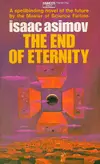
Like with most of the Asimov that I've read, the reading experience is colored by how deep and foundational his influence on the genre was; it felt like I'd read this before, like I knew what would happen from page one. It shouldn't be surprising given that Asimov is sort of the SF godfather, but End of Eternity is some of that good ol' classic Science Fiction, published in 1955 it's an early example of the time loop plot device/premise. I haven't read much of the Asimov catalogue outside the Foundation series and his notable short story collections, but he wrote like 500 books, so that's probably true for most people. End of Eternity is one of his better known novels, though a little buried behind the luster of Foundation and I, Robot. But it's clear to me that this stuck in the minds of its readers just as surely as those books did, because reading this book in 2025 is a lot like looking at a house partially built- the framing is all you can see.
The story follows Andrew Harlan, an Eternal. Harlan was taken from his time by an organization called Eternity, which exists across time and seeks to shepard mankind safely into the future. Harlan is trained as a technician in the service of Eternity, the individual designated to physically alter the past in order to change reality further down the timeline. Eternity is an insular and hermetic society, male dominated, so things predictably go awry when Harlan is asked to observe the 427th century in the company of *gasp* a woman. Enter Noÿs, the first and only woman Harlan has ever met and whom he immediately falls for in apocalyptic fashion, watch as Harlan burns it all down in the name of love.
The writing is pure Asimov, the intoxicating blend of speculative science and rock solid narrative fundamentals. I don't want to discount the book or downplay Asmiov's talents, but this is a casual, easy reading thriller whose complexity is entirely rooted in the time travel. Asimov never really reinvented the wheel when it came to story structure, he was happy to play with established tropes, instead choosing to focus on delivering hard science in an informal style. You won't ever get lost reading Asimov, but if you're like me, and you read a ton of SF that's not necessarily an entirely good thing. The over reliance on basic storytelling techniques means that a lot of this book can be boiled down to TV-trope tags, in fact we can run the list: Temptress and Forbidden Love, The Order is Not What it Seems, Woman as Catalyst, Reluctant Lover, and more than any other Disruption as Salvation are all tropes present in their most archetypical form.
With that said, I have no problem with an old story like this being a little mechanical if it prevents the text from feeling dated or stuffy down the line. That's the magic of Asimov, his simple and casual style is one that easily transcends the decades, it makes these stories just as interesting and captivating to read in 2025 as they were in 1955. Unfortunately, a story like End of Eternity is a victim of its own success; so much of what has come after this book has been inspired by and is emulating this framework that it reads like it's the one doing the copying. The Inverted World is the chief example that I can point to; so much of the structure of that book is directly lifted from Asimov, from the repetition of tropes and themes to even its principal character "Helward", which could be a subtle a nod to Harlan.
If you've read Asimov before, then you know exactly what to expect. If you haven't, what are you doing! Go read Foundation!
PS: This book in its original unpublished draft was standalone, but upon further consideration, Asimov changed the ending in order to tie this book into his larger Robots/Foundation universe. So I guess what I said at the top about only reading Foundation and his short stories is still technically true.
Like with most of the Asimov that I've read, the reading experience is colored by how deep and foundational his influence on the genre was; it felt like I'd read this before, like I knew what would happen from page one. It shouldn't be surprising given that Asimov is sort of the SF godfather, but End of Eternity is some of that good ol' classic Science Fiction, published in 1955 it's an early example of the time loop plot device/premise. I haven't read much of the Asimov catalogue outside the Foundation series and his notable short story collections, but he wrote like 500 books, so that's probably true for most people. End of Eternity is one of his better known novels, though a little buried behind the luster of Foundation and I, Robot. But it's clear to me that this stuck in the minds of its readers just as surely as those books did, because reading this book in 2025 is a lot like looking at a house partially built- the framing is all you can see.
The story follows Andrew Harlan, an Eternal. Harlan was taken from his time by an organization called Eternity, which exists across time and seeks to shepard mankind safely into the future. Harlan is trained as a technician in the service of Eternity, the individual designated to physically alter the past in order to change reality further down the timeline. Eternity is an insular and hermetic society, male dominated, so things predictably go awry when Harlan is asked to observe the 427th century in the company of *gasp* a woman. Enter Noÿs, the first and only woman Harlan has ever met and whom he immediately falls for in apocalyptic fashion, watch as Harlan burns it all down in the name of love.
The writing is pure Asimov, the intoxicating blend of speculative science and rock solid narrative fundamentals. I don't want to discount the book or downplay Asmiov's talents, but this is a casual, easy reading thriller whose complexity is entirely rooted in the time travel. Asimov never really reinvented the wheel when it came to story structure, he was happy to play with established tropes, instead choosing to focus on delivering hard science in an informal style. You won't ever get lost reading Asimov, but if you're like me, and you read a ton of SF that's not necessarily an entirely good thing. The over reliance on basic storytelling techniques means that a lot of this book can be boiled down to TV-trope tags, in fact we can run the list: Temptress and Forbidden Love, The Order is Not What it Seems, Woman as Catalyst, Reluctant Lover, and more than any other Disruption as Salvation are all tropes present in their most archetypical form.
With that said, I have no problem with an old story like this being a little mechanical if it prevents the text from feeling dated or stuffy down the line. That's the magic of Asimov, his simple and casual style is one that easily transcends the decades, it makes these stories just as interesting and captivating to read in 2025 as they were in 1955. Unfortunately, a story like End of Eternity is a victim of its own success; so much of what has come after this book has been inspired by and is emulating this framework that it reads like it's the one doing the copying. The Inverted World is the chief example that I can point to; so much of the structure of that book is directly lifted from Asimov, from the repetition of tropes and themes to even its principal character "Helward", which could be a subtle a nod to Harlan.
If you've read Asimov before, then you know exactly what to expect. If you haven't, what are you doing! Go read Foundation!
PS: This book in its original unpublished draft was standalone, but upon further consideration, Asimov changed the ending in order to tie this book into his larger Robots/Foundation universe. So I guess what I said at the top about only reading Foundation and his short stories is still technically true.

This is a book that's exactly what it purports to be. Pathogenesis is the history of western civilization as viewed through the lens of plague and disease. I'm wary when it comes to books that try to reframe history along certain lines because they tend to play up the importance of their subject, it's bound to happen. That's the case here, but I would class it as "over-magnification" and not nearly to a degree where the book is purposely misinforming you. This book is accessible and covers a broad swath of human history, it's easy to read with an excellent audiobook (read by the author!) to boot, but I wouldn't rely on this book as my sole source for historical information. I really liked taking a deeper dive into an influence on history that is often overlooked but as shown by Kennedy often produced outsized impacts.
Broken into 8 parts, we start with the primordial soup, the birth of bacteria and viruses and quickly work our way from neolithic man, through the rise of Christianity and the fall of the Roman Empire, to the development of germ theory and modern sanitation. This book will mainly be a recap for anyone who has studied history, but even if you haven't, I doubt that Neanderthals, and Alexander the Great, Rome, and Slavery are going to be fresh topics. Framed around well known events, this book shines the spotlight on the moments in history books where you read something like, "the enemy camp thus was riddled through with plague and weakened" and the tide was miraculously turned. There is plenty of information that goes beyond the basic history, so nerds need not roll their eyes in boredom.
Where this differs from a Wikipedia article is in the quality of the writing and the depth of the research. Kennedy manages to work a flowing narrative out of what is otherwise a well formulated outline, taking us through nearly 20,000 years of human history without ever killing the pace. What I really appreciated was that despite most of the book being a refresher, he includes the most up-to-date historical findings from contemporary scholars as a part of the summary. An example would be what killed the Neanderthals; it was likely endemic plagues migrating north along with migrants from early sub-Saharan population centers as the earth warmed. This isn't the first time that I've seen plague offered as the reason for the rapid extinction of the various paleolithic humanoid subspecies, but never as coherent and accessible as the theory is presented here. It's like that with most subjects, giving you a glimpse past the surface details with an eye to plague and pathogen.
Kennedy frames the history of disease through a public health lens, highlighting a critical message: despite our scientific ability to identify and solve root causes of disease, poverty and inequity continue to undermine global health. We've understood that poor people who live in bad conditions get sick since the 1850s (it's shocking but true), but medical focus has shifted away from prevention toward treatment alone. Despite the WHO's establishment in the 1970s, global health initiatives have fallen short of their potential because healthcare professionals have been encouraged to "stay in their lanes" - developing treatments rather than addressing the social determinants of health. Pathogenesis serves as a powerful reminder that true progress in public health requires confronting the socioeconomic factors that create disease vulnerability, not just treating symptoms after outbreaks occur.
However, my main gripe with the book comes out of this conclusion, because the counter example provided for our modern public health regime is that of the Great Leap Forward and the subsequent period of reform and opening up. Despite the death toll in both human and sparrow lives, the author finds time to complement the totality with which the Chinese government is able to affect their public health scheme. His conclusion paints China as the next great hope for an effective global public health campaign, proposing that COVID marks the transition from western democratic leadership of the global system. Indeed, while paying lip service to their spotty human rights record, Kennedy inexplicably takes their COVID statistical claims at face value, citing figures that paint the death rates in the US as 300 times higher than in China (something I find patently unbelievable). It's not my patriotic spirit that finds this objectionable, but rather the part of me that demands the same scholarly rigor as was applied to the rest of the book.
This is a well sourced and valuable treatment of western civ and the history of pathogens. Barring its questionable conclusion, I found it generally accurate and entertaining to read.
PS: I wasn't sure where to fit this in, but when this author visits topics that I am better versed in, such as the slave trade, I noticed that there's a tendency to oversimplify. To Kennedy, the primary reason behind the mass enslavement of black Africans was their immunity to Malaria and Yellow Fever. While this is certainly true and a major contributing factor to their desirability as noted by the book, it discounts other notable (and likely more potent) factors.
In the same chapter where the author details the difficulties white slavers had just surviving on the African continent, he manages to ignore the implications of that fact: chiefly that a significant portion of the supply of African slaves was provided by indigenous slavers operating out of economic need. He makes no mentions of the collapse of the Arab and African economies, how the supply of enslaved people grew due to the inflationary effect of American gold and silver. While plague does factor into this economic rationale, a more complete explanation would focus on the economics; it would acknowledge plague's effect on supply by decimating the population of American natives while discounting alternative sources of slaves according to cost. Kennedy tries to explain that the calculus was more economic and racial than it was motivated by concerns for the health and conditions of the slaves, but does not go on to explain the rationale as I just did. This is really a nitpick, but I wouldn't want someone to read this book and just assume that Kennedy's pathogenic focused take on history is a definitive one.
This is a book that's exactly what it purports to be. Pathogenesis is the history of western civilization as viewed through the lens of plague and disease. I'm wary when it comes to books that try to reframe history along certain lines because they tend to play up the importance of their subject, it's bound to happen. That's the case here, but I would class it as "over-magnification" and not nearly to a degree where the book is purposely misinforming you. This book is accessible and covers a broad swath of human history, it's easy to read with an excellent audiobook (read by the author!) to boot, but I wouldn't rely on this book as my sole source for historical information. I really liked taking a deeper dive into an influence on history that is often overlooked but as shown by Kennedy often produced outsized impacts.
Broken into 8 parts, we start with the primordial soup, the birth of bacteria and viruses and quickly work our way from neolithic man, through the rise of Christianity and the fall of the Roman Empire, to the development of germ theory and modern sanitation. This book will mainly be a recap for anyone who has studied history, but even if you haven't, I doubt that Neanderthals, and Alexander the Great, Rome, and Slavery are going to be fresh topics. Framed around well known events, this book shines the spotlight on the moments in history books where you read something like, "the enemy camp thus was riddled through with plague and weakened" and the tide was miraculously turned. There is plenty of information that goes beyond the basic history, so nerds need not roll their eyes in boredom.
Where this differs from a Wikipedia article is in the quality of the writing and the depth of the research. Kennedy manages to work a flowing narrative out of what is otherwise a well formulated outline, taking us through nearly 20,000 years of human history without ever killing the pace. What I really appreciated was that despite most of the book being a refresher, he includes the most up-to-date historical findings from contemporary scholars as a part of the summary. An example would be what killed the Neanderthals; it was likely endemic plagues migrating north along with migrants from early sub-Saharan population centers as the earth warmed. This isn't the first time that I've seen plague offered as the reason for the rapid extinction of the various paleolithic humanoid subspecies, but never as coherent and accessible as the theory is presented here. It's like that with most subjects, giving you a glimpse past the surface details with an eye to plague and pathogen.
Kennedy frames the history of disease through a public health lens, highlighting a critical message: despite our scientific ability to identify and solve root causes of disease, poverty and inequity continue to undermine global health. We've understood that poor people who live in bad conditions get sick since the 1850s (it's shocking but true), but medical focus has shifted away from prevention toward treatment alone. Despite the WHO's establishment in the 1970s, global health initiatives have fallen short of their potential because healthcare professionals have been encouraged to "stay in their lanes" - developing treatments rather than addressing the social determinants of health. Pathogenesis serves as a powerful reminder that true progress in public health requires confronting the socioeconomic factors that create disease vulnerability, not just treating symptoms after outbreaks occur.
However, my main gripe with the book comes out of this conclusion, because the counter example provided for our modern public health regime is that of the Great Leap Forward and the subsequent period of reform and opening up. Despite the death toll in both human and sparrow lives, the author finds time to complement the totality with which the Chinese government is able to affect their public health scheme. His conclusion paints China as the next great hope for an effective global public health campaign, proposing that COVID marks the transition from western democratic leadership of the global system. Indeed, while paying lip service to their spotty human rights record, Kennedy inexplicably takes their COVID statistical claims at face value, citing figures that paint the death rates in the US as 300 times higher than in China (something I find patently unbelievable). It's not my patriotic spirit that finds this objectionable, but rather the part of me that demands the same scholarly rigor as was applied to the rest of the book.
This is a well sourced and valuable treatment of western civ and the history of pathogens. Barring its questionable conclusion, I found it generally accurate and entertaining to read.
PS: I wasn't sure where to fit this in, but when this author visits topics that I am better versed in, such as the slave trade, I noticed that there's a tendency to oversimplify. To Kennedy, the primary reason behind the mass enslavement of black Africans was their immunity to Malaria and Yellow Fever. While this is certainly true and a major contributing factor to their desirability as noted by the book, it discounts other notable (and likely more potent) factors.
In the same chapter where the author details the difficulties white slavers had just surviving on the African continent, he manages to ignore the implications of that fact: chiefly that a significant portion of the supply of African slaves was provided by indigenous slavers operating out of economic need. He makes no mentions of the collapse of the Arab and African economies, how the supply of enslaved people grew due to the inflationary effect of American gold and silver. While plague does factor into this economic rationale, a more complete explanation would focus on the economics; it would acknowledge plague's effect on supply by decimating the population of American natives while discounting alternative sources of slaves according to cost. Kennedy tries to explain that the calculus was more economic and racial than it was motivated by concerns for the health and conditions of the slaves, but does not go on to explain the rationale as I just did. This is really a nitpick, but I wouldn't want someone to read this book and just assume that Kennedy's pathogenic focused take on history is a definitive one.

I wish I hadn't waited so long to read this last chunk of the Lords of Darkness, this would have been much better with the previous two books fresh in mind. Delusion's Master rounds out the trio of demon lords, introducing Chuz, the eponymous Delusion's Master. But you'd be forgiven for missing that because this story is more of a woven addendum to Night's Master, with the story revolving around Azhrarn.
I really dig the Flat Earth, as a modern reimagining of 1000 and one nights, I couldn't ask for anything better. This book keeps to that concept, adopting the interwoven fables but juicing it up with some more direct biblical references. The Tower of Babel is the most prominent reference, but the entire work is painted in the colors of Genesis. This confirms a trend that I was noticing as I read Death's Master, but as the subject gets closer and closer to divinity, it's the biblical folklore that is getting most of the focus allegorically and stylistically. If that's your cup of tea, I think you'll really enjoy this book, it's a meditation on a number of things but divinity and mortality are center stage and they've always been a core conceit of the series.
Personally, it was a little too biblical and a little too depressing for my taste. There's a tongue in cheek slant to the set-up of boring gods and entertaining demons, but it doesn't change the fact that you've made your boring gods the center of the story. If there was a point or some kind of moral or catharsis I could overlook it, but the story was more than a little bleak, even for a series of tragedies. On that note, there's some pretty unsavory stuff in here to boot, in particular the rape and torture of the village idiot. It's couched in the thematic structure of the story and a commentary of the dark nature of man but still, yikes.
The prose is just as beautiful as it was in the first two books, I just didn't love the theme, the subject or the vibe for this one. YMMV.
I wish I hadn't waited so long to read this last chunk of the Lords of Darkness, this would have been much better with the previous two books fresh in mind. Delusion's Master rounds out the trio of demon lords, introducing Chuz, the eponymous Delusion's Master. But you'd be forgiven for missing that because this story is more of a woven addendum to Night's Master, with the story revolving around Azhrarn.
I really dig the Flat Earth, as a modern reimagining of 1000 and one nights, I couldn't ask for anything better. This book keeps to that concept, adopting the interwoven fables but juicing it up with some more direct biblical references. The Tower of Babel is the most prominent reference, but the entire work is painted in the colors of Genesis. This confirms a trend that I was noticing as I read Death's Master, but as the subject gets closer and closer to divinity, it's the biblical folklore that is getting most of the focus allegorically and stylistically. If that's your cup of tea, I think you'll really enjoy this book, it's a meditation on a number of things but divinity and mortality are center stage and they've always been a core conceit of the series.
Personally, it was a little too biblical and a little too depressing for my taste. There's a tongue in cheek slant to the set-up of boring gods and entertaining demons, but it doesn't change the fact that you've made your boring gods the center of the story. If there was a point or some kind of moral or catharsis I could overlook it, but the story was more than a little bleak, even for a series of tragedies. On that note, there's some pretty unsavory stuff in here to boot, in particular the rape and torture of the village idiot. It's couched in the thematic structure of the story and a commentary of the dark nature of man but still, yikes.
The prose is just as beautiful as it was in the first two books, I just didn't love the theme, the subject or the vibe for this one. YMMV.

Just put this at the top of your TBR, you won't regret reading 35 brilliant pages. I had to stop multiple times to double check, but this was published in 1909. Read it yourself, it does not read like that at all, like not one bit, it could have been written in 2021, I thought it was from 2021!
This is a short story about a future where humanity lives inside of a giant, globe spanning, subterranean machine. Each person lives within their own little pod, each person is connected to everyone else through a system of tubes and wires that transmit sound and video. The Machine cares for everyone; generations of humans have been raised within its confines, few desiring to trade their cocoons for Earth's poisoned surface. I won't give any more away except to say that this is a warning about embracing technology and forgetting what it means to live.
I think what really had me in disbelief over the age of this short story is just how close Forster's world came to life under quarantine. This has been commented on in recent years, and it's the fun fact that put this on my radar: This reads like someone with a time machine wrote it. It is SHOCKING how close modernity is to this dystopia. There's stuff we all now recognize as a part of mundane reality, facetime and IMs and doordash and not leaving your house for weeks at a time- and funny enough also airports and commercial aviation (which wouldn't be a thing for another 15 years).
If you've seen Wall-E I doubt you could read this story without thinking it must have been the inspiration behind that vision of the future. I don't know about that, but this story is without question ahead of its time. It didn't really see acclaim until the 1960s but here it is 60 years after its second wind still mindbogglingly prescient and relevant.
This is an unquestionable 10/10 and not difficult to get through in the slightest, I don't think I can say that for anything else this old. Seriously it's like 35 pages, just read it.
Just put this at the top of your TBR, you won't regret reading 35 brilliant pages. I had to stop multiple times to double check, but this was published in 1909. Read it yourself, it does not read like that at all, like not one bit, it could have been written in 2021, I thought it was from 2021!
This is a short story about a future where humanity lives inside of a giant, globe spanning, subterranean machine. Each person lives within their own little pod, each person is connected to everyone else through a system of tubes and wires that transmit sound and video. The Machine cares for everyone; generations of humans have been raised within its confines, few desiring to trade their cocoons for Earth's poisoned surface. I won't give any more away except to say that this is a warning about embracing technology and forgetting what it means to live.
I think what really had me in disbelief over the age of this short story is just how close Forster's world came to life under quarantine. This has been commented on in recent years, and it's the fun fact that put this on my radar: This reads like someone with a time machine wrote it. It is SHOCKING how close modernity is to this dystopia. There's stuff we all now recognize as a part of mundane reality, facetime and IMs and doordash and not leaving your house for weeks at a time- and funny enough also airports and commercial aviation (which wouldn't be a thing for another 15 years).
If you've seen Wall-E I doubt you could read this story without thinking it must have been the inspiration behind that vision of the future. I don't know about that, but this story is without question ahead of its time. It didn't really see acclaim until the 1960s but here it is 60 years after its second wind still mindbogglingly prescient and relevant.
This is an unquestionable 10/10 and not difficult to get through in the slightest, I don't think I can say that for anything else this old. Seriously it's like 35 pages, just read it.

Book Club for March __________
It's not often that I run across a book for which I can provide a definitive litmus test, but this is one of them. The City & the City lives and dies by its premise, and it's fascinating: There exist two side-by-side city states, Beszel and Ul Qoma, their borders overlap significantly. We're talking adjacent buildings that are in separate cities, even the individual floors of some of those buildings and the streets outside crosshatched between them. Their separation is achieved by social conditioning; the citizens of both cities are taught to ignore the other, to unsee their neighbors and the foreign city they live in. In such a place, what would happen when a murder is committed in one city and the body is dumped and discovered in the other?
If I've got you asking questions like, "how does that work?", "how is that enforceable?", you'll really enjoy where this book goes. Which is great news for me, because this work is otherwise difficult to categorize; there are fantasy and SF elements, but simultaneously it's a grounded speculative crime story. It's difficult to describe, but one of the big strengths of the book is in how Miéville blends the fantastical elements to complement reality. A city where you have to ignore half the people living in it seems like an impossibility at first, but as that reality is illustrated you cannot help but to see the parallels in modern urban living, to think about the unhoused and mentally ill that ride with us on public transit, who we walk past on the street with a similar sense of unseeing.
The book is at its best when it's being symbolic, when it's alluding to the absurdities of our own reality; unfortunately, these moments peter out as the novel goes on. They often come early on, as Miéville is describing the cities without revealing the concept of unseeing. The reveal of the crosshatching and the following exposition were the pinnacle of the book for me. Miéville explores exactly the kinds of things that I wanted to be explored, he shows how it all works, right down to the traffic codes.
As it goes on, the sense of place and the mystery of the setting are subsumed by the murder plot and the surrounding conspiracy. You'll notice that I haven't given up the details for it, and that's a purposeful omission, it's not hard to grasp and not interesting to solve. In fact, the novel ends on its weakest note, with the focus entirely fixed on catching the murderer; I found this subplot mechanical and predictable, the interest in developing the world undercutting the pace and coherence of the investigation.
Miéville managed to tickle the lawyer part of my brain, the part that loves a nice jurisdictional dispute and has been reprogrammed to turn everything into an IRAC. I blanket recommend this to my legal compatriots for one reason alone, it's such an interesting thought experiment. The setting is more than enough reason to read this, and despite my complaints the murder mystery is competent, just a little boring and predictable.
Book Club for March __________
It's not often that I run across a book for which I can provide a definitive litmus test, but this is one of them. The City & the City lives and dies by its premise, and it's fascinating: There exist two side-by-side city states, Beszel and Ul Qoma, their borders overlap significantly. We're talking adjacent buildings that are in separate cities, even the individual floors of some of those buildings and the streets outside crosshatched between them. Their separation is achieved by social conditioning; the citizens of both cities are taught to ignore the other, to unsee their neighbors and the foreign city they live in. In such a place, what would happen when a murder is committed in one city and the body is dumped and discovered in the other?
If I've got you asking questions like, "how does that work?", "how is that enforceable?", you'll really enjoy where this book goes. Which is great news for me, because this work is otherwise difficult to categorize; there are fantasy and SF elements, but simultaneously it's a grounded speculative crime story. It's difficult to describe, but one of the big strengths of the book is in how Miéville blends the fantastical elements to complement reality. A city where you have to ignore half the people living in it seems like an impossibility at first, but as that reality is illustrated you cannot help but to see the parallels in modern urban living, to think about the unhoused and mentally ill that ride with us on public transit, who we walk past on the street with a similar sense of unseeing.
The book is at its best when it's being symbolic, when it's alluding to the absurdities of our own reality; unfortunately, these moments peter out as the novel goes on. They often come early on, as Miéville is describing the cities without revealing the concept of unseeing. The reveal of the crosshatching and the following exposition were the pinnacle of the book for me. Miéville explores exactly the kinds of things that I wanted to be explored, he shows how it all works, right down to the traffic codes.
As it goes on, the sense of place and the mystery of the setting are subsumed by the murder plot and the surrounding conspiracy. You'll notice that I haven't given up the details for it, and that's a purposeful omission, it's not hard to grasp and not interesting to solve. In fact, the novel ends on its weakest note, with the focus entirely fixed on catching the murderer; I found this subplot mechanical and predictable, the interest in developing the world undercutting the pace and coherence of the investigation.
Miéville managed to tickle the lawyer part of my brain, the part that loves a nice jurisdictional dispute and has been reprogrammed to turn everything into an IRAC. I blanket recommend this to my legal compatriots for one reason alone, it's such an interesting thought experiment. The setting is more than enough reason to read this, and despite my complaints the murder mystery is competent, just a little boring and predictable.

Book Club for Feb (I am aware it's March) ________
This wasn't perfect, but I liked it, I found the premise interesting, the characters plausible and well written, and I am probably going to read the next installment. The book is a hybrid of epic adventure and dark academia, wrapped in a Roman toga; to over simplify it, this is a planet bound Red Rising #1 with the government from the Hunger Games.
The story is told first person from the perspective of Vis, a foreign prince orphaned after the conquest of his home country by the Catenan Republic. Narrowly escaping death beside the rest of his family two years prior, Vis is living in hiding within a Catenan orphanage. Vis is trapped under hierarchy rule, in a country where the poor and working class citizens "cede" their literal willpower and mental focus up the pyramid, strengthening those above with supernatural strength and abilities. Unwilling to cede his strength to the people who killed his family, Vis endures ceaseless abuse and torture from his caretakers during the day, and toils away his nights as a guard for the prison or by fighting in the arena. One night he unwittingly draws the attention of Ulciscor, a dodgy but high ranking man in the hierarchy who is coincidentally seeking to adopt a young man of Vis's caliber. Forced into helping Ulciscor, Vis is tasked with infiltrating the most prestigious university in the country, expected to excel and seeking the truth behind the death of Ulciscor's younger brother.
The general premise of this book is fairly YA, you'd be forgiven for assuming it's going to be close to the Hunger Games or possibly something a little more adult but generally accessible like Fourth Wing. I am going to disabuse anyone of that notion, the "dark" part of this book manifests itself in some pretty extreme violence and gore. These moments are some of the most impactful and best written parts of the book, so I'm going to try not to spoil them, suffice to say that we're talking highly detailed rivers of blood and mountains of corpses.
As you can tell there's a lot going on, it's the first book in a series and there is a giant foundation to lay. Unfortunately, I think that's the biggest problem with the book; Will of the Many is far busier than most first entry books (and those are already fairly busy). I got lost somewhere between the child gladiators and the exam prep, and I feel very strongly that this should have been split across two books. The bulk of the story, the academy component, only begins after Vis's introduction, nearly 30% of the way through the book. It's a bifurcation that really calls into question the school setting, especially because unlike in other academia books, our MC has already learned the bulk of what the college had to offer before he ever sets foot inside. It's a lot of setup with not a lot of immediate pay off, and it means that the story skates by mainly on its premise and the good dialog/character work.
Speaking of dialogue and characters, I was a little thrown by the maturity of Vis's narration initially, his thoughts are way too complete for a 17-year-old. But as the narrative began to resolve, I saw purposeful gaps and cracks in his veneer that revealed a lot of his youth and humanity. There are really well crafted moments that show us the terrified and traumatized boy within Vis, and how those experiences assert themselves within his personality. Islington has really capitalized on the transparency of the first-person perspective to deliver a character with breathtaking fidelity. That luster naturally extends to the friends Vis makes at school, particularly his male cadre of Callidus and Eidhin as well as Emissa, our presumptive love interest.
I was surprised that I didn't love this book, it seemed like it checked all the right boxes, but it just never clicked. I kept getting the sense that I was reading something one-dimensional, made needlessly overcomplicated in an attempt to imitate depth. There's so much set up of this world and its government, yet I felt robbed when it wasn't used for anything. I mean, here's a 700-page book on a society literally organized into pyramids, is it crazy to expect a little bit on how, maybe, that's a bit like what we've got going on over here? Why not make Vis apply for a FAFSA or something, show me the bureaucracy at work! Don't give me the Latin script of Agent Cody Banks 3: Cody goes to College. Maybe it was saved for the next book, or maybe that's where they'll introduce a multiverse so we can sell the IP to Disney or Amazon.
I liked it, but I don't get the hype from the 5-star reviews. This is a competent, well executed, but over busy and bloated book 1 of a series. For every moment I found myself enjoying this book, there was another where I was slogging through the poorly paced middle or lost in yet another development occurring behind the scenes. This book keeps you asking questions but never offers enough answers, instead promising an exciting resolution to your query one or two books down the line. I think that generally most people will like this, especially people who love other fantasy first-person perspective books/series like ACOTAR or the Dresden Files.
Book Club for Feb (I am aware it's March) ________
This wasn't perfect, but I liked it, I found the premise interesting, the characters plausible and well written, and I am probably going to read the next installment. The book is a hybrid of epic adventure and dark academia, wrapped in a Roman toga; to over simplify it, this is a planet bound Red Rising #1 with the government from the Hunger Games.
The story is told first person from the perspective of Vis, a foreign prince orphaned after the conquest of his home country by the Catenan Republic. Narrowly escaping death beside the rest of his family two years prior, Vis is living in hiding within a Catenan orphanage. Vis is trapped under hierarchy rule, in a country where the poor and working class citizens "cede" their literal willpower and mental focus up the pyramid, strengthening those above with supernatural strength and abilities. Unwilling to cede his strength to the people who killed his family, Vis endures ceaseless abuse and torture from his caretakers during the day, and toils away his nights as a guard for the prison or by fighting in the arena. One night he unwittingly draws the attention of Ulciscor, a dodgy but high ranking man in the hierarchy who is coincidentally seeking to adopt a young man of Vis's caliber. Forced into helping Ulciscor, Vis is tasked with infiltrating the most prestigious university in the country, expected to excel and seeking the truth behind the death of Ulciscor's younger brother.
The general premise of this book is fairly YA, you'd be forgiven for assuming it's going to be close to the Hunger Games or possibly something a little more adult but generally accessible like Fourth Wing. I am going to disabuse anyone of that notion, the "dark" part of this book manifests itself in some pretty extreme violence and gore. These moments are some of the most impactful and best written parts of the book, so I'm going to try not to spoil them, suffice to say that we're talking highly detailed rivers of blood and mountains of corpses.
As you can tell there's a lot going on, it's the first book in a series and there is a giant foundation to lay. Unfortunately, I think that's the biggest problem with the book; Will of the Many is far busier than most first entry books (and those are already fairly busy). I got lost somewhere between the child gladiators and the exam prep, and I feel very strongly that this should have been split across two books. The bulk of the story, the academy component, only begins after Vis's introduction, nearly 30% of the way through the book. It's a bifurcation that really calls into question the school setting, especially because unlike in other academia books, our MC has already learned the bulk of what the college had to offer before he ever sets foot inside. It's a lot of setup with not a lot of immediate pay off, and it means that the story skates by mainly on its premise and the good dialog/character work.
Speaking of dialogue and characters, I was a little thrown by the maturity of Vis's narration initially, his thoughts are way too complete for a 17-year-old. But as the narrative began to resolve, I saw purposeful gaps and cracks in his veneer that revealed a lot of his youth and humanity. There are really well crafted moments that show us the terrified and traumatized boy within Vis, and how those experiences assert themselves within his personality. Islington has really capitalized on the transparency of the first-person perspective to deliver a character with breathtaking fidelity. That luster naturally extends to the friends Vis makes at school, particularly his male cadre of Callidus and Eidhin as well as Emissa, our presumptive love interest.
I was surprised that I didn't love this book, it seemed like it checked all the right boxes, but it just never clicked. I kept getting the sense that I was reading something one-dimensional, made needlessly overcomplicated in an attempt to imitate depth. There's so much set up of this world and its government, yet I felt robbed when it wasn't used for anything. I mean, here's a 700-page book on a society literally organized into pyramids, is it crazy to expect a little bit on how, maybe, that's a bit like what we've got going on over here? Why not make Vis apply for a FAFSA or something, show me the bureaucracy at work! Don't give me the Latin script of Agent Cody Banks 3: Cody goes to College. Maybe it was saved for the next book, or maybe that's where they'll introduce a multiverse so we can sell the IP to Disney or Amazon.
I liked it, but I don't get the hype from the 5-star reviews. This is a competent, well executed, but over busy and bloated book 1 of a series. For every moment I found myself enjoying this book, there was another where I was slogging through the poorly paced middle or lost in yet another development occurring behind the scenes. This book keeps you asking questions but never offers enough answers, instead promising an exciting resolution to your query one or two books down the line. I think that generally most people will like this, especially people who love other fantasy first-person perspective books/series like ACOTAR or the Dresden Files.

"[This] is one of those books that radicalizes you", was the most common response I got when I told friends what I was reading. Obviously, I'm quoting them because I can't put it any better. If the extent of your US History knowledge begins and ends with your AP/HS US class, reading this book will drop your jaw. There really are so many omissions that our textbooks have made that, once revealed, force you to reconsider your impression of the country and its decision makers.
Lies My Teacher Told Me might be too strong a title, since technically there aren't all that many outright lies in the texts themselves. Lies mainly deals in filling in the egregious omissions that almost all the texts have retained to this day. These omissions primarily concern things like who discovered America, the Columbian exchange, the Civil War, and Woodrow Wilson being a massive racist piece of shit. More than just backfilling Loewen reveals the pattern, the bias in the types of facts that get pulled from the text. This is half correction of US History-half correction of the education system, and it means that Loewen opines broadly and with little discretion as to what the problems in education are and how to solve them.
I read the 3rd edition, and as the author takes great pains to note, he's changed almost none of the core material between each re-issue. That might seem like a pointless detail but think about it, this was originally published in 1995 and in 30 years all Loewen ever needed to change was his introduction. It speaks to the nature of the facts, namely that they are facts. This book has been right about US History since its inception, and despite critics crying "lib!" for over 30 years, the facts have not changed.
Of course, the political discourse in this country has changed, drastically. If you look at the top reviews for this book, they're extremely critical of the obvious liberal slant to Loewen's commentary, of the abundant "white guilt" that drowns out the discourse on education. Those reviews are from 2008, and within the context of the last decade those complaints seem quaint and bygone. If you still believe the news, here in 2025 we're about to cut the Dept. of Education by executive order, with the soon-to-be unemployed Secretary slated to be Linda McMahon of WWE fame. No, I think a centrist position on education policy has been shown to be one of the appeaser, in the Churchill sense of the word. No, in 2025 Loewen reads like a prophet, his "overtly socialist and liberal leanings" could now be mistaken for wide-eyed sobriety if not outright prescience.
Speaking as someone with a single family home's worth of debt thanks to higher education, I still found some of the things that Loewen teaches to be completely brand new to me. I kind of gave it away at the top, but the fact that we continue to rehabilitate Woodrow Wilson's image completely shook me. I've taken collegiate courses on WW1 with significant focus on Wilson; he'd even made my top 5 presidents list in the past- but I had never been taught about him single-handedly re-invigorating the KKK, or about him re-segregating the government. Despite taking multiple film studies courses, I had no idea that Wilson showed Birth of a Nation as the first film in the White House. Or what about John Brown, my teacher blew completely past him, and this was the same guy who said "I John Brown am now quite certain that the crimes of this guilty land will never be purged away, but with blood," literally calling out the civil war in advance. This was the first time that I ever read his words:
"Now, if it is deemed necessary that I should forfeit my life for the furtherance of the ends of justice, and mingle my blood further with the blood of my children and with the blood of millions in this slave country whose rights are disregarded by wicked, cruel and unjust enactments, I say, Let it be done"
Is this the most balanced treatment of US History? Not by a mile. But there's not one word of untruth in this book. The rhetoric can be overly persuasive, if not completely bleeding heart at times, but that doesn't discount Loewen's point to me. Especially when it looks like we'll soon be funding religious private schools with public money. No, this is a book that sets the record straight, a book that has been proven correct at every turn. It could ostensibly radicalize you.
"[This] is one of those books that radicalizes you", was the most common response I got when I told friends what I was reading. Obviously, I'm quoting them because I can't put it any better. If the extent of your US History knowledge begins and ends with your AP/HS US class, reading this book will drop your jaw. There really are so many omissions that our textbooks have made that, once revealed, force you to reconsider your impression of the country and its decision makers.
Lies My Teacher Told Me might be too strong a title, since technically there aren't all that many outright lies in the texts themselves. Lies mainly deals in filling in the egregious omissions that almost all the texts have retained to this day. These omissions primarily concern things like who discovered America, the Columbian exchange, the Civil War, and Woodrow Wilson being a massive racist piece of shit. More than just backfilling Loewen reveals the pattern, the bias in the types of facts that get pulled from the text. This is half correction of US History-half correction of the education system, and it means that Loewen opines broadly and with little discretion as to what the problems in education are and how to solve them.
I read the 3rd edition, and as the author takes great pains to note, he's changed almost none of the core material between each re-issue. That might seem like a pointless detail but think about it, this was originally published in 1995 and in 30 years all Loewen ever needed to change was his introduction. It speaks to the nature of the facts, namely that they are facts. This book has been right about US History since its inception, and despite critics crying "lib!" for over 30 years, the facts have not changed.
Of course, the political discourse in this country has changed, drastically. If you look at the top reviews for this book, they're extremely critical of the obvious liberal slant to Loewen's commentary, of the abundant "white guilt" that drowns out the discourse on education. Those reviews are from 2008, and within the context of the last decade those complaints seem quaint and bygone. If you still believe the news, here in 2025 we're about to cut the Dept. of Education by executive order, with the soon-to-be unemployed Secretary slated to be Linda McMahon of WWE fame. No, I think a centrist position on education policy has been shown to be one of the appeaser, in the Churchill sense of the word. No, in 2025 Loewen reads like a prophet, his "overtly socialist and liberal leanings" could now be mistaken for wide-eyed sobriety if not outright prescience.
Speaking as someone with a single family home's worth of debt thanks to higher education, I still found some of the things that Loewen teaches to be completely brand new to me. I kind of gave it away at the top, but the fact that we continue to rehabilitate Woodrow Wilson's image completely shook me. I've taken collegiate courses on WW1 with significant focus on Wilson; he'd even made my top 5 presidents list in the past- but I had never been taught about him single-handedly re-invigorating the KKK, or about him re-segregating the government. Despite taking multiple film studies courses, I had no idea that Wilson showed Birth of a Nation as the first film in the White House. Or what about John Brown, my teacher blew completely past him, and this was the same guy who said "I John Brown am now quite certain that the crimes of this guilty land will never be purged away, but with blood," literally calling out the civil war in advance. This was the first time that I ever read his words:
"Now, if it is deemed necessary that I should forfeit my life for the furtherance of the ends of justice, and mingle my blood further with the blood of my children and with the blood of millions in this slave country whose rights are disregarded by wicked, cruel and unjust enactments, I say, Let it be done"
Is this the most balanced treatment of US History? Not by a mile. But there's not one word of untruth in this book. The rhetoric can be overly persuasive, if not completely bleeding heart at times, but that doesn't discount Loewen's point to me. Especially when it looks like we'll soon be funding religious private schools with public money. No, this is a book that sets the record straight, a book that has been proven correct at every turn. It could ostensibly radicalize you.


know I call a lot of things "classics" around here, particularly for anything by Le Guin, but Earthsea truly fits the bill. If you only accept perfection from your fantasy, look no further. I say that with the small caveat that this is an all-ages read, if you need a gritty, action-packed, thrill ride with a formula defined magic system this is not for you.
I read this because half-way through Akata Witch (which I just reviewed) I started to self-doubt, had I turned into a YA hater? Reading through Earthsea helped to confirm that I wasn't losing touch, and it reinforced for me the things that I like in YA. This story is lovely, a fanciful and touching voyage across the world of Earthsea. I found Earthsea itself every bit as enchanting and detail rich as Middle Earth but without all the exposition. As a piece of genre writing, this book is technical perfection, capturing the raw essence of fantasy without aping LOTR, in fact, while innovating with concepts like cosmic balance and the magic of True Names. Beyond genre, the themes of adolescence and self-identity are woven into the narrative with care and precision. Le Guin is a master of using story to drive a point home, and adapting a coming of age story is no sweat for her.
My take seems to run with the majority, because the Earthsea Cycle is considered as one of the tent poles of the Tolkien-era fantasy genre. A Wizard of Earthsea introduces us to the clustered islands of Earthsea through the eyes of Sparrowhawk, a young boy born with an incredible talent for magic. Sparrowhawk is taken in as an apprentice by the powerful mage Ogion and given his true name, "Ged". Ogion teaches Ged only the basics of mage craft, and endeavors instead to teach him of balance and the natural order, which magic can easily upset. It comes to naught as Ged rifles through Ogion's tomes, looking for a spell to impress a girl, and accidentally summons a shadow that Ogion must banish. Frustrated with Ogion's slow and steady teaching method, Ged reluctantly accepts his master's suggestion that he set out for the Wizards school on Roke Island. Once on Roke, he gains power quickly, making friends and enemies before being baited into a magical duel in which he casts the spell secretly taught to him by the shadow. Rather than summoning the spirit of a mythical beauty from the dead, he instead summons a shadow creature which attacks him, drawing him into a world-spanning battle for survival as Ged struggles to right his wrongs and return balance to Earthsea.
I have no notes on this one, as is the case with much of Le Guin's work, there's very little room for improvement. This is an adolescent fantasy, it's what she sought out to do with this book, and it's what she achieved. To have the book be so richly imaginative on top of basically establishing the modern template for the fantasy Bildungsroman is probably what elevated Earthsea to its contemporary success. I have friends who hate to read old books or watch old movies because these things tend to date themselves, thankfully this is not one of those books- I could not tell this was published in 1968. So to any prospective reader looking for an excellent all-ages fantasy series to get into, something rich in imagination and message, look no further than Wizard of Earthsea. Glad to have crossed this off my TBR.
PS: Among the other reasons, I also picked this up because I realized I couldn't remember if I had in fact read it before. This realization came after a very confused viewing of the animated Tales of Earthsea by Goro Miyazaki, sparrowhawk seemed familiar but nothing else. Turns out that aside from borrowing the settings and characters of Earthsea, the rest of the Miyazaki project is OC- and my familiarity with the series? From the Sci-Fi channel miniseries
know I call a lot of things "classics" around here, particularly for anything by Le Guin, but Earthsea truly fits the bill. If you only accept perfection from your fantasy, look no further. I say that with the small caveat that this is an all-ages read, if you need a gritty, action-packed, thrill ride with a formula defined magic system this is not for you.
I read this because half-way through Akata Witch (which I just reviewed) I started to self-doubt, had I turned into a YA hater? Reading through Earthsea helped to confirm that I wasn't losing touch, and it reinforced for me the things that I like in YA. This story is lovely, a fanciful and touching voyage across the world of Earthsea. I found Earthsea itself every bit as enchanting and detail rich as Middle Earth but without all the exposition. As a piece of genre writing, this book is technical perfection, capturing the raw essence of fantasy without aping LOTR, in fact, while innovating with concepts like cosmic balance and the magic of True Names. Beyond genre, the themes of adolescence and self-identity are woven into the narrative with care and precision. Le Guin is a master of using story to drive a point home, and adapting a coming of age story is no sweat for her.
My take seems to run with the majority, because the Earthsea Cycle is considered as one of the tent poles of the Tolkien-era fantasy genre. A Wizard of Earthsea introduces us to the clustered islands of Earthsea through the eyes of Sparrowhawk, a young boy born with an incredible talent for magic. Sparrowhawk is taken in as an apprentice by the powerful mage Ogion and given his true name, "Ged". Ogion teaches Ged only the basics of mage craft, and endeavors instead to teach him of balance and the natural order, which magic can easily upset. It comes to naught as Ged rifles through Ogion's tomes, looking for a spell to impress a girl, and accidentally summons a shadow that Ogion must banish. Frustrated with Ogion's slow and steady teaching method, Ged reluctantly accepts his master's suggestion that he set out for the Wizards school on Roke Island. Once on Roke, he gains power quickly, making friends and enemies before being baited into a magical duel in which he casts the spell secretly taught to him by the shadow. Rather than summoning the spirit of a mythical beauty from the dead, he instead summons a shadow creature which attacks him, drawing him into a world-spanning battle for survival as Ged struggles to right his wrongs and return balance to Earthsea.
I have no notes on this one, as is the case with much of Le Guin's work, there's very little room for improvement. This is an adolescent fantasy, it's what she sought out to do with this book, and it's what she achieved. To have the book be so richly imaginative on top of basically establishing the modern template for the fantasy Bildungsroman is probably what elevated Earthsea to its contemporary success. I have friends who hate to read old books or watch old movies because these things tend to date themselves, thankfully this is not one of those books- I could not tell this was published in 1968. So to any prospective reader looking for an excellent all-ages fantasy series to get into, something rich in imagination and message, look no further than Wizard of Earthsea. Glad to have crossed this off my TBR.
PS: Among the other reasons, I also picked this up because I realized I couldn't remember if I had in fact read it before. This realization came after a very confused viewing of the animated Tales of Earthsea by Goro Miyazaki, sparrowhawk seemed familiar but nothing else. Turns out that aside from borrowing the settings and characters of Earthsea, the rest of the Miyazaki project is OC- and my familiarity with the series? From the Sci-Fi channel miniseries


Book Club for December (I know it's February) ____________
I haven't kept up with the book club lately, I shouldn't have skipped the Hitchhiker's re-read because it totally threw off the rhythm I had going with these. That's half of the case for the delay here, I missed the deadline and put it down half finished, until last week. I wouldn't chalk the cause of the pause entirely up to a busted schedule, no, I put Akata Witch down because I didn't like the book. I won't leave the reader in suspense, it's because this is YA. I'll admit my bias here, and it's an obvious one, I am not in the YA demo and these books don't really do much for me. Likewise, I'm not sure if I can tell good YA apart from bad YA at this point, but I've read better YA than this.
Akata Witch is easy to wrap your head around, what if Harry Potter took place in Nigeria and the magic was less about wands and more about Juju. We join Sunny, an adolescent albino girl whose family has recently repatriated to Nigeria from the US. Through Sunny's American eyes, readers get a speedy introduction to Nigeria before diving further into the world of the Leopard People (Wizards). Sunny makes friends with Orlu, Chi-Chi, and Sasha, eventually joining them under the magical/juju-ical tutelage of Anton. Just as Sunny as gets her bearings in the secret world of wizards Leopards, she learns that she and her classmates are fated to battle the Black Hat; Nigeria's child murdering Voldemort.
That's all you really need to know, this is Nigerian Harry Potter. Its got the same strengths as HP as well, namely in discovery and atmosphere. There are some things I really liked here: I thought that the Juju-magic system was very interesting and much better developed than the magic in HP. It was cool how the magic system was inspired by and used to introduce some of the folklore and fill in cultural gaps that American readers are bound to run into with a book like this. This book also retains that coming of age/adolescent transformation aspect that made Harry Potter such a relatable YA read. The best moments in the book come as Sunny comes to grasp her power and new identity. It doesn't hurt either that the dynamic of Sunny's friend group is fun and supportive, the book shines brightest when it's just Sunny and the gang going about their days.
Unfortunately, that's all I came to like about this book. Akata Witch manages to copy and alter almost every aspect of Harry Potter, it sticks to the formula, but it's just worse. One big failure of the book early on was with how little explanation of the "wizarding world" there was. I might call this weak world building, but it's not that there was a failure to build a world, more-so there wasn't enough explanation. In Harry Potter, nearly 3/4s of that first book is devoted to explaining and exploring every aspect of the world. Introducing shopkeepers, Quiditch, and chocolate frogs, it's all contextualized as Harry comes into contact with it. Meanwhile Akata Witch just drops you in, explaining only where necessary and seemingly making as little use of Sunny's status as a student as possible. That's just not going to work when the reader is not familiar with Nigeria much less your Afro-magical world! It's not like the magic was well explained either, Sunny may have been learning Juju but none of it carried over to the reader, that, or Leopard Knocks has a vastly inferior curriculum to Hogwarts and Sunny is just as clueless as I am.
It was "Black Hat" as the Voldemort stand in that took me over the edge. I never liked the fated child trope to begin with, and now you're telling me that the villain in this book isn't just magical Hitler (as Voldy was) but he's also a serial child murderer (that the muggles, sorry, "lambs" are AWARE AND TERRIFIED of) and the only plan the elder magicians have is to task a squad of teens, one of whom literally started learning magicJuju that day, to deal with him while doing absolutely nothing else about it. This is where I put the book down.
Having gotten past that, I can say that my dislike of this book came down to how disjointed the pacing of the book was coupled with how obvious of a lift of Harry Potter it is. This story had a really structured series of milestones that the characters had to get to, but the interconnecting story tissue that fills the gaps between moments isn't effective. This story feels abrupt, things happen because they have to happen, not because a character has caused them to happen. With the story basically set on rails there's no real pay off when Sunny and the gang eventually overcome their foe. In fact, our heroes have nothing to do with the mechanism that defeats Black Hat, their only contribution to his defeat being their geographic proximity to him.
This was supposed to be a wizard-come-of-age story but I didn't really feel the pay-off here. This was a cool idea with lackluster execution, and credit where it's due, so much of what I read in this book was new and interesting to me, it just wasn't enough to overcome the novice/lifted story structure.
Book Club for December (I know it's February) ____________
I haven't kept up with the book club lately, I shouldn't have skipped the Hitchhiker's re-read because it totally threw off the rhythm I had going with these. That's half of the case for the delay here, I missed the deadline and put it down half finished, until last week. I wouldn't chalk the cause of the pause entirely up to a busted schedule, no, I put Akata Witch down because I didn't like the book. I won't leave the reader in suspense, it's because this is YA. I'll admit my bias here, and it's an obvious one, I am not in the YA demo and these books don't really do much for me. Likewise, I'm not sure if I can tell good YA apart from bad YA at this point, but I've read better YA than this.
Akata Witch is easy to wrap your head around, what if Harry Potter took place in Nigeria and the magic was less about wands and more about Juju. We join Sunny, an adolescent albino girl whose family has recently repatriated to Nigeria from the US. Through Sunny's American eyes, readers get a speedy introduction to Nigeria before diving further into the world of the Leopard People (Wizards). Sunny makes friends with Orlu, Chi-Chi, and Sasha, eventually joining them under the magical/juju-ical tutelage of Anton. Just as Sunny as gets her bearings in the secret world of wizards Leopards, she learns that she and her classmates are fated to battle the Black Hat; Nigeria's child murdering Voldemort.
That's all you really need to know, this is Nigerian Harry Potter. Its got the same strengths as HP as well, namely in discovery and atmosphere. There are some things I really liked here: I thought that the Juju-magic system was very interesting and much better developed than the magic in HP. It was cool how the magic system was inspired by and used to introduce some of the folklore and fill in cultural gaps that American readers are bound to run into with a book like this. This book also retains that coming of age/adolescent transformation aspect that made Harry Potter such a relatable YA read. The best moments in the book come as Sunny comes to grasp her power and new identity. It doesn't hurt either that the dynamic of Sunny's friend group is fun and supportive, the book shines brightest when it's just Sunny and the gang going about their days.
Unfortunately, that's all I came to like about this book. Akata Witch manages to copy and alter almost every aspect of Harry Potter, it sticks to the formula, but it's just worse. One big failure of the book early on was with how little explanation of the "wizarding world" there was. I might call this weak world building, but it's not that there was a failure to build a world, more-so there wasn't enough explanation. In Harry Potter, nearly 3/4s of that first book is devoted to explaining and exploring every aspect of the world. Introducing shopkeepers, Quiditch, and chocolate frogs, it's all contextualized as Harry comes into contact with it. Meanwhile Akata Witch just drops you in, explaining only where necessary and seemingly making as little use of Sunny's status as a student as possible. That's just not going to work when the reader is not familiar with Nigeria much less your Afro-magical world! It's not like the magic was well explained either, Sunny may have been learning Juju but none of it carried over to the reader, that, or Leopard Knocks has a vastly inferior curriculum to Hogwarts and Sunny is just as clueless as I am.
It was "Black Hat" as the Voldemort stand in that took me over the edge. I never liked the fated child trope to begin with, and now you're telling me that the villain in this book isn't just magical Hitler (as Voldy was) but he's also a serial child murderer (that the muggles, sorry, "lambs" are AWARE AND TERRIFIED of) and the only plan the elder magicians have is to task a squad of teens, one of whom literally started learning magicJuju that day, to deal with him while doing absolutely nothing else about it. This is where I put the book down.
Having gotten past that, I can say that my dislike of this book came down to how disjointed the pacing of the book was coupled with how obvious of a lift of Harry Potter it is. This story had a really structured series of milestones that the characters had to get to, but the interconnecting story tissue that fills the gaps between moments isn't effective. This story feels abrupt, things happen because they have to happen, not because a character has caused them to happen. With the story basically set on rails there's no real pay off when Sunny and the gang eventually overcome their foe. In fact, our heroes have nothing to do with the mechanism that defeats Black Hat, their only contribution to his defeat being their geographic proximity to him.
This was supposed to be a wizard-come-of-age story but I didn't really feel the pay-off here. This was a cool idea with lackluster execution, and credit where it's due, so much of what I read in this book was new and interesting to me, it just wasn't enough to overcome the novice/lifted story structure.

*This book has nothing to do with the Severance TV show on Apple TV. Everyone I mentioned this book to assumed it was the basis for the show, as did I when I originally added it to my list; it's not.
This Severance is about the apocalypse, and who doesn't love a good apocalypse book? I know I can always make time to contemplate the end of the species. Severance subscribes to the Last of Us hypothesis that it'll be a fungal pandemic that zombifies the planet. Where this differs from every other zombie apocalypse is that these zombies are horribly mundane-typified not by the rage filled rushes of 28 Days Later, but rather the mechanical repetitions of a saleswoman folding and unfolding the same tattered sweaters inside a crumbling Juicy Couture, of a housewife endlessly setting and clearing a rotted meal from the dinner table. There's a very odd blurring of the lines between the survivors and the fetid automatons that populate the deserted suburbia the survivors ritualistically and methodically lurk through.
Candace Chen, our protagonist and pre-Apocalypse worker bee, narrates her life and the collapse of civilization from the proverbial front row. So absorbed in the anesthesia of routine, Candice manages to work her pointless office job through a pandemic and the collapse of social order, commuting (and eventually blogging) her way through an ever bleaker and decaying New York City.
The narrative unfolds in jumps across time from the pre- to the post apocalyptic present, in which Candice and a small group of survivors work their way west to Chicago. All the while, Candice's narration manages to focus on the inane details of her job as a bible production assistant, her relationships, and her mother's insistence on proper skin care. Buried in these innocuous details lurk incredibly foreboding visuals and a bleak reflection on the horror of the mundane. I might not be selling it quite right, but all of these innocuous details and humdrum narration unsuspectingly build towards an absolute anxiety-attack-inducing climax. I won't say more, suffice to say I don't think this would have hit as hard having not lived through the COVID pandemic.
What really struck me was just how terribly mundane (there i've said it three times) this vision of the end of the world is; it's horribly depressing to think that about a ruined world that's a hollow and meaningless echo of our normal one. It really begs the question of whether or not we aren't living in our own small apocolypses as we work through the daily routine of our regular lives. The line that separates the zombies cylicng through in the worn in grooves of their former lives and our own life's routine and rituals is razor-thin. The dread existential. Thankfully, the novel manages to end on a somewhat hopeful note.
I thought this was brilliant; a complete sleeper in its construction and terrific in execution. That does mean that it puts you out a little far on the limb, there are necessarily some boring chapters to wade through (but who knows ymmv, it's all pretty relatable)
*This book has nothing to do with the Severance TV show on Apple TV. Everyone I mentioned this book to assumed it was the basis for the show, as did I when I originally added it to my list; it's not.
This Severance is about the apocalypse, and who doesn't love a good apocalypse book? I know I can always make time to contemplate the end of the species. Severance subscribes to the Last of Us hypothesis that it'll be a fungal pandemic that zombifies the planet. Where this differs from every other zombie apocalypse is that these zombies are horribly mundane-typified not by the rage filled rushes of 28 Days Later, but rather the mechanical repetitions of a saleswoman folding and unfolding the same tattered sweaters inside a crumbling Juicy Couture, of a housewife endlessly setting and clearing a rotted meal from the dinner table. There's a very odd blurring of the lines between the survivors and the fetid automatons that populate the deserted suburbia the survivors ritualistically and methodically lurk through.
Candace Chen, our protagonist and pre-Apocalypse worker bee, narrates her life and the collapse of civilization from the proverbial front row. So absorbed in the anesthesia of routine, Candice manages to work her pointless office job through a pandemic and the collapse of social order, commuting (and eventually blogging) her way through an ever bleaker and decaying New York City.
The narrative unfolds in jumps across time from the pre- to the post apocalyptic present, in which Candice and a small group of survivors work their way west to Chicago. All the while, Candice's narration manages to focus on the inane details of her job as a bible production assistant, her relationships, and her mother's insistence on proper skin care. Buried in these innocuous details lurk incredibly foreboding visuals and a bleak reflection on the horror of the mundane. I might not be selling it quite right, but all of these innocuous details and humdrum narration unsuspectingly build towards an absolute anxiety-attack-inducing climax. I won't say more, suffice to say I don't think this would have hit as hard having not lived through the COVID pandemic.
What really struck me was just how terribly mundane (there i've said it three times) this vision of the end of the world is; it's horribly depressing to think that about a ruined world that's a hollow and meaningless echo of our normal one. It really begs the question of whether or not we aren't living in our own small apocolypses as we work through the daily routine of our regular lives. The line that separates the zombies cylicng through in the worn in grooves of their former lives and our own life's routine and rituals is razor-thin. The dread existential. Thankfully, the novel manages to end on a somewhat hopeful note.
I thought this was brilliant; a complete sleeper in its construction and terrific in execution. That does mean that it puts you out a little far on the limb, there are necessarily some boring chapters to wade through (but who knows ymmv, it's all pretty relatable)

Not much of a review in me for this one. This series keeps impressing me, I have this worry that this will get so out there that it basically devolves into the book version of two and half men, fart jokes and pop culture references, but Dinniman keeps this show on rails and keeps it interesting to boot. Can't wait for the next one.
Not much of a review in me for this one. This series keeps impressing me, I have this worry that this will get so out there that it basically devolves into the book version of two and half men, fart jokes and pop culture references, but Dinniman keeps this show on rails and keeps it interesting to boot. Can't wait for the next one.

