
Laith


Added to listFull Reviewswith 161 books.


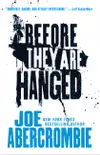
Don't you love it when a sequel comes out swinging for the fences? No middle book syndrome, not a single weak chapter, paragraph, or sentence in the whole thing. Before They Are Hanged is everything that I loved from The Blade Itself taken to the next level.
Before They Are Hanged picks up just after the events of Book 1 and wastes no time in catching us up with our protagonists starting with Glokta. Where the last book had many scattered perspectives as our cast was assembled, Before They Are Hanged settles on bouncing between three parties; Glokta in the South, West and Threetree's gang in the North, and our main party of Logen, Ferro, Jezal, and Bayaz in the west.
I don't want to get too specific on plot; each party is accomplishing a unique task and their stories are largely independent. Logen has joined Bayaz on his quest into the Old Empire seeking a forbidden power. West is fighting the Union's war in the North against King Bethod. Most interesting of all, Glokta is now the superior of Dagoska and tasked with rooting out corruption while organizing the city's defenses in advance of a war with the Gurkish. All your favorites from the last book are finally in a position to begin their adventures and boy is it entertaining. As I mentioned with the last book, there isn't anything exceedingly unique as far as the premise goes, what The Fist Law series is really about is injecting nuance and cynicism into traditional tropes. So despite the trite premise, the plot proves to be exceedingly engaging.
As far as the theme goes this book is consistent with The Blade Itself, we've got a focus on the harsh realities of war and violence right at the forefront of it all. There is a persistent thread concerning the settling of scores, of reaping what you've sown, those concepts being echoed between the different storylines in both their narratives and in the prose itself. I think it's needless to say that Joe Abercrombie is a master of character writing and dialogue, but I will say that as a consequence of reading this series a lot of the recall I associate with traditional fantasy has been overwritten with old logan ninefingers and his motley crew. There are catchphrases, I totally forgot to mention that last review; personally I liked them, They fit in great and these books tend to be hilarious when appropriate.
More than anything I think I love the vibe of this series the most. It really benefits from the classic setting and story; it's dark and atmospheric and not always but now and again the story slips into a nostalgic almost a tabletop campaign-y vibe. I think I can safely say that I am hooked and I'll probably read the next series in this larger world/universe. I also can't believe that there hasn't been an adaptation of this yet!? The dialogue is so good that it sometimes feels like I am reading a screenplay for an hour of premier television. We've all wanted more Game of Throne-ish content, here's something that's arguably better!
Don't you love it when a sequel comes out swinging for the fences? No middle book syndrome, not a single weak chapter, paragraph, or sentence in the whole thing. Before They Are Hanged is everything that I loved from The Blade Itself taken to the next level.
Before They Are Hanged picks up just after the events of Book 1 and wastes no time in catching us up with our protagonists starting with Glokta. Where the last book had many scattered perspectives as our cast was assembled, Before They Are Hanged settles on bouncing between three parties; Glokta in the South, West and Threetree's gang in the North, and our main party of Logen, Ferro, Jezal, and Bayaz in the west.
I don't want to get too specific on plot; each party is accomplishing a unique task and their stories are largely independent. Logen has joined Bayaz on his quest into the Old Empire seeking a forbidden power. West is fighting the Union's war in the North against King Bethod. Most interesting of all, Glokta is now the superior of Dagoska and tasked with rooting out corruption while organizing the city's defenses in advance of a war with the Gurkish. All your favorites from the last book are finally in a position to begin their adventures and boy is it entertaining. As I mentioned with the last book, there isn't anything exceedingly unique as far as the premise goes, what The Fist Law series is really about is injecting nuance and cynicism into traditional tropes. So despite the trite premise, the plot proves to be exceedingly engaging.
As far as the theme goes this book is consistent with The Blade Itself, we've got a focus on the harsh realities of war and violence right at the forefront of it all. There is a persistent thread concerning the settling of scores, of reaping what you've sown, those concepts being echoed between the different storylines in both their narratives and in the prose itself. I think it's needless to say that Joe Abercrombie is a master of character writing and dialogue, but I will say that as a consequence of reading this series a lot of the recall I associate with traditional fantasy has been overwritten with old logan ninefingers and his motley crew. There are catchphrases, I totally forgot to mention that last review; personally I liked them, They fit in great and these books tend to be hilarious when appropriate.
More than anything I think I love the vibe of this series the most. It really benefits from the classic setting and story; it's dark and atmospheric and not always but now and again the story slips into a nostalgic almost a tabletop campaign-y vibe. I think I can safely say that I am hooked and I'll probably read the next series in this larger world/universe. I also can't believe that there hasn't been an adaptation of this yet!? The dialogue is so good that it sometimes feels like I am reading a screenplay for an hour of premier television. We've all wanted more Game of Throne-ish content, here's something that's arguably better!

I think I'm a Becky Chambers fan. I've only read The Long Way to a Small, Angry Planet so maybe that's premature but I really liked that book, and spoiler: I loved this book. This is a spoonful of sugar, a warm cup of something on a perfect fall day; and I read this at the perfect time, peak spooky season, the leaves have turned and it is nice and cool and rainy. What a cozy and comfy vibe.
I feel like expounding on how cozy this is might actually undercut some of the coziness and I would hate to take the full blast away from anyone. Just trust me when I say the cozy element of this book is there and it is perfectly done, and if that's what you want to key in on: it's in there go read it.
I also don't want to give too much of the actual plot away so I'll be extremely reductive. A Tea Monk named Dex and a robot named Mosscap go on a hike and have a cup of tea in the woods. What really stands out about this book is the world-building. This world has lore and it rocks, it's a utopia where humanity frees the sentient robots and gives them half their world. It's like Terminator but with tea-1000s. The joy is in exploring a world and culture so foreign as to allow that kind of outcome, what the people are like, what the robots are like. It's hopeful.
It's actually more than hopeful, this book is an optimistic supernova ball of sunshine of a science fiction story. If it were just perfectly executed cozy it might not rate super high with me, but it's such a breath of fresh air. Not only for me as a reader but for the SF genre. It could just be the books that I have been choosing to read - not to complain about some excellent books- but it seems like anything that is popular and well-reviewed tends to be dark/hard/violent. I love it when I run across a book that scratches that SF itch in a different way.
I have caught myself thinking about TLWSA a fair few times and for much the same reasons. I think this book will stick with me in much the same way. While these are two very different stories, I think it's proved that Becky Chambers can write some absolutely lovable characters. Dex and Mosscap are kind and thoughtful and are so good to each other in a way that not only subverts SF convention but fills you with warmth.
I did have one gripe, and I did debate docking a point for it. This book is a little short, and the way it ends absolutely demands a continuation. While there is a complete story told here, I feel like maybe this didn't need to get split into two books. Part 1 and Part 2 as a thing of economy. But then again, this did come out in a pandemic year so the content demand probably had something to do with it.
This won't crack my favorites list on its own, so the sequel better rip.
TL;DR: A Tea Monk named Dex and a robot named Mosscap go on a hike and have a cup of tea in the woods.
PS: 2021 really had some great books
I think I'm a Becky Chambers fan. I've only read The Long Way to a Small, Angry Planet so maybe that's premature but I really liked that book, and spoiler: I loved this book. This is a spoonful of sugar, a warm cup of something on a perfect fall day; and I read this at the perfect time, peak spooky season, the leaves have turned and it is nice and cool and rainy. What a cozy and comfy vibe.
I feel like expounding on how cozy this is might actually undercut some of the coziness and I would hate to take the full blast away from anyone. Just trust me when I say the cozy element of this book is there and it is perfectly done, and if that's what you want to key in on: it's in there go read it.
I also don't want to give too much of the actual plot away so I'll be extremely reductive. A Tea Monk named Dex and a robot named Mosscap go on a hike and have a cup of tea in the woods. What really stands out about this book is the world-building. This world has lore and it rocks, it's a utopia where humanity frees the sentient robots and gives them half their world. It's like Terminator but with tea-1000s. The joy is in exploring a world and culture so foreign as to allow that kind of outcome, what the people are like, what the robots are like. It's hopeful.
It's actually more than hopeful, this book is an optimistic supernova ball of sunshine of a science fiction story. If it were just perfectly executed cozy it might not rate super high with me, but it's such a breath of fresh air. Not only for me as a reader but for the SF genre. It could just be the books that I have been choosing to read - not to complain about some excellent books- but it seems like anything that is popular and well-reviewed tends to be dark/hard/violent. I love it when I run across a book that scratches that SF itch in a different way.
I have caught myself thinking about TLWSA a fair few times and for much the same reasons. I think this book will stick with me in much the same way. While these are two very different stories, I think it's proved that Becky Chambers can write some absolutely lovable characters. Dex and Mosscap are kind and thoughtful and are so good to each other in a way that not only subverts SF convention but fills you with warmth.
I did have one gripe, and I did debate docking a point for it. This book is a little short, and the way it ends absolutely demands a continuation. While there is a complete story told here, I feel like maybe this didn't need to get split into two books. Part 1 and Part 2 as a thing of economy. But then again, this did come out in a pandemic year so the content demand probably had something to do with it.
This won't crack my favorites list on its own, so the sequel better rip.
TL;DR: A Tea Monk named Dex and a robot named Mosscap go on a hike and have a cup of tea in the woods.
PS: 2021 really had some great books


I assume anyone clicking on a review for Book 6 of a series isn't exactly looking for reasons to read on. That's especially true here, Book 5 skipped past the “hanger” part of cliffhanger and threw us off the cliff altogether. But if you're the type of reader who needs positive confirmation or reinforcement or whatever, here it is: Ruocchio has saved the series climax for book 6 out of 7, this is the height, the pinnacle for this type of story, you must read on. I'm assuming that everyone else who clicked on this wants to know my thoughts about the series and where I think this is going, you too must read on.What I actually want to talk about is the series as a whole, because while I stand by my previous review of The Empire of Silence, I didn't totally grasp what I was reading that early into the series. I accused Book 1 of being strongly King killer/Red Rising/Dune influenced, and that threw me off of the scent. I was expecting grand action, betrayal, and galactic politics; all of that stuff is in there, and it plays a fairly important role in the story and the plotting, it's just not what the series is about. Buried under all of those prominent nods and story features, I was shocked to discover a kernel of [b:The Book of the New Sun 968868 The Book of the New Sun Gene Wolfe https://i.gr-assets.com/images/S/compressed.photo.goodreads.com/books/1388595738l/968868.SX50.jpg 6965668]. It wasn't clear at the outset, but if this series is a derivation of any singular story, it has to be Gene Wolfe's Christ-inspired masterpiece. Is that a bit like saying, “Oh, I love [Insert Contemporary Fantasy Series], but buried under all of that new stuff it's LOTR to the core”? Sure it is, and I understand the concept of a foundational work influencing everything that comes after it just as surely as I consider TBNS a foundational work in its own right. But TBNS has been slower to penetrate into contemporary lit; this series is just the first example I can now point to as evidence for that claim. Before anyone gets carried away and takes this as me saying that Chris Ruocchio is a copycat hack, first shut up, second TBNS isn't dealing in a wholly original premise either. Obviously. It's all memetics at a certain point, but Sun Eater, just as surely as TBNS and LOTR, is built on the monomyth. The Heroes Journey, we meet again. I'm not going to give an in-depth lecture on the monomyth, anyone who has taken an English class will get the general idea; Departure, Initiation, and Return. You can get really screwy, breaking it down into 17 steps, but I've always focused on this point: You can break most stories into this three part structure. Myths, Fiction, even religion. Most especially religion; the literary concept is often introduced within the context of the rebirth of Christ. What I'm trying to not so subtly say is that the Christ allegory isn't missed on me here in Sun Eater, as it wasn't in TBNS or in LOTR. It's just so much more obvious here, and it's on purpose. In TBNS the critical question of the series is what happens at the end of creation? What happens when we die? This book is where we start to see Roucchio's answers, and they are cut extremely close to those that Gene Wolfe offered up.That's kind of my ultimate takeaway on the series so far, it's a Christ allegory, and it's in the penultimate act, so I'm trying to true reserve judgement until the conclusion. Maybe this is what happens when you read Gene Wolfe, you start to see him in everything even remotely close, but as we approach the end of the series I get a strong sense that we are converging with Roucchio's inspirations. Whether this series can differentiate itself meaningfully from TBNS remains to be seen; I would argue everything we've gotten so far is more than enough for this series to stand on its own merits regardless. But I would feel a little cheated if the ending arrives at the same moral conclusions. PS and TLDR: As the series has gone on, it's gotten more and more philosophical, and we are arriving at the point where the philosophy really matters. Even if book 7 ends up a rehash of Urth of the New Sun (and the bible), this is still going to be one of the best SF series I've ever read. Even if Sun Eater only manages to be a re-encapsulation of TBNS by its conclusion, it's still a slam dunk to me because someone has finally translated Gene Wolfe into something truly page turning and accessible.
I assume anyone clicking on a review for Book 6 of a series isn't exactly looking for reasons to read on. That's especially true here, Book 5 skipped past the “hanger” part of cliffhanger and threw us off the cliff altogether. But if you're the type of reader who needs positive confirmation or reinforcement or whatever, here it is: Ruocchio has saved the series climax for book 6 out of 7, this is the height, the pinnacle for this type of story, you must read on. I'm assuming that everyone else who clicked on this wants to know my thoughts about the series and where I think this is going, you too must read on.What I actually want to talk about is the series as a whole, because while I stand by my previous review of The Empire of Silence, I didn't totally grasp what I was reading that early into the series. I accused Book 1 of being strongly King killer/Red Rising/Dune influenced, and that threw me off of the scent. I was expecting grand action, betrayal, and galactic politics; all of that stuff is in there, and it plays a fairly important role in the story and the plotting, it's just not what the series is about. Buried under all of those prominent nods and story features, I was shocked to discover a kernel of [b:The Book of the New Sun 968868 The Book of the New Sun Gene Wolfe https://i.gr-assets.com/images/S/compressed.photo.goodreads.com/books/1388595738l/968868.SX50.jpg 6965668]. It wasn't clear at the outset, but if this series is a derivation of any singular story, it has to be Gene Wolfe's Christ-inspired masterpiece. Is that a bit like saying, “Oh, I love [Insert Contemporary Fantasy Series], but buried under all of that new stuff it's LOTR to the core”? Sure it is, and I understand the concept of a foundational work influencing everything that comes after it just as surely as I consider TBNS a foundational work in its own right. But TBNS has been slower to penetrate into contemporary lit; this series is just the first example I can now point to as evidence for that claim. Before anyone gets carried away and takes this as me saying that Chris Ruocchio is a copycat hack, first shut up, second TBNS isn't dealing in a wholly original premise either. Obviously. It's all memetics at a certain point, but Sun Eater, just as surely as TBNS and LOTR, is built on the monomyth. The Heroes Journey, we meet again. I'm not going to give an in-depth lecture on the monomyth, anyone who has taken an English class will get the general idea; Departure, Initiation, and Return. You can get really screwy, breaking it down into 17 steps, but I've always focused on this point: You can break most stories into this three part structure. Myths, Fiction, even religion. Most especially religion; the literary concept is often introduced within the context of the rebirth of Christ. What I'm trying to not so subtly say is that the Christ allegory isn't missed on me here in Sun Eater, as it wasn't in TBNS or in LOTR. It's just so much more obvious here, and it's on purpose. In TBNS the critical question of the series is what happens at the end of creation? What happens when we die? This book is where we start to see Roucchio's answers, and they are cut extremely close to those that Gene Wolfe offered up.That's kind of my ultimate takeaway on the series so far, it's a Christ allegory, and it's in the penultimate act, so I'm trying to true reserve judgement until the conclusion. Maybe this is what happens when you read Gene Wolfe, you start to see him in everything even remotely close, but as we approach the end of the series I get a strong sense that we are converging with Roucchio's inspirations. Whether this series can differentiate itself meaningfully from TBNS remains to be seen; I would argue everything we've gotten so far is more than enough for this series to stand on its own merits regardless. But I would feel a little cheated if the ending arrives at the same moral conclusions. PS and TLDR: As the series has gone on, it's gotten more and more philosophical, and we are arriving at the point where the philosophy really matters. Even if book 7 ends up a rehash of Urth of the New Sun (and the bible), this is still going to be one of the best SF series I've ever read. Even if Sun Eater only manages to be a re-encapsulation of TBNS by its conclusion, it's still a slam dunk to me because someone has finally translated Gene Wolfe into something truly page turning and accessible.
I assume anyone clicking on a review for Book 6 of a series isn't exactly looking for reasons to read on. That's especially true here, Book 5 skipped past the “hanger” part of cliffhanger and threw us off the cliff altogether. But if you're the type of reader who needs positive confirmation or reinforcement or whatever, here it is: Ruocchio has saved the series climax for book 6 out of 7, this is the height, the pinnacle for this type of story, you must read on. I'm assuming that everyone else who clicked on this wants to know my thoughts about the series and where I think this is going, you too must read on.What I actually want to talk about is the series as a whole, because while I stand by my previous review of The Empire of Silence, I didn't totally grasp what I was reading that early into the series. I accused Book 1 of being strongly King killer/Red Rising/Dune influenced, and that threw me off of the scent. I was expecting grand action, betrayal, and galactic politics; all of that stuff is in there, and it plays a fairly important role in the story and the plotting, it's just not what the series is about. Buried under all of those prominent nods and story features, I was shocked to discover a kernel of [b:The Book of the New Sun 968868 The Book of the New Sun Gene Wolfe https://i.gr-assets.com/images/S/compressed.photo.goodreads.com/books/1388595738l/968868.SX50.jpg 6965668]. It wasn't clear at the outset, but if this series is a derivation of any singular story, it has to be Gene Wolfe's Christ-inspired masterpiece. Is that a bit like saying, “Oh, I love [Insert Contemporary Fantasy Series], but buried under all of that new stuff it's LOTR to the core”? Sure it is, and I understand the concept of a foundational work influencing everything that comes after it just as surely as I consider TBNS a foundational work in its own right. But TBNS has been slower to penetrate into contemporary lit; this series is just the first example I can now point to as evidence for that claim. Before anyone gets carried away and takes this as me saying that Chris Ruocchio is a copycat hack, first shut up, second TBNS isn't dealing in a wholly original premise either. Obviously. It's all memetics at a certain point, but Sun Eater, just as surely as TBNS and LOTR, is built on the monomyth. The Heroes Journey, we meet again. I'm not going to give an in-depth lecture on the monomyth, anyone who has taken an English class will get the general idea; Departure, Initiation, and Return. You can get really screwy, breaking it down into 17 steps, but I've always focused on this point: You can break most stories into this three part structure. Myths, Fiction, even religion. Most especially religion; the literary concept is often introduced within the context of the rebirth of Christ. What I'm trying to not so subtly say is that the Christ allegory isn't missed on me here in Sun Eater, as it wasn't in TBNS or in LOTR. It's just so much more obvious here, and it's on purpose. In TBNS the critical question of the series is what happens at the end of creation? What happens when we die? This book is where we start to see Roucchio's answers, and they are cut extremely close to those that Gene Wolfe offered up.That's kind of my ultimate takeaway on the series so far, it's a Christ allegory, and it's in the penultimate act, so I'm trying to true reserve judgement until the conclusion. Maybe this is what happens when you read Gene Wolfe, you start to see him in everything even remotely close, but as we approach the end of the series I get a strong sense that we are converging with Roucchio's inspirations. Whether this series can differentiate itself meaningfully from TBNS remains to be seen; I would argue everything we've gotten so far is more than enough for this series to stand on its own merits regardless. But I would feel a little cheated if the ending arrives at the same moral conclusions. PS and TLDR: As the series has gone on, it's gotten more and more philosophical, and we are arriving at the point where the philosophy really matters. Even if book 7 ends up a rehash of Urth of the New Sun (and the bible), this is still going to be one of the best SF series I've ever read. Even if Sun Eater only manages to be a re-encapsulation of TBNS by its conclusion, it's still a slam dunk to me because someone has finally translated Gene Wolfe into something truly page turning and accessible.
I assume anyone clicking on a review for Book 6 of a series isn't exactly looking for reasons to read on. That's especially true here, Book 5 skipped past the “hanger” part of cliffhanger and threw us off the cliff altogether. But if you're the type of reader who needs positive confirmation or reinforcement or whatever, here it is: Ruocchio has saved the series climax for book 6 out of 7, this is the height, the pinnacle for this type of story, you must read on. I'm assuming that everyone else who clicked on this wants to know my thoughts about the series and where I think this is going, you too must read on.What I actually want to talk about is the series as a whole, because while I stand by my previous review of The Empire of Silence, I didn't totally grasp what I was reading that early into the series. I accused Book 1 of being strongly King killer/Red Rising/Dune influenced, and that threw me off of the scent. I was expecting grand action, betrayal, and galactic politics; all of that stuff is in there, and it plays a fairly important role in the story and the plotting, it's just not what the series is about. Buried under all of those prominent nods and story features, I was shocked to discover a kernel of [b:The Book of the New Sun 968868 The Book of the New Sun Gene Wolfe https://i.gr-assets.com/images/S/compressed.photo.goodreads.com/books/1388595738l/968868.SX50.jpg 6965668]. It wasn't clear at the outset, but if this series is a derivation of any singular story, it has to be Gene Wolfe's Christ-inspired masterpiece. Is that a bit like saying, “Oh, I love [Insert Contemporary Fantasy Series], but buried under all of that new stuff it's LOTR to the core”? Sure it is, and I understand the concept of a foundational work influencing everything that comes after it just as surely as I consider TBNS a foundational work in its own right. But TBNS has been slower to penetrate into contemporary lit; this series is just the first example I can now point to as evidence for that claim. Before anyone gets carried away and takes this as me saying that Chris Ruocchio is a copycat hack, first shut up, second TBNS isn't dealing in a wholly original premise either. Obviously. It's all memetics at a certain point, but Sun Eater, just as surely as TBNS and LOTR, is built on the monomyth. The Heroes Journey, we meet again. I'm not going to give an in-depth lecture on the monomyth, anyone who has taken an English class will get the general idea; Departure, Initiation, and Return. You can get really screwy, breaking it down into 17 steps, but I've always focused on this point: You can break most stories into this three part structure. Myths, Fiction, even religion. Most especially religion; the literary concept is often introduced within the context of the rebirth of Christ. What I'm trying to not so subtly say is that the Christ allegory isn't missed on me here in Sun Eater, as it wasn't in TBNS or in LOTR. It's just so much more obvious here, and it's on purpose. In TBNS the critical question of the series is what happens at the end of creation? What happens when we die? This book is where we start to see Roucchio's answers, and they are cut extremely close to those that Gene Wolfe offered up.That's kind of my ultimate takeaway on the series so far, it's a Christ allegory, and it's in the penultimate act, so I'm trying to true reserve judgement until the conclusion. Maybe this is what happens when you read Gene Wolfe, you start to see him in everything even remotely close, but as we approach the end of the series I get a strong sense that we are converging with Roucchio's inspirations. Whether this series can differentiate itself meaningfully from TBNS remains to be seen; I would argue everything we've gotten so far is more than enough for this series to stand on its own merits regardless. But I would feel a little cheated if the ending arrives at the same moral conclusions. PS and TLDR: As the series has gone on, it's gotten more and more philosophical, and we are arriving at the point where the philosophy really matters. Even if book 7 ends up a rehash of Urth of the New Sun (and the bible), this is still going to be one of the best SF series I've ever read. Even if Sun Eater only manages to be a re-encapsulation of TBNS by its conclusion, it's still a slam dunk to me because someone has finally translated Gene Wolfe into something truly page turning and accessible.

Not much of a review in me for this one. This series keeps impressing me, I have this worry that this will get so out there that it basically devolves into the book version of two and half men, fart jokes and pop culture references, but Dinniman keeps this show on rails and keeps it interesting to boot. Can't wait for the next one.
Not much of a review in me for this one. This series keeps impressing me, I have this worry that this will get so out there that it basically devolves into the book version of two and half men, fart jokes and pop culture references, but Dinniman keeps this show on rails and keeps it interesting to boot. Can't wait for the next one.

I don't want to review the 6th book in a killer series; if you're planning to read this, then you're obviously not new to DCC and you don't need my opinion to get you to read it. Seeing as how this is the latest entry, this review seems like a good place to comment on the series to this point. I have had such a blast with Carl, I don't think I've read anything as consistently fun (and funny) as this is since Hitchhiker's Guide.
Maybe I'm just a sucker for the absurd and the insane, I loved The Library at Mount Char and I might be the only person I know that has seen (and loved) HBO's Doom Patrol. I cannot seem to help myself when a plot is nonsensical enough to turn everything on its head at a moments notice; I can't help but to watch with rapt attention and laugh myself hoarse.
The longer the series has gone on, the further the developments have tacked towards outright insanity. It's a tough line to toe, you want it lighthearted and insane, but you also don't want that stuff to undercut the character work and the serious moments. Carl is perfection when it comes to that balance. There's never a moment in these books where something crazy isn't happening or just about to happen, and despite the terrible consequences that tend to follow each event, Dinniman manages to keep it light without deflating the tension. A huge part of the fun is seeing how the latest arrangement of the dominoes will collapse, whether it's a 20-story tall pair of butt cheeks or a Hydra formed out of everyone you ever loved.
All of that said, this latest entry is shaking up the formula. The further into the dungeon Carl and Co. venture, the more "galactic" the story gets, the stronger the overworld's plot begins to factor into the core story. The story telling has evolved past "Carl fights a giant ball of pigs mid-orgy and celebrates his survival" to "Carl dissects the alien statute governing child actors with his lawyer while smushing the feral slugs that are growing out of his elbow." The serious content that's hiding behind the game show facade is starting to become more and more prominent. If this book is any indication, I think that we are due to see Carl escape the confines of the crawl sometime soon.
Despite the increasing volume of serious content that is making its way to the fore, this is a comedy, and it'll always be important to keep your funny bone engaged as you read. Even with the multitude of lives on the line, it bears repeating that the fates are balanced on the shoulders of a barefoot dude in his underwear, a talking cat, and their magically sentient sex doll head. On the subject, Samantha is far and away my favorite character to be introduced so far. She's the embodiment of the kind of work that this story is; absurd but undeniably charming.
I challenge you to find another title that comes remotely close to the absurdity of this without immediately reducing itself to mere parody. I'll wait.
I don't want to review the 6th book in a killer series; if you're planning to read this, then you're obviously not new to DCC and you don't need my opinion to get you to read it. Seeing as how this is the latest entry, this review seems like a good place to comment on the series to this point. I have had such a blast with Carl, I don't think I've read anything as consistently fun (and funny) as this is since Hitchhiker's Guide.
Maybe I'm just a sucker for the absurd and the insane, I loved The Library at Mount Char and I might be the only person I know that has seen (and loved) HBO's Doom Patrol. I cannot seem to help myself when a plot is nonsensical enough to turn everything on its head at a moments notice; I can't help but to watch with rapt attention and laugh myself hoarse.
The longer the series has gone on, the further the developments have tacked towards outright insanity. It's a tough line to toe, you want it lighthearted and insane, but you also don't want that stuff to undercut the character work and the serious moments. Carl is perfection when it comes to that balance. There's never a moment in these books where something crazy isn't happening or just about to happen, and despite the terrible consequences that tend to follow each event, Dinniman manages to keep it light without deflating the tension. A huge part of the fun is seeing how the latest arrangement of the dominoes will collapse, whether it's a 20-story tall pair of butt cheeks or a Hydra formed out of everyone you ever loved.
All of that said, this latest entry is shaking up the formula. The further into the dungeon Carl and Co. venture, the more "galactic" the story gets, the stronger the overworld's plot begins to factor into the core story. The story telling has evolved past "Carl fights a giant ball of pigs mid-orgy and celebrates his survival" to "Carl dissects the alien statute governing child actors with his lawyer while smushing the feral slugs that are growing out of his elbow." The serious content that's hiding behind the game show facade is starting to become more and more prominent. If this book is any indication, I think that we are due to see Carl escape the confines of the crawl sometime soon.
Despite the increasing volume of serious content that is making its way to the fore, this is a comedy, and it'll always be important to keep your funny bone engaged as you read. Even with the multitude of lives on the line, it bears repeating that the fates are balanced on the shoulders of a barefoot dude in his underwear, a talking cat, and their magically sentient sex doll head. On the subject, Samantha is far and away my favorite character to be introduced so far. She's the embodiment of the kind of work that this story is; absurd but undeniably charming.
I challenge you to find another title that comes remotely close to the absurdity of this without immediately reducing itself to mere parody. I'll wait.

I won't be doing full reviews for each entry in this series, just commenting on what I liked/disliked for the sake of the completionist within me.
___
Holy Cow! We're really leaning into the SF this time around. This series has obviously always had an SF slant to it, but this entry is the first to pull the camera back and introduce us to the workings of the larger galactic scene. The more I find out about the makeup of this world and the origins of the Crawl, the more interesting this story gets.
I really got a Hitchhiker's guide vibe off of this entry, this book has Carl interacting more and more with the world outside the dungeon. A lot of questions I had were answered, but even better ones have taken their place. Final note: the complexities of this Alien legal system and Carl's newly appointed lawyer are just a wellspring of entertainment to me.
I would have read book 6 immediately after this, but I didn't think I'd get this far in the series so early into my vacation. Time for a little pause.
I won't be doing full reviews for each entry in this series, just commenting on what I liked/disliked for the sake of the completionist within me.
___
Holy Cow! We're really leaning into the SF this time around. This series has obviously always had an SF slant to it, but this entry is the first to pull the camera back and introduce us to the workings of the larger galactic scene. The more I find out about the makeup of this world and the origins of the Crawl, the more interesting this story gets.
I really got a Hitchhiker's guide vibe off of this entry, this book has Carl interacting more and more with the world outside the dungeon. A lot of questions I had were answered, but even better ones have taken their place. Final note: the complexities of this Alien legal system and Carl's newly appointed lawyer are just a wellspring of entertainment to me.
I would have read book 6 immediately after this, but I didn't think I'd get this far in the series so early into my vacation. Time for a little pause.

I won't be doing full reviews for each entry in this series, just commenting on what I liked/disliked for the sake of the completionist within me.
__
My faith in the series was restored here, it seemed like with the new level the priorities of the story were reset. This entry focuses a lot more on the community the Crawlers are building as the Dungeon progresses. It's still being funny every chance it gets, but there's a quiet undercurrent building as the Dungeon starts to affect the mentality of our cast (namely Carl).
Almost parallel to the serious inner world of the characters, their antics in the Dungeon are reaching new heights of wacky, reckless mayhem. I really like the balance that Dinniman is striking here, and it helps to keep us engaged when we don't know every move Carl will make. It's doubly so as the mounting story concerning him and the administrators of the dungeon starts to have actual development here.
AND THE CLIFFHANGER ENDING!?
I won't be doing full reviews for each entry in this series, just commenting on what I liked/disliked for the sake of the completionist within me.
__
My faith in the series was restored here, it seemed like with the new level the priorities of the story were reset. This entry focuses a lot more on the community the Crawlers are building as the Dungeon progresses. It's still being funny every chance it gets, but there's a quiet undercurrent building as the Dungeon starts to affect the mentality of our cast (namely Carl).
Almost parallel to the serious inner world of the characters, their antics in the Dungeon are reaching new heights of wacky, reckless mayhem. I really like the balance that Dinniman is striking here, and it helps to keep us engaged when we don't know every move Carl will make. It's doubly so as the mounting story concerning him and the administrators of the dungeon starts to have actual development here.
AND THE CLIFFHANGER ENDING!?

I won't be doing full reviews for each entry in this series, just commenting on what I liked/disliked for the sake of the completionist within me.
The series almost lost me here. If this book made you put these down for good, I don't blame you. The level this time around is the “Iron Tangle”, a nauseatingly complex subway system consisting of interconnected stations and railway lines and portals. It's a cool idea, but I think that even Dinniman was confused and burnt out by the end of this arc.
This is a major book as far as the story progression goes, it introduces the cookbook, Katia, and it expands on Mongo. This is a case of too many ingredients crowding the pot, and you'll be hard-pressed to find a focal point as Carl spends the entire book back tracking and teleporting and just getting lost along with the reader.
Stick with it to the end, and you're guaranteed a few laughs as well as the knowledge that the next two books put the trains firmly in the rearview.
I won't be doing full reviews for each entry in this series, just commenting on what I liked/disliked for the sake of the completionist within me.
The series almost lost me here. If this book made you put these down for good, I don't blame you. The level this time around is the “Iron Tangle”, a nauseatingly complex subway system consisting of interconnected stations and railway lines and portals. It's a cool idea, but I think that even Dinniman was confused and burnt out by the end of this arc.
This is a major book as far as the story progression goes, it introduces the cookbook, Katia, and it expands on Mongo. This is a case of too many ingredients crowding the pot, and you'll be hard-pressed to find a focal point as Carl spends the entire book back tracking and teleporting and just getting lost along with the reader.
Stick with it to the end, and you're guaranteed a few laughs as well as the knowledge that the next two books put the trains firmly in the rearview.

I won't be doing full reviews for each entry in this series, just commenting on what I liked/disliked for the sake of the completionist within me.
Doomsday Scenario picks up right after #1, and it's more of the same zany stuff I loved in the first. There's definitely more mayhem, and I think this book clues you into the escalator nature of the story much better than the first. Things are crazier by an order of magnitude in this book, and since i'm writing this after getting to book 5 I know that this trend is something that will carry on through to the end.
I won't be doing full reviews for each entry in this series, just commenting on what I liked/disliked for the sake of the completionist within me.
Doomsday Scenario picks up right after #1, and it's more of the same zany stuff I loved in the first. There's definitely more mayhem, and I think this book clues you into the escalator nature of the story much better than the first. Things are crazier by an order of magnitude in this book, and since i'm writing this after getting to book 5 I know that this trend is something that will carry on through to the end.

Mana Toast.
This is Toast.
It refills your mana. That's it. Nothing more. Fuck you.
I get that comedy is subjective but if this book can't get a laugh out of you, well, first let me express my condolences about your surgically removed funny bone and simultaneously congratulate you on that nifty promotion to Gulag Warden.
Seeing as how I am currently in the midst of binging this series front to back, I guess my opinion is pretty obvious; this rocks. This first book specifically is a gem among gems, it not only establishes the (fairly involved) premise, but it sets the comedic bar about as high as it can get. Every character is funny, the flavor text and AI notifications? Some of those almost killed me. Your experience may vary, the humor is definitely topical and makes references/uses words that will probably date this piece in the future. What's really impressive is how the story manages to balance the hilarity with more serious/somber moments that don't feel out of place. This story is wacky and silly, but it's also extremely self-aware- so don't worry about the story not going anywhere interesting.
I'm not going to outline the premise or the plot because this is not a difficult read. But I am going to strongly recommend the Audiobook version, it is the definitive way to experience this series (at least to me, and especially if you have a tendency to skip past system dialog/achievement notices). Between the incredible voice talent and over-the-top production you'd think you were listening to audio cut straight from a cartoon/TV adaptation. Honestly, that's what they should do whenever they adapt this for TV, just draw the scenes and use the audiobook audio.
For fans of LitRPG, this has all the elements you've come to expect: A system, dungeons, stats, and progression. The system is definitely funnier than your typical fare, but the real difference maker is just how creative Dinniman manages to be about the abilities, classes, races, monsters (etc.). He's not making stuff up from scratch, but I seriously doubt there's another book that features meth-producing-lava-spitting Bad Llamas, or pyramid-scheme fairies, or a system AI with a big time crush fetish.
I couldn't finish this review without at least mentioning Mongo. Oh Mongo, your entry onto the scene had me giggling like a school boy in church.
Mana Toast.
This is Toast.
It refills your mana. That's it. Nothing more. Fuck you.
I get that comedy is subjective but if this book can't get a laugh out of you, well, first let me express my condolences about your surgically removed funny bone and simultaneously congratulate you on that nifty promotion to Gulag Warden.
Seeing as how I am currently in the midst of binging this series front to back, I guess my opinion is pretty obvious; this rocks. This first book specifically is a gem among gems, it not only establishes the (fairly involved) premise, but it sets the comedic bar about as high as it can get. Every character is funny, the flavor text and AI notifications? Some of those almost killed me. Your experience may vary, the humor is definitely topical and makes references/uses words that will probably date this piece in the future. What's really impressive is how the story manages to balance the hilarity with more serious/somber moments that don't feel out of place. This story is wacky and silly, but it's also extremely self-aware- so don't worry about the story not going anywhere interesting.
I'm not going to outline the premise or the plot because this is not a difficult read. But I am going to strongly recommend the Audiobook version, it is the definitive way to experience this series (at least to me, and especially if you have a tendency to skip past system dialog/achievement notices). Between the incredible voice talent and over-the-top production you'd think you were listening to audio cut straight from a cartoon/TV adaptation. Honestly, that's what they should do whenever they adapt this for TV, just draw the scenes and use the audiobook audio.
For fans of LitRPG, this has all the elements you've come to expect: A system, dungeons, stats, and progression. The system is definitely funnier than your typical fare, but the real difference maker is just how creative Dinniman manages to be about the abilities, classes, races, monsters (etc.). He's not making stuff up from scratch, but I seriously doubt there's another book that features meth-producing-lava-spitting Bad Llamas, or pyramid-scheme fairies, or a system AI with a big time crush fetish.
I couldn't finish this review without at least mentioning Mongo. Oh Mongo, your entry onto the scene had me giggling like a school boy in church.

I’m typically loath to review sequels deep into a series, particularly when they are continuations of one story — sequels tend to be overly dependent on prior material, making it nearly impossible to judge them on their own merits. That’s never been the case with Wayfarers. Every entry has been distinct in both style and subject from what precedes it, each being tangentially related at most. Record of a Spaceborn Few is equally unique: it returns to the Galactic Commons to explore the lives of everyday humans living as part of the Exodan Fleet. Where the previous entries were more alien-focused, action-packed romps, Record is a slow-rolling exploration of the mundane — a slice-of-life carried along split narratives, and an exceptionally pure exercise in world building.
After destroying the earth (either through war or indifference), humanity pools its remaining resources to build a fleet of generation ships. Vowing never to repeat the mistakes that led to earth’s destruction, the Exodus Fleet sets out to seek a new home world, bound by a pledge that no member would ever go hungry or unhoused. Centuries of travel forge a way of life firmly communal, if not outright socialist. The Fleet ceases its wandering once it encounters a member species of the Galactic Commons, whose donated technology allows humanity to settle and join the galactic community. Now orbiting an alien sun and living under artificial gravity, it seems humanity has reached its destination — and yet the Fleet persists. When a disaster destroys an entire ship, it throws the central question of the book into sharp relief: what is the purpose of the Fleet once it has reached its destination?
Rather than telling, Chambers shows us what life is like for this future human race. Record is told from the viewpoints of five characters: Tessa, a mother of two dealing with the aftermath of the disaster; Kip, a wayward teen coming of age aboard the Fleet; Eyas, a caretaker who administers Exodan funeral rites; Isabel, an elderly archivist hosting a visiting alien scholar studying Exodan culture; and Sawyer, a planet-born Exodan newly immigrated to the Fleet. Events slowly unfold as we jump between perspectives and inhabit the Fleet alongside these characters, coming to understand their way of life, how it is changing, and why it must continue to do so. The perspectives of Sawyer and the alien scholar are particularly brilliant devices, grounding newcomers with organic explanations for the most mundane aspects of Fleet life — and it’s in exactly these quiet details that Chambers is at her best, able to paint a vivid and complex world through character and setting alone, never stopping to announce what she’s doing.
The core strength of the book is its portrayal of a powerless humanity. It’s a decidedly anti-sci-fi concept to have us be the charity case of the galaxy, and it perfectly complements Chambers’ quiet style while tying neatly into the dynamics of the prior entries. The character work, as throughout the series, is superb — Chambers has always been able to tell deeply human stories through non-human characters, and with the focus now squarely on human territory the emotional resonance is at its highest. This is a book that is genuinely touching and surprisingly relatable despite its setting, and one that any reader could pick up without having touched the prior entries.
The main weakness is structural. Five perspectives is a lot to carry, and for a significant stretch of the first half your attention is scattered across threads at very different stages of development — you find yourself waiting on the narratives you care about most while others catch up. It’s a common hazard of this kind of ensemble storytelling, and Chambers navigates it better than most, but the imbalance between a slow first half and a more assured second is noticeable. That said, Record of a Spaceborn Few is not quite my favourite of the series — but it may be Chambers’ most accomplished piece of world building, and that alone makes it essential reading for anyone who has spent time in the Galactic Commons.
I’m typically loath to review sequels deep into a series, particularly when they are continuations of one story — sequels tend to be overly dependent on prior material, making it nearly impossible to judge them on their own merits. That’s never been the case with Wayfarers. Every entry has been distinct in both style and subject from what precedes it, each being tangentially related at most. Record of a Spaceborn Few is equally unique: it returns to the Galactic Commons to explore the lives of everyday humans living as part of the Exodan Fleet. Where the previous entries were more alien-focused, action-packed romps, Record is a slow-rolling exploration of the mundane — a slice-of-life carried along split narratives, and an exceptionally pure exercise in world building.
After destroying the earth (either through war or indifference), humanity pools its remaining resources to build a fleet of generation ships. Vowing never to repeat the mistakes that led to earth’s destruction, the Exodus Fleet sets out to seek a new home world, bound by a pledge that no member would ever go hungry or unhoused. Centuries of travel forge a way of life firmly communal, if not outright socialist. The Fleet ceases its wandering once it encounters a member species of the Galactic Commons, whose donated technology allows humanity to settle and join the galactic community. Now orbiting an alien sun and living under artificial gravity, it seems humanity has reached its destination — and yet the Fleet persists. When a disaster destroys an entire ship, it throws the central question of the book into sharp relief: what is the purpose of the Fleet once it has reached its destination?
Rather than telling, Chambers shows us what life is like for this future human race. Record is told from the viewpoints of five characters: Tessa, a mother of two dealing with the aftermath of the disaster; Kip, a wayward teen coming of age aboard the Fleet; Eyas, a caretaker who administers Exodan funeral rites; Isabel, an elderly archivist hosting a visiting alien scholar studying Exodan culture; and Sawyer, a planet-born Exodan newly immigrated to the Fleet. Events slowly unfold as we jump between perspectives and inhabit the Fleet alongside these characters, coming to understand their way of life, how it is changing, and why it must continue to do so. The perspectives of Sawyer and the alien scholar are particularly brilliant devices, grounding newcomers with organic explanations for the most mundane aspects of Fleet life — and it’s in exactly these quiet details that Chambers is at her best, able to paint a vivid and complex world through character and setting alone, never stopping to announce what she’s doing.
The core strength of the book is its portrayal of a powerless humanity. It’s a decidedly anti-sci-fi concept to have us be the charity case of the galaxy, and it perfectly complements Chambers’ quiet style while tying neatly into the dynamics of the prior entries. The character work, as throughout the series, is superb — Chambers has always been able to tell deeply human stories through non-human characters, and with the focus now squarely on human territory the emotional resonance is at its highest. This is a book that is genuinely touching and surprisingly relatable despite its setting, and one that any reader could pick up without having touched the prior entries.
The main weakness is structural. Five perspectives is a lot to carry, and for a significant stretch of the first half your attention is scattered across threads at very different stages of development — you find yourself waiting on the narratives you care about most while others catch up. It’s a common hazard of this kind of ensemble storytelling, and Chambers navigates it better than most, but the imbalance between a slow first half and a more assured second is noticeable. That said, Record of a Spaceborn Few is not quite my favourite of the series — but it may be Chambers’ most accomplished piece of world building, and that alone makes it essential reading for anyone who has spent time in the Galactic Commons.


Becky Chambers has quickly become the author I turn to when I'm feeling blue. She writes some of the most hopeful and uplifting stories in the sci-fi space, and this book is no exception. We return to the richly imagined universe of the Wayfarer, to a station chock-full of unique alien races intermingled with humans. Chambers expands her world, this time choosing to focus on the status of AI and clones. I can't overstate how much I love her tendency to tell stories that explore the human condition through non-human characters. That's exactly what A Closed and Common Orbit is: an exploration of humanity through human-adjacent characters.
In many ways, this book is a sequel in name only. The crew of the Wayfarer are left to their own devices as we follow the new version of Lovelace, now known as Sidra, placed into a humanoid body kit as she adapts to life among humans. Returning from the previous novel is the tinkerer/tech Pepper, who takes on the role of caretaker to Sidra. Chambers goes on to tell a touching story within a story; the novel bounces between the perspective of Sidra as she adapts to her new human form and the perspective of Jane-23 (the young Pepper), an escaped clone surviving alone in a vast scrapyard. Jane enlists the help of a scrapped shipboard AI known as OWL, learning first to survive and later about the world beyond.
Both stories are interesting explorations across the range of the human experience, from things as simple as hunger and the pleasure of taste to more complex and solemn subjects. Sidra struggles to accept her redefined role and to find a new purpose for her existence; Jane similarly seeks to understand her place in the world, all the while battling for survival. These dual narratives are balanced perfectly. In particular, the pacing of each perspective never drags far behind the other, and the larger narrative never failed to maintain my interest. The real strength of this book is how each of the main characters is discovering the world before our eyes, allowing the reader to rediscover a world that was already fleshed out in the first book.
Speaking of the first book, it's not necessary to read it to follow what's going on here. Yes, this book features characters from the first book, but they were on the periphery in that first entry, and they are given their own full introductions and backstory here. This might be recency bias talking, but this is as good a place as the first to jump into the Wayfarers series, I know that I preferred this novel across the board. I will note that the writing style and themes in this second entry are more in line with the remaining bulk of Chambers' catalog; if you like this book, I would strongly recommend reading Monk & Robot- particularly if you also end up preferring this to the first entry.
A Closed and Common Orbit is a compelling and thought-provoking addition to the Wayfarers series. Chambers' unique ability to explore deep, human themes through non-human characters shines in this novel, making it an excellent read for both newcomers to the series and established fans alike. Her hopeful and uplifting approach to sci-fi continues to set her apart in the genre, making this book a perfect choice for those seeking a more optimistic view of the future.
Becky Chambers has quickly become the author I turn to when I'm feeling blue. She writes some of the most hopeful and uplifting stories in the sci-fi space, and this book is no exception. We return to the richly imagined universe of the Wayfarer, to a station chock-full of unique alien races intermingled with humans. Chambers expands her world, this time choosing to focus on the status of AI and clones. I can't overstate how much I love her tendency to tell stories that explore the human condition through non-human characters. That's exactly what A Closed and Common Orbit is: an exploration of humanity through human-adjacent characters.
In many ways, this book is a sequel in name only. The crew of the Wayfarer are left to their own devices as we follow the new version of Lovelace, now known as Sidra, placed into a humanoid body kit as she adapts to life among humans. Returning from the previous novel is the tinkerer/tech Pepper, who takes on the role of caretaker to Sidra. Chambers goes on to tell a touching story within a story; the novel bounces between the perspective of Sidra as she adapts to her new human form and the perspective of Jane-23 (the young Pepper), an escaped clone surviving alone in a vast scrapyard. Jane enlists the help of a scrapped shipboard AI known as OWL, learning first to survive and later about the world beyond.
Both stories are interesting explorations across the range of the human experience, from things as simple as hunger and the pleasure of taste to more complex and solemn subjects. Sidra struggles to accept her redefined role and to find a new purpose for her existence; Jane similarly seeks to understand her place in the world, all the while battling for survival. These dual narratives are balanced perfectly. In particular, the pacing of each perspective never drags far behind the other, and the larger narrative never failed to maintain my interest. The real strength of this book is how each of the main characters is discovering the world before our eyes, allowing the reader to rediscover a world that was already fleshed out in the first book.
Speaking of the first book, it's not necessary to read it to follow what's going on here. Yes, this book features characters from the first book, but they were on the periphery in that first entry, and they are given their own full introductions and backstory here. This might be recency bias talking, but this is as good a place as the first to jump into the Wayfarers series, I know that I preferred this novel across the board. I will note that the writing style and themes in this second entry are more in line with the remaining bulk of Chambers' catalog; if you like this book, I would strongly recommend reading Monk & Robot- particularly if you also end up preferring this to the first entry.
A Closed and Common Orbit is a compelling and thought-provoking addition to the Wayfarers series. Chambers' unique ability to explore deep, human themes through non-human characters shines in this novel, making it an excellent read for both newcomers to the series and established fans alike. Her hopeful and uplifting approach to sci-fi continues to set her apart in the genre, making this book a perfect choice for those seeking a more optimistic view of the future.


Added to listFull Reviewswith 160 books.
